"fa182e0cd0a6ea73"{"id":"1000521","slug":"industrial-kitbash-and-coal-mine-set","title":"Industrial Kitbash and Coal Mine Set","category":"Industrial","engine":"4.26+,5.0+","assetVersion":"","engineVersion":"Engine Version: 4.26+,5.0+","tag":"Industrial","accent":"blue","visual":"mech","summary":"Industrial Kitbash and Coal Mine Set combining hard surface pipes, pillars, walls with organic coal rocks and stones for Unreal Engine environments.","platform":"Unreal Engine","publishedAt":"2026-07-14T13:19:10.840Z","updatedAt":"2026-07-14T13:19:10.840Z","sourceNotes":[],"fileContents":[],"compatibility":["Unreal Engine","Engine Version: 4.26+,5.0+"],"featuredImage":{"alt":"Industrial Kitbash and Coal Mine Set","src":"/wp-content/uploads/published/2026/07/2f1241c3affb-43210993-d994-4453-a220-142ff2888530-1b02908e9f.webp"},"hasDownloadLink":true,"downloads":4,"terms":[{"taxonomy":"category","slug":"industrial-environments","name":"Industrial"}],"galleryImages":[{"src":"/wp-content/uploads/published/2026/07/55b8bbe35bcf-c1337fc7-e54e-4276-a233-68428eb78181-57102477ab.webp","alt":"Industrial Kitbash and Coal Mine Set"},{"src":"/wp-content/uploads/published/2026/07/ce76fd4d8d4d-0b095b44-3250-40aa-8e0a-380909b66841-7791468a2e.webp","alt":"Industrial Kitbash and Coal Mine Set"},{"src":"/wp-content/uploads/published/2026/07/7e206068287f-d61ae906-c282-4c53-ad49-7e72b6a0d6a8-073caae767.webp","alt":"Industrial Kitbash and Coal Mine Set"},{"src":"/wp-content/uploads/published/2026/07/f565dfc9ff70-81a9bbed-22ef-4eef-912c-7b24a0f03907-c0211f008f.webp","alt":"Industrial Kitbash and Coal Mine Set"},{"src":"/wp-content/uploads/published/2026/07/9202d2df46b9-1a8a7fed-e235-440d-9331-08fb736fd18d-01c21e136a.webp","alt":"Industrial Kitbash and Coal Mine Set"},{"src":"/wp-content/uploads/published/2026/07/d001b313fe4b-93e6620b-622c-4e1d-85b1-55d3c26b0a03-1370436efc.webp","alt":"Industrial Kitbash and Coal Mine Set"},{"src":"/wp-content/uploads/published/2026/07/55972ecba1f1-4b117c26-23e0-4e1b-8e05-67fbb06fe48b-1a112c9491.webp","alt":"Industrial Kitbash and Coal Mine Set"},{"src":"/wp-content/uploads/published/2026/07/67ee68b7486c-b01af0a6-e738-4bf1-afcf-fcb2ec6e1e93-8a8d13427b.webp","alt":"Industrial Kitbash and Coal Mine Set"},{"src":"/wp-content/uploads/published/2026/07/261803b4272d-4b6672bb-56b4-4a78-b049-b2abbb129067-0ba8f92b4f.webp","alt":"Industrial Kitbash and Coal Mine Set"},{"src":"/wp-content/uploads/published/2026/07/d4d7d8535ac8-0aab94dd-0693-43ac-a705-c43c46b851f4-fb0a0a18d5.webp","alt":"Industrial Kitbash and Coal Mine Set"}],"accessPanel":{"kind":"resource","title":"Download this resource","eyebrow":"Free Download","message":"Log in or create a free account to start your download.","fileName":"Content.7z","safetyNote":"Resources are manually reviewed before listing to improve quality and reduce obvious risks.","actionLabel":"Download Free","resourceType":"Resource archive"},"contentHtml":"\u003ch2\u003eSetting Up the Coal Mine Environment\u003c/h2\u003e\n\u003cp\u003eBuilding a coal mine scene begins by assembling a combination of hard surface and organic components. The Industrial Kitbash and Coal Mine Set supplies both categories in one package, allowing creators to construct tunnels, chambers, and above-ground support structures without switching between unrelated asset collections. The workflow starts by snapping modular pieces such as walls, floors, and pillars into place to establish the architectural shell. From there, pipes and railings extend the industrial framework, while rocks and stones fill gaps, pile along the ground, and break up straight edges with natural irregularity.\u003c/p\u003e\n\u003cp\u003eThis dual approach—structural geometry paired with geological detail—means the environment can be blocked out quickly and then refined with scattered organic meshes. Because the pieces share a theme, the resulting spaces read as cohesive working mines rather than generic corridors lined with generic props.\u003c/p\u003e\n\u003ch2\u003eHard Surface and Organic Asset Mix\u003c/h2\u003e\n\u003cp\u003eThe package divides its contents into two functional groups. On the hard surface side, it includes pipes, pillars, walls, floors, railings, and cables. These are the components that define the industrial infrastructure: piping runs along ceilings and walls, pillars support vertical load paths, railings line walkways and shaft edges, and cables drape between fixtures to add secondary visual density.\u003c/p\u003e\n\u003cp\u003eOn the organic side, the set provides coal rocks and stones. These meshes serve a different purpose. Instead of forming structure, they populate the ground, clutter corners, and simulate raw extracted material or natural cave geology. Mixing the two groups lets a creator build scenes that feel grounded—steel and concrete infrastructure surrounded by the rough, irregular shapes of mined material. The kitbash format means individual pieces are intended to be combined, repositioned, and reused rather than placed as fixed, standalone structures.\u003c/p\u003e\n\u003ch2\u003eComponent Variety and Scene Construction\u003c/h2\u003e\n\u003cp\u003eVariety is central to how this set functions. The hard surface assets cover the core architectural and mechanical needs of a mine: vertical supports, horizontal walking surfaces, enclosed wall sections, pipe networks for fluid or gas transport, railings for safety edges, dangling cables for utility lines, and assorted props to populate work areas. The organic assets contribute rocks and stones that vary in implied scale and shape, useful for forming coal heaps, lining tunnel floors, or integrating into the surrounding terrain where the mine meets exposed earth.\u003c/p\u003e\n\u003cp\u003eBecause the set is tagged as modular and lowpoly, the construction process favors placing many instances to build up density rather than relying on a small number of heavy, pre-assembled meshes. Walls and floors can be tiled to form long corridors or wide chambers. Pipes can be routed along ceilings or external walls. Railings can be repeated along extended platforms. Rocks can be duplicated and rotated to form large piles without obvious repetition. This modular logic keeps the authoring process flexible—creators adjust layouts, extend corridors, or rework chamber proportions without needing custom geometry for each change.\u003c/p\u003e\n\u003ch2\u003eCompatibility Across Unreal Generations\u003c/h2\u003e\n\u003cp\u003eThe assets are built to work within Unreal Engine, and the package supports a wide span of editor versions. Compatibility runs from 4.17 through 4.27 on the earlier generation, covering the mature Unreal Engine 4 releases that many existing projects still use. It also extends into Unreal Engine 5, supporting versions 5.0 through 5.7. This gives creators room to import the set into legacy projects still on UE4, update to UE5 when ready, or start fresh projects on current-generation builds. The same kitbash library can follow a production from older workflows into newer ones without rebuilding asset libraries from scratch.\u003c/p\u003e\n\u003ch2\u003eWhere the Kitbash Set Fits Best\u003c/h2\u003e\n\u003cp\u003eThis collection targets creators working on industrial and mining-themed environments. Any project requiring a realistic coal mine setting—whether a game level, cinematic sequence, simulation, or virtual production scene—gets a ready supply of structural and geological components. The realistic tag attached to the set indicates that the target visual standard leans toward grounded, authentic industrial environments rather than stylized or cartoon interpretations.\u003c/p\u003e\n\u003cp\u003eThe mix of mechanical and natural meshes also makes the set useful for scenes where a mine transitions between constructed spaces and raw rock faces. A creator can build supported tunnels using the structural pieces, then blend into organic cave-like areas using the stone and rock assets, keeping a consistent material and tonal palette throughout the transition.\u003c/p\u003e\n\u003ch2\u003eSession Output and Preview Material\u003c/h2\u003e\n\u003cp\u003eThe set offers visual references to verify its look before committing to implementation. A video walkthrough demonstrates the assembled environments and shows how the pieces function together in context rather than individually. A 360 panorama and asset renders provide additional spatial and detail views, letting creators inspect pieces from multiple angles and gauge how the lighting reacts to the organic and hard surface meshes. These previews help with pre-production planning—checking whether the scale, density, and visual quality match the needs of the intended scene before full asset integration begins.\u003c/p\u003e\n\u003ch2\u003eWho Benefits from This Collection\u003c/h2\u003e\n\u003cp\u003eEnvironment artists constructing industrial scenes will find the most direct use here. The kitbash approach favors creators who prefer to compose spaces piece by piece rather than use locked-in layouts. Those working on realistic mine interiors, factory-adjacent tunnels, or extraction facilities can use the pipes, pillars, walls, floors, railings, and cables to form the infrastructure, then scatter coal rocks and stones to add the geological context that makes the space read as an active or abandoned mine.\u003c/p\u003e\n\u003cp\u003eProjects on either Unreal Engine 4—specifically 4.17 and later—or Unreal Engine 5 can integrate the set without version friction. The modular, lowpoly nature makes it suitable for level designers who need to iterate rapidly on layouts or fill large areas without heavy meshes dragging performance down. The included preview material lets teams evaluate the visual standard against their pipeline before full integration.\u003c/p\u003e\n\n\u003ch2\u003eMore From The Same Workflow\u003c/h2\u003e\n\u003cul\u003e\n\u003cli\u003e\u003ca href=\"https://3dcghub.com/victorian-train-station-and-railroad-modular-set/\" title=\"Victorian Train Station and Railroad Modular Set\"\u003eVictorian Train Station and Railroad Modular Set\u003c/a\u003e\u003c/li\u003e\n\u003cli\u003e\u003ca href=\"https://3dcghub.com/container-yard-environment-set/\" title=\"Container Yard Environment Set\"\u003eContainer Yard Environment Set\u003c/a\u003e\u003c/li\u003e\n\u003cli\u003e\u003ca href=\"https://3dcghub.com/industrial-zone-buildings/\" title=\"Industrial Zone - Buildings\"\u003eIndustrial Zone - Buildings\u003c/a\u003e\u003c/li\u003e\n\u003cli\u003e\u003ca href=\"https://3dcghub.com/office-space-megapack/\" title=\"Office Space Megapack\"\u003eOffice Space Megapack\u003c/a\u003e\u003c/li\u003e\n\u003cli\u003e\u003ca href=\"https://3dcghub.com/industrial-area-hangar/\" title=\"Industrial Area Hangar\"\u003eIndustrial Area Hangar\u003c/a\u003e\u003c/li\u003e\n\u003c/ul\u003e","contentTextLength":6536,"navigation":{"current":1415,"total":3789,"previous":{"id":"1000522","slug":"low-poly-shooter-pack-v6-0","title":"Low Poly Shooter Pack v6.0","category":"Shooter","platform":"Unreal Engine","updatedAt":"2026-07-14T13:23:42.771Z"},"next":{"id":"5726","slug":"hand-to-hand-set","title":"Hand to Hand set","category":"Combat","platform":"Unreal Engine","updatedAt":"2026-07-14T13:08:37.966Z"}},"relatedResources":[{"id":"1000241","slug":"victorian-train-station-and-railroad-modular-set","title":"Victorian Train Station and Railroad Modular Set","category":"Industrial","engine":"4.26+,5.0+","assetVersion":"","engineVersion":"Engine Version: 4.26+,5.0+","tag":"Industrial","accent":"blue","visual":"mech","summary":"Construct realistic 19th-century railway environments with this modular asset pack, featuring PBR materials, era-specific props, and pre-built station layouts.","platform":"Unreal Engine","publishedAt":"2026-06-30T19:27:29.377Z","updatedAt":"2026-06-30T19:27:29.377Z","sourceNotes":[],"fileContents":[],"compatibility":["Unreal Engine","Engine Version: 4.26+,5.0+"],"featuredImage":{"alt":"Victorian Train Station and Railroad Modular Set","src":"/wp-content/uploads/published/2026/06/431053457220-4e736639-b2d7-4ff8-85f5-af538bb481a2-bcd4089d02.webp"},"hasDownloadLink":true,"downloads":3},{"id":"8560","slug":"container-yard-environment-set","title":"Container Yard Environment Set","category":"Industrial","engine":"4.26+,5.0+","assetVersion":"Engine version: 4.26+,5.0+","engineVersion":"4.16","tag":"Industrial","accent":"blue","visual":"city","summary":"Build detailed industrial landscapes with this comprehensive set of shipping containers and port assets. It features customizable materials and background elements for maximum realism.","platform":"Unreal Engine","publishedAt":"2026-02-23T17:50:40.000Z","updatedAt":"2026-04-19T15:55:24.000Z","sourceNotes":[],"fileContents":[],"compatibility":["Unreal Engine","Engine version: 4.26+,5.0+"],"featuredImage":{"alt":"Container Yard Environment Set","src":"https://3dcghub.com/wp-content/uploads/2026/02/f5c20195-e95e-4c0f-8b29-40e11412677d.webp"},"hasDownloadLink":true,"downloads":0},{"id":"1000371","slug":"industrial-zone-buildings","title":"Industrial Zone - Buildings","category":"Industrial","engine":"5.0+","assetVersion":"","engineVersion":"Engine Version: 5.0+","tag":"Industrial","accent":"blue","visual":"mech","summary":"A detailed look at the Industrial Zone - Buildings package, featuring over 75 modular kitbash parts, 4K PBR textures, and disassemblable HERO structures.","platform":"Unreal Engine","publishedAt":"2026-07-06T15:49:45.484Z","updatedAt":"2026-07-06T15:49:45.484Z","sourceNotes":[],"fileContents":[],"compatibility":["Unreal Engine","Engine Version: 5.0+"],"featuredImage":{"alt":"Industrial Zone - Buildings","src":"/wp-content/uploads/published/2026/07/3bff311f418c-bf74d5a1-e499-48c8-a907-7a28eefacbc4-9b0d8d50dd.webp"},"hasDownloadLink":true,"downloads":1}]}
Industrial
Industrial Kitbash and Coal Mine Set
Industrial Kitbash and Coal Mine Set combining hard surface pipes, pillars, walls with organic coal rocks and stones for Unreal Engine environments.
Building a coal mine scene begins by assembling a combination of hard surface and organic components. The Industrial Kitbash and Coal Mine Set supplies both categories in one package, allowing creators to construct tunnels, chambers, and above-ground support structures without switching between unrelated asset collections. The workflow starts by snapping modular pieces such as walls, floors, and pillars into place to establish the architectural shell. From there, pipes and railings extend the industrial framework, while rocks and stones fill gaps, pile along the ground, and break up straight edges with natural irregularity.
This dual approach—structural geometry paired with geological detail—means the environment can be blocked out quickly and then refined with scattered organic meshes. Because the pieces share a theme, the resulting spaces read as cohesive working mines rather than generic corridors lined with generic props.
Hard Surface and Organic Asset Mix
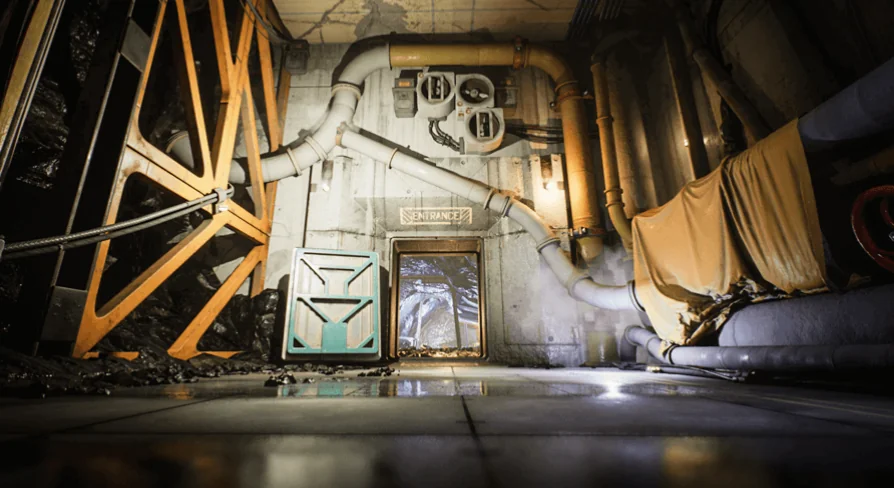
The package divides its contents into two functional groups. On the hard surface side, it includes pipes, pillars, walls, floors, railings, and cables. These are the components that define the industrial infrastructure: piping runs along ceilings and walls, pillars support vertical load paths, railings line walkways and shaft edges, and cables drape between fixtures to add secondary visual density.
On the organic side, the set provides coal rocks and stones. These meshes serve a different purpose. Instead of forming structure, they populate the ground, clutter corners, and simulate raw extracted material or natural cave geology. Mixing the two groups lets a creator build scenes that feel grounded—steel and concrete infrastructure surrounded by the rough, irregular shapes of mined material. The kitbash format means individual pieces are intended to be combined, repositioned, and reused rather than placed as fixed, standalone structures.
Component Variety and Scene Construction
Variety is central to how this set functions. The hard surface assets cover the core architectural and mechanical needs of a mine: vertical supports, horizontal walking surfaces, enclosed wall sections, pipe networks for fluid or gas transport, railings for safety edges, dangling cables for utility lines, and assorted props to populate work areas. The organic assets contribute rocks and stones that vary in implied scale and shape, useful for forming coal heaps, lining tunnel floors, or integrating into the surrounding terrain where the mine meets exposed earth.
Because the set is tagged as modular and lowpoly, the construction process favors placing many instances to build up density rather than relying on a small number of heavy, pre-assembled meshes. Walls and floors can be tiled to form long corridors or wide chambers. Pipes can be routed along ceilings or external walls. Railings can be repeated along extended platforms. Rocks can be duplicated and rotated to form large piles without obvious repetition. This modular logic keeps the authoring process flexible—creators adjust layouts, extend corridors, or rework chamber proportions without needing custom geometry for each change.
Compatibility Across Unreal Generations
The assets are built to work within Unreal Engine, and the package supports a wide span of editor versions. Compatibility runs from 4.17 through 4.27 on the earlier generation, covering the mature Unreal Engine 4 releases that many existing projects still use. It also extends into Unreal Engine 5, supporting versions 5.0 through 5.7. This gives creators room to import the set into legacy projects still on UE4, update to UE5 when ready, or start fresh projects on current-generation builds. The same kitbash library can follow a production from older workflows into newer ones without rebuilding asset libraries from scratch.
Where the Kitbash Set Fits Best
This collection targets creators working on industrial and mining-themed environments. Any project requiring a realistic coal mine setting—whether a game level, cinematic sequence, simulation, or virtual production scene—gets a ready supply of structural and geological components. The realistic tag attached to the set indicates that the target visual standard leans toward grounded, authentic industrial environments rather than stylized or cartoon interpretations.
The mix of mechanical and natural meshes also makes the set useful for scenes where a mine transitions between constructed spaces and raw rock faces. A creator can build supported tunnels using the structural pieces, then blend into organic cave-like areas using the stone and rock assets, keeping a consistent material and tonal palette throughout the transition.
Session Output and Preview Material
The set offers visual references to verify its look before committing to implementation. A video walkthrough demonstrates the assembled environments and shows how the pieces function together in context rather than individually. A 360 panorama and asset renders provide additional spatial and detail views, letting creators inspect pieces from multiple angles and gauge how the lighting reacts to the organic and hard surface meshes. These previews help with pre-production planning—checking whether the scale, density, and visual quality match the needs of the intended scene before full asset integration begins.
Who Benefits from This Collection
Environment artists constructing industrial scenes will find the most direct use here. The kitbash approach favors creators who prefer to compose spaces piece by piece rather than use locked-in layouts. Those working on realistic mine interiors, factory-adjacent tunnels, or extraction facilities can use the pipes, pillars, walls, floors, railings, and cables to form the infrastructure, then scatter coal rocks and stones to add the geological context that makes the space read as an active or abandoned mine.
Projects on either Unreal Engine 4—specifically 4.17 and later—or Unreal Engine 5 can integrate the set without version friction. The modular, lowpoly nature makes it suitable for level designers who need to iterate rapidly on layouts or fill large areas without heavy meshes dragging performance down. The included preview material lets teams evaluate the visual standard against their pipeline before full integration.
 Industrial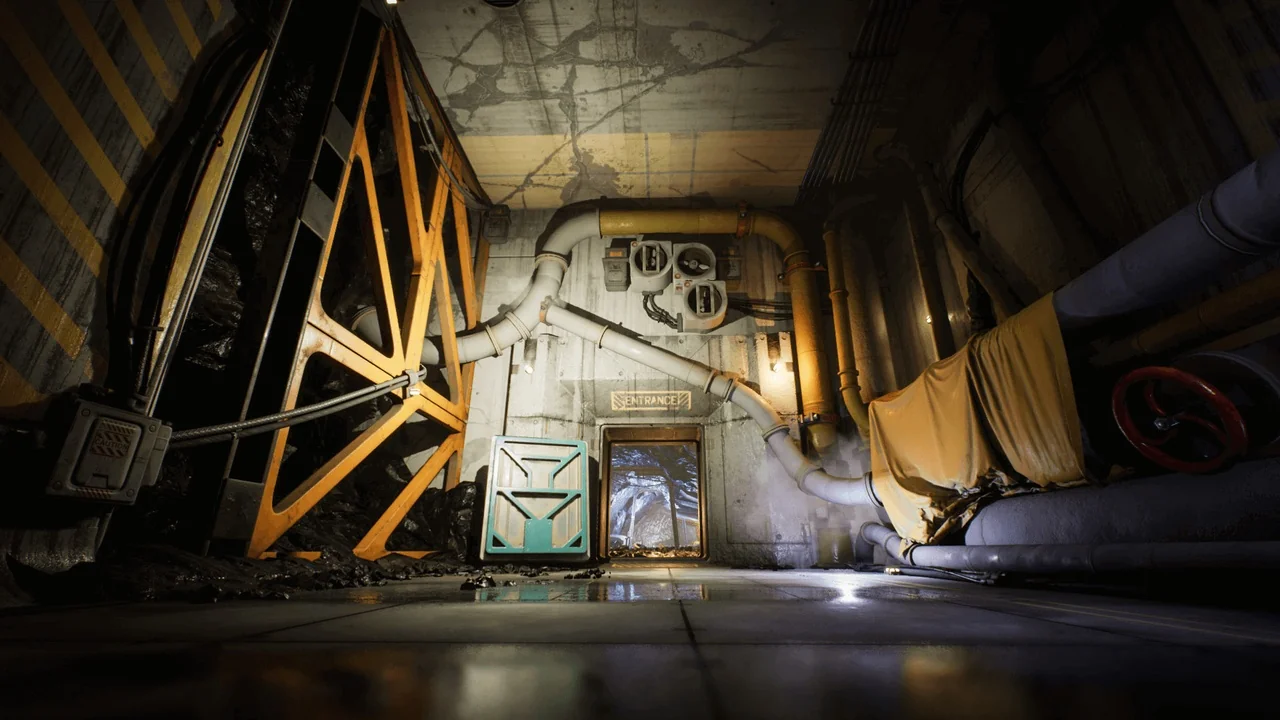
 Industrial
 Industrial
 Industrial