"07a32e720bd988c8"{"id":"1002490","slug":"mr-plague-doctor","title":"mr. Plague Doctor","category":"Characters \u0026 Creatures","engine":"4.18+,5.0+","assetVersion":"","engineVersion":"Engine Version: 4.18+,5.0+","tag":"Characters","accent":"blue","visual":"character","summary":"Technical analysis of mr. Plague Doctor, covering its low-poly geometry, Epic Skeleton v4 rig, 39 animations, and 2048x2048 PBR metallic texture workflow.","platform":"Unreal Engine","indexPolicy":"index","publishedAt":"2026-11-12T03:55:35.329Z","updatedAt":"2026-11-12T03:55:35.329Z","sourceNotes":[],"fileContents":[],"compatibility":["Unreal Engine","Engine Version: 4.18+,5.0+"],"featuredImage":{"alt":"mr. Plague Doctor","src":"/wp-content/uploads/published/2026/11/640616c0ad64-a2624ca2-2168-47eb-b4a4-cdcc8a3a16a3-a60fbb70df.webp"},"hasDownloadLink":true,"downloads":0,"terms":[{"taxonomy":"category","slug":"characters-and-creatures","name":"Characters \u0026 Creatures"}],"galleryImages":[{"src":"/wp-content/uploads/published/2026/11/c78dd653ada8-0eabb798-7e62-4069-a847-a8f3f1b11f02-04940f6300.webp","alt":"mr. Plague Doctor"},{"src":"/wp-content/uploads/published/2026/11/59d3ca93d384-7b974e29-d285-49d3-bb25-76e3626bd539-9aff1e0809.webp","alt":"mr. Plague Doctor"},{"src":"/wp-content/uploads/published/2026/11/a91a71f230ef-80f081f5-fce9-4973-8ca7-4acd27458e06-12527ed709.webp","alt":"mr. Plague Doctor"},{"src":"/wp-content/uploads/published/2026/11/3bce009aa254-1a52c5be-ed84-4ee2-b9b3-f7a5d2304f54-109d00e2b2.webp","alt":"mr. Plague Doctor"},{"src":"/wp-content/uploads/published/2026/11/33146cf8ae15-5c57fac2-ad37-4b0e-81bb-bc4ff4a01cf8-97de16257b.webp","alt":"mr. Plague Doctor"},{"src":"/wp-content/uploads/published/2026/11/5d2dbea1965b-c9d17986-d268-4ca7-aa62-a0b535a194d3-b73afa4cef.webp","alt":"mr. Plague Doctor"},{"src":"/wp-content/uploads/published/2026/11/6b398491e984-22cb19f3-01fb-43c1-8220-25a77b3299d1-c7c59f635d.webp","alt":"mr. Plague Doctor"},{"src":"/wp-content/uploads/published/2026/11/84260e1c5a28-7dcc230e-40a0-43e7-a7b5-c4f23d387179-679814e4f9.webp","alt":"mr. Plague Doctor"},{"src":"/wp-content/uploads/published/2026/11/8ce75ad874d9-74247df1-375b-4d19-aa59-fc8d4d7dda58-25db0cde41.webp","alt":"mr. Plague Doctor"},{"src":"/wp-content/uploads/published/2026/11/24e79fa121db-96ccd49b-78a1-4d85-8448-364219495fb6-6f2598e161.webp","alt":"mr. Plague Doctor"}],"accessPanel":{"kind":"resource","title":"Get this resource","eyebrow":"Free resource","message":"Download this resource in your browser.","fileName":"Content.7z","safetyNote":"Resources are manually reviewed before listing to improve quality and reduce obvious risks.","actionLabel":"Get this resource","resourceType":"Resource archive","versions":[]},"contentHtml":"\u003ch2\u003eAtmospheric Worldbuilding with mr. Plague Doctor\u003c/h2\u003e\n\u003cp\u003eGothic streets, plague-swept hamlets, and dark fantasy dungeons often rely on stylized silhouettes to communicate tension immediately. The iconic plague physician motif carries an instant narrative weight, blending historical dread with horror, madness, and arcane themes. Within game production, utilizing a dedicated character mesh like mr. Plague Doctor allows developers to populate scenes with an unsettling male figure that fits equally well as a maniacal antagonist, a roaming horror-themed NPC, a magic-wielding boss, or a stylized warrior.\u003c/p\u003e\n\u003cp\u003eDeploying a low-poly stylized character reduces rendering overhead while keeping the character readable across different lighting setups. Whether staged beside dimly lit alleyways or integrated into Halloween-themed combat encounters, the asset provides a self-contained baseline with built-in skeletal weighting, dedicated movement clips, and surface maps tailored for real-time engines.\u003c/p\u003e \u003ch2\u003ePolygon Budget and Low-Poly Mesh Metrics\u003c/h2\u003e\n\u003cp\u003eOptimization is central to maintaining stable frame rates, especially in scenes that combine dynamic lighting, multiple active artificial intelligence agents, and dense environmental geometry. The mr. Plague Doctor asset maintains a balanced, low-poly footprint designed specifically for game engines. The mesh structure consists of the following technical dimensions:\u003c/p\u003e\n\u003cul\u003e\n\u003cli\u003eVertices: 10,210\u003c/li\u003e\n\u003cli\u003eFaces: 9,325\u003c/li\u003e\n\u003cli\u003eTriangles: 18,509\u003c/li\u003e\n\u003c/ul\u003e\n\u003cp\u003eAt 18,509 triangles, the character hits a versatile midpoint. It is lightweight enough to be duplicated for group encounters or background patrols without overwhelming draw call budgets, yet detailed enough to serve as a primary player avatar or close-up enemy in third-person or top-down perspectives. The edge flow supports smooth silhouette definition around the signature beak mask, brimmed hat, and draped attire without inflating the face count beyond practical performance thresholds.\u003c/p\u003e \u003ch2\u003ePlague Doctor Skeleton Architecture and Rigging\u003c/h2\u003e\n\u003cp\u003eSkeletal setup governs how easily a custom character integrates into existing gameplay mechanics. Rigging for the mr. Plague Doctor model is constructed directly on Epic Skeleton version 4, an update integrated on November 27, 2020. Utilizing an established skeleton standard eliminates the friction of building custom hierarchy trees from scratch, ensuring standard bone naming conventions and joint orientations are preserved throughout the body.\u003c/p\u003e\n\u003cp\u003eFor modern engine workflows, particularly when transitioning projects between Unreal Engine 4 and Unreal Engine 5, this rig architecture offers immediate utility. When a developer has configured a universal retargeting setup from the UE4 skeleton to the UE5 Mannequin, no secondary retargeting steps are required for this model. The standard proportions translate directly, allowing teams to repurpose their broader library of Epic Skeleton-compatible combat, locomotion, and interaction sequences seamlessly onto the character.\u003c/p\u003e \u003ch2\u003eDual Animation Sets and Lantern Handling\u003c/h2\u003e\n\u003cp\u003eTo support immediate implementation without requiring manual keyframing from day one, mr. Plague Doctor includes a library of 39 pre-built animations. These motions are divided into two distinct functional groupings based on prop interaction:\u003c/p\u003e\n\u003cul\u003e\n\u003cli\u003eSet 1: Locomotion and action clips executed without a lantern.\u003c/li\u003e\n\u003cli\u003eSet 2: Adjusted movement cycles and poses configured specifically with a lantern held in hand.\u003c/li\u003e\n\u003c/ul\u003e\n\u003cp\u003eDividing the animation library across equipped and unequipped states addresses a common issue in atmospheric game projects. Characters operating in shadowy, horror-driven environments frequently need an active light source. When holding a lantern, arm positioning, center of balance, and upper-body sway must adapt so the light does not clip awkwardly into cloaks or swing wildly during locomotion. Having 39 distinct clips pre-separated into these two operational states allows developers to set up clean blends within an Animation Blueprint, alternating between empty-handed casting or combat stances and lantern-bearing exploration cycles based on dynamic gameplay conditions.\u003c/p\u003e \u003ch2\u003ePBR Metallic Shading and Emissive Texturing\u003c/h2\u003e\n\u003cp\u003eMaterial response is handled through a standardized PBR workflow driven by a Metallic shader model. The surface definition is contained within five distinct 2048x2048 texture maps, balancing close-range texture clarity with sensible video memory utilization:\u003c/p\u003e\n\u003cul\u003e\n\u003cli\u003eAlbedo: Defines base color values across the leather, fabric, and accessory elements.\u003c/li\u003e\n\u003cli\u003eAmbient Occlusion (AO): Bakes static shadow depth into crevices, folds, and under-mask seams to preserve geometric depth in low-light environments.\u003c/li\u003e\n\u003cli\u003eMetallic: Differentiates non-conductive cloth or skin from metallic hardware, buckles, and lantern framing.\u003c/li\u003e\n\u003cli\u003eNormal: Supplies micro-surface details, seams, and fabric grain without demanding additional physical geometry.\u003c/li\u003e\n\u003cli\u003eEmissions: Powers self-illuminated accents, useful for glowing eyes, magical effects, or internal lantern illumination.\u003c/li\u003e\n\u003c/ul\u003e\n\u003cp\u003eThe 2048x2048 resolution provides adequate pixel density across the full body mesh, preventing visible blur when the camera tracks near the character. Because the textures rely on the standard Metallic/Roughness approach, the materials translate cleanly into modern deferred or forward renderers without requiring custom shader translation graphs.\u003c/p\u003e \u003ch2\u003eImplementation Considerations for Crazy and Horror Archetypes\u003c/h2\u003e\n\u003cp\u003eThe tagged thematic profile—spanning plague, horror, crazy, maniac, and magic categories—points to broad flexibility within action and survival genres. The asset also notes compatibility within Chinese Warrior asset pipelines, expanding its cross-system utility for developers mixing regional or stylistic character libraries within shared project frameworks.\u003c/p\u003e\n\u003cp\u003eWhen wiring mr. Plague Doctor into an active project, the inclusion of Epic Skeleton v4 hierarchy, dedicated Animation Blueprint readiness, and pre-sorted dual animation tracks minimizes technical hurdles. Developers can bind the emissive channels to dynamic material instances to flicker lantern light, map the 39 animations into blend spaces, and deploy the 18,509-triangle character directly into real-time environments.\u003c/p\u003e\n\n\u003ch2\u003eExplore Similar Assets\u003c/h2\u003e\n\u003cul\u003e\n\u003cli\u003e\u003ca href=\"https://3dcghub.com/defender-girl/\" rel=\"noopener noreferrer\"\u003eDefender Girl\u003c/a\u003e\u003c/li\u003e\n\u003cli\u003e\u003ca href=\"https://3dcghub.com/modern-character/\" rel=\"noopener noreferrer\"\u003eModern character\u003c/a\u003e\u003c/li\u003e\n\u003cli\u003e\u003ca href=\"https://3dcghub.com/native-american/\" rel=\"noopener noreferrer\"\u003eNative American\u003c/a\u003e\u003c/li\u003e\n\u003cli\u003e\u003ca href=\"https://3dcghub.com/dystopia-mech-and-pilot/\" rel=\"noopener noreferrer\"\u003eDystopia Mech and Pilot\u003c/a\u003e\u003c/li\u003e\n\u003cli\u003e\u003ca href=\"https://3dcghub.com/rebel/\" rel=\"noopener noreferrer\"\u003eRebel\u003c/a\u003e\u003c/li\u003e\n\u003c/ul\u003e","contentTextLength":6255,"navigation":{"current":9,"total":4421,"previous":{"id":"1002491","slug":"post-apocaliptic-survival-male-character","title":"Post apocaliptic survival male character","category":"Characters \u0026 Creatures","platform":"Unreal Engine","updatedAt":"2026-11-12T03:56:43.462Z"},"next":{"id":"1002489","slug":"mongol","title":"Mongol","category":"Characters \u0026 Creatures","platform":"Unreal Engine","updatedAt":"2026-11-12T03:54:07.741Z"}},"relatedResources":[{"id":"1002473","slug":"defender-girl","title":"Defender Girl","category":"Characters \u0026 Creatures","engine":"4.18+,5.0+","assetVersion":"","engineVersion":"Engine Version: 4.18+,5.0+","tag":"Characters","accent":"blue","visual":"character","summary":"Technical breakdown of the Defender Girl low-poly character model, covering its UE4 skeleton in UE5, PBR textures, tissue physics, and mesh metrics.","platform":"Unreal Engine","indexPolicy":"index","publishedAt":"2026-11-12T03:21:41.247Z","updatedAt":"2026-11-12T03:21:41.247Z","sourceNotes":[],"fileContents":[],"compatibility":["Unreal Engine","Engine Version: 4.18+,5.0+"],"featuredImage":{"alt":"Defender Girl","src":"/wp-content/uploads/published/2026/11/34ebf783c1cb-7e1bc220-ffb4-405c-a452-f998b5628309-21cc64a9cc.webp"},"hasDownloadLink":true,"downloads":0},{"id":"1002486","slug":"modern-character","title":"Modern character","category":"Characters \u0026 Creatures","engine":"4.18+,5.0+","assetVersion":"","engineVersion":"Engine Version: 4.18+,5.0+","tag":"Characters","accent":"blue","visual":"character","summary":"A low-poly male character asset with an Epic skeleton, firearm mesh, modular outfit textures, and two-sided shader support for multiple game genres.","platform":"Unreal Engine","indexPolicy":"index","publishedAt":"2026-11-12T03:51:41.314Z","updatedAt":"2026-11-12T03:51:41.314Z","sourceNotes":[],"fileContents":[],"compatibility":["Unreal Engine","Engine Version: 4.18+,5.0+"],"featuredImage":{"alt":"Modern character","src":"/wp-content/uploads/published/2026/11/12f2b0e8163d-3ca52942-b1a7-4fc0-8362-a5915c0b2c24-c02fa3d7d6.webp"},"hasDownloadLink":true,"downloads":0},{"id":"1002416","slug":"native-american","title":"Native American","category":"Characters \u0026 Creatures","engine":"4.18+,5.0+","assetVersion":"","engineVersion":"Engine Version: 4.18+,5.0+","tag":"Characters","accent":"blue","visual":"character","summary":"Technical breakdown of the Native American lowpoly character model, featuring Epic Skeleton rigging, 44 animations, SSS materials, and physics setups.","platform":"Unreal Engine","indexPolicy":"index","publishedAt":"2026-11-10T13:36:44.305Z","updatedAt":"2026-11-10T13:36:44.305Z","sourceNotes":[],"fileContents":[],"compatibility":["Unreal Engine","Engine Version: 4.18+,5.0+"],"featuredImage":{"alt":"Native American","src":"/wp-content/uploads/published/2026/11/edbc47aac0c7-a2e36e55-bd1f-45fc-8037-7d656ac1de87-2613efbab3.webp"},"hasDownloadLink":true,"downloads":0}]}
Characters
mr. Plague Doctor
Technical analysis of mr. Plague Doctor, covering its low-poly geometry, Epic Skeleton v4 rig, 39 animations, and 2048x2048 PBR metallic texture workflow.
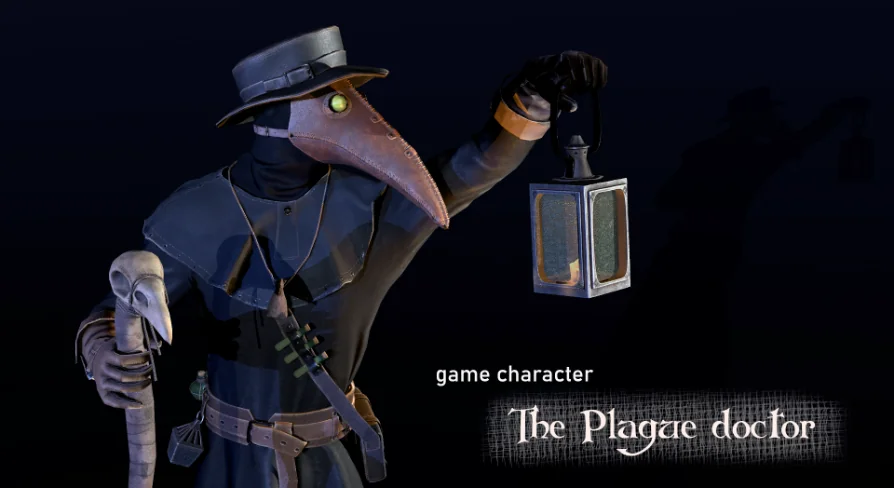
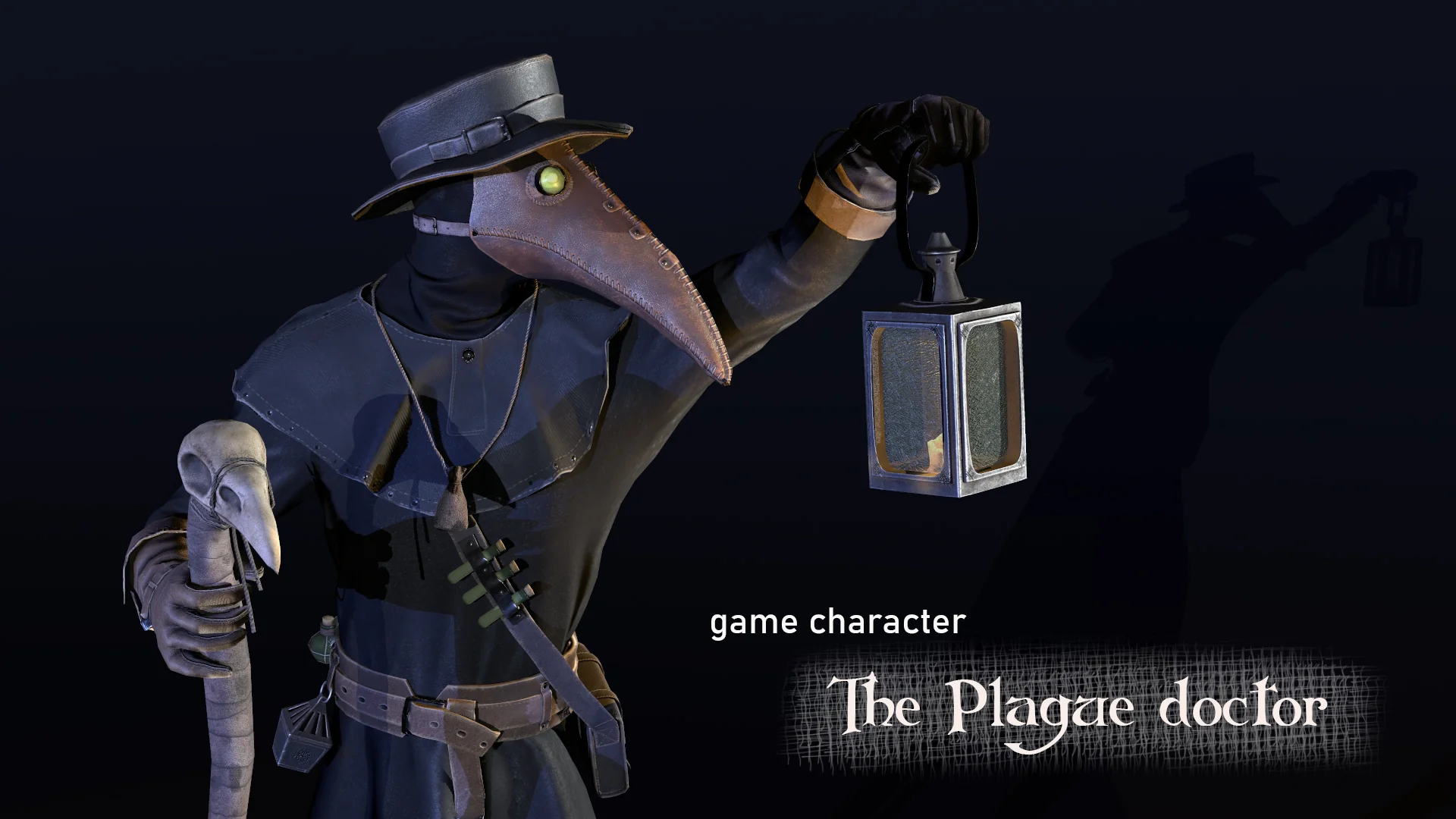
Gothic streets, plague-swept hamlets, and dark fantasy dungeons often rely on stylized silhouettes to communicate tension immediately. The iconic plague physician motif carries an instant narrative weight, blending historical dread with horror, madness, and arcane themes. Within game production, utilizing a dedicated character mesh like mr. Plague Doctor allows developers to populate scenes with an unsettling male figure that fits equally well as a maniacal antagonist, a roaming horror-themed NPC, a magic-wielding boss, or a stylized warrior.
Deploying a low-poly stylized character reduces rendering overhead while keeping the character readable across different lighting setups. Whether staged beside dimly lit alleyways or integrated into Halloween-themed combat encounters, the asset provides a self-contained baseline with built-in skeletal weighting, dedicated movement clips, and surface maps tailored for real-time engines.
Polygon Budget and Low-Poly Mesh Metrics
Optimization is central to maintaining stable frame rates, especially in scenes that combine dynamic lighting, multiple active artificial intelligence agents, and dense environmental geometry. The mr. Plague Doctor asset maintains a balanced, low-poly footprint designed specifically for game engines. The mesh structure consists of the following technical dimensions:
Vertices: 10,210
Faces: 9,325
Triangles: 18,509
At 18,509 triangles, the character hits a versatile midpoint. It is lightweight enough to be duplicated for group encounters or background patrols without overwhelming draw call budgets, yet detailed enough to serve as a primary player avatar or close-up enemy in third-person or top-down perspectives. The edge flow supports smooth silhouette definition around the signature beak mask, brimmed hat, and draped attire without inflating the face count beyond practical performance thresholds.
Plague Doctor Skeleton Architecture and Rigging
Skeletal setup governs how easily a custom character integrates into existing gameplay mechanics. Rigging for the mr. Plague Doctor model is constructed directly on Epic Skeleton version 4, an update integrated on November 27, 2020. Utilizing an established skeleton standard eliminates the friction of building custom hierarchy trees from scratch, ensuring standard bone naming conventions and joint orientations are preserved throughout the body.
For modern engine workflows, particularly when transitioning projects between Unreal Engine 4 and Unreal Engine 5, this rig architecture offers immediate utility. When a developer has configured a universal retargeting setup from the UE4 skeleton to the UE5 Mannequin, no secondary retargeting steps are required for this model. The standard proportions translate directly, allowing teams to repurpose their broader library of Epic Skeleton-compatible combat, locomotion, and interaction sequences seamlessly onto the character.
Dual Animation Sets and Lantern Handling
To support immediate implementation without requiring manual keyframing from day one, mr. Plague Doctor includes a library of 39 pre-built animations. These motions are divided into two distinct functional groupings based on prop interaction:
Set 1: Locomotion and action clips executed without a lantern.
Set 2: Adjusted movement cycles and poses configured specifically with a lantern held in hand.
Dividing the animation library across equipped and unequipped states addresses a common issue in atmospheric game projects. Characters operating in shadowy, horror-driven environments frequently need an active light source. When holding a lantern, arm positioning, center of balance, and upper-body sway must adapt so the light does not clip awkwardly into cloaks or swing wildly during locomotion. Having 39 distinct clips pre-separated into these two operational states allows developers to set up clean blends within an Animation Blueprint, alternating between empty-handed casting or combat stances and lantern-bearing exploration cycles based on dynamic gameplay conditions.
PBR Metallic Shading and Emissive Texturing
Material response is handled through a standardized PBR workflow driven by a Metallic shader model. The surface definition is contained within five distinct 2048x2048 texture maps, balancing close-range texture clarity with sensible video memory utilization:
Albedo: Defines base color values across the leather, fabric, and accessory elements.
Ambient Occlusion (AO): Bakes static shadow depth into crevices, folds, and under-mask seams to preserve geometric depth in low-light environments.
Metallic: Differentiates non-conductive cloth or skin from metallic hardware, buckles, and lantern framing.
Normal: Supplies micro-surface details, seams, and fabric grain without demanding additional physical geometry.
Emissions: Powers self-illuminated accents, useful for glowing eyes, magical effects, or internal lantern illumination.
The 2048x2048 resolution provides adequate pixel density across the full body mesh, preventing visible blur when the camera tracks near the character. Because the textures rely on the standard Metallic/Roughness approach, the materials translate cleanly into modern deferred or forward renderers without requiring custom shader translation graphs.
Implementation Considerations for Crazy and Horror Archetypes
The tagged thematic profile—spanning plague, horror, crazy, maniac, and magic categories—points to broad flexibility within action and survival genres. The asset also notes compatibility within Chinese Warrior asset pipelines, expanding its cross-system utility for developers mixing regional or stylistic character libraries within shared project frameworks.
When wiring mr. Plague Doctor into an active project, the inclusion of Epic Skeleton v4 hierarchy, dedicated Animation Blueprint readiness, and pre-sorted dual animation tracks minimizes technical hurdles. Developers can bind the emissive channels to dynamic material instances to flicker lantern light, map the 39 animations into blend spaces, and deploy the 18,509-triangle character directly into real-time environments.
 Characters
 Characters
 Characters
 Characters