"07a32e720bd988c8"{"id":"1002491","slug":"post-apocaliptic-survival-male-character","title":"Post apocaliptic survival male character","category":"Characters \u0026 Creatures","engine":"4.18+,5.0+","assetVersion":"","engineVersion":"Engine Version: 4.18+,5.0+","tag":"Characters","accent":"blue","visual":"character","summary":"Explore the Post apocaliptic survival male character featuring 4K PBR textures, DigitalHuman shaders, eye bones, blend shapes, and an Animation Blueprint.","platform":"Unreal Engine","indexPolicy":"index","publishedAt":"2026-11-12T03:56:43.462Z","updatedAt":"2026-11-12T03:56:43.462Z","sourceNotes":[],"fileContents":[],"compatibility":["Unreal Engine","Engine Version: 4.18+,5.0+"],"featuredImage":{"alt":"Post apocaliptic survival male character","src":"/wp-content/uploads/published/2026/11/a3961ab6f25b-9cc10b4d-053c-4e7b-8ae2-83aa0bf045a7-ddaabae2bc.webp"},"hasDownloadLink":true,"downloads":0,"terms":[{"taxonomy":"category","slug":"characters-and-creatures","name":"Characters \u0026 Creatures"}],"galleryImages":[{"src":"/wp-content/uploads/published/2026/11/eaae0b41b208-6b75fb84-b0e4-43ca-8de2-c4d7858a3733-5fdd4197da.webp","alt":"Post apocaliptic survival male character"},{"src":"/wp-content/uploads/published/2026/11/f99b21a2f711-1d0423f0-2d37-40d9-8a5a-1d51625fac28-1d97a32fd8.webp","alt":"Post apocaliptic survival male character"},{"src":"/wp-content/uploads/published/2026/11/fce2524b23c2-2b99525b-05e3-4eaa-891d-8f3ced5b7dc2-d081155b1a.webp","alt":"Post apocaliptic survival male character"},{"src":"/wp-content/uploads/published/2026/11/0ffdc99580e7-63425e12-1520-40c2-9faf-9eaed91f1892-21a504b8f1.webp","alt":"Post apocaliptic survival male character"},{"src":"/wp-content/uploads/published/2026/11/09386e13b3e4-fa51c391-9115-41eb-942d-85302dcf8ce9-2d773a2e91.webp","alt":"Post apocaliptic survival male character"},{"src":"/wp-content/uploads/published/2026/11/321a8ee74e24-13e15164-ea7b-47a1-8089-54fe67893b92-0cc67baecc.webp","alt":"Post apocaliptic survival male character"},{"src":"/wp-content/uploads/published/2026/11/dd460c788ac2-7f8a2a57-c7c0-410c-8ceb-a8b14105b476-00dc4b44c8.webp","alt":"Post apocaliptic survival male character"},{"src":"/wp-content/uploads/published/2026/11/8cb48443b216-b741cdc5-0ec5-4c5d-9084-97275b31710a-09e407fb6f.webp","alt":"Post apocaliptic survival male character"},{"src":"/wp-content/uploads/published/2026/11/a1d8da82c720-1bd0506f-b647-4852-af14-81e386238a31-a837499b9f.webp","alt":"Post apocaliptic survival male character"}],"accessPanel":{"kind":"resource","title":"Get this resource","eyebrow":"Free resource","message":"Download this resource in your browser.","fileName":"Content.7z","safetyNote":"Resources are manually reviewed before listing to improve quality and reduce obvious risks.","actionLabel":"Get this resource","resourceType":"Resource archive","versions":[]},"contentHtml":"\u003cp\u003eStepping directly into a real-time viewport, the realistic male figure presents a rugged, weathered presence designed to fit hostile, collapsed environments. Equipped with a bag and survival-focused garb, the model is configured to respond immediately to game lighting and skeletal locomotion systems. The asset brings together high-resolution surface maps, dedicated facial deformation channels, and pre-built motion graphs that solve many of the mechanical hurdles involved in getting a player avatar or key non-player character operational inside an interactive scene.\u003c/p\u003e \u003ch2\u003eSurface Detailing and Shading for the Survival Male Character\u003c/h2\u003e\n\u003cp\u003eVisual authenticity in contemporary real-time rendering relies heavily on accurate material response, and this character asset establishes its physical presence through a complete set of 4K PBR textures. At this resolution, fine micro-surface details such as fabric weaves, worn leather seams, skin pore structures, and environmental grime remain crisp even when the camera pushes in for tight cinematic framing or dynamic conversation angles. The underlying physically based rendering workflow guarantees that material channels—governing roughness, metallicity, normal direction, and base color—react predictably across disparate lighting conditions, whether standing beneath harsh midday sun or inside dim, shadowed ruins.\u003c/p\u003e \u003cp\u003eBeyond standard PBR setups, the package supplies specialized texture sets configured specifically for Unreal's DigitalHuman shaders. Skin rendering in modern engines presents unique challenges, particularly regarding how light penetrates translucent tissue layers before scattering outward. Shaders shaped by digital human standards require dedicated data masks to control subsurface scattering amounts, specular micro-roughness variations, and localized translucency zones across areas like the ears, nose, and lips. By delivering textures tailored directly to these shader inputs, the character avoids the flat, waxy appearance that frequently occurs when applying generic surface shaders to human anatomy, producing realistic epidermal depth right out of the box.\u003c/p\u003e \u003ch2\u003eHumanoid Skeletal Architecture in the Apocaliptic Character Setup\u003c/h2\u003e\n\u003cp\u003eUnderneath the rendered surface, the asset is structured upon a standardized humanoid rig. Adhering to humanoid skeletal naming and hierarchy conventions allows the model to communicate smoothly with existing motion libraries, retargeting systems, and gameplay codebases. Standard limb and torso chains translate input transforms reliably, enabling straightforward implementation for third-person exploration, tactical combat, or interactive environmental traversal.\u003c/p\u003e \u003cp\u003eA notable technical inclusion within the skeletal structure is the addition of dedicated bones for the eyes. While many standard character hierarchies omit individual ocular joints in favor of purely morph-based solutions, standalone eye bones unlock distinct runtime benefits:\u003c/p\u003e\n\u003cul\u003e \u003cli\u003eIndependent rotational control for procedural look-at targets and dynamic eye tracking during player interactions.\u003c/li\u003e \u003cli\u003eRapid orientation adjustments that simulate realistic saccadic movements without requiring unique morph channels for every minor glance.\u003c/li\u003e \u003cli\u003eSeamless blending between scripted cinematic gaze markers and active physics-driven head rotation.\u003c/li\u003e\n\u003c/ul\u003e \u003cp\u003eThese eye joints work in tandem with the primary head hierarchy, ensuring that whether a character is scanning a desolate horizon or focusing on an incoming threat, ocular direction aligns naturally with the intended line of sight.\u003c/p\u003e \u003ch2\u003eFacial Blend Shapes and Expressive Performance\u003c/h2\u003e\n\u003cp\u003eConveying the strain of survival demands nuanced facial expression, which this asset supports through a dedicated collection of facial blend shapes. Morph targets provide precise vertex-level offsets that control localized facial geometry, allowing animators and technical artists to shape subtle emotional states, reactive twitches, and clean speech phonemes. Because blend shapes operate independently of the primary skeletal transforms, they preserve the underlying cranial volume while manipulating surfaces around the brow, eyelids, cheeks, and mouth.\u003c/p\u003e \u003cp\u003eWhen combined with the articulated eye bones, the blend shapes enable a complete facial performance pipeline. Speech tracks can drive mouth and jaw shapes while gaze targets guide the directional bones of the eyes, avoiding the rigid, mask-like look common to models restricted solely to skeletal facial rigs. This dual-layer approach provides developers with the flexibility needed to author expressive cutscenes or implement automated dynamic dialogue setups in real time.\u003c/p\u003e \u003ch2\u003eLocomotion Integration and Animation Blueprint Scripting\u003c/h2\u003e\n\u003cp\u003eTo bridge the gap between static mesh geometry and active gameplay, the package incorporates an Animation Blueprint alongside a library of 27 distinct animations. The presence of an Animation Blueprint provides an operational framework where state machines, transition rules, and blend spaces can be evaluated instantaneously. Rather than requiring developers to construct character logic graphs from scratch, the included script architecture demonstrates how to map movement inputs directly to the character's humanoid bone chains.\u003c/p\u003e \u003cp\u003eThe 27 included animation clips supply the foundational movement vocabulary required for survival-oriented gameplay. Locomotion states, idling poses, and transitional actions can be slotted directly into the blueprint's state machine, establishing an immediate foundation for player-controlled movement or NPC patrol routines. Because the underlying structure conforms to standard humanoid definitions, expanding this library with custom combat maneuvers, climbing motions, or environmental interactions remains entirely feasible through standard retargeting workflows.\u003c/p\u003e \u003ch2\u003ePipeline Compatibility with Customizable Male Characters\u003c/h2\u003e\n\u003cp\u003eLong-term asset utility often depends on how effectively a model fits within a broader production ecosystem. This survival character is designed with compatibility for customizable male character pipelines, allowing technical teams to integrate the mesh alongside related modular frameworks. Proportions, joint placements, and rigging boundaries align with these systems, reducing the friction typically encountered when trying to mix garments, gear, or anatomical elements across multiple character variants.\u003c/p\u003e \u003cp\u003eFor development teams assembling gritty, survival-themed experiences, the combination of 4K texturing, DigitalHuman shader readiness, dual-layer facial controls, and ready-to-run animation scripting makes this male character a fully functional, production-ready asset capable of meeting the demands of modern real-time visual fidelity.\u003c/p\u003e\n\n\u003ch2\u003eRelated Resources Worth Checking\u003c/h2\u003e\n\u003cul\u003e\n\u003cli\u003e\u003ca href=\"https://3dcghub.com/customizable-survival-girl/\" rel=\"noopener noreferrer\"\u003eCustomizable Survival Girl\u003c/a\u003e\u003c/li\u003e\n\u003cli\u003e\u003ca href=\"https://3dcghub.com/customized-post-apocalyptic-characters/\" rel=\"noopener noreferrer\"\u003eCustomized Post Apocalyptic Characters\u003c/a\u003e\u003c/li\u003e\n\u003cli\u003e\u003ca href=\"https://3dcghub.com/survival-character-male/\" rel=\"noopener noreferrer\"\u003eSurvival Character Male\u003c/a\u003e\u003c/li\u003e\n\u003cli\u003e\u003ca href=\"https://3dcghub.com/modern-male-pack/\" rel=\"noopener noreferrer\"\u003eModern Male Pack\u003c/a\u003e\u003c/li\u003e\n\u003cli\u003e\u003ca href=\"https://3dcghub.com/animalia-brown-bear-male/\" rel=\"noopener noreferrer\"\u003eAnimalia - Brown Bear (male)\u003c/a\u003e\u003c/li\u003e\n\u003c/ul\u003e","contentTextLength":6830,"navigation":{"current":8,"total":4421,"previous":{"id":"1002492","slug":"protective-suit","title":"Protective Suit","category":"Characters \u0026 Creatures","platform":"Unreal Engine","updatedAt":"2026-11-12T03:57:57.272Z"},"next":{"id":"1002490","slug":"mr-plague-doctor","title":"mr. Plague Doctor","category":"Characters \u0026 Creatures","platform":"Unreal Engine","updatedAt":"2026-11-12T03:55:35.329Z"}},"relatedResources":[{"id":"2125","slug":"customizable-survival-girl","title":"Customizable Survival Girl","category":"Characters \u0026 Creatures","engine":"4.26+,5.0+","assetVersion":"Engine version: 4.26+,5.0+","engineVersion":"4.19","tag":"Characters","accent":"blue","visual":"character","summary":"Create unique characters with the Modular Survival Girl asset. Features 4K PBR textures, Epic Skeleton rigging, and customizable outfits for survival games.","platform":"Unreal Engine","indexPolicy":"index","publishedAt":"2026-02-07T07:28:22.000Z","updatedAt":"2026-04-19T15:58:06.000Z","sourceNotes":[],"fileContents":[],"compatibility":["Unreal Engine","Engine version: 4.26+,5.0+"],"featuredImage":{"alt":"Customizable Survival Girl","src":"https://3dcghub.com/wp-content/uploads/2026/02/00f6d419-2e01-4606-9200-648551ffb216.webp"},"hasDownloadLink":true,"downloads":1},{"id":"1000809","slug":"customized-post-apocalyptic-characters","title":"Customized Post Apocalyptic Characters","category":"Characters \u0026 Creatures","engine":"4.26+,5.0+","assetVersion":"","engineVersion":"Engine Version: 4.26+,5.0+","tag":"Characters","accent":"blue","visual":"character","summary":"Modular post-apocalyptic character pack with interchangeable heads, clothes, masks, backpacks, weapons, and Epic Skeleton rigging for survival and horror scenes","platform":"Unreal Engine","indexPolicy":"index","publishedAt":"2026-07-31T08:49:21.684Z","updatedAt":"2026-07-31T08:49:21.684Z","sourceNotes":[],"fileContents":[],"compatibility":["Unreal Engine","Engine Version: 4.26+,5.0+"],"featuredImage":{"alt":"Customized Post Apocalyptic Characters","src":"/wp-content/uploads/published/2026/07/82f2105f5d37-1650b3e7-da11-460d-952c-372e3c366b5b-6eac59119d.webp"},"hasDownloadLink":true,"downloads":2},{"id":"3640","slug":"survival-character-male","title":"Survival Character Male","category":"Characters \u0026 Creatures","engine":"4.26+,5.0+","assetVersion":"Engine version: 4.26+,5.0+","engineVersion":"4.18","tag":"Characters","accent":"blue","visual":"character","summary":"Enhance your project with this high-quality Male Survival Character. Featuring two clothing sets and animation support, it is perfect for survival and RPG games","platform":"Unreal Engine","indexPolicy":"noindex","publishedAt":"2026-02-09T08:52:21.000Z","updatedAt":"2026-04-19T15:57:35.000Z","sourceNotes":[],"fileContents":[],"compatibility":["Unreal Engine","Engine version: 4.26+,5.0+"],"featuredImage":{"alt":"Survival Character Male","src":"https://3dcghub.com/wp-content/uploads/2026/02/0c12af9c-6224-498c-9e93-718117d99c5d.webp"},"hasDownloadLink":true,"downloads":0}]}
Characters
Post apocaliptic survival male character
Explore the Post apocaliptic survival male character featuring 4K PBR textures, DigitalHuman shaders, eye bones, blend shapes, and an Animation Blueprint.
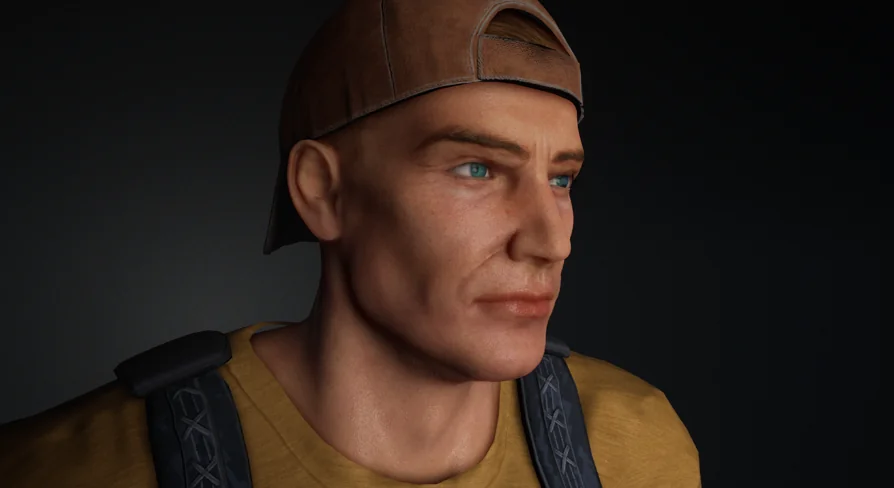
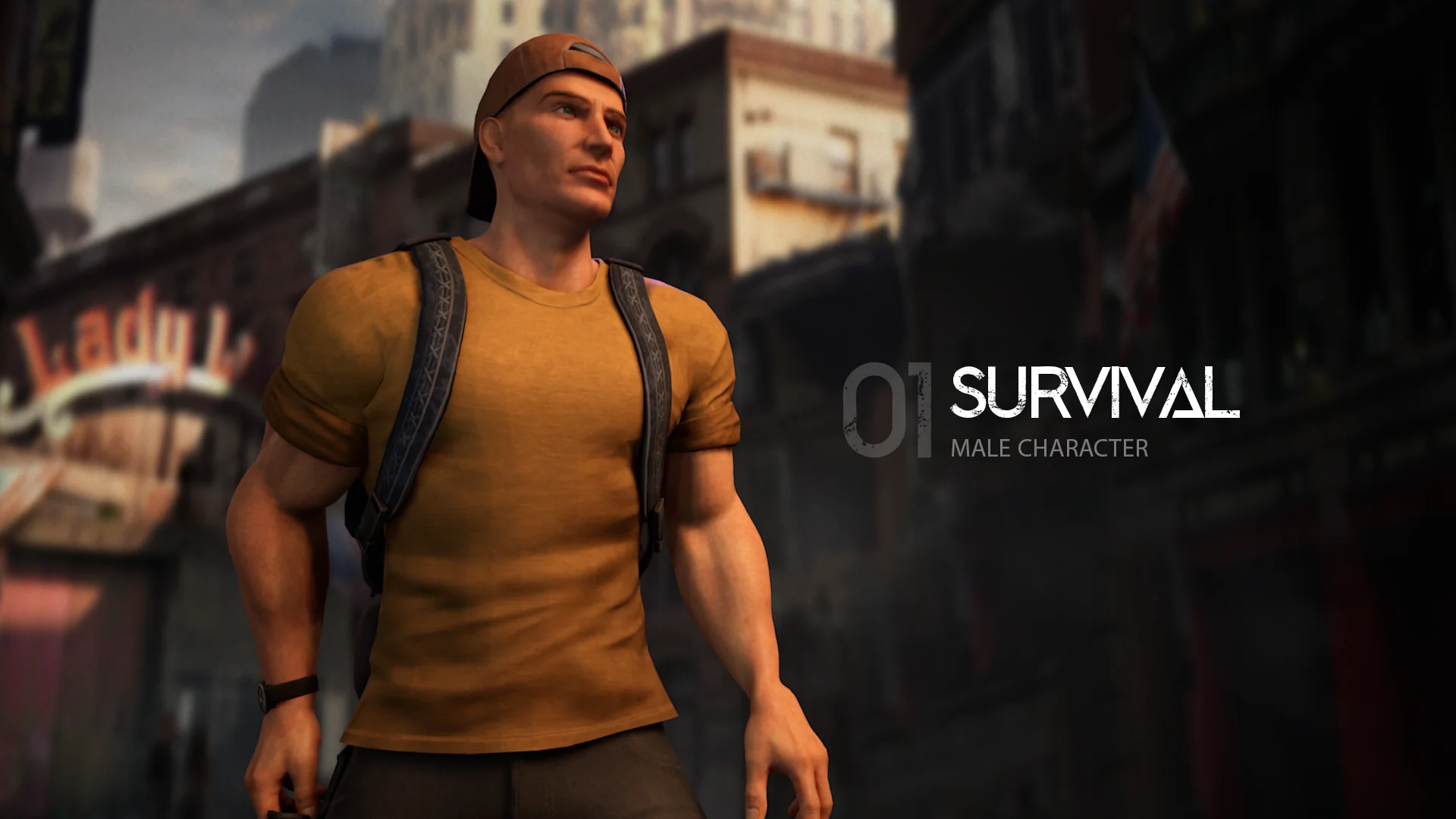
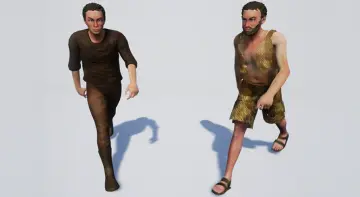
Stepping directly into a real-time viewport, the realistic male figure presents a rugged, weathered presence designed to fit hostile, collapsed environments. Equipped with a bag and survival-focused garb, the model is configured to respond immediately to game lighting and skeletal locomotion systems. The asset brings together high-resolution surface maps, dedicated facial deformation channels, and pre-built motion graphs that solve many of the mechanical hurdles involved in getting a player avatar or key non-player character operational inside an interactive scene.
Surface Detailing and Shading for the Survival Male Character
Visual authenticity in contemporary real-time rendering relies heavily on accurate material response, and this character asset establishes its physical presence through a complete set of 4K PBR textures. At this resolution, fine micro-surface details such as fabric weaves, worn leather seams, skin pore structures, and environmental grime remain crisp even when the camera pushes in for tight cinematic framing or dynamic conversation angles. The underlying physically based rendering workflow guarantees that material channels—governing roughness, metallicity, normal direction, and base color—react predictably across disparate lighting conditions, whether standing beneath harsh midday sun or inside dim, shadowed ruins.
Beyond standard PBR setups, the package supplies specialized texture sets configured specifically for Unreal's DigitalHuman shaders. Skin rendering in modern engines presents unique challenges, particularly regarding how light penetrates translucent tissue layers before scattering outward. Shaders shaped by digital human standards require dedicated data masks to control subsurface scattering amounts, specular micro-roughness variations, and localized translucency zones across areas like the ears, nose, and lips. By delivering textures tailored directly to these shader inputs, the character avoids the flat, waxy appearance that frequently occurs when applying generic surface shaders to human anatomy, producing realistic epidermal depth right out of the box.
Humanoid Skeletal Architecture in the Apocaliptic Character Setup
Underneath the rendered surface, the asset is structured upon a standardized humanoid rig. Adhering to humanoid skeletal naming and hierarchy conventions allows the model to communicate smoothly with existing motion libraries, retargeting systems, and gameplay codebases. Standard limb and torso chains translate input transforms reliably, enabling straightforward implementation for third-person exploration, tactical combat, or interactive environmental traversal.
A notable technical inclusion within the skeletal structure is the addition of dedicated bones for the eyes. While many standard character hierarchies omit individual ocular joints in favor of purely morph-based solutions, standalone eye bones unlock distinct runtime benefits:
Independent rotational control for procedural look-at targets and dynamic eye tracking during player interactions.
Rapid orientation adjustments that simulate realistic saccadic movements without requiring unique morph channels for every minor glance.
Seamless blending between scripted cinematic gaze markers and active physics-driven head rotation.
These eye joints work in tandem with the primary head hierarchy, ensuring that whether a character is scanning a desolate horizon or focusing on an incoming threat, ocular direction aligns naturally with the intended line of sight.
Facial Blend Shapes and Expressive Performance
Conveying the strain of survival demands nuanced facial expression, which this asset supports through a dedicated collection of facial blend shapes. Morph targets provide precise vertex-level offsets that control localized facial geometry, allowing animators and technical artists to shape subtle emotional states, reactive twitches, and clean speech phonemes. Because blend shapes operate independently of the primary skeletal transforms, they preserve the underlying cranial volume while manipulating surfaces around the brow, eyelids, cheeks, and mouth.
When combined with the articulated eye bones, the blend shapes enable a complete facial performance pipeline. Speech tracks can drive mouth and jaw shapes while gaze targets guide the directional bones of the eyes, avoiding the rigid, mask-like look common to models restricted solely to skeletal facial rigs. This dual-layer approach provides developers with the flexibility needed to author expressive cutscenes or implement automated dynamic dialogue setups in real time.
Locomotion Integration and Animation Blueprint Scripting
To bridge the gap between static mesh geometry and active gameplay, the package incorporates an Animation Blueprint alongside a library of 27 distinct animations. The presence of an Animation Blueprint provides an operational framework where state machines, transition rules, and blend spaces can be evaluated instantaneously. Rather than requiring developers to construct character logic graphs from scratch, the included script architecture demonstrates how to map movement inputs directly to the character's humanoid bone chains.
The 27 included animation clips supply the foundational movement vocabulary required for survival-oriented gameplay. Locomotion states, idling poses, and transitional actions can be slotted directly into the blueprint's state machine, establishing an immediate foundation for player-controlled movement or NPC patrol routines. Because the underlying structure conforms to standard humanoid definitions, expanding this library with custom combat maneuvers, climbing motions, or environmental interactions remains entirely feasible through standard retargeting workflows.
Pipeline Compatibility with Customizable Male Characters
Long-term asset utility often depends on how effectively a model fits within a broader production ecosystem. This survival character is designed with compatibility for customizable male character pipelines, allowing technical teams to integrate the mesh alongside related modular frameworks. Proportions, joint placements, and rigging boundaries align with these systems, reducing the friction typically encountered when trying to mix garments, gear, or anatomical elements across multiple character variants.
For development teams assembling gritty, survival-themed experiences, the combination of 4K texturing, DigitalHuman shader readiness, dual-layer facial controls, and ready-to-run animation scripting makes this male character a fully functional, production-ready asset capable of meeting the demands of modern real-time visual fidelity.
 Characters
 Characters
 Characters
 Characters