"95ccd6d7c96110f6"{"id":"1002454","slug":"dystopia-mech-and-pilot","title":"Dystopia Mech and Pilot","category":"Characters \u0026 Creatures","engine":"4.18+,5.0+","assetVersion":"","engineVersion":"Engine Version: 4.18+,5.0+","tag":"Characters","accent":"blue","visual":"character","summary":"Explore the Dystopia Mech and Pilot character package featuring rusty PBR textures, modular lowpoly construction, two weapons, and Epic Skeleton animation suppo","platform":"Unreal Engine","indexPolicy":"index","publishedAt":"2026-11-11T08:42:53.204Z","updatedAt":"2026-11-11T08:42:53.204Z","sourceNotes":[],"fileContents":[],"compatibility":["Unreal Engine","Engine Version: 4.18+,5.0+"],"featuredImage":{"alt":"Dystopia Mech and Pilot","src":"/wp-content/uploads/published/2026/11/6d46a1b31ab9-3dbbdf7b-98ea-42ed-83ed-b97f3c8fa3ff-8997ced7fd.webp"},"hasDownloadLink":true,"downloads":0,"terms":[{"taxonomy":"category","slug":"characters-and-creatures","name":"Characters \u0026 Creatures"}],"galleryImages":[{"src":"/wp-content/uploads/published/2026/11/058cd13a80d8-af5041f4-ca7b-4d06-8a9c-677fa07d957b-78dc939f85.webp","alt":"Dystopia Mech and Pilot"},{"src":"/wp-content/uploads/published/2026/11/8ee5b83fff31-c48267eb-6ccd-4334-acee-c43d967f86d5-7e37318234.webp","alt":"Dystopia Mech and Pilot"},{"src":"/wp-content/uploads/published/2026/11/91624b6a2bae-56f2cb76-c22d-402b-9620-40f5d7c8ce01-93c4d8bd9c.webp","alt":"Dystopia Mech and Pilot"},{"src":"/wp-content/uploads/published/2026/11/a792fd1655a0-53a4e905-060f-481a-a5cf-aed39bfb204c-5eb5923bec.webp","alt":"Dystopia Mech and Pilot"},{"src":"/wp-content/uploads/published/2026/11/1532b985bb65-47d38347-e006-4448-97d4-b68f6fb8c0f7-acb06f3ce4.webp","alt":"Dystopia Mech and Pilot"},{"src":"/wp-content/uploads/published/2026/11/c2328bcf7637-3eba3140-9a00-4823-8d05-781515d777dc-e0210e2ce5.webp","alt":"Dystopia Mech and Pilot"},{"src":"/wp-content/uploads/published/2026/11/6538479b1fa6-7f93844d-15f2-4a1b-878c-c264aea3e05e-23b6be41a3.webp","alt":"Dystopia Mech and Pilot"}],"accessPanel":{"kind":"resource","title":"Get this resource","eyebrow":"Free resource","message":"Download this resource in your browser.","fileName":"Content.7z","safetyNote":"Resources are manually reviewed before listing to improve quality and reduce obvious risks.","actionLabel":"Get this resource","resourceType":"Resource archive","versions":[]},"contentHtml":"\u003cp\u003eDense canopy environments and derelict outpost interiors impose distinct demands on character art. A robotic frame placed deep within a rainforest or overgrown woodland needs surface weathering that reflects humidity, age, and exposure, rather than pristine showroom metals. At the same time, staging military interiors requires assets flexible enough to stand side by side in neat formations without causing rendering bottlenecks. The Dystopia Mech and Pilot package addresses both staging requirements directly, coupling an articulated mechanical character with a dedicated pilot figure, two functional weapons, and a heavy layer of surface rust tailored for wild or abandoned terrain.\u003c/p\u003e \u003ch2\u003eStaging the Dystopia Mech Across Forest and Hangar Environments\u003c/h2\u003e \u003cp\u003ePlacing mechanical units in organic biomes often creates visual friction when surfaces look artificially uniform or polished. The primary mech in this set incorporates weathered, oxidized surface texturing specifically matched to humid, untamed backdrops like jungles and deep forests. Rust patterns across the exterior plating suggest extended deployment, long periods of abandonment, or minimal maintenance in field conditions. When surrounded by tall grasses, mud paths, or dense canopy shadows, these corrosion details allow the machine to blend naturally into the wilderness rather than looking like an ungrounded prop dropped into the scene.\u003c/p\u003e \u003cp\u003eBeyond isolated wilderness encounters, the asset supports organized interior setups. You can construct an enclosed staging bay or repair room and line up multiple mech frames along maintenance gantries. Because the geometry uses a lowpoly foundation, populating an interior scene with several identical or slightly altered units remains lightweight. The contrast between natural overgrowth and organized industrial interiors gives level designers freedom to transition from an active mechanized garrison into forgotten ruins reclaimed by vegetation without needing a separate set of vehicle meshes.\u003c/p\u003e \u003ch2\u003eArming the Pilot and Configuring Machine Scale\u003c/h2\u003e \u003cp\u003eThe relationship between an operator and their mechanized unit establishes the scale and narrative stakes of any combat encounter. Supplying both the full-scale mech and an independent pilot character allows developers to design gameplay loops that transition between mounted vehicle combat and foot traversal. The pilot model functions as an autonomous entity rather than an embedded cockpit texture, making it possible to stage scenarios where the operator dismounts, conducts field repairs, secures perimeter zones, or navigates narrow spaces where the main robot cannot fit.\u003c/p\u003e \u003cp\u003eTwo distinct weapons complete the combat package. These armaments equip either the machine or its operator to fulfill specific battlefield roles across role-playing game systems or tactical action titles. Equipping a mech with heavy offensive gear establishes an immediate visual silhouette for ranged suppression, while secondary configurations suit defensive or rapid-strike playstyles. The modular structure of the models makes handling weapon attachments straightforward, giving designers the option to swap or alter loadouts based on player progression, enemy tiers, or mission parameters.\u003c/p\u003e \u003ch2\u003eAnimation Blueprint Integration and Epic Skeleton Movement\u003c/h2\u003e \u003cp\u003eLocomotion defines the weight and visual impact of any bipedal or multi-jointed robot. The package includes Epic animations and is tested directly against the Epic Skeleton within Unreal Engine 5, ensuring reliable retargeting, bone alignment, and standard mannequin integration. The character framework includes dedicated Blueprint and Animation Blueprint setups, eliminating the need to build state machines, transition logic, or basic locomotion graphs entirely from scratch.\u003c/p\u003e \u003cp\u003eA notable technical dimension of the set is compatibility with 56 animations suited to creatures. This compatibility expands the mech's behavior beyond standard robotic walks and rigid industrial turns. Heavy mechanical frames often share joint limits, center-of-mass shifts, and ground-slam impacts with large quadrupedal or hulking biological beasts. Tapping into creature motion libraries allows the unit to perform aggressive stomps, hunched predatory stalks, wide turning arcs, and dynamic melee swings that give the machine an imposing, monstrous presence on the battlefield.\u003c/p\u003e \u003cp\u003eUnderlying scripts tie the animation controllers and gameplay logic together. Whether configured as an AI-driven boss encounter, a companion follower, or a playable hero unit, the Blueprint architecture handles movement inputs and stance changes cleanly within modern Unreal Engine project pipelines.\u003c/p\u003e \u003ch2\u003eModular Lowpoly Construction and PBR Surface Wear\u003c/h2\u003e \u003cp\u003eBalancing visual complexity against runtime efficiency is critical for projects featuring dynamic lighting, large environments, or numerous simultaneous combatants. The assets utilize a lowpoly construction pipeline backed by Physically Based Rendering (PBR) texture maps. PBR workflows ensure that the metal chassis, corroded plates, and structural components react accurately under changing skyboxes, artificial spotlights, or sun shafts filtering through dense tree branches.\u003c/p\u003e \u003cp\u003eHighlights reflect crisply off unblemished metallic edges, while matte roughness definitions mute light bouncing off oxidized rust patches and weathered seams. This material behavior is vital for dark forest clearings or foggy jungle clearings where indirect lighting dominates. The modular layout of the character models also facilitates part swaps, making it simpler to hide specific armor plates, adjust damaged sections, or test varied equipment arrangements across different enemy variants in an RPG campaign.\u003c/p\u003e \u003ch2\u003eTarget Projects and Production Fits for Mech Deployments\u003c/h2\u003e \u003cp\u003eIndependent developers building science fiction, post-apocalyptic, or grim fantasy RPGs gain an integrated pairing of operator and war machine that avoids stylistic mismatches. The inclusion of core Blueprint logic, animation test assets, and dedicated weapons provides a rapid foundation for prototyping combat encounters, hangar dioramas, or wilderness patrol sequences.\u003c/p\u003e \u003cp\u003eTeams focusing on atmospheric exploration titles benefit from the pre-weathered aesthetic, which fits straight into forgotten ruins, overgrown military exclusion zones, and remote research facilities. With the pilot and machine ready to take full advantage of creature-style motion patterns and Epic Skeleton pipelines, the package serves as a ready-to-deploy solution for expressive mechanized combat.\u003c/p\u003e\n\n\u003ch2\u003eContinue Browsing Similar Packs\u003c/h2\u003e\n\u003cul\u003e\n\u003cli\u003e\u003ca href=\"https://3dcghub.com/z-mech-robot-giant/\" rel=\"noopener noreferrer\"\u003eZ-Mech Robot Giant\u003c/a\u003e\u003c/li\u003e\n\u003cli\u003e\u003ca href=\"https://3dcghub.com/dystopia-soldier/\" rel=\"noopener noreferrer\"\u003eDystopia Soldier\u003c/a\u003e\u003c/li\u003e\n\u003cli\u003e\u003ca href=\"https://3dcghub.com/rebel/\" rel=\"noopener noreferrer\"\u003eRebel\u003c/a\u003e\u003c/li\u003e\n\u003cli\u003e\u003ca href=\"https://3dcghub.com/native-american/\" rel=\"noopener noreferrer\"\u003eNative American\u003c/a\u003e\u003c/li\u003e\n\u003cli\u003e\u003ca href=\"https://3dcghub.com/medical-worker-01/\" rel=\"noopener noreferrer\"\u003eMedical Worker 01\u003c/a\u003e\u003c/li\u003e\n\u003c/ul\u003e","contentTextLength":6625,"navigation":{"current":11,"total":4387,"previous":{"id":"1002455","slug":"etasphera05","title":"Etasphera05","category":"Mechanical \u0026 Robots","platform":"Unreal Engine","updatedAt":"2026-11-11T08:43:41.117Z"},"next":{"id":"1002453","slug":"biotech-hornet","title":"Biotech - Hornet","category":"Characters \u0026 Creatures","platform":"Unreal Engine","updatedAt":"2026-11-11T08:42:07.950Z"}},"relatedResources":[{"id":"1002458","slug":"mech-biped","title":"MECH BIPED","category":"Characters \u0026 Creatures","engine":"4.15+,5.0+","assetVersion":"","engineVersion":"Engine Version: 4.15+,5.0+","tag":"Characters","accent":"blue","visual":"character","summary":"Explore the MECH BIPED asset, featuring 35.08K tris, a 59-bone rig, 4 materials, 24 animations, and modular weapon attachments for sci-fi titles.","platform":"Unreal Engine","indexPolicy":"index","publishedAt":"2026-11-11T08:45:43.128Z","updatedAt":"2026-11-11T08:45:43.128Z","sourceNotes":[],"fileContents":[],"compatibility":["Unreal Engine","Engine Version: 4.15+,5.0+"],"featuredImage":{"alt":"MECH BIPED","src":"/wp-content/uploads/published/2026/11/4cf202e93ce6-024d8eac-e0cda02cbe.webp"},"hasDownloadLink":true,"downloads":0},{"id":"1002401","slug":"z-mech-robot-giant","title":"Z-Mech Robot Giant","category":"Characters \u0026 Creatures","engine":"4.26+,5.0+","assetVersion":"","engineVersion":"Engine Version: 4.26+,5.0+","tag":"Characters","accent":"blue","visual":"character","summary":"Examine the Z-Mech Robot Giant character mesh, its Epic skeleton integration, animation blueprint setup, and Combat Missile Pack compatibility.","platform":"Unreal Engine","indexPolicy":"index","publishedAt":"2026-11-10T04:31:06.426Z","updatedAt":"2026-11-10T04:31:06.426Z","sourceNotes":[],"fileContents":[],"compatibility":["Unreal Engine","Engine Version: 4.26+,5.0+"],"featuredImage":{"alt":"Z-Mech Robot Giant","src":"/wp-content/uploads/published/2026/11/a82c9967c4ca-d8a647fc-dded-41f7-8fdd-5727d7de6f38-2dfc2f2420.webp"},"hasDownloadLink":true,"downloads":0},{"id":"1000731","slug":"dystopia-soldier","title":"Dystopia Soldier","category":"Characters \u0026 Creatures","engine":"4.26+,5.0+","assetVersion":"","engineVersion":"Engine Version: 4.26+,5.0+","tag":"Characters","accent":"blue","visual":"character","summary":"Dystopia Soldier is a low-poly PBR character with weapons, APEX cloth physics, animation blueprint, and 56 animations suited for dystopian and horror game proje","platform":"Unreal Engine","indexPolicy":"index","publishedAt":"2026-07-26T16:05:13.433Z","updatedAt":"2026-07-26T16:05:13.433Z","sourceNotes":[],"fileContents":[],"compatibility":["Unreal Engine","Engine Version: 4.26+,5.0+"],"featuredImage":{"alt":"Dystopia Soldier","src":"/wp-content/uploads/published/2026/07/86c1e035977d-6e1c203b-e8fb-4445-88a0-0cb28ca39bbd-b92fdedcbe.webp"},"hasDownloadLink":true,"downloads":0}]}
Characters
Dystopia Mech and Pilot
Explore the Dystopia Mech and Pilot character package featuring rusty PBR textures, modular lowpoly construction, two weapons, and Epic Skeleton animation suppo
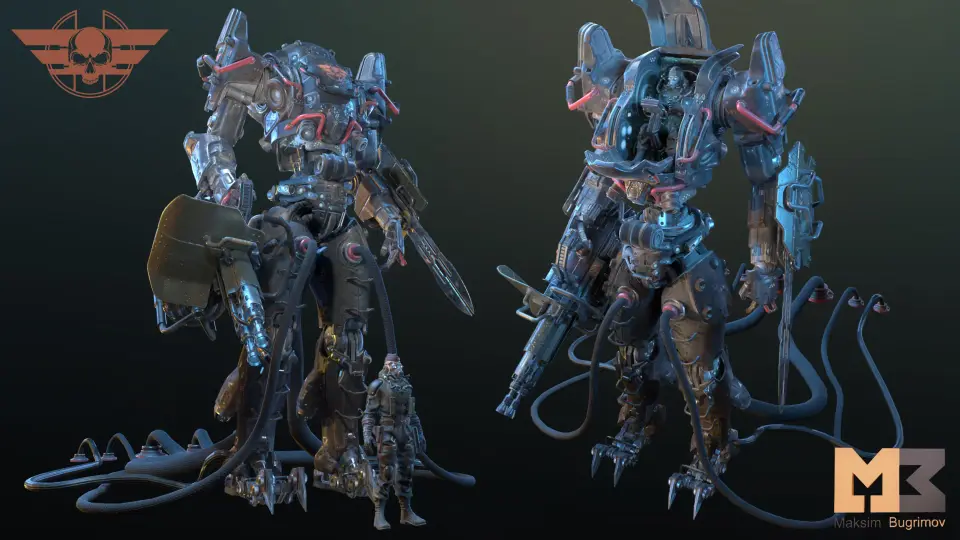
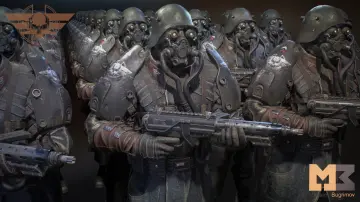
Dense canopy environments and derelict outpost interiors impose distinct demands on character art. A robotic frame placed deep within a rainforest or overgrown woodland needs surface weathering that reflects humidity, age, and exposure, rather than pristine showroom metals. At the same time, staging military interiors requires assets flexible enough to stand side by side in neat formations without causing rendering bottlenecks. The Dystopia Mech and Pilot package addresses both staging requirements directly, coupling an articulated mechanical character with a dedicated pilot figure, two functional weapons, and a heavy layer of surface rust tailored for wild or abandoned terrain.
Staging the Dystopia Mech Across Forest and Hangar Environments
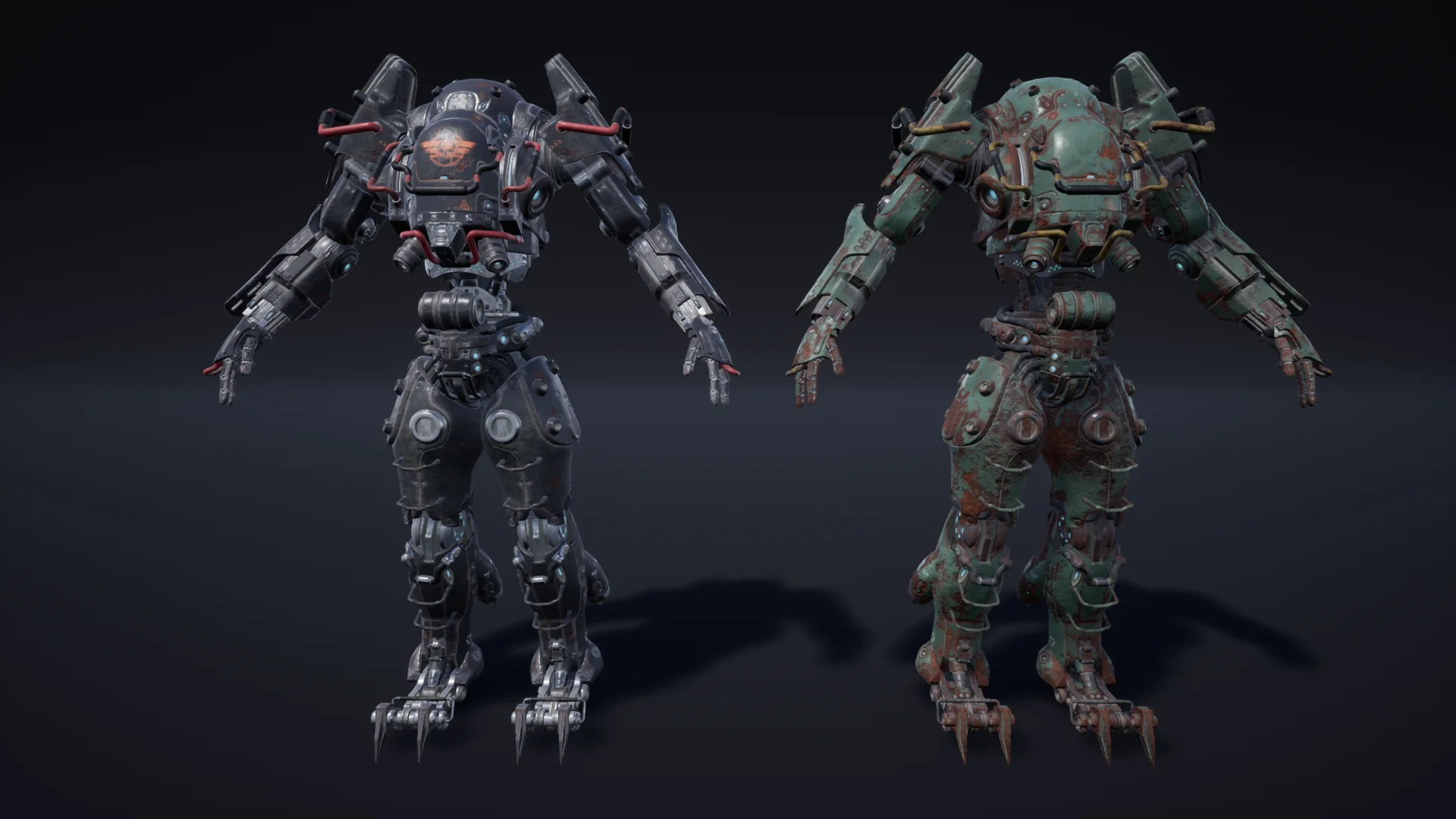
Placing mechanical units in organic biomes often creates visual friction when surfaces look artificially uniform or polished. The primary mech in this set incorporates weathered, oxidized surface texturing specifically matched to humid, untamed backdrops like jungles and deep forests. Rust patterns across the exterior plating suggest extended deployment, long periods of abandonment, or minimal maintenance in field conditions. When surrounded by tall grasses, mud paths, or dense canopy shadows, these corrosion details allow the machine to blend naturally into the wilderness rather than looking like an ungrounded prop dropped into the scene.
Beyond isolated wilderness encounters, the asset supports organized interior setups. You can construct an enclosed staging bay or repair room and line up multiple mech frames along maintenance gantries. Because the geometry uses a lowpoly foundation, populating an interior scene with several identical or slightly altered units remains lightweight. The contrast between natural overgrowth and organized industrial interiors gives level designers freedom to transition from an active mechanized garrison into forgotten ruins reclaimed by vegetation without needing a separate set of vehicle meshes.
Arming the Pilot and Configuring Machine Scale
The relationship between an operator and their mechanized unit establishes the scale and narrative stakes of any combat encounter. Supplying both the full-scale mech and an independent pilot character allows developers to design gameplay loops that transition between mounted vehicle combat and foot traversal. The pilot model functions as an autonomous entity rather than an embedded cockpit texture, making it possible to stage scenarios where the operator dismounts, conducts field repairs, secures perimeter zones, or navigates narrow spaces where the main robot cannot fit.
Two distinct weapons complete the combat package. These armaments equip either the machine or its operator to fulfill specific battlefield roles across role-playing game systems or tactical action titles. Equipping a mech with heavy offensive gear establishes an immediate visual silhouette for ranged suppression, while secondary configurations suit defensive or rapid-strike playstyles. The modular structure of the models makes handling weapon attachments straightforward, giving designers the option to swap or alter loadouts based on player progression, enemy tiers, or mission parameters.
Animation Blueprint Integration and Epic Skeleton Movement
Locomotion defines the weight and visual impact of any bipedal or multi-jointed robot. The package includes Epic animations and is tested directly against the Epic Skeleton within Unreal Engine 5, ensuring reliable retargeting, bone alignment, and standard mannequin integration. The character framework includes dedicated Blueprint and Animation Blueprint setups, eliminating the need to build state machines, transition logic, or basic locomotion graphs entirely from scratch.
A notable technical dimension of the set is compatibility with 56 animations suited to creatures. This compatibility expands the mech's behavior beyond standard robotic walks and rigid industrial turns. Heavy mechanical frames often share joint limits, center-of-mass shifts, and ground-slam impacts with large quadrupedal or hulking biological beasts. Tapping into creature motion libraries allows the unit to perform aggressive stomps, hunched predatory stalks, wide turning arcs, and dynamic melee swings that give the machine an imposing, monstrous presence on the battlefield.
Underlying scripts tie the animation controllers and gameplay logic together. Whether configured as an AI-driven boss encounter, a companion follower, or a playable hero unit, the Blueprint architecture handles movement inputs and stance changes cleanly within modern Unreal Engine project pipelines.
Modular Lowpoly Construction and PBR Surface Wear
Balancing visual complexity against runtime efficiency is critical for projects featuring dynamic lighting, large environments, or numerous simultaneous combatants. The assets utilize a lowpoly construction pipeline backed by Physically Based Rendering (PBR) texture maps. PBR workflows ensure that the metal chassis, corroded plates, and structural components react accurately under changing skyboxes, artificial spotlights, or sun shafts filtering through dense tree branches.
Highlights reflect crisply off unblemished metallic edges, while matte roughness definitions mute light bouncing off oxidized rust patches and weathered seams. This material behavior is vital for dark forest clearings or foggy jungle clearings where indirect lighting dominates. The modular layout of the character models also facilitates part swaps, making it simpler to hide specific armor plates, adjust damaged sections, or test varied equipment arrangements across different enemy variants in an RPG campaign.
Target Projects and Production Fits for Mech Deployments
Independent developers building science fiction, post-apocalyptic, or grim fantasy RPGs gain an integrated pairing of operator and war machine that avoids stylistic mismatches. The inclusion of core Blueprint logic, animation test assets, and dedicated weapons provides a rapid foundation for prototyping combat encounters, hangar dioramas, or wilderness patrol sequences.
Teams focusing on atmospheric exploration titles benefit from the pre-weathered aesthetic, which fits straight into forgotten ruins, overgrown military exclusion zones, and remote research facilities. With the pilot and machine ready to take full advantage of creature-style motion patterns and Epic Skeleton pipelines, the package serves as a ready-to-deploy solution for expressive mechanized combat.
 Characters
 Characters
 Characters
 Characters