"1a0e4ac4dc71d030"{"id":"1001249","slug":"moore-s-rpg-template","title":"Moore's RPG Template","category":"RPG","engine":"5.4+","assetVersion":"","engineVersion":"Engine Version: 5.4+","tag":"RPG","accent":"blue","visual":"mech","summary":"Moore's RPG Template provides a single-player medieval high fantasy framework featuring MetaHuman integration, combat systems, and modular blueprint architectur","platform":"Unreal Engine","publishedAt":"2026-09-23T15:30:22.716Z","updatedAt":"2026-09-23T15:30:22.716Z","sourceNotes":[],"fileContents":[],"compatibility":["Unreal Engine","Engine Version: 5.4+"],"featuredImage":{"alt":"Moore's RPG Template","src":"/wp-content/uploads/published/2026/09/9a5d27a50db4-fa069f86-c509-4b85-b864-288f8a032627-2721a81ac6.webp"},"hasDownloadLink":true,"downloads":0,"terms":[{"taxonomy":"category","slug":"rpg","name":"RPG"}],"galleryImages":[{"src":"/wp-content/uploads/published/2026/09/15b84ee7133e-2bd0d0d7-80f6-42c6-b06b-e4aacdbbbd8c-4894464cdc.webp","alt":"Moore's RPG Template"},{"src":"/wp-content/uploads/published/2026/09/c18f959207bc-e68b15e5-a76b-418b-9997-33a9358b0e67-00971208fd.webp","alt":"Moore's RPG Template"},{"src":"/wp-content/uploads/published/2026/09/6ccebcab2d85-9af679cf-ce09-4337-a3f0-80ea8ba7edce-12ec8e7d72.webp","alt":"Moore's RPG Template"},{"src":"/wp-content/uploads/published/2026/09/6b53c21d0541-61053874-9c53-4966-b624-6e47d8614b6a-ba01dc0568.webp","alt":"Moore's RPG Template"},{"src":"/wp-content/uploads/published/2026/09/3de587b42673-1d016b73-f398-404b-a447-6434173a3f23-e33fc6087d.webp","alt":"Moore's RPG Template"},{"src":"/wp-content/uploads/published/2026/09/6dfa3b4bb456-fa71f2e4-6745-4b71-ad4c-25ac9a9d9fda-ef08399bdd.webp","alt":"Moore's RPG Template"},{"src":"/wp-content/uploads/published/2026/09/3ce021a26286-601962aa-baa3-4229-955f-47e8d6f1406a-0ae997b82e.webp","alt":"Moore's RPG Template"},{"src":"/wp-content/uploads/published/2026/09/05252787105d-e0e30fd2-f36f-4bcd-a789-db0297790691-11f9e77b3d.webp","alt":"Moore's RPG Template"},{"src":"/wp-content/uploads/published/2026/09/733bacd22d96-b46395d7-113e-4b24-bd90-33a6219039b9-d38b00dbfd.webp","alt":"Moore's RPG Template"},{"src":"/wp-content/uploads/published/2026/09/7f221030f5f4-bf2cdac5-1cf4-4b0b-9a51-09611b5eea5c-752a54b07d.webp","alt":"Moore's RPG Template"}],"accessPanel":{"kind":"resource","title":"Download this resource","eyebrow":"Free Download","message":"Log in or create a free account to start your download.","fileName":"Content.7z","safetyNote":"Resources are manually reviewed before listing to improve quality and reduce obvious risks.","actionLabel":"Download Free","resourceType":"Resource archive"},"contentHtml":"\u003ch2\u003eCore Framework for Medieval High Fantasy RPGs\u003c/h2\u003e\n\u003cp\u003eMoore's RPG Template, designated as MRPGT version 2.15 from Moore Game Dev, is structured as a complete project serving as a first- and third-person, single-player high fantasy core framework. The kit supplies indie developers and development teams with foundational systems aimed at establishing single-player role-playing games similar in functionality and gameplay to Skyrim. By organizing user interfaces, gameplay blueprints, animated props, sample characters, and environmental elements into a single foundation, it removes the necessity of assembling fundamental RPG logic from scratch.\u003c/p\u003e\n\u003cp\u003eIncluded directly within the framework are environmental starting points, specifically a sample landscape along with Medieval Buildings Volume 1. These visual foundations allow immediate prototyping of towns, wilderness areas, and points of interest. Creators can use the provided assets as the groundwork for a medieval high fantasy world, substituting or expanding graphics, audio, animation assets, and blueprint code to suit their own project specifications, or utilizing the included logic as a practical reference for custom system engineering.\u003c/p\u003e \u003ch2\u003eMetaHuman Characters, Rigging, and Mesh Standards\u003c/h2\u003e\n\u003cp\u003eVersion 2.15 introduces direct support for MetaHuman player characters and non-player characters. Skeletal meshes for humanoid models are configured to support both the MetaHuman skeleton and the standard UE5 skeleton, allowing developers to adapt external animations and character meshes across both pipelines without breaking underlying socket logic or deformation setups.\u003c/p\u003e\n\u003cp\u003eThe character configuration allows players to choose their character's sex at the start of the game, offering both male and female character paths. Outfitting options span multiple social tiers, including two types of civilian clothing, chainmail armour, and plate armour, alongside sample male and female knight characters. These outfits are complemented by MetaHuman-tailored clothing, armours, and dedicated animation assets. For narrative immersion, the dialogue presentation utilizes custom face animations for NPC speech, synchronizing facial movement to spoken interactions in the scene.\u003c/p\u003e \u003ch2\u003eCombat Mechanics, Weapon Types, and Non-Humanoid Encounters\u003c/h2\u003e\n\u003cp\u003eThe combat architecture governs hostile engagements through dedicated player mechanics and responsive NPC Combat AI. The system supports multiple weapon types, each wired with combo attack routines to drive rhythmic, multi-stage melee action. Defensive and offensive actions are governed by real-time tracking bars for health, stamina, and power, forcing tactical resource management during continuous skirmishes.\u003c/p\u003e\n\u003cp\u003eCombat is not restricted solely to humanoid opponents. A dedicated non-humanoid combat system facilitates encounters against beasts and fantasy monsters with customized hit logic and behavior. Complementing direct martial force, the template provides a stealth system for evasive navigation or surprise attacks, alongside a full spell management and spell casting system. Players can configure spells and weapons rapidly mid-fight using an integrated favourite system, maintaining fluid control over active loadouts.\u003c/p\u003e \u003ch2\u003eWorld Interaction, Mounts, and Exploration Systems\u003c/h2\u003e\n\u003cp\u003eNavigating the environment is facilitated by an integrated orientation suite that includes a world map, minimap, and compass system. To cover large landscapes, players can utilize an interactive mount system, activate fast travel nodes, or step into a teleporter system configured for immediate transit across disparate map sectors.\u003c/p\u003e\n\u003cp\u003eExploration extends into nuanced physical interactions with the environment. Characters can sit on chairs and benches, open and inspect written lore via a book reading system, or bypass locked containers and doorways through an interactive lockpicking system. Wild environments feature an ingredient harvesting system for gathering raw alchemy components, while an underlying survival system enforces ongoing maintenance of character vitals. Auditory pacing is handled by an ambient music system that reacts to world states, while open-world performance is safeguarded by an automated NPC spawn and despawn system that regulates actor density to improve overall frame rates.\u003c/p\u003e \u003ch2\u003eSkill Levelling, Crafting, and Character Management\u003c/h2\u003e\n\u003cp\u003eProgression loops mirror deep role-playing mechanics through tightly connected character and item management systems. As players complete tasks or engage in combat, experience feeds into an active skill levelling system, level up system, and perk system, allowing specialized attribute upgrades and talent specialization. Quests guide narrative momentum through a structured quest system, supported by an interactive dialogue system and a follower system that lets allied companions accompany the player on expeditions.\u003c/p\u003e\n\u003cp\u003eEconomic and utility loops are driven by randomized loot tables, a trading system for commerce with vendors, a comprehensive crafting system, and an enchanting system to augment gear with magical properties. Gathered ingredients, arms, armours, and spellbooks are sorted within the inventory interface, allowing players to manage equipment weights, modify items, and equip distinct weapon setups without UI latency or desynchronization.\u003c/p\u003e \u003ch2\u003eBlueprint Architecture, Event Dispatchers, and Source Assets\u003c/h2\u003e\n\u003cp\u003eUnder the hood, the blueprint architecture within Moore's RPG Template is built cleanly with no circular dependencies, preventing compilation bottlenecks and reference bloat. Interfaces and event dispatchers are used systematically across actor classes to maintain modular communication, directly improving runtime FPS and ensuring that modular subsystems can be modified or disconnected without breaking surrounding gameplay code.\u003c/p\u003e\n\u003cp\u003eInput mappings accommodate standard mouse and keyboard controls as well as full gamepad controls, with an Xbox controller recommended for native play. The setup also includes an operational main menu and options system alongside an active save game system that preserves world states and player progress. 3D artists looking to modify underlying meshes, textures, or skinning receive source Blender, Maya, and Substance Painter files, providing direct DCC pipeline access alongside the included sample equipment, spells, perks, and animation sets.\u003c/p\u003e\n\n\u003ch2\u003eExplore Similar Assets\u003c/h2\u003e\n\u003cul\u003e\n\u003cli\u003e\u003ca href=\"https://3dcghub.com/modern-rpg-bundle-v7-0-1/\" title=\"Modern RPG BUNDLE v7.0.1\"\u003eModern RPG BUNDLE v7.0.1\u003c/a\u003e\u003c/li\u003e\n\u003cli\u003e\u003ca href=\"https://3dcghub.com/huge-arpg/\" title=\"Huge ARPG\"\u003eHuge ARPG\u003c/a\u003e\u003c/li\u003e\n\u003cli\u003e\u003ca href=\"https://3dcghub.com/advanced-multiplayer-survival-templatev2/\" title=\"Advanced Multiplayer Survival TemplateV2\"\u003eAdvanced Multiplayer Survival TemplateV2\u003c/a\u003e\u003c/li\u003e\n\u003cli\u003e\u003ca href=\"https://3dcghub.com/easy-topdown-template-v2-1-survival-action-shooter-top-down-rpg/\" title=\"Easy TopDown Template V2.1 | Survival Action Shooter Top Down RPG\"\u003eEasy TopDown Template V2.1 | Survival Action Shooter Top Down RPG\u003c/a\u003e\u003c/li\u003e\n\u003cli\u003e\u003ca href=\"https://3dcghub.com/top-down-rpg-template/\" title=\"Top Down RPG Template\"\u003eTop Down RPG Template\u003c/a\u003e\u003c/li\u003e\n\u003c/ul\u003e","contentTextLength":6496,"navigation":{"current":9,"total":3200,"previous":{"id":"1001250","slug":"open-world-rpg-toolkit","title":"Open World RPG Toolkit","category":"RPG","platform":"Unreal Engine","updatedAt":"2026-09-23T15:32:52.651Z"},"next":{"id":"1001248","slug":"adventurer-s-inventory-kit","title":"Adventurer's Inventory Kit","category":"RPG","platform":"Unreal Engine","updatedAt":"2026-09-23T15:27:24.258Z"}},"relatedResources":[{"id":"1000249","slug":"modern-rpg-bundle-v7-0-1","title":"Modern RPG BUNDLE v7.0.1","category":"RPG","engine":"5.4+","assetVersion":"Asset Version: 6.1.1","engineVersion":"Engine Version: 5.4+","tag":"RPG","accent":"blue","visual":"mech","summary":"A comprehensive RPG framework featuring inventory systems, weapon modifications, complex vehicle mechanics, multiplayer menus, and MetaHuman compatibility.","platform":"Unreal Engine","publishedAt":"2026-06-30T20:57:03.116Z","updatedAt":"2026-06-30T20:57:03.116Z","sourceNotes":[],"fileContents":[],"compatibility":["Unreal Engine","Asset Version: 6.1.1","Engine Version: 5.4+"],"featuredImage":{"alt":"Modern RPG BUNDLE v7.0.1","src":"/wp-content/uploads/published/2026/06/8a8479d4c0b6-c35035a1-419b-41de-bdcb-0dbd98054c6d-1060ae143b.webp"},"hasDownloadLink":true,"downloads":5},{"id":"28288","slug":"huge-arpg","title":"Huge ARPG","category":"RPG","engine":"5.2+","assetVersion":"Engine version: 5.2+","engineVersion":"","tag":"RPG","accent":"blue","visual":"character","summary":"Huge ARPG packages a broad set of action RPG systems into one integrated game kit. It covers play modes, menus, inventory, quests, mounts, combat support, and progression-related systems that help shape a full gameplay loop.","platform":"Unreal Engine","publishedAt":"2026-05-06T16:44:53.000Z","updatedAt":"2026-05-06T16:44:54.000Z","sourceNotes":[],"fileContents":[],"compatibility":["Unreal Engine","Engine version: 5.2+"],"featuredImage":{"alt":"Huge ARPG","src":"https://3dcghub.com/wp-content/uploads/2026/05/8b181149ff89_43501a1c-97dd-48e0-8030-559f6590cba8.webp"},"hasDownloadLink":true,"downloads":0},{"id":"1001031","slug":"easy-topdown-template-v2-1-survival-action-shooter-top-down-rpg","title":"Easy TopDown Template V2.1 | Survival Action Shooter Top Down RPG","category":"RPG","engine":"5.6+","assetVersion":"","engineVersion":"Engine Version: 5.6+","tag":"RPG","accent":"blue","visual":"mech","summary":"Production-ready top-down survival RPG template with replicated multiplayer, combat, inventory, building, AI, narrative systems, 280+ docs, and a V3 roadmap.","platform":"Unreal Engine","publishedAt":"2026-08-23T12:26:25.601Z","updatedAt":"2026-08-23T12:26:25.601Z","sourceNotes":[],"fileContents":[],"compatibility":["Unreal Engine","Engine Version: 5.6+"],"featuredImage":{"alt":"Easy TopDown Template V2.1 | Survival Action Shooter Top Down RPG","src":"/wp-content/uploads/published/2026/08/8044fdff0e95-28bfa536-f855-4e68-910b-00eda2dc37ec-911ae442b6.webp"},"hasDownloadLink":true,"downloads":5}]}
RPG
Moore's RPG Template
Moore's RPG Template provides a single-player medieval high fantasy framework featuring MetaHuman integration, combat systems, and modular blueprint architectur
Moore's RPG Template, designated as MRPGT version 2.15 from Moore Game Dev, is structured as a complete project serving as a first- and third-person, single-player high fantasy core framework. The kit supplies indie developers and development teams with foundational systems aimed at establishing single-player role-playing games similar in functionality and gameplay to Skyrim. By organizing user interfaces, gameplay blueprints, animated props, sample characters, and environmental elements into a single foundation, it removes the necessity of assembling fundamental RPG logic from scratch.
Included directly within the framework are environmental starting points, specifically a sample landscape along with Medieval Buildings Volume 1. These visual foundations allow immediate prototyping of towns, wilderness areas, and points of interest. Creators can use the provided assets as the groundwork for a medieval high fantasy world, substituting or expanding graphics, audio, animation assets, and blueprint code to suit their own project specifications, or utilizing the included logic as a practical reference for custom system engineering.
MetaHuman Characters, Rigging, and Mesh Standards
Version 2.15 introduces direct support for MetaHuman player characters and non-player characters. Skeletal meshes for humanoid models are configured to support both the MetaHuman skeleton and the standard UE5 skeleton, allowing developers to adapt external animations and character meshes across both pipelines without breaking underlying socket logic or deformation setups.
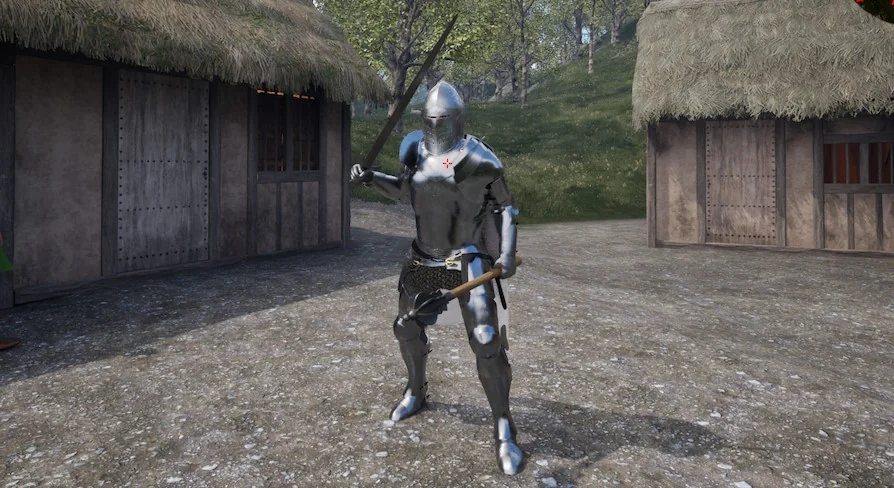
The character configuration allows players to choose their character's sex at the start of the game, offering both male and female character paths. Outfitting options span multiple social tiers, including two types of civilian clothing, chainmail armour, and plate armour, alongside sample male and female knight characters. These outfits are complemented by MetaHuman-tailored clothing, armours, and dedicated animation assets. For narrative immersion, the dialogue presentation utilizes custom face animations for NPC speech, synchronizing facial movement to spoken interactions in the scene.
Combat Mechanics, Weapon Types, and Non-Humanoid Encounters
The combat architecture governs hostile engagements through dedicated player mechanics and responsive NPC Combat AI. The system supports multiple weapon types, each wired with combo attack routines to drive rhythmic, multi-stage melee action. Defensive and offensive actions are governed by real-time tracking bars for health, stamina, and power, forcing tactical resource management during continuous skirmishes.
Combat is not restricted solely to humanoid opponents. A dedicated non-humanoid combat system facilitates encounters against beasts and fantasy monsters with customized hit logic and behavior. Complementing direct martial force, the template provides a stealth system for evasive navigation or surprise attacks, alongside a full spell management and spell casting system. Players can configure spells and weapons rapidly mid-fight using an integrated favourite system, maintaining fluid control over active loadouts.
World Interaction, Mounts, and Exploration Systems
Navigating the environment is facilitated by an integrated orientation suite that includes a world map, minimap, and compass system. To cover large landscapes, players can utilize an interactive mount system, activate fast travel nodes, or step into a teleporter system configured for immediate transit across disparate map sectors.
Exploration extends into nuanced physical interactions with the environment. Characters can sit on chairs and benches, open and inspect written lore via a book reading system, or bypass locked containers and doorways through an interactive lockpicking system. Wild environments feature an ingredient harvesting system for gathering raw alchemy components, while an underlying survival system enforces ongoing maintenance of character vitals. Auditory pacing is handled by an ambient music system that reacts to world states, while open-world performance is safeguarded by an automated NPC spawn and despawn system that regulates actor density to improve overall frame rates.
Skill Levelling, Crafting, and Character Management
Progression loops mirror deep role-playing mechanics through tightly connected character and item management systems. As players complete tasks or engage in combat, experience feeds into an active skill levelling system, level up system, and perk system, allowing specialized attribute upgrades and talent specialization. Quests guide narrative momentum through a structured quest system, supported by an interactive dialogue system and a follower system that lets allied companions accompany the player on expeditions.
Economic and utility loops are driven by randomized loot tables, a trading system for commerce with vendors, a comprehensive crafting system, and an enchanting system to augment gear with magical properties. Gathered ingredients, arms, armours, and spellbooks are sorted within the inventory interface, allowing players to manage equipment weights, modify items, and equip distinct weapon setups without UI latency or desynchronization.
Blueprint Architecture, Event Dispatchers, and Source Assets
Under the hood, the blueprint architecture within Moore's RPG Template is built cleanly with no circular dependencies, preventing compilation bottlenecks and reference bloat. Interfaces and event dispatchers are used systematically across actor classes to maintain modular communication, directly improving runtime FPS and ensuring that modular subsystems can be modified or disconnected without breaking surrounding gameplay code.
Input mappings accommodate standard mouse and keyboard controls as well as full gamepad controls, with an Xbox controller recommended for native play. The setup also includes an operational main menu and options system alongside an active save game system that preserves world states and player progress. 3D artists looking to modify underlying meshes, textures, or skinning receive source Blender, Maya, and Substance Painter files, providing direct DCC pipeline access alongside the included sample equipment, spells, perks, and animation sets.
 RPG
RPG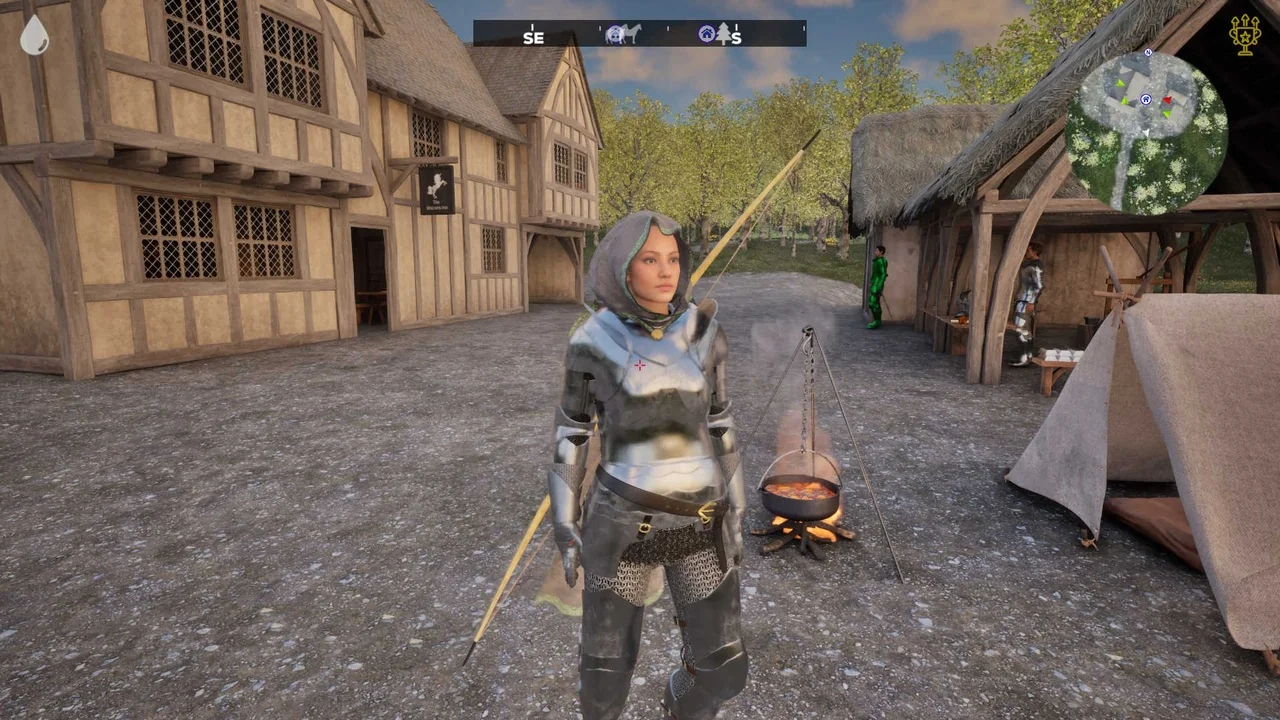
 RPG
RPG RPG
RPG RPG
RPG