"40f1e7fa2e041c1a"{"id":"1001584","slug":"survival-rpg-engine","title":"Survival RPG Engine","category":"RPG","engine":"5.5+","assetVersion":"","engineVersion":"Engine Version: 5.5+","tag":"RPG","accent":"blue","visual":"mech","summary":"Explore the mechanics of Survival RPG Engine, covering multiplayer networking, PCG world generation, building systems, and data-driven character progression.","platform":"Unreal Engine","publishedAt":"2026-10-10T09:08:31.079Z","updatedAt":"2026-10-10T09:08:31.079Z","sourceNotes":[],"fileContents":[],"compatibility":["Unreal Engine","Engine Version: 5.5+"],"featuredImage":{"alt":"Survival RPG Engine","src":"/wp-content/uploads/published/2026/10/5090c18eb0af-217516e7-a06d-4940-9399-2fc1ef6d175f-16d4eef1b1.webp"},"hasDownloadLink":true,"downloads":0,"terms":[{"taxonomy":"category","slug":"rpg","name":"RPG"}],"galleryImages":[{"src":"/wp-content/uploads/published/2026/10/44dbae6e719a-1b1389d3-eea1-4598-a53c-45ba2f917941-30699dee88.webp","alt":"Survival RPG Engine"},{"src":"/wp-content/uploads/published/2026/10/b311c60f1bc8-7fd04eb8-c3ee-4d88-b5f2-ce36e1e2bae8-369e4830ea.webp","alt":"Survival RPG Engine"},{"src":"/wp-content/uploads/published/2026/10/10af4ad0599f-9bc0d4c2-acbd-498f-bc1f-fb4266878339-6b52839b0f.webp","alt":"Survival RPG Engine"},{"src":"/wp-content/uploads/published/2026/10/4f26cb4ac23f-f4a0f5a0-ef27-4190-8c00-4ba2370354c3-ef92440293.webp","alt":"Survival RPG Engine"},{"src":"/wp-content/uploads/published/2026/10/7dd0fc1f01c0-07489ac8-7904-4601-bac2-7b93dc03cb40-74987478ed.webp","alt":"Survival RPG Engine"},{"src":"/wp-content/uploads/published/2026/10/53ce92cf07e9-ea729bf1-23cb-45e8-a665-d440228804ae-7e4eaf29fb.webp","alt":"Survival RPG Engine"},{"src":"/wp-content/uploads/published/2026/10/4e40dd091f41-a6e4928a-f63e-4b4e-a93d-0949c802b062-92ea5dbe10.webp","alt":"Survival RPG Engine"},{"src":"/wp-content/uploads/published/2026/10/53d8ddc7688e-74512f3c-8f5d-455b-968a-aad722a45ed3-67908317a9.webp","alt":"Survival RPG Engine"},{"src":"/wp-content/uploads/published/2026/10/8750beab6813-625598f1-8770-4b34-8da9-a8de080eb893-be23c24bac.webp","alt":"Survival RPG Engine"},{"src":"/wp-content/uploads/published/2026/10/2b51ee692d13-5759ce75-2f29-41ed-8c81-9744897dd4c6-61f175bf4e.webp","alt":"Survival RPG Engine"}],"accessPanel":{"kind":"resource","title":"Download this resource","eyebrow":"Free Download","message":"Log in or create a free account to start your download.","fileName":"RPG Engine V7.7z","safetyNote":"Resources are manually reviewed before listing to improve quality and reduce obvious risks.","actionLabel":"Download Free","resourceType":"Resource archive"},"contentHtml":"\u003ch2\u003eCombat Mechanics and Character Progression in Survival RPG Engine\u003c/h2\u003e\u003cp\u003ePlayers step directly into an active gameplay loop where physical interaction and specialized character roles govern survival. The combat system uses dedicated combat targeting, letting players alternate between close-quarters encounters and dynamic ranged engagements powered by projectile-based weapons. Weapon handling adapts dynamically to equipment types; two-handed weapons switch their operational logic automatically, while off-hand slots accommodate defensive shields, light-bearing torches, or compatible dual-wield secondary armaments. When traversing terrain, movement shifts smoothly into a swimming system complete with custom animations, dedicated audio cues, and integrated water visuals tied directly to native ocean, lake, and river setups.\u003c/p\u003e\u003cp\u003eProgression relies on layered character definitions. Designers can configure distinct player classes with customized starting attributes, exclusive abilities, starter kits, and strict equipment restrictions. Beneath base class boundaries lies an advanced attributes system that handles both permanent growth and time-based status effects. A dedicated talent system allows for tiered trees utilizing custom progression currencies, functioning alongside a secondary skill tree, reputation mechanics, and a data-driven trait system. Enhanced Input bindings, complete with native gamepad support and a look-at gaze tracking system, handle every combat swing, blocking action, and targeted interaction across the interface.\u003c/p\u003e\u003ch2\u003eBuilding System, Power Zones, and Procedural World Layouts\u003c/h2\u003e\u003cp\u003eTerritory management and survival shelters rely on a networked building system governed by a dedicated building manager. Structural pieces evaluate integrity through an internal support framework, drawing costs directly from shared resource pools so groups can construct communal strongholds. Electrification expands this base-building layer through an integrated power system. Players establish distinct power zones, routing energy to machinery and functional survival stations within protected perimeter limits.\u003c/p\u003e\u003cp\u003eLarge landscapes make use of specialized performance tools to handle vast amounts of environmental content without tanking frame rates:\u003c/p\u003e\u003cul\u003e\u003cli\u003eProcedural Content Generation (PCG) graphs drive automated, distributed open-world object spawning across varied topography.\u003c/li\u003e\u003cli\u003eInteractable Instance Static Meshes replace standard individual actors, ensuring that gatherable vegetation, mineral nodes, and environmental items remain fully interactable without multiplying draw calls.\u003c/li\u003e\u003cli\u003eAn open-world AI spawning system regulates wildlife, enemies, and neutral entities dynamically based on proximity and performance budgets.\u003c/li\u003e\u003cli\u003eAn expandable room generator enables developers to generate isolated dungeon layouts or overview levels without assembling interior spaces by hand.\u003c/li\u003e\u003c/ul\u003e\u003ch2\u003eData-Driven Quests, Inventory Queues, and Multiplayer Infrastructure\u003c/h2\u003e\u003cp\u003eSurvival RPG Engine standardizes progression and item tracking through fully decoupled data architectures. The item catalog operates completely data-driven, feeding into an inventory structure that features timed crafting queues, expandable storage containers, and direct equipment hotbars. Durability loss is addressed through an item repair mechanic, enabling players to restore degrading gear directly within their bags using specialized repair kits. Social systems run in tandem with survival needs, giving access to in-game guilds, real-time multiplayer chat, and customizable HUD menus.\u003c/p\u003e\u003cp\u003eNon-player characters and narrative flows interface through an advanced dialogue, vendor, and quest structure. Quests pull requirements, objectives, and dialog trees from separate data tables, enabling teams to alter NPC interactions, market prices, and dynamic errands without rewriting core logic. Navigation across these encounters is guided by interactive outline highlights, contextual interaction timers, and an orientation suite featuring both localized mini-maps and full global world maps.\u003c/p\u003e\u003cp\u003eNetwork operations run across multiple networking architectures, including local LAN setups, peer-to-peer configurations, Steam sessions, and dedicated server hosts. State persistence relies on a multiplayer save and load architecture where player profiles, specific level layouts, and global settings write to independent data files. Game version management is sustained through a unique GUID system, allowing developers to patch ongoing builds and update live projects without wiping active user states.\u003c/p\u003e\u003ch2\u003ePlugin Requirements, Modular Saves, and Example Assets\u003c/h2\u003e\u003cp\u003eDeploying the framework into a project requires activating specific core plugins inside the editor. These dependencies include Epic Games PCG, Landmass, and Blueprint File Utilities. For studios planning broader online matchmaking or enhanced networking layers, the Advanced Sessions plugin can be enabled alongside the default connection pipeline. Data persistence is engineered to remain compatible with Modular Save System workflows, reinforcing the separation between world states and player inventory files.\u003c/p\u003e\u003cp\u003eThe package ships completely hand-created without artificial intelligence assets, utilizing external CC0 models from KayKit to provide immediate visual context for testing dungeons, props, and gear. Dynamic audio cues rely on royalty-free sound assets sourced from Soundraw, handling interface feedback and surface-responsive footstep audio. Menus—including the title screen, server list, settings configuration, and load profiles—are rendered with the open-source Xolonium typeface, supplying a functional testing environment right out of the box.\u003c/p\u003e\n\n\u003ch2\u003eExplore Similar Assets\u003c/h2\u003e\n\u003cul\u003e\n\u003cli\u003e\u003ca href=\"https://3dcghub.com/advanced-multiplayer-survival-templatev2/\" title=\"Advanced Multiplayer Survival TemplateV2\"\u003eAdvanced Multiplayer Survival TemplateV2\u003c/a\u003e\u003c/li\u003e\n\u003cli\u003e\u003ca href=\"https://3dcghub.com/easy-survival-rpg-v5/\" title=\"Easy Survival RPG V5\"\u003eEasy Survival RPG V5\u003c/a\u003e\u003c/li\u003e\n\u003cli\u003e\u003ca href=\"https://3dcghub.com/easy-topdown-template-v2-1-survival-action-shooter-top-down-rpg/\" title=\"Easy TopDown Template V2.1 | Survival Action Shooter Top Down RPG\"\u003eEasy TopDown Template V2.1 | Survival Action Shooter Top Down RPG\u003c/a\u003e\u003c/li\u003e\n\u003cli\u003e\u003ca href=\"https://3dcghub.com/open-world-rpg-toolkit/\" title=\"Open World RPG Toolkit\"\u003eOpen World RPG Toolkit\u003c/a\u003e\u003c/li\u003e\n\u003cli\u003e\u003ca href=\"https://3dcghub.com/modern-rpg-bundle-v7-0-1/\" title=\"Modern RPG BUNDLE v7.0.1\"\u003eModern RPG BUNDLE v7.0.1\u003c/a\u003e\u003c/li\u003e\n\u003c/ul\u003e","contentTextLength":5853,"navigation":{"current":3,"total":3524,"previous":{"id":"1001585","slug":"butcher-s-alley-palmetro-future-city-nanite-lp","title":"Butcher's Alley Palmetro Future City (Nanite + LP)","category":"Streets \u0026 Construction","platform":"Unreal Engine","updatedAt":"2026-10-10T11:14:38.761Z"},"next":{"id":"1001583","slug":"open-world-animset","title":"Open World Animset","category":"Variety","platform":"Unreal Engine","updatedAt":"2026-10-10T08:55:24.492Z"}},"relatedResources":[{"id":"11798","slug":"advanced-multiplayer-survival-templatev2","title":"Advanced Multiplayer Survival TemplateV2","category":"RPG","engine":"5.5+","assetVersion":"Engine version: 5.5+","engineVersion":"Asset Version:V2","tag":"RPG","accent":"blue","visual":"character","summary":"Build a high-quality survival experience with the Advanced Multiplayer Survival TemplateV2. This comprehensive foundation includes essential systems like zombie AI, item crafting, and full multiplayer support.","platform":"Unreal Engine","publishedAt":"2026-03-05T19:00:24.000Z","updatedAt":"2026-04-19T15:48:07.000Z","sourceNotes":[],"fileContents":[],"compatibility":["Unreal Engine","Engine version: 5.5+","Asset Version: V2"],"featuredImage":{"alt":"Advanced Multiplayer Survival TemplateV2","src":"https://3dcghub.com/wp-content/uploads/2026/03/dbeacd86-ed41-4e46-bde4-64c9d1a5b350.webp"},"hasDownloadLink":true,"downloads":7},{"id":"11819","slug":"easy-survival-rpg-v5","title":"Easy Survival RPG V5","category":"RPG","engine":"5.1+,5.8+","assetVersion":"","engineVersion":"Engine Version: 5.1+,5.8+","tag":"RPG","accent":"blue","visual":"character","summary":"Easy Survival RPG V5 provides a battle-tested foundation for creating professional multiplayer games. This modular template includes everything from combat and crafting to advanced life simulation systems.","platform":"Unreal Engine","publishedAt":"2026-03-05T19:04:26.000Z","updatedAt":"2026-10-07T09:08:33.708Z","sourceNotes":[],"fileContents":[],"compatibility":["Unreal Engine","Engine Version: 5.1+,5.8+"],"featuredImage":{"alt":"Easy Survival RPG V5","src":"https://3dcghub.com/wp-content/uploads/2026/03/bcd7af22-1493-4aa2-8994-25e309eac033.webp"},"hasDownloadLink":true,"downloads":5},{"id":"1001031","slug":"easy-topdown-template-v2-1-survival-action-shooter-top-down-rpg","title":"Easy TopDown Template V2.1 | Survival Action Shooter Top Down RPG","category":"RPG","engine":"5.6+","assetVersion":"","engineVersion":"Engine Version: 5.6+","tag":"RPG","accent":"blue","visual":"mech","summary":"Production-ready top-down survival RPG template with replicated multiplayer, combat, inventory, building, AI, narrative systems, 280+ docs, and a V3 roadmap.","platform":"Unreal Engine","publishedAt":"2026-08-23T12:26:25.601Z","updatedAt":"2026-08-23T12:26:25.601Z","sourceNotes":[],"fileContents":[],"compatibility":["Unreal Engine","Engine Version: 5.6+"],"featuredImage":{"alt":"Easy TopDown Template V2.1 | Survival Action Shooter Top Down RPG","src":"/wp-content/uploads/published/2026/08/8044fdff0e95-28bfa536-f855-4e68-910b-00eda2dc37ec-911ae442b6.webp"},"hasDownloadLink":true,"downloads":8}]}
RPG
Survival RPG Engine
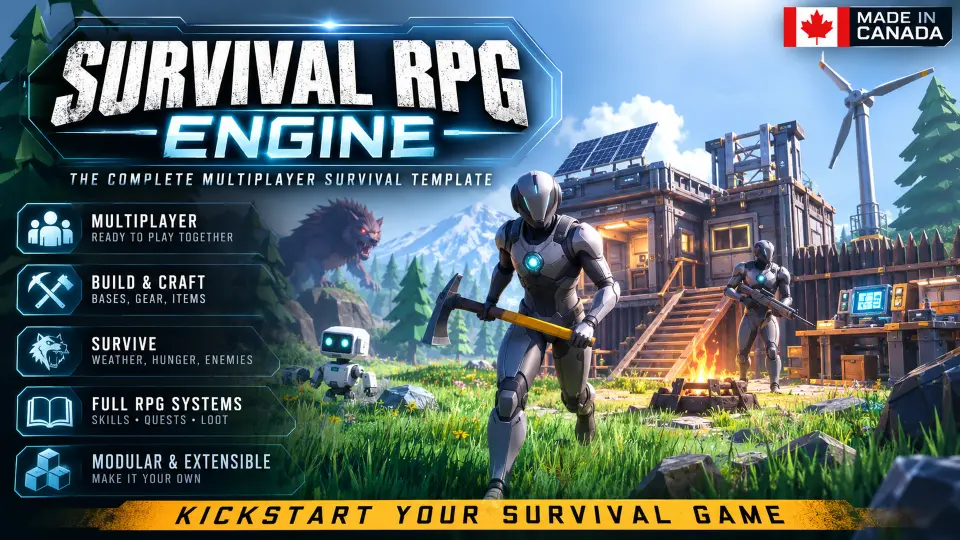
Explore the mechanics of Survival RPG Engine, covering multiplayer networking, PCG world generation, building systems, and data-driven character progression.
Category:Unreal Engine,RPGPlatform: Unreal EngineEngine Version: 5.5+Published: Oct 10, 2026
RPG
Resource overview
Combat Mechanics and Character Progression in Survival RPG Engine
Players step directly into an active gameplay loop where physical interaction and specialized character roles govern survival. The combat system uses dedicated combat targeting, letting players alternate between close-quarters encounters and dynamic ranged engagements powered by projectile-based weapons. Weapon handling adapts dynamically to equipment types; two-handed weapons switch their operational logic automatically, while off-hand slots accommodate defensive shields, light-bearing torches, or compatible dual-wield secondary armaments. When traversing terrain, movement shifts smoothly into a swimming system complete with custom animations, dedicated audio cues, and integrated water visuals tied directly to native ocean, lake, and river setups.
Progression relies on layered character definitions. Designers can configure distinct player classes with customized starting attributes, exclusive abilities, starter kits, and strict equipment restrictions. Beneath base class boundaries lies an advanced attributes system that handles both permanent growth and time-based status effects. A dedicated talent system allows for tiered trees utilizing custom progression currencies, functioning alongside a secondary skill tree, reputation mechanics, and a data-driven trait system. Enhanced Input bindings, complete with native gamepad support and a look-at gaze tracking system, handle every combat swing, blocking action, and targeted interaction across the interface.
Building System, Power Zones, and Procedural World Layouts
Territory management and survival shelters rely on a networked building system governed by a dedicated building manager. Structural pieces evaluate integrity through an internal support framework, drawing costs directly from shared resource pools so groups can construct communal strongholds. Electrification expands this base-building layer through an integrated power system. Players establish distinct power zones, routing energy to machinery and functional survival stations within protected perimeter limits.
Large landscapes make use of specialized performance tools to handle vast amounts of environmental content without tanking frame rates:
Interactable Instance Static Meshes replace standard individual actors, ensuring that gatherable vegetation, mineral nodes, and environmental items remain fully interactable without multiplying draw calls.
An open-world AI spawning system regulates wildlife, enemies, and neutral entities dynamically based on proximity and performance budgets.
An expandable room generator enables developers to generate isolated dungeon layouts or overview levels without assembling interior spaces by hand.
Data-Driven Quests, Inventory Queues, and Multiplayer Infrastructure
Survival RPG Engine standardizes progression and item tracking through fully decoupled data architectures. The item catalog operates completely data-driven, feeding into an inventory structure that features timed crafting queues, expandable storage containers, and direct equipment hotbars. Durability loss is addressed through an item repair mechanic, enabling players to restore degrading gear directly within their bags using specialized repair kits. Social systems run in tandem with survival needs, giving access to in-game guilds, real-time multiplayer chat, and customizable HUD menus.
Non-player characters and narrative flows interface through an advanced dialogue, vendor, and quest structure. Quests pull requirements, objectives, and dialog trees from separate data tables, enabling teams to alter NPC interactions, market prices, and dynamic errands without rewriting core logic. Navigation across these encounters is guided by interactive outline highlights, contextual interaction timers, and an orientation suite featuring both localized mini-maps and full global world maps.
Network operations run across multiple networking architectures, including local LAN setups, peer-to-peer configurations, Steam sessions, and dedicated server hosts. State persistence relies on a multiplayer save and load architecture where player profiles, specific level layouts, and global settings write to independent data files. Game version management is sustained through a unique GUID system, allowing developers to patch ongoing builds and update live projects without wiping active user states.
Plugin Requirements, Modular Saves, and Example Assets
Deploying the framework into a project requires activating specific core plugins inside the editor. These dependencies include Epic Games PCG, Landmass, and Blueprint File Utilities. For studios planning broader online matchmaking or enhanced networking layers, the Advanced Sessions plugin can be enabled alongside the default connection pipeline. Data persistence is engineered to remain compatible with Modular Save System workflows, reinforcing the separation between world states and player inventory files.
The package ships completely hand-created without artificial intelligence assets, utilizing external CC0 models from KayKit to provide immediate visual context for testing dungeons, props, and gear. Dynamic audio cues rely on royalty-free sound assets sourced from Soundraw, handling interface feedback and surface-responsive footstep audio. Menus—including the title screen, server list, settings configuration, and load profiles—are rendered with the open-source Xolonium typeface, supplying a functional testing environment right out of the box.
 RPG
RPG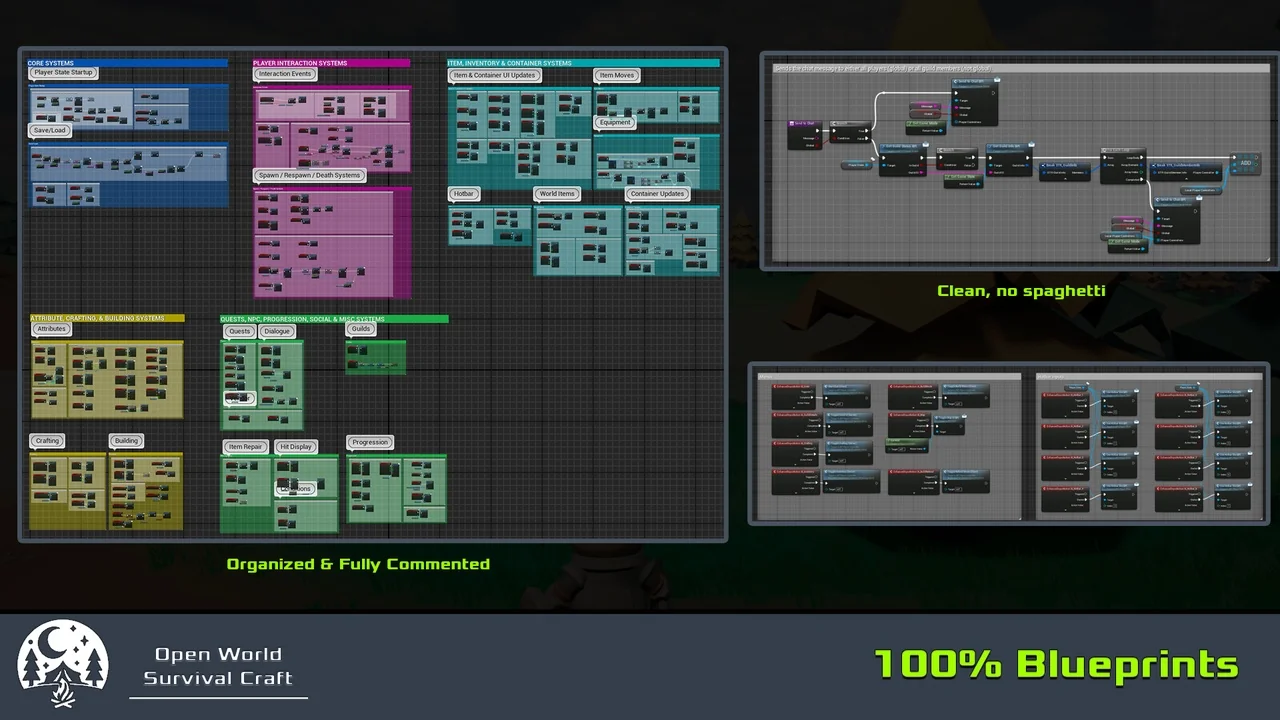
 RPG
RPG RPG
RPG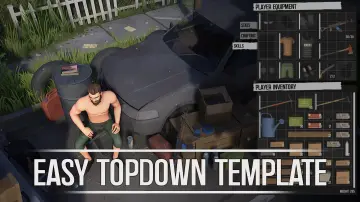 RPG
RPG