"1d4087a6a07e7b1d"{"id":"1001583","slug":"open-world-animset","title":"Open World Animset","category":"Variety","engine":"4.8+,5.0+","assetVersion":"","engineVersion":"Engine Version: 4.8+,5.0+","tag":"Variety","accent":"blue","visual":"mech","summary":"Over 500 motion capture animations for humanoid character movement, traversal, cover mechanics, firearm handling, and melee combat.","platform":"Unreal Engine","publishedAt":"2026-10-10T08:55:24.492Z","updatedAt":"2026-10-10T08:55:24.492Z","sourceNotes":[],"fileContents":[],"compatibility":["Unreal Engine","Engine Version: 4.8+,5.0+"],"featuredImage":{"alt":"Open World Animset","src":"/wp-content/uploads/published/2026/10/5316a1357041-5e3578f2-c647-450e-a63b-ea83d2aa1e89-94597b32fa.webp"},"hasDownloadLink":true,"downloads":0,"terms":[{"taxonomy":"category","slug":"variety-animations","name":"Variety"}],"galleryImages":[{"src":"/wp-content/uploads/published/2026/10/1102edb95636-ae42c890-2671-40ff-9b00-5b6c53b9b96b-ec74ec20b9.webp","alt":"Open World Animset"},{"src":"/wp-content/uploads/published/2026/10/a06624efc409-6816db06-e363-4464-8056-8ff1efe10ab4-a23030ffe5.webp","alt":"Open World Animset"},{"src":"/wp-content/uploads/published/2026/10/aafa3c2251f8-c897b8a8-e2f7-4b7c-8324-cf1161bd3c3c-0516767ba4.webp","alt":"Open World Animset"},{"src":"/wp-content/uploads/published/2026/10/4791bae19bbf-84e0f931-0ace-47c1-8d31-23fcc6dfed4e-885f963b82.webp","alt":"Open World Animset"},{"src":"/wp-content/uploads/published/2026/10/03072e483de0-06868734-d575-431d-8783-2b9e393432b9-0abe8b3afa.webp","alt":"Open World Animset"},{"src":"/wp-content/uploads/published/2026/10/bfd85749dd68-d13f0ace-9008-41b4-b0c5-27a822501bc8-a9a356e747.webp","alt":"Open World Animset"},{"src":"/wp-content/uploads/published/2026/10/2f1315aafce8-402febbc-4336-4c37-9672-9a981870de8c-b0af6d4e66.webp","alt":"Open World Animset"},{"src":"/wp-content/uploads/published/2026/10/db00f89daa0c-fa10dd79-d86a-4bfd-8ca2-cd3b2eb7af5c-185ce9f009.webp","alt":"Open World Animset"},{"src":"/wp-content/uploads/published/2026/10/13aec9b2f498-62953456-edbb-43c6-9dc6-9328bd7ec29a-7afdb38dfb.webp","alt":"Open World Animset"},{"src":"/wp-content/uploads/published/2026/10/369f8ad701ab-7c23a80c-0273-4b3b-a757-121abf61ce14-2f98e22aa7.webp","alt":"Open World Animset"}],"accessPanel":{"kind":"resource","title":"Download this resource","eyebrow":"Free Download","message":"Log in or create a free account to start your download.","fileName":"Content.7z","safetyNote":"Resources are manually reviewed before listing to improve quality and reduce obvious risks.","actionLabel":"Download Free","resourceType":"Resource archive"},"contentHtml":"\u003ch2\u003eSetting Up Root Motion Character Controllers with Open World Animset\u003c/h2\u003e\u003cp\u003eIntegrating large-scale locomotion into an interactive project begins with how character movement connects to collision and game logic. Open World Animset centers on a library of more than 500 motion capture animations crafted for realistic humanoid movement across sprawling environments. The core design relies on clean root motion tracking, where displacement data embedded in the animation drives the character controller rather than synthetic capsule movement. This approach eliminates foot sliding and preserves the natural weight shifts recorded during capture sessions.\u003c/p\u003e\u003cp\u003eBuilding a dedicated root motion character controller around this library requires establishing distinct state machines for traversal speeds, environmental contacts, and tactical states. Because the asset includes complete sets of start transitions, continuous cycles, and dedicated stop states, the animation logic can transition smoothly between idle positions and full locomotion without sudden pop frames. Setting up these states involves mapping the forward, backward, and lateral momentum arcs to the controller's input axes, ensuring that sudden stops and gradual deceleration curves match the physical momentum captured files.\u003c/p\u003e\u003ch2\u003eFull-Spectrum Locomotion, Transitions, and Movement States\u003c/h2\u003e\u003cp\u003eLocomotion forms the foundation of any continuous gameplay experience, requiring distinct gait layers to accommodate exploration and survival scenarios. The package covers three primary ground speeds: walking, jogging, and sprinting. Rather than offering basic seamless loops that jump abruptly from rest to full run, each movement tier includes dedicated starting strides, turning loops, and stopping transitions.\u003c/p\u003e\u003cp\u003eBeyond standard upright bipedal transit, character navigation frequently demands alternative body stances depending on terrain clearance or stealth mechanics. Crawling animations provide low-profile locomotion across flat and irregular surfaces, matching the pacing required for stealth sequences. Sliding captures allow characters to drop rapidly from sprints down into low-clearance passages or defensive positions. When encountering drops or sheer surfaces, the library supplies falling loops and impact landings, alongside swimming sets that handle water navigation without breaking character realism.\u003c/p\u003e\u003ch2\u003eCover Switching, Rope Climbing, and Traversal Interactions\u003c/h2\u003e\u003cp\u003eTraversing complex topography requires specialized movement interactions that bridge ground locomotion and vertical navigation. The set supplies comprehensive vertical mobility including direct climbing and rope climbing cycles. Characters can grip vertical lines, ascend rope spans, and step off onto ledges without requiring manual keyframing of the body's center of gravity.\u003c/p\u003e\u003cp\u003eVaulting cycles handle horizontal obstacles of varying heights, letting the avatar step up, place hands, and clear barricades without coming to a complete halt. Door interactions provide grounded, physical connections to scene geometry, supplying contextual arm and torso movements for opening passages during forward runs or cautious exploration.\u003c/p\u003e\u003cp\u003eDefensive environmental interaction relies heavily on tactical cover systems. Open World Animset provides dedicated clips for:\u003c/p\u003e\u003cul\u003e\u003cli\u003eEntering and exiting low and high cover nodes\u003c/li\u003e\u003cli\u003eCover switching movements between separated barriers\u003c/li\u003e\u003cli\u003eCover walking along continuous walls and parapets\u003c/li\u003e\u003cli\u003eCover turning around corners while maintaining defensive stances\u003c/li\u003e\u003c/ul\u003e\u003cp\u003eThese specialized states allow a controller to dynamically anchor the player to surrounding walls while preserving directional input response.\u003c/p\u003e\u003ch2\u003eFirearm Handling, Strafing, and Weapon Transition States\u003c/h2\u003e\u003cp\u003eCombat locomotion within the package is arranged through realistic weight management and weapon retention. The library separates armatures and aim profiles across both sidearms and two-handed rifles, providing distinct sets for pistols and machine guns. Each weapon archetype features individual shooting sequences, dynamic cycling, and reload animations.\u003c/p\u003e\u003cp\u003eCombat mobility is structured through multi-directional strafing. Both pistol and machine gun sets feature lateral steps, backward retreats, and forward pushes that allow the avatar to keep aim points locked to a target while navigating terrain. Like the unarmed movement systems, all weapon-bearing states include full transition starts and stops, preventing jarring snaps when raising weapons from a relaxed sprint into an active firing posture.\u003c/p\u003e\u003ch2\u003eVersion 1.1 Expansions and Old Man Animset Compatibility\u003c/h2\u003e\u003cp\u003eProject updates have expanded the baseline traversal suite into full contact combat. Version 1.1 introduces animated hands for refined item interaction and grip fidelity, alongside dedicated melee combat moves and impact-driven deaths. These strike and fatality sets connect directly to the existing locomotion framework, providing heavy physical reactions when engagements move from firearm exchanges to close-quarters encounters.\u003c/p\u003e\u003cp\u003eFor projects balancing multiple character builds or requiring stylistic variance across different character profiles, the library maintains compatibility with the Old Man Animset. This structural alignment allows animation blueprints, state machines, and root motion setups to share logic trees and interaction nodes across multiple character types without rebuilding state controllers from the ground up.\u003c/p\u003e\n\n\u003ch2\u003eRelated Resources Worth Checking\u003c/h2\u003e\n\u003cul\u003e\n\u003cli\u003e\u003ca href=\"https://3dcghub.com/old-man-animset/\" title=\"Old Man Animset\"\u003eOld Man Animset\u003c/a\u003e\u003c/li\u003e\n\u003cli\u003e\u003ca href=\"https://3dcghub.com/open-world-ai-multiplayer-spawn-system/\" title=\"Open World AI Multiplayer Spawn System\"\u003eOpen World AI Multiplayer Spawn System\u003c/a\u003e\u003c/li\u003e\n\u003cli\u003e\u003ca href=\"https://3dcghub.com/ultimate-open-world/\" title=\"Ultimate Open World\"\u003eUltimate Open World\u003c/a\u003e\u003c/li\u003e\n\u003cli\u003e\u003ca href=\"https://3dcghub.com/storage-units-set/\" title=\"Storage Units Set\"\u003eStorage Units Set\u003c/a\u003e\u003c/li\u003e\n\u003cli\u003e\u003ca href=\"https://3dcghub.com/sci-fi-worker-animset/\" title=\"Sci-fi Worker Animset\"\u003eSci-fi Worker Animset\u003c/a\u003e\u003c/li\u003e\n\u003c/ul\u003e","contentTextLength":5534,"navigation":{"current":28,"total":3548,"previous":{"id":"1001584","slug":"survival-rpg-engine","title":"Survival RPG Engine","category":"RPG","platform":"Unreal Engine","updatedAt":"2026-10-10T09:08:31.079Z"},"next":{"id":"1001582","slug":"modular-cliffs","title":"Modular Cliffs","category":"Island","platform":"Unreal Engine","updatedAt":"2026-10-10T08:54:24.591Z"}},"relatedResources":[{"id":"1000127","slug":"old-man-animset","title":"Old Man Animset","category":"Variety","engine":"4.26+,5.0+","assetVersion":"","engineVersion":"Engine Version: 4.26+,5.0+","tag":"Variety","accent":"blue","visual":"mech","summary":"A realistic elderly male animset featuring a walking stick for balance, suited to projects and game worlds that need believable older male presence.","platform":"Unreal Engine","publishedAt":"2026-06-11T10:12:14.396Z","updatedAt":"2026-06-11T10:12:14.396Z","sourceNotes":[],"fileContents":[],"compatibility":["Unreal Engine","Engine Version: 4.26+,5.0+"],"featuredImage":{"alt":"Old Man Animset","src":"/wp-content/uploads/published/2026/06/c0db5a0f5b13-6f5f689e-d68b-4c73-99df-63b936cbecfe-f4e498c32a.webp"},"hasDownloadLink":true,"downloads":1},{"id":"1000922","slug":"open-world-ai-multiplayer-spawn-system","title":"Open World AI Multiplayer Spawn System","category":"Gameplay Features","engine":"4.26+,5.0+","assetVersion":"","engineVersion":"Engine Version: 4.26+,5.0+","tag":"Gameplay Features","accent":"blue","visual":"mech","summary":"A server-side Blueprint spawn system for open-world multiplayer games, with roaming, stationary, and path AI, friendly or zombie variants.","platform":"Unreal Engine","publishedAt":"2026-08-08T05:05:40.195Z","updatedAt":"2026-08-08T05:05:40.195Z","sourceNotes":[],"fileContents":[],"compatibility":["Unreal Engine","Engine Version: 4.26+,5.0+"],"featuredImage":{"alt":"Open World AI Multiplayer Spawn System","src":"/wp-content/uploads/published/2026/08/c4917032d21c-cb7e3ead-ba0b-445c-8608-4fe8a4722c7e-d50d7d81fc.webp"},"hasDownloadLink":true,"downloads":1},{"id":"24823","slug":"ultimate-open-world","title":"Ultimate Open World","category":"Shooter","engine":"5.5+","assetVersion":"Engine version: 5.5+","engineVersion":"Asset Version:1.1 - 1.2","tag":"Shooter","accent":"blue","visual":"character","summary":"Ultimate Open World is set up as a starting point for open world games that need a clear, organized base. It combines the studioâs work in models, animations, programming, and ready-to-use environments with materials that help frame setup and implementation.","platform":"Unreal Engine","publishedAt":"2026-04-17T09:16:54.000Z","updatedAt":"2026-04-29T05:47:19.000Z","sourceNotes":[],"fileContents":[],"compatibility":["Unreal Engine","Engine version: 5.5+","Asset Version: 1.1 - 1.2"],"featuredImage":{"alt":"Ultimate Open World","src":"https://3dcghub.com/wp-content/uploads/2026/04/f6218a722e6e_0253a61c-4a7a-4655-abf5-4f829b521192.webp"},"hasDownloadLink":true,"downloads":17}]}
Variety
Open World Animset
Over 500 motion capture animations for humanoid character movement, traversal, cover mechanics, firearm handling, and melee combat.
Category:Unreal Engine,VarietyPlatform: Unreal EngineEngine Version: 4.8+,5.0+Published: Oct 10, 2026
Variety
Resource overview
Setting Up Root Motion Character Controllers with Open World Animset
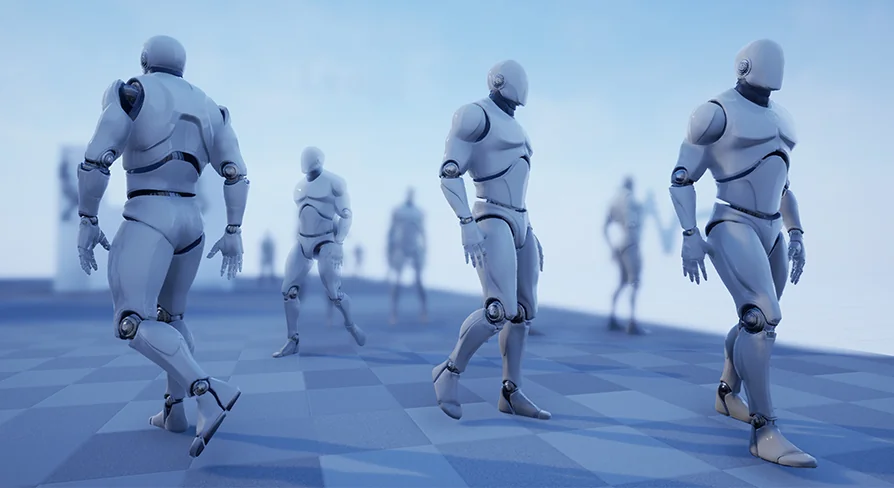
Integrating large-scale locomotion into an interactive project begins with how character movement connects to collision and game logic. Open World Animset centers on a library of more than 500 motion capture animations crafted for realistic humanoid movement across sprawling environments. The core design relies on clean root motion tracking, where displacement data embedded in the animation drives the character controller rather than synthetic capsule movement. This approach eliminates foot sliding and preserves the natural weight shifts recorded during capture sessions.
Building a dedicated root motion character controller around this library requires establishing distinct state machines for traversal speeds, environmental contacts, and tactical states. Because the asset includes complete sets of start transitions, continuous cycles, and dedicated stop states, the animation logic can transition smoothly between idle positions and full locomotion without sudden pop frames. Setting up these states involves mapping the forward, backward, and lateral momentum arcs to the controller's input axes, ensuring that sudden stops and gradual deceleration curves match the physical momentum captured files.
Full-Spectrum Locomotion, Transitions, and Movement States
Locomotion forms the foundation of any continuous gameplay experience, requiring distinct gait layers to accommodate exploration and survival scenarios. The package covers three primary ground speeds: walking, jogging, and sprinting. Rather than offering basic seamless loops that jump abruptly from rest to full run, each movement tier includes dedicated starting strides, turning loops, and stopping transitions.
Beyond standard upright bipedal transit, character navigation frequently demands alternative body stances depending on terrain clearance or stealth mechanics. Crawling animations provide low-profile locomotion across flat and irregular surfaces, matching the pacing required for stealth sequences. Sliding captures allow characters to drop rapidly from sprints down into low-clearance passages or defensive positions. When encountering drops or sheer surfaces, the library supplies falling loops and impact landings, alongside swimming sets that handle water navigation without breaking character realism.
Cover Switching, Rope Climbing, and Traversal Interactions
Traversing complex topography requires specialized movement interactions that bridge ground locomotion and vertical navigation. The set supplies comprehensive vertical mobility including direct climbing and rope climbing cycles. Characters can grip vertical lines, ascend rope spans, and step off onto ledges without requiring manual keyframing of the body's center of gravity.
Vaulting cycles handle horizontal obstacles of varying heights, letting the avatar step up, place hands, and clear barricades without coming to a complete halt. Door interactions provide grounded, physical connections to scene geometry, supplying contextual arm and torso movements for opening passages during forward runs or cautious exploration.
Defensive environmental interaction relies heavily on tactical cover systems. Open World Animset provides dedicated clips for:
Entering and exiting low and high cover nodes
Cover switching movements between separated barriers
Cover walking along continuous walls and parapets
Cover turning around corners while maintaining defensive stances
These specialized states allow a controller to dynamically anchor the player to surrounding walls while preserving directional input response.
Firearm Handling, Strafing, and Weapon Transition States
Combat locomotion within the package is arranged through realistic weight management and weapon retention. The library separates armatures and aim profiles across both sidearms and two-handed rifles, providing distinct sets for pistols and machine guns. Each weapon archetype features individual shooting sequences, dynamic cycling, and reload animations.
Combat mobility is structured through multi-directional strafing. Both pistol and machine gun sets feature lateral steps, backward retreats, and forward pushes that allow the avatar to keep aim points locked to a target while navigating terrain. Like the unarmed movement systems, all weapon-bearing states include full transition starts and stops, preventing jarring snaps when raising weapons from a relaxed sprint into an active firing posture.
Version 1.1 Expansions and Old Man Animset Compatibility
Project updates have expanded the baseline traversal suite into full contact combat. Version 1.1 introduces animated hands for refined item interaction and grip fidelity, alongside dedicated melee combat moves and impact-driven deaths. These strike and fatality sets connect directly to the existing locomotion framework, providing heavy physical reactions when engagements move from firearm exchanges to close-quarters encounters.
For projects balancing multiple character builds or requiring stylistic variance across different character profiles, the library maintains compatibility with the Old Man Animset. This structural alignment allows animation blueprints, state machines, and root motion setups to share logic trees and interaction nodes across multiple character types without rebuilding state controllers from the ground up.
 Variety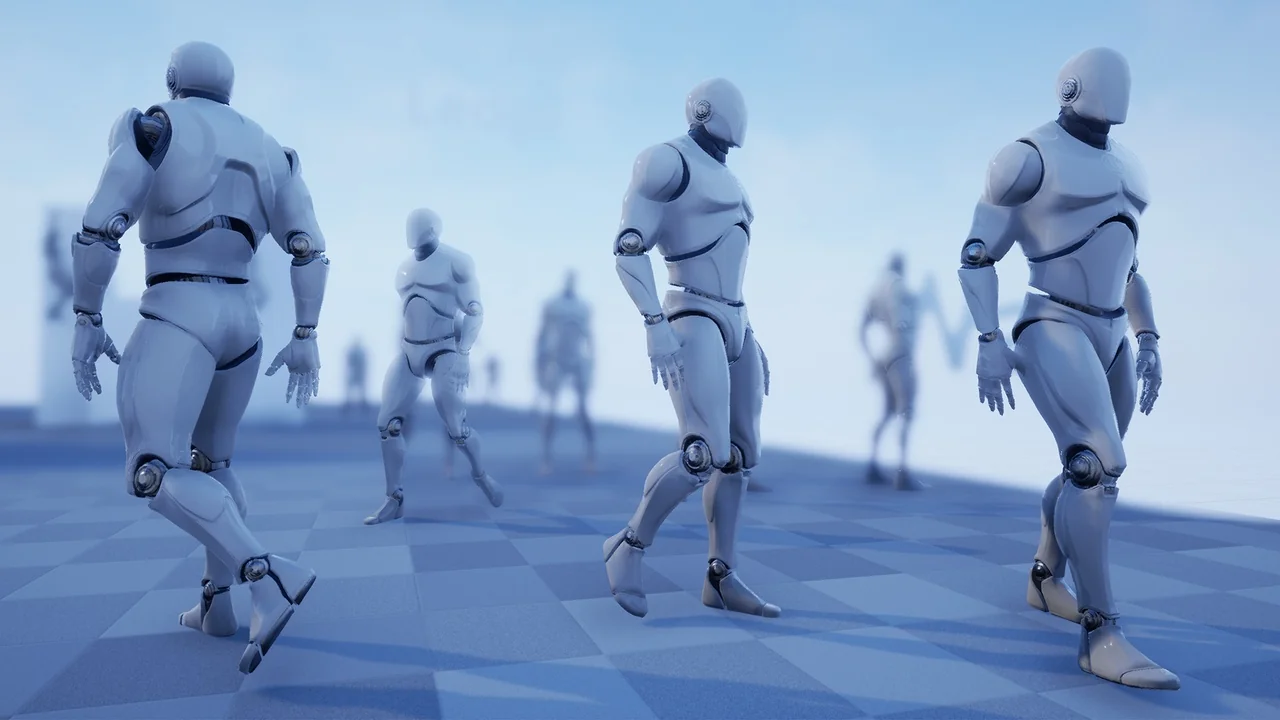
 Variety
 Gameplay Features
 Shooter