"7066dd76da796369"{"id":"1000127","slug":"old-man-animset","title":"Old Man Animset","category":"Variety","engine":"4.26+,5.0+","assetVersion":"","engineVersion":"Engine Version: 4.26+,5.0+","tag":"Variety","accent":"blue","visual":"mech","summary":"A realistic elderly male animset featuring a walking stick for balance, suited to projects and game worlds that need believable older male presence.","platform":"Unreal Engine","publishedAt":"2026-06-11T10:12:14.396Z","updatedAt":"2026-06-11T10:12:14.396Z","sourceNotes":[],"fileContents":[],"compatibility":["Unreal Engine","Engine Version: 4.26+,5.0+"],"featuredImage":{"alt":"Old Man Animset","src":"/wp-content/uploads/published/2026/06/c0db5a0f5b13-6f5f689e-d68b-4c73-99df-63b936cbecfe-f4e498c32a.webp"},"hasDownloadLink":true,"downloads":1,"terms":[{"taxonomy":"category","slug":"variety-animations","name":"Variety"}],"galleryImages":[{"src":"/wp-content/uploads/published/2026/06/5daa96374a64-e845f98d-6039-4776-b4cf-ca830efa473a-e8ed5c0079.webp","alt":"Old Man Animset"},{"src":"/wp-content/uploads/published/2026/06/5a9b0e45bbb6-6f649424-5d8c-4f73-9791-365a7cff64ef-8c0a9ec468.webp","alt":"Old Man Animset"},{"src":"/wp-content/uploads/published/2026/06/b41369714cf1-aba5c43b-0596-4a58-b45f-fb9e7f79d1d9-14aa23e486.webp","alt":"Old Man Animset"},{"src":"/wp-content/uploads/published/2026/06/9d834762ad24-ca540fbd-13b2-4f94-b1a5-5873500fb5fa-d38aba53be.webp","alt":"Old Man Animset"},{"src":"/wp-content/uploads/published/2026/06/29c3a76a330a-a839c39b-decb-4250-9577-52a33b5cb1c1-795145168c.webp","alt":"Old Man Animset"},{"src":"/wp-content/uploads/published/2026/06/818a1d3f8400-3aa8819b-1810-496d-895a-54173d803898-4e2aa9e220.webp","alt":"Old Man Animset"}],"accessPanel":{"kind":"resource","title":"Download this resource","eyebrow":"Free Download","message":"Log in or create a free account to start your download.","fileName":"Content.7z","safetyNote":"Resources are manually reviewed before listing to improve quality and reduce obvious risks.","actionLabel":"Download Free","resourceType":"Resource archive"},"contentHtml":"\u003cp\u003e\u003cstrong\u003eOld Man Animset\u003c/strong\u003e Focuses on a very specific kind of character motion: a realistic elderly male, animated with pose-matched movement and supported by a walking stick for balance. That immediately places it in a narrower and more useful category than a broad character pack. Instead of trying to cover every age group or movement style, it concentrates on the physical behavior of an older male figure and the visible influence of age on posture and balance.\u003c/p\u003e\n\u003cp\u003eThe walking stick is not a decorative detail. It defines how the character reads at a glance. A stick used for balance changes the center of attention in movement, makes the elderly profile clearer, and helps communicate age through action rather than through static appearance alone. In production terms, that means the set contributes character identity through motion. A scene does not just include another male figure; it includes an older man whose way of moving signals history, fragility, and realism.\u003c/p\u003e \u003ch2\u003eRealistic elderly male movement\u003c/h2\u003e\n\u003cp\u003eThe strongest point here is its commitment to a realistic elderly male. This helps because older characters often need more than a simple slower walk to feel convincing. The description emphasizes realism, which suggests that the character’s motion is meant to reflect age in a grounded way rather than in an exaggerated or stylized manner. For teams building scenes with a believable social mix, that distinction is important. An elderly character should not move like a standard adult body with only minor timing changes. He should carry a different physical presence.\u003c/p\u003e\n\u003cp\u003eThat presence is reinforced by the stated pose-matched approach. Even with limited information, pose matching signals consistency in how the body is arranged from one motion to another. For an animation set, that kind of consistency helps preserve the character’s physical identity. This gives not just a collection of disconnected actions, but motion that keeps the elderly male readable as the same person across use cases. When age is one of the defining traits of a character, continuity in pose and body language becomes especially valuable.\u003c/p\u003e\n\u003cp\u003eThe focus on an older male also fills a gap that many projects run into once they move beyond a narrow cast of default archetypes. Crowds, neighborhood scenes, industrial spaces, and simulation-driven worlds can feel incomplete if everyone is represented by the same range of adult movement. A realistic older male adds social texture. He changes the rhythm of a scene simply by existing within it.\u003c/p\u003e \u003ch2\u003eWalking stick for balance\u003c/h2\u003e\n\u003cp\u003eThe walking stick is the most concrete element in the set’s identity. Its role is clear: balance. This frames the character as someone whose movement depends on support, and that support becomes part of the animation language. The stick affects silhouette, pacing, and body weight. Even without itemizing specific clips, the core behavior is easy to understand: this is an elderly man whose physical movement is arranged through stable, supported locomotion.\u003c/p\u003e\n\u003cp\u003eThat balance-oriented motion has practical value in scenes where background characters need more than visual variety. A walking stick changes how a figure occupies space. It can make a character stand out in a crowd without requiring dramatic action. In quieter scenes, it contributes a grounded sense of vulnerability or routine. In more populated environments, it helps break up repetition by introducing a distinct movement pattern that differs from ordinary upright walking.\u003c/p\u003e\n\u003cp\u003eBecause the walking stick is tied directly to balance, it also helps define the character without relying on dialogue or close-up presentation. A project that needs environmental storytelling can benefit from that immediately readable trait. The character communicates age and physical condition through movement alone. That is often one of the most effective uses of animation in world-building: letting behavior carry information that would otherwise need to be explained.\u003c/p\u003e \u003ch2\u003eOld Man Animset in a populated game world\u003c/h2\u003e\n\u003cp\u003eThis set is described as being well suited to fleshing out a project or game world with realistic older males. That phrase points to its most natural place in production. It is not framed as a hero-only performance set or as a single dramatic showcase piece. Its clearest use is in making a world feel more complete by adding a demographic and behavioral layer that many environments lack.\u003c/p\u003e\n\u003cp\u003eWhen a world includes only generic adult movement, it tends to lose some of its credibility. Age diversity is part of what makes locations feel lived in. An elderly male with a walking stick can fit into streets, facilities, public areas, industrial settings, and simulation spaces where the population should reflect a broader range of people. The tag set reinforces this direction. Terms such as elderly, age, realistic, old, male, industrial, and simulation all point toward grounded scene-building rather than exaggerated action.\u003c/p\u003e\n\u003cp\u003eThat makes the animset especially relevant in workflows where the goal is not just to animate one character, but to support the overall believability of a setting. A world-builder may need older residents, older workers, or older passersby who move in a way that feels distinct from the rest of the cast. In that context, a focused animset can be more useful than a broad but less specific package. Specificity gives the environment sharper social detail.\u003c/p\u003e \u003ch2\u003ePose-matched animation and scene consistency\u003c/h2\u003e\n\u003cp\u003ePose matching deserves attention because it speaks to how the set can behave inside a larger animation pipeline. Even without expanding into technical claims that are not stated, the term implies a deliberate relationship between motions. That is important for anyone placing a character into repeated or varied scene work. If an older male character appears across multiple moments in a project, consistency in posture and body language helps preserve believability.\u003c/p\u003e\n\u003cp\u003eFor this particular type of character, consistency matters even more than it might for a generic background figure. Age-related movement tends to be recognized through repeated physical cues: guarded balance, supported steps, and a posture that aligns with the use of a walking stick. If those cues remain consistent, the character reads clearly every time he appears. Pose-matched animation supports that continuity of identity.\u003c/p\u003e\n\u003cp\u003eIt also helps the elderly male feel intentional rather than incidental. In world-building, background characters can sometimes seem like interchangeable motion placeholders. A pose-matched elderly figure with a defined balancing aid feels more authored than that. He has a repeatable physical logic. That is valuable whether the character is present only briefly or used throughout a broader environment.\u003c/p\u003e \u003ch2\u003eIndustrial and simulation contexts\u003c/h2\u003e\n\u003cp\u003eThe tags industrial and simulation add another useful layer to where this animset can fit. They suggest settings where realism and clear human behavior matter more than spectacle. In simulation-oriented work, believable population movement helps users read the environment as functioning space. In industrial scenes, human variety can keep spaces from feeling overly sterile or mechanically populated.\u003c/p\u003e\n\u003cp\u003eAn elderly male character can contribute to both. In simulation contexts, he broadens the demographic range of the world. In industrial contexts, he can add contrast, history, or a stronger sense that the environment serves more than one narrow role. The realism tag is important here as well. These are the kinds of projects where grounded motion usually matters most, because the scene depends on observation and credibility rather than on exaggerated performance.\u003c/p\u003e\n\u003cp\u003eThematically, the set stays tightly focused. It is about age, gender, balance, and realism. That narrow scope is useful in production because it gives teams a clear answer to a specific casting need: an older male character whose movement is visibly shaped by age and support. Instead of improvising that presence with generic motion, the project can place a character who already carries those traits in a readable way.\u003c/p\u003e \u003ch2\u003eWhere this animset is set up to help\u003c/h2\u003e\n\u003cp\u003eOld Man Animset is most at home in projects that need believable older male presence as part of the environment itself. Its defining pieces are straightforward but effective: a realistic elderly male, pose-matched animation, and a walking stick used for balance. Together, those details make it a practical choice when a scene needs more than generic human movement and is trying to represent age in a visible, grounded way.\u003c/p\u003e\n\u003cp\u003eFor teams filling out a world, that is the main strength here. The set is ready to handle the specific job of giving older male characters a clearer place in the motion language of the project.\u003c/p\u003e\n\n\u003ch2\u003eRelated Resources Worth Checking\u003c/h2\u003e\n\u003cul\u003e\n\u003cli\u003e\u003ca href=\"https://3dcghub.com/sci-fi-worker-animset/\" title=\"Sci-fi Worker Animset\"\u003eSci-fi Worker Animset\u003c/a\u003e\u003c/li\u003e\n\u003cli\u003e\u003ca href=\"https://3dcghub.com/2handed-hammer-animset/\" title=\"2Handed Hammer AnimSet\"\u003e2Handed Hammer AnimSet\u003c/a\u003e\u003c/li\u003e\n\u003cli\u003e\u003ca href=\"https://3dcghub.com/one-handed-sword-animset-pro/\" title=\"One Handed Sword Animset Pro\"\u003eOne Handed Sword Animset Pro\u003c/a\u003e\u003c/li\u003e\n\u003cli\u003e\u003ca href=\"https://3dcghub.com/sword-sheath-animset/\" title=\"Sword sheath AnimSet\"\u003eSword sheath AnimSet\u003c/a\u003e\u003c/li\u003e\n\u003cli\u003e\u003ca href=\"https://3dcghub.com/post-apocalyptic-melee-weapons-vol-2-post-apocalyptic-melee-weapons-weapon-old/\" title=\"Post Apocalyptic Melee Weapons VOL.2 (Post Apocalyptic Melee Weapons Weapon Old)\"\u003ePost Apocalyptic Melee Weapons VOL.2 (Post Apocalyptic Melee Weapons Weapon Old)\u003c/a\u003e\u003c/li\u003e\n\u003c/ul\u003e","contentTextLength":8912,"navigation":{"current":2039,"total":4016,"previous":{"id":"1000128","slug":"optimizator","title":"Optimizator","category":"Widgets \u0026 Controls","platform":"Unreal Engine","updatedAt":"2026-06-11T10:15:39.247Z"},"next":{"id":"1000125","slug":"nv-spline-tools","title":"NV Spline Tools","category":"Gameplay Features","platform":"Unreal Engine","updatedAt":"2026-06-11T09:59:29.656Z"}},"relatedResources":[{"id":"1001583","slug":"open-world-animset","title":"Open World Animset","category":"Variety","engine":"4.8+,5.0+","assetVersion":"","engineVersion":"Engine Version: 4.8+,5.0+","tag":"Variety","accent":"blue","visual":"mech","summary":"Over 500 motion capture animations for humanoid character movement, traversal, cover mechanics, firearm handling, and melee combat.","platform":"Unreal Engine","publishedAt":"2026-10-10T08:55:24.492Z","updatedAt":"2026-10-10T08:55:24.492Z","sourceNotes":[],"fileContents":[],"compatibility":["Unreal Engine","Engine Version: 4.8+,5.0+"],"featuredImage":{"alt":"Open World Animset","src":"/wp-content/uploads/published/2026/10/5316a1357041-5e3578f2-c647-450e-a63b-ea83d2aa1e89-94597b32fa.webp"},"hasDownloadLink":true,"downloads":2},{"id":"1001792","slug":"baker-character-npc-baker-character-worker-npc-sculpt-3d-model-man-art-old","title":"Baker Character / NPC ( Baker Character Worker NPC Sculpt 3D Model Man Art Old )","category":"Characters \u0026 Creatures","engine":"4.26+,5.0+","assetVersion":"","engineVersion":"Engine Version: 4.26+,5.0+","tag":"Characters","accent":"blue","visual":"character","summary":"Explore the fully rigged Baker Character NPC model, built on the Unreal Engine Mannequin skeleton for modular scene integration and animation workflows.","platform":"Unreal Engine","publishedAt":"2026-10-21T07:44:46.854Z","updatedAt":"2026-10-21T07:44:46.854Z","sourceNotes":[],"fileContents":[],"compatibility":["Unreal Engine","Engine Version: 4.26+,5.0+"],"featuredImage":{"alt":"Baker Character / NPC ( Baker Character Worker NPC Sculpt 3D Model Man Art Old )","src":"/wp-content/uploads/published/2026/10/4e58afb31219-0fb78b29-b3dc-44eb-a85c-0d511756fd39-61d90e66eb.webp"},"hasDownloadLink":true,"downloads":0},{"id":"6424","slug":"sci-fi-worker-animset","title":"Sci-fi Worker Animset","category":"Variety","engine":"4.26+,5.0+","assetVersion":"Engine version: 4.26+,5.0+","engineVersion":"4.19","tag":"Variety","accent":"blue","visual":"animation","summary":"Enhance your sci-fi game with over 120 motion capture animations. Perfect for space ports, repair crews, and cargo handling. Includes seamless blending and root","platform":"Unreal Engine","publishedAt":"2026-02-19T15:19:58.000Z","updatedAt":"2026-04-19T15:56:24.000Z","sourceNotes":[],"fileContents":[],"compatibility":["Unreal Engine","Engine version: 4.26+,5.0+"],"featuredImage":{"alt":"Sci-fi Worker Animset","src":"https://3dcghub.com/wp-content/uploads/2026/02/d48555c9-f950-4432-aabb-a4756067d0ff.webp"},"hasDownloadLink":true,"downloads":0}]}
Variety
Old Man Animset
A realistic elderly male animset featuring a walking stick for balance, suited to projects and game worlds that need believable older male presence.
Category:Unreal Engine,VarietyPlatform: Unreal EngineEngine Version: 4.26+,5.0+Published: Jun 11, 2026
Variety
Resource overview
Old Man Animset Focuses on a very specific kind of character motion: a realistic elderly male, animated with pose-matched movement and supported by a walking stick for balance. That immediately places it in a narrower and more useful category than a broad character pack. Instead of trying to cover every age group or movement style, it concentrates on the physical behavior of an older male figure and the visible influence of age on posture and balance.
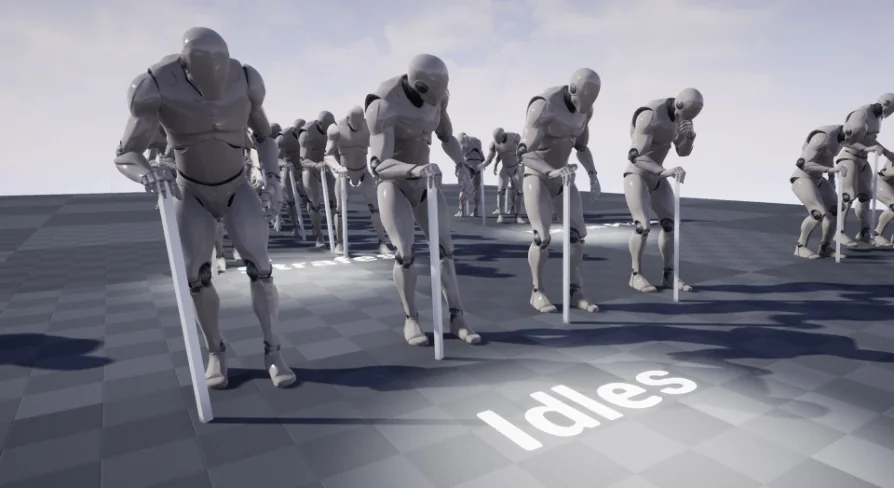
The walking stick is not a decorative detail. It defines how the character reads at a glance. A stick used for balance changes the center of attention in movement, makes the elderly profile clearer, and helps communicate age through action rather than through static appearance alone. In production terms, that means the set contributes character identity through motion. A scene does not just include another male figure; it includes an older man whose way of moving signals history, fragility, and realism.
Realistic elderly male movement
The strongest point here is its commitment to a realistic elderly male. This helps because older characters often need more than a simple slower walk to feel convincing. The description emphasizes realism, which suggests that the character’s motion is meant to reflect age in a grounded way rather than in an exaggerated or stylized manner. For teams building scenes with a believable social mix, that distinction is important. An elderly character should not move like a standard adult body with only minor timing changes. He should carry a different physical presence.
That presence is reinforced by the stated pose-matched approach. Even with limited information, pose matching signals consistency in how the body is arranged from one motion to another. For an animation set, that kind of consistency helps preserve the character’s physical identity. This gives not just a collection of disconnected actions, but motion that keeps the elderly male readable as the same person across use cases. When age is one of the defining traits of a character, continuity in pose and body language becomes especially valuable.
The focus on an older male also fills a gap that many projects run into once they move beyond a narrow cast of default archetypes. Crowds, neighborhood scenes, industrial spaces, and simulation-driven worlds can feel incomplete if everyone is represented by the same range of adult movement. A realistic older male adds social texture. He changes the rhythm of a scene simply by existing within it.
Walking stick for balance
The walking stick is the most concrete element in the set’s identity. Its role is clear: balance. This frames the character as someone whose movement depends on support, and that support becomes part of the animation language. The stick affects silhouette, pacing, and body weight. Even without itemizing specific clips, the core behavior is easy to understand: this is an elderly man whose physical movement is arranged through stable, supported locomotion.
That balance-oriented motion has practical value in scenes where background characters need more than visual variety. A walking stick changes how a figure occupies space. It can make a character stand out in a crowd without requiring dramatic action. In quieter scenes, it contributes a grounded sense of vulnerability or routine. In more populated environments, it helps break up repetition by introducing a distinct movement pattern that differs from ordinary upright walking.
Because the walking stick is tied directly to balance, it also helps define the character without relying on dialogue or close-up presentation. A project that needs environmental storytelling can benefit from that immediately readable trait. The character communicates age and physical condition through movement alone. That is often one of the most effective uses of animation in world-building: letting behavior carry information that would otherwise need to be explained.
Old Man Animset in a populated game world
This set is described as being well suited to fleshing out a project or game world with realistic older males. That phrase points to its most natural place in production. It is not framed as a hero-only performance set or as a single dramatic showcase piece. Its clearest use is in making a world feel more complete by adding a demographic and behavioral layer that many environments lack.
When a world includes only generic adult movement, it tends to lose some of its credibility. Age diversity is part of what makes locations feel lived in. An elderly male with a walking stick can fit into streets, facilities, public areas, industrial settings, and simulation spaces where the population should reflect a broader range of people. The tag set reinforces this direction. Terms such as elderly, age, realistic, old, male, industrial, and simulation all point toward grounded scene-building rather than exaggerated action.
That makes the animset especially relevant in workflows where the goal is not just to animate one character, but to support the overall believability of a setting. A world-builder may need older residents, older workers, or older passersby who move in a way that feels distinct from the rest of the cast. In that context, a focused animset can be more useful than a broad but less specific package. Specificity gives the environment sharper social detail.
Pose-matched animation and scene consistency
Pose matching deserves attention because it speaks to how the set can behave inside a larger animation pipeline. Even without expanding into technical claims that are not stated, the term implies a deliberate relationship between motions. That is important for anyone placing a character into repeated or varied scene work. If an older male character appears across multiple moments in a project, consistency in posture and body language helps preserve believability.
For this particular type of character, consistency matters even more than it might for a generic background figure. Age-related movement tends to be recognized through repeated physical cues: guarded balance, supported steps, and a posture that aligns with the use of a walking stick. If those cues remain consistent, the character reads clearly every time he appears. Pose-matched animation supports that continuity of identity.
It also helps the elderly male feel intentional rather than incidental. In world-building, background characters can sometimes seem like interchangeable motion placeholders. A pose-matched elderly figure with a defined balancing aid feels more authored than that. He has a repeatable physical logic. That is valuable whether the character is present only briefly or used throughout a broader environment.
Industrial and simulation contexts
The tags industrial and simulation add another useful layer to where this animset can fit. They suggest settings where realism and clear human behavior matter more than spectacle. In simulation-oriented work, believable population movement helps users read the environment as functioning space. In industrial scenes, human variety can keep spaces from feeling overly sterile or mechanically populated.
An elderly male character can contribute to both. In simulation contexts, he broadens the demographic range of the world. In industrial contexts, he can add contrast, history, or a stronger sense that the environment serves more than one narrow role. The realism tag is important here as well. These are the kinds of projects where grounded motion usually matters most, because the scene depends on observation and credibility rather than on exaggerated performance.
Thematically, the set stays tightly focused. It is about age, gender, balance, and realism. That narrow scope is useful in production because it gives teams a clear answer to a specific casting need: an older male character whose movement is visibly shaped by age and support. Instead of improvising that presence with generic motion, the project can place a character who already carries those traits in a readable way.
Where this animset is set up to help
Old Man Animset is most at home in projects that need believable older male presence as part of the environment itself. Its defining pieces are straightforward but effective: a realistic elderly male, pose-matched animation, and a walking stick used for balance. Together, those details make it a practical choice when a scene needs more than generic human movement and is trying to represent age in a visible, grounded way.
For teams filling out a world, that is the main strength here. The set is ready to handle the specific job of giving older male characters a clearer place in the motion language of the project.
 Variety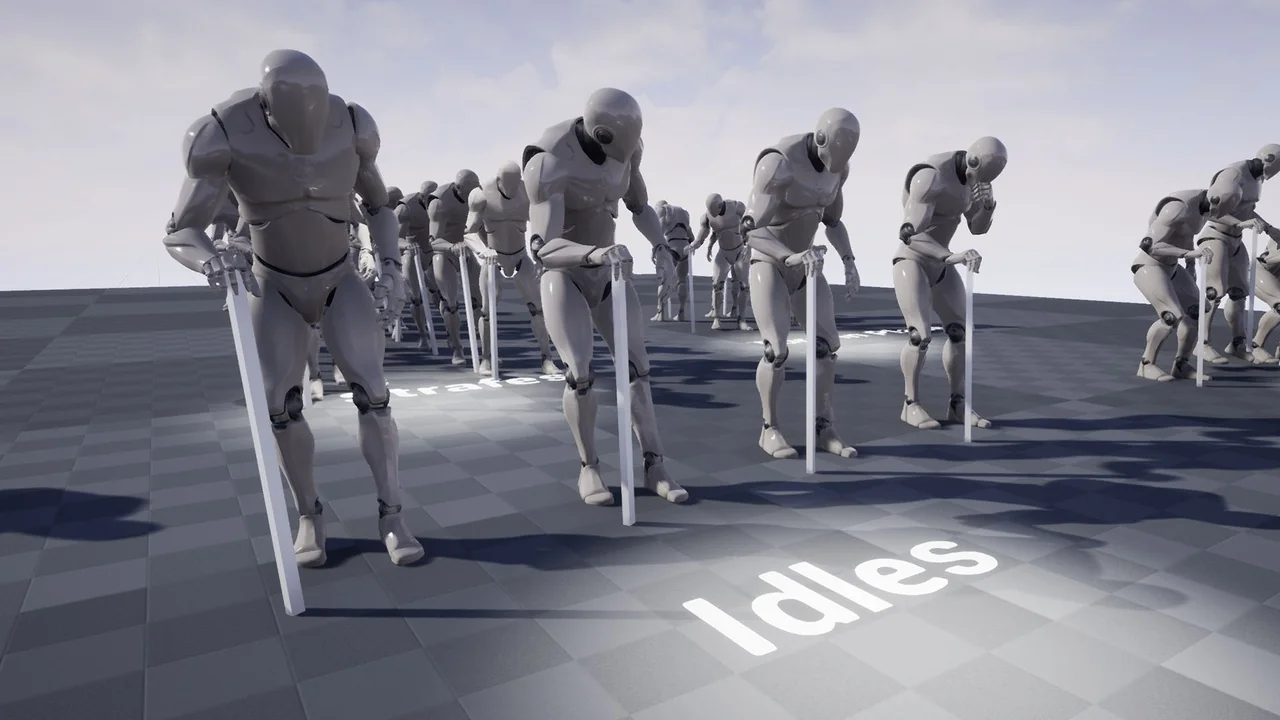
 Variety
 Characters
 Variety