"1c2c8b66743036b4"{"id":"1001702","slug":"rpg-engine-v7","title":"RPG Engine V7","category":"RPG","engine":"5.5+","assetVersion":"","engineVersion":"Engine Version: 5.5+","tag":"RPG","accent":"blue","visual":"mech","summary":"Explore RPG Engine V7, a multiplayer RPG framework for Unreal Engine 5 featuring replicated combat, MetaHuman integration, and DataAsset HUB configuration.","platform":"Unreal Engine","publishedAt":"2026-10-14T13:31:26.770Z","updatedAt":"2026-10-14T13:31:26.770Z","sourceNotes":[],"fileContents":[],"compatibility":["Unreal Engine","Engine Version: 5.5+"],"featuredImage":{"alt":"RPG Engine V7","src":"/wp-content/uploads/published/2026/10/b93a6c265b05-685c12d7-10e4-4c73-828e-25a26e074f1d-6592963c47.webp"},"hasDownloadLink":true,"downloads":2,"terms":[{"taxonomy":"category","slug":"rpg","name":"RPG"}],"galleryImages":[{"src":"/wp-content/uploads/published/2026/10/93f3141d6a4e-4a064b36-b7ef-4e18-82e3-c68c999adfc1-96c8db8f85.webp","alt":"RPG Engine V7"},{"src":"/wp-content/uploads/published/2026/10/58afc7dc4566-147f6d8e-e0e5-4289-8f00-ea86774d9d64-3c4db3817e.webp","alt":"RPG Engine V7"},{"src":"/wp-content/uploads/published/2026/10/45361ca8fdec-dd783a4e-ec1f-41d9-8e95-3f31b182586f-c044047ec3.webp","alt":"RPG Engine V7"},{"src":"/wp-content/uploads/published/2026/10/610aa61ff7b6-5f8aa02c-43c5-49d4-a80a-e4032d65caec-59ffa55b48.webp","alt":"RPG Engine V7"},{"src":"/wp-content/uploads/published/2026/10/6dc538fdc206-ce88e977-18e7-44dd-a8a6-b66fd27f13d6-dfebf391e4.webp","alt":"RPG Engine V7"},{"src":"/wp-content/uploads/published/2026/10/a4eab6456fea-9a2c6d52-f0df-494a-9f35-a87a292523ac-c6a293751e.webp","alt":"RPG Engine V7"},{"src":"/wp-content/uploads/published/2026/10/0e8e5bf1f921-cb7fa86e-d9c5-42f2-8d3a-1ebb7c691bc8-d8059f120d.webp","alt":"RPG Engine V7"},{"src":"/wp-content/uploads/published/2026/10/d04d52b0e7a1-f7143021-56ab-4865-9f48-f1f04c57b2b9-3974928d28.webp","alt":"RPG Engine V7"},{"src":"/wp-content/uploads/published/2026/10/47b5de7fa5b2-4bade7ea-d7d7-446c-b776-ecf2989088e8-8a80345d38.webp","alt":"RPG Engine V7"}],"accessPanel":{"kind":"resource","title":"Download this resource","eyebrow":"Free Download","message":"Log in or create a free account to start your download.","fileName":"RPG Engine - Ultimate Multiplayer Framework.7z","safetyNote":"Resources are manually reviewed before listing to improve quality and reduce obvious risks.","actionLabel":"Download Free","resourceType":"Resource archive"},"contentHtml":"\u003ch2\u003eBuilding Dynamic Multiplayer Worlds in Unreal Engine 5\u003c/h2\u003e\u003cp\u003eConstructing open-world role-playing titles, tense tactical survival sandboxes, or hybrid fantasy-shooter landscapes requires synchronizing dozens of interconnected systems across an online network. RPG Engine V7 delivers a multiplayer RPG framework for Unreal Engine 5 designed to bypass the foundational architecture phase so teams can focus directly on world-building and game rules. It establishes a fully replicated environment that supports everything from fluid player traversal to persistent game states, allowing technical designers to set up large-scale multiplayer spaces without writing network replication from scratch.\u003c/p\u003e\u003cp\u003eRather than distributing settings across isolated blueprints or hidden actor components, the framework routes its configuration through a centralized DataAsset HUB. This structure handles the setup for over 50 pre-integrated systems, covering combat, inventory, artificial intelligence, quests, and vehicle mechanics. Every system is built blueprint-first with full source code included, keeping the architecture open for C++ extensions when lower-level performance tuning is required.\u003c/p\u003e\u003ch2\u003eNetwork State Orchestration and Real-World Latency Handling\u003c/h2\u003e\u003cp\u003eOnline multiplayer hinges on how gracefully systems respond to packet delays and network jitter. RPG Engine V7 implements an authoritative server structure equipped with state prediction and built-in lag compensation, tested under real-world latency conditions ranging between 150ms and 250ms. The version 7 update specifically emphasizes state orchestration and prediction, introducing predictive handling for player states and simulated world events to keep inputs responsive despite distant servers.\u003c/p\u003e\u003cp\u003eThis network foundation has evolved through progressive architectural overhauls. Earlier iterations established modularization based on mediator patterns to handle scalability, integrated Mass AI with Mutable populations, and brought in Gameplay Tags alongside dynamic crosshair and shoulder-swapping logic. By anchoring these elements into authoritative prediction models, player actions like weapon fire, physical parkour, and ability triggers remain clean and reliable across varying connection speeds.\u003c/p\u003e\u003ch2\u003eCharacter Customization, Visual Gear, and Traversal Mechanics\u003c/h2\u003e\u003cp\u003ePlayer characters integrate directly with Epic's MetaHuman pipeline, ensuring high-fidelity facial and skeletal rigs function smoothly inside gameplay loops. A dedicated wardrobe workflow manages dynamic clothing and equipment meshes, altering character visuals in real time as players equip gear, switch loadouts, or customize weapons.\u003c/p\u003e\u003cp\u003eLocomotion blends standard movement with physical exploration systems:\u003c/p\u003e\u003cul\u003e\u003cli\u003eParkour and climbing systems that detect and interact with world obstacles\u003c/li\u003e\u003cli\u003eVertical navigation utilizing interactive ladders and scalable barriers\u003c/li\u003e\u003cli\u003eWater traversal through integrated swimming mechanics\u003c/li\u003e\u003cli\u003eDoor interactions featuring advanced entry and breach behaviors\u003c/li\u003e\u003cli\u003eTactical combat movement including camera shoulder swapping and character leaning\u003c/li\u003e\u003c/ul\u003e\u003ch2\u003eMulti-Disciplinary Combat and Survival Layers\u003c/h2\u003e\u003cp\u003eCombat in RPG Engine V7 accommodates varied combat styles ranging from modern tactical firefights to melee skirmishes and fantasy skill rotations. Melee combat incorporates combo logic, targeted tracking across multiple strike zones, aerial or ranged variations, status effects, and cinematic camera hooks. Firearms support pistols, rifles, sniper rifles, rocket launchers, and crossbows, paired with an attachment workflow covering scopes, silencers, grips, tactical flashlights, and expanded magazines with diverse ammo types. Explosive and tactical utility options include fragmentation, smoke, stun, marker, poison gas, and EMP grenades.\u003c/p\u003e\u003cp\u003eTactical gear offers varied mitigation layers through distinct armor classes, while functional equipment such as night vision, thermal optics, gas masks, tactical goggles, and communications headsets actively alter player perception and survival. Special abilities expand these engagements through configurable buffs, debuffs, and gameplay layer triggers suited for action-RPG or hybrid mechanics. Beneath combat lies a survival framework tracking hunger, thirst, environmental temperatures, poisoning, and persistent external hazards, tying character health directly to ecological conditions.\u003c/p\u003e\u003ch2\u003eArtificial Intelligence and System Integration\u003c/h2\u003e\u003cp\u003eEnemy and non-player characters utilize Unreal Engine Behavior Trees alongside the Environment Query System (EQS) to drive intelligent behaviors across multiple difficulty profiles. The built-in sensory perception suite processes line of sight, audio cues, and an internal memory module, prompting AI combatants to take cover, manage offensive spacing, swap weapons, deploy armor, and throw grenades during encounters.\u003c/p\u003e\u003cp\u003eThese combatants interact directly with broader game-state architectures:\u003c/p\u003e\u003cul\u003e\u003cli\u003eExpandable inventory and equipment slot structures\u003c/li\u003e\u003cli\u003eResource crafting pipelines linked with interactive vendor economies\u003c/li\u003e\u003cli\u003eBranching quest trees, interactive NPC dialogues, and progression triggers\u003c/li\u003e\u003cli\u003eExperience-based skill trees and modular gameplay-state tracking\u003c/li\u003e\u003cli\u003eMulti-slot save and load architecture with UI menu routing\u003c/li\u003e\u003cli\u003eIntegrated vehicle handling for modular drivable cars\u003c/li\u003e\u003cli\u003eFull world map and minimap tracking\u003c/li\u003e\u003cli\u003eComplete UI workflows including main menus, pause screens, multiplayer lobbies, pre-game loadout screens, graphics, audio, and gameplay settings, along with UI icon generation tools\u003c/li\u003e\u003c/ul\u003e\u003ch2\u003eFramework Alignment for Production Teams\u003c/h2\u003e\u003cp\u003eRPG Engine V7 is built for studios and independent developers building comprehensive third-person role-playing games, survival titles, or complex tactical action games in Unreal Engine 5. Because its interconnected networks—from vehicle handling to deep progression systems—are bound together through a single configuration hub, the framework suits projects needing an immediate, production-ready backend without spending months assembling disparate marketplace systems. The foundation supports immediate prototyping through its blueprint layer, while the underlying source code and planned expansions for dedicated shooter and adventure editions allow teams to scale their development scope smoothly.\u003c/p\u003e\n\n\u003ch2\u003eExplore Similar Assets\u003c/h2\u003e\n\u003cul\u003e\n\u003cli\u003e\u003ca href=\"https://3dcghub.com/modern-rpg-bundle-v7-0-1/\" title=\"Modern RPG BUNDLE v7.0.1\"\u003eModern RPG BUNDLE v7.0.1\u003c/a\u003e\u003c/li\u003e\n\u003cli\u003e\u003ca href=\"https://3dcghub.com/survival-rpg-engine/\" title=\"Survival RPG Engine\"\u003eSurvival RPG Engine\u003c/a\u003e\u003c/li\u003e\n\u003cli\u003e\u003ca href=\"https://3dcghub.com/advanced-multiplayer-survival-templatev2/\" title=\"Advanced Multiplayer Survival TemplateV2\"\u003eAdvanced Multiplayer Survival TemplateV2\u003c/a\u003e\u003c/li\u003e\n\u003cli\u003e\u003ca href=\"https://3dcghub.com/easy-survival-rpg-v5/\" title=\"Easy Survival RPG V5\"\u003eEasy Survival RPG V5\u003c/a\u003e\u003c/li\u003e\n\u003cli\u003e\u003ca href=\"https://3dcghub.com/moore-s-rpg-template/\" title=\"Moore\u0026#039;s RPG Template\"\u003eMoore\u0026#039;s RPG Template\u003c/a\u003e\u003c/li\u003e\n\u003c/ul\u003e","contentTextLength":6371,"navigation":{"current":13,"total":3651,"previous":{"id":"1001703","slug":"spaceport-and-space-center-environment-kit","title":"Spaceport and Space Center Environment Kit","category":"Industrial","platform":"Unreal Engine","updatedAt":"2026-10-14T17:04:35.251Z"},"next":{"id":"1001701","slug":"modular-amsterdam-city-street-with-canal","title":"Modular Amsterdam City Street with Canal","category":"Cities","platform":"Unreal Engine","updatedAt":"2026-10-14T13:30:10.202Z"}},"relatedResources":[{"id":"1000249","slug":"modern-rpg-bundle-v7-0-1","title":"Modern RPG BUNDLE v7.0.1","category":"RPG","engine":"5.4+","assetVersion":"Asset Version: 6.1.1","engineVersion":"Engine Version: 5.4+","tag":"RPG","accent":"blue","visual":"mech","summary":"A comprehensive RPG framework featuring inventory systems, weapon modifications, complex vehicle mechanics, multiplayer menus, and MetaHuman compatibility.","platform":"Unreal Engine","publishedAt":"2026-06-30T20:57:03.116Z","updatedAt":"2026-06-30T20:57:03.116Z","sourceNotes":[],"fileContents":[],"compatibility":["Unreal Engine","Asset Version: 6.1.1","Engine Version: 5.4+"],"featuredImage":{"alt":"Modern RPG BUNDLE v7.0.1","src":"/wp-content/uploads/published/2026/06/8a8479d4c0b6-c35035a1-419b-41de-bdcb-0dbd98054c6d-1060ae143b.webp"},"hasDownloadLink":true,"downloads":6},{"id":"1001584","slug":"survival-rpg-engine","title":"Survival RPG Engine","category":"RPG","engine":"5.5+","assetVersion":"","engineVersion":"Engine Version: 5.5+","tag":"RPG","accent":"blue","visual":"mech","summary":"Explore the mechanics of Survival RPG Engine, covering multiplayer networking, PCG world generation, building systems, and data-driven character progression.","platform":"Unreal Engine","publishedAt":"2026-10-10T09:08:31.079Z","updatedAt":"2026-10-10T09:08:31.079Z","sourceNotes":[],"fileContents":[],"compatibility":["Unreal Engine","Engine Version: 5.5+"],"featuredImage":{"alt":"Survival RPG Engine","src":"/wp-content/uploads/published/2026/10/5090c18eb0af-217516e7-a06d-4940-9399-2fc1ef6d175f-16d4eef1b1.webp"},"hasDownloadLink":true,"downloads":0},{"id":"11798","slug":"advanced-multiplayer-survival-templatev2","title":"Advanced Multiplayer Survival TemplateV2","category":"RPG","engine":"5.5+","assetVersion":"Engine version: 5.5+","engineVersion":"Asset Version:V2","tag":"RPG","accent":"blue","visual":"character","summary":"Build a high-quality survival experience with the Advanced Multiplayer Survival TemplateV2. This comprehensive foundation includes essential systems like zombie AI, item crafting, and full multiplayer support.","platform":"Unreal Engine","publishedAt":"2026-03-05T19:00:24.000Z","updatedAt":"2026-04-19T15:48:07.000Z","sourceNotes":[],"fileContents":[],"compatibility":["Unreal Engine","Engine version: 5.5+","Asset Version: V2"],"featuredImage":{"alt":"Advanced Multiplayer Survival TemplateV2","src":"https://3dcghub.com/wp-content/uploads/2026/03/dbeacd86-ed41-4e46-bde4-64c9d1a5b350.webp"},"hasDownloadLink":true,"downloads":7}]}
RPG
RPG Engine V7
Explore RPG Engine V7, a multiplayer RPG framework for Unreal Engine 5 featuring replicated combat, MetaHuman integration, and DataAsset HUB configuration.
Category:Unreal Engine,RPGPlatform: Unreal EngineEngine Version: 5.5+Published: Oct 14, 2026
RPG
Resource overview
Building Dynamic Multiplayer Worlds in Unreal Engine 5
Constructing open-world role-playing titles, tense tactical survival sandboxes, or hybrid fantasy-shooter landscapes requires synchronizing dozens of interconnected systems across an online network. RPG Engine V7 delivers a multiplayer RPG framework for Unreal Engine 5 designed to bypass the foundational architecture phase so teams can focus directly on world-building and game rules. It establishes a fully replicated environment that supports everything from fluid player traversal to persistent game states, allowing technical designers to set up large-scale multiplayer spaces without writing network replication from scratch.
Rather than distributing settings across isolated blueprints or hidden actor components, the framework routes its configuration through a centralized DataAsset HUB. This structure handles the setup for over 50 pre-integrated systems, covering combat, inventory, artificial intelligence, quests, and vehicle mechanics. Every system is built blueprint-first with full source code included, keeping the architecture open for C++ extensions when lower-level performance tuning is required.
Network State Orchestration and Real-World Latency Handling
Online multiplayer hinges on how gracefully systems respond to packet delays and network jitter. RPG Engine V7 implements an authoritative server structure equipped with state prediction and built-in lag compensation, tested under real-world latency conditions ranging between 150ms and 250ms. The version 7 update specifically emphasizes state orchestration and prediction, introducing predictive handling for player states and simulated world events to keep inputs responsive despite distant servers.
This network foundation has evolved through progressive architectural overhauls. Earlier iterations established modularization based on mediator patterns to handle scalability, integrated Mass AI with Mutable populations, and brought in Gameplay Tags alongside dynamic crosshair and shoulder-swapping logic. By anchoring these elements into authoritative prediction models, player actions like weapon fire, physical parkour, and ability triggers remain clean and reliable across varying connection speeds.
Character Customization, Visual Gear, and Traversal Mechanics
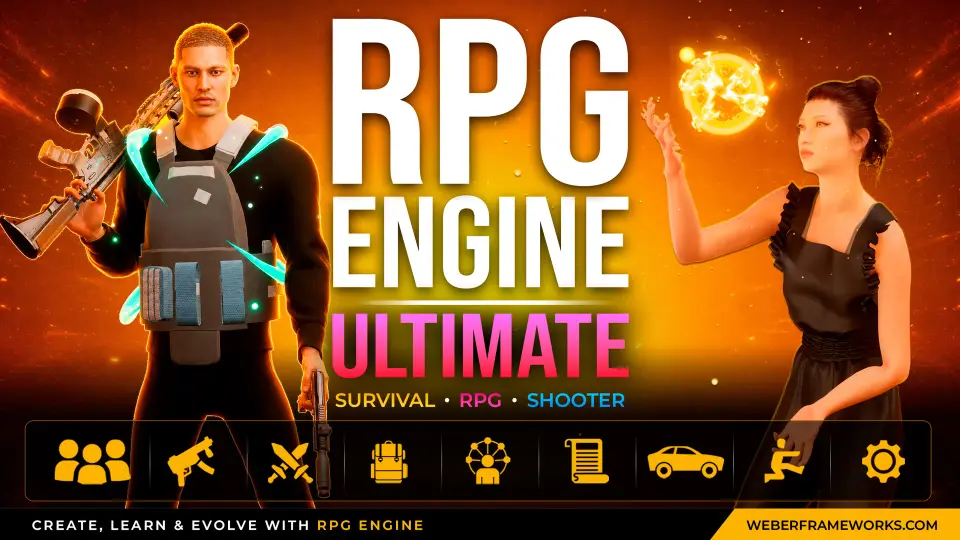
Player characters integrate directly with Epic's MetaHuman pipeline, ensuring high-fidelity facial and skeletal rigs function smoothly inside gameplay loops. A dedicated wardrobe workflow manages dynamic clothing and equipment meshes, altering character visuals in real time as players equip gear, switch loadouts, or customize weapons.
Locomotion blends standard movement with physical exploration systems:
Parkour and climbing systems that detect and interact with world obstacles
Vertical navigation utilizing interactive ladders and scalable barriers
Water traversal through integrated swimming mechanics
Door interactions featuring advanced entry and breach behaviors
Tactical combat movement including camera shoulder swapping and character leaning
Multi-Disciplinary Combat and Survival Layers
Combat in RPG Engine V7 accommodates varied combat styles ranging from modern tactical firefights to melee skirmishes and fantasy skill rotations. Melee combat incorporates combo logic, targeted tracking across multiple strike zones, aerial or ranged variations, status effects, and cinematic camera hooks. Firearms support pistols, rifles, sniper rifles, rocket launchers, and crossbows, paired with an attachment workflow covering scopes, silencers, grips, tactical flashlights, and expanded magazines with diverse ammo types. Explosive and tactical utility options include fragmentation, smoke, stun, marker, poison gas, and EMP grenades.
Tactical gear offers varied mitigation layers through distinct armor classes, while functional equipment such as night vision, thermal optics, gas masks, tactical goggles, and communications headsets actively alter player perception and survival. Special abilities expand these engagements through configurable buffs, debuffs, and gameplay layer triggers suited for action-RPG or hybrid mechanics. Beneath combat lies a survival framework tracking hunger, thirst, environmental temperatures, poisoning, and persistent external hazards, tying character health directly to ecological conditions.
Artificial Intelligence and System Integration
Enemy and non-player characters utilize Unreal Engine Behavior Trees alongside the Environment Query System (EQS) to drive intelligent behaviors across multiple difficulty profiles. The built-in sensory perception suite processes line of sight, audio cues, and an internal memory module, prompting AI combatants to take cover, manage offensive spacing, swap weapons, deploy armor, and throw grenades during encounters.
These combatants interact directly with broader game-state architectures:
Expandable inventory and equipment slot structures
Resource crafting pipelines linked with interactive vendor economies
Branching quest trees, interactive NPC dialogues, and progression triggers
Experience-based skill trees and modular gameplay-state tracking
Multi-slot save and load architecture with UI menu routing
Integrated vehicle handling for modular drivable cars
Full world map and minimap tracking
Complete UI workflows including main menus, pause screens, multiplayer lobbies, pre-game loadout screens, graphics, audio, and gameplay settings, along with UI icon generation tools
Framework Alignment for Production Teams
RPG Engine V7 is built for studios and independent developers building comprehensive third-person role-playing games, survival titles, or complex tactical action games in Unreal Engine 5. Because its interconnected networks—from vehicle handling to deep progression systems—are bound together through a single configuration hub, the framework suits projects needing an immediate, production-ready backend without spending months assembling disparate marketplace systems. The foundation supports immediate prototyping through its blueprint layer, while the underlying source code and planned expansions for dedicated shooter and adventure editions allow teams to scale their development scope smoothly.
 RPG
RPG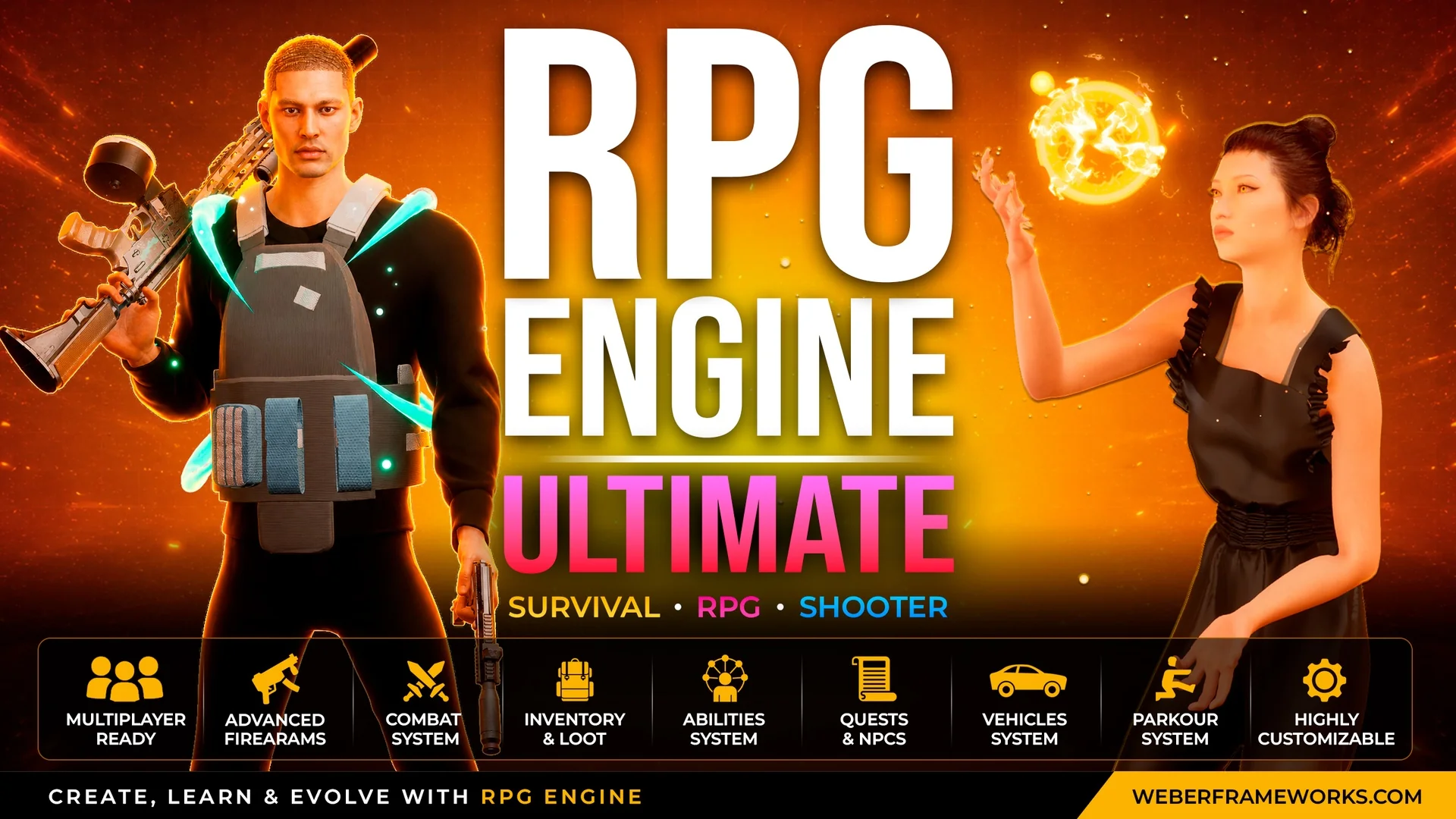
 RPG
RPG RPG
RPG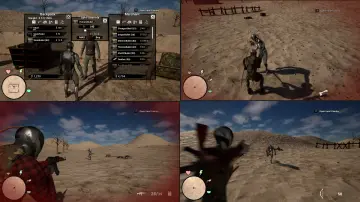 RPG
RPG