"c68a05d5e51405b3"{"id":"1001106","slug":"modular-sci-fi-quarry-environment","title":"Modular Sci-Fi Quarry Environment","category":"Sci-Fi","engine":"4.26+,5.0+","assetVersion":"","engineVersion":"Engine Version: 4.26+,5.0+","tag":"Sci-Fi","accent":"blue","visual":"city","summary":"A modular sci-fi quarry environment for UE4/UE5 with fit-together parts and customizable materials for building large underground spaces. Includes tutorial, vid","platform":"Unreal Engine","publishedAt":"2026-09-07T05:54:31.086Z","updatedAt":"2026-09-07T05:54:31.086Z","sourceNotes":[],"fileContents":[],"compatibility":["Unreal Engine","Engine Version: 4.26+,5.0+"],"featuredImage":{"alt":"Modular Sci-Fi Quarry Environment","src":"/wp-content/uploads/published/2026/09/f32ade7cf9dd-fad7efa4-885c-4a61-bf93-af53aef3ddda-c597b0b3b0.webp"},"hasDownloadLink":true,"downloads":0,"terms":[{"taxonomy":"category","slug":"sci-fi","name":"Sci-Fi"}],"galleryImages":[{"src":"/wp-content/uploads/published/2026/09/f3a6ed8d8f4a-d43fc0d4-a44c-41d4-8a05-ca2c8e5cb79b-8707641826.webp","alt":"Modular Sci-Fi Quarry Environment"},{"src":"/wp-content/uploads/published/2026/09/f5d2a3bca723-be284910-c729-45ae-a724-917920ab7ac9-2f0989a08d.webp","alt":"Modular Sci-Fi Quarry Environment"},{"src":"/wp-content/uploads/published/2026/09/79b9fd5769f3-e6abf654-05d5-442a-a354-212d79358fd5-68eae8ac30.webp","alt":"Modular Sci-Fi Quarry Environment"},{"src":"/wp-content/uploads/published/2026/09/dbec7768c3e3-502c8dcc-6c2d-474f-a346-9919f7e009d3-cd76df1ce4.webp","alt":"Modular Sci-Fi Quarry Environment"},{"src":"/wp-content/uploads/published/2026/09/553cc5b3382b-b17edfa5-35be-48ae-9984-ddb3cc4c814c-71acd4bd56.webp","alt":"Modular Sci-Fi Quarry Environment"},{"src":"/wp-content/uploads/published/2026/09/fa9ad72d2bd0-4729d887-b598-472d-a920-49642231f3a2-e31382e942.webp","alt":"Modular Sci-Fi Quarry Environment"},{"src":"/wp-content/uploads/published/2026/09/a5f4dc5badb6-0591190c-61df-4d97-bd86-48d2ac94922f-42ffed1fda.webp","alt":"Modular Sci-Fi Quarry Environment"},{"src":"/wp-content/uploads/published/2026/09/66c19c69181e-9f8f5d48-b4de-4ab9-bb43-4e9cd1051f92-6368a676ae.webp","alt":"Modular Sci-Fi Quarry Environment"},{"src":"/wp-content/uploads/published/2026/09/96d80557520c-4e646fe7-d33d-4549-863b-a9513ddb4cd1-5643ad78d3.webp","alt":"Modular Sci-Fi Quarry Environment"}],"accessPanel":{"kind":"resource","title":"Download this resource","eyebrow":"Free Download","message":"Log in or create a free account to start your download.","fileName":"Content.7z","safetyNote":"Resources are manually reviewed before listing to improve quality and reduce obvious risks.","actionLabel":"Download Free","resourceType":"Resource archive"},"contentHtml":"\u003cp\u003eThe Modular Sci-Fi Quarry Environment is a modular construction kit for building large underground sci-fi spaces. Its core purpose is to give you a starting point for an underground project, with parts that fit together and materials that can be customized. The early stage of level creation is therefore less about aligning geometry and more about deciding where the space begins and how far it needs to extend.\u003c/p\u003e \u003ch2\u003eFit-Together Parts for Large Underground Spaces\u003c/h2\u003e\n\u003cp\u003eEvery part is planned to connect cleanly with the next one. That connection rule is what makes expansion feel manageable. When a level needs to be enlarged, you can add another set of attached modules without having to revisit the previous ones.\u003c/p\u003e\n\u003cp\u003eThe environment is not limited to a small set of predefined layouts. The package is explicitly oriented toward creating underground spaces that are as big as you want them to be. None of the modules force a boundary, so you can stop when the design says the play space is sufficient, not when the kit says it ends.\u003c/p\u003e \u003ch3\u003eMaterials Give You Control After the Layout Is Set\u003c/h3\u003e\n\u003cp\u003eOnce the layout is in place, material customization becomes the main visual lever. Because the geometry is modular, material changes are what separate one region from another. You can keep the same set of pieces and shift the material response to match different lighting conditions or surface treatments inside the underground world.\u003c/p\u003e\n\u003cp\u003eIn a large underground project, this prevents the scenery from reading as a single repeated stamp. Materials are customizable, and the rest of the workflow supports that flexibility: build the structure with modules, then tune how each part reflects light and detail through material settings.\u003c/p\u003e \u003ch2\u003eImplementation Guidance for UE4 and UE5\u003c/h2\u003e\n\u003cp\u003eFor developers working in Unreal Engine 4 or Unreal Engine 5, there is supporting documentation made for those pipelines. A live document is available for all of the developer's UE4 and UE5 products, which means it will be updated alongside the toolkit itself. The live nature of the document matters because engine updates can change import expectations or rendering conventions.\u003c/p\u003e\n\u003cp\u003eAlongside that, the package includes a dedicated document asset with asset overview images, a tutorial, custom collisions, and product update notes. The overview images give you a quick visual reference of assembled configurations. The tutorial fills in the construction order. Custom collisions are documented separately, so you do not have to guess how to prepare pieces for interactive gameplay. The update notes tell you what changed between product revisions, which is important for anyone keeping an asset current.\u003c/p\u003e \u003ch3\u003eVideo Walkthrough and HDRI Plugin Activation\u003c/h3\u003e\n\u003cp\u003eA video overview and walkthrough is part of the package's learning material. Watching the environment in motion can save time when you are positioning the first modular pieces. The setup also mentions activating the HDRI plugin, which points to using image-based lighting or reflection captures during the building phase. HDRI activation is listed as one of the starting steps, so it is something to plan for in the editor before you judge how the materials look under the intended lighting.\u003c/p\u003e \u003ch2\u003eSupport Flow for Bugs and Requests\u003c/h2\u003e\n\u003cp\u003eNo modular environment stays bug-free in every possible combination. For those situations, the developer provides a support channel. Requests and questions can be sent by mail, and Discord is available for more direct contact. The “find issues or bugs” approach means you can report problems rather than silently working around them.\u003c/p\u003e\n\u003cp\u003eThat support flow is particularly relevant when you are pushing the kit into a large, dense level. Different collision settings, custom materials, and lighting configurations can all trigger unexpected behavior. Combined with the product update notes in the documentation, this support system gives the environment a maintained feel rather than a one-time release.\u003c/p\u003e \u003ch2\u003eFuturistic, Realistic, and Metaverse-Oriented\u003c/h2\u003e\n\u003cp\u003eThe environment's tags place it in a useful middle ground: a realistic sci-fi quarry. These are the terms used to position it: quarry, futuristic, sci-fi, level, realistic, metaverse, underground. That combination is well suited to a game level that needs both industrial realism and speculative future technology.\u003c/p\u003e\n\u003cp\u003eThe metaverse connection is not trivial. Shared virtual spaces often depend on a consistent set of modular pieces that can be moved around to create different regions. A realistic quarry environment could serve as a stage for social hubs, exploration modes, or a persistent world location. The ability to extend the space freely supports that need.\u003c/p\u003e \u003cp\u003eAt the intersection of modular construction, material flexibility, and clear documentation, the Modular Sci-Fi Quarry Environment is positioned as a practical foundation for underground sci-fi level building. It lets you start, expand, customize, and maintain the space, which is exactly what an underground environment needs in production.\u003c/p\u003e\n\n\u003ch2\u003eMore From The Same Workflow\u003c/h2\u003e\n\u003cul\u003e\n\u003cli\u003e\u003ca href=\"https://3dcghub.com/spectrum-galaxy-modular-sci-fi-environment-kit/\" title=\"Spectrum Galaxy | Modular Sci-Fi Environment Kit\"\u003eSpectrum Galaxy | Modular Sci-Fi Environment Kit\u003c/a\u003e\u003c/li\u003e\n\u003cli\u003e\u003ca href=\"https://3dcghub.com/sci-fi-modular-station/\" title=\"Sci-Fi Modular Station\"\u003eSci-Fi Modular Station\u003c/a\u003e\u003c/li\u003e\n\u003cli\u003e\u003ca href=\"https://3dcghub.com/sci-fi-hangar/\" title=\"Sci-Fi Hangar\"\u003eSci-Fi Hangar\u003c/a\u003e\u003c/li\u003e\n\u003cli\u003e\u003ca href=\"https://3dcghub.com/modular-sci-fi-environment-a/\" title=\"Modular sci-fi Environment A\"\u003eModular sci-fi Environment A\u003c/a\u003e\u003c/li\u003e\n\u003cli\u003e\u003ca href=\"https://3dcghub.com/iss-international-space-station/\" title=\"ISS INTERNATIONAL SPACE STATION\"\u003eISS INTERNATIONAL SPACE STATION\u003c/a\u003e\u003c/li\u003e\n\u003c/ul\u003e","contentTextLength":5140,"navigation":{"current":869,"total":3860,"previous":{"id":"1001107","slug":"broadleaf-poplar-forest-pcg-biome","title":"Broadleaf Poplar Forest - PCG Biome","category":"Forest \u0026 Jungle","platform":"Unreal Engine","updatedAt":"2026-09-07T06:21:06.743Z"},"next":{"id":"1001105","slug":"modular-limb-damage-system","title":"Modular Limb Damage System","category":"Gameplay Features","platform":"Unreal Engine","updatedAt":"2026-09-07T05:41:59.387Z"}},"relatedResources":[{"id":"1001680","slug":"modular-sci-fi-interior","title":"Modular Sci-Fi Interior","category":"Sci-Fi","engine":"4.26+,5.0+","assetVersion":"","engineVersion":"Engine Version: 4.26+,5.0+","tag":"Sci-Fi","accent":"blue","visual":"mech","summary":"Build AAA spaceship corridors, engineering bays, and laboratories with Modular Sci-Fi Interior, featuring 68 compatible parts and customizable materials.","platform":"Unreal Engine","publishedAt":"2026-10-13T15:31:32.670Z","updatedAt":"2026-10-13T15:31:32.670Z","sourceNotes":[],"fileContents":[],"compatibility":["Unreal Engine","Engine Version: 4.26+,5.0+"],"featuredImage":{"alt":"Modular Sci-Fi Interior","src":"/wp-content/uploads/published/2026/10/5f742de1385a-81f27987-eea8-4083-8247-e2f32ed77b80-110aed85b4.webp"},"hasDownloadLink":true,"downloads":1},{"id":"1001665","slug":"scifi-corridor-environment","title":"SciFi Corridor Environment","category":"Sci-Fi","engine":"4.20+,5.0+","assetVersion":"","engineVersion":"Engine Version: 4.20+,5.0+","tag":"Sci-Fi","accent":"blue","visual":"city","summary":"Explore the SciFi Corridor Environment, a modular lowpoly level scene built for current gen games with customizable PBR materials and prop compatibility.","platform":"Unreal Engine","publishedAt":"2026-10-13T15:05:15.324Z","updatedAt":"2026-10-13T15:05:15.324Z","sourceNotes":[],"fileContents":[],"compatibility":["Unreal Engine","Engine Version: 4.20+,5.0+"],"featuredImage":{"alt":"SciFi Corridor Environment","src":"/wp-content/uploads/published/2026/10/522388a562b7-365997bb-848d-475f-be61-3d69c5e3307e-42292051e6.webp"},"hasDownloadLink":true,"downloads":1},{"id":"1001660","slug":"sci-fi-interior-pack","title":"Sci-Fi Interior Pack","category":"Sci-Fi","engine":"4.16+,5.0+","assetVersion":"","engineVersion":"Engine Version: 4.16+,5.0+","tag":"Sci-Fi","accent":"blue","visual":"mech","summary":"Build AAA sci-fi corridors, rooms, and space station halls with the modular meshes, props, and realistic PBR materials in the Sci-Fi Interior Pack.","platform":"Unreal Engine","publishedAt":"2026-10-13T14:49:18.243Z","updatedAt":"2026-10-13T14:49:18.243Z","sourceNotes":[],"fileContents":[],"compatibility":["Unreal Engine","Engine Version: 4.16+,5.0+"],"featuredImage":{"alt":"Sci-Fi Interior Pack","src":"/wp-content/uploads/published/2026/10/feeee675490c-ab3f77c7-91c9-47ea-82e1-43d047947c91-e6293b0541.webp"},"hasDownloadLink":true,"downloads":1}]}
Sci-Fi
Modular Sci-Fi Quarry Environment
A modular sci-fi quarry environment for UE4/UE5 with fit-together parts and customizable materials for building large underground spaces. Includes tutorial, vid
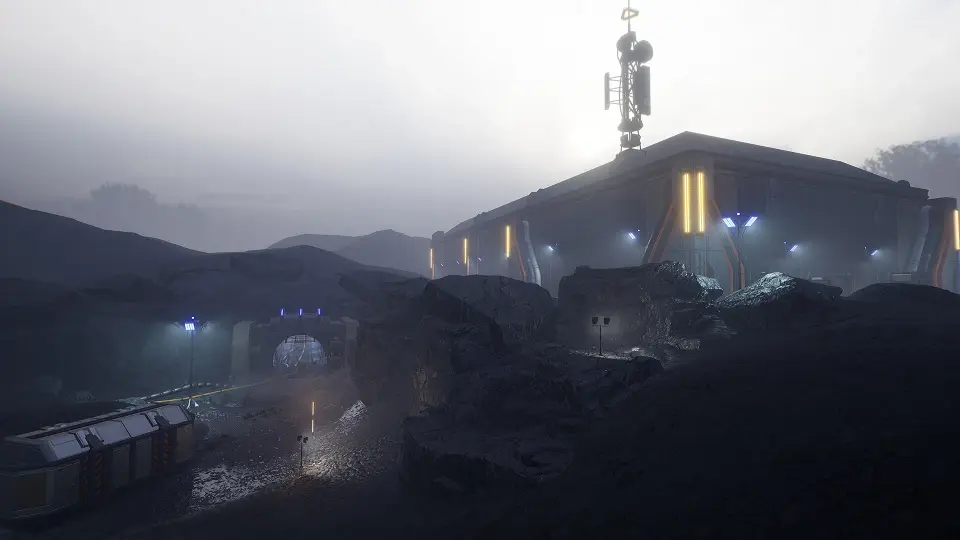
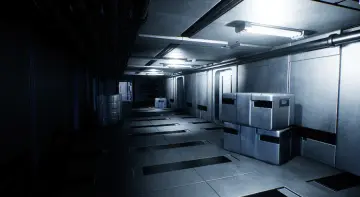
The Modular Sci-Fi Quarry Environment is a modular construction kit for building large underground sci-fi spaces. Its core purpose is to give you a starting point for an underground project, with parts that fit together and materials that can be customized. The early stage of level creation is therefore less about aligning geometry and more about deciding where the space begins and how far it needs to extend.
Fit-Together Parts for Large Underground Spaces
Every part is planned to connect cleanly with the next one. That connection rule is what makes expansion feel manageable. When a level needs to be enlarged, you can add another set of attached modules without having to revisit the previous ones.
The environment is not limited to a small set of predefined layouts. The package is explicitly oriented toward creating underground spaces that are as big as you want them to be. None of the modules force a boundary, so you can stop when the design says the play space is sufficient, not when the kit says it ends.
Materials Give You Control After the Layout Is Set
Once the layout is in place, material customization becomes the main visual lever. Because the geometry is modular, material changes are what separate one region from another. You can keep the same set of pieces and shift the material response to match different lighting conditions or surface treatments inside the underground world.
In a large underground project, this prevents the scenery from reading as a single repeated stamp. Materials are customizable, and the rest of the workflow supports that flexibility: build the structure with modules, then tune how each part reflects light and detail through material settings.
Implementation Guidance for UE4 and UE5
For developers working in Unreal Engine 4 or Unreal Engine 5, there is supporting documentation made for those pipelines. A live document is available for all of the developer's UE4 and UE5 products, which means it will be updated alongside the toolkit itself. The live nature of the document matters because engine updates can change import expectations or rendering conventions.
Alongside that, the package includes a dedicated document asset with asset overview images, a tutorial, custom collisions, and product update notes. The overview images give you a quick visual reference of assembled configurations. The tutorial fills in the construction order. Custom collisions are documented separately, so you do not have to guess how to prepare pieces for interactive gameplay. The update notes tell you what changed between product revisions, which is important for anyone keeping an asset current.
Video Walkthrough and HDRI Plugin Activation
A video overview and walkthrough is part of the package's learning material. Watching the environment in motion can save time when you are positioning the first modular pieces. The setup also mentions activating the HDRI plugin, which points to using image-based lighting or reflection captures during the building phase. HDRI activation is listed as one of the starting steps, so it is something to plan for in the editor before you judge how the materials look under the intended lighting.
Support Flow for Bugs and Requests
No modular environment stays bug-free in every possible combination. For those situations, the developer provides a support channel. Requests and questions can be sent by mail, and Discord is available for more direct contact. The “find issues or bugs” approach means you can report problems rather than silently working around them.
That support flow is particularly relevant when you are pushing the kit into a large, dense level. Different collision settings, custom materials, and lighting configurations can all trigger unexpected behavior. Combined with the product update notes in the documentation, this support system gives the environment a maintained feel rather than a one-time release.
Futuristic, Realistic, and Metaverse-Oriented
The environment's tags place it in a useful middle ground: a realistic sci-fi quarry. These are the terms used to position it: quarry, futuristic, sci-fi, level, realistic, metaverse, underground. That combination is well suited to a game level that needs both industrial realism and speculative future technology.
The metaverse connection is not trivial. Shared virtual spaces often depend on a consistent set of modular pieces that can be moved around to create different regions. A realistic quarry environment could serve as a stage for social hubs, exploration modes, or a persistent world location. The ability to extend the space freely supports that need.
At the intersection of modular construction, material flexibility, and clear documentation, the Modular Sci-Fi Quarry Environment is positioned as a practical foundation for underground sci-fi level building. It lets you start, expand, customize, and maintain the space, which is exactly what an underground environment needs in production.
 Sci-Fi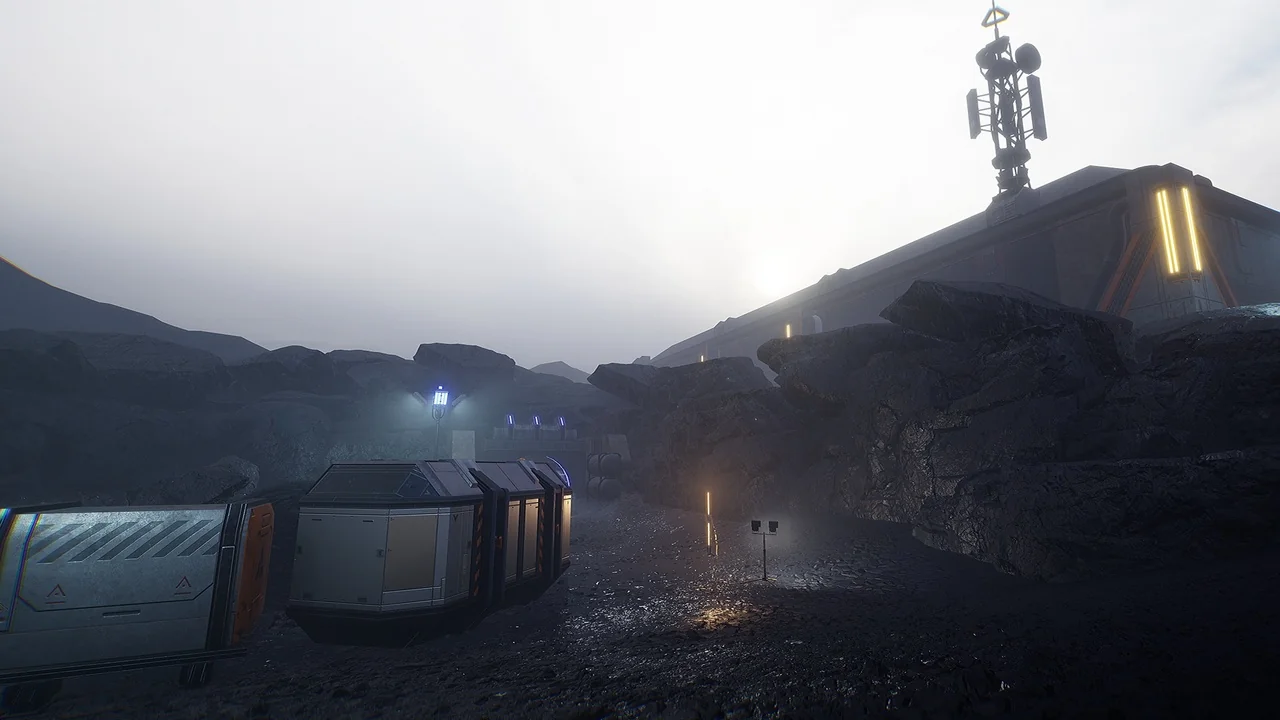
 Sci-Fi
 Sci-Fi
 Sci-Fi