"7e6fc58c410f2894"{"id":"1001665","slug":"scifi-corridor-environment","title":"SciFi Corridor Environment","category":"Sci-Fi","engine":"4.20+,5.0+","assetVersion":"","engineVersion":"Engine Version: 4.20+,5.0+","tag":"Sci-Fi","accent":"blue","visual":"city","summary":"Explore the SciFi Corridor Environment, a modular lowpoly level scene built for current gen games with customizable PBR materials and prop compatibility.","platform":"Unreal Engine","publishedAt":"2026-10-13T15:05:15.324Z","updatedAt":"2026-10-13T15:05:15.324Z","sourceNotes":[],"fileContents":[],"compatibility":["Unreal Engine","Engine Version: 4.20+,5.0+"],"featuredImage":{"alt":"SciFi Corridor Environment","src":"/wp-content/uploads/published/2026/10/522388a562b7-365997bb-848d-475f-be61-3d69c5e3307e-42292051e6.webp"},"hasDownloadLink":true,"downloads":0,"terms":[{"taxonomy":"category","slug":"sci-fi","name":"Sci-Fi"}],"galleryImages":[{"src":"/wp-content/uploads/published/2026/10/a79924a9e157-4de906ac-935c-4296-9a3e-33cd307d6172-4e421cdac3.webp","alt":"SciFi Corridor Environment"},{"src":"/wp-content/uploads/published/2026/10/40c71320991f-8ab771e3-c143-4a48-9187-74ed09fc50ef-a56aec5cc0.webp","alt":"SciFi Corridor Environment"},{"src":"/wp-content/uploads/published/2026/10/4485624a059a-02295104-d7d6-4ed9-8d22-4e2edd87931f-9a1f4a9a8c.webp","alt":"SciFi Corridor Environment"},{"src":"/wp-content/uploads/published/2026/10/6a5ad3a6a830-cc1b57a3-ac1d-4eea-9c2c-dc7081add626-09fd63aee7.webp","alt":"SciFi Corridor Environment"},{"src":"/wp-content/uploads/published/2026/10/c4926b52f932-083abe46-b7e8-4a83-9c83-bf10d29d90f5-ada4ab777b.webp","alt":"SciFi Corridor Environment"},{"src":"/wp-content/uploads/published/2026/10/056ae1cbf5b7-8c987ff4-4405-4c37-b5e1-1b4e50684b9e-99f6fcadbc.webp","alt":"SciFi Corridor Environment"}],"accessPanel":{"kind":"resource","title":"Download this resource","eyebrow":"Free Download","message":"Log in or create a free account to start your download.","fileName":"Content.7z","safetyNote":"Resources are manually reviewed before listing to improve quality and reduce obvious risks.","actionLabel":"Download Free","resourceType":"Resource archive"},"contentHtml":"\u003ch2\u003eAssembling the Modular SciFi Corridor Environment Scene\u003c/h2\u003e\n\u003cp\u003eIntegrating a dedicated corridor layout into an active project starts by establishing the spatial rhythm of the modular components. The SciFi Corridor Environment delivers a complete scene framework constructed for current gen games, emphasizing structured, repeatable geometry that links seamlessly into extended architectural pathways. Because the asset relies on a modular design logic, level designers can configure standard straight runs, junction points, and transitional chambers to build out comprehensive facility interiors.\u003c/p\u003e\n\u003cp\u003eWorking with modular level pieces demands clean alignment across structural seams. In this environment, walls, floor plates, ceiling bulkheads, and frame components align along predictable spatial increments. Placing these elements side by side allows developers to quickly sketch out playable paths, test scale against character movement, and verify sightlines before locking down decorative placement. The underlying lowpoly construction keeps baseline scene overhead light during early blockout, ensuring rapid iteration without dragging viewport performance.\u003c/p\u003e\n\u003cp\u003eBeyond simple hallway runs, the modular structure supports multi-tier corridor planning. Structural segments can be arrayed to imply high-tech transit tubes, maintenance conduits, or secure outpost thoroughfares. By treating each segment as an adaptable building block, level creators maintain full creative authority over how long, wide, or claustrophobic an interior run feels, creating distinct sub-areas across a single unified installation.\u003c/p\u003e \u003ch2\u003eFine-Tuning PBR Materials: Roughness, Metallic, and Ambient Occlusion\u003c/h2\u003e\n\u003cp\u003eVisual fidelity across the scene is governed by a PBR material workflow engineered to produce realistic surfaces under dynamic and static lighting setups. Rather than locking artists into a static look, the environment incorporates adjustable material settings focused directly on roughness, metallic, and ambient occlusion parameters. These targeted adjustments give developers the freedom to shift the aesthetic tone of the entire installation without having to repaint base texture maps from scratch.\u003c/p\u003e\n\u003cp\u003eAdjusting the roughness value fundamentally alters how light catches the panels and structural frames. Dialing roughness down produces a polished, pristine finish typical of high-security research laboratories, corporate vessels, or advanced orbital habitats where surfaces are kept clean and reflective. Increasing the roughness disperses highlights, yielding a dull, matte presentation that suggests unwashed utility corridors, abandoned industrial facilities, or heavy military installations subject to ongoing atmospheric wear.\u003c/p\u003e\n\u003cp\u003eModifying the metallic channel allows artists to shift the perceived material composition of structural panels. Pushing metallic values to their ceiling transforms the architecture into raw alloy bulkheads, reflective plating, and exposed structural steel. Conversely, lowering metallic settings introduces painted, composite, or synthetic polymer qualities to the walls and ceiling trims, allowing distinct factions or ship compartments to carry unique visual signatures while reusing the same base meshes.\u003c/p\u003e\n\u003cp\u003eThe ambient occlusion setting works in tandem with these surface properties to emphasize self-shadowing in panel recesses, joints, bolt lines, and corners. In lowpoly modeling, geometric depth must be reinforced by contact shadowing. Fine-tuning the ambient occlusion channel deepens these recessed seams, grounding the modular panels against one another and preventing the flat look that can occur when low-density geometry is placed under bright, even illumination.\u003c/p\u003e \u003ch2\u003eConstructing Realistic Level Layouts with Lowpoly Geometry\u003c/h2\u003e\n\u003cp\u003eBalancing realistic art direction with lowpoly asset budgets is a primary concern for current gen games. High-fidelity rendering engines demand sharp visual feedback, yet competitive frame rates depend on sensible polygon allocation across background architecture. The SciFi Corridor Environment addresses this balance by utilizing clean lowpoly modeling wrapped in high-detail PBR surfacing.\u003c/p\u003e\n\u003cp\u003eBecause the individual structural elements avoid unnecessary geometric density, level designers can construct vast networks of hallways, utility tunnels, and transit hubs without overwhelming vertex budgets. This balance is especially useful in gameplay sequences requiring long draw distances, complex enemy pathfinding, or intense visual effects happening concurrently in the play space. The clean edge flows of the lowpoly meshes also simplify lightmap baking and real-time indirect lighting calculations, cutting down on lighting artifacts along panel seams.\u003c/p\u003e\n\u003cp\u003eRealistic visual language in this scene stems from proportion and functional detailing rather than hyper-dense geometry. Door frames, wall supports, and ceiling conduits mirror practical industrial engineering principles, ensuring that hallways look believable to the player. The lowpoly framework provides the necessary silhouette and structural boundary, while the interaction of metallic, roughness, and AO maps creates the illusion of intricate manufacturing across every panel face.\u003c/p\u003e \u003ch2\u003eIntegration Workflow with the Sci fi Props Pack\u003c/h2\u003e\n\u003cp\u003eWhile the SciFi Corridor Environment supplies the foundational architecture, functional game spaces require interior dressing to feel lived-in and operational. The scene features built-in compatibility with the Sci fi Props Pack, allowing creators to detail the bare corridors with thematic apparatus, technical consoles, storage units, and utility clutter.\u003c/p\u003e\n\u003cp\u003ePlacing props along modular walls breaks up visual repetition across long corridor stretches. By positioning matching sci-fi props near alcoves, junctions, and door terminals, environment artists can guide player navigation, frame gameplay objectives, and establish environmental storytelling. The shared design logic between the corridor architecture and the props pack ensures that scale, thematic detailing, and material responses remain consistent across all interactive and static elements.\u003c/p\u003e\n\u003cp\u003eThis cross-asset compatibility streamlines the level creation pipeline. Developers can assemble the primary corridor shell first, tune the PBR material values to set the environmental tone, and immediately drop in corresponding props to create specialized rooms—such as medical bays, engineering stations, or cargo staging areas—without running into material mismatches or stylistic dissonance.\u003c/p\u003e \u003ch2\u003eProduction Readiness for Current Gen Games\u003c/h2\u003e\n\u003cp\u003eDeploying environment art into current generation production pipelines requires assets that drop into modern rendering workflows with minimal friction. The SciFi Corridor Environment functions as an adaptable, production-ready foundation designed explicitly around current gen specifications, combining modular layout flexibility with lowpoly runtime efficiency and hands-on material calibration.\u003c/p\u003e\n\u003cp\u003eWhether employed as a core setting for narrative-driven interior sequences, an arena framework for fast-paced action, or an atmospheric backdrop for survival scenarios, the environment gives developers direct control over scene tone and performance. Through focused adjustments to roughness, metallic, and AO channels, alongside easy prop integration, the scene bridges the gap between lightweight level construction and realistic sci-fi world-building.\u003c/p\u003e\n\n\u003ch2\u003eExplore Similar Assets\u003c/h2\u003e\n\u003cul\u003e\n\u003cli\u003e\u003ca href=\"https://3dcghub.com/sci-fi-interior-pack/\" title=\"Sci-Fi Interior Pack\"\u003eSci-Fi Interior Pack\u003c/a\u003e\u003c/li\u003e\n\u003cli\u003e\u003ca href=\"https://3dcghub.com/scifi-industrial-level-kit-2-0/\" title=\"SciFi/Industrial Level Kit 2.0\"\u003eSciFi/Industrial Level Kit 2.0\u003c/a\u003e\u003c/li\u003e\n\u003cli\u003e\u003ca href=\"https://3dcghub.com/sci-fi-hangar/\" title=\"Sci-Fi Hangar\"\u003eSci-Fi Hangar\u003c/a\u003e\u003c/li\u003e\n\u003cli\u003e\u003ca href=\"https://3dcghub.com/modular-sci-fi-hangar-area-environment/\" title=\"Modular Sci-fi Hangar Area Environment\"\u003eModular Sci-fi Hangar Area Environment\u003c/a\u003e\u003c/li\u003e\n\u003cli\u003e\u003ca href=\"https://3dcghub.com/concrete-hallway/\" title=\"Concrete Hallway\"\u003eConcrete Hallway\u003c/a\u003e\u003c/li\u003e\n\u003c/ul\u003e","contentTextLength":7519,"navigation":{"current":17,"total":3618,"previous":{"id":"1001666","slug":"simple-cartoon-fx-pack","title":"Simple Cartoon FX Pack","category":"Variety","platform":"Unreal Engine","updatedAt":"2026-10-13T15:07:26.502Z"},"next":{"id":"1001664","slug":"scifi-colony-city","title":"SciFi Colony City","category":"Cities","platform":"Unreal Engine","updatedAt":"2026-10-13T15:03:09.535Z"}},"relatedResources":[{"id":"1001680","slug":"modular-sci-fi-interior","title":"Modular Sci-Fi Interior","category":"Sci-Fi","engine":"4.26+,5.0+","assetVersion":"","engineVersion":"Engine Version: 4.26+,5.0+","tag":"Sci-Fi","accent":"blue","visual":"mech","summary":"Build AAA spaceship corridors, engineering bays, and laboratories with Modular Sci-Fi Interior, featuring 68 compatible parts and customizable materials.","platform":"Unreal Engine","publishedAt":"2026-10-13T15:31:32.670Z","updatedAt":"2026-10-13T15:31:32.670Z","sourceNotes":[],"fileContents":[],"compatibility":["Unreal Engine","Engine Version: 4.26+,5.0+"],"featuredImage":{"alt":"Modular Sci-Fi Interior","src":"/wp-content/uploads/published/2026/10/5f742de1385a-81f27987-eea8-4083-8247-e2f32ed77b80-110aed85b4.webp"},"hasDownloadLink":true,"downloads":0},{"id":"1001660","slug":"sci-fi-interior-pack","title":"Sci-Fi Interior Pack","category":"Sci-Fi","engine":"4.16+,5.0+","assetVersion":"","engineVersion":"Engine Version: 4.16+,5.0+","tag":"Sci-Fi","accent":"blue","visual":"mech","summary":"Build AAA sci-fi corridors, rooms, and space station halls with the modular meshes, props, and realistic PBR materials in the Sci-Fi Interior Pack.","platform":"Unreal Engine","publishedAt":"2026-10-13T14:49:18.243Z","updatedAt":"2026-10-13T14:49:18.243Z","sourceNotes":[],"fileContents":[],"compatibility":["Unreal Engine","Engine Version: 4.16+,5.0+"],"featuredImage":{"alt":"Sci-Fi Interior Pack","src":"/wp-content/uploads/published/2026/10/feeee675490c-ab3f77c7-91c9-47ea-82e1-43d047947c91-e6293b0541.webp"},"hasDownloadLink":true,"downloads":0},{"id":"1001555","slug":"scifi-industrial-level-kit-2-0","title":"SciFi/Industrial Level Kit 2.0","category":"Sci-Fi","engine":"4.19+,5.0+","assetVersion":"","engineVersion":"Engine Version: 4.19+,5.0+","tag":"Sci-Fi","accent":"blue","visual":"mech","summary":"SciFi/Industrial Level Kit 2.0 delivers over 1500 modular meshes and Blueprints with PBR/IBL lighting and multi-resolution textures for sci-fi environments.","platform":"Unreal Engine","publishedAt":"2026-10-10T03:45:25.139Z","updatedAt":"2026-10-10T03:45:25.139Z","sourceNotes":[],"fileContents":[],"compatibility":["Unreal Engine","Engine Version: 4.19+,5.0+"],"featuredImage":{"alt":"SciFi/Industrial Level Kit 2.0","src":"/wp-content/uploads/published/2026/10/21759bf57f6e-da6da6ce-23c5-402b-8cc5-45bd1e8ecea9-a2e57d98d6.webp"},"hasDownloadLink":true,"downloads":0}]}
Sci-Fi
SciFi Corridor Environment
Explore the SciFi Corridor Environment, a modular lowpoly level scene built for current gen games with customizable PBR materials and prop compatibility.
Category:Unreal Engine,Sci-FiPlatform: Unreal EngineEngine Version: 4.20+,5.0+Published: Oct 13, 2026
Sci-Fi
Resource overview
Assembling the Modular SciFi Corridor Environment Scene
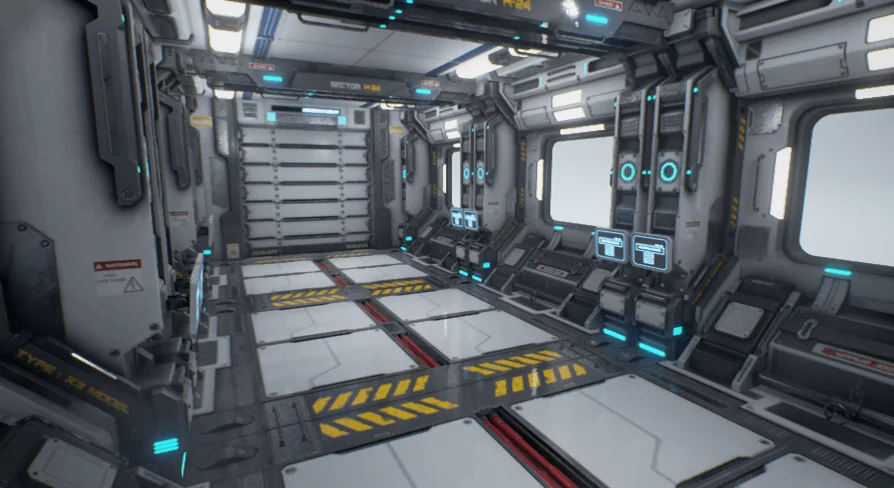
Integrating a dedicated corridor layout into an active project starts by establishing the spatial rhythm of the modular components. The SciFi Corridor Environment delivers a complete scene framework constructed for current gen games, emphasizing structured, repeatable geometry that links seamlessly into extended architectural pathways. Because the asset relies on a modular design logic, level designers can configure standard straight runs, junction points, and transitional chambers to build out comprehensive facility interiors.
Working with modular level pieces demands clean alignment across structural seams. In this environment, walls, floor plates, ceiling bulkheads, and frame components align along predictable spatial increments. Placing these elements side by side allows developers to quickly sketch out playable paths, test scale against character movement, and verify sightlines before locking down decorative placement. The underlying lowpoly construction keeps baseline scene overhead light during early blockout, ensuring rapid iteration without dragging viewport performance.
Beyond simple hallway runs, the modular structure supports multi-tier corridor planning. Structural segments can be arrayed to imply high-tech transit tubes, maintenance conduits, or secure outpost thoroughfares. By treating each segment as an adaptable building block, level creators maintain full creative authority over how long, wide, or claustrophobic an interior run feels, creating distinct sub-areas across a single unified installation.
Fine-Tuning PBR Materials: Roughness, Metallic, and Ambient Occlusion
Visual fidelity across the scene is governed by a PBR material workflow engineered to produce realistic surfaces under dynamic and static lighting setups. Rather than locking artists into a static look, the environment incorporates adjustable material settings focused directly on roughness, metallic, and ambient occlusion parameters. These targeted adjustments give developers the freedom to shift the aesthetic tone of the entire installation without having to repaint base texture maps from scratch.
Adjusting the roughness value fundamentally alters how light catches the panels and structural frames. Dialing roughness down produces a polished, pristine finish typical of high-security research laboratories, corporate vessels, or advanced orbital habitats where surfaces are kept clean and reflective. Increasing the roughness disperses highlights, yielding a dull, matte presentation that suggests unwashed utility corridors, abandoned industrial facilities, or heavy military installations subject to ongoing atmospheric wear.
Modifying the metallic channel allows artists to shift the perceived material composition of structural panels. Pushing metallic values to their ceiling transforms the architecture into raw alloy bulkheads, reflective plating, and exposed structural steel. Conversely, lowering metallic settings introduces painted, composite, or synthetic polymer qualities to the walls and ceiling trims, allowing distinct factions or ship compartments to carry unique visual signatures while reusing the same base meshes.
The ambient occlusion setting works in tandem with these surface properties to emphasize self-shadowing in panel recesses, joints, bolt lines, and corners. In lowpoly modeling, geometric depth must be reinforced by contact shadowing. Fine-tuning the ambient occlusion channel deepens these recessed seams, grounding the modular panels against one another and preventing the flat look that can occur when low-density geometry is placed under bright, even illumination.
Constructing Realistic Level Layouts with Lowpoly Geometry
Balancing realistic art direction with lowpoly asset budgets is a primary concern for current gen games. High-fidelity rendering engines demand sharp visual feedback, yet competitive frame rates depend on sensible polygon allocation across background architecture. The SciFi Corridor Environment addresses this balance by utilizing clean lowpoly modeling wrapped in high-detail PBR surfacing.
Because the individual structural elements avoid unnecessary geometric density, level designers can construct vast networks of hallways, utility tunnels, and transit hubs without overwhelming vertex budgets. This balance is especially useful in gameplay sequences requiring long draw distances, complex enemy pathfinding, or intense visual effects happening concurrently in the play space. The clean edge flows of the lowpoly meshes also simplify lightmap baking and real-time indirect lighting calculations, cutting down on lighting artifacts along panel seams.
Realistic visual language in this scene stems from proportion and functional detailing rather than hyper-dense geometry. Door frames, wall supports, and ceiling conduits mirror practical industrial engineering principles, ensuring that hallways look believable to the player. The lowpoly framework provides the necessary silhouette and structural boundary, while the interaction of metallic, roughness, and AO maps creates the illusion of intricate manufacturing across every panel face.
Integration Workflow with the Sci fi Props Pack
While the SciFi Corridor Environment supplies the foundational architecture, functional game spaces require interior dressing to feel lived-in and operational. The scene features built-in compatibility with the Sci fi Props Pack, allowing creators to detail the bare corridors with thematic apparatus, technical consoles, storage units, and utility clutter.
Placing props along modular walls breaks up visual repetition across long corridor stretches. By positioning matching sci-fi props near alcoves, junctions, and door terminals, environment artists can guide player navigation, frame gameplay objectives, and establish environmental storytelling. The shared design logic between the corridor architecture and the props pack ensures that scale, thematic detailing, and material responses remain consistent across all interactive and static elements.
This cross-asset compatibility streamlines the level creation pipeline. Developers can assemble the primary corridor shell first, tune the PBR material values to set the environmental tone, and immediately drop in corresponding props to create specialized rooms—such as medical bays, engineering stations, or cargo staging areas—without running into material mismatches or stylistic dissonance.
Production Readiness for Current Gen Games
Deploying environment art into current generation production pipelines requires assets that drop into modern rendering workflows with minimal friction. The SciFi Corridor Environment functions as an adaptable, production-ready foundation designed explicitly around current gen specifications, combining modular layout flexibility with lowpoly runtime efficiency and hands-on material calibration.
Whether employed as a core setting for narrative-driven interior sequences, an arena framework for fast-paced action, or an atmospheric backdrop for survival scenarios, the environment gives developers direct control over scene tone and performance. Through focused adjustments to roughness, metallic, and AO channels, alongside easy prop integration, the scene bridges the gap between lightweight level construction and realistic sci-fi world-building.
 Sci-Fi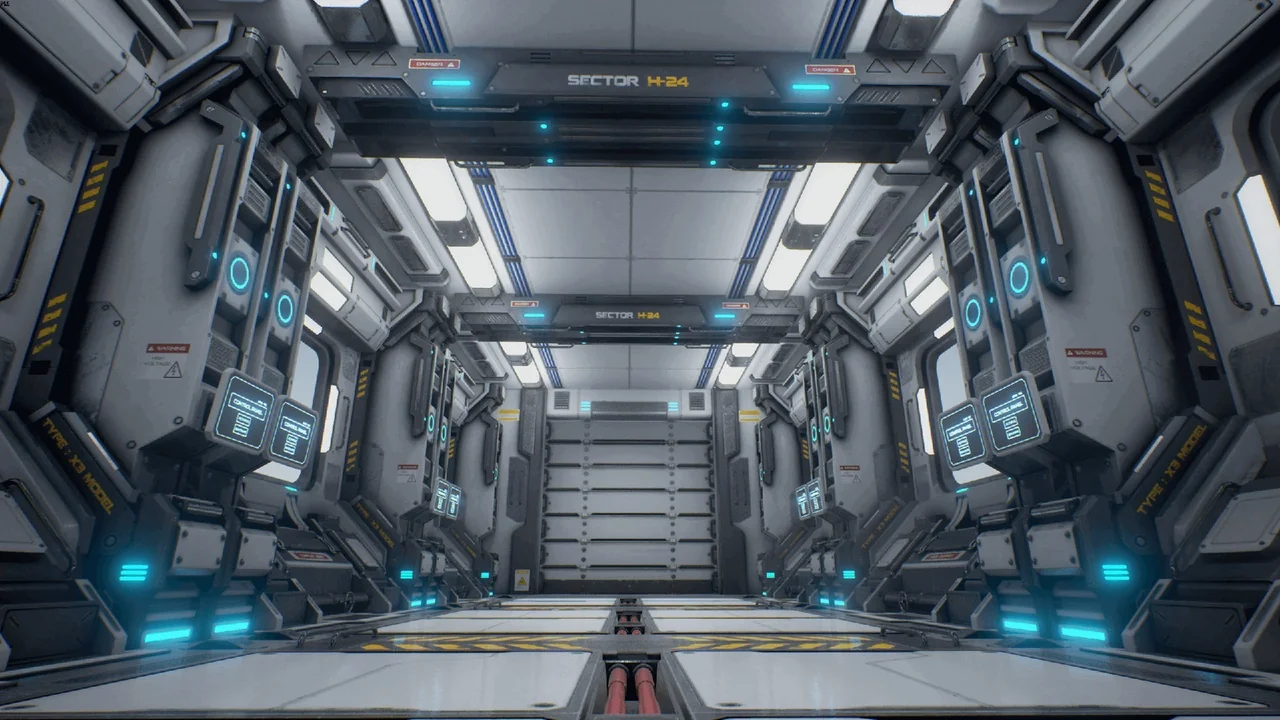
 Sci-Fi
 Sci-Fi
 Sci-Fi