"7e6fc58c410f2894"{"id":"1000372","slug":"iss-international-space-station","title":"ISS INTERNATIONAL SPACE STATION","category":"Sci-Fi","engine":"4.26+,5.0+","assetVersion":"","engineVersion":"Engine Version: 4.26+,5.0+","tag":"Sci-Fi","accent":"blue","visual":"mech","summary":"An exterior-only environment of the International Space Station featuring 4K PBR textures, real-world scale, and an automated Earth day-night cycle.","platform":"Unreal Engine","publishedAt":"2026-07-06T16:12:36.535Z","updatedAt":"2026-07-06T16:12:36.535Z","sourceNotes":[],"fileContents":[],"compatibility":["Unreal Engine","Engine Version: 4.26+,5.0+"],"featuredImage":{"alt":"ISS INTERNATIONAL SPACE STATION","src":"/wp-content/uploads/published/2026/07/128bbc70e107-558794d1-ddb8-41c4-9021-a69253776357-894047899d.webp"},"hasDownloadLink":true,"downloads":1,"terms":[{"taxonomy":"category","slug":"sci-fi","name":"Sci-Fi"}],"galleryImages":[{"src":"/wp-content/uploads/published/2026/07/ed507cd979c4-2527b41e-f30f-44b2-9b32-69d57ab2e649-c7b5047b98.webp","alt":"ISS INTERNATIONAL SPACE STATION"},{"src":"/wp-content/uploads/published/2026/07/7b53c94b119f-9b2ffadf-74aa-47e7-8272-70594a4cce09-f6aa524f58.webp","alt":"ISS INTERNATIONAL SPACE STATION"},{"src":"/wp-content/uploads/published/2026/07/8bb0607e0552-c5096041-9261-41fa-80d2-d8410dcbe719-b00277f89a.webp","alt":"ISS INTERNATIONAL SPACE STATION"},{"src":"/wp-content/uploads/published/2026/07/1f617c6a4174-1781f92d-e2ef-4a93-9f62-61c14abee92d-1960378db3.webp","alt":"ISS INTERNATIONAL SPACE STATION"},{"src":"/wp-content/uploads/published/2026/07/411740101cb5-e1a99bc3-792b-4ba7-b1bb-536e87451b35-590157e6bf.webp","alt":"ISS INTERNATIONAL SPACE STATION"},{"src":"/wp-content/uploads/published/2026/07/97b717182851-acae22a5-e674-4ee6-9d5b-e666fccd12a4-85f2d8a7d4.webp","alt":"ISS INTERNATIONAL SPACE STATION"},{"src":"/wp-content/uploads/published/2026/07/5adb458afaf0-a66bd0af-ed48-43b4-b6a2-80fcd0745789-a851f3224a.webp","alt":"ISS INTERNATIONAL SPACE STATION"},{"src":"/wp-content/uploads/published/2026/07/4acb1658d867-40c7cc4a-bc61-4abf-9355-30502525a4b4-889d6a75f5.webp","alt":"ISS INTERNATIONAL SPACE STATION"},{"src":"/wp-content/uploads/published/2026/07/c9c0ff9989d1-0d423539-59ad-4a47-b301-ee6fa5fd325d-2776ef2c7b.webp","alt":"ISS INTERNATIONAL SPACE STATION"},{"src":"/wp-content/uploads/published/2026/07/07796631281a-13f4b512-b331-41bc-98d4-208216d9a3e6-991700a0ec.webp","alt":"ISS INTERNATIONAL SPACE STATION"}],"accessPanel":{"kind":"resource","title":"Download this resource","eyebrow":"Free Download","message":"Log in or create a free account to start your download.","fileName":"Content.7z","safetyNote":"Resources are manually reviewed before listing to improve quality and reduce obvious risks.","actionLabel":"Download Free","resourceType":"Resource archive"},"contentHtml":"\u003ch2\u003eStructuring the Scene for Orbit and Spacewalks\u003c/h2\u003e\n\u003cp\u003eWhen building space simulators, cinematic flybys, or realistic orbital environments, the structural foundation dictates the entire workflow. This project provides a fully constructed environment of the International Space Station. Because the asset is explicitly designed as an exterior-only environment, it is targeted primarily toward establishing shots, spacewalk mechanics, and external orbital simulations rather than interior crew-cabin exploration. By omitting interior geometry, the environment remains focused entirely on the complex external architecture of the station.\u003c/p\u003e\n\u003cp\u003eThe geometry is built according to real-world existing models, ensuring that the proportions, module placement, and overall silhouette align exactly with the actual station. Developers working on realistic simulations, spacecraft docking sequences, or educational space projects can rely heavily on the real-world scales and structures provided in the mesh data. This strict adherence to accurate scaling means that physics simulations, camera collision bounds, and character proportions will naturally match the authentic dimensions of the real-world counterpart without requiring manual resizing.\u003c/p\u003e\n\u003ch2\u003eMaterial Fidelity and 4K PBR Setup\u003c/h2\u003e\n\u003cp\u003eIn the vacuum of space, lighting behaves with extreme contrast, making the material response of spacecraft surfaces highly visible. To handle these harsh outdoor lighting conditions, every module and structural component of the station is textured using a physically based rendering (PBR) workflow. Specifically, the materials utilize dedicated roughness and metalness maps to dictate how light scatters across the various solar panels, thermal blankets, and metallic trusses.\u003c/p\u003e\n\u003cp\u003eEach model in the environment is supported by a 4096x4096 texture resolution. This 4K texture sizing allows for extremely close camera work during cinematic renders or tight third-person angles during an extravehicular activity simulation. The high-resolution roughness and metalness data ensure that specular highlights from the sun and the ambient bounce light from the Earth below behave predictably across the station's diverse surface materials, maintaining a strict realistic visual standard for demanding space levels.\u003c/p\u003e\n\u003ch2\u003eDynamic Earth and Day-Night Transitions\u003c/h2\u003e\n\u003cp\u003eA static space environment often feels lifeless, usually requiring significant blueprint work to simulate accurate orbital mechanics and planetary lighting. To bypass this heavy setup phase, the environment includes a dynamic Earth background that automatically generates day and night cycles. As the station orbits, or as time progresses within the scene, the planet below seamlessly shifts between its brightly sunlit surface and its nighttime phase.\u003c/p\u003e\n\u003cp\u003eThis automated planetary transition provides immediate movement and atmospheric depth to the background, directly interacting with the station's own lighting scenario. Developers can utilize this automatic generation to create time-lapse cinematics, simulate accurate orbital periods, or force players to manage visibility during the dark phase of an orbit in a survival simulation project.\u003c/p\u003e\n\u003ch2\u003eOrganizing Real-World Station Components\u003c/h2\u003e\n\u003cp\u003eManaging a complex spacecraft assembly with dozens of interconnected modules, trusses, and radiators can easily become a chaotic process within the engine outliner. To streamline project management and level design, each part of the environment is named precisely after its real-world counterpart. This naming convention makes it very easy to locate, select, and utilize specific parts for any custom purposes.\u003c/p\u003e\n\u003cp\u003eIf a developer needs to isolate a specific solar array, docking port, or habitation exterior for a particular cinematic sequence, the real-world naming structure allows for rapid filtering. This organizational method ensures that teams can easily break down the station, rearrange parts to construct a custom fantasy or alien spacecraft design, or isolate specific sectors for optimized rendering in a sprawling galaxy scene.\u003c/p\u003e\n\u003ch2\u003eApplying Decals for Surface Realism\u003c/h2\u003e\n\u003cp\u003eClean geometry often requires additional surface disruption to achieve true realism, especially on structures constantly exposed to the harsh conditions of the cosmos. To supplement the primary 4K PBR textures, the project includes eight distinct decals. These decals are intended to be placed across the exterior hulls and structural beams to break up repeating patterns and add localized detail. By utilizing these decals, level designers can apply specific surface wear, panel markings, or technical indicators without having to permanently modify the underlying 4K texture maps or increase the overall geometric complexity of the station mesh.\u003c/p\u003e\n\u003ch2\u003eUnreal Engine Compatibility Profile\u003c/h2\u003e\n\u003cp\u003eThe technical foundation of the environment is built to accommodate standard legacy workflows within the Unreal Engine ecosystem. The project was originally created using Unreal Engine 4.24 and has been thoroughly tested for stability through Unreal Engine 4.27. This ensures a clear and functional implementation for developers operating within these specific versions of the UE4 pipeline.\u003c/p\u003e\n\u003cp\u003eTeams building outdoor space scenes, realistic simulations, or galaxy-spanning fantasy projects can integrate the station knowing the material setups and dynamic planetary lighting are verified and clear of errors for these engine builds. Ultimately, the package serves studios needing a highly accurate, exterior-focused orbital asset that prioritizes real-world scaling and automated planetary backdrops.\u003c/p\u003e\n\n\u003ch2\u003eMore From The Same Workflow\u003c/h2\u003e\n\u003cul\u003e\n\u003cli\u003e\u003ca href=\"https://3dcghub.com/mars-sanctuary-sci-fi-modular-environment-pack/\" title=\"Mars Sanctuary: Sci-Fi Modular Environment Pack\"\u003eMars Sanctuary: Sci-Fi Modular Environment Pack\u003c/a\u003e\u003c/li\u003e\n\u003cli\u003e\u003ca href=\"https://3dcghub.com/space-colonies-other-planets/\" title=\"Space Colonies: Other Planets\"\u003eSpace Colonies: Other Planets\u003c/a\u003e\u003c/li\u003e\n\u003cli\u003e\u003ca href=\"https://3dcghub.com/scifi-kitbash-level-builder/\" title=\"Scifi Kitbash Level Builder\"\u003eScifi Kitbash Level Builder\u003c/a\u003e\u003c/li\u003e\n\u003cli\u003e\u003ca href=\"https://3dcghub.com/sci-fi-orion-mars-med-lab/\" title=\"Sci Fi Orion Mars Med Lab\"\u003eSci Fi Orion Mars Med Lab\u003c/a\u003e\u003c/li\u003e\n\u003cli\u003e\u003ca href=\"https://3dcghub.com/subway-hyperloop-train-station-modular-futuristic-sci-fi/\" title=\"SUBWAY HYPERLOOP TRAIN STATION MODULAR FUTURISTIC SCI FI\"\u003eSUBWAY HYPERLOOP TRAIN STATION MODULAR FUTURISTIC SCI FI\u003c/a\u003e\u003c/li\u003e\n\u003c/ul\u003e","contentTextLength":5761,"navigation":{"current":1387,"total":3618,"previous":{"id":"1000373","slug":"king-arthur-medieval-castle-interior-environment-castle-medieval-throne-room","title":"King Arthur Medieval Castle Interior Environment ( Castle Medieval Throne Room )","category":"Medieval","platform":"Unreal Engine","updatedAt":"2026-07-06T16:20:13.608Z"},"next":{"id":"1000371","slug":"industrial-zone-buildings","title":"Industrial Zone - Buildings","category":"Industrial","platform":"Unreal Engine","updatedAt":"2026-07-06T15:49:45.484Z"}},"relatedResources":[{"id":"1001660","slug":"sci-fi-interior-pack","title":"Sci-Fi Interior Pack","category":"Sci-Fi","engine":"4.16+,5.0+","assetVersion":"","engineVersion":"Engine Version: 4.16+,5.0+","tag":"Sci-Fi","accent":"blue","visual":"mech","summary":"Build AAA sci-fi corridors, rooms, and space station halls with the modular meshes, props, and realistic PBR materials in the Sci-Fi Interior Pack.","platform":"Unreal Engine","publishedAt":"2026-10-13T14:49:18.243Z","updatedAt":"2026-10-13T14:49:18.243Z","sourceNotes":[],"fileContents":[],"compatibility":["Unreal Engine","Engine Version: 4.16+,5.0+"],"featuredImage":{"alt":"Sci-Fi Interior Pack","src":"/wp-content/uploads/published/2026/10/feeee675490c-ab3f77c7-91c9-47ea-82e1-43d047947c91-e6293b0541.webp"},"hasDownloadLink":true,"downloads":0},{"id":"9557","slug":"mars-sanctuary-sci-fi-modular-environment-pack","title":"Mars Sanctuary: Sci-Fi Modular Environment Pack","category":"Sci-Fi","engine":"4.27,5.0+","assetVersion":"Engine version: 4.27,5.0+","engineVersion":"4.27","tag":"Sci-Fi","accent":"blue","visual":"city","summary":"Create immersive futuristic interiors with the Mars Sanctuary: Sci-Fi Modular Environment Pack. This kit features optimized materials, interactive Blueprints, and support for both UE4 and UE5 Lumen.","platform":"Unreal Engine","publishedAt":"2026-03-01T17:14:35.000Z","updatedAt":"2026-04-19T15:51:07.000Z","sourceNotes":[],"fileContents":[],"compatibility":["Unreal Engine","Engine version: 4.27,5.0+"],"featuredImage":{"alt":"Mars Sanctuary: Sci-Fi Modular Environment Pack","src":"https://3dcghub.com/wp-content/uploads/2026/03/8e9045de-5da6-48d3-beba-4bccdbba01be.webp"},"hasDownloadLink":true,"downloads":1},{"id":"9666","slug":"space-colonies-other-planets","title":"Space Colonies: Other Planets","category":"Sci-Fi","engine":"4.26+,5.0+","assetVersion":"Engine version: 4.26+,5.0+","engineVersion":"4.19","tag":"Sci-Fi","accent":"blue","visual":"city","summary":"Create detailed sci-fi environments with Space Colonies: Other Planets. This modular pack includes everything from living modules to desert landscape materials for building distant research stations.","platform":"Unreal Engine","publishedAt":"2026-03-01T17:31:55.000Z","updatedAt":"2026-04-19T15:51:03.000Z","sourceNotes":[],"fileContents":[],"compatibility":["Unreal Engine","Engine version: 4.26+,5.0+"],"featuredImage":{"alt":"Space Colonies: Other Planets","src":"https://3dcghub.com/wp-content/uploads/2026/03/1489d748-a88c-43a5-b217-a48dc2d81d04.webp"},"hasDownloadLink":true,"downloads":0}]}
Sci-Fi
ISS INTERNATIONAL SPACE STATION
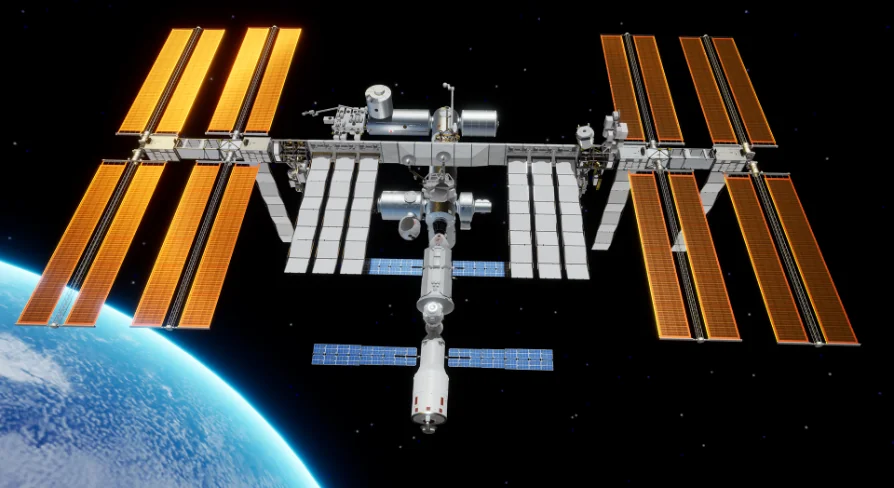
An exterior-only environment of the International Space Station featuring 4K PBR textures, real-world scale, and an automated Earth day-night cycle.
When building space simulators, cinematic flybys, or realistic orbital environments, the structural foundation dictates the entire workflow. This project provides a fully constructed environment of the International Space Station. Because the asset is explicitly designed as an exterior-only environment, it is targeted primarily toward establishing shots, spacewalk mechanics, and external orbital simulations rather than interior crew-cabin exploration. By omitting interior geometry, the environment remains focused entirely on the complex external architecture of the station.
The geometry is built according to real-world existing models, ensuring that the proportions, module placement, and overall silhouette align exactly with the actual station. Developers working on realistic simulations, spacecraft docking sequences, or educational space projects can rely heavily on the real-world scales and structures provided in the mesh data. This strict adherence to accurate scaling means that physics simulations, camera collision bounds, and character proportions will naturally match the authentic dimensions of the real-world counterpart without requiring manual resizing.
Material Fidelity and 4K PBR Setup
In the vacuum of space, lighting behaves with extreme contrast, making the material response of spacecraft surfaces highly visible. To handle these harsh outdoor lighting conditions, every module and structural component of the station is textured using a physically based rendering (PBR) workflow. Specifically, the materials utilize dedicated roughness and metalness maps to dictate how light scatters across the various solar panels, thermal blankets, and metallic trusses.
Each model in the environment is supported by a 4096x4096 texture resolution. This 4K texture sizing allows for extremely close camera work during cinematic renders or tight third-person angles during an extravehicular activity simulation. The high-resolution roughness and metalness data ensure that specular highlights from the sun and the ambient bounce light from the Earth below behave predictably across the station's diverse surface materials, maintaining a strict realistic visual standard for demanding space levels.
Dynamic Earth and Day-Night Transitions
A static space environment often feels lifeless, usually requiring significant blueprint work to simulate accurate orbital mechanics and planetary lighting. To bypass this heavy setup phase, the environment includes a dynamic Earth background that automatically generates day and night cycles. As the station orbits, or as time progresses within the scene, the planet below seamlessly shifts between its brightly sunlit surface and its nighttime phase.
This automated planetary transition provides immediate movement and atmospheric depth to the background, directly interacting with the station's own lighting scenario. Developers can utilize this automatic generation to create time-lapse cinematics, simulate accurate orbital periods, or force players to manage visibility during the dark phase of an orbit in a survival simulation project.
Organizing Real-World Station Components
Managing a complex spacecraft assembly with dozens of interconnected modules, trusses, and radiators can easily become a chaotic process within the engine outliner. To streamline project management and level design, each part of the environment is named precisely after its real-world counterpart. This naming convention makes it very easy to locate, select, and utilize specific parts for any custom purposes.
If a developer needs to isolate a specific solar array, docking port, or habitation exterior for a particular cinematic sequence, the real-world naming structure allows for rapid filtering. This organizational method ensures that teams can easily break down the station, rearrange parts to construct a custom fantasy or alien spacecraft design, or isolate specific sectors for optimized rendering in a sprawling galaxy scene.
Applying Decals for Surface Realism
Clean geometry often requires additional surface disruption to achieve true realism, especially on structures constantly exposed to the harsh conditions of the cosmos. To supplement the primary 4K PBR textures, the project includes eight distinct decals. These decals are intended to be placed across the exterior hulls and structural beams to break up repeating patterns and add localized detail. By utilizing these decals, level designers can apply specific surface wear, panel markings, or technical indicators without having to permanently modify the underlying 4K texture maps or increase the overall geometric complexity of the station mesh.
Unreal Engine Compatibility Profile
The technical foundation of the environment is built to accommodate standard legacy workflows within the Unreal Engine ecosystem. The project was originally created using Unreal Engine 4.24 and has been thoroughly tested for stability through Unreal Engine 4.27. This ensures a clear and functional implementation for developers operating within these specific versions of the UE4 pipeline.
Teams building outdoor space scenes, realistic simulations, or galaxy-spanning fantasy projects can integrate the station knowing the material setups and dynamic planetary lighting are verified and clear of errors for these engine builds. Ultimately, the package serves studios needing a highly accurate, exterior-focused orbital asset that prioritizes real-world scaling and automated planetary backdrops.
 Sci-Fi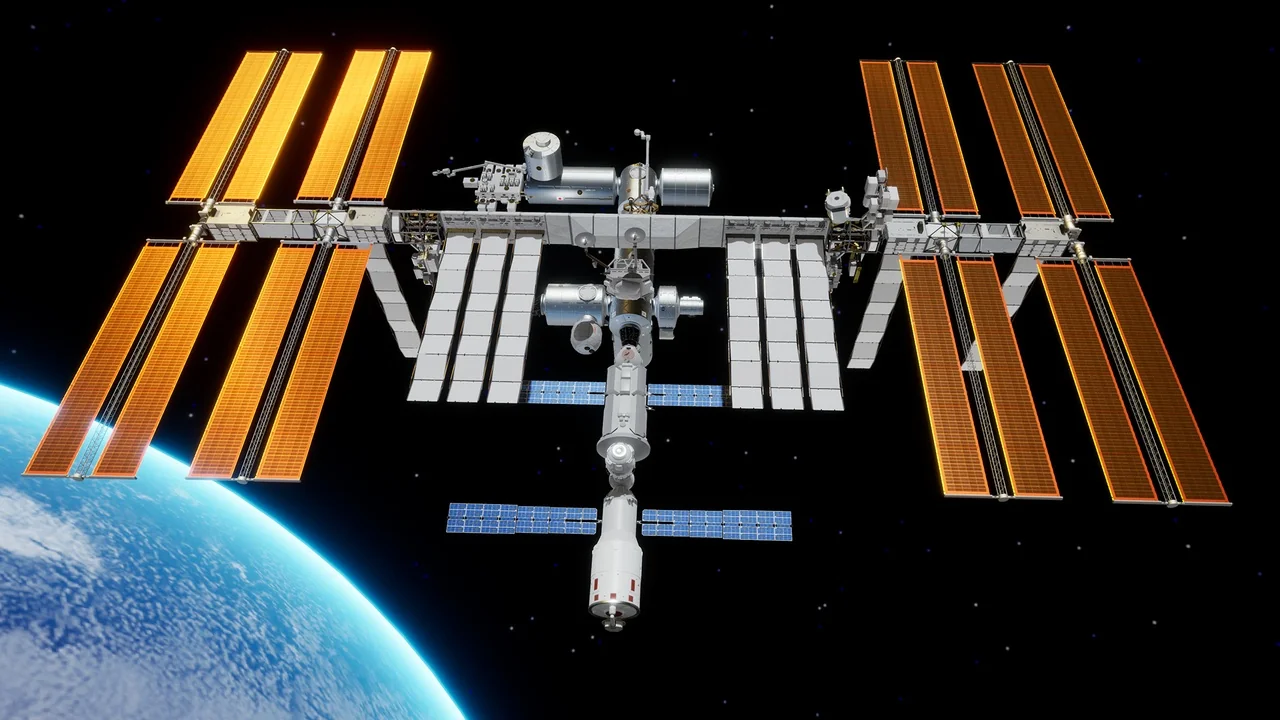
 Sci-Fi
 Sci-Fi
 Sci-Fi