"6c6413bef81af556"{"id":"28038","slug":"sci-fi-orion-mars-med-lab","title":"Sci Fi Orion Mars Med Lab","category":"Sci-Fi","engine":"4.26+,5.0+","assetVersion":"Engine version: 4.26+,5.0+","engineVersion":"4.19","tag":"Sci-Fi","accent":"blue","visual":"city","summary":"Sci Fi Orion Mars Med Lab focuses on a common environment-production task: building a medical and laboratory space that can either stand alone or connect cleanly to a larger sci-fi facility. It combines hospital rooms, cryo equipment, animated displays, and...","platform":"Unreal Engine","publishedAt":"2026-05-01T07:48:32.000Z","updatedAt":"2026-05-01T07:48:33.000Z","sourceNotes":[],"fileContents":[],"compatibility":["Unreal Engine","Engine version: 4.26+,5.0+"],"featuredImage":{"alt":"Sci Fi Orion Mars Med Lab","src":"https://3dcghub.com/wp-content/uploads/2026/05/014e0d1d582a_574a962e-de39-4c72-b35a-6a0c6115f476.webp"},"hasDownloadLink":true,"downloads":1,"terms":[{"taxonomy":"category","slug":"sci-fi","name":"Sci-Fi"},{"taxonomy":"post_tag","slug":"environment","name":"Environment"},{"taxonomy":"post_tag","slug":"materials","name":"Materials"},{"taxonomy":"post_tag","slug":"unreal-engine-5","name":"Unreal Engine 5"}],"galleryImages":[{"src":"https://3dcghub.com/wp-content/uploads/2026/05/849297d14a6e_e2877ae1-5ca1-4f84-a277-1bf4aefd9bc3.webp","alt":"Sci Fi Orion Mars Med Lab"},{"src":"https://3dcghub.com/wp-content/uploads/2026/05/fa20971e53bf_c919a9df-c9ff-4ffc-97e3-2253c8590852.webp","alt":"Sci Fi Orion Mars Med Lab"},{"src":"https://3dcghub.com/wp-content/uploads/2026/05/b2cb289c42e3_635d622e-0617-47b3-b62e-5ee1b7b12ff4.webp","alt":"Sci Fi Orion Mars Med Lab"},{"src":"https://3dcghub.com/wp-content/uploads/2026/05/18854d8c6064_cd256ff7-159b-4006-b9f4-c3dafe930bee.webp","alt":"Sci Fi Orion Mars Med Lab"},{"src":"https://3dcghub.com/wp-content/uploads/2026/05/caad8adeba43_f5209a6f-46e3-4318-a9ac-077de80b9132.webp","alt":"Sci Fi Orion Mars Med Lab"},{"src":"https://3dcghub.com/wp-content/uploads/2026/05/189c7045410c_e11d7a88-480c-434b-adc2-77c0803b85b1.webp","alt":"Sci Fi Orion Mars Med Lab"},{"src":"https://3dcghub.com/wp-content/uploads/2026/05/699eb8c0f6a6_6a784434-bb28-43f3-bc82-7bdcc3462d46.webp","alt":"Sci Fi Orion Mars Med Lab"},{"src":"https://3dcghub.com/wp-content/uploads/2026/05/0facc2c9ef1d_345a8a56-1325-4d89-87c4-b9adafed7bc0.webp","alt":"Sci Fi Orion Mars Med Lab"},{"src":"https://3dcghub.com/wp-content/uploads/2026/05/b9c1c8292374_2bf40fcc-afd3-4f64-9691-4db29a0ab71b.webp","alt":"Sci Fi Orion Mars Med Lab"},{"src":"https://3dcghub.com/wp-content/uploads/2026/05/819a793dcbb5_a098e1a8-a2e3-40ad-9eb7-cd85d1d85db4.webp","alt":"Sci Fi Orion Mars Med Lab"}],"accessPanel":{"kind":"resource","title":"Access this resource","eyebrow":"Free Download","message":"Log in or create a free account to start your download.","fileName":"Content.7z","safetyNote":"All resources are 100% manually reviewed to eliminate all risks.","actionLabel":"Download Free","resourceType":"Resource archive"},"contentHtml":"\u003cp\u003eWhen a scene needs a believable sci-fi medical wing, the hardest part is often not the hero props. It is getting the full space to work as a coherent environment, with rooms, circulation, equipment, and enough flexibility to adapt the layout without rebuilding everything from scratch.\u003c/p\u003e\n\u003cp\u003eSci Fi Orion Mars Med Lab addresses that job directly. It is a medical hospital and laboratory set in the Orion Mars series, created to fit together with Orion Mars Corridors and Orion Mars Living Quarters. That places it naturally in a larger environment pipeline where separate interior modules need to connect into one continuous setting rather than feel like isolated rooms.\u003c/p\u003e \u003ch2\u003eSetting up a Sci Fi Orion Mars Med Lab scene\u003c/h2\u003e\n\u003cp\u003eThe package centers on a medical facility layout rather than a single room. Hospital rooms are included alongside beds with curtain dividers, cryo chambers, and bio scanners, which gives the set a clear functional identity from the start.\u003c/p\u003e\n\u003cp\u003eThat matters in production because the environment can read as both treatment space and laboratory space without needing a separate visual language for each. A team blocking out a station or colony interior can place it as a dedicated med bay, a research ward, or a combined healthcare and analysis area. The asset can also be used as an interior space on its own, or expanded with external walls and roof pieces. That makes it useful for two different staging needs: enclosed interior shots and scenes where the building shell also needs to be visible.\u003c/p\u003e \u003ch2\u003eOrion Mars Med Lab and how it connects to the series\u003c/h2\u003e\n\u003cp\u003eThis set is not presented as a disconnected environment. It fits together with Orion Mars Corridors and Orion Mars Living Quarters, which gives it a practical role in larger level assembly.\u003c/p\u003e\n\u003cp\u003eIn a workflow built around modular scene construction, that connection is one of the most useful details. A medical wing usually needs believable adjacency to circulation spaces and nearby habitation areas. Here, Med Lab is already positioned to join those related Orion Mars environments. Some content from Sci Fi Orion Mars Living Quarters is also included to demonstrate how the spaces fit together, reinforcing that the package is meant to be integrated rather than treated as a sealed-off module.\u003c/p\u003e\n\u003cp\u003eFor environment work, that kind of continuity helps with more than visual matching. It supports scene planning. Corridors can serve as access routes, living quarters can establish the surrounding facility, and the med lab can become a destination space within the same world. Instead of solving every connection point independently, the production can use a set that already acknowledges the neighboring parts of the station or colony.\u003c/p\u003e \u003ch2\u003eBlueprint customization across floors, walls, beds, and scanners\u003c/h2\u003e\n\u003cp\u003eA major part of the package is how many structural and functional pieces are handled through Blueprints. The floors, walls, ceilings, chair, beds, cryo chamber, bed curtains, bio scanner, and robotic arm tracks are Blueprints that use construction scripts with public exposed variables for customization.\u003c/p\u003e\n\u003cp\u003eThat shifts the set from static dressing toward a more adjustable environment kit. In practice, it means the Med Lab is suited to layout work where the scene needs to change shape, spacing, or configuration while the art direction is still being refined. Floors, walls, and ceilings being Blueprint-based supports room assembly. Beds, curtains, and scanners being part of the same customization approach helps populate those rooms without breaking the consistency of the setup process.\u003c/p\u003e\n\u003cp\u003eThe mention of robotic arm tracks also points to a space that can feel active and mechanical rather than purely architectural. Animated screens, pads, and displays add another layer to that. They help the environment read as an operational medical and research area, not just an empty shell with static props. For teams staging walkthroughs, cinematic beats, or ambient background action inside a medical section, those animated interface elements can carry a lot of the scene's technological atmosphere.\u003c/p\u003e \u003ch2\u003eHospital rooms, Cryo chambers, and Bio scanners in production use\u003c/h2\u003e\n\u003cp\u003eThe strongest visual identity in this set comes from the medical equipment and room dressing. Beds with curtain dividers establish recognizable hospital spaces, while cryo chambers and bio scanners push the environment into a science-fiction healthcare setting.\u003c/p\u003e\n\u003cp\u003eThat mix makes the pack useful for several types of scene composition within the same production. A hospital room can be staged as a practical care area. A cryo chamber room can suggest emergency storage, long-term treatment, or experimental procedures. Bio scanners can support laboratory corners or diagnostic stations. Since the package combines those components inside one environment set, the tone can shift from clinical care to advanced research without leaving the same visual system.\u003c/p\u003e\n\u003cp\u003eThe resource also includes two example environments, one on Mars and one that is just the interior, plus one overview map. Those examples give the set a clear role in setup and review. An interior-only example helps when the focus is room layout, materials, and equipment arrangement. A Mars example shows how the environment can sit in a planetary context. The overview map is a practical aid when the goal is to inspect the included parts and understand how the set is organized before folding it into a larger level.\u003c/p\u003e \u003ch2\u003eMaterials, textures, and implementation notes for Med Lab\u003c/h2\u003e\n\u003cp\u003eThe package includes 8 meshes, 34 materials, 15 material functions, 79 textures, and 4 Blueprints besides the Blueprint-driven elements already listed. Those numbers show that the Med Lab is not just a handful of props. It is a structured environment package with a substantial amount of surface and shader support behind the rooms and equipment.\u003c/p\u003e\n\u003cp\u003eThere is also one implementation note to account for: for engine version 5.0, the Electra Plugins are needed. That is the sort of small technical requirement that belongs near the start of production planning rather than at the end, especially when a team is evaluating how quickly an environment can be dropped into an existing Unreal Engine project.\u003c/p\u003e\n\u003cp\u003eThe Mars skydome background image is credited to NASA/JPL-Caltech. In context, that detail sits alongside the included Mars example environment and helps define the set's wider backdrop when the med lab is placed beyond a purely interior presentation.\u003c/p\u003e\n\u003cp\u003eFor a production that needs a sci-fi healthcare and lab space inside a larger Mars facility, Sci Fi Orion Mars Med Lab fits best as a modular environment layer: a medical destination that can stand alone for interior scenes, or slot into the broader Orion Mars series when the full colony layout needs to connect room by room.\u003c/p\u003e\n\n\u003ch2\u003eMore From The Same Workflow\u003c/h2\u003e\n\u003cul\u003e\n\u003cli\u003e\u003ca href=\"https://3dcghub.com/56-fabric-textile-materials-4k-pbr-collection/\" title=\"56 Fabric \u0026amp;amp; Textile Materials (4K PBR Collection)\"\u003e56 Fabric \u0026amp; Textile Materials (4K PBR Collection)\u003c/a\u003e\u003c/li\u003e\n\u003cli\u003e\u003ca href=\"https://3dcghub.com/advanced-road-materials/\" title=\"Advanced road materials\"\u003eAdvanced road materials\u003c/a\u003e\u003c/li\u003e\n\u003cli\u003e\u003ca href=\"https://3dcghub.com/master-materials-and-layer-system-for-daz3d-imports/\" title=\"Master Materials and Layer System for Daz3D Imports\"\u003eMaster Materials and Layer System for Daz3D Imports\u003c/a\u003e\u003c/li\u003e\n\u003cli\u003e\u003ca href=\"https://3dcghub.com/realistic-materials-vol-7-water-ice-25-materials/\" title=\"Realistic Materials Vol. 7 – Water \u0026amp;amp; Ice (25+ Materials)\"\u003eRealistic Materials Vol. 7 – Water \u0026amp; Ice (25+ Materials)\u003c/a\u003e\u003c/li\u003e\n\u003cli\u003e\u003ca href=\"https://3dcghub.com/stylized-250-materials-bundle/\" title=\"Stylized 250 Materials Bundle\"\u003eStylized 250 Materials Bundle\u003c/a\u003e\u003c/li\u003e\n\u003c/ul\u003e\n\n\u003ch2\u003eAsset Gallery\u003c/h2\u003e","contentTextLength":7003,"navigation":{"current":1296,"total":3140,"previous":{"id":"28051","slug":"sci-fi-orion-mars-living-quarters","title":"Sci Fi Orion Mars Living Quarters","category":"Sci-Fi","platform":"Unreal Engine","updatedAt":"2026-05-01T08:36:29.000Z"},"next":{"id":"28024","slug":"sci-fi-robot-factory-environment","title":"Sci-Fi Robot Factory Environment","category":"Sci-Fi","platform":"Unreal Engine","updatedAt":"2026-04-30T15:53:07.000Z"}},"relatedResources":[{"id":"28051","slug":"sci-fi-orion-mars-living-quarters","title":"Sci Fi Orion Mars Living Quarters","category":"Sci-Fi","engine":"4.26+,5.0+","assetVersion":"Engine version: 4.26+,5.0+","engineVersion":"","tag":"Sci-Fi","accent":"blue","visual":"city","summary":"Sci Fi Orion Mars Living Quarters focuses on building Mars habitats that can stretch from interior rooms to exterior structures across a large terrain. It combines modular architecture, interactive Blueprint elements, and layered material control for projec...","platform":"Unreal Engine","publishedAt":"2026-05-01T08:36:28.000Z","updatedAt":"2026-05-01T08:36:29.000Z","sourceNotes":[],"fileContents":[],"compatibility":["Unreal Engine","Engine version: 4.26+,5.0+"],"featuredImage":{"alt":"Sci Fi Orion Mars Living Quarters","src":"https://3dcghub.com/wp-content/uploads/2026/05/6392090df1e0_01805f4e-57ae-45d4-8504-7ebf7ad7be73.webp"},"hasDownloadLink":true,"downloads":1},{"id":"27524","slug":"concrete-hallway","title":"Concrete Hallway","category":"Sci-Fi","engine":"5.0+","assetVersion":"Engine version: 5.0+","engineVersion":"","tag":"Sci-Fi","accent":"blue","visual":"city","summary":"Concrete Hallway brings a futuristic modern sci-fi corridor look with a simple concrete surface that avoids repetitive patterning. Its UV-independent material and actor-position texture offset make it useful for scenes that need controlled variation, while...","platform":"Unreal Engine","publishedAt":"2026-04-26T06:56:05.000Z","updatedAt":"2026-04-26T06:56:06.000Z","sourceNotes":[],"fileContents":[],"compatibility":["Unreal Engine","Engine version: 5.0+"],"featuredImage":{"alt":"Concrete Hallway","src":"https://3dcghub.com/wp-content/uploads/2026/04/36d62a0adfce_689b39b7-b0a6-40e3-831e-1de586c71c73.webp"},"hasDownloadLink":true,"downloads":0},{"id":"1001142","slug":"modular-sci-fi-station","title":"Modular Sci-Fi Station","category":"Sci-Fi","engine":"4.26+,5.0+","assetVersion":"","engineVersion":"Engine Version: 4.26+,5.0+","tag":"Sci-Fi","accent":"blue","visual":"mech","summary":"Construct diverse sci-fi rooms, hallways, and spaceship interiors with the low-poly Modular Sci-Fi Station kit featuring high-resolution PBR textures.","platform":"Unreal Engine","publishedAt":"2026-09-09T05:35:44.412Z","updatedAt":"2026-09-09T05:35:44.412Z","sourceNotes":[],"fileContents":[],"compatibility":["Unreal Engine","Engine Version: 4.26+,5.0+"],"featuredImage":{"alt":"Modular Sci-Fi Station","src":"/wp-content/uploads/published/2026/09/a4c5f3ab3f03-8001c386-d63a-49cc-b8df-63595e3c4c42-c1137ad880.webp"},"hasDownloadLink":true,"downloads":0}]}
Sci-Fi
Sci Fi Orion Mars Med Lab
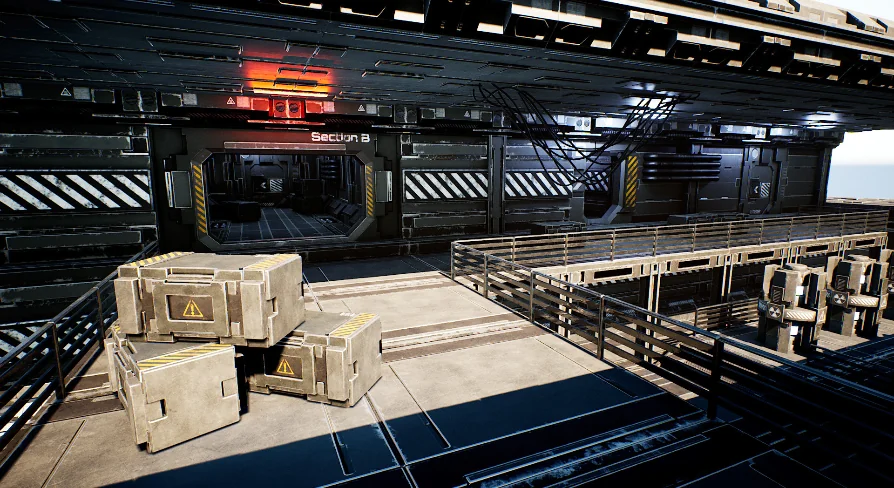
Sci Fi Orion Mars Med Lab focuses on a common environment-production task: building a medical and laboratory space that can either stand alone or connect cleanly to a larger sci-fi facility. It combines hospital rooms, cryo equipment, animated displays, and...
Category:Unreal Engine, Sci-FiPlatform: Unreal EngineEngine version: 4.26+,5.0+Published: May 1, 2026
Sci-Fi
Resource overview
When a scene needs a believable sci-fi medical wing, the hardest part is often not the hero props. It is getting the full space to work as a coherent environment, with rooms, circulation, equipment, and enough flexibility to adapt the layout without rebuilding everything from scratch.
Sci Fi Orion Mars Med Lab addresses that job directly. It is a medical hospital and laboratory set in the Orion Mars series, created to fit together with Orion Mars Corridors and Orion Mars Living Quarters. That places it naturally in a larger environment pipeline where separate interior modules need to connect into one continuous setting rather than feel like isolated rooms.
Setting up a Sci Fi Orion Mars Med Lab scene
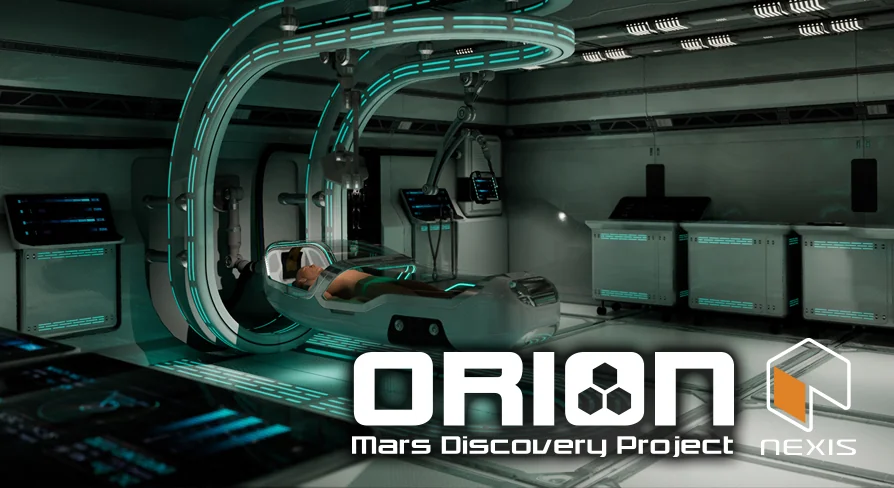
The package centers on a medical facility layout rather than a single room. Hospital rooms are included alongside beds with curtain dividers, cryo chambers, and bio scanners, which gives the set a clear functional identity from the start.
That matters in production because the environment can read as both treatment space and laboratory space without needing a separate visual language for each. A team blocking out a station or colony interior can place it as a dedicated med bay, a research ward, or a combined healthcare and analysis area. The asset can also be used as an interior space on its own, or expanded with external walls and roof pieces. That makes it useful for two different staging needs: enclosed interior shots and scenes where the building shell also needs to be visible.
Orion Mars Med Lab and how it connects to the series
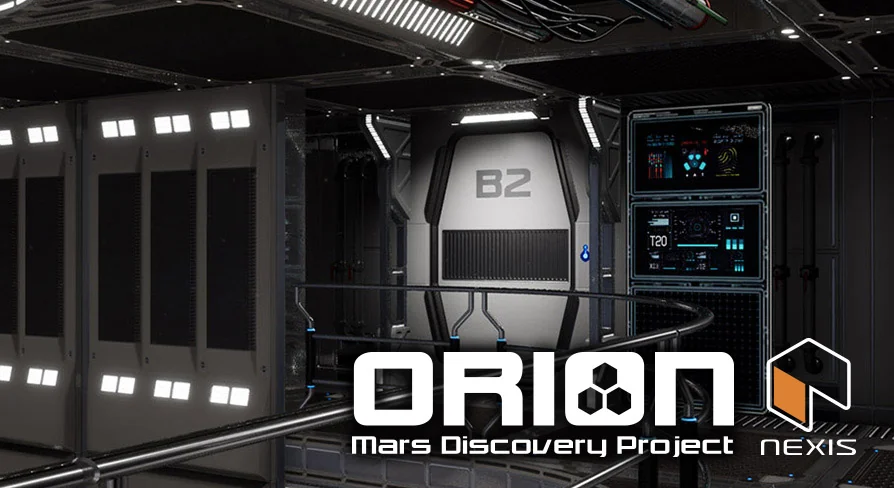
This set is not presented as a disconnected environment. It fits together with Orion Mars Corridors and Orion Mars Living Quarters, which gives it a practical role in larger level assembly.
In a workflow built around modular scene construction, that connection is one of the most useful details. A medical wing usually needs believable adjacency to circulation spaces and nearby habitation areas. Here, Med Lab is already positioned to join those related Orion Mars environments. Some content from Sci Fi Orion Mars Living Quarters is also included to demonstrate how the spaces fit together, reinforcing that the package is meant to be integrated rather than treated as a sealed-off module.
For environment work, that kind of continuity helps with more than visual matching. It supports scene planning. Corridors can serve as access routes, living quarters can establish the surrounding facility, and the med lab can become a destination space within the same world. Instead of solving every connection point independently, the production can use a set that already acknowledges the neighboring parts of the station or colony.
Blueprint customization across floors, walls, beds, and scanners
A major part of the package is how many structural and functional pieces are handled through Blueprints. The floors, walls, ceilings, chair, beds, cryo chamber, bed curtains, bio scanner, and robotic arm tracks are Blueprints that use construction scripts with public exposed variables for customization.
That shifts the set from static dressing toward a more adjustable environment kit. In practice, it means the Med Lab is suited to layout work where the scene needs to change shape, spacing, or configuration while the art direction is still being refined. Floors, walls, and ceilings being Blueprint-based supports room assembly. Beds, curtains, and scanners being part of the same customization approach helps populate those rooms without breaking the consistency of the setup process.
The mention of robotic arm tracks also points to a space that can feel active and mechanical rather than purely architectural. Animated screens, pads, and displays add another layer to that. They help the environment read as an operational medical and research area, not just an empty shell with static props. For teams staging walkthroughs, cinematic beats, or ambient background action inside a medical section, those animated interface elements can carry a lot of the scene's technological atmosphere.
Hospital rooms, Cryo chambers, and Bio scanners in production use
The strongest visual identity in this set comes from the medical equipment and room dressing. Beds with curtain dividers establish recognizable hospital spaces, while cryo chambers and bio scanners push the environment into a science-fiction healthcare setting.
That mix makes the pack useful for several types of scene composition within the same production. A hospital room can be staged as a practical care area. A cryo chamber room can suggest emergency storage, long-term treatment, or experimental procedures. Bio scanners can support laboratory corners or diagnostic stations. Since the package combines those components inside one environment set, the tone can shift from clinical care to advanced research without leaving the same visual system.
The resource also includes two example environments, one on Mars and one that is just the interior, plus one overview map. Those examples give the set a clear role in setup and review. An interior-only example helps when the focus is room layout, materials, and equipment arrangement. A Mars example shows how the environment can sit in a planetary context. The overview map is a practical aid when the goal is to inspect the included parts and understand how the set is organized before folding it into a larger level.
Materials, textures, and implementation notes for Med Lab
The package includes 8 meshes, 34 materials, 15 material functions, 79 textures, and 4 Blueprints besides the Blueprint-driven elements already listed. Those numbers show that the Med Lab is not just a handful of props. It is a structured environment package with a substantial amount of surface and shader support behind the rooms and equipment.
There is also one implementation note to account for: for engine version 5.0, the Electra Plugins are needed. That is the sort of small technical requirement that belongs near the start of production planning rather than at the end, especially when a team is evaluating how quickly an environment can be dropped into an existing Unreal Engine project.
The Mars skydome background image is credited to NASA/JPL-Caltech. In context, that detail sits alongside the included Mars example environment and helps define the set's wider backdrop when the med lab is placed beyond a purely interior presentation.
For a production that needs a sci-fi healthcare and lab space inside a larger Mars facility, Sci Fi Orion Mars Med Lab fits best as a modular environment layer: a medical destination that can stand alone for interior scenes, or slot into the broader Orion Mars series when the full colony layout needs to connect room by room.
 Sci-Fi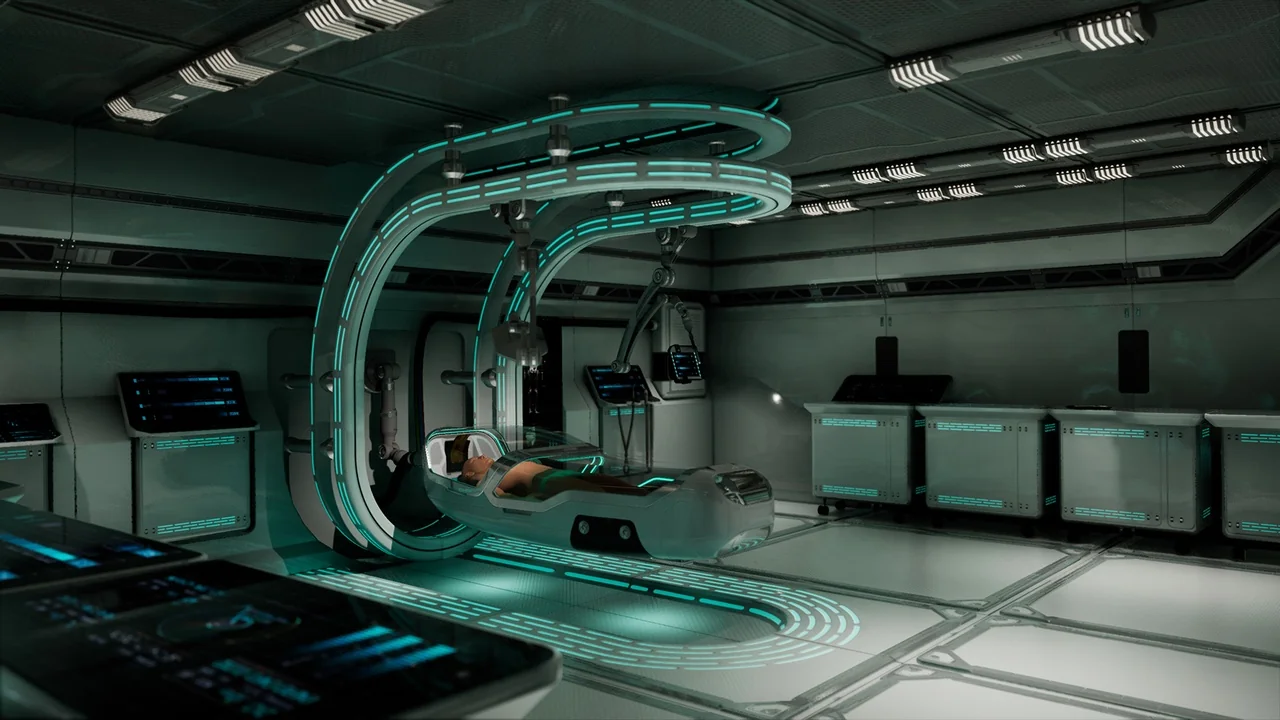
 Sci-Fi
 Sci-Fi
 Sci-Fi