"6c6413bef81af556"{"id":"28051","slug":"sci-fi-orion-mars-living-quarters","title":"Sci Fi Orion Mars Living Quarters","category":"Sci-Fi","engine":"4.26+,5.0+","assetVersion":"Engine version: 4.26+,5.0+","engineVersion":"","tag":"Sci-Fi","accent":"blue","visual":"city","summary":"Sci Fi Orion Mars Living Quarters focuses on building Mars habitats that can stretch from interior rooms to exterior structures across a large terrain. It combines modular architecture, interactive Blueprint elements, and layered material control for projec...","platform":"Unreal Engine","publishedAt":"2026-05-01T08:36:28.000Z","updatedAt":"2026-05-01T08:36:29.000Z","sourceNotes":[],"fileContents":[],"compatibility":["Unreal Engine","Engine version: 4.26+,5.0+"],"featuredImage":{"alt":"Sci Fi Orion Mars Living Quarters","src":"https://3dcghub.com/wp-content/uploads/2026/05/6392090df1e0_01805f4e-57ae-45d4-8504-7ebf7ad7be73.webp"},"hasDownloadLink":true,"downloads":1,"terms":[{"taxonomy":"category","slug":"sci-fi","name":"Sci-Fi"},{"taxonomy":"post_tag","slug":"environment","name":"Environment"},{"taxonomy":"post_tag","slug":"materials","name":"Materials"},{"taxonomy":"post_tag","slug":"unreal-engine-5","name":"Unreal Engine 5"}],"galleryImages":[{"src":"https://3dcghub.com/wp-content/uploads/2026/05/5665c30dedd7_35cf07e7-a218-4354-9179-502b4b2f8ad2.webp","alt":"Sci Fi Orion Mars Living Quarters"},{"src":"https://3dcghub.com/wp-content/uploads/2026/05/39670b923136_45e74a8c-647a-4dbf-b86d-215d1f182ee9.webp","alt":"Sci Fi Orion Mars Living Quarters"},{"src":"https://3dcghub.com/wp-content/uploads/2026/05/e9e05a9429dc_33f8cf25-7653-4ed6-bdc6-2d27d64825c8.webp","alt":"Sci Fi Orion Mars Living Quarters"},{"src":"https://3dcghub.com/wp-content/uploads/2026/05/5caa44c8d2f4_030244a5-7efd-4e4b-b869-effbd65f566e.webp","alt":"Sci Fi Orion Mars Living Quarters"},{"src":"https://3dcghub.com/wp-content/uploads/2026/05/dffdad094911_3eb3b054-47cc-4286-aecb-265a65250822.webp","alt":"Sci Fi Orion Mars Living Quarters"},{"src":"https://3dcghub.com/wp-content/uploads/2026/05/54c4b11019c1_781099a3-f696-44ca-a273-a59c3f446054.webp","alt":"Sci Fi Orion Mars Living Quarters"},{"src":"https://3dcghub.com/wp-content/uploads/2026/05/f478a94f06bd_e6294a3d-ed08-46e3-b850-57e8146ab769.webp","alt":"Sci Fi Orion Mars Living Quarters"},{"src":"https://3dcghub.com/wp-content/uploads/2026/05/7bf3dbebffbc_ab7bc8a0-03ba-4393-acbf-e717e68fe7b7.webp","alt":"Sci Fi Orion Mars Living Quarters"},{"src":"https://3dcghub.com/wp-content/uploads/2026/05/a83abf81a37a_433b35a4-a813-4147-8378-dc7b01661266.webp","alt":"Sci Fi Orion Mars Living Quarters"},{"src":"https://3dcghub.com/wp-content/uploads/2026/05/4ed1f18cd152_1b3ad29b-162c-45b9-91fa-d53bc7af25c3.webp","alt":"Sci Fi Orion Mars Living Quarters"}],"accessPanel":{"kind":"resource","title":"Access this resource","eyebrow":"Free Download","message":"Log in or create a free account to start your download.","fileName":"Content.7z","safetyNote":"All resources are 100% manually reviewed to eliminate all risks.","actionLabel":"Download Free","resourceType":"Resource archive"},"contentHtml":"\u003cp\u003eProjects that need Mars habitats, connected sci-fi interiors, and large exterior outposts are the natural fit for \u003cstrong\u003eSci Fi Orion Mars Living Quarters\u003c/strong\u003e. The package centers on a massive Mars terrain and a diverse set of modular building assets, making it suited to scenes that move between living spaces, structural exteriors, and broader planetary surface shots without switching to a separate visual language.\u003c/p\u003e \u003cp\u003eThe set also connects directly with \u003cstrong\u003eOrion Mars Corridors\u003c/strong\u003e, which gives it a clear place in a larger environment workflow. Rather than functioning as a single isolated location, it extends a broader Mars facility style with pieces that can be assembled into more complete residential or operational areas.\u003c/p\u003e \u003ch2\u003eSci Fi Orion Mars Living Quarters on a large Mars terrain\u003c/h2\u003e\n\u003cp\u003eThe strongest concrete element here is scale. A massive Mars terrain forms the backdrop for the modular structures, so this is not limited to a compact interior kit. It supports scenes where buildings need to sit believably on the Martian surface, with enough room for larger compounds, smaller installations, and transitions between them.\u003c/p\u003e \u003cp\u003eThat external scope is paired with building pieces intended for assembly. The modular building assets allow layouts to be arranged into different configurations rather than locking everything into one fixed composition. For creators working on level art, cinematic environments, or explorable sci-fi spaces, that means the package can cover enclosed habitation zones as well as outside-facing architecture on the same terrain.\u003c/p\u003e \u003cp\u003eThree example environments are included on Mars: one large setup, one smaller setup, and one using new terrain. There is also one overview map. Those example scenes make the package easier to read as a world-building set rather than just a folder of parts. The larger environment points toward more expansive colony-style scenes, while the smaller one suggests quicker room-and-structure layouts or more focused mission spaces. The additional overview map helps frame the collection as a complete environment package with multiple ways to inspect or present the content.\u003c/p\u003e \u003ch2\u003eOrion Mars Corridors compatibility and modular interior building\u003c/h2\u003e\n\u003cp\u003eA key practical detail is that the living quarters fit together with \u003cstrong\u003eOrion Mars Corridors\u003c/strong\u003e. That matters most for projects already using corridor-based sci-fi interiors and looking to expand into lived-in sections of the same facility. Corridors often solve movement and connection; living quarters expand that into destination spaces such as rooms, storage areas, and support sections.\u003c/p\u003e \u003cp\u003eThe wall construction supports both interior and exterior building because all walls are double sided. That removes a common limitation in modular kits where one side is meant only for interior use and the other side is either unfinished or structurally unsuitable for external views. Here, the same wall assets can support scenes viewed from outside the structure as well as spaces explored from inside. For a Mars outpost, that flexibility helps when a sequence needs to cut from a habitat exterior into a room without visual mismatch in the surrounding architecture.\u003c/p\u003e \u003cp\u003eThis makes the package especially useful for creators who want to block out connected habitats, attach quarters to corridor networks, or stage gameplay and cinematic moments that move through doors and into private or operational spaces. The value is not in one hero room alone, but in the ability to assemble a broader base with consistent sci-fi styling across both interior and exterior surfaces.\u003c/p\u003e \u003ch2\u003eBlueprint elevator, doors, closets, and drawers\u003c/h2\u003e\n\u003cp\u003eInteractivity is another concrete part of the set. It includes a configurable \u003cstrong\u003eBlueprint elevator\u003c/strong\u003e, along with many Blueprints for opening closets, doors, and drawers. These are not vague interaction claims; they point to the kinds of functional environmental props that help a living quarters set feel occupied and operational rather than static.\u003c/p\u003e \u003cp\u003eThe configurable elevator is particularly useful in multi-level structures or larger habitat modules where vertical movement is part of the environment design. It gives creators a built-in way to connect floors in a more believable sci-fi facility layout. At the same time, opening closets, doors, and drawers bring smaller-scale interaction to rooms and storage spaces. Those details are often what separate a backdrop from a place that can support closer camera work or more tactile player movement.\u003c/p\u003e \u003cp\u003eBecause these interactions are handled through Blueprints, the package leans toward practical scene assembly rather than pure static decoration. A developer building a Mars station walkthrough, a cinematic sequence inside an outpost, or an explorable level with interactive props would benefit from that mix of structural pieces and ready-made environmental actions.\u003c/p\u003e \u003ch2\u003eMars materials, tiered instances, and PBR wear controls\u003c/h2\u003e\n\u003cp\u003eThe material system is one of the more flexible parts of the package. Many of the floors, ceilings, control panels, and large building details have different materials that can be swapped for different looks. That gives the same core meshes room to support different parts of a settlement, whether the goal is to keep areas visually consistent or break them into cleaner, more industrial, or more worn sections.\u003c/p\u003e \u003cp\u003eThe material instances are tiered, which allows broad and narrow changes depending on how much of the scene needs adjustment. Colors can be changed all at once, or further down the tier on specific groups such as the walls or floors. This kind of control is helpful when refining a full environment after the basic layout is already built. A creator can push the whole habitat toward one palette or isolate only certain surfaces to create section-to-section variation.\u003c/p\u003e \u003cp\u003ePBR materials are included with sliders for edge wear and grunge. That adds another layer of art direction without requiring a full material rebuild. Cleaner surfaces may suit newly established colony spaces or sterile interior sections, while heavier wear and grunge can push the same architecture toward a more used and weathered look. Since the package covers both exterior and interior building, those controls also help keep the environment visually responsive to context, from exposed structures on the Mars terrain to enclosed living and control areas.\u003c/p\u003e \u003ch2\u003eEngine 5.0 plugin note and who this Mars environment suits\u003c/h2\u003e\n\u003cp\u003eFor engine version 5.0, the required plugin is \u003cstrong\u003eElectra Plugins\u003c/strong\u003e. There is also a ReadMe file that explains how to import the Inputs file. Those details point to a package that includes setup steps beyond simply dropping meshes into a scene, especially for anyone planning to use its interaction systems and included content as intended.\u003c/p\u003e \u003cp\u003eThe Mars skydome uses a background image credited to NASA/JPL-Caltech, which reinforces the planetary setting around the modular structures and example maps.\u003c/p\u003e \u003cp\u003eThis set makes the most sense for developers and environment artists building Mars bases, sci-fi residential sections, and connected interior-exterior outposts. It is especially well suited to projects that need modular assembly, interactive doors and storage elements, a configurable elevator, and material controls that can shift the same location from clean to worn without changing the core architecture.\u003c/p\u003e\n\n\u003ch2\u003eRelated Resources Worth Checking\u003c/h2\u003e\n\u003cul\u003e\n\u003cli\u003e\u003ca href=\"https://3dcghub.com/sci-fi-orion-mars-med-lab/\" title=\"Sci Fi Orion Mars Med Lab\"\u003eSci Fi Orion Mars Med Lab\u003c/a\u003e\u003c/li\u003e\n\u003cli\u003e\u003ca href=\"https://3dcghub.com/56-fabric-textile-materials-4k-pbr-collection/\" title=\"56 Fabric \u0026amp;amp; Textile Materials (4K PBR Collection)\"\u003e56 Fabric \u0026amp; Textile Materials (4K PBR Collection)\u003c/a\u003e\u003c/li\u003e\n\u003cli\u003e\u003ca href=\"https://3dcghub.com/advanced-road-materials/\" title=\"Advanced road materials\"\u003eAdvanced road materials\u003c/a\u003e\u003c/li\u003e\n\u003cli\u003e\u003ca href=\"https://3dcghub.com/master-materials-and-layer-system-for-daz3d-imports/\" title=\"Master Materials and Layer System for Daz3D Imports\"\u003eMaster Materials and Layer System for Daz3D Imports\u003c/a\u003e\u003c/li\u003e\n\u003cli\u003e\u003ca href=\"https://3dcghub.com/realistic-materials-vol-7-water-ice-25-materials/\" title=\"Realistic Materials Vol. 7 – Water \u0026amp;amp; Ice (25+ Materials)\"\u003eRealistic Materials Vol. 7 – Water \u0026amp; Ice (25+ Materials)\u003c/a\u003e\u003c/li\u003e\n\u003c/ul\u003e","contentTextLength":7541,"navigation":{"current":1295,"total":3140,"previous":{"id":"28054","slug":"daemon-girl-deluxe-version-game-ready","title":"Daemon Girl Deluxe Version - Game Ready","category":"Characters \u0026 Creatures","platform":"Unreal Engine","updatedAt":"2026-05-01T08:42:01.000Z"},"next":{"id":"28038","slug":"sci-fi-orion-mars-med-lab","title":"Sci Fi Orion Mars Med Lab","category":"Sci-Fi","platform":"Unreal Engine","updatedAt":"2026-05-01T07:48:33.000Z"}},"relatedResources":[{"id":"28038","slug":"sci-fi-orion-mars-med-lab","title":"Sci Fi Orion Mars Med Lab","category":"Sci-Fi","engine":"4.26+,5.0+","assetVersion":"Engine version: 4.26+,5.0+","engineVersion":"4.19","tag":"Sci-Fi","accent":"blue","visual":"city","summary":"Sci Fi Orion Mars Med Lab focuses on a common environment-production task: building a medical and laboratory space that can either stand alone or connect cleanly to a larger sci-fi facility. It combines hospital rooms, cryo equipment, animated displays, and...","platform":"Unreal Engine","publishedAt":"2026-05-01T07:48:32.000Z","updatedAt":"2026-05-01T07:48:33.000Z","sourceNotes":[],"fileContents":[],"compatibility":["Unreal Engine","Engine version: 4.26+,5.0+"],"featuredImage":{"alt":"Sci Fi Orion Mars Med Lab","src":"https://3dcghub.com/wp-content/uploads/2026/05/014e0d1d582a_574a962e-de39-4c72-b35a-6a0c6115f476.webp"},"hasDownloadLink":true,"downloads":1},{"id":"27524","slug":"concrete-hallway","title":"Concrete Hallway","category":"Sci-Fi","engine":"5.0+","assetVersion":"Engine version: 5.0+","engineVersion":"","tag":"Sci-Fi","accent":"blue","visual":"city","summary":"Concrete Hallway brings a futuristic modern sci-fi corridor look with a simple concrete surface that avoids repetitive patterning. Its UV-independent material and actor-position texture offset make it useful for scenes that need controlled variation, while...","platform":"Unreal Engine","publishedAt":"2026-04-26T06:56:05.000Z","updatedAt":"2026-04-26T06:56:06.000Z","sourceNotes":[],"fileContents":[],"compatibility":["Unreal Engine","Engine version: 5.0+"],"featuredImage":{"alt":"Concrete Hallway","src":"https://3dcghub.com/wp-content/uploads/2026/04/36d62a0adfce_689b39b7-b0a6-40e3-831e-1de586c71c73.webp"},"hasDownloadLink":true,"downloads":0},{"id":"1001142","slug":"modular-sci-fi-station","title":"Modular Sci-Fi Station","category":"Sci-Fi","engine":"4.26+,5.0+","assetVersion":"","engineVersion":"Engine Version: 4.26+,5.0+","tag":"Sci-Fi","accent":"blue","visual":"mech","summary":"Construct diverse sci-fi rooms, hallways, and spaceship interiors with the low-poly Modular Sci-Fi Station kit featuring high-resolution PBR textures.","platform":"Unreal Engine","publishedAt":"2026-09-09T05:35:44.412Z","updatedAt":"2026-09-09T05:35:44.412Z","sourceNotes":[],"fileContents":[],"compatibility":["Unreal Engine","Engine Version: 4.26+,5.0+"],"featuredImage":{"alt":"Modular Sci-Fi Station","src":"/wp-content/uploads/published/2026/09/a4c5f3ab3f03-8001c386-d63a-49cc-b8df-63595e3c4c42-c1137ad880.webp"},"hasDownloadLink":true,"downloads":0}]}
Sci-Fi
Sci Fi Orion Mars Living Quarters
Sci Fi Orion Mars Living Quarters focuses on building Mars habitats that can stretch from interior rooms to exterior structures across a large terrain. It combines modular architecture, interactive Blueprint elements, and layered material control for projec...
Category:Unreal Engine, Sci-FiPlatform: Unreal EngineEngine version: 4.26+,5.0+Published: May 1, 2026
Sci-Fi
Resource overview
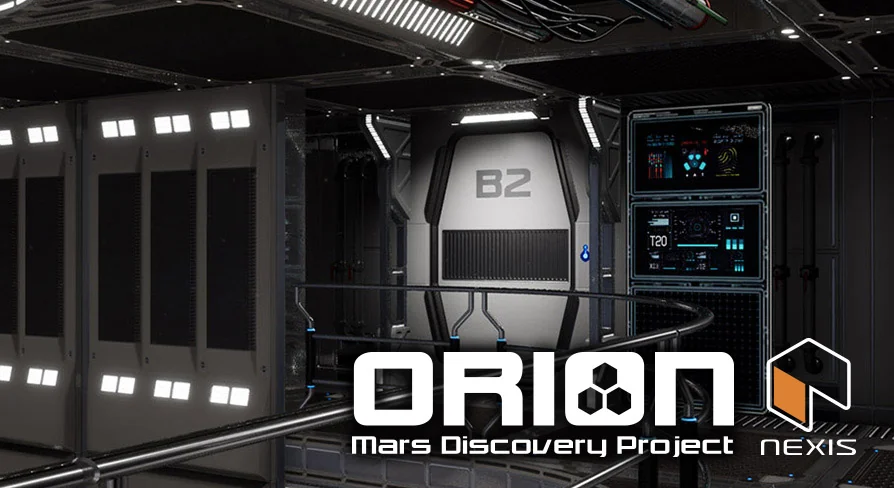
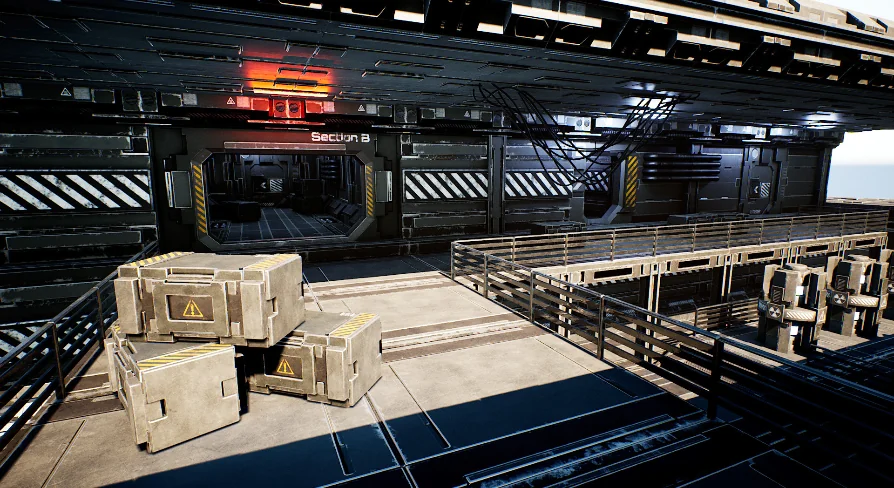
Projects that need Mars habitats, connected sci-fi interiors, and large exterior outposts are the natural fit for Sci Fi Orion Mars Living Quarters. The package centers on a massive Mars terrain and a diverse set of modular building assets, making it suited to scenes that move between living spaces, structural exteriors, and broader planetary surface shots without switching to a separate visual language.
The set also connects directly with Orion Mars Corridors, which gives it a clear place in a larger environment workflow. Rather than functioning as a single isolated location, it extends a broader Mars facility style with pieces that can be assembled into more complete residential or operational areas.
Sci Fi Orion Mars Living Quarters on a large Mars terrain
The strongest concrete element here is scale. A massive Mars terrain forms the backdrop for the modular structures, so this is not limited to a compact interior kit. It supports scenes where buildings need to sit believably on the Martian surface, with enough room for larger compounds, smaller installations, and transitions between them.
That external scope is paired with building pieces intended for assembly. The modular building assets allow layouts to be arranged into different configurations rather than locking everything into one fixed composition. For creators working on level art, cinematic environments, or explorable sci-fi spaces, that means the package can cover enclosed habitation zones as well as outside-facing architecture on the same terrain.
Three example environments are included on Mars: one large setup, one smaller setup, and one using new terrain. There is also one overview map. Those example scenes make the package easier to read as a world-building set rather than just a folder of parts. The larger environment points toward more expansive colony-style scenes, while the smaller one suggests quicker room-and-structure layouts or more focused mission spaces. The additional overview map helps frame the collection as a complete environment package with multiple ways to inspect or present the content.
Orion Mars Corridors compatibility and modular interior building
A key practical detail is that the living quarters fit together with Orion Mars Corridors. That matters most for projects already using corridor-based sci-fi interiors and looking to expand into lived-in sections of the same facility. Corridors often solve movement and connection; living quarters expand that into destination spaces such as rooms, storage areas, and support sections.
The wall construction supports both interior and exterior building because all walls are double sided. That removes a common limitation in modular kits where one side is meant only for interior use and the other side is either unfinished or structurally unsuitable for external views. Here, the same wall assets can support scenes viewed from outside the structure as well as spaces explored from inside. For a Mars outpost, that flexibility helps when a sequence needs to cut from a habitat exterior into a room without visual mismatch in the surrounding architecture.
This makes the package especially useful for creators who want to block out connected habitats, attach quarters to corridor networks, or stage gameplay and cinematic moments that move through doors and into private or operational spaces. The value is not in one hero room alone, but in the ability to assemble a broader base with consistent sci-fi styling across both interior and exterior surfaces.
Blueprint elevator, doors, closets, and drawers
Interactivity is another concrete part of the set. It includes a configurable Blueprint elevator, along with many Blueprints for opening closets, doors, and drawers. These are not vague interaction claims; they point to the kinds of functional environmental props that help a living quarters set feel occupied and operational rather than static.
The configurable elevator is particularly useful in multi-level structures or larger habitat modules where vertical movement is part of the environment design. It gives creators a built-in way to connect floors in a more believable sci-fi facility layout. At the same time, opening closets, doors, and drawers bring smaller-scale interaction to rooms and storage spaces. Those details are often what separate a backdrop from a place that can support closer camera work or more tactile player movement.
Because these interactions are handled through Blueprints, the package leans toward practical scene assembly rather than pure static decoration. A developer building a Mars station walkthrough, a cinematic sequence inside an outpost, or an explorable level with interactive props would benefit from that mix of structural pieces and ready-made environmental actions.
Mars materials, tiered instances, and PBR wear controls
The material system is one of the more flexible parts of the package. Many of the floors, ceilings, control panels, and large building details have different materials that can be swapped for different looks. That gives the same core meshes room to support different parts of a settlement, whether the goal is to keep areas visually consistent or break them into cleaner, more industrial, or more worn sections.
The material instances are tiered, which allows broad and narrow changes depending on how much of the scene needs adjustment. Colors can be changed all at once, or further down the tier on specific groups such as the walls or floors. This kind of control is helpful when refining a full environment after the basic layout is already built. A creator can push the whole habitat toward one palette or isolate only certain surfaces to create section-to-section variation.
PBR materials are included with sliders for edge wear and grunge. That adds another layer of art direction without requiring a full material rebuild. Cleaner surfaces may suit newly established colony spaces or sterile interior sections, while heavier wear and grunge can push the same architecture toward a more used and weathered look. Since the package covers both exterior and interior building, those controls also help keep the environment visually responsive to context, from exposed structures on the Mars terrain to enclosed living and control areas.
Engine 5.0 plugin note and who this Mars environment suits
For engine version 5.0, the required plugin is Electra Plugins. There is also a ReadMe file that explains how to import the Inputs file. Those details point to a package that includes setup steps beyond simply dropping meshes into a scene, especially for anyone planning to use its interaction systems and included content as intended.
The Mars skydome uses a background image credited to NASA/JPL-Caltech, which reinforces the planetary setting around the modular structures and example maps.
This set makes the most sense for developers and environment artists building Mars bases, sci-fi residential sections, and connected interior-exterior outposts. It is especially well suited to projects that need modular assembly, interactive doors and storage elements, a configurable elevator, and material controls that can shift the same location from clean to worn without changing the core architecture.
 Sci-Fi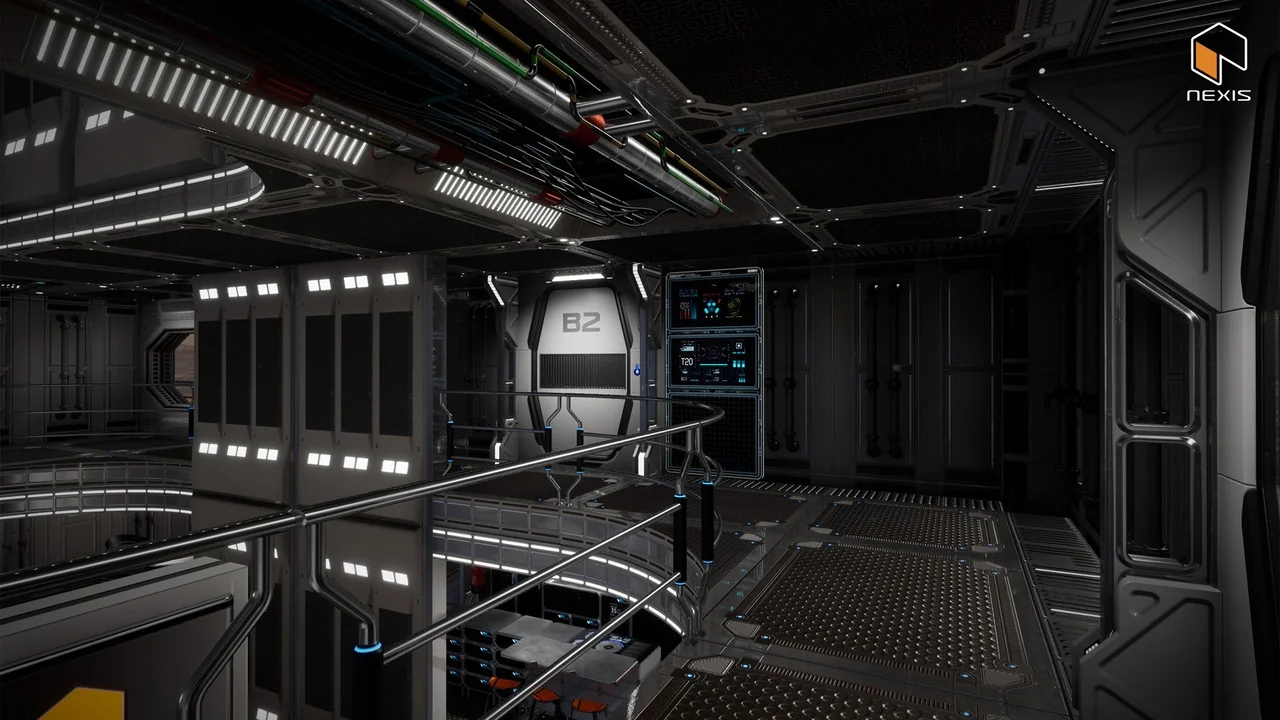
 Sci-Fi
 Sci-Fi
 Sci-Fi