"7b46a695175d8694"{"id":"1001536","slug":"modular-lost-ruins-kit","title":"Modular Lost Ruins Kit","category":"Environments","engine":"5.1+","assetVersion":"","engineVersion":"Engine Version: 5.1+","tag":"Environments","accent":"blue","visual":"city","summary":"Build overgrown stone temples and forgotten fantasy environments using the Modular Lost Ruins Kit, featuring Nanite, Lumen, and modular grid assets.","platform":"Unreal Engine","publishedAt":"2026-10-09T17:29:18.138Z","updatedAt":"2026-10-09T17:29:18.138Z","sourceNotes":[],"fileContents":[],"compatibility":["Unreal Engine","Engine Version: 5.1+"],"featuredImage":{"alt":"Modular Lost Ruins Kit","src":"/wp-content/uploads/published/2026/10/7af8a7b14e3e-f3f91042-90f8-406c-b1c8-c8e686a421ca-85d034c72a.webp"},"hasDownloadLink":true,"downloads":0,"terms":[{"taxonomy":"category","slug":"environments","name":"Environments"}],"galleryImages":[{"src":"/wp-content/uploads/published/2026/10/1f0c12415184-0e1c8eb1-878b-45a8-88c8-5cc6aed53911-a602f682c3.webp","alt":"Modular Lost Ruins Kit"},{"src":"/wp-content/uploads/published/2026/10/77fa08bdbbf0-492c2d5f-1c98-4765-8e2e-99bed7135c79-2bc829a3e9.webp","alt":"Modular Lost Ruins Kit"},{"src":"/wp-content/uploads/published/2026/10/da167fc0d589-cb1166d0-45d9-490a-9ae2-b01ae5fac7bc-38737d28e9.webp","alt":"Modular Lost Ruins Kit"},{"src":"/wp-content/uploads/published/2026/10/5d0ff8d36de7-c9bec77c-00e2-4ac8-8794-131e45650d76-646f3c51b0.webp","alt":"Modular Lost Ruins Kit"},{"src":"/wp-content/uploads/published/2026/10/42bb31c712de-ddf7e283-9f7e-4a2b-8b47-b4b4eea1e618-703502fab7.webp","alt":"Modular Lost Ruins Kit"},{"src":"/wp-content/uploads/published/2026/10/f0988b25505a-e1127efd-e111-4a31-9980-3775048048f0-3fbcc7023c.webp","alt":"Modular Lost Ruins Kit"},{"src":"/wp-content/uploads/published/2026/10/8e3f646556dd-754e968d-477e-499a-9e96-eeaeebe9f12b-36dd7fe10e.webp","alt":"Modular Lost Ruins Kit"},{"src":"/wp-content/uploads/published/2026/10/ebaa823d06d9-09b60c5b-66da-4d72-bf73-01e18d021973-8cb86368bf.webp","alt":"Modular Lost Ruins Kit"},{"src":"/wp-content/uploads/published/2026/10/a536e9592936-e2213244-4e21-4d9a-81fc-318abae8109e-fed75b02d7.webp","alt":"Modular Lost Ruins Kit"},{"src":"/wp-content/uploads/published/2026/10/fd698844ba79-07a6e56f-778d-4ed2-be44-2b2e23b8ba6b-b1929b689e.webp","alt":"Modular Lost Ruins Kit"}],"accessPanel":{"kind":"resource","title":"Download this resource","eyebrow":"Free Download","message":"Log in or create a free account to start your download.","fileName":"Modular Lost Ruins Kit.7z","safetyNote":"Resources are manually reviewed before listing to improve quality and reduce obvious risks.","actionLabel":"Download Free","resourceType":"Resource archive"},"contentHtml":"\u003ch2\u003eConstructing Ancient Environments with Grid-Aligned Ruins\u003c/h2\u003e\n\u003cp\u003eAssembling forgotten sanctuaries, derelict fortresses, and fantasy temple complexes requires modularity that respects strict grid mechanics. Modular Lost Ruins Kit provides an extensive library of architectural and environmental components specifically calibrated to snap cleanly onto standard editor grids. Level designers can assemble continuous wall perimeters, structural wooden frameworks, and damaged stone ruin elements without wrestling with misaligned seams or awkward transform offsets.\u003c/p\u003e\n\u003cp\u003eDecay is rarely uniform in aged architecture. To capture natural weathering, most structural models in the collection include alternative overgrown versions. These variants feature baked-in plant life and moss accumulation directly applied to the stone and timber surfaces. Having clean and vegetation-encrusted counterparts side by side allows for natural degradation gradients across a scene, depicting sheltered interior chambers as relatively preserved while outward-facing structures show centuries of wild overgrowth.\u003c/p\u003e \u003ch2\u003eOvergrown Variants, Native Foliage, and Ground Cover\u003c/h2\u003e\n\u003cp\u003eReclaiming stone architecture requires organic ground clutter and canopy layers that visually integrate with structural assets. The package provides dedicated foliage models spanning multiple growth tiers, including full trees, wild ferns, field grasses, patches of hay, and lower-level ground cover. Combining individual vegetation assets with the overgrown ruin pieces creates believable transitions where nature actively blankets broken pillars, crumbling archways, and fractured tombstones.\u003c/p\u003e\n\u003cp\u003eBecause the plant library includes varied densities and heights, dressing an exterior glade or a collapsed stone hall can be achieved using a unified biological palette. Broadleaf ferns and ground plants cluster along foundation crevices, while taller trees establish broken canopies overhead. Hay and dried ground brush provide tonal contrast against green undergrowth, helping artists break up visual repetition across large outdoor expanses.\u003c/p\u003e \u003ch2\u003eMaster Materials, Triplanar Texturing, and Parallax Mapping\u003c/h2\u003e\n\u003cp\u003eShader architecture within the package relies on clean hierarchies using Material Instances derived from feature-rich Master Materials. Individual material toggles allow specific features to be engaged or disabled on a per-asset basis, granting artists technical flexibility across diverse lighting and optimization conditions. This instance-based approach ensures that visual properties remain synchronized while allowing distinct surfaces to run lean shader instruction counts when complex effects are unnecessary.\u003c/p\u003e\n\u003cp\u003eTerrain integration is managed through an advanced multi-layer landscape material configured for triplanar projection and parallax mapping. Triplanar mapping prevents harsh texture stretching on sheer cliffs, steep hillsides, and rocky embankments without requiring manual UV adjustments on sculpted heightmaps. Parallax mapping deepens surface relief on ground surfaces, creating physical depth across gravel, earth, and stone pathways. The landscape system also hooks directly into an automated landscape grass system, scattering foliage meshes directly over specific painted ground layers.\u003c/p\u003e \u003ch2\u003eRock Formations, Props, and Interior Scatter\u003c/h2\u003e\n\u003cp\u003eNatural landscapes demand believable geological transitions around artificial masonry. The kit incorporates a rock library scaling from compact ground boulders to towering cliff formations. These rock meshes rely on an advanced rock Material tailored to blend surface detail consistently across distinct asset scales, maintaining consistent texel density whether placing a small boundary stone or an imposing rock wall.\u003c/p\u003e\n\u003cp\u003eFor interior staging and narrative world-building, the package includes thematic loot and utility props:\u003c/p\u003e\n\u003cul\u003e\n\u003cli\u003eStacks of coins, decorative goblets, and vintage bottles for relic caches and sacred altars\u003c/li\u003e\n\u003cli\u003eStorage barrels, clay jars, and packing boxes for abandoned depots or ruined storerooms\u003c/li\u003e\n\u003cli\u003eRune stones, broken relics, and sacred pillars for fantasy temples and forgotten burial grounds\u003c/li\u003e\n\u003c/ul\u003e\n\u003cp\u003eThese dressing elements transform bare modular corridors into inhabited spaces, giving players tangible focal points when navigating cavernous halls or sunken chambers.\u003c/p\u003e \u003ch2\u003eProject Setup, Collision Retention, and Engine Features\u003c/h2\u003e\n\u003cp\u003eModern visual pipelines require real-time geometric fidelity and dynamic global illumination. The package natively supports Nanite virtualized geometry and Lumen dynamic illumination inside Unreal Engine, allowing complex high-polygon stone surfaces to capture soft bounced light, deep ambient occlusion, and micro-polygon detail without cumbersome manual LOD workflows.\u003c/p\u003e\n\u003cp\u003eWhen opening the project for the first time, careful attention must be paid to the initial import dialog. Users should select \"Don't Import\" upon launching the project. The pack contains uncompiled source files for artists who intend to modify raw meshes or textures externally. Allowing the editor to automatically import these assets during initial load can overwrite custom project settings, inadvertently wiping predefined collision hulls and physics assignments.\u003c/p\u003e\n\u003cp\u003eThe included example level provides a complete reference layout demonstrating lighting, terrain painting, and prop placement. It features custom static lighting bakes alongside the procedural landscape setup, serving as a template for inspecting proper assembly techniques, material layer blends, and scene dressing hierarchies.\u003c/p\u003e \u003ch2\u003eTarget Workflows and Practical Application\u003c/h2\u003e\n\u003cp\u003eLevel designers building fantasy ruins, post-apocalyptic relics, or ancient stone temples will find this collection particularly effective for rapid greyboxing that transitions straight into final art. Its compatibility with the Post Apocalyptic Bundle allows teams to cross-pollinate contemporary decay with ancient stone ruins, constructing layered history inside a single game world. Teams looking to construct dense, vegetation-heavy historical sites benefit directly from the grid snapping, instance-driven material toggles, and unified foliage suite.\u003c/p\u003e\n\n\u003ch2\u003eContinue Browsing Similar Packs\u003c/h2\u003e\n\u003cul\u003e\n\u003cli\u003e\u003ca href=\"https://3dcghub.com/lost-temple-vol-1-ancient-ruins/\" title=\"Lost Temple VOL.1 - Ancient Ruins\"\u003eLost Temple VOL.1 - Ancient Ruins\u003c/a\u003e\u003c/li\u003e\n\u003cli\u003e\u003ca href=\"https://3dcghub.com/sharurs-lost-monastery-ruins/\" title=\"Sharur\u0026#039;s Lost Monastery Ruins\"\u003eSharur\u0026#039;s Lost Monastery Ruins\u003c/a\u003e\u003c/li\u003e\n\u003cli\u003e\u003ca href=\"https://3dcghub.com/fantasy-gothic-pack/\" title=\"Fantasy Gothic Pack\"\u003eFantasy Gothic Pack\u003c/a\u003e\u003c/li\u003e\n\u003cli\u003e\u003ca href=\"https://3dcghub.com/ancient-temple-ruins-mountains-environment/\" title=\"Ancient Temple Ruins - Mountains Environment\"\u003eAncient Temple Ruins - Mountains Environment\u003c/a\u003e\u003c/li\u003e\n\u003cli\u003e\u003ca href=\"https://3dcghub.com/vp-temples-of-cambodia-ruins-exterior-and-interior/\" title=\"[VP] Temples of Cambodia - Ruins exterior and interior\"\u003e[VP] Temples of Cambodia - Ruins exterior and interior\u003c/a\u003e\u003c/li\u003e\n\u003c/ul\u003e","contentTextLength":6301,"navigation":{"current":8,"total":3481,"previous":{"id":"1001537","slug":"modular-rural-cabins","title":"Modular Rural Cabins","category":"Rural","platform":"Unreal Engine","updatedAt":"2026-10-09T17:30:15.417Z"},"next":{"id":"1001535","slug":"modular-interiors-and-explorer-props","title":"Modular Interiors and Explorer Props","category":"Interior","platform":"Unreal Engine","updatedAt":"2026-10-09T17:28:19.616Z"}},"relatedResources":[{"id":"1001166","slug":"lost-temple-vol-1-ancient-ruins","title":"Lost Temple VOL.1 - Ancient Ruins","category":"Buildings \u0026 Architecture","engine":"5.0+","assetVersion":"","engineVersion":"Engine Version: 5.0+","tag":"Buildings","accent":"blue","visual":"mech","summary":"An architectural library of 91 modular Balinese stone meshes and photogrammetry sculptures created by Rendertale Artists for Unreal Engine 5.4.","platform":"Unreal Engine","publishedAt":"2026-09-16T13:47:47.064Z","updatedAt":"2026-09-16T13:47:47.064Z","sourceNotes":[],"fileContents":[],"compatibility":["Unreal Engine","Engine Version: 5.0+"],"featuredImage":{"alt":"Lost Temple VOL.1 - Ancient Ruins","src":"/wp-content/uploads/published/2026/09/0808c34dfd67-d317756b-ea0b-4514-88e7-e39dac67cd02-ad0279ed47.webp"},"hasDownloadLink":true,"downloads":0},{"id":"9252","slug":"sharurs-lost-monastery-ruins","title":"Sharur's Lost Monastery Ruins","category":"Medieval","engine":"4.26+,5.0+","assetVersion":"Engine version: 4.26+,5.0+","engineVersion":"4.19","tag":"Medieval","accent":"blue","visual":"city","summary":"Build immersive historical and fantasy levels with Sharur's Lost Monastery Ruins. This pack features 91 modular assets, including towers, cliffs, and advanced shaders inspired by the Sazava monastery.","platform":"Unreal Engine","publishedAt":"2026-03-01T16:15:05.000Z","updatedAt":"2026-04-19T15:51:16.000Z","sourceNotes":[],"fileContents":[],"compatibility":["Unreal Engine","Engine version: 4.26+,5.0+"],"featuredImage":{"alt":"Sharur's Lost Monastery Ruins","src":"https://3dcghub.com/wp-content/uploads/2026/03/bb7d2d14-472d-49b0-9bf4-cabc6f18e9fa.webp"},"hasDownloadLink":true,"downloads":0},{"id":"7948","slug":"fantasy-gothic-pack","title":"Fantasy Gothic Pack","category":"Fantasy","engine":"5.1+","assetVersion":"Engine version: 5.1+","engineVersion":"","tag":"Fantasy","accent":"blue","visual":"city","summary":"Build breathtaking stylized worlds with this massive collection of over 270 gothic-themed assets. This pack is perfect for creating citadels, ruins, and medieval cities in any modern game engine.","platform":"Unreal Engine","publishedAt":"2026-02-22T16:03:25.000Z","updatedAt":"2026-04-19T15:55:52.000Z","sourceNotes":[],"fileContents":[],"compatibility":["Unreal Engine","Engine version: 5.1+"],"featuredImage":{"alt":"Fantasy Gothic Pack","src":"https://3dcghub.com/wp-content/uploads/2026/02/0aab05ad-c59a-4dd8-acbd-ca22abcce18c.webp"},"hasDownloadLink":true,"downloads":2}]}
Environments
Modular Lost Ruins Kit
Build overgrown stone temples and forgotten fantasy environments using the Modular Lost Ruins Kit, featuring Nanite, Lumen, and modular grid assets.
Category:Unreal Engine,EnvironmentsPlatform: Unreal EngineEngine Version: 5.1+Published: Oct 9, 2026
Environments
Resource overview
Constructing Ancient Environments with Grid-Aligned Ruins
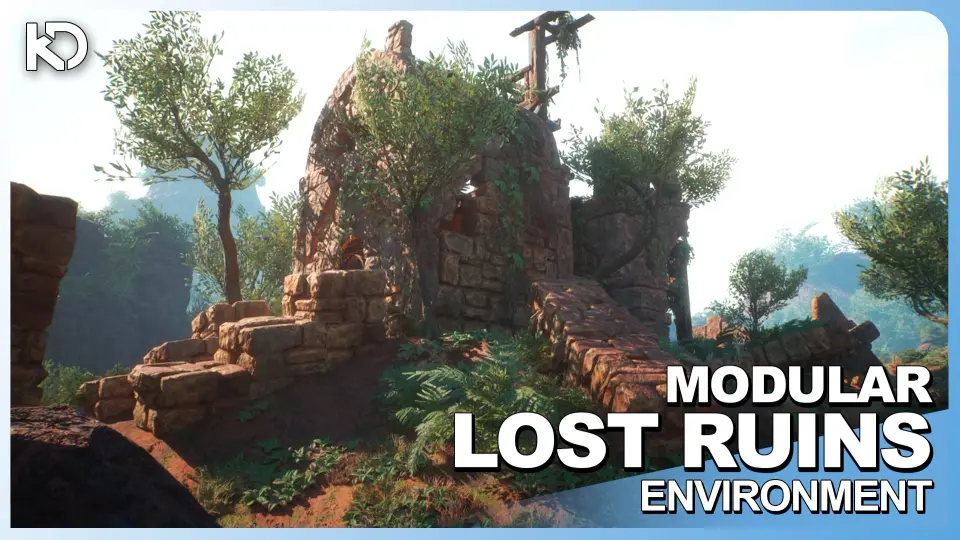
Assembling forgotten sanctuaries, derelict fortresses, and fantasy temple complexes requires modularity that respects strict grid mechanics. Modular Lost Ruins Kit provides an extensive library of architectural and environmental components specifically calibrated to snap cleanly onto standard editor grids. Level designers can assemble continuous wall perimeters, structural wooden frameworks, and damaged stone ruin elements without wrestling with misaligned seams or awkward transform offsets.
Decay is rarely uniform in aged architecture. To capture natural weathering, most structural models in the collection include alternative overgrown versions. These variants feature baked-in plant life and moss accumulation directly applied to the stone and timber surfaces. Having clean and vegetation-encrusted counterparts side by side allows for natural degradation gradients across a scene, depicting sheltered interior chambers as relatively preserved while outward-facing structures show centuries of wild overgrowth.
Overgrown Variants, Native Foliage, and Ground Cover
Reclaiming stone architecture requires organic ground clutter and canopy layers that visually integrate with structural assets. The package provides dedicated foliage models spanning multiple growth tiers, including full trees, wild ferns, field grasses, patches of hay, and lower-level ground cover. Combining individual vegetation assets with the overgrown ruin pieces creates believable transitions where nature actively blankets broken pillars, crumbling archways, and fractured tombstones.
Because the plant library includes varied densities and heights, dressing an exterior glade or a collapsed stone hall can be achieved using a unified biological palette. Broadleaf ferns and ground plants cluster along foundation crevices, while taller trees establish broken canopies overhead. Hay and dried ground brush provide tonal contrast against green undergrowth, helping artists break up visual repetition across large outdoor expanses.
Master Materials, Triplanar Texturing, and Parallax Mapping
Shader architecture within the package relies on clean hierarchies using Material Instances derived from feature-rich Master Materials. Individual material toggles allow specific features to be engaged or disabled on a per-asset basis, granting artists technical flexibility across diverse lighting and optimization conditions. This instance-based approach ensures that visual properties remain synchronized while allowing distinct surfaces to run lean shader instruction counts when complex effects are unnecessary.
Terrain integration is managed through an advanced multi-layer landscape material configured for triplanar projection and parallax mapping. Triplanar mapping prevents harsh texture stretching on sheer cliffs, steep hillsides, and rocky embankments without requiring manual UV adjustments on sculpted heightmaps. Parallax mapping deepens surface relief on ground surfaces, creating physical depth across gravel, earth, and stone pathways. The landscape system also hooks directly into an automated landscape grass system, scattering foliage meshes directly over specific painted ground layers.
Rock Formations, Props, and Interior Scatter
Natural landscapes demand believable geological transitions around artificial masonry. The kit incorporates a rock library scaling from compact ground boulders to towering cliff formations. These rock meshes rely on an advanced rock Material tailored to blend surface detail consistently across distinct asset scales, maintaining consistent texel density whether placing a small boundary stone or an imposing rock wall.
For interior staging and narrative world-building, the package includes thematic loot and utility props:
Stacks of coins, decorative goblets, and vintage bottles for relic caches and sacred altars
Storage barrels, clay jars, and packing boxes for abandoned depots or ruined storerooms
Rune stones, broken relics, and sacred pillars for fantasy temples and forgotten burial grounds
These dressing elements transform bare modular corridors into inhabited spaces, giving players tangible focal points when navigating cavernous halls or sunken chambers.
Project Setup, Collision Retention, and Engine Features
Modern visual pipelines require real-time geometric fidelity and dynamic global illumination. The package natively supports Nanite virtualized geometry and Lumen dynamic illumination inside Unreal Engine, allowing complex high-polygon stone surfaces to capture soft bounced light, deep ambient occlusion, and micro-polygon detail without cumbersome manual LOD workflows.
When opening the project for the first time, careful attention must be paid to the initial import dialog. Users should select "Don't Import" upon launching the project. The pack contains uncompiled source files for artists who intend to modify raw meshes or textures externally. Allowing the editor to automatically import these assets during initial load can overwrite custom project settings, inadvertently wiping predefined collision hulls and physics assignments.
The included example level provides a complete reference layout demonstrating lighting, terrain painting, and prop placement. It features custom static lighting bakes alongside the procedural landscape setup, serving as a template for inspecting proper assembly techniques, material layer blends, and scene dressing hierarchies.
Target Workflows and Practical Application
Level designers building fantasy ruins, post-apocalyptic relics, or ancient stone temples will find this collection particularly effective for rapid greyboxing that transitions straight into final art. Its compatibility with the Post Apocalyptic Bundle allows teams to cross-pollinate contemporary decay with ancient stone ruins, constructing layered history inside a single game world. Teams looking to construct dense, vegetation-heavy historical sites benefit directly from the grid snapping, instance-driven material toggles, and unified foliage suite.
 Environments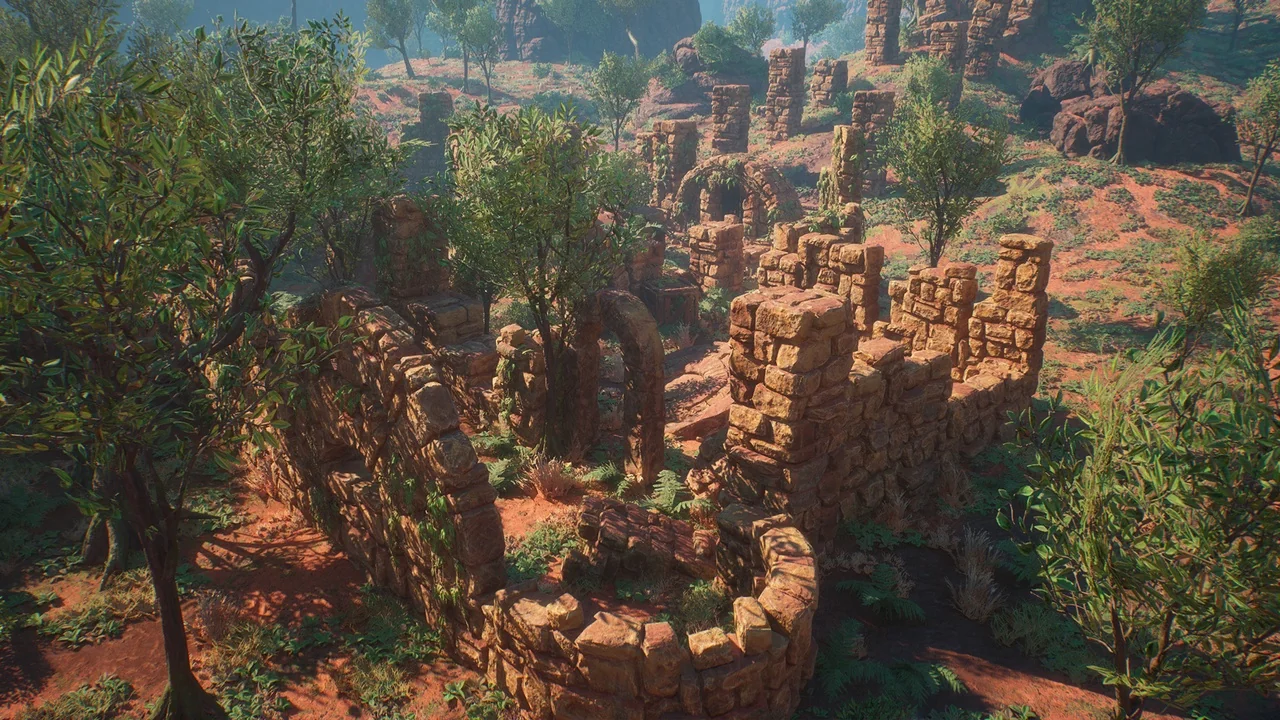
 Buildings
 Medieval
 Fantasy