"a7cfa646d0d8ae55"{"id":"1001166","slug":"lost-temple-vol-1-ancient-ruins","title":"Lost Temple VOL.1 - Ancient Ruins","category":"Buildings \u0026 Architecture","engine":"5.0+","assetVersion":"","engineVersion":"Engine Version: 5.0+","tag":"Buildings","accent":"blue","visual":"mech","summary":"An architectural library of 91 modular Balinese stone meshes and photogrammetry sculptures created by Rendertale Artists for Unreal Engine 5.4.","platform":"Unreal Engine","publishedAt":"2026-09-16T13:47:47.064Z","updatedAt":"2026-09-16T13:47:47.064Z","sourceNotes":[],"fileContents":[],"compatibility":["Unreal Engine","Engine Version: 5.0+"],"featuredImage":{"alt":"Lost Temple VOL.1 - Ancient Ruins","src":"/wp-content/uploads/published/2026/09/0808c34dfd67-d317756b-ea0b-4514-88e7-e39dac67cd02-ad0279ed47.webp"},"hasDownloadLink":true,"downloads":0,"terms":[{"taxonomy":"category","slug":"buildings-and-architecture","name":"Buildings \u0026 Architecture"}],"galleryImages":[{"src":"/wp-content/uploads/published/2026/09/b4e2c9fcbd65-36bec993-b7d7-4bcd-89f0-89d5e7332bed-ab5fe7029a.webp","alt":"Lost Temple VOL.1 - Ancient Ruins"},{"src":"/wp-content/uploads/published/2026/09/b6d44b584fa3-4e7e04ad-de50-448e-aa44-96bcbc548dfa-b4f48cf0b3.webp","alt":"Lost Temple VOL.1 - Ancient Ruins"},{"src":"/wp-content/uploads/published/2026/09/9d2eb9797b0b-cfbd7c49-9dda-4816-beb4-76765ccc40aa-aca6036948.webp","alt":"Lost Temple VOL.1 - Ancient Ruins"},{"src":"/wp-content/uploads/published/2026/09/70eac48329fd-ebdb12f2-2929-445e-81ae-e6027084465c-259e37643d.webp","alt":"Lost Temple VOL.1 - Ancient Ruins"},{"src":"/wp-content/uploads/published/2026/09/e65b53e96cb0-65e44355-f940-4ff7-8b03-1e9f98aac369-c09e4ed7e1.webp","alt":"Lost Temple VOL.1 - Ancient Ruins"},{"src":"/wp-content/uploads/published/2026/09/f1900ef3fd3f-42fe9d24-3ed5-4ef9-a8dc-dac61f74b783-772ece2f9a.webp","alt":"Lost Temple VOL.1 - Ancient Ruins"},{"src":"/wp-content/uploads/published/2026/09/4820c93b44db-e683d70e-aee7-4a10-ae98-b72cca12b306-2c7d216384.webp","alt":"Lost Temple VOL.1 - Ancient Ruins"},{"src":"/wp-content/uploads/published/2026/09/c36c8bc76332-76d8ea25-7c03-4a1c-a2ab-f90a913cf21a-649146d93f.webp","alt":"Lost Temple VOL.1 - Ancient Ruins"},{"src":"/wp-content/uploads/published/2026/09/fa2723f252a4-8440b189-4b4d-4feb-9862-cd381acd27ed-c8828402d5.webp","alt":"Lost Temple VOL.1 - Ancient Ruins"},{"src":"/wp-content/uploads/published/2026/09/3287a491ab77-c6a461df-2468-4fbf-960f-d8a3066ea2f7-794d1ffc69.webp","alt":"Lost Temple VOL.1 - Ancient Ruins"}],"accessPanel":{"kind":"resource","title":"Download this resource","eyebrow":"Free Download","message":"Log in or create a free account to start your download.","fileName":"Content.7z","safetyNote":"Resources are manually reviewed before listing to improve quality and reduce obvious risks.","actionLabel":"Download Free","resourceType":"Resource archive"},"contentHtml":"\u003ch2\u003eNinety-One Meshes Derived from Balinese Photogrammetry\u003c/h2\u003e\u003cp\u003eLost Temple VOL.1 - Ancient Ruins centers on ninety-one detailed 3D meshes captured from real-world Balinese stone sculptures and historical structural elements. Photogrammetry forms the foundation of the collection, translating the eroded edges, micro-fissures, and chiselled reliefs of real stone carvings directly into digital assets. Because these models originate from real-world cultural masonry, the stone surfaces feature authentic patterns of wear, natural weathering, and aged details that are difficult to reproduce convincingly through manual sculpting alone.\u003c/p\u003e\u003cp\u003eThe package contains decorative elements designed to sit alongside foundational architectural blocks. Individual sculptures serve as focal items within scenes, bringing authentic cultural motifs, deities, and guardian forms into historical or fantasy settings. Surrounding these primary sculptural pieces are supporting ruin elements that share the same weathered masonry profile. The photogrammetric capture preserves fine material transitions across the surfaces, ensuring that the stone retains its tactile fidelity when inspected from close camera angles or rendered from wide establishing shots.\u003c/p\u003e\u003ch2\u003eAssembly Across Temple Stairs, Pillars, Gateways, and Bridges\u003c/h2\u003e\u003cp\u003eThe collection focuses on modular construction, dividing structural architecture into interchangeable components that connect logically in 3D space. Level designers and environment artists can draw from an inventory that includes temple stairs, upright pillars, gateway portals, bridges, and perimeter fences. These pieces are cut and proportioned to align smoothly against one another, allowing custom temple complexes to grow from simple platforms into sprawling ancient compounds.\u003c/p\u003e\u003cp\u003eIndividual stair pieces can be multiplied to produce stepped foundation plinths, towering ascents to shrines, or broken terrace runs overgrown by jungle. Decorative pillars support lintels or stand in fragmented rows, marking out decayed colonnades and collapsed halls. Gateways act as structural transitions between courtyards, while modular bridge segments span chasms, rivers, or sunken stone drainage systems. Combined with modular fences and fractured ruin sections, the library makes it possible to stage complex layouts where stone pathways lead through layers of defensive or ceremonial architecture.\u003c/p\u003e\u003ch2\u003eVirtual Texturing Requirements in Unreal Engine 5.4\u003c/h2\u003e\u003cp\u003eAll assets in Lost Temple VOL.1 - Ancient Ruins are built for rendering within Unreal Engine 5.4. Due to the high texture resolution and surface detail demanded by photogrammetric stone data, virtual texturing support must be enabled in the project settings before implementing the assets. Unreal Engine uses Virtual Texturing to stream and manage massive texture files efficiently, dividing large texture maps into discrete tiles and loading only the visible mip levels into video memory on demand.\u003c/p\u003e\u003cp\u003eRunning photogrammetry-captured stonework without virtual texturing risks performance bottlenecks and heavy memory overhead, especially when building sprawling temple courtyards filled with dozens of unique meshes. Enabling virtual texturing ensures that high-fidelity normal maps, micro-surface details, and stone color variations stream smoothly across both Nanite-level geometries and cinematic camera passes. It provides the visual depth needed to showcase real-world stone erosion while maintaining practical performance during engine playback and sequencing.\u003c/p\u003e\u003ch2\u003eBlueprint Workflows and Building Generator Modular Staging\u003c/h2\u003e\u003cp\u003eModularity across the ninety-one pieces allows for flexible assembly directly in the viewport or through nested Blueprints. Environment artists can group individual pillars, steps, and gate thresholds into reusable Blueprint actors, standardizing entryways or perimeter walls across a wide level. This approach speeds up scene decoration, letting teams deploy composite architectural formations while keeping pivot alignments and structural spacing consistent across the environment.\u003c/p\u003e\u003cp\u003eThe package is also compatible with Building Generator workflows, opening up automated and procedural construction pipelines. Procedural tools rely on standardized dimensions and clear snap points to assemble walls, roofs, and vertical columns dynamically. Because the structural meshes adhere to cohesive proportions, they can feed rule-based procedural graphs that generate randomized ruin layouts, collapsed corridors, or stepped terrace structures without manual piece-by-piece placement. For non-procedural passes, individual components remain fully accessible to stage hand-placed vignettes, such as broken steps tipped on their side or fallen pillars half-buried in terrain.\u003c/p\u003e\u003ch2\u003eAsset Scope, Lighting Independence, and Commercial Deployment\u003c/h2\u003e\u003cp\u003eCreated by Rendertale Artists, the package is delivered exclusively as a 3D asset set. It intentionally omits environment maps, skyboxes, and pre-baked lighting setups. This gives technical artists complete freedom over atmosphere, direct sun angle, and ambient lighting, ensuring that the stone meshes can integrate seamlessly into custom lighting configurations, Lumen systems, or specialized day-night cycles without conflicting with baked lighting data.\u003c/p\u003e\u003cp\u003eThe library is entirely free of legal issues, making it suitable for safe deployment in commercial video games, virtual production sequences, architectural visualizations, and cinematic short films. Whether deployed as a massive ruined temple complex constructed from modular building components, or distributed across a scene as isolated sculptural focal points, the assets provide a production-ready toolkit focused strictly on authentic, photogrammetric stone craftsmanship.\u003c/p\u003e\n\n\u003ch2\u003eExplore Similar Assets\u003c/h2\u003e\n\u003cul\u003e\n\u003cli\u003e\u003ca href=\"https://3dcghub.com/vp-temples-of-cambodia-ruins-exterior-and-interior/\" title=\"[VP] Temples of Cambodia - Ruins exterior and interior\"\u003e[VP] Temples of Cambodia - Ruins exterior and interior\u003c/a\u003e\u003c/li\u003e\n\u003cli\u003e\u003ca href=\"https://3dcghub.com/ancient-temple-environment-temple-ancient-tropical-temple-ancient-temple/\" title=\"Ancient Temple Environment ( Temple, Ancient Tropical Temple, Ancient , Temple )\"\u003eAncient Temple Environment ( Temple, Ancient Tropical Temple, Ancient , Temple )\u003c/a\u003e\u003c/li\u003e\n\u003cli\u003e\u003ca href=\"https://3dcghub.com/mountain-temple-japanese-temple-ancient-temple-temple-shrine-feudal-japan/\" title=\"Mountain Temple (Japanese Temple, Ancient Temple, Temple Shrine, Feudal Japan)\"\u003eMountain Temple (Japanese Temple, Ancient Temple, Temple Shrine, Feudal Japan)\u003c/a\u003e\u003c/li\u003e\n\u003cli\u003e\u003ca href=\"https://3dcghub.com/ghost-town-vol-1-176-modular-old-cabin-assets-for-ue5/\" title=\"Ghost Town VOL.1 - Old Cabins\"\u003eGhost Town VOL.1 - Old Cabins\u003c/a\u003e\u003c/li\u003e\n\u003cli\u003e\u003ca href=\"https://3dcghub.com/ancient-cathedral-environment-ancient-cathedral-ancient-dungeon-cathedral-3d/\" title=\"Ancient Cathedral Environment ( Ancient Cathedral Ancient Dungeon Cathedral 3D )\"\u003eAncient Cathedral Environment ( Ancient Cathedral Ancient Dungeon Cathedral 3D )\u003c/a\u003e\u003c/li\u003e\n\u003c/ul\u003e","contentTextLength":6071,"navigation":{"current":59,"total":3167,"previous":{"id":"1001167","slug":"modular-soldier-opb-full","title":"Modular Soldier OPB Full","category":"Characters \u0026 Creatures","platform":"Unreal Engine","updatedAt":"2026-09-16T15:17:15.509Z"},"next":{"id":"1001165","slug":"hawknest-shipping-port-modular","title":"HAWKNEST - Shipping Port (Modular)","category":"Industrial","platform":"Unreal Engine","updatedAt":"2026-09-16T09:15:39.305Z"}},"relatedResources":[{"id":"1001076","slug":"vp-temples-of-cambodia-ruins-exterior-and-interior","title":"[VP] Temples of Cambodia - Ruins exterior and interior","category":"Historical","engine":"5.1+","assetVersion":"","engineVersion":"Engine Version: 5.1+","tag":"Historical","accent":"blue","visual":"mech","summary":"A UE5 virtual production set with 225+ assets, photogrammetry meshes, Lumen and Nanite, and interior/exterior temple ruins for cinematic shoots.","platform":"Unreal Engine","publishedAt":"2026-09-04T15:20:59.646Z","updatedAt":"2026-09-04T15:20:59.646Z","sourceNotes":[],"fileContents":[],"compatibility":["Unreal Engine","Engine Version: 5.1+"],"featuredImage":{"alt":"[VP] Temples of Cambodia - Ruins exterior and interior","src":"/wp-content/uploads/published/2026/09/e98d07773c31-d1d31c30-c89a-4b52-b9d5-3b0aea0c63b8-bbd1ec4a04.webp"},"hasDownloadLink":true,"downloads":0},{"id":"1000913","slug":"ancient-temple-environment-temple-ancient-tropical-temple-ancient-temple","title":"Ancient Temple Environment ( Temple, Ancient Tropical Temple, Ancient , Temple )","category":"Temple","engine":"5.1+","assetVersion":"","engineVersion":"Engine Version: 5.1+","tag":"Temple","accent":"blue","visual":"city","summary":"Explore a modular Ancient Temple Environment with 34 ready-to-use prefabs, ancient Indian architectural references, and a valley demo map for UE5 games and cine","platform":"Unreal Engine","publishedAt":"2026-08-08T03:11:58.956Z","updatedAt":"2026-08-08T03:11:58.956Z","sourceNotes":[],"fileContents":[],"compatibility":["Unreal Engine","Engine Version: 5.1+"],"featuredImage":{"alt":"Ancient Temple Environment ( Temple, Ancient Tropical Temple, Ancient , Temple )","src":"/wp-content/uploads/published/2026/08/841ea3296a93-0c853b90-8415-4696-8bdc-5d82ff9e05a3-b564c94d66.webp"},"hasDownloadLink":true,"downloads":0},{"id":"1000652","slug":"mountain-temple-japanese-temple-ancient-temple-temple-shrine-feudal-japan","title":"Mountain Temple (Japanese Temple, Ancient Temple, Temple Shrine, Feudal Japan)","category":"Temple","engine":"5.5+","assetVersion":"","engineVersion":"Engine Version: 5.5+","tag":"Temple","accent":"blue","visual":"mech","summary":"A modular Japanese shrine temple environment for Unreal Engine with material layering, vertex painting, Nanite foliage, and prop kits for building feudal Japan","platform":"Unreal Engine","publishedAt":"2026-07-21T19:17:13.891Z","updatedAt":"2026-07-21T19:17:13.891Z","sourceNotes":[],"fileContents":[],"compatibility":["Unreal Engine","Engine Version: 5.5+"],"featuredImage":{"alt":"Mountain Temple (Japanese Temple, Ancient Temple, Temple Shrine, Feudal Japan)","src":"/wp-content/uploads/published/2026/07/c65473b30385-e14168cc-6d72-423a-a7bf-177d39c6402a-3db1da1c73.webp"},"hasDownloadLink":true,"downloads":0}]}
Buildings
Lost Temple VOL.1 - Ancient Ruins
An architectural library of 91 modular Balinese stone meshes and photogrammetry sculptures created by Rendertale Artists for Unreal Engine 5.4.
Ninety-One Meshes Derived from Balinese Photogrammetry
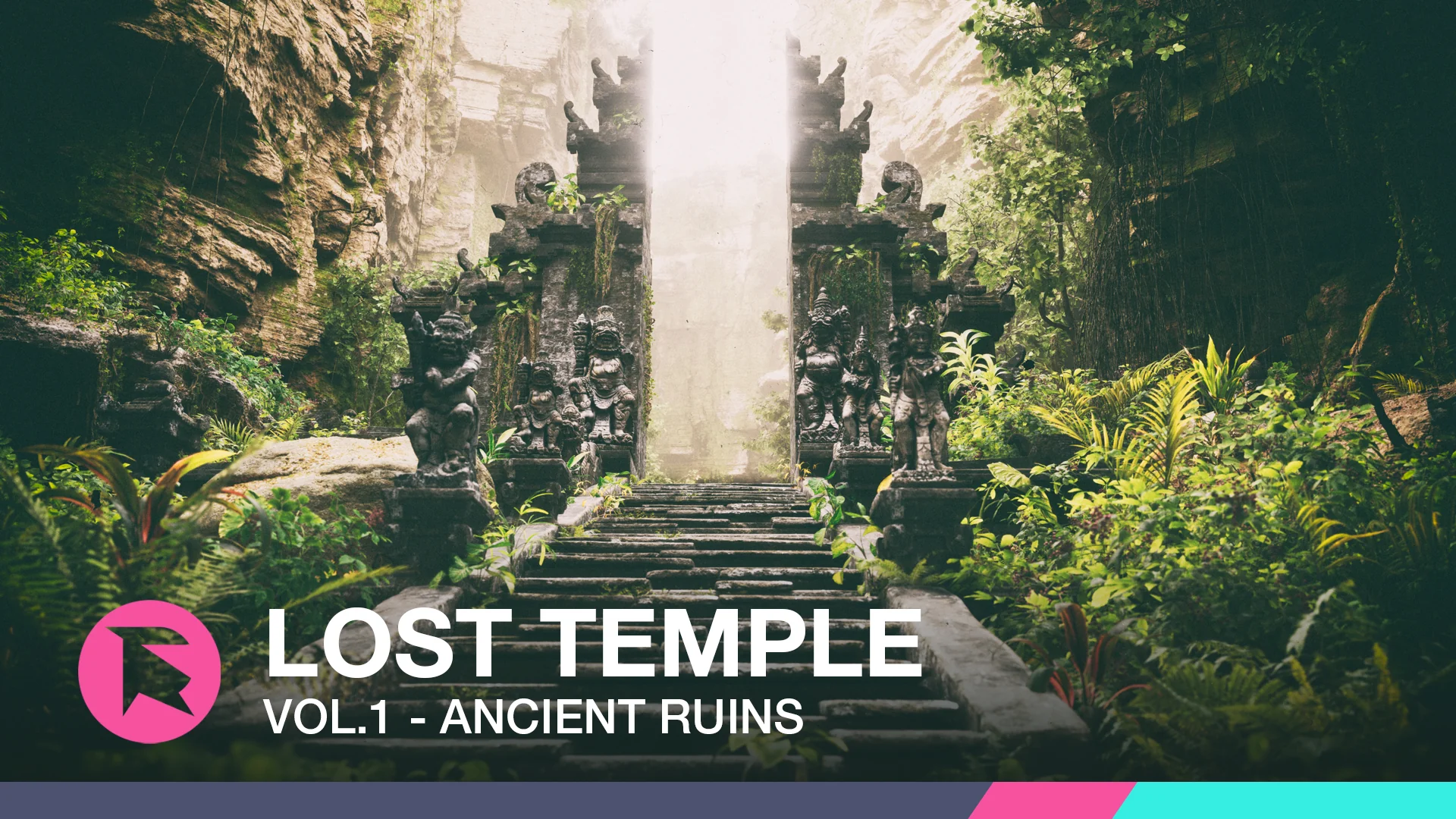
Lost Temple VOL.1 - Ancient Ruins centers on ninety-one detailed 3D meshes captured from real-world Balinese stone sculptures and historical structural elements. Photogrammetry forms the foundation of the collection, translating the eroded edges, micro-fissures, and chiselled reliefs of real stone carvings directly into digital assets. Because these models originate from real-world cultural masonry, the stone surfaces feature authentic patterns of wear, natural weathering, and aged details that are difficult to reproduce convincingly through manual sculpting alone.
The package contains decorative elements designed to sit alongside foundational architectural blocks. Individual sculptures serve as focal items within scenes, bringing authentic cultural motifs, deities, and guardian forms into historical or fantasy settings. Surrounding these primary sculptural pieces are supporting ruin elements that share the same weathered masonry profile. The photogrammetric capture preserves fine material transitions across the surfaces, ensuring that the stone retains its tactile fidelity when inspected from close camera angles or rendered from wide establishing shots.
Assembly Across Temple Stairs, Pillars, Gateways, and Bridges
The collection focuses on modular construction, dividing structural architecture into interchangeable components that connect logically in 3D space. Level designers and environment artists can draw from an inventory that includes temple stairs, upright pillars, gateway portals, bridges, and perimeter fences. These pieces are cut and proportioned to align smoothly against one another, allowing custom temple complexes to grow from simple platforms into sprawling ancient compounds.
Individual stair pieces can be multiplied to produce stepped foundation plinths, towering ascents to shrines, or broken terrace runs overgrown by jungle. Decorative pillars support lintels or stand in fragmented rows, marking out decayed colonnades and collapsed halls. Gateways act as structural transitions between courtyards, while modular bridge segments span chasms, rivers, or sunken stone drainage systems. Combined with modular fences and fractured ruin sections, the library makes it possible to stage complex layouts where stone pathways lead through layers of defensive or ceremonial architecture.
Virtual Texturing Requirements in Unreal Engine 5.4
All assets in Lost Temple VOL.1 - Ancient Ruins are built for rendering within Unreal Engine 5.4. Due to the high texture resolution and surface detail demanded by photogrammetric stone data, virtual texturing support must be enabled in the project settings before implementing the assets. Unreal Engine uses Virtual Texturing to stream and manage massive texture files efficiently, dividing large texture maps into discrete tiles and loading only the visible mip levels into video memory on demand.
Running photogrammetry-captured stonework without virtual texturing risks performance bottlenecks and heavy memory overhead, especially when building sprawling temple courtyards filled with dozens of unique meshes. Enabling virtual texturing ensures that high-fidelity normal maps, micro-surface details, and stone color variations stream smoothly across both Nanite-level geometries and cinematic camera passes. It provides the visual depth needed to showcase real-world stone erosion while maintaining practical performance during engine playback and sequencing.
Blueprint Workflows and Building Generator Modular Staging
Modularity across the ninety-one pieces allows for flexible assembly directly in the viewport or through nested Blueprints. Environment artists can group individual pillars, steps, and gate thresholds into reusable Blueprint actors, standardizing entryways or perimeter walls across a wide level. This approach speeds up scene decoration, letting teams deploy composite architectural formations while keeping pivot alignments and structural spacing consistent across the environment.
The package is also compatible with Building Generator workflows, opening up automated and procedural construction pipelines. Procedural tools rely on standardized dimensions and clear snap points to assemble walls, roofs, and vertical columns dynamically. Because the structural meshes adhere to cohesive proportions, they can feed rule-based procedural graphs that generate randomized ruin layouts, collapsed corridors, or stepped terrace structures without manual piece-by-piece placement. For non-procedural passes, individual components remain fully accessible to stage hand-placed vignettes, such as broken steps tipped on their side or fallen pillars half-buried in terrain.
Asset Scope, Lighting Independence, and Commercial Deployment
Created by Rendertale Artists, the package is delivered exclusively as a 3D asset set. It intentionally omits environment maps, skyboxes, and pre-baked lighting setups. This gives technical artists complete freedom over atmosphere, direct sun angle, and ambient lighting, ensuring that the stone meshes can integrate seamlessly into custom lighting configurations, Lumen systems, or specialized day-night cycles without conflicting with baked lighting data.
The library is entirely free of legal issues, making it suitable for safe deployment in commercial video games, virtual production sequences, architectural visualizations, and cinematic short films. Whether deployed as a massive ruined temple complex constructed from modular building components, or distributed across a scene as isolated sculptural focal points, the assets provide a production-ready toolkit focused strictly on authentic, photogrammetric stone craftsmanship.
 Buildings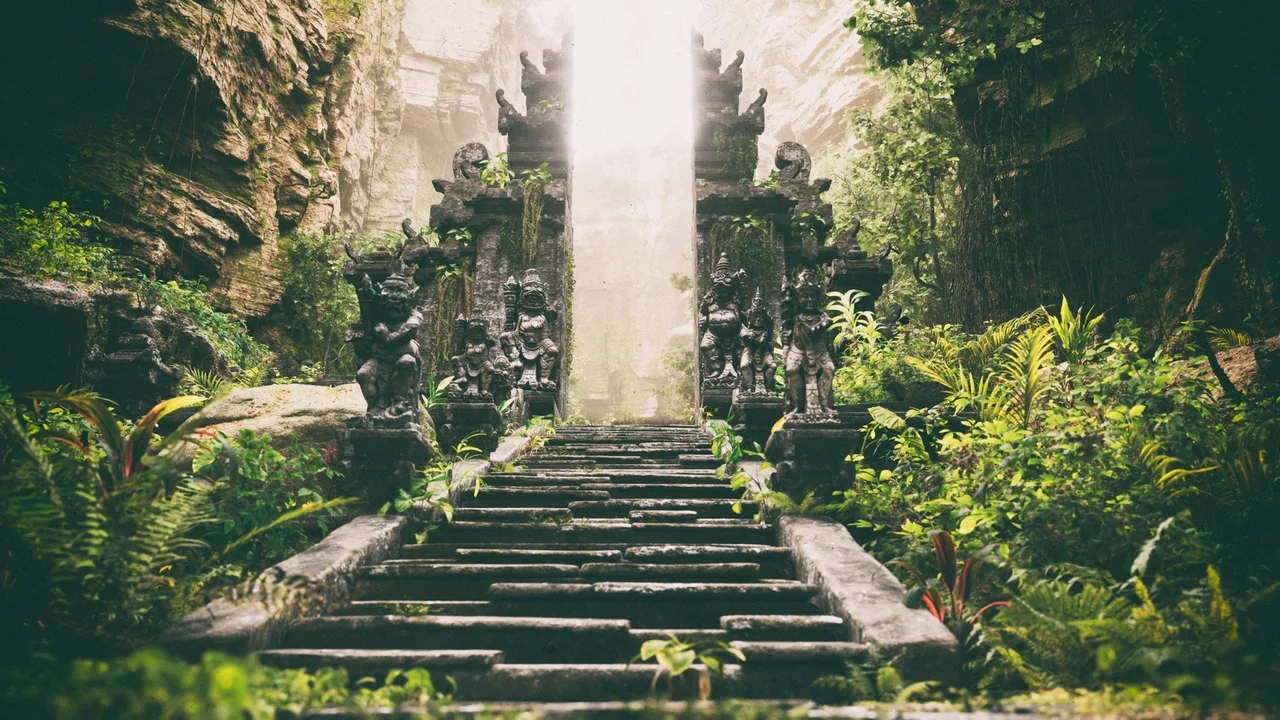
![[VP] Temples of Cambodia - Ruins exterior and interior](/wp-content/uploads/published/2026/09/e98d07773c31-d1d31c30-c89a-4b52-b9d5-3b0aea0c63b8-bbd1ec4a04.webp) Historical
Historical Temple
 Temple