"fa182e0cd0a6ea73"{"id":"1001844","slug":"the-empyrean-ruins-and-fortress-kit","title":"The Empyrean- Ruins and Fortress Kit","category":"Fantasy","engine":"5.3+","assetVersion":"","engineVersion":"Engine Version: 5.3+","tag":"Fantasy","accent":"blue","visual":"mech","summary":"Build layered medieval Indian fortresses, dark dungeons, and cliffside ruins with modular architecture and data layer environment variants.","platform":"Unreal Engine","publishedAt":"2026-10-21T08:35:15.755Z","updatedAt":"2026-10-21T08:35:15.755Z","sourceNotes":[],"fileContents":[],"compatibility":["Unreal Engine","Engine Version: 5.3+"],"featuredImage":{"alt":"The Empyrean- Ruins and Fortress Kit","src":"/wp-content/uploads/published/2026/10/c5a877ebed84-39e349bd-d868-4234-a018-4ecb7b441c69-c268059e31.webp"},"hasDownloadLink":true,"downloads":0,"terms":[{"taxonomy":"category","slug":"fantasy","name":"Fantasy"}],"galleryImages":[{"src":"/wp-content/uploads/published/2026/10/68725ccdbe14-e340b7a2-e312-4622-a763-50b7ff8a135a-ad2f757034.webp","alt":"The Empyrean- Ruins and Fortress Kit"},{"src":"/wp-content/uploads/published/2026/10/e3e7d4b9cc42-9075c0c5-be42-4d9e-9fa3-975627034eba-55c38d67ca.webp","alt":"The Empyrean- Ruins and Fortress Kit"},{"src":"/wp-content/uploads/published/2026/10/2ba2bbfd7508-1ad65655-ee2b-4391-943b-b92275273d73-5def4b77b0.webp","alt":"The Empyrean- Ruins and Fortress Kit"},{"src":"/wp-content/uploads/published/2026/10/efe76b12e0b7-05946637-5a0b-454a-bfec-17e4c504df4d-84beb2399d.webp","alt":"The Empyrean- Ruins and Fortress Kit"},{"src":"/wp-content/uploads/published/2026/10/2193350d5178-e422bc5a-c751-42be-ab17-2918b8022bb3-a5ee728163.webp","alt":"The Empyrean- Ruins and Fortress Kit"},{"src":"/wp-content/uploads/published/2026/10/372b6cf79081-8655def5-637c-446d-9aad-05f464b919c8-332ce2f5f6.webp","alt":"The Empyrean- Ruins and Fortress Kit"},{"src":"/wp-content/uploads/published/2026/10/f1d80cc3543e-067ec785-5d1a-4890-805b-90b881ad2fc7-e0f4f284a6.webp","alt":"The Empyrean- Ruins and Fortress Kit"},{"src":"/wp-content/uploads/published/2026/10/b76a516802c1-aaa51b76-a135-407c-8c3d-b7c13c1444e7-6d09fadf7f.webp","alt":"The Empyrean- Ruins and Fortress Kit"},{"src":"/wp-content/uploads/published/2026/10/c619d0e7ccd9-e03a0f9f-fd84-4e3b-b2a1-7e70937f278a-61b502ecfa.webp","alt":"The Empyrean- Ruins and Fortress Kit"},{"src":"/wp-content/uploads/published/2026/10/e74f5e8ccd86-8cf42b54-7e61-442b-8f03-ddb9091d3919-ec6b1ad284.webp","alt":"The Empyrean- Ruins and Fortress Kit"}],"accessPanel":{"kind":"resource","title":"Download this resource","eyebrow":"Free Download","message":"Log in or create a free account to start your download.","fileName":"The Empyrean - Ruins and Fortress Kit.7z","safetyNote":"Resources are manually reviewed before listing to improve quality and reduce obvious risks.","actionLabel":"Download Free","resourceType":"Resource archive"},"contentHtml":"\u003ch2\u003eStructuring Alternate Environments Through Data Layers\u003c/h2\u003e \u003cp\u003eImplementing large-scale architectural projects requires deliberate organization, especially when dealing with complex multi-room strongholds and exterior geography. The Empyrean- Ruins and Fortress Kit takes advantage of data layers to establish an alternate environment directly inside the level setup. Instead of requiring fragmented level files or separate streaming volumes for different scene iterations, data layers allow different environmental states and spatial configurations to be toggled, isolated, and streamed systematically.\u003c/p\u003e \u003cp\u003eThis data layer approach offers direct utility when transitioning an active fortress into a decrepit ruin or testing distinct environmental variations across the same geographic footprint. By separating specific structural groups, props, and structural damage into alternate layers, world builders can maintain a single persistent coordinate system while dynamically flipping the atmosphere or state of the world. Level designers working with complex cliffside layouts or multi-tiered keeps can manage dense clusters of mesh instances without bogging down the primary working viewport.\u003c/p\u003e \u003ch2\u003eIntegration of Door Interactions and Navigation Flow\u003c/h2\u003e \u003cp\u003eTraversing complex modular interiors demands basic mechanical hooks to feel functional during spatial grayboxing and staging. The kit incorporates basic interactivity out of the box, utilizing standard player-facing controls such as pressing E to open doors throughout the structures. This input setup anchors the scale of the environment to player perspective, establishing immediate spatial pacing between enclosed chambers and sprawling courtyards.\u003c/p\u003e \u003cp\u003eHaving functional door access already integrated into the architectural pieces bridges the gap between passive visual layout and active game traversal. Corridors can be segmented into distinct zones, controlling player visibility and pathing through dark castle corridors and subterranean labyrinths. This interaction hook also establishes clear points of entry across heavy defensive gates, reinforcing the tactical feel of the fortresses during walkthroughs and gameplay testing.\u003c/p\u003e \u003ch2\u003eMedieval Indian Aesthetics and Cultural Architecture\u003c/h2\u003e \u003cp\u003eThe kit diverges from standard Western European medieval defaults by centering its visual language on medieval Indian aesthetics fused with assorted cultural influences. This stylistic blend alters the structural character of arches, wall surfaces, bastions, and structural stonework, resulting in fortresses that appear distinct, weathered, and historically grounded while fitting seamlessly into realistic fantasy or adventure contexts.\u003c/p\u003e \u003cp\u003eCarved relief patterns, broad parapets, elevated defensive outposts, and sweeping foundation walls allow for builds that sit naturally atop jagged cliffs or along mountainous terrain. The cultural crossover allows developers to craft majestic castles that retain an aura of grand, ancient empires, as well as forbidding defensive positions that feel fortified against massive sieges. Because the architectural features prioritize realistic stone textures and structural mass, the kit adapts well to both bright, sun-drenched outposts and shadowed, dark fantasy domains.\u003c/p\u003e \u003ch2\u003eConstructing Intricately Layered Fortresses and Labyrinthine Dungeons\u003c/h2\u003e \u003cp\u003eThe modular assets empower the creation of expansive defensive works, extending from high cliff perches down into labyrinthine dungeons beneath the stone. The kit is built to support verticality, giving developers the tools to construct intricately layered fortresses where multiple decks, elevated walkways, and fortified bastions overlook lower courtyards.\u003c/p\u003e \u003cul\u003e \u003cli\u003e\u003cstrong\u003eFormidable Fortresses:\u003c/strong\u003e High stone walls, perimeter defenses, and massive gates configured to guard natural chokepoints and cliff edges.\u003c/li\u003e \u003cli\u003e\u003cstrong\u003eMajestic Castles:\u003c/strong\u003e Layered royal halls, grand courtyards, and palatial keeps built with ornate historical detailing.\u003c/li\u003e \u003cli\u003e\u003cstrong\u003eHaunting Ruins:\u003c/strong\u003e Decayed battlements, collapsed archways, and exposed structural skeletons that hint at fallen kingdoms.\u003c/li\u003e \u003cli\u003e\u003cstrong\u003eUnderground Dungeons:\u003c/strong\u003e Interlocking subterranean corridors, dark stone cells, and twisting chambers suitable for traditional RPG exploration.\u003c/li\u003e \u003c/ul\u003e \u003cp\u003eBecause the components can be assembled into both pristine fortifications and decaying ruins, spaces can communicate the passage of time across different sections of a single map. An occupied outer bailey can yield to forgotten inner sanctums, or a fully functioning citadel can transition abruptly into forgotten, underground labyrinths filled with damp stone passages and secluded chambers.\u003c/p\u003e \u003ch2\u003eDesigning for Multiplayer Exploration and Tactical Level Design\u003c/h2\u003e \u003cp\u003eBeyond single-player visual vignettes, the components are geared toward environments designed with multiplayer in mind. Multiplayer level design introduces strict spatial requirements: sightlines must be carefully managed, flanking routes must remain readable, and interior rooms require sufficient width to accommodate multiple concurrent players and combat navigation.\u003c/p\u003e \u003cp\u003eThe scale of the fortress gates, ramparts, and dungeon halls provides enough clearance for dynamic encounters. Wide staircases and multi-tier parapets enable vertical combat, while dungeon intersections can be arrayed into looping paths rather than dead-end tunnels. The structural mass of the assets makes them especially suited for cliffside battlements where elevation changes determine tactical advantage, giving adventure and RPG projects the breathing room needed for cooperative raids or competitive multiplayer confrontations.\u003c/p\u003e \u003ch2\u003eProduction Readiness and Creator Support\u003c/h2\u003e \u003cp\u003eDeploying large modular environments into an ongoing production pipeline requires stable assembly standards and reliable developer backing. The Empyrean provides a coherent library where wall segments, foundational cliffs, gateways, and floor plates align cleanly to prevent light leaking and navigational seams in dark dungeon interiors.\u003c/p\u003e \u003cp\u003eFor technical troubleshooting, configuration questions, or implementation support, direct developer contact is maintained to ensure projects can resolve pipeline friction quickly. Whether deployed for an expansive open-world cliff fortress, a claustrophobic subterranean dungeon crawl, or a multiplayer stronghold siege, the kit delivers an adaptable, culturally distinctive foundation for detailed level creation.\u003c/p\u003e\n\n\u003ch2\u003eRelated Resources Worth Checking\u003c/h2\u003e\n\u003cul\u003e\n\u003cli\u003e\u003ca href=\"https://3dcghub.com/fantasy-gothic-pack/\" title=\"Fantasy Gothic Pack\"\u003eFantasy Gothic Pack\u003c/a\u003e\u003c/li\u003e\n\u003cli\u003e\u003ca href=\"https://3dcghub.com/modular-lost-ruins-kit/\" title=\"Modular Lost Ruins Kit\"\u003eModular Lost Ruins Kit\u003c/a\u003e\u003c/li\u003e\n\u003cli\u003e\u003ca href=\"https://3dcghub.com/roman-palace-arena-and-dungeon-rome-fantasy-modular-kit/\" title=\"Roman Palace, Arena \u0026amp; Dungeon - Rome Fantasy Modular Kit\"\u003eRoman Palace, Arena \u0026amp; Dungeon - Rome Fantasy Modular Kit\u003c/a\u003e\u003c/li\u003e\n\u003cli\u003e\u003ca href=\"https://3dcghub.com/top-down-starter-kit-swvictoria/\" title=\"Top-Down Starter Kit [SWVictoria]\"\u003eTop-Down Starter Kit [SWVictoria]\u003c/a\u003e\u003c/li\u003e\n\u003cli\u003e\u003ca href=\"https://3dcghub.com/stylized-modular-crystal-mine/\" title=\"Stylized Modular Crystal Mine\"\u003eStylized Modular Crystal Mine\u003c/a\u003e\u003c/li\u003e\n\u003c/ul\u003e","contentTextLength":6531,"navigation":{"current":12,"total":3789,"previous":{"id":"1001845","slug":"uscans-dishes-01","title":"Uscans Dishes 01","category":"Tools, Objects \u0026 Decor","platform":"Unreal Engine","updatedAt":"2026-10-21T08:36:10.673Z"},"next":{"id":"1001843","slug":"teleportation-fx","title":"Teleportation FX","category":"Transition","platform":"Unreal Engine","updatedAt":"2026-10-21T08:34:34.486Z"}},"relatedResources":[{"id":"7948","slug":"fantasy-gothic-pack","title":"Fantasy Gothic Pack","category":"Fantasy","engine":"5.1+","assetVersion":"Engine version: 5.1+","engineVersion":"","tag":"Fantasy","accent":"blue","visual":"city","summary":"Build breathtaking stylized worlds with this massive collection of over 270 gothic-themed assets. This pack is perfect for creating citadels, ruins, and medieval cities in any modern game engine.","platform":"Unreal Engine","publishedAt":"2026-02-22T16:03:25.000Z","updatedAt":"2026-04-19T15:55:52.000Z","sourceNotes":[],"fileContents":[],"compatibility":["Unreal Engine","Engine version: 5.1+"],"featuredImage":{"alt":"Fantasy Gothic Pack","src":"https://3dcghub.com/wp-content/uploads/2026/02/0aab05ad-c59a-4dd8-acbd-ca22abcce18c.webp"},"hasDownloadLink":true,"downloads":2},{"id":"1001536","slug":"modular-lost-ruins-kit","title":"Modular Lost Ruins Kit","category":"Environments","engine":"5.1+","assetVersion":"","engineVersion":"Engine Version: 5.1+","tag":"Environments","accent":"blue","visual":"city","summary":"Build overgrown stone temples and forgotten fantasy environments using the Modular Lost Ruins Kit, featuring Nanite, Lumen, and modular grid assets.","platform":"Unreal Engine","publishedAt":"2026-10-09T17:29:18.138Z","updatedAt":"2026-10-09T17:29:18.138Z","sourceNotes":[],"fileContents":[],"compatibility":["Unreal Engine","Engine Version: 5.1+"],"featuredImage":{"alt":"Modular Lost Ruins Kit","src":"/wp-content/uploads/published/2026/10/7af8a7b14e3e-f3f91042-90f8-406c-b1c8-c8e686a421ca-85d034c72a.webp"},"hasDownloadLink":true,"downloads":0},{"id":"1001067","slug":"roman-palace-arena-and-dungeon-rome-fantasy-modular-kit","title":"Roman Palace, Arena \u0026 Dungeon - Rome Fantasy Modular Kit","category":"Fantasy","engine":"4.26+,5.0+","assetVersion":"","engineVersion":"Engine Version: 4.26+,5.0+","tag":"Fantasy","accent":"blue","visual":"mech","summary":"Rome Palace, Arena \u0026 Dungeon is a modular environment kit with structure modules, palace and dungeon scenes, dual lighting, and sublevel streaming.","platform":"Unreal Engine","publishedAt":"2026-09-03T16:36:54.367Z","updatedAt":"2026-09-03T16:36:54.367Z","sourceNotes":[],"fileContents":[],"compatibility":["Unreal Engine","Engine Version: 4.26+,5.0+"],"featuredImage":{"alt":"Roman Palace, Arena \u0026 Dungeon - Rome Fantasy Modular Kit","src":"/wp-content/uploads/published/2026/09/1a77e7e18a45-2e9d13ff-4d08-4bc3-aef6-7cd4a743f7be-a4bee2316d.webp"},"hasDownloadLink":true,"downloads":1}]}
Fantasy
The Empyrean- Ruins and Fortress Kit
Build layered medieval Indian fortresses, dark dungeons, and cliffside ruins with modular architecture and data layer environment variants.
Category:Unreal Engine,FantasyPlatform: Unreal EngineEngine Version: 5.3+Published: Oct 21, 2026
Fantasy
Resource overview
Structuring Alternate Environments Through Data Layers
Implementing large-scale architectural projects requires deliberate organization, especially when dealing with complex multi-room strongholds and exterior geography. The Empyrean- Ruins and Fortress Kit takes advantage of data layers to establish an alternate environment directly inside the level setup. Instead of requiring fragmented level files or separate streaming volumes for different scene iterations, data layers allow different environmental states and spatial configurations to be toggled, isolated, and streamed systematically.
This data layer approach offers direct utility when transitioning an active fortress into a decrepit ruin or testing distinct environmental variations across the same geographic footprint. By separating specific structural groups, props, and structural damage into alternate layers, world builders can maintain a single persistent coordinate system while dynamically flipping the atmosphere or state of the world. Level designers working with complex cliffside layouts or multi-tiered keeps can manage dense clusters of mesh instances without bogging down the primary working viewport.
Integration of Door Interactions and Navigation Flow
Traversing complex modular interiors demands basic mechanical hooks to feel functional during spatial grayboxing and staging. The kit incorporates basic interactivity out of the box, utilizing standard player-facing controls such as pressing E to open doors throughout the structures. This input setup anchors the scale of the environment to player perspective, establishing immediate spatial pacing between enclosed chambers and sprawling courtyards.
Having functional door access already integrated into the architectural pieces bridges the gap between passive visual layout and active game traversal. Corridors can be segmented into distinct zones, controlling player visibility and pathing through dark castle corridors and subterranean labyrinths. This interaction hook also establishes clear points of entry across heavy defensive gates, reinforcing the tactical feel of the fortresses during walkthroughs and gameplay testing.
Medieval Indian Aesthetics and Cultural Architecture
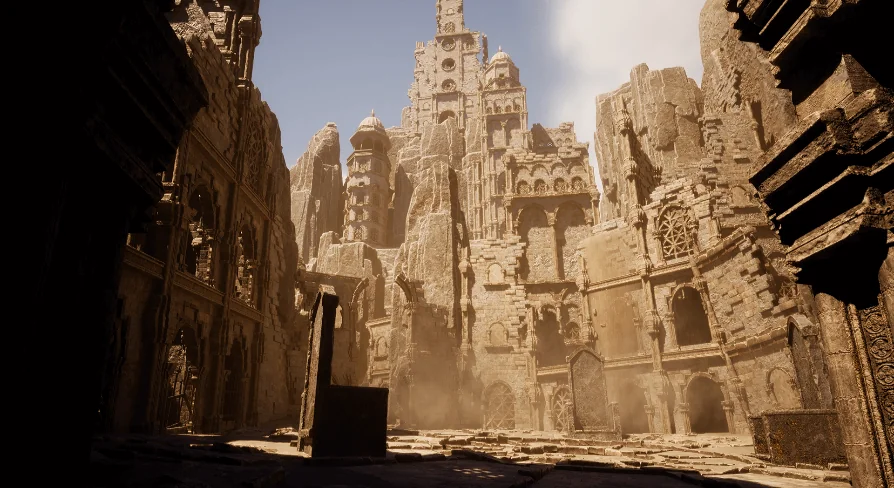
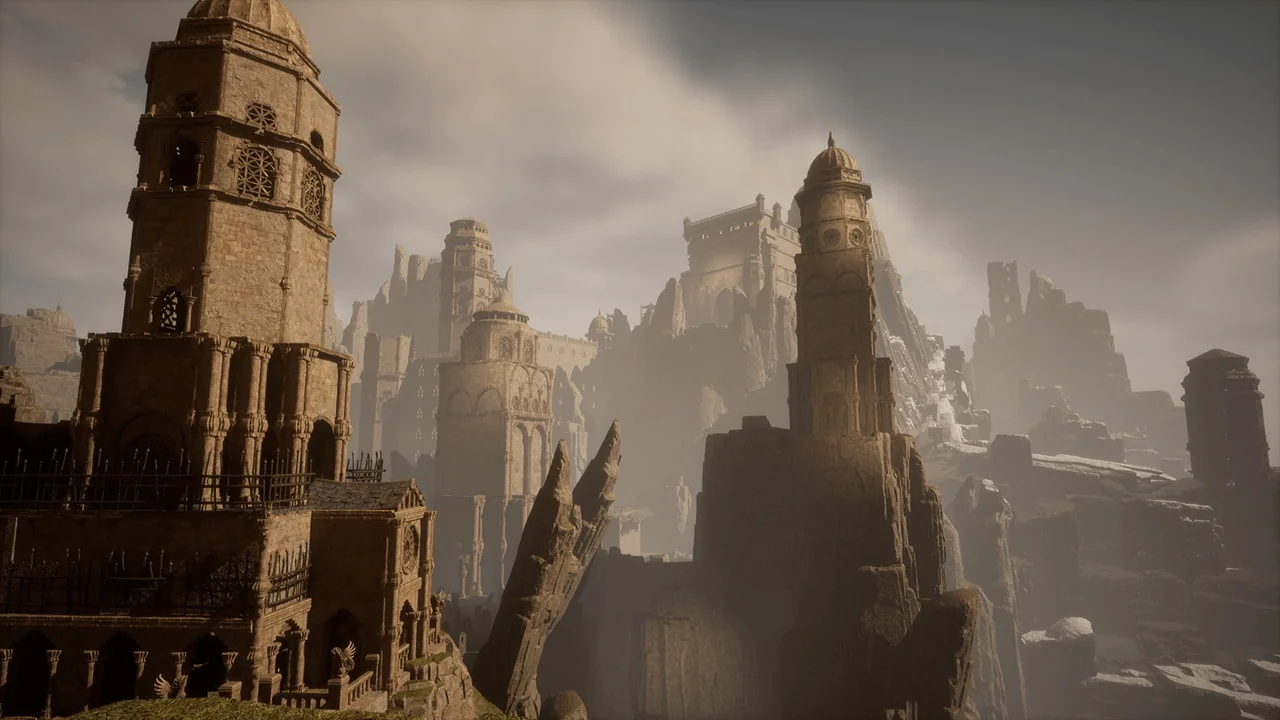
The kit diverges from standard Western European medieval defaults by centering its visual language on medieval Indian aesthetics fused with assorted cultural influences. This stylistic blend alters the structural character of arches, wall surfaces, bastions, and structural stonework, resulting in fortresses that appear distinct, weathered, and historically grounded while fitting seamlessly into realistic fantasy or adventure contexts.
Carved relief patterns, broad parapets, elevated defensive outposts, and sweeping foundation walls allow for builds that sit naturally atop jagged cliffs or along mountainous terrain. The cultural crossover allows developers to craft majestic castles that retain an aura of grand, ancient empires, as well as forbidding defensive positions that feel fortified against massive sieges. Because the architectural features prioritize realistic stone textures and structural mass, the kit adapts well to both bright, sun-drenched outposts and shadowed, dark fantasy domains.
Constructing Intricately Layered Fortresses and Labyrinthine Dungeons
The modular assets empower the creation of expansive defensive works, extending from high cliff perches down into labyrinthine dungeons beneath the stone. The kit is built to support verticality, giving developers the tools to construct intricately layered fortresses where multiple decks, elevated walkways, and fortified bastions overlook lower courtyards.
Formidable Fortresses: High stone walls, perimeter defenses, and massive gates configured to guard natural chokepoints and cliff edges.
Majestic Castles: Layered royal halls, grand courtyards, and palatial keeps built with ornate historical detailing.
Haunting Ruins: Decayed battlements, collapsed archways, and exposed structural skeletons that hint at fallen kingdoms.
Underground Dungeons: Interlocking subterranean corridors, dark stone cells, and twisting chambers suitable for traditional RPG exploration.
Because the components can be assembled into both pristine fortifications and decaying ruins, spaces can communicate the passage of time across different sections of a single map. An occupied outer bailey can yield to forgotten inner sanctums, or a fully functioning citadel can transition abruptly into forgotten, underground labyrinths filled with damp stone passages and secluded chambers.
Designing for Multiplayer Exploration and Tactical Level Design
Beyond single-player visual vignettes, the components are geared toward environments designed with multiplayer in mind. Multiplayer level design introduces strict spatial requirements: sightlines must be carefully managed, flanking routes must remain readable, and interior rooms require sufficient width to accommodate multiple concurrent players and combat navigation.
The scale of the fortress gates, ramparts, and dungeon halls provides enough clearance for dynamic encounters. Wide staircases and multi-tier parapets enable vertical combat, while dungeon intersections can be arrayed into looping paths rather than dead-end tunnels. The structural mass of the assets makes them especially suited for cliffside battlements where elevation changes determine tactical advantage, giving adventure and RPG projects the breathing room needed for cooperative raids or competitive multiplayer confrontations.
Production Readiness and Creator Support
Deploying large modular environments into an ongoing production pipeline requires stable assembly standards and reliable developer backing. The Empyrean provides a coherent library where wall segments, foundational cliffs, gateways, and floor plates align cleanly to prevent light leaking and navigational seams in dark dungeon interiors.
For technical troubleshooting, configuration questions, or implementation support, direct developer contact is maintained to ensure projects can resolve pipeline friction quickly. Whether deployed for an expansive open-world cliff fortress, a claustrophobic subterranean dungeon crawl, or a multiplayer stronghold siege, the kit delivers an adaptable, culturally distinctive foundation for detailed level creation.
 Fantasy
 Fantasy
 Environments
 Fantasy