"7ad89cffa44984cf"{"id":"1002547","slug":"mistic","title":"Mistic","category":"Humans","engine":"4.22+,5.0+","assetVersion":"","engineVersion":"Engine Version: 4.22+,5.0+","tag":"Humans","accent":"blue","visual":"mech","summary":"Explore Mistic, a lowpoly anime-styled character asset featuring separate textures for face, hair, skin, and cloth, built for mage, guard, and NPC roles.","platform":"Unreal Engine","indexPolicy":"index","publishedAt":"2026-11-13T09:56:17.654Z","updatedAt":"2026-11-13T09:56:17.654Z","sourceNotes":[],"fileContents":[],"compatibility":["Unreal Engine","Engine Version: 4.22+,5.0+"],"featuredImage":{"alt":"Mistic","src":"/wp-content/uploads/published/2026/11/0063b16c26db-0c016656-1525-408e-bfbf-578a092a54fe-df94718e02.webp"},"hasDownloadLink":true,"downloads":0,"terms":[{"taxonomy":"category","slug":"humans","name":"Humans"}],"galleryImages":[{"src":"/wp-content/uploads/published/2026/11/15b4489d9a15-ab5bc6fb-15e9-4fd7-9f44-aa861e445b34-2db01e8e63.webp","alt":"Mistic"},{"src":"/wp-content/uploads/published/2026/11/d889f169f685-f85f5874-3e51-4a32-a7d5-fde103a0232f-a5fdf925f4.webp","alt":"Mistic"},{"src":"/wp-content/uploads/published/2026/11/a2e95be5e9e7-a33b04a1-23ac-42be-977e-e551a23735f6-03e1667425.webp","alt":"Mistic"}],"accessPanel":{"kind":"resource","title":"Get this resource","eyebrow":"Free resource","message":"Download this resource in your browser.","fileName":"Content.7z","safetyNote":"Resources are manually reviewed before listing to improve quality and reduce obvious risks.","actionLabel":"Get this resource","resourceType":"Resource archive","versions":[]},"contentHtml":"\u003cp\u003eA solitary spellcaster patrolling a village perimeter or a robed guardian standing post at an anime-styled shrine establishes immediate tone inside a low-poly project. Mistic brings this visual archetype into focus, embodying a Japanese cartoon aesthetic suited for fantasy roles ranging from ceremonial shamans and arcane mages to steadfast guards and background townspeople. Because the geometry maintains a distinct lowpoly silhouette, the model integrates cleanly into lightweight scene hierarchies without overwhelming frame budgets or demanding heavy rendering overhead.\u003c/p\u003e \u003ch2\u003eStaging Mistic Across Lowpoly Stylized Roles\u003c/h2\u003e\n\u003cp\u003ePopulating stylized game worlds requires assets that can seamlessly step into different narrative responsibilities. Mistic is constructed to span multiple job classes without demanding major structural overhauls. Placed in an arcane library or a woodland shrine, the figure functions naturally as a wizard or shaman, channeling traditional fantasy tropes interpreted through an anime lens. Placed along town palisades, stone gateways, or royal courtyards, the exact same base asset serves as a vigilant guard or disciplined sentry monitoring travelers.\u003c/p\u003e\n\u003cp\u003eNon-player characters often suffer from visual monotony when small villages or faction outposts require multiple figures on screen simultaneously. Because Mistic covers roles extending from mystical practitioners to everyday NPCs, scene directors can disperse the model across varied gameplay encounters. One instance might deliver quest dialogue near an altar, while another cluster stands watchful duty along an exterior rampart. The cartoon visual design guarantees that the character reads clearly from both close-up dialogue angles and distant isometric overhead cameras.\u003c/p\u003e \u003ch2\u003eTexture Isolation and Surface Separation in Mistic\u003c/h2\u003e\n\u003cp\u003eVisual variety in character-heavy projects relies heavily on flexible material configurations. Mistic separates its surface definitions into four distinct texture assignments: face, skin, hair, and cloth. Isolating these elements prevents changes to one anatomical or garment zone from bleeding into another, offering precise control over the character's visual identity.\u003c/p\u003e\n\u003cp\u003eDecoupling the cloth map from the underlying anatomy simplifies regional color adjustments. Developers seeking to denote faction affiliations, elemental alignments, or hierarchy levels can tint, alter, or replace the cloth textures without touching facial details or skin tones. Royal guards might bear crimson garments, wandering wizards can sport deep indigo robes, and village shamans can wear muted earth tones, all while utilizing the same base geometry. The separation of the hair and face maps opens similar room for variation, letting teams assign varying hair shades or swap alternate facial expressions while preserving bodily skin values.\u003c/p\u003e\n\u003cp\u003eThis texture segmentation makes quick color customization a fundamental part of the character workflow. Because the maps are compartmentalized, modifying color values requires minimal editing effort, enabling fast turnaround times when establishing unique variants for different game districts or enemy tiers.\u003c/p\u003e \u003ch2\u003eAnimation Validation and Unity3D Motion Behavior\u003c/h2\u003e\n\u003cp\u003eStatic poses can obscure how well a lowpoly model will articulate during interactive gameplay. Mistic includes verified animation checks, ensuring that joint deformation across the limbs, torso, and attire operates cleanly during movement cycles. Demonstrations of the animation set are showcased within Unity3D, showing how the mesh holds up under real-time character locomotion, idle stances, and action beats.\u003c/p\u003e\n\u003cp\u003eObserving the movement behavior within Unity3D confirms that the stylized geometry accommodates standard locomotion, combat actions, and ambient NPC gestures without unnatural mesh pinching. Shamans can perform ritualistic spellcasting motions, wizards can brandish magical focal points, and guards can hold steady defensive postures while retaining the crisp silhouette intrinsic to cartoon designs. For projects built in Unity3D, the presence of the functioning animation checks allows character controllers to be wired directly into locomotion trees with minimal mechanical friction.\u003c/p\u003e \u003ch2\u003eUnreal Engine Pipeline Differences and Shading Needs\u003c/h2\u003e\n\u003cp\u003eWhile Mistic operates smoothly across different production environments, engine-specific configurations require deliberate setup depending on your chosen platform. The Unreal Engine package arrives without the dedicated script and custom toon shader that appear in the Unity3D demonstration. Teams integrating the asset into Unreal Engine must take this technical distinction into account when planning their rendering pipelines.\u003c/p\u003e\n\u003cp\u003eTo match the intended anime aesthetic inside Unreal Engine, artists will need to connect the model's separate texture maps to custom material networks or utilize their project's internal cel-shading solutions. Unreal Engine handles stylized toon looks through various techniques, including custom lighting calculations in the material editor or post-process shading volumes. Because the textures for face, skin, hair, and cloth are already partitioned, building material instances in Unreal Engine remains straightforward. Once instances are connected, developers can adjust scalar or vector parameters directly within Unreal's material tools to replicate the vibrant, stepped lighting gradients typical of cartoon Japanese productions.\u003c/p\u003e\n\u003cp\u003eGameplay logic and interaction scripting must also be authored natively when working in Unreal Engine. Rather than relying on imported vendor scripts, technical designers can map the verified skeletal animations straight into Unreal's animation blueprints, state machines, and blend spaces, ensuring full compatibility with custom player controllers or behavioral tree tasks for AI guards and roaming NPCs.\u003c/p\u003e \u003ch2\u003eIntegration Within the Yippy Kawaii Line\u003c/h2\u003e\n\u003cp\u003eStylistic uniformity represents one of the steepest challenges when gathering assets for stylized games. Mistic features verified compatibility with the Yippy Kawaii asset collection, allowing it to coexist effortlessly alongside matching stylized characters, props, and environments. Projects utilizing other assets from this lineage benefit from identical design language, shared proportional conventions, and complementary cartoon texturing methods.\u003c/p\u003e\n\u003cp\u003eThis cross-asset compatibility allows development teams to populate expansive fantasy worlds without suffering visual clashes between disparate artistic styles. Mistic can stand alongside fellow Yippy Kawaii figures in bustling town squares, ancient shrines, or fortified strongholds, forming a cohesive aesthetic unit that preserves immersion across every scene.\u003c/p\u003e\n\n\u003ch2\u003eExplore Similar Assets\u003c/h2\u003e\n\u003cul\u003e\n\u003cli\u003e\u003ca href=\"https://3dcghub.com/john-farmer/\" rel=\"noopener noreferrer\"\u003eJohn Farmer\u003c/a\u003e\u003c/li\u003e\n\u003cli\u003e\u003ca href=\"https://3dcghub.com/landon/\" rel=\"noopener noreferrer\"\u003eLandon\u003c/a\u003e\u003c/li\u003e\n\u003cli\u003e\u003ca href=\"https://3dcghub.com/carmel/\" rel=\"noopener noreferrer\"\u003eCarmel\u003c/a\u003e\u003c/li\u003e\n\u003cli\u003e\u003ca href=\"https://3dcghub.com/red-knight/\" rel=\"noopener noreferrer\"\u003eRed Knight\u003c/a\u003e\u003c/li\u003e\n\u003cli\u003e\u003ca href=\"https://3dcghub.com/customizable-school-girls/\" rel=\"noopener noreferrer\"\u003eCustomizable School Girls\u003c/a\u003e\u003c/li\u003e\n\u003c/ul\u003e","contentTextLength":6754,"navigation":{"current":30,"total":4499,"previous":{"id":"1002548","slug":"modern-soldier-camo-pack","title":"Modern Soldier Camo Pack","category":"Characters \u0026 Creatures","platform":"Unreal Engine","updatedAt":"2026-11-13T09:57:24.415Z"},"next":{"id":"1002546","slug":"mini-monsters","title":"Mini Monsters","category":"Creatures \u0026 Monsters","platform":"Unreal Engine","updatedAt":"2026-11-13T09:55:20.585Z"}},"relatedResources":[{"id":"1002539","slug":"john-farmer","title":"John Farmer","category":"Humans","engine":"4.22+,5.0+","assetVersion":"","engineVersion":"Engine Version: 4.22+,5.0+","tag":"Humans","accent":"blue","visual":"mech","summary":"A lowpoly anime NPC designed for farm settings, featuring separate texture zones, spade equipment, and cross-engine implementation details.","platform":"Unreal Engine","indexPolicy":"index","publishedAt":"2026-11-13T09:42:49.953Z","updatedAt":"2026-11-13T09:42:49.953Z","sourceNotes":[],"fileContents":[],"compatibility":["Unreal Engine","Engine Version: 4.22+,5.0+"],"featuredImage":{"alt":"John Farmer","src":"/wp-content/uploads/published/2026/11/aa38688d96a7-9920b373-a2e3-4a09-aab1-aca3ddd74620-225321562e.webp"},"hasDownloadLink":true,"downloads":0},{"id":"1002484","slug":"landon","title":"Landon","category":"Humans","engine":"4.22+,5.0+","assetVersion":"","engineVersion":"Engine Version: 4.22+,5.0+","tag":"Humans","accent":"blue","visual":"mech","summary":"Explore Landon, a lowpoly anime fantasy character featuring separate textures for face, hair, skin, and armor, ideal for archer and guard roles.","platform":"Unreal Engine","indexPolicy":"index","publishedAt":"2026-11-12T03:47:06.398Z","updatedAt":"2026-11-12T03:47:06.398Z","sourceNotes":[],"fileContents":[],"compatibility":["Unreal Engine","Engine Version: 4.22+,5.0+"],"featuredImage":{"alt":"Landon","src":"/wp-content/uploads/published/2026/11/ea3b0acab5a4-27cd2668-ce20-4397-a47d-69c1fab66c69-91dd5db839.webp"},"hasDownloadLink":true,"downloads":0},{"id":"1002468","slug":"carmel","title":"Carmel","category":"Humans","engine":"4.22+,5.0+","assetVersion":"","engineVersion":"Engine Version: 4.22+,5.0+","tag":"Humans","accent":"blue","visual":"mech","summary":"Carmel is a low-poly fantasy NPC character model featuring separated textures for face, skin, hair, and clothes, with verified animation support.","platform":"Unreal Engine","indexPolicy":"index","publishedAt":"2026-11-12T03:08:36.535Z","updatedAt":"2026-11-12T03:08:36.535Z","sourceNotes":[],"fileContents":[],"compatibility":["Unreal Engine","Engine Version: 4.22+,5.0+"],"featuredImage":{"alt":"Carmel","src":"/wp-content/uploads/published/2026/11/91525a699dff-42b5a9ca-487c-4df4-82d4-f7e5c2afaabe-2459f9cac6.webp"},"hasDownloadLink":true,"downloads":0}]}
Humans
Mistic
Explore Mistic, a lowpoly anime-styled character asset featuring separate textures for face, hair, skin, and cloth, built for mage, guard, and NPC roles.
Category:Unreal Engine,HumansPlatform: Unreal EngineEngine Version: 4.22+,5.0+Published: Nov 13, 2026
Humans
Resource overview
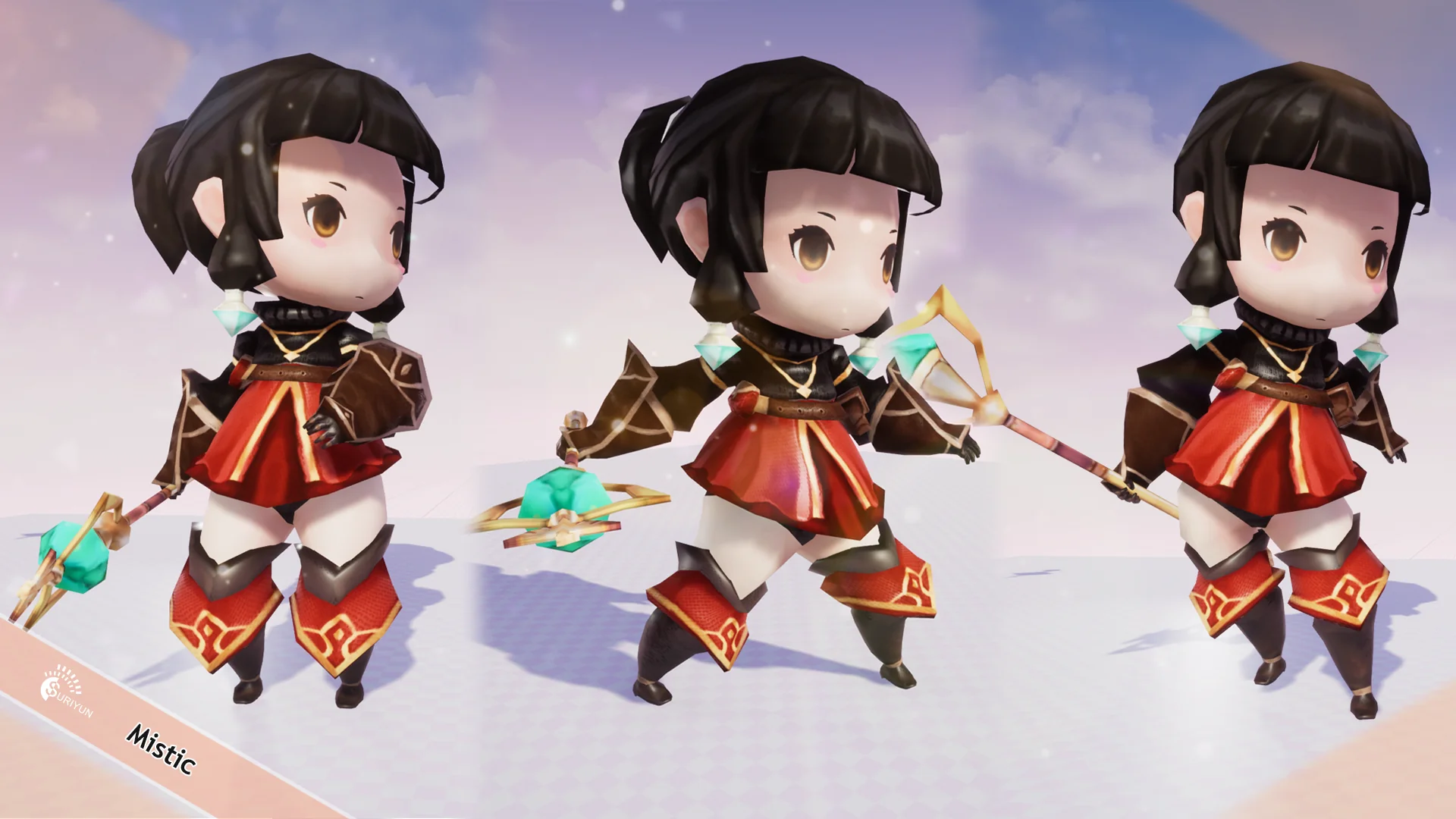
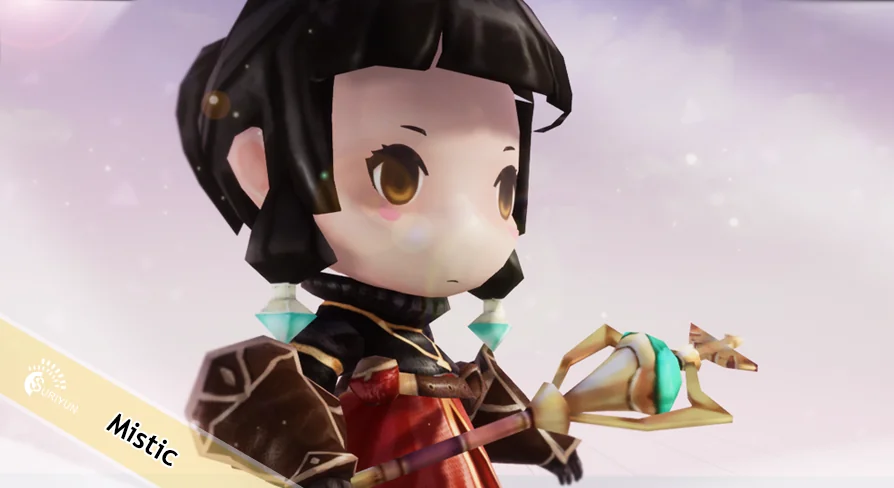
A solitary spellcaster patrolling a village perimeter or a robed guardian standing post at an anime-styled shrine establishes immediate tone inside a low-poly project. Mistic brings this visual archetype into focus, embodying a Japanese cartoon aesthetic suited for fantasy roles ranging from ceremonial shamans and arcane mages to steadfast guards and background townspeople. Because the geometry maintains a distinct lowpoly silhouette, the model integrates cleanly into lightweight scene hierarchies without overwhelming frame budgets or demanding heavy rendering overhead.
Staging Mistic Across Lowpoly Stylized Roles
Populating stylized game worlds requires assets that can seamlessly step into different narrative responsibilities. Mistic is constructed to span multiple job classes without demanding major structural overhauls. Placed in an arcane library or a woodland shrine, the figure functions naturally as a wizard or shaman, channeling traditional fantasy tropes interpreted through an anime lens. Placed along town palisades, stone gateways, or royal courtyards, the exact same base asset serves as a vigilant guard or disciplined sentry monitoring travelers.
Non-player characters often suffer from visual monotony when small villages or faction outposts require multiple figures on screen simultaneously. Because Mistic covers roles extending from mystical practitioners to everyday NPCs, scene directors can disperse the model across varied gameplay encounters. One instance might deliver quest dialogue near an altar, while another cluster stands watchful duty along an exterior rampart. The cartoon visual design guarantees that the character reads clearly from both close-up dialogue angles and distant isometric overhead cameras.
Texture Isolation and Surface Separation in Mistic
Visual variety in character-heavy projects relies heavily on flexible material configurations. Mistic separates its surface definitions into four distinct texture assignments: face, skin, hair, and cloth. Isolating these elements prevents changes to one anatomical or garment zone from bleeding into another, offering precise control over the character's visual identity.
Decoupling the cloth map from the underlying anatomy simplifies regional color adjustments. Developers seeking to denote faction affiliations, elemental alignments, or hierarchy levels can tint, alter, or replace the cloth textures without touching facial details or skin tones. Royal guards might bear crimson garments, wandering wizards can sport deep indigo robes, and village shamans can wear muted earth tones, all while utilizing the same base geometry. The separation of the hair and face maps opens similar room for variation, letting teams assign varying hair shades or swap alternate facial expressions while preserving bodily skin values.
This texture segmentation makes quick color customization a fundamental part of the character workflow. Because the maps are compartmentalized, modifying color values requires minimal editing effort, enabling fast turnaround times when establishing unique variants for different game districts or enemy tiers.
Animation Validation and Unity3D Motion Behavior
Static poses can obscure how well a lowpoly model will articulate during interactive gameplay. Mistic includes verified animation checks, ensuring that joint deformation across the limbs, torso, and attire operates cleanly during movement cycles. Demonstrations of the animation set are showcased within Unity3D, showing how the mesh holds up under real-time character locomotion, idle stances, and action beats.
Observing the movement behavior within Unity3D confirms that the stylized geometry accommodates standard locomotion, combat actions, and ambient NPC gestures without unnatural mesh pinching. Shamans can perform ritualistic spellcasting motions, wizards can brandish magical focal points, and guards can hold steady defensive postures while retaining the crisp silhouette intrinsic to cartoon designs. For projects built in Unity3D, the presence of the functioning animation checks allows character controllers to be wired directly into locomotion trees with minimal mechanical friction.
Unreal Engine Pipeline Differences and Shading Needs
While Mistic operates smoothly across different production environments, engine-specific configurations require deliberate setup depending on your chosen platform. The Unreal Engine package arrives without the dedicated script and custom toon shader that appear in the Unity3D demonstration. Teams integrating the asset into Unreal Engine must take this technical distinction into account when planning their rendering pipelines.
To match the intended anime aesthetic inside Unreal Engine, artists will need to connect the model's separate texture maps to custom material networks or utilize their project's internal cel-shading solutions. Unreal Engine handles stylized toon looks through various techniques, including custom lighting calculations in the material editor or post-process shading volumes. Because the textures for face, skin, hair, and cloth are already partitioned, building material instances in Unreal Engine remains straightforward. Once instances are connected, developers can adjust scalar or vector parameters directly within Unreal's material tools to replicate the vibrant, stepped lighting gradients typical of cartoon Japanese productions.
Gameplay logic and interaction scripting must also be authored natively when working in Unreal Engine. Rather than relying on imported vendor scripts, technical designers can map the verified skeletal animations straight into Unreal's animation blueprints, state machines, and blend spaces, ensuring full compatibility with custom player controllers or behavioral tree tasks for AI guards and roaming NPCs.
Integration Within the Yippy Kawaii Line
Stylistic uniformity represents one of the steepest challenges when gathering assets for stylized games. Mistic features verified compatibility with the Yippy Kawaii asset collection, allowing it to coexist effortlessly alongside matching stylized characters, props, and environments. Projects utilizing other assets from this lineage benefit from identical design language, shared proportional conventions, and complementary cartoon texturing methods.
This cross-asset compatibility allows development teams to populate expansive fantasy worlds without suffering visual clashes between disparate artistic styles. Mistic can stand alongside fellow Yippy Kawaii figures in bustling town squares, ancient shrines, or fortified strongholds, forming a cohesive aesthetic unit that preserves immersion across every scene.
 Humans