"7b46a695175d8694"{"id":"1001533","slug":"medieval-stronghold-architecture","title":"Medieval Stronghold Architecture","category":"Fantasy","engine":"4.27+,5.0+","assetVersion":"","engineVersion":"Engine Version: 4.27+,5.0+","tag":"Fantasy","accent":"blue","visual":"mech","summary":"Build castles with Medieval Stronghold Architecture. Features 196 meshes, vertex-paintable surfaces, modular interiors, exteriors, props, and 110 textures.","platform":"Unreal Engine","publishedAt":"2026-10-09T17:26:18.770Z","updatedAt":"2026-10-09T17:26:18.770Z","sourceNotes":[],"fileContents":[],"compatibility":["Unreal Engine","Engine Version: 4.27+,5.0+"],"featuredImage":{"alt":"Medieval Stronghold Architecture","src":"/wp-content/uploads/published/2026/10/969b0d427324-f53b1cb1-45ee-48bf-b0a6-068a8309f8e1-ec4b62d52e.webp"},"hasDownloadLink":true,"downloads":0,"terms":[{"taxonomy":"category","slug":"fantasy","name":"Fantasy"}],"galleryImages":[{"src":"/wp-content/uploads/published/2026/10/8862426bdd55-c4f88f26-e11b-4f42-af24-4abcafa41eee-a7ab1ac633.webp","alt":"Medieval Stronghold Architecture"},{"src":"/wp-content/uploads/published/2026/10/e53edb94c213-c571ce85-2ec9-4ba3-9aed-4721583f4219-a8c883cf5e.webp","alt":"Medieval Stronghold Architecture"},{"src":"/wp-content/uploads/published/2026/10/9be36d0fd94b-5ee4dc52-164f-401f-bc55-a92d82ba2b2b-78d2384a69.webp","alt":"Medieval Stronghold Architecture"},{"src":"/wp-content/uploads/published/2026/10/5f0a688d5b05-0a345bb2-1b3e-44a1-bd82-63d69d7ed3f4-75ec463bd5.webp","alt":"Medieval Stronghold Architecture"},{"src":"/wp-content/uploads/published/2026/10/2bdc643f809a-3a667fec-4174-40a3-9620-b42b323c0540-d23680de73.webp","alt":"Medieval Stronghold Architecture"},{"src":"/wp-content/uploads/published/2026/10/2d872e7bcb77-cb9b643e-c138-4417-8f57-fe9d40e35228-e6159ac92d.webp","alt":"Medieval Stronghold Architecture"},{"src":"/wp-content/uploads/published/2026/10/31a1ddbc6115-06bbbdc8-7032-4b7c-a0de-81ca0a94d166-1ce453098c.webp","alt":"Medieval Stronghold Architecture"}],"accessPanel":{"kind":"resource","title":"Download this resource","eyebrow":"Free Download","message":"Log in or create a free account to start your download.","fileName":"Medieval Stronghold Architecture.7z","safetyNote":"Resources are manually reviewed before listing to improve quality and reduce obvious risks.","actionLabel":"Download Free","resourceType":"Resource archive"},"contentHtml":"\u003ch2\u003eAssembling Modular Fortresses from Interior to Exterior\u003c/h2\u003e\u003cp\u003eConstructing a fortified stronghold requires structural components that align precisely across both outer bastions and internal chambers. Medieval Stronghold Architecture delivers this structural capability through a library of 196 distinct meshes organized to bridge outdoor courtyards and indoor halls. Rather than relying on static, single-purpose buildings, the package provides discrete pieces that allow level designers to dictate the footprint, height, and defensive layout of a fortress layout from the ground up.\u003c/p\u003e\u003cp\u003eBuilding out a functional castle compound demands a balance between grand exterior ramparts and navigable indoor hallways. Having direct access to matched exterior and interior structural elements eliminates the visual mismatch that often occurs when assembling multi-room fortifications. Level artists can establish towering defensive perimeter walls, transition directly into enclosed corridors, and finish rooms with targeted interior modules without changing visual styles.\u003c/p\u003e\u003ch2\u003eExterior Modules, Scaffolding, and Structural Shells\u003c/h2\u003e\u003cp\u003eThe architectural foundation of the pack centers on 160 architectural modules split across three distinct styles. These three styles provide stylistic variety across fortress builds, ensuring that large compounds do not look completely uniform across every tower or gatehouse.\u003c/p\u003e\u003cp\u003eThe structural assets divide into three clear categories:\u003c/p\u003e\u003cul\u003e\u003cli\u003e78 exterior modules, including 6 specialized two-sided modules configured to bridge internal and external geometry seamlessly.\u003c/li\u003e\u003cli\u003e72 interior modules, featuring 5 two-sided modules configured to handle partition transitions between distinct rooms.\u003c/li\u003e\u003cli\u003e21 wood and scaffolding pieces designed to stage dynamic construction scenes, siege preparations, or layered vertical platforms.\u003c/li\u003e\u003c/ul\u003e\u003cp\u003eThe two-sided exterior and interior components solve a common problem in modular level assembly: building continuous walls that carry correct surface treatments on both sides. Instead of forcing artists to slap two distinct single-sided meshes back-to-back, these dedicated two-sided pieces keep scene geometry clean while handling wall depth. The accompanying 21 scaffolding and woodwork pieces expand vertical layout possibilities. Builders can dress active work areas, establish elevated archer platforms, or line tall courtyard walls with timber walks and ramps.\u003c/p\u003e\u003ch2\u003eProp Distribution and the Five Extension Canvases\u003c/h2\u003e\u003cp\u003eBeyond structural stonework and timber scaffolds, the collection supplies 26 dedicated props to populate empty spaces with lived-in detail. Structural masonry establishes scale, but localized set dressing gives strongholds their defensive and domestic character.\u003c/p\u003e\u003cp\u003eThe prop breakdown covers essential fortress items:\u003c/p\u003e\u003cul\u003e\u003cli\u003e9 furniture assets to outfit interior chambers, throne rooms, and guard quarters.\u003c/li\u003e\u003cli\u003e5 distinct doors designed to enclose interior chambers and external thresholds.\u003c/li\u003e\u003cli\u003e3 decorative flags to introduce heraldry and focal points across exterior towers and ramparts.\u003c/li\u003e\u003cli\u003e2 grass vegetation patches to ground outdoor stone foundations into natural terrain.\u003c/li\u003e\u003cli\u003e1 light fixture to set initial interior illumination schemes.\u003c/li\u003e\u003cli\u003e1 static interior tailored tapestry providing refined wall dressing.\u003c/li\u003e\u003cli\u003e5 canvases specifically intended for artists who wish to produce and integrate their own custom assets.\u003c/li\u003e\u003c/ul\u003e\u003cp\u003eThe inclusion of five blank canvases gives environment artists a clear expansion point. Rather than leaving the collection closed to external additions, these canvas assets allow teams to create new paintings, banners, or graphic elements that integrate directly into the existing visual setup of the stronghold.\u003c/p\u003e\u003ch2\u003eSurface Shading with Paintable Materials and Occlusion Instances\u003c/h2\u003e\u003cp\u003eTexturing stone fortresses requires continuous variation so that large surfaces do not look like repetitive tiling patterns. The collection handles this through 20 base materials supported by 13 specialized material instances, incorporating vertex-paintable properties to break up monotony.\u003c/p\u003e\u003cp\u003eThe 20 base materials are distributed across specific asset types:\u003c/p\u003e\u003cul\u003e\u003cli\u003e6 materials dedicated to exterior architectural assets.\u003c/li\u003e\u003cli\u003e6 materials for interior architectural assets, two of which support vertex painting.\u003c/li\u003e\u003cli\u003e3 materials configured for miscellaneous props.\u003c/li\u003e\u003cli\u003e2 materials for the scaffolding and timber set.\u003c/li\u003e\u003cli\u003e2 materials tailored for the pack's doors.\u003c/li\u003e\u003cli\u003e1 tillable exterior ground material configured for surface painting.\u003c/li\u003e\u003cli\u003e1 tillable stone and debris material configured for the two-sided wall modules.\u003c/li\u003e\u003c/ul\u003e\u003cp\u003eThe 13 material instances provide targeted shading behaviors for specialized meshes. Two instances are tuned for baked occlusion effects across the smaller doors, giving doorframes realistic depth. Seven instances manage occlusion effects across the interior furniture assets, rooting tables and seating firmly to the floor. Two instances handle flags and the tailored tapestry, one instance powers a paintable fake interior setup to suggest depth through windows or archways, and the remaining instance finishes the shading pipeline.\u003c/p\u003e\u003ch2\u003eTexture Map Channels and Dwarf Fantasy Environment Set 1.1 Compatibility\u003c/h2\u003e\u003cp\u003eA comprehensive texture library drives the pack's materials, totaling 110 textures. The pipeline spans standard PBR texture maps including Albedo, Normals, Roughness, and Metalness, alongside dedicated Occlusion Masks and Grayscale filters. These grayscale filters and occlusion masks allow the material graph to blend weathering, grime, and contact shadows across surfaces without relying purely on unique UV unwraps for every block of stone.\u003c/p\u003e\u003cp\u003eFor productions managing multi-pack fantasy environments, the package maintains compatibility with the Dwarf Fantasy Environment Set 1.1. This ensures that assets from both collections can stand side by side without conflicting technical setups or jarring artistic clashes. Teams assembling expansive fantasy compounds or subterranean castle keeps can mix the modular stone modules, woodwork, and props with compatible dwarf environment assets, significantly broadening the architectural scope of their level design pipeline.\u003c/p\u003e\n\n\u003ch2\u003eExplore Similar Assets\u003c/h2\u003e\n\u003cul\u003e\n\u003cli\u003e\u003ca href=\"https://3dcghub.com/fafnirs-keep/\" title=\"Fafnir\u0026#039;s Keep\"\u003eFafnir\u0026#039;s Keep\u003c/a\u003e\u003c/li\u003e\n\u003cli\u003e\u003ca href=\"https://3dcghub.com/medieval-watchtowers-and-platforms-v1/\" title=\"Medieval Watchtowers and Platforms - v1\"\u003eMedieval Watchtowers and Platforms - v1\u003c/a\u003e\u003c/li\u003e\n\u003cli\u003e\u003ca href=\"https://3dcghub.com/lake-house-01-with-interiors-4k-pbr/\" title=\"LAKE HOUSE 01 with INTERIORS 4K PBR\"\u003eLAKE HOUSE 01 with INTERIORS 4K PBR\u003c/a\u003e\u003c/li\u003e\n\u003cli\u003e\u003ca href=\"https://3dcghub.com/wood-structures/\" title=\"Wood Structures\"\u003eWood Structures\u003c/a\u003e\u003c/li\u003e\n\u003cli\u003e\u003ca href=\"https://3dcghub.com/medieval-architecture-pack/\" title=\"Medieval Architecture Pack\"\u003eMedieval Architecture Pack\u003c/a\u003e\u003c/li\u003e\n\u003c/ul\u003e","contentTextLength":6230,"navigation":{"current":11,"total":3481,"previous":{"id":"1001534","slug":"mini-market-environment","title":"Mini Market Environment","category":"Cities","platform":"Unreal Engine","updatedAt":"2026-10-09T17:27:19.818Z"},"next":{"id":"1001532","slug":"levelcontroller2-transform-levels-at-runtime-in-realtime","title":"LevelController2 (Transform Levels At Runtime In Realtime)","category":"Engine Tools","platform":"Unreal Engine","updatedAt":"2026-10-09T17:25:41.854Z"}},"relatedResources":[{"id":"27128","slug":"fafnirs-keep","title":"Fafnir's Keep","category":"Fantasy","engine":"5.3+","assetVersion":"Engine version: 5.3+","engineVersion":"","tag":"Fantasy","accent":"blue","visual":"city","summary":"Fafnir's Keep drops a glossy medieval fantasy setting into a scene with a fully laid-out showcase map, architecture pieces, and atmospheric lighting. It also includes blueprints, materials, textures, collision, and Nanite-based LOD support for Unreal Engine...","platform":"Unreal Engine","publishedAt":"2026-04-21T12:49:59.000Z","updatedAt":"2026-04-21T12:50:02.000Z","sourceNotes":[],"fileContents":[],"compatibility":["Unreal Engine","Engine version: 5.3+"],"featuredImage":{"alt":"Fafnir's Keep","src":"https://3dcghub.com/wp-content/uploads/2026/04/d255dbf87692_14e31df1-bf22-4de7-ae1e-525992ac2b73.webp"},"hasDownloadLink":true,"downloads":0},{"id":"1000645","slug":"medieval-watchtowers-and-platforms-v1","title":"Medieval Watchtowers and Platforms - v1","category":"Buildings \u0026 Architecture","engine":"5.0+","assetVersion":"","engineVersion":"Engine Version: 5.0+","tag":"Buildings","accent":"blue","visual":"mech","summary":"Nine medieval watchtowers and platforms built for Unreal Engine 5 with Nanite, Lumen support, tiled materials, and multiple LODs for AAA fantasy RPG production.","platform":"Unreal Engine","publishedAt":"2026-07-21T17:44:36.382Z","updatedAt":"2026-07-21T17:44:36.382Z","sourceNotes":[],"fileContents":[],"compatibility":["Unreal Engine","Engine Version: 5.0+"],"featuredImage":{"alt":"Medieval Watchtowers and Platforms - v1","src":"/wp-content/uploads/published/2026/07/13bfec9e8e92-e3924236-632f-4dc1-b2f2-286bcfc59f88-7a8b235e94.webp"},"hasDownloadLink":true,"downloads":0},{"id":"1264","slug":"lake-house-01-with-interiors-4k-pbr","title":"LAKE HOUSE 01 with INTERIORS 4K PBR","category":"Buildings \u0026 Architecture","engine":"5.5+","assetVersion":"Engine version: 5.5+","engineVersion":"5.5","tag":"Buildings","accent":"blue","visual":"mech","summary":"Enhance your digital environments with 20 detailed 3D lake houses. Featuring 4K PBR textures, full interiors, and optimized assets for games and cinematics.","platform":"Unreal Engine","publishedAt":"2026-02-06T17:29:31.000Z","updatedAt":"2026-04-19T15:58:12.000Z","sourceNotes":[],"fileContents":[],"compatibility":["Unreal Engine","Engine version: 5.5+"],"featuredImage":{"alt":"LAKE HOUSE 01 with INTERIORS 4K PBR","src":"https://3dcghub.com/wp-content/uploads/2026/02/e2f52c34-b0af-40e2-8e2a-be4767d64935.jpg"},"hasDownloadLink":true,"downloads":1}]}
Fantasy
Medieval Stronghold Architecture
Build castles with Medieval Stronghold Architecture. Features 196 meshes, vertex-paintable surfaces, modular interiors, exteriors, props, and 110 textures.
Category:Unreal Engine,FantasyPlatform: Unreal EngineEngine Version: 4.27+,5.0+Published: Oct 9, 2026
Fantasy
Resource overview
Assembling Modular Fortresses from Interior to Exterior
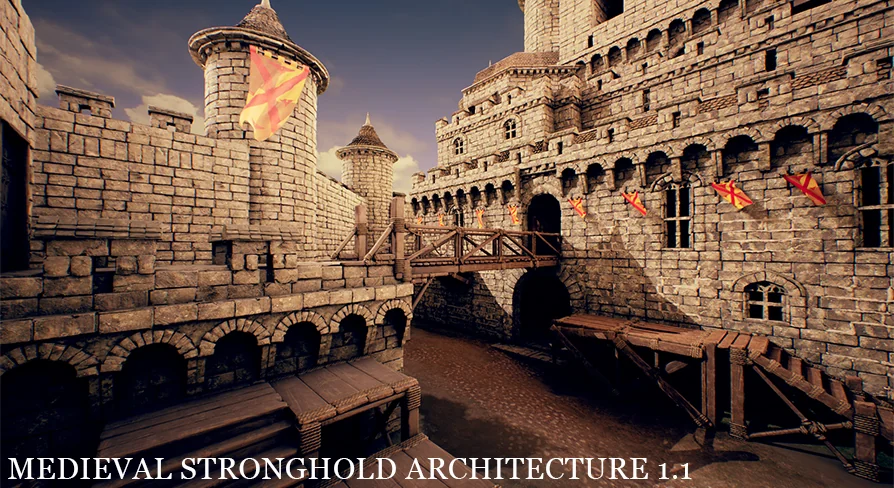
Constructing a fortified stronghold requires structural components that align precisely across both outer bastions and internal chambers. Medieval Stronghold Architecture delivers this structural capability through a library of 196 distinct meshes organized to bridge outdoor courtyards and indoor halls. Rather than relying on static, single-purpose buildings, the package provides discrete pieces that allow level designers to dictate the footprint, height, and defensive layout of a fortress layout from the ground up.
Building out a functional castle compound demands a balance between grand exterior ramparts and navigable indoor hallways. Having direct access to matched exterior and interior structural elements eliminates the visual mismatch that often occurs when assembling multi-room fortifications. Level artists can establish towering defensive perimeter walls, transition directly into enclosed corridors, and finish rooms with targeted interior modules without changing visual styles.
Exterior Modules, Scaffolding, and Structural Shells
The architectural foundation of the pack centers on 160 architectural modules split across three distinct styles. These three styles provide stylistic variety across fortress builds, ensuring that large compounds do not look completely uniform across every tower or gatehouse.
The structural assets divide into three clear categories:
78 exterior modules, including 6 specialized two-sided modules configured to bridge internal and external geometry seamlessly.
72 interior modules, featuring 5 two-sided modules configured to handle partition transitions between distinct rooms.
21 wood and scaffolding pieces designed to stage dynamic construction scenes, siege preparations, or layered vertical platforms.
The two-sided exterior and interior components solve a common problem in modular level assembly: building continuous walls that carry correct surface treatments on both sides. Instead of forcing artists to slap two distinct single-sided meshes back-to-back, these dedicated two-sided pieces keep scene geometry clean while handling wall depth. The accompanying 21 scaffolding and woodwork pieces expand vertical layout possibilities. Builders can dress active work areas, establish elevated archer platforms, or line tall courtyard walls with timber walks and ramps.
Prop Distribution and the Five Extension Canvases
Beyond structural stonework and timber scaffolds, the collection supplies 26 dedicated props to populate empty spaces with lived-in detail. Structural masonry establishes scale, but localized set dressing gives strongholds their defensive and domestic character.
The prop breakdown covers essential fortress items:
9 furniture assets to outfit interior chambers, throne rooms, and guard quarters.
5 distinct doors designed to enclose interior chambers and external thresholds.
3 decorative flags to introduce heraldry and focal points across exterior towers and ramparts.
2 grass vegetation patches to ground outdoor stone foundations into natural terrain.
1 light fixture to set initial interior illumination schemes.
5 canvases specifically intended for artists who wish to produce and integrate their own custom assets.
The inclusion of five blank canvases gives environment artists a clear expansion point. Rather than leaving the collection closed to external additions, these canvas assets allow teams to create new paintings, banners, or graphic elements that integrate directly into the existing visual setup of the stronghold.
Surface Shading with Paintable Materials and Occlusion Instances
Texturing stone fortresses requires continuous variation so that large surfaces do not look like repetitive tiling patterns. The collection handles this through 20 base materials supported by 13 specialized material instances, incorporating vertex-paintable properties to break up monotony.
The 20 base materials are distributed across specific asset types:
6 materials dedicated to exterior architectural assets.
6 materials for interior architectural assets, two of which support vertex painting.
3 materials configured for miscellaneous props.
2 materials for the scaffolding and timber set.
2 materials tailored for the pack's doors.
1 tillable exterior ground material configured for surface painting.
1 tillable stone and debris material configured for the two-sided wall modules.
The 13 material instances provide targeted shading behaviors for specialized meshes. Two instances are tuned for baked occlusion effects across the smaller doors, giving doorframes realistic depth. Seven instances manage occlusion effects across the interior furniture assets, rooting tables and seating firmly to the floor. Two instances handle flags and the tailored tapestry, one instance powers a paintable fake interior setup to suggest depth through windows or archways, and the remaining instance finishes the shading pipeline.
Texture Map Channels and Dwarf Fantasy Environment Set 1.1 Compatibility
A comprehensive texture library drives the pack's materials, totaling 110 textures. The pipeline spans standard PBR texture maps including Albedo, Normals, Roughness, and Metalness, alongside dedicated Occlusion Masks and Grayscale filters. These grayscale filters and occlusion masks allow the material graph to blend weathering, grime, and contact shadows across surfaces without relying purely on unique UV unwraps for every block of stone.
For productions managing multi-pack fantasy environments, the package maintains compatibility with the Dwarf Fantasy Environment Set 1.1. This ensures that assets from both collections can stand side by side without conflicting technical setups or jarring artistic clashes. Teams assembling expansive fantasy compounds or subterranean castle keeps can mix the modular stone modules, woodwork, and props with compatible dwarf environment assets, significantly broadening the architectural scope of their level design pipeline.
 Fantasy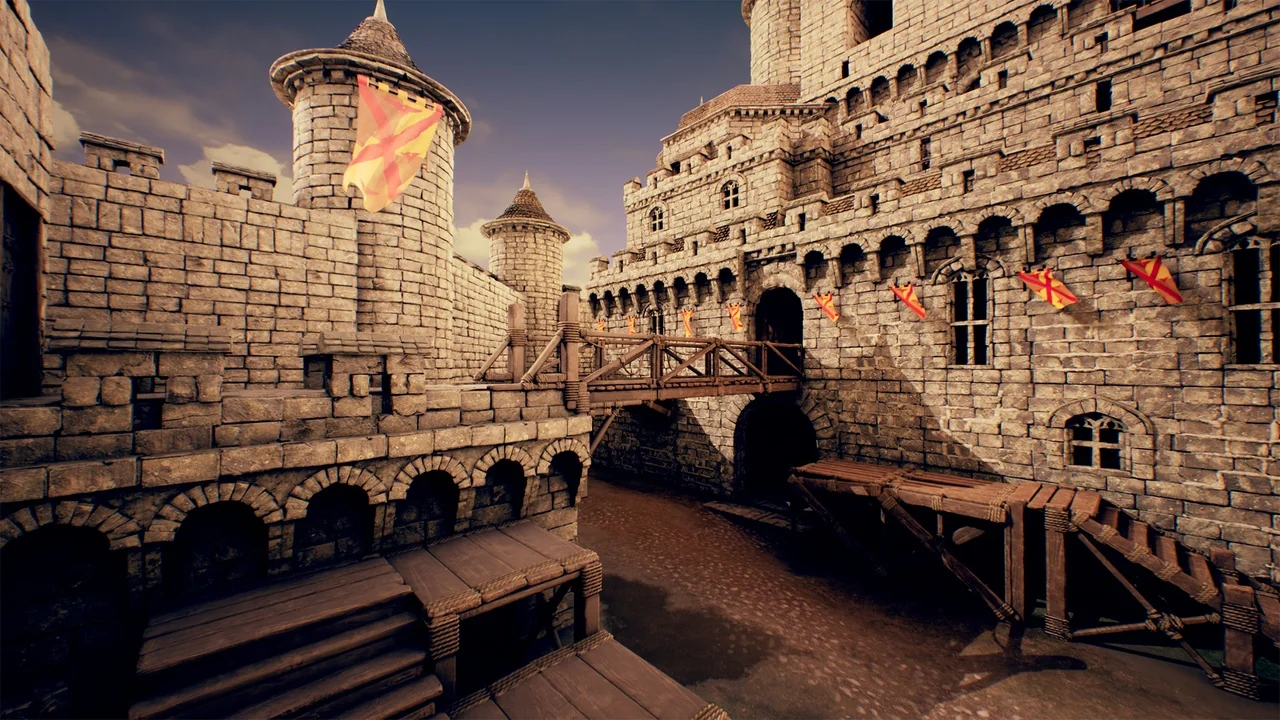
 Fantasy
 Buildings
 Buildings