"7e6fc58c410f2894"{"id":"24303","slug":"marine-shader-pack","title":"Marine Shader Pack","category":"Shaders","engine":"Original Unity version: 2018.4.2","assetVersion":"Original Unity version: 2018.4.2","engineVersion":"Asset Version:1.0","tag":"Shaders","accent":"cyan","visual":"luts","summary":"Marine Shader Pack gives Unity projects an ocean shader, a river shader, and supporting shaders for ground, ruffles, clover, sand, and rock. It also includes environment models and supports Built-In and URP workflows.","platform":"Unity","publishedAt":"2026-04-14T11:17:54.000Z","updatedAt":"2026-04-20T06:12:50.000Z","sourceNotes":[],"fileContents":[],"compatibility":["Unity","Original Unity version: 2018.4.2","Asset Version: 1.0"],"featuredImage":{"alt":"Marine Shader Pack","src":"https://3dcghub.com/wp-content/uploads/2026/04/2f94d725b646_d9234812-7931-4bca-a269-8bf3b3a7170a_1280x720_stretch.webp"},"hasDownloadLink":true,"downloads":0,"terms":[{"taxonomy":"category","slug":"shaders-vfx-unity-2","name":"Shaders"},{"taxonomy":"post_tag","slug":"materials","name":"Materials"},{"taxonomy":"post_tag","slug":"unity","name":"Unity"},{"taxonomy":"post_tag","slug":"vfx","name":"VFX"}],"galleryImages":[{"src":"https://3dcghub.com/wp-content/uploads/2026/04/806ce93b64c3_d434cba6-963d-45d9-a8ab-fd3c726a6f39_scaled.webp","alt":"Marine Shader Pack"}],"accessPanel":{"kind":"resource","title":"Access this resource","eyebrow":"Free Download","message":"Log in or create a free account to start your download.","fileName":"Marine Shader Pack v1.0.7z","safetyNote":"All resources are 100% manually reviewed to eliminate all risks.","actionLabel":"Download Free","resourceType":"Resource archive"},"contentHtml":"\u003ch2\u003eWhen a scene needs water and the area around it\u003c/h2\u003e\n\u003cp\u003eMarine Shader Pack fits projects that need more than one kind of water surface. An ocean shader and a river shader are both included, which makes it easier to treat broad open water and narrower water areas as separate parts of a scene instead of forcing them into the same material setup. That distinction matters in production, because water often sits at the center of a sceneâs look and has to work alongside terrain, shoreline details, and surrounding environment pieces.\u003c/p\u003e\n\u003cp\u003eThe pack is aimed at Unity work, and it is presented as a shader pack that helps with game creation. In practice, that means it sits in the part of the workflow where the scene already has a direction and needs surface treatment that can carry the marine theme through the world. The name points to water, but the contents make it clear that the package reaches beyond water alone.\u003c/p\u003e \u003ch2\u003eWhat comes with the shader set\u003c/h2\u003e\n\u003cp\u003eThe core of the package is simple: ocean and river shaders. Around those are additional shaders for ground, ruffles, clover, sand, and rock. That mix gives the package a wider role than a single water material. It can support the surrounding surfaces that usually appear near marine environments, so the water does not feel isolated from the rest of the scene.\u003c/p\u003e\n\u003cp\u003eThe included pieces are:\u003c/p\u003e\n\u003cul\u003e \u003cli\u003eOcean shader\u003c/li\u003e \u003cli\u003eRiver shader\u003c/li\u003e \u003cli\u003eAdditional shaders for ground, ruffles, clover, sand, and rock\u003c/li\u003e \u003cli\u003eEnvironment models\u003c/li\u003e\n\u003c/ul\u003e\n\u003cp\u003eThe environment models matter because they add another layer to the packageâs usefulness. Rather than leaving the project with shaders only, the pack also includes physical scene pieces that can sit alongside the water and terrain treatments. That makes the resource more complete for teams trying to keep a marine scene visually connected from the water surface to the nearby environment.\u003c/p\u003e\n\u003cp\u003eThose extra shaders also suggest a practical workflow: water can be paired with surface details instead of standing on its own. Ground, sand, and rock are the kinds of elements that often frame water in a scene, while clover and ruffles point to smaller decorative or surface-level additions. Used together, they let the pack contribute to both the main water surfaces and the visual transition into the surrounding world.\u003c/p\u003e \u003ch2\u003eWhere it fits inside Unity work\u003c/h2\u003e\n\u003cp\u003eMarine Shader Pack is marked for all platforms, so it is positioned as a broad Unity resource rather than something tied to one narrow target. It supports the Built-In renderer and URP, which makes it relevant to projects working in either of those paths. The render pipeline compatibility is listed for 2020.3.0f1 as URP and Built-in, and the release notes record a switch to 2020.3.0 along with the addition of URP.\u003c/p\u003e\n\u003cp\u003eThe version history gives a clearer sense of where the pack sits in a production timeline. The original Unity version is 2018.4.2, and the supported Unity versions listed are 2018.4.2 and 2020.3.0. That means the pack has a defined compatibility range rather than being a loose collection with no stated baseline. For a team planning a scene that needs marine surfaces, those version details help narrow down whether the asset lines up with the projectâs Unity setup.\u003c/p\u003e\n\u003cp\u003eThe package also comes as a unitypackage. That makes it easy to think about as an imported asset set rather than a single isolated shader file. The file size is 264.5 MB, and the asset count is 96, which tells you the pack is made up of a fairly large set of included pieces. For a project workflow, that matters because the resource is not only about one shader; it arrives as a bundle with enough material to support several related scene elements.\u003c/p\u003e \u003ch2\u003eRelease state and project planning details\u003c/h2\u003e\n\u003cp\u003eThe latest version is 1.1, and the latest release date is Jun 14, 2024. The asset was first published on Apr 07, 2020. Those dates show a package that has been maintained over time and updated well after its initial publication. The current release note is short but specific: it notes the switch to 2020.3.0 and the addition of URP. That is the kind of detail that matters when a project is choosing between render paths or trying to stay within a particular Unity version range.\u003c/p\u003e\n\u003cp\u003eIn day-to-day use, the pack reads as a marine environment toolset with a focused core. The ocean shader and river shader cover the main water surfaces. The extra shaders extend the look into nearby ground and surface detail. The environment models give the package more physical context. Together, those parts make it a practical fit for scenes where water is a major visual element and where the rest of the environment needs to stay visually consistent with it.\u003c/p\u003e\n\u003cp\u003eFor teams working in Built-In or URP, the compatibility information is the strongest reason to look closely at this pack. For teams building water-heavy scenes in Unity, the combination of water shaders, supporting surface shaders, and environment models gives the package a clear place in production: it is meant to handle the marine side of a scene without stopping at the waterline.\u003c/p\u003e\n\n\u003ch2\u003eMore From The Same Workflow\u003c/h2\u003e\n\u003cul\u003e\n\u003cli\u003e\u003ca href=\"https://3dcghub.com/make-a-horror-survival-game-in-unity/\" title=\"Make a horror survival game in Unity\"\u003eMake a horror survival game in Unity\u003c/a\u003e\u003c/li\u003e\n\u003cli\u003e\u003ca href=\"https://3dcghub.com/unity-shader-programming-beginners-to-advanced-techniques/\" title=\"Unity Shader Programming: Beginners to Advanced Techniques\"\u003eUnity Shader Programming: Beginners to Advanced Techniques\u003c/a\u003e\u003c/li\u003e\n\u003cli\u003e\u003ca href=\"https://3dcghub.com/mastering-editor-scripting-in-unity/\" title=\"Mastering Editor Scripting in Unity\"\u003eMastering Editor Scripting in Unity\u003c/a\u003e\u003c/li\u003e\n\u003cli\u003e\u003ca href=\"https://3dcghub.com/altos-volumetric-clouds-skybox-and-weather-for-unity-urp/\" title=\"Altos – Volumetric Clouds, Skybox, and Weather for Unity URP\"\u003eAltos – Volumetric Clouds, Skybox, and Weather for Unity URP\u003c/a\u003e\u003c/li\u003e\n\u003cli\u003e\u003ca href=\"https://3dcghub.com/toolkit-for-unity-physics-2026/\" title=\"Toolkit for Unity Physics 2026\"\u003eToolkit for Unity Physics 2026\u003c/a\u003e\u003c/li\u003e\n\u003c/ul\u003e","contentTextLength":5284,"navigation":{"current":1885,"total":3618,"previous":{"id":"24316","slug":"omnishade-pbr-physically-based-uber-shader","title":"OmniShade PBR - Physically Based Uber Shader","category":"Shaders","platform":"Unity","updatedAt":"2026-04-20T06:12:50.000Z"},"next":{"id":"24299","slug":"ice-world-2","title":"Ice World","category":"Shaders","platform":"Unity","updatedAt":"2026-04-20T06:12:50.000Z"}},"relatedResources":[{"id":"24052","slug":"all-in-1-sprite-shader","title":"All In 1 Sprite Shader","category":"Shaders","engine":"Original Unity version: 2021.3.45","assetVersion":"Original Unity version: 2021.3.45","engineVersion":"Asset Version:4.25","tag":"Shaders","accent":"cyan","visual":"audio","summary":"All In 1 Sprite Shader brings sprites, UI elements, and particles into one fast workflow. It combines 46+ effects, supports multiple render pipelines, and includes tools for inspection, baking, and script access.","platform":"Unity","publishedAt":"2026-04-12T09:32:11.000Z","updatedAt":"2026-04-19T15:35:01.000Z","sourceNotes":[],"fileContents":[],"compatibility":["Unity","Original Unity version: 2021.3.45","Asset Version: 4.25"],"featuredImage":{"alt":"All In 1 Sprite Shader","src":"https://3dcghub.com/wp-content/uploads/2026/04/c9cd3962dfe2_e5a17b50-03e4-447a-939a-519f7b5e4b8f_1280x720_stretch.webp"},"hasDownloadLink":true,"downloads":5},{"id":"24136","slug":"enviro-3-terrain-shader","title":"Enviro 3 - Terrain Shader","category":"Shaders","engine":"Original Unity version: 2021.3.45","assetVersion":"Original Unity version: 2021.3.45","engineVersion":"Asset Version:1.1.2","tag":"Shaders","accent":"cyan","visual":"audio","summary":"Enviro 3 - Terrain Shader is a PBR terrain shader for Unity that focuses on weather-driven surface changes. It covers dynamic snow, puddles, wetness, blending control, and terrain hole support across supported render pipelines.","platform":"Unity","publishedAt":"2026-04-12T09:54:37.000Z","updatedAt":"2026-04-19T15:34:58.000Z","sourceNotes":[],"fileContents":[],"compatibility":["Unity","Original Unity version: 2021.3.45","Asset Version: 1.1.2"],"featuredImage":{"alt":"Enviro 3 - Terrain Shader","src":"https://3dcghub.com/wp-content/uploads/2026/04/85056b4933d5_c948eb4b-7e79-4b63-a5f1-ee65186a1e93_1280x720_stretch.webp"},"hasDownloadLink":true,"downloads":3},{"id":"24364","slug":"sprite-shaders-ultimate","title":"Sprite Shaders Ultimate","category":"Shaders","engine":"Original Unity version: 2020.3.0","assetVersion":"Original Unity version: 2020.3.0","engineVersion":"Asset Version:6.10","tag":"Shaders","accent":"cyan","visual":"luts","summary":"Sprite Shaders Ultimate brings sprites and UI elements into motion with a large set of combinable shaders. It includes tools for masking, fading, pixel art handling, shader baking, and support across render pipelines.","platform":"Unity","publishedAt":"2026-04-14T11:31:15.000Z","updatedAt":"2026-04-20T06:12:49.000Z","sourceNotes":[],"fileContents":[],"compatibility":["Unity","Original Unity version: 2020.3.0","Asset Version: 6.10"],"featuredImage":{"alt":"Sprite Shaders Ultimate","src":"https://3dcghub.com/wp-content/uploads/2026/04/dc468761f253_7796ac63-cceb-4e61-9b8d-fe845bffe76d_1280x720_stretch.webp"},"hasDownloadLink":true,"downloads":2}]}
Shaders
Marine Shader Pack
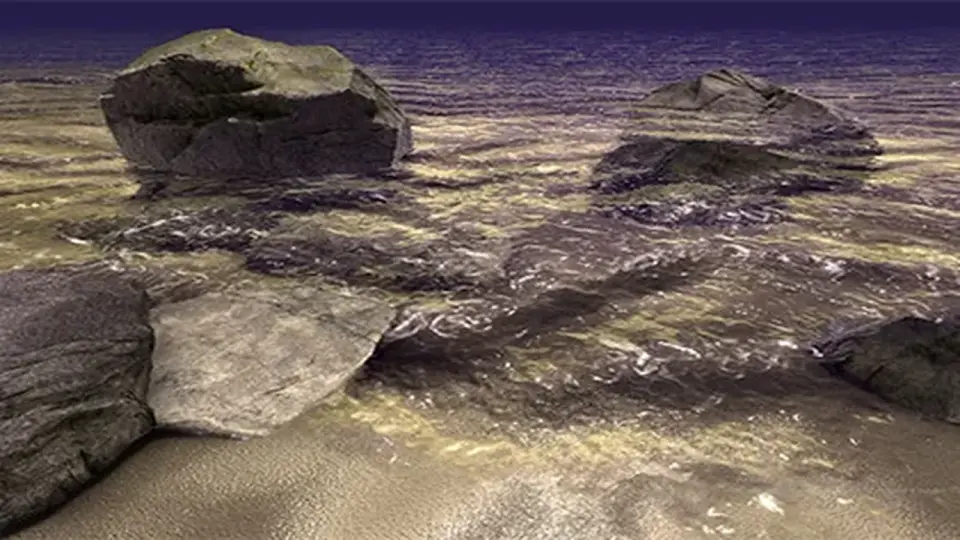
Marine Shader Pack gives Unity projects an ocean shader, a river shader, and supporting shaders for ground, ruffles, clover, sand, and rock. It also includes environment models and supports Built-In and URP workflows.
Marine Shader Pack fits projects that need more than one kind of water surface. An ocean shader and a river shader are both included, which makes it easier to treat broad open water and narrower water areas as separate parts of a scene instead of forcing them into the same material setup. That distinction matters in production, because water often sits at the center of a sceneâs look and has to work alongside terrain, shoreline details, and surrounding environment pieces.
The pack is aimed at Unity work, and it is presented as a shader pack that helps with game creation. In practice, that means it sits in the part of the workflow where the scene already has a direction and needs surface treatment that can carry the marine theme through the world. The name points to water, but the contents make it clear that the package reaches beyond water alone.
What comes with the shader set
The core of the package is simple: ocean and river shaders. Around those are additional shaders for ground, ruffles, clover, sand, and rock. That mix gives the package a wider role than a single water material. It can support the surrounding surfaces that usually appear near marine environments, so the water does not feel isolated from the rest of the scene.
The included pieces are:
Ocean shader
River shader
Additional shaders for ground, ruffles, clover, sand, and rock
Environment models
The environment models matter because they add another layer to the packageâs usefulness. Rather than leaving the project with shaders only, the pack also includes physical scene pieces that can sit alongside the water and terrain treatments. That makes the resource more complete for teams trying to keep a marine scene visually connected from the water surface to the nearby environment.
Those extra shaders also suggest a practical workflow: water can be paired with surface details instead of standing on its own. Ground, sand, and rock are the kinds of elements that often frame water in a scene, while clover and ruffles point to smaller decorative or surface-level additions. Used together, they let the pack contribute to both the main water surfaces and the visual transition into the surrounding world.
Where it fits inside Unity work
Marine Shader Pack is marked for all platforms, so it is positioned as a broad Unity resource rather than something tied to one narrow target. It supports the Built-In renderer and URP, which makes it relevant to projects working in either of those paths. The render pipeline compatibility is listed for 2020.3.0f1 as URP and Built-in, and the release notes record a switch to 2020.3.0 along with the addition of URP.
The version history gives a clearer sense of where the pack sits in a production timeline. The original Unity version is 2018.4.2, and the supported Unity versions listed are 2018.4.2 and 2020.3.0. That means the pack has a defined compatibility range rather than being a loose collection with no stated baseline. For a team planning a scene that needs marine surfaces, those version details help narrow down whether the asset lines up with the projectâs Unity setup.
The package also comes as a unitypackage. That makes it easy to think about as an imported asset set rather than a single isolated shader file. The file size is 264.5 MB, and the asset count is 96, which tells you the pack is made up of a fairly large set of included pieces. For a project workflow, that matters because the resource is not only about one shader; it arrives as a bundle with enough material to support several related scene elements.
Release state and project planning details
The latest version is 1.1, and the latest release date is Jun 14, 2024. The asset was first published on Apr 07, 2020. Those dates show a package that has been maintained over time and updated well after its initial publication. The current release note is short but specific: it notes the switch to 2020.3.0 and the addition of URP. That is the kind of detail that matters when a project is choosing between render paths or trying to stay within a particular Unity version range.
In day-to-day use, the pack reads as a marine environment toolset with a focused core. The ocean shader and river shader cover the main water surfaces. The extra shaders extend the look into nearby ground and surface detail. The environment models give the package more physical context. Together, those parts make it a practical fit for scenes where water is a major visual element and where the rest of the environment needs to stay visually consistent with it.
For teams working in Built-In or URP, the compatibility information is the strongest reason to look closely at this pack. For teams building water-heavy scenes in Unity, the combination of water shaders, supporting surface shaders, and environment models gives the package a clear place in production: it is meant to handle the marine side of a scene without stopping at the waterline.
 Shaders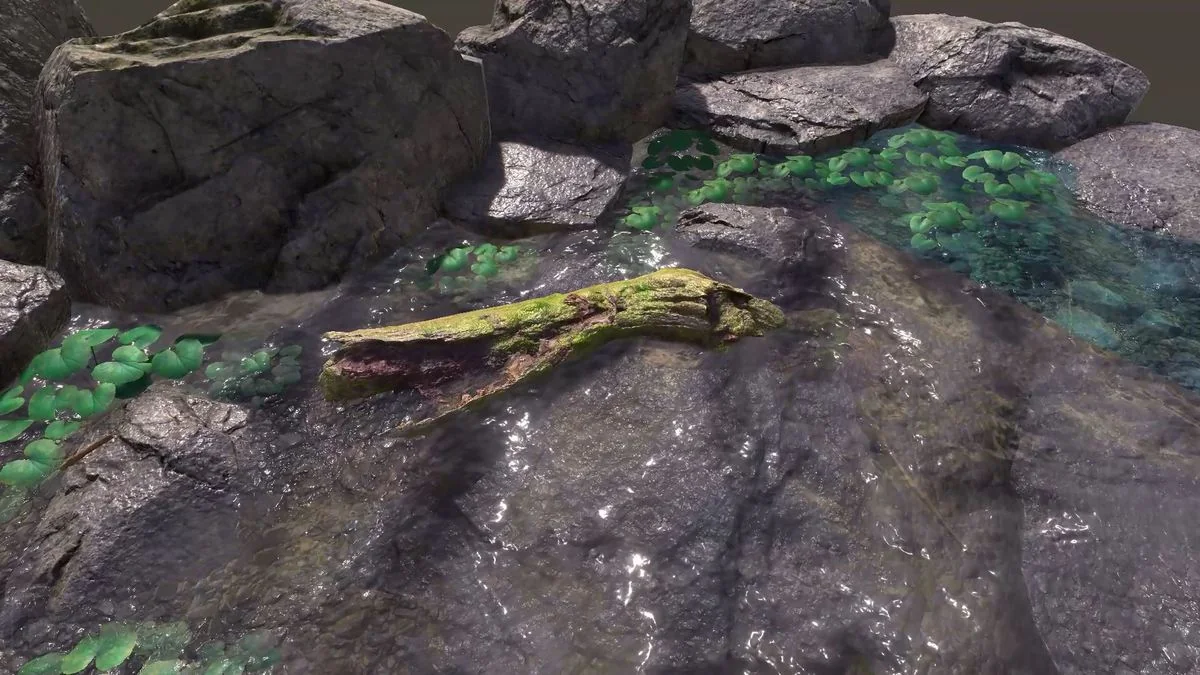
 Shaders
 Shaders
 Shaders