"7ad89cffa44984cf"{"id":"1002543","slug":"little-dragons-mouse","title":"Little Dragons Mouse","category":"Characters \u0026 Creatures","engine":"4.26+,5.0+","assetVersion":"","engineVersion":"Engine Version: 4.26+,5.0+","tag":"Characters","accent":"blue","visual":"character","summary":"Examine the models, 150+ animations, hatching cycles, and visual styles included in Little Dragons Mouse for fantasy pet and creature systems.","platform":"Unreal Engine","indexPolicy":"index","publishedAt":"2026-11-13T09:49:01.516Z","updatedAt":"2026-11-13T09:49:01.516Z","sourceNotes":[],"fileContents":[],"compatibility":["Unreal Engine","Engine Version: 4.26+,5.0+"],"featuredImage":{"alt":"Little Dragons Mouse","src":"/wp-content/uploads/published/2026/11/3ba1393b2b8f-f2f154f8-e422-4ce0-9f6f-a7a26c38a5d6-5255acfe07.webp"},"hasDownloadLink":true,"downloads":0,"terms":[{"taxonomy":"category","slug":"characters-and-creatures","name":"Characters \u0026 Creatures"}],"galleryImages":[{"src":"/wp-content/uploads/published/2026/11/fa541717cbd9-d6dc0d90-d012-42de-b823-e4ea6c30a961-31686a2719.webp","alt":"Little Dragons Mouse"},{"src":"/wp-content/uploads/published/2026/11/fcfb51d23f6a-a9645f3e-6a0f-4a42-a5c5-561654205dd2-e29c4443ae.webp","alt":"Little Dragons Mouse"},{"src":"/wp-content/uploads/published/2026/11/bc1277015893-c655b74d-c02d-4c77-8b1a-4fe0832b455f-dbefd0de2e.webp","alt":"Little Dragons Mouse"},{"src":"/wp-content/uploads/published/2026/11/f6e3fceaad3b-950e0fc9-77da-45a4-b653-336b48b1f246-70f7d2626a.webp","alt":"Little Dragons Mouse"},{"src":"/wp-content/uploads/published/2026/11/eb659fe98e77-f063ed6a-7dd3-4602-bb56-42289aae4f57-93446fca19.webp","alt":"Little Dragons Mouse"},{"src":"/wp-content/uploads/published/2026/11/c0b70130e3ef-527e3e7f-e209-435d-8e4c-305ab9d002ec-4e5b93d201.webp","alt":"Little Dragons Mouse"},{"src":"/wp-content/uploads/published/2026/11/ed350c4cedd5-cc614647-8d04-4d19-a2e3-158e05b95daf-cffefadebb.webp","alt":"Little Dragons Mouse"},{"src":"/wp-content/uploads/published/2026/11/7648b0528c75-f0d05c7b-e992-4b8f-8132-a1575167c190-499ab0d561.webp","alt":"Little Dragons Mouse"},{"src":"/wp-content/uploads/published/2026/11/c66d926277d1-fd25e784-6fbf-4925-a1da-43fa22cd4c04-cb26b8a41d.webp","alt":"Little Dragons Mouse"},{"src":"/wp-content/uploads/published/2026/11/29f84e95a44d-b8e3eb8d-0ae2-4677-822e-26bcf7789592-454c4baedc.webp","alt":"Little Dragons Mouse"}],"accessPanel":{"kind":"resource","title":"Get this resource","eyebrow":"Free resource","message":"Download this resource in your browser.","fileName":"Content.7z","safetyNote":"Resources are manually reviewed before listing to improve quality and reduce obvious risks.","actionLabel":"Get this resource","resourceType":"Resource archive","versions":[]},"contentHtml":"\u003ch2\u003eFantasy Companion Roles for Little Dragons Mouse\u003c/h2\u003e\u003cp\u003eSmall fantasy creatures frequently occupy vital roles across role-playing games, survival adventures, and stylized platformers. Whether acting as a loyal companion animal, a summonable familiar, wild environmental fauna, or a hatchable reward, small winged reptiles require a versatile foundation of motion to appear alive. Little Dragons Mouse focuses squarely on this niche, delivering a miniature dragon and wyvern character framework structured through diverse movement types and behavioral acting.\u003c/p\u003e\u003cp\u003eBecause the creature bridges the gap between ground-dwelling quadruped and winged flier, projects utilizing such an asset need smooth continuity across varied terrain. The inclusion of baby dragon themes allows developers to craft pet progression systems, starting from the egg stage and extending into active gameplay where the creature follows, rests, navigates waterways, or engages in skirmishes alongside the player character.\u003c/p\u003e\u003ch2\u003eLocomotion, Aerial Movement, and Aquatic States\u003c/h2\u003e\u003cp\u003eA primary demand of any interactive creature is locomotion that fits both open terrain and confined spaces. Little Dragons Mouse delivers more than 150 animations, giving animators and gameplay programmers the coverage needed to handle standard movement as well as edge cases. Ground movement includes foundational walks, trots, and runs, complemented by directional turns, jumps, and evasive dodges. These variations accommodate both slow, inquisitive wandering behaviors for ambient wildlife and high-speed pursuit or retreat sequences during tense encounters.\u003c/p\u003e\u003cp\u003eThe motion set provides both root-motion and in-place animation formats. In-place tracks are well suited for conventional player-driven movement inputs where the character capsule is manipulated by script or standard navigation mesh agents. Root-motion tracks, conversely, preserve the true physical displacement calculated by the animator, ensuring feet do not slide during turns, sudden dodges, or trotting transitions.\u003c/p\u003e\u003cp\u003eBeyond terrestrial movement, the asset features dedicated aerial and water states. The flight sequences allow the creature to take to the air smoothly, accommodating vertical exploration, perching, or airborne travel. For aquatic environments, the package supplies swimming and underwater animation sets. This enables the creature to follow players into rivers, dive beneath lakes, or navigate swampy biomes without breaking immersion through mismatched land animations.\u003c/p\u003e\u003ch2\u003eBehaviors, Combat, and Hatching Sequences in Little Dragons Mouse\u003c/h2\u003e\u003cp\u003eCreature believable behavior relies heavily on what happens between movement phases. Little Dragons Mouse includes an extensive assortment of idles, emotion gestures, sleep states, and specific actions. These expressive motions provide the subtle twitches, breathing loops, and personality cues needed to convey mood, whether the creature is relaxing by a campfire, reacting to an interactable object, or idling beside an owner.\u003c/p\u003e\u003cp\u003eCombat functionality is addressed through both offensive and defensive states. The offensive kit contains physical melee strikes and fire-breathing attacks, allowing the miniature wyvern to function as an active combatant or an aggressive wild threat. Defensive and failure states are equally represented, including hit reactions when taking damage, alongside distinct death sequences that cleanly resolve combat encounters.\u003c/p\u003e\u003cp\u003eA notable aspect of the collection is the inclusion of dedicated egg meshes alongside three distinct egg hatching animations. Pet-raising and creature-taming mechanics depend heavily on birth moments to build attachment. Having three separate hatching cycles allows developers to introduce randomized hatching presentations or stagger the emergence of multiple baby dragons during quest cutscenes and incubator interactions.\u003c/p\u003e\u003ch2\u003eAesthetic Styles and Color Variations\u003c/h2\u003e\u003cp\u003eVisual cohesion determines how readily an asset integrates into a game's world. Little Dragons Mouse includes four distinct visual styles to fit different art directions:\u003c/p\u003e\u003cul\u003e\u003cli\u003eRealistic: Detailed texturing and surface definition suited for grounded fantasy environments and high-fidelity rendering pipelines.\u003c/li\u003e\u003cli\u003eToon: Stylized outlines, vibrant tones, and exaggerated handpainted sensibilities suited for cartoon aesthetics.\u003c/li\u003e\u003cli\u003eSimple Box: Geometric, blocky structural designs tailored for casual, grid-based, or minimalist game presentations.\u003c/li\u003e\u003cli\u003ePoly Art: Clean, faceted low-poly surfaces designed to match popular flat-shaded indie aesthetics.\u003c/li\u003e\u003c/ul\u003e\u003cp\u003eEach of the four styles comes equipped with five distinct color schemes. This results in twenty visual variations straight out of the box, offering substantial variety for enemy recolors, elemental species variants (such as fire, ice, or poison), or customizable pet appearances without requiring immediate texture modifications.\u003c/p\u003e\u003ch2\u003eTechnical Scope and Rig Architecture\u003c/h2\u003e\u003cp\u003eUnderstanding the exact contents of an asset package prevents pipeline bottlenecks during production. Little Dragons Mouse delivers meshes, textures, eggs, and animations, but does not provide pre-assembled Blueprint character controllers or movement scripts. The technical setup relies on the developer to build the state machines, blend spaces, and input handling within their own engine environment.\u003c/p\u003e\u003cp\u003eFor projects already utilizing quadruped locomotion pipelines, the animation layout shares compatibility principles with the Horse Animset framework. This alignment eases the retargeting and shared logic burden for teams handling multiple four-legged beasts within a unified locomotion framework.\u003c/p\u003e\u003cp\u003eTeams benefiting most from this asset are programmers, technical artists, and independent studios building creature-focused RPGs, pet-raising titles, or action-adventure games where comprehensive motion coverage is essential. By providing complete movement cycles across ground, air, and water—along with combat, idle personality states, four art styles, and life-cycle egg hatching—the package supplies the visual and animated elements needed to establish a functional miniature dragon companion.\u003c/p\u003e\n\n\u003ch2\u003eRelated Resources Worth Checking\u003c/h2\u003e\n\u003cul\u003e\n\u003cli\u003e\u003ca href=\"https://3dcghub.com/little-dragon-sea/\" rel=\"noopener noreferrer\"\u003eLittle Dragon Sea\u003c/a\u003e\u003c/li\u003e\n\u003cli\u003e\u003ca href=\"https://3dcghub.com/elemental-dragon/\" rel=\"noopener noreferrer\"\u003eElemental Dragon\u003c/a\u003e\u003c/li\u003e\n\u003cli\u003e\u003ca href=\"https://3dcghub.com/black-dragon/\" rel=\"noopener noreferrer\"\u003eBlack Dragon\u003c/a\u003e\u003c/li\u003e\n\u003cli\u003e\u003ca href=\"https://3dcghub.com/mutant-rat-mouse/\" rel=\"noopener noreferrer\"\u003eMutant Rat Mouse\u003c/a\u003e\u003c/li\u003e\n\u003cli\u003e\u003ca href=\"https://3dcghub.com/winter-dragon-wyvern/\" rel=\"noopener noreferrer\"\u003eWinter Dragon (Wyvern)\u003c/a\u003e\u003c/li\u003e\n\u003c/ul\u003e","contentTextLength":6188,"navigation":{"current":34,"total":4499,"previous":{"id":"1002544","slug":"little-dragons-tiger","title":"Little Dragons Tiger","category":"Characters \u0026 Creatures","platform":"Unreal Engine","updatedAt":"2026-11-13T09:52:17.153Z"},"next":{"id":"1002542","slug":"little-dragon-sea","title":"Little Dragon Sea","category":"Characters \u0026 Creatures","platform":"Unreal Engine","updatedAt":"2026-11-13T09:47:38.951Z"}},"relatedResources":[{"id":"1002544","slug":"little-dragons-tiger","title":"Little Dragons Tiger","category":"Characters \u0026 Creatures","engine":"4.26+,5.0+","assetVersion":"","engineVersion":"Engine Version: 4.26+,5.0+","tag":"Characters","accent":"blue","visual":"character","summary":"Technical breakdown of Little Dragons Tiger, detailing animation setups, styles, egg hatching sequences, and Horse Animset compatibility.","platform":"Unreal Engine","indexPolicy":"index","publishedAt":"2026-11-13T09:52:17.153Z","updatedAt":"2026-11-13T09:52:17.153Z","sourceNotes":[],"fileContents":[],"compatibility":["Unreal Engine","Engine Version: 4.26+,5.0+"],"featuredImage":{"alt":"Little Dragons Tiger","src":"/wp-content/uploads/published/2026/11/92b1590b536d-dec9fe4d-1906-45b3-8031-4abd1d56097a-9913410b38.webp"},"hasDownloadLink":true,"downloads":0},{"id":"1002542","slug":"little-dragon-sea","title":"Little Dragon Sea","category":"Characters \u0026 Creatures","engine":"4.15+,5.0+","assetVersion":"","engineVersion":"Engine Version: 4.15+,5.0+","tag":"Characters","accent":"blue","visual":"character","summary":"Examine the technical integration, visual styles, and 120 locomotion and action animations provided in the Little Dragon Sea asset collection.","platform":"Unreal Engine","indexPolicy":"index","publishedAt":"2026-11-13T09:47:38.951Z","updatedAt":"2026-11-13T09:47:38.951Z","sourceNotes":[],"fileContents":[],"compatibility":["Unreal Engine","Engine Version: 4.15+,5.0+"],"featuredImage":{"alt":"Little Dragon Sea","src":"/wp-content/uploads/published/2026/11/bd1ea715e089-02c595b9-11ae-4d26-a487-a85db35fc074-61935685dc.webp"},"hasDownloadLink":true,"downloads":0},{"id":"1002553","slug":"dragons-pack-pbr","title":"Dragons Pack PBR","category":"Characters \u0026 Creatures","engine":"4.26+,5.0+","assetVersion":"","engineVersion":"Engine Version: 4.26+,5.0+","tag":"Characters","accent":"blue","visual":"character","summary":"A modular dragon character with three heads, four backs, two tails, morphable meshes, land and air animations, riding gear, and texture customization.","platform":"Unreal Engine","indexPolicy":"index","publishedAt":"2026-11-13T10:44:04.939Z","updatedAt":"2026-11-13T10:44:04.939Z","sourceNotes":[],"fileContents":[],"compatibility":["Unreal Engine","Engine Version: 4.26+,5.0+"],"featuredImage":{"alt":"Dragons Pack PBR","src":"/wp-content/uploads/published/2026/11/3da1c57f3803-c7f49a80-8d53-4c2e-a37d-b60a8158091b-4055ba50f8.webp"},"hasDownloadLink":true,"downloads":0}]}
Characters
Little Dragons Mouse
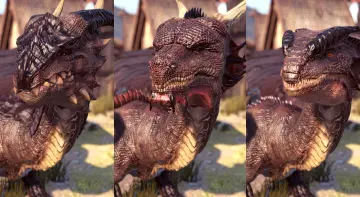
Examine the models, 150+ animations, hatching cycles, and visual styles included in Little Dragons Mouse for fantasy pet and creature systems.
Small fantasy creatures frequently occupy vital roles across role-playing games, survival adventures, and stylized platformers. Whether acting as a loyal companion animal, a summonable familiar, wild environmental fauna, or a hatchable reward, small winged reptiles require a versatile foundation of motion to appear alive. Little Dragons Mouse focuses squarely on this niche, delivering a miniature dragon and wyvern character framework structured through diverse movement types and behavioral acting.
Because the creature bridges the gap between ground-dwelling quadruped and winged flier, projects utilizing such an asset need smooth continuity across varied terrain. The inclusion of baby dragon themes allows developers to craft pet progression systems, starting from the egg stage and extending into active gameplay where the creature follows, rests, navigates waterways, or engages in skirmishes alongside the player character.
Locomotion, Aerial Movement, and Aquatic States
A primary demand of any interactive creature is locomotion that fits both open terrain and confined spaces. Little Dragons Mouse delivers more than 150 animations, giving animators and gameplay programmers the coverage needed to handle standard movement as well as edge cases. Ground movement includes foundational walks, trots, and runs, complemented by directional turns, jumps, and evasive dodges. These variations accommodate both slow, inquisitive wandering behaviors for ambient wildlife and high-speed pursuit or retreat sequences during tense encounters.
The motion set provides both root-motion and in-place animation formats. In-place tracks are well suited for conventional player-driven movement inputs where the character capsule is manipulated by script or standard navigation mesh agents. Root-motion tracks, conversely, preserve the true physical displacement calculated by the animator, ensuring feet do not slide during turns, sudden dodges, or trotting transitions.
Beyond terrestrial movement, the asset features dedicated aerial and water states. The flight sequences allow the creature to take to the air smoothly, accommodating vertical exploration, perching, or airborne travel. For aquatic environments, the package supplies swimming and underwater animation sets. This enables the creature to follow players into rivers, dive beneath lakes, or navigate swampy biomes without breaking immersion through mismatched land animations.
Behaviors, Combat, and Hatching Sequences in Little Dragons Mouse
Creature believable behavior relies heavily on what happens between movement phases. Little Dragons Mouse includes an extensive assortment of idles, emotion gestures, sleep states, and specific actions. These expressive motions provide the subtle twitches, breathing loops, and personality cues needed to convey mood, whether the creature is relaxing by a campfire, reacting to an interactable object, or idling beside an owner.
Combat functionality is addressed through both offensive and defensive states. The offensive kit contains physical melee strikes and fire-breathing attacks, allowing the miniature wyvern to function as an active combatant or an aggressive wild threat. Defensive and failure states are equally represented, including hit reactions when taking damage, alongside distinct death sequences that cleanly resolve combat encounters.
A notable aspect of the collection is the inclusion of dedicated egg meshes alongside three distinct egg hatching animations. Pet-raising and creature-taming mechanics depend heavily on birth moments to build attachment. Having three separate hatching cycles allows developers to introduce randomized hatching presentations or stagger the emergence of multiple baby dragons during quest cutscenes and incubator interactions.
Aesthetic Styles and Color Variations
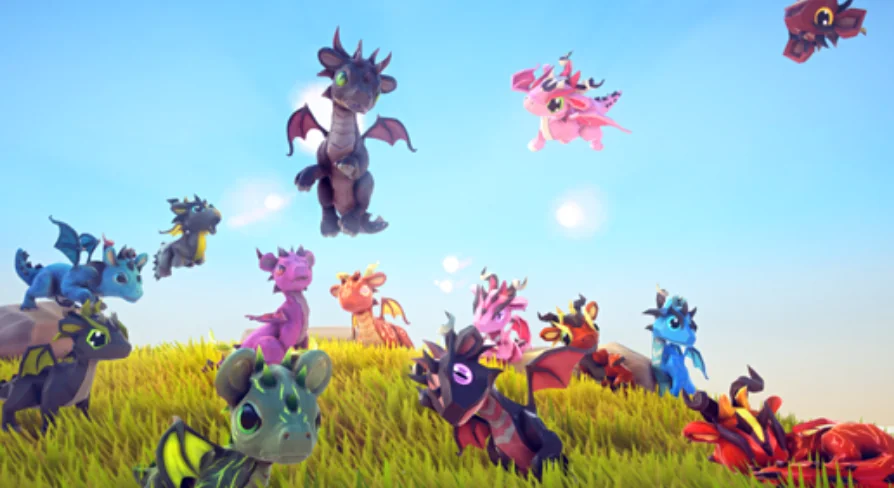
Visual cohesion determines how readily an asset integrates into a game's world. Little Dragons Mouse includes four distinct visual styles to fit different art directions:
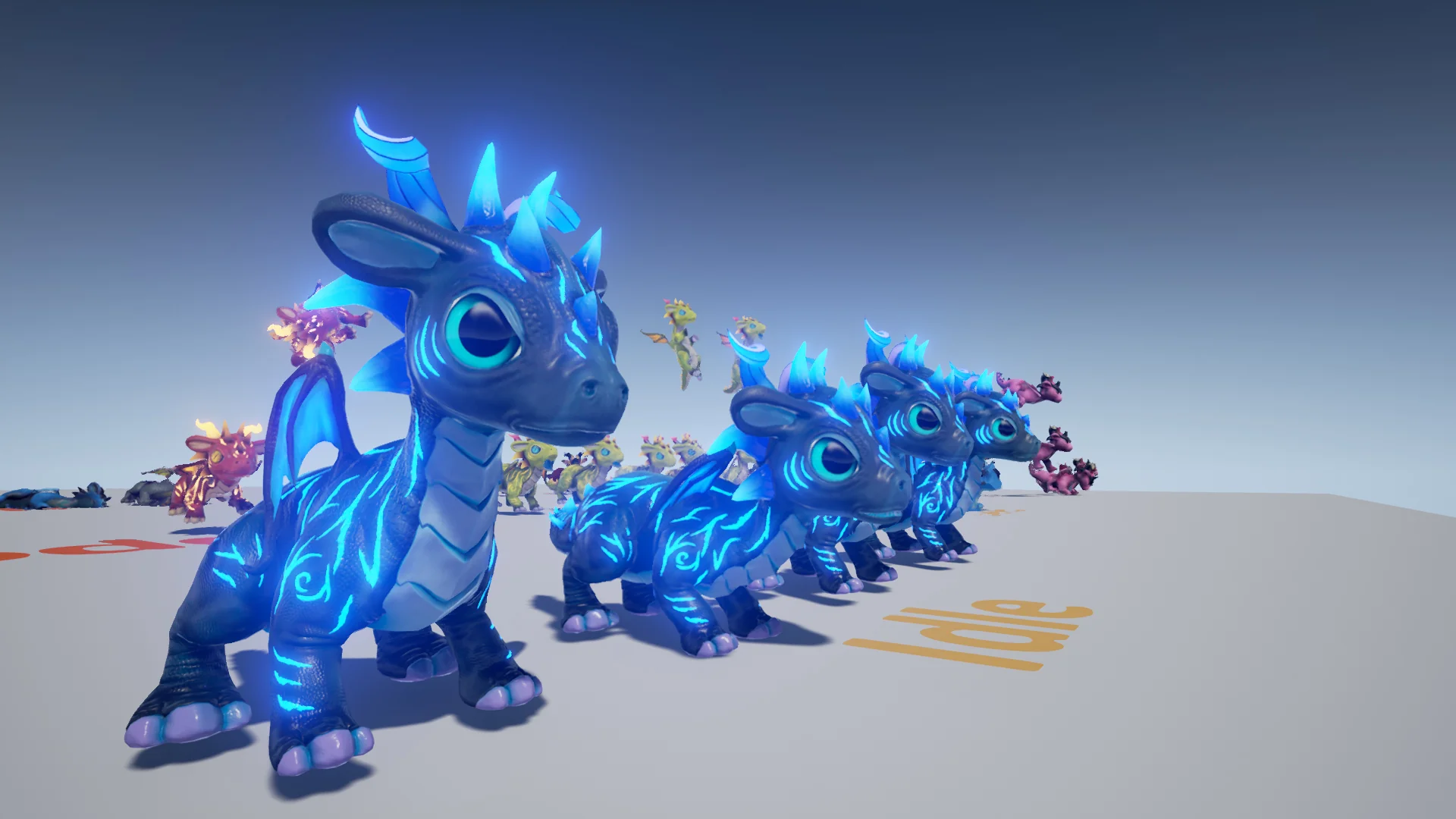
Realistic: Detailed texturing and surface definition suited for grounded fantasy environments and high-fidelity rendering pipelines.
Toon: Stylized outlines, vibrant tones, and exaggerated handpainted sensibilities suited for cartoon aesthetics.
Simple Box: Geometric, blocky structural designs tailored for casual, grid-based, or minimalist game presentations.
Poly Art: Clean, faceted low-poly surfaces designed to match popular flat-shaded indie aesthetics.
Each of the four styles comes equipped with five distinct color schemes. This results in twenty visual variations straight out of the box, offering substantial variety for enemy recolors, elemental species variants (such as fire, ice, or poison), or customizable pet appearances without requiring immediate texture modifications.
Technical Scope and Rig Architecture
Understanding the exact contents of an asset package prevents pipeline bottlenecks during production. Little Dragons Mouse delivers meshes, textures, eggs, and animations, but does not provide pre-assembled Blueprint character controllers or movement scripts. The technical setup relies on the developer to build the state machines, blend spaces, and input handling within their own engine environment.
For projects already utilizing quadruped locomotion pipelines, the animation layout shares compatibility principles with the Horse Animset framework. This alignment eases the retargeting and shared logic burden for teams handling multiple four-legged beasts within a unified locomotion framework.
Teams benefiting most from this asset are programmers, technical artists, and independent studios building creature-focused RPGs, pet-raising titles, or action-adventure games where comprehensive motion coverage is essential. By providing complete movement cycles across ground, air, and water—along with combat, idle personality states, four art styles, and life-cycle egg hatching—the package supplies the visual and animated elements needed to establish a functional miniature dragon companion.
 Characters
 Characters
 Characters
 Characters