"82ee98b2ee2793f1"{"id":"1002436","slug":"mutant-rat-mouse","title":"Mutant Rat Mouse","category":"Characters \u0026 Creatures","engine":"4.20+,5.0+","assetVersion":"","engineVersion":"Engine Version: 4.20+,5.0+","tag":"Characters","accent":"blue","visual":"character","summary":"Explore the Mutant Rat Mouse asset package, featuring raw FBX meshes, 11 combat animations, a 4096x4096 diffuse texture, and multi-role gameplay flexibility.","platform":"Unreal Engine","indexPolicy":"index","publishedAt":"2026-11-10T18:31:52.675Z","updatedAt":"2026-11-10T18:31:52.675Z","sourceNotes":[],"fileContents":[],"compatibility":["Unreal Engine","Engine Version: 4.20+,5.0+"],"featuredImage":{"alt":"Mutant Rat Mouse","src":"/wp-content/uploads/published/2026/11/a4253623c018-dfa609bb-fc7a-4485-866a-25be88271a63-7251fa4fa1.webp"},"hasDownloadLink":true,"downloads":0,"terms":[{"taxonomy":"category","slug":"characters-and-creatures","name":"Characters \u0026 Creatures"}],"galleryImages":[{"src":"/wp-content/uploads/published/2026/11/0cefe889d6ce-68dc850a-0807-4b35-b9db-49d02ea202c0-5780d2dd4b.webp","alt":"Mutant Rat Mouse"},{"src":"/wp-content/uploads/published/2026/11/eaf3d0719823-b6e26edb-f0fd-42fd-a0cd-0cd63011901c-8ea26fc25c.webp","alt":"Mutant Rat Mouse"},{"src":"/wp-content/uploads/published/2026/11/4dcbd5fb8d97-7b560c0f-46f6-478f-824a-8610689cf6d5-e80f6644b5.webp","alt":"Mutant Rat Mouse"},{"src":"/wp-content/uploads/published/2026/11/86073a94e2d0-b977cc37-8246-4f38-a31b-4c19b5fa4243-71387d97df.webp","alt":"Mutant Rat Mouse"},{"src":"/wp-content/uploads/published/2026/11/09bc56e98978-88bbcb5b-8ad1-4512-8670-36704a841563-aebfac814d.webp","alt":"Mutant Rat Mouse"}],"accessPanel":{"kind":"resource","title":"Get this resource","eyebrow":"Free resource","message":"Download this resource in your browser.","fileName":"Content.7z","safetyNote":"Resources are manually reviewed before listing to improve quality and reduce obvious risks.","actionLabel":"Get this resource","resourceType":"Resource archive","versions":[]},"contentHtml":"\u003ch2\u003eRaw FBX Files and the Mutant Rat Model Structure\u003c/h2\u003e\n\u003cp\u003eThe Mutant Rat Mouse provides a complete creature setup delivered strictly through raw production assets. Rather than bundling prefabricated character scripts or engine-locked prefabs, the package delivers the core components required to build custom character logic: an FBX model file, individual FBX motion sequences, and an uncompressed TGA texture map. This straightforward structure ensures that the underlying mesh and skeletal hierarchy remain completely accessible for immediate import into any interactive pipeline.\u003c/p\u003e\n\u003cp\u003eBecause there are no pre-built Blueprints packaged within the files, developers retain complete control over the technical setup. The raw model imports cleanly without carrying over unused nodes, proprietary scripting frameworks, or hardcoded character controller components. Teams building specialized artificial intelligence, combat frameworks, or bespoke player-interaction code can connect the geometry and skeletal data straight into their existing game architecture without having to dismantle preexisting templates first.\u003c/p\u003e \u003ch2\u003eMotion Breakdown for the Mutant Rat Mouse Animation Set\u003c/h2\u003e\n\u003cp\u003eSupplied with the model is an 11-clip animation suite exported in the FBX format, targeting essential creature actions spanning basic locomotion, proactive attacks, defensive postures, and damage reactions. Each motion file isolates a specific behavior, allowing animators and technical artists to split them into modular animation montages or blend trees.\u003c/p\u003e\n\u003cul\u003e \u003cli\u003e\u003cstrong\u003eLocomotion:\u003c/strong\u003e Idle, Walk, and Run provide the primary speed spectrum needed to blend seamless movement across uneven terrain or varied character velocities.\u003c/li\u003e \u003cli\u003e\u003cstrong\u003eOffense:\u003c/strong\u003e Attack1 and Attack2 offer distinct strike variations, facilitating alternating combo sequences, directional attacks, or distinct light and heavy offensive swings.\u003c/li\u003e \u003cli\u003e\u003cstrong\u003eDefense and Impact:\u003c/strong\u003e Guard, Hit1, Hit2, and Hit3 equip the creature for back-and-forth combat exchanges. Having three distinct hit-reaction takes prevents visual monotony when the character absorbs repeated strikes in rapid succession, while the guard motion provides an active blocking or bracing state.\u003c/li\u003e \u003cli\u003e\u003cstrong\u003eDefeat:\u003c/strong\u003e Die1 and Die2 deliver two separate death resolutions, giving designers options for directional knockdowns or randomized demise sequences.\u003c/li\u003e\n\u003c/ul\u003e\n\u003cp\u003eSeparating these states across individual files allows for clean blending within an engine state machine. The walk and run cycles can be interpolated smoothly along a standard speed float, while the three hit clips give enough variety to drive flinch montages that trigger without canceling root orientation or interrupting navigation unexpectedly.\u003c/p\u003e \u003ch2\u003eIntegrating the Mouse into Monster, Boss, or Mount Roles\u003c/h2\u003e\n\u003cp\u003eThe conceptual versatility of the Mutant Rat Mouse enables it to fulfill several distinct interactive functions within a game world. Depending on how a project balances scale, health parameters, and animation states, the same base asset can transition across vastly different design applications:\u003c/p\u003e\n\u003cp\u003eConfigured as a standard monster or common dungeon minion, the character relies heavily on the Walk, Run, and Hit reactions, closing ground rapidly and reacting clearly to weapon impacts. When scaled up in size and given higher poise thresholds, the creature shifts naturally into a boss encounter. In a boss context, the Guard animation can be tied to defensive phases or invulnerability windows, while Attack1 and Attack2 can be weighted differently to signal telegraph windows and area-of-effect hazards.\u003c/p\u003e\n\u003cp\u003eBeyond hostile combat encounters, the asset is suited for passive or utility functions. Designers can set up the creature as a rideable mount, where the Run and Walk cycles correspond to player navigation inputs and the Idle serves as a stationary mount stance. Similarly, the asset functions as a combat pet or utility companion, moving alongside a player character, utilizing the Guard pose to take protective stances, and executing the Attack animations on command. In projects requiring atmospheric set dressing, the mesh and its basic idle or walking motions can be deployed as ambient vermin across ruined cities, sewers, and wasteland environments.\u003c/p\u003e \u003ch2\u003eDiffuse Texture Resolution and Material Preparation\u003c/h2\u003e\n\u003cp\u003eTexturing for the creature is anchored by a single dedicated diffuse map delivered at 4096x4096 resolution in TGA format. Delivering the surface detail at a native 4K standard ensures that fine epidermal features, fur clumping, claws, and anatomical mutations remain crisp even when the camera moves into close proximity during cinematic sequences or mount riding.\u003c/p\u003e\n\u003cp\u003eThe uncompressed nature of the TGA file preserves clean color fidelity and tonal transitions across the entire texture space. Because it arrives as a standalone diffuse map, technical artists can incorporate it into custom master materials, applying engine-native surface parameters, procedural roughness values, detail normals, or tint masks according to the specific shading model of their project. For mobile projects or secondary background placements where texture memory must be managed strictly, the 4096x4096 file can be downscaled within the engine to 2048x2048 or 1024x1024 without losing fundamental surface definition.\u003c/p\u003e \u003ch2\u003eBuilding Animation Blueprints and Wolf King Compatibility\u003c/h2\u003e\n\u003cp\u003eBecause the package supplies the raw visual assets without pre-assembled scripting, the immediate technical step involves building a native Animation Blueprint or state machine around the FBX skeleton. The included tags—Mouse, Rodent, Script, Rat, and Animationblueprint—highlight the natural implementation path: developers write custom character scripts, assign movement variables, and link the 11 takes into an organized graph.\u003c/p\u003e\n\u003cp\u003eLocomotion blending forms the base layer, mapping the Idle, Walk, and Run files to ground speed parameters. Combat states connect above this layer, using slot nodes to play Attack1, Attack2, Guard, and the three Hit reactions as upper-body or full-body dynamic montages. The two Die animations transition out of the live state graph entirely via a death state node, disabling collision and stopping character logic.\u003c/p\u003e\n\u003cp\u003eThe asset also notes compatibility with Wolf King, allowing it to align directly alongside existing projects or ecosystem pipelines structured through that standard. By supplying raw, clean FBX animations and unencumbered textures, the package gives developers an immediate, adaptable base ready to be rigged into custom controllers, behavior trees, and gameplay loops.\u003c/p\u003e\n\n\u003ch2\u003eRelated Resources Worth Checking\u003c/h2\u003e\n\u003cul\u003e\n\u003cli\u003e\u003ca href=\"https://3dcghub.com/animalia-rat/\" rel=\"noopener noreferrer\"\u003eAnimalia - Rat\u003c/a\u003e\u003c/li\u003e\n\u003cli\u003e\u003ca href=\"https://3dcghub.com/mouse/\" rel=\"noopener noreferrer\"\u003eMouse\u003c/a\u003e\u003c/li\u003e\n\u003cli\u003e\u003ca href=\"https://3dcghub.com/zombie-mutant-2/\" rel=\"noopener noreferrer\"\u003eZombie mutant 2\u003c/a\u003e\u003c/li\u003e\n\u003cli\u003e\u003ca href=\"https://3dcghub.com/skinless-mutant/\" rel=\"noopener noreferrer\"\u003eSkinless mutant\u003c/a\u003e\u003c/li\u003e\n\u003cli\u003e\u003ca href=\"https://3dcghub.com/mutant-3/\" rel=\"noopener noreferrer\"\u003eMutant 3\u003c/a\u003e\u003c/li\u003e\n\u003c/ul\u003e","contentTextLength":6577,"navigation":{"current":14,"total":4372,"previous":{"id":"1002437","slug":"poly-art-bear","title":"Poly Art Bear","category":"Characters \u0026 Creatures","platform":"Unreal Engine","updatedAt":"2026-11-10T18:33:07.742Z"},"next":{"id":"1002435","slug":"mosquitos-pack","title":"Mosquitos pack","category":"Insects","platform":"Unreal Engine","updatedAt":"2026-11-10T18:31:05.012Z"}},"relatedResources":[{"id":"1002419","slug":"animalia-rat","title":"Animalia - Rat","category":"Characters \u0026 Creatures","engine":"4.12+,5.0+","assetVersion":"","engineVersion":"Engine Version: 4.12+,5.0+","tag":"Characters","accent":"blue","visual":"character","summary":"A close technical look at Animalia - Rat, featuring 60 fps animations, dual root-motion workflows, 2K textures, gFur support, and full DCC rigs.","platform":"Unreal Engine","indexPolicy":"index","publishedAt":"2026-11-10T18:09:48.713Z","updatedAt":"2026-11-10T18:09:48.713Z","sourceNotes":[],"fileContents":[],"compatibility":["Unreal Engine","Engine Version: 4.12+,5.0+"],"featuredImage":{"alt":"Animalia - Rat","src":"/wp-content/uploads/published/2026/11/29b9a6c97842-83907b08-259b-4708-b853-fe43dc26352b-0abcb383f7.webp"},"hasDownloadLink":true,"downloads":0},{"id":"1002445","slug":"rats-complete-pack","title":"Rats Complete Pack","category":"Characters \u0026 Creatures","engine":"4.26+,5.0+","assetVersion":"","engineVersion":"Engine Version: 4.26+,5.0+","tag":"Characters","accent":"blue","visual":"character","summary":"Explore the Rats Complete Pack featuring common, mutant, fanged, cub, and naked rat models, custom animation sets, and Animationblueprint integration.","platform":"Unreal Engine","indexPolicy":"index","publishedAt":"2026-11-10T18:46:12.021Z","updatedAt":"2026-11-10T18:46:12.021Z","sourceNotes":[],"fileContents":[],"compatibility":["Unreal Engine","Engine Version: 4.26+,5.0+"],"featuredImage":{"alt":"Rats Complete Pack","src":"/wp-content/uploads/published/2026/11/f7971f8b242d-e3410fea-b396-4984-8caf-561a3d686e9a-49c1429459.webp"},"hasDownloadLink":true,"downloads":0},{"id":"3105","slug":"mouse","title":"Mouse","category":"Characters \u0026 Creatures","engine":"5.1+","assetVersion":"Engine version: 5.1+","engineVersion":"4.20","tag":"Characters","accent":"blue","visual":"character","summary":"Enhance your project with this realistic 3D mouse model. Featuring 4K textures, full rigging, and custom animations, it is perfect for any game environment.","platform":"Unreal Engine","indexPolicy":"index","publishedAt":"2026-02-08T15:25:31.000Z","updatedAt":"2026-04-19T15:57:42.000Z","sourceNotes":[],"fileContents":[],"compatibility":["Unreal Engine","Engine version: 5.1+"],"featuredImage":{"alt":"Mouse","src":"https://3dcghub.com/wp-content/uploads/2026/02/5a89c552-df57-4a94-be99-8968b5c07230.webp"},"hasDownloadLink":true,"downloads":1}]}
Characters
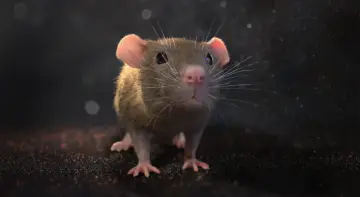
Mutant Rat Mouse
Explore the Mutant Rat Mouse asset package, featuring raw FBX meshes, 11 combat animations, a 4096x4096 diffuse texture, and multi-role gameplay flexibility.
The Mutant Rat Mouse provides a complete creature setup delivered strictly through raw production assets. Rather than bundling prefabricated character scripts or engine-locked prefabs, the package delivers the core components required to build custom character logic: an FBX model file, individual FBX motion sequences, and an uncompressed TGA texture map. This straightforward structure ensures that the underlying mesh and skeletal hierarchy remain completely accessible for immediate import into any interactive pipeline.
Because there are no pre-built Blueprints packaged within the files, developers retain complete control over the technical setup. The raw model imports cleanly without carrying over unused nodes, proprietary scripting frameworks, or hardcoded character controller components. Teams building specialized artificial intelligence, combat frameworks, or bespoke player-interaction code can connect the geometry and skeletal data straight into their existing game architecture without having to dismantle preexisting templates first.
Motion Breakdown for the Mutant Rat Mouse Animation Set
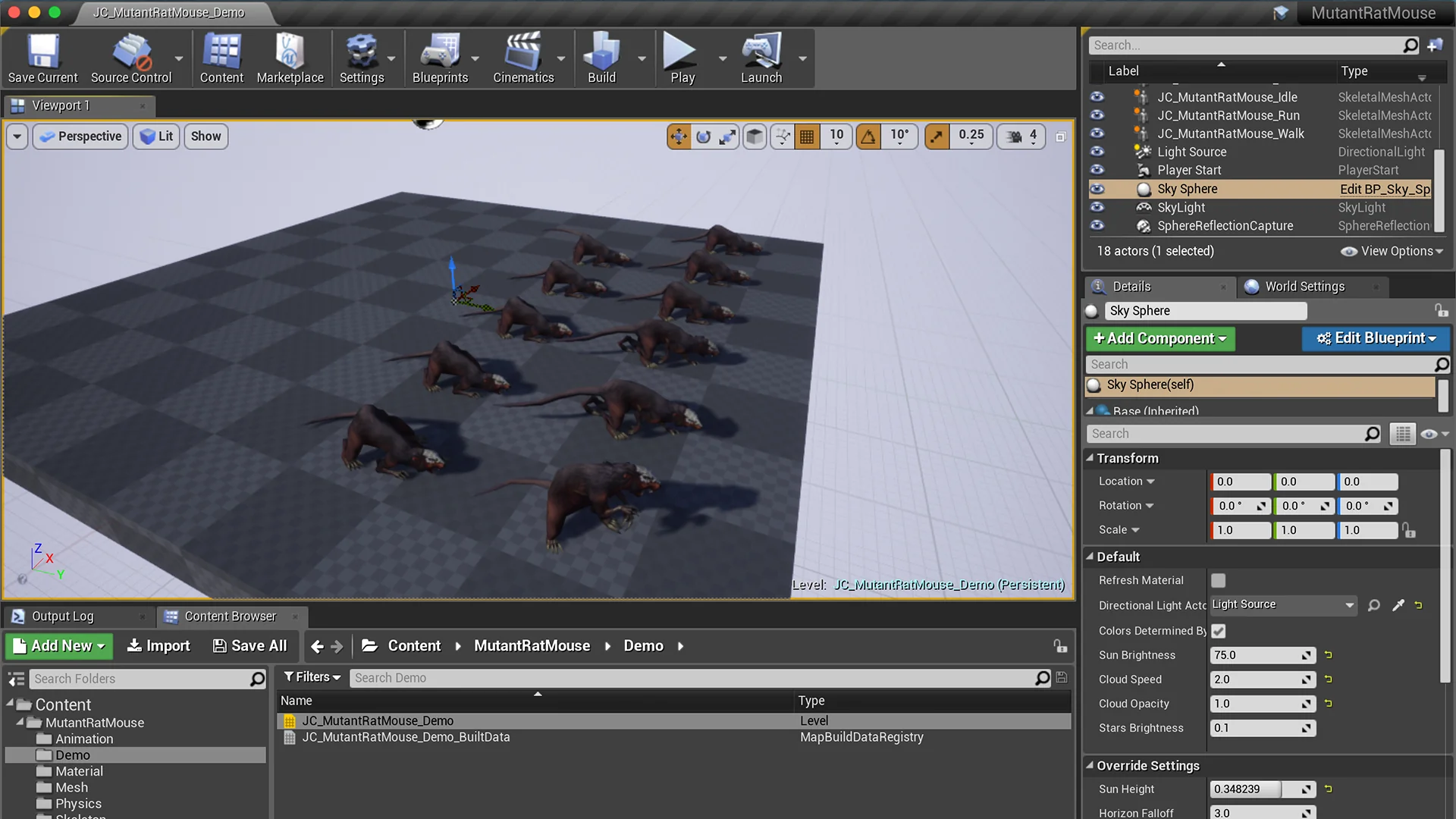
Supplied with the model is an 11-clip animation suite exported in the FBX format, targeting essential creature actions spanning basic locomotion, proactive attacks, defensive postures, and damage reactions. Each motion file isolates a specific behavior, allowing animators and technical artists to split them into modular animation montages or blend trees.
Locomotion: Idle, Walk, and Run provide the primary speed spectrum needed to blend seamless movement across uneven terrain or varied character velocities.
Offense: Attack1 and Attack2 offer distinct strike variations, facilitating alternating combo sequences, directional attacks, or distinct light and heavy offensive swings.
Defense and Impact: Guard, Hit1, Hit2, and Hit3 equip the creature for back-and-forth combat exchanges. Having three distinct hit-reaction takes prevents visual monotony when the character absorbs repeated strikes in rapid succession, while the guard motion provides an active blocking or bracing state.
Defeat: Die1 and Die2 deliver two separate death resolutions, giving designers options for directional knockdowns or randomized demise sequences.
Separating these states across individual files allows for clean blending within an engine state machine. The walk and run cycles can be interpolated smoothly along a standard speed float, while the three hit clips give enough variety to drive flinch montages that trigger without canceling root orientation or interrupting navigation unexpectedly.
Integrating the Mouse into Monster, Boss, or Mount Roles
The conceptual versatility of the Mutant Rat Mouse enables it to fulfill several distinct interactive functions within a game world. Depending on how a project balances scale, health parameters, and animation states, the same base asset can transition across vastly different design applications:
Configured as a standard monster or common dungeon minion, the character relies heavily on the Walk, Run, and Hit reactions, closing ground rapidly and reacting clearly to weapon impacts. When scaled up in size and given higher poise thresholds, the creature shifts naturally into a boss encounter. In a boss context, the Guard animation can be tied to defensive phases or invulnerability windows, while Attack1 and Attack2 can be weighted differently to signal telegraph windows and area-of-effect hazards.
Beyond hostile combat encounters, the asset is suited for passive or utility functions. Designers can set up the creature as a rideable mount, where the Run and Walk cycles correspond to player navigation inputs and the Idle serves as a stationary mount stance. Similarly, the asset functions as a combat pet or utility companion, moving alongside a player character, utilizing the Guard pose to take protective stances, and executing the Attack animations on command. In projects requiring atmospheric set dressing, the mesh and its basic idle or walking motions can be deployed as ambient vermin across ruined cities, sewers, and wasteland environments.
Diffuse Texture Resolution and Material Preparation
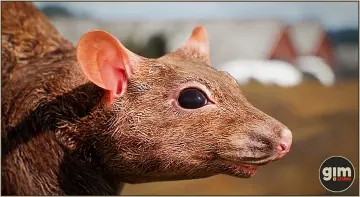
Texturing for the creature is anchored by a single dedicated diffuse map delivered at 4096x4096 resolution in TGA format. Delivering the surface detail at a native 4K standard ensures that fine epidermal features, fur clumping, claws, and anatomical mutations remain crisp even when the camera moves into close proximity during cinematic sequences or mount riding.
The uncompressed nature of the TGA file preserves clean color fidelity and tonal transitions across the entire texture space. Because it arrives as a standalone diffuse map, technical artists can incorporate it into custom master materials, applying engine-native surface parameters, procedural roughness values, detail normals, or tint masks according to the specific shading model of their project. For mobile projects or secondary background placements where texture memory must be managed strictly, the 4096x4096 file can be downscaled within the engine to 2048x2048 or 1024x1024 without losing fundamental surface definition.
Building Animation Blueprints and Wolf King Compatibility
Because the package supplies the raw visual assets without pre-assembled scripting, the immediate technical step involves building a native Animation Blueprint or state machine around the FBX skeleton. The included tags—Mouse, Rodent, Script, Rat, and Animationblueprint—highlight the natural implementation path: developers write custom character scripts, assign movement variables, and link the 11 takes into an organized graph.
Locomotion blending forms the base layer, mapping the Idle, Walk, and Run files to ground speed parameters. Combat states connect above this layer, using slot nodes to play Attack1, Attack2, Guard, and the three Hit reactions as upper-body or full-body dynamic montages. The two Die animations transition out of the live state graph entirely via a death state node, disabling collision and stopping character logic.
The asset also notes compatibility with Wolf King, allowing it to align directly alongside existing projects or ecosystem pipelines structured through that standard. By supplying raw, clean FBX animations and unencumbered textures, the package gives developers an immediate, adaptable base ready to be rigged into custom controllers, behavior trees, and gameplay loops.
 Characters
 Characters
 Characters
 Characters