"c68a05d5e51405b3"{"id":"1000680","slug":"skinless-mutant","title":"Skinless mutant","category":"Characters \u0026 Creatures","engine":"4.26+,5.0+","assetVersion":"","engineVersion":"Engine Version: 4.26+,5.0+","tag":"Characters","accent":"blue","visual":"character","summary":"Low-poly mutant character for games across RPG, strategy, and first-person shooter genres. Horror creature with animation blueprint and undead modular compatibi","platform":"Unreal Engine","publishedAt":"2026-07-22T15:18:52.308Z","updatedAt":"2026-07-22T15:18:52.308Z","sourceNotes":[],"fileContents":[],"compatibility":["Unreal Engine","Engine Version: 4.26+,5.0+"],"featuredImage":{"alt":"Skinless mutant","src":"/wp-content/uploads/published/2026/07/b667ce1d9c28-bd264074-b15b-4dea-a77a-f0d9cbcec45a-bb6b90d078.webp"},"hasDownloadLink":true,"downloads":0,"terms":[{"taxonomy":"category","slug":"characters-and-creatures","name":"Characters \u0026 Creatures"}],"galleryImages":[{"src":"/wp-content/uploads/published/2026/07/0b4e1f55bf5c-1357bef7-b020-4ac7-a3c0-5cbfd71e38c2-176b65f2c7.webp","alt":"Skinless mutant"},{"src":"/wp-content/uploads/published/2026/07/540954497cb1-b62ff6cb-1160-4bed-9fda-d117a6cc544d-279dfebfdc.webp","alt":"Skinless mutant"},{"src":"/wp-content/uploads/published/2026/07/bffa4b96775e-3f19b7cd-4289-4091-8608-b2bccb3dbd45-5225b9a123.webp","alt":"Skinless mutant"},{"src":"/wp-content/uploads/published/2026/07/f31a06de26c8-b536ae23-3442-46dc-a433-45d1933bc55b-e280af973c.webp","alt":"Skinless mutant"},{"src":"/wp-content/uploads/published/2026/07/d4092362efd1-9d3440aa-4d9a-4fe9-98ca-2b334eb2a4bc-f6bd3b2bd8.webp","alt":"Skinless mutant"},{"src":"/wp-content/uploads/published/2026/07/38403286262d-9ddda7ea-62bc-4b2c-b0db-9e329a7d36a6-ec2d86fee2.webp","alt":"Skinless mutant"},{"src":"/wp-content/uploads/published/2026/07/aafdb278dcdc-c42529c2-70fc-415c-b0f0-7a2270040f7d-b748cf47ce.webp","alt":"Skinless mutant"},{"src":"/wp-content/uploads/published/2026/07/692207116c44-8c636f84-77ac-49c8-8e6c-2a2c57a0041a-bf64398354.webp","alt":"Skinless mutant"},{"src":"/wp-content/uploads/published/2026/07/ea84ffa440ee-852ad4f3-7732-424d-8d6e-69f7d9364870-304e2cc6bb.webp","alt":"Skinless mutant"}],"accessPanel":{"kind":"resource","title":"Download this resource","eyebrow":"Free Download","message":"Log in or create a free account to start your download.","fileName":"Content.7z","safetyNote":"Resources are manually reviewed before listing to improve quality and reduce obvious risks.","actionLabel":"Download Free","resourceType":"Resource archive"},"contentHtml":"\u003cp\u003ePopulating a game world with hostile creatures often means choosing between characters that fit a stylized aesthetic and characters that carry enough threat to feel dangerous. The \u003cstrong\u003eSkinless Mutant\u003c/strong\u003e addresses that gap as a low-poly creature intended for direct use across multiple game genres, from close-quarters first-person shooters to top-down strategy titles.\u003c/p\u003e \n\n\u003ch2\u003eWhat the Skinless Mutant Package Delivers\u003c/h2\u003e \n\u003cp\u003eAt its core, the asset is a single mutant character shaped by a low-poly aesthetic. The design leans into horror and fantasy vocabulary, sitting somewhere between a demon, a zombie, and an exposed-muscle creature. Its stripped-down appearance, implied by the name, places it firmly in the evil and undead categories without requiring high-resolution texture work to communicate menace.\u003c/p\u003e \n\u003cp\u003eThe character ships with an Animation Blueprint, which means the movement and state logic is already wired rather than left as a static mesh. For developers working in-engine, this reduces the setup work needed to get a creature walking, idling, or transitioning between locomotion states. The tag list confirms the scripting and animation focus: \u003cem\u003eScript\u003c/em\u003e and \u003cem\u003eAnimation Blueprint\u003c/em\u003e both appear alongside the character descriptors.\u003c/p\u003e \n\n\u003ch3\u003eGenre Flexibility Across RPG, Strategy, and FPS Projects\u003c/h3\u003e \n\u003cp\u003eOne of the more deliberate aspects of the mutant is its stated suitability for games of different genres. RPG projects can use it as a field encounter or dungeon creature. Strategy games can deploy it as a unit where the low-poly construction keeps render costs manageable when multiple instances appear on screen. First-person shooters benefit from the horror-leaning design, where the skinless aesthetic reads clearly even at closer camera distances.\u003c/p\u003e \n\u003cp\u003eThe low-poly construction also serves a practical function here. Lower polygon counts mean the mutant can appear in larger numbers or on lower-end hardware without becoming a bottleneck. That makes it viable for indie projects, mobile titles, or any production where the performance budget matters as much as visual impact.\u003c/p\u003e \n\n\u003ch2\u003eHorror, Demon, Zombie, and Evil Design Tags\u003c/h2\u003e \n\u003cp\u003eThe tagging for this creature pulls from several overlapping horror traditions. \u003cem\u003eHorror\u003c/em\u003e, \u003cem\u003eDemon\u003c/em\u003e, \u003cem\u003eZombie\u003c/em\u003e, \u003cem\u003eEvil\u003c/em\u003e, \u003cem\u003eMutant\u003c/em\u003e, \u003cem\u003eFantasy\u003c/em\u003e, and \u003cem\u003eMonster\u003c/em\u003e all appear in the metadata. This combination signals that the design is not locked into a single fictional origin. It can serve as a scientific experiment gone wrong, a supernatural entity, or a fantasy battlefield unit depending on how it is framed within a scene.\u003c/p\u003e \n\u003cp\u003eThat tag spread also tells developers where the character belongs visually. Projects building dark fantasy worlds, post-apocalyptic environments, or straight horror experiences can drop this creature in without it clashing with the surrounding tone. The \u003cem\u003eLow-Poly\u003c/em\u003e tag keeps expectations grounded: the creature is not a photorealistic model but a stylized interpretation that prioritizes readability and performance.\u003c/p\u003e \n\n\u003ch3\u003eModular Undead Compatibility and Scene Integration\u003c/h3\u003e \n\u003cp\u003eCompatibility notes point to the mutant fitting within a modular undead workflow. For developers building enemy rosters, this means the character can function alongside other undead assets rather than existing as an isolated one-off. Whether the modularity applies to shared animation logic, consistent scaling, or thematic grouping, the creature is positioned to work within a broader undead set rather than requiring custom handling to fit in.\u003c/p\u003e \n\u003cp\u003eDevelopers building levels around enemy variety can use the mutant as one tier in a creature hierarchy. Its exposed, skinless appearance distinguishes it visually from rotted zombies or armored demons, giving level designers a way to signal different threat types or enemy ranks without relying solely on stat differences.\u003c/p\u003e \n\n\u003ch2\u003eAnimation Blueprint and Scripting Setup\u003c/h2\u003e \n\u003cp\u003eThe inclusion of an Animation Blueprint is the most concrete technical detail in the package. A blueprint-ready creature arrives with locomotion and state logic that a developer can plug into a game framework without building the animation state machine from scratch. The \u003cem\u003eScript\u003c/em\u003e tag reinforces that there is code or logic included, not just visual assets.\u003c/p\u003e \n\u003cp\u003eThis is where the production time savings actually show up. Instead of importing a mesh, retargeting animations, building a state machine, and wiring events, a developer can start from the provided blueprint and adjust parameters to fit project-specific needs. For small teams or solo developers, that removal of boilerplate setup is a meaningful reduction in integration time.\u003c/p\u003e \n\u003cp\u003eThe blueprint also implies the character is meant to move and behave as an active game agent, not sit as a static prop. Locomotion, idle states, and likely combat or reaction states are part of the package design, which aligns with the stated suitability for active game genres.\u003c/p\u003e \n\n\u003ch3\u003eWhere the Skinless Mutant Fits in a Production Pipeline\u003c/h3\u003e \n\u003cp\u003eThis creature belongs in the enemy roster of any project that needs hostile, horror-adjacent creatures without committing to high-fidelity modeling. RPG developers building encounter tables can use it as a mid-tier mutant or corrupted humanoid. Strategy developers can field it as a melee unit where visual distinctiveness matters more than complex animation. FPS developers can place it in corridors or dark environments where its design registers quickly and its low-poly footprint keeps performance stable during combat.\u003c/p\u003e \n\u003cp\u003eDevelopers who benefit most are those already working in a low-poly or stylized aesthetic and who need a creature that comes with animation logic rather than just a mesh. The blueprint inclusion and modular undead compatibility make it a practical drop-in for productions where enemy variety and setup speed both matter.\u003c/p\u003e\n\n\u003ch2\u003eMore From The Same Workflow\u003c/h2\u003e\n\u003cul\u003e\n\u003cli\u003e\u003ca href=\"https://3dcghub.com/mutant-3/\" title=\"Mutant 3\"\u003eMutant 3\u003c/a\u003e\u003c/li\u003e\n\u003cli\u003e\u003ca href=\"https://3dcghub.com/mutanthedgehog/\" title=\"MutantHedgehog\"\u003eMutantHedgehog\u003c/a\u003e\u003c/li\u003e\n\u003cli\u003e\u003ca href=\"https://3dcghub.com/mutant-creature-03-game-assets-extra/\" title=\"Mutant Creature 03 - Game Assets + Extra\"\u003eMutant Creature 03 - Game Assets + Extra\u003c/a\u003e\u003c/li\u003e\n\u003cli\u003e\u003ca href=\"https://3dcghub.com/mutant-mask/\" title=\"Mutant Mask\"\u003eMutant Mask\u003c/a\u003e\u003c/li\u003e\n\u003cli\u003e\u003ca href=\"https://3dcghub.com/mushroom-k/\" title=\"Mushroom (K)\"\u003eMushroom (K)\u003c/a\u003e\u003c/li\u003e\n\u003c/ul\u003e","contentTextLength":5811,"navigation":{"current":1325,"total":3860,"previous":{"id":"1000681","slug":"song-of-alcazar-signature-collection","title":"Song of Alcazar - Signature Collection","category":"Fantasy","platform":"Unreal Engine","updatedAt":"2026-07-22T15:33:23.616Z"},"next":{"id":"1000679","slug":"significance-optimizer-game-thread-cpu-optimization","title":"Significance Optimizer - Game Thread/CPU Optimization","category":"Gameplay Features","platform":"Unreal Engine","updatedAt":"2026-07-22T15:03:09.945Z"}},"relatedResources":[{"id":"3122","slug":"mutant-3","title":"Mutant 3","category":"Characters \u0026 Creatures","engine":"4.26+,5.0+","assetVersion":"Engine version: 4.26+,5.0+","engineVersion":"4.18","tag":"Characters","accent":"blue","visual":"character","summary":"Discover the Mutant 3 character model, a game-ready creature rigged with the Epic Skeleton. Perfect for horror, RPG, and FPS games with optimized low-poly mesh.","platform":"Unreal Engine","publishedAt":"2026-02-08T15:32:14.000Z","updatedAt":"2026-04-19T15:57:42.000Z","sourceNotes":[],"fileContents":[],"compatibility":["Unreal Engine","Engine version: 4.26+,5.0+"],"featuredImage":{"alt":"Mutant 3","src":"https://3dcghub.com/wp-content/uploads/2026/02/dfbdb10d-ef9e-4109-ada5-d7cf3d53b8c4.webp"},"hasDownloadLink":true,"downloads":2},{"id":"3130","slug":"mutant-creature-03-game-assets-extra","title":"Mutant Creature 03 - Game Assets + Extra","category":"Characters \u0026 Creatures","engine":"4.27,5.0+","assetVersion":"Engine version: 4.27,5.0+","engineVersion":"4.27","tag":"Characters","accent":"blue","visual":"character","summary":"Enhance your horror or action game with Mutant Creature 03. Featuring easy color customization and seamless UE4/UE5 animation retargeting for developers.","platform":"Unreal Engine","publishedAt":"2026-02-08T16:06:51.000Z","updatedAt":"2026-04-19T15:57:42.000Z","sourceNotes":[],"fileContents":[],"compatibility":["Unreal Engine","Engine version: 4.27,5.0+"],"featuredImage":{"alt":"Mutant Creature 03 - Game Assets + Extra","src":"https://3dcghub.com/wp-content/uploads/2026/02/a0770531-b28c-4d6d-9605-a6d2c5eb6ee0.webp"},"hasDownloadLink":true,"downloads":0},{"id":"3137","slug":"mutant-mask","title":"Mutant Mask","category":"Characters \u0026 Creatures","engine":"4.26+,5.0+","assetVersion":"Engine version: 4.26+,5.0+","engineVersion":"4.18","tag":"Characters","accent":"blue","visual":"character","summary":"Enhance your horror project with the Mutant Mask character. This low-poly, animated mutant features a chilling design and smooth animations for any game engine.","platform":"Unreal Engine","publishedAt":"2026-02-08T16:11:08.000Z","updatedAt":"2026-04-19T15:57:42.000Z","sourceNotes":[],"fileContents":[],"compatibility":["Unreal Engine","Engine version: 4.26+,5.0+"],"featuredImage":{"alt":"Mutant Mask","src":"https://3dcghub.com/wp-content/uploads/2026/02/def2b5e3-fc53-43b5-a0ff-0800bd51dc02.webp"},"hasDownloadLink":true,"downloads":0}]}
Characters
Skinless mutant
Low-poly mutant character for games across RPG, strategy, and first-person shooter genres. Horror creature with animation blueprint and undead modular compatibi
Populating a game world with hostile creatures often means choosing between characters that fit a stylized aesthetic and characters that carry enough threat to feel dangerous. The Skinless Mutant addresses that gap as a low-poly creature intended for direct use across multiple game genres, from close-quarters first-person shooters to top-down strategy titles.
What the Skinless Mutant Package Delivers
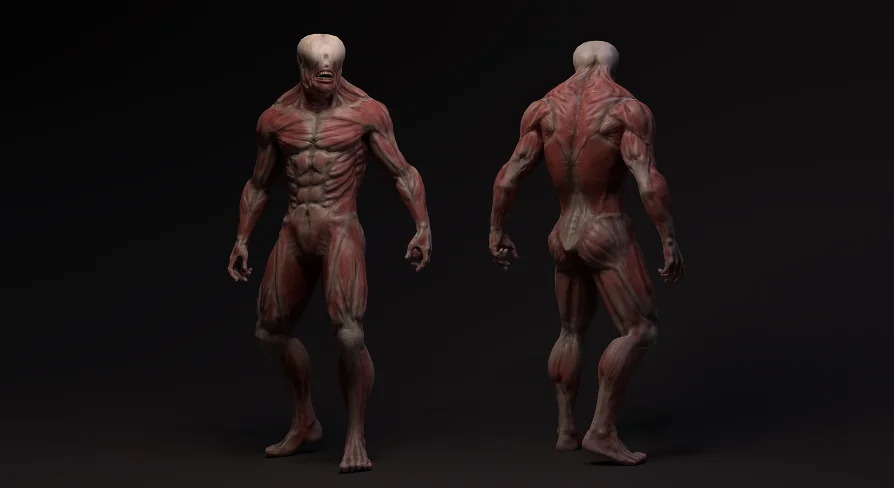
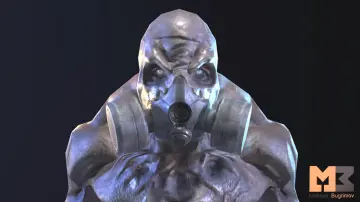
At its core, the asset is a single mutant character shaped by a low-poly aesthetic. The design leans into horror and fantasy vocabulary, sitting somewhere between a demon, a zombie, and an exposed-muscle creature. Its stripped-down appearance, implied by the name, places it firmly in the evil and undead categories without requiring high-resolution texture work to communicate menace.
The character ships with an Animation Blueprint, which means the movement and state logic is already wired rather than left as a static mesh. For developers working in-engine, this reduces the setup work needed to get a creature walking, idling, or transitioning between locomotion states. The tag list confirms the scripting and animation focus: Script and Animation Blueprint both appear alongside the character descriptors.
Genre Flexibility Across RPG, Strategy, and FPS Projects
One of the more deliberate aspects of the mutant is its stated suitability for games of different genres. RPG projects can use it as a field encounter or dungeon creature. Strategy games can deploy it as a unit where the low-poly construction keeps render costs manageable when multiple instances appear on screen. First-person shooters benefit from the horror-leaning design, where the skinless aesthetic reads clearly even at closer camera distances.
The low-poly construction also serves a practical function here. Lower polygon counts mean the mutant can appear in larger numbers or on lower-end hardware without becoming a bottleneck. That makes it viable for indie projects, mobile titles, or any production where the performance budget matters as much as visual impact.
Horror, Demon, Zombie, and Evil Design Tags
The tagging for this creature pulls from several overlapping horror traditions. Horror, Demon, Zombie, Evil, Mutant, Fantasy, and Monster all appear in the metadata. This combination signals that the design is not locked into a single fictional origin. It can serve as a scientific experiment gone wrong, a supernatural entity, or a fantasy battlefield unit depending on how it is framed within a scene.
That tag spread also tells developers where the character belongs visually. Projects building dark fantasy worlds, post-apocalyptic environments, or straight horror experiences can drop this creature in without it clashing with the surrounding tone. The Low-Poly tag keeps expectations grounded: the creature is not a photorealistic model but a stylized interpretation that prioritizes readability and performance.
Modular Undead Compatibility and Scene Integration
Compatibility notes point to the mutant fitting within a modular undead workflow. For developers building enemy rosters, this means the character can function alongside other undead assets rather than existing as an isolated one-off. Whether the modularity applies to shared animation logic, consistent scaling, or thematic grouping, the creature is positioned to work within a broader undead set rather than requiring custom handling to fit in.
Developers building levels around enemy variety can use the mutant as one tier in a creature hierarchy. Its exposed, skinless appearance distinguishes it visually from rotted zombies or armored demons, giving level designers a way to signal different threat types or enemy ranks without relying solely on stat differences.
Animation Blueprint and Scripting Setup
The inclusion of an Animation Blueprint is the most concrete technical detail in the package. A blueprint-ready creature arrives with locomotion and state logic that a developer can plug into a game framework without building the animation state machine from scratch. The Script tag reinforces that there is code or logic included, not just visual assets.
This is where the production time savings actually show up. Instead of importing a mesh, retargeting animations, building a state machine, and wiring events, a developer can start from the provided blueprint and adjust parameters to fit project-specific needs. For small teams or solo developers, that removal of boilerplate setup is a meaningful reduction in integration time.
The blueprint also implies the character is meant to move and behave as an active game agent, not sit as a static prop. Locomotion, idle states, and likely combat or reaction states are part of the package design, which aligns with the stated suitability for active game genres.
Where the Skinless Mutant Fits in a Production Pipeline
This creature belongs in the enemy roster of any project that needs hostile, horror-adjacent creatures without committing to high-fidelity modeling. RPG developers building encounter tables can use it as a mid-tier mutant or corrupted humanoid. Strategy developers can field it as a melee unit where visual distinctiveness matters more than complex animation. FPS developers can place it in corridors or dark environments where its design registers quickly and its low-poly footprint keeps performance stable during combat.
Developers who benefit most are those already working in a low-poly or stylized aesthetic and who need a creature that comes with animation logic rather than just a mesh. The blueprint inclusion and modular undead compatibility make it a practical drop-in for productions where enemy variety and setup speed both matter.
 Characters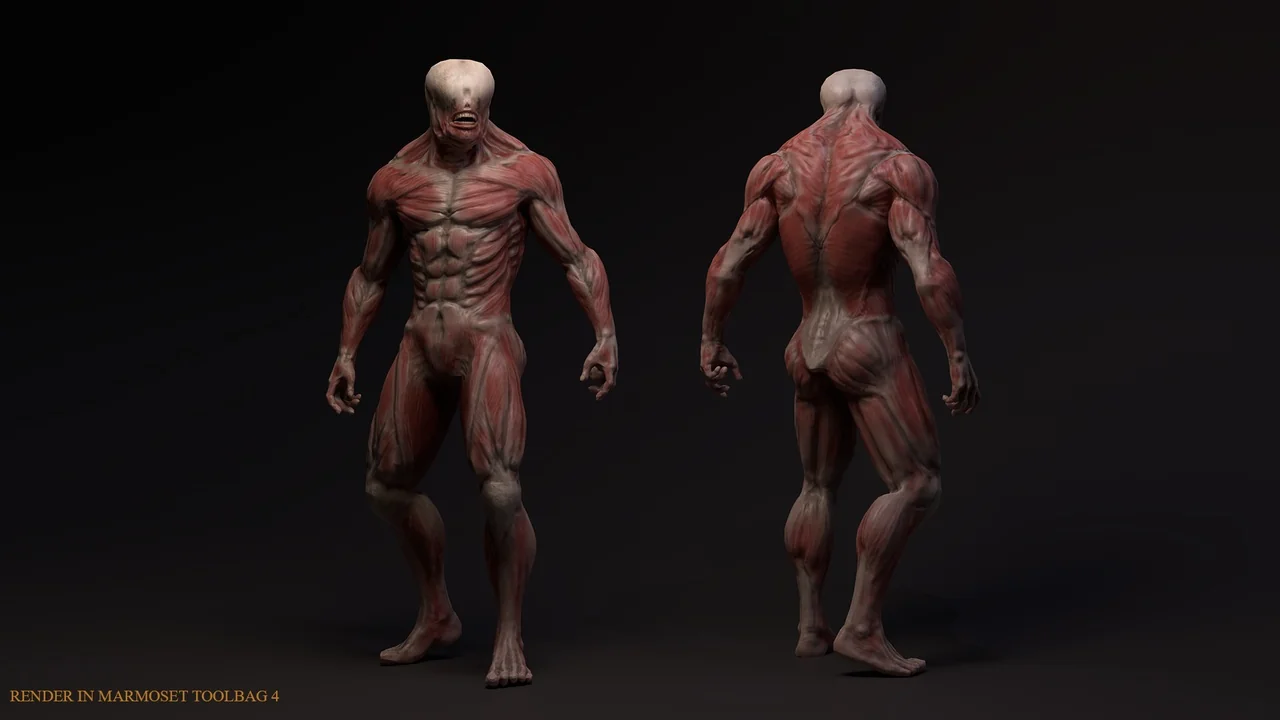
 Characters
 Characters
 Characters