"c14ff6bd758dadb1"{"id":"1000658","slug":"mushroom-k","title":"Mushroom (K)","category":"Characters \u0026 Creatures","engine":"4.26+,5.0+","assetVersion":"","engineVersion":"Engine Version: 4.26+,5.0+","tag":"Characters","accent":"blue","visual":"character","summary":"A low-poly mushroom mutant character with 7,256 polygons and 11 animations covering attacks, movement, damage reactions, and death for fantasy game scenes.","platform":"Unreal Engine","publishedAt":"2026-07-21T20:25:46.015Z","updatedAt":"2026-07-21T20:25:46.015Z","sourceNotes":[],"fileContents":[],"compatibility":["Unreal Engine","Engine Version: 4.26+,5.0+"],"featuredImage":{"alt":"Mushroom (K)","src":"/wp-content/uploads/published/2026/07/4c7e0fb7cc8e-9f6d67df-3d8f-46b5-9193-65124b5b0f65-f7b13b43c7.webp"},"hasDownloadLink":true,"downloads":0,"terms":[{"taxonomy":"category","slug":"characters-and-creatures","name":"Characters \u0026 Creatures"}],"galleryImages":[{"src":"/wp-content/uploads/published/2026/07/db84d226cf2d-8060060a-9e17-4082-8e46-9e2e6bb8ce78-d1830f4d2c.webp","alt":"Mushroom (K)"},{"src":"/wp-content/uploads/published/2026/07/79908252d80a-317a9a2d-bfd2-4242-b2c4-cc4fb26547f2-1d1513e90d.webp","alt":"Mushroom (K)"},{"src":"/wp-content/uploads/published/2026/07/25127818392d-60834d08-a75b-40c1-8c5a-7b34732f12f3-248724d21b.webp","alt":"Mushroom (K)"},{"src":"/wp-content/uploads/published/2026/07/f5e3b905402c-fca7c286-303d-4345-9d22-dd036bc233dc-5be81ca2e8.webp","alt":"Mushroom (K)"},{"src":"/wp-content/uploads/published/2026/07/cc76dbe8910c-c7c8c67b-ba3d-43ea-a1e1-e334f3643f06-d861136158.webp","alt":"Mushroom (K)"},{"src":"/wp-content/uploads/published/2026/07/c58eb79e7149-a55d1e59-75aa-4b2b-83a0-7a4f3f2363bc-2b850b6d55.webp","alt":"Mushroom (K)"},{"src":"/wp-content/uploads/published/2026/07/ed93ac0586cc-2e833d88-8c47-4bee-9a27-3bfb9f1c8b45-a9d005f84e.webp","alt":"Mushroom (K)"},{"src":"/wp-content/uploads/published/2026/07/dc299d3f2e5c-a0d730c1-a421-4952-98ae-e6982004fd91-d536d715e5.webp","alt":"Mushroom (K)"},{"src":"/wp-content/uploads/published/2026/07/8610aa13d76f-e4310c1f-f9ca-4a4d-9790-b3d5d1fe1337-f7cbdedb44.webp","alt":"Mushroom (K)"},{"src":"/wp-content/uploads/published/2026/07/d188b5c82054-6cb86b4b-baf4-40b5-93d0-bfbcccf9ced1-2411a2da42.webp","alt":"Mushroom (K)"}],"accessPanel":{"kind":"resource","title":"Download this resource","eyebrow":"Free Download","message":"Log in or create a free account to start your download.","fileName":"Content.7z","safetyNote":"Resources are manually reviewed before listing to improve quality and reduce obvious risks.","actionLabel":"Download Free","resourceType":"Resource archive"},"contentHtml":"\u003cp\u003eFantasy worlds often need oddball adversaries that do not look like standard goblins or skeletons. A mutated mushroom creature fills that gap, sitting somewhere between a nature spirit and a toxic hazard. The kind of scene where a player walks through a dim forest or an abandoned alchemy lab and spots a hunched, fleshy cap lunging from the shadows is exactly where this character model earns its place. The tagging points to demon, mutant, chemical, and monster themes, so the intended mood leans toward corrupted fantasy rather than cheerful woodland fairy tale.\u003c/p\u003e \n\n\u003ch2\u003eWhat the Mushroom (K) Package Actually Contains\u003c/h2\u003e \n\u003cp\u003eAt its core, this is a low-poly character model based on a mushroom mutant concept. The polygon count sits at 7,256, which places it in the lightweight category suitable for real-time rendering where performance matters. This density is low enough to populate several instances across a scene without crippling frame rates, but detailed enough to hold its own in closer encounters.\u003c/p\u003e \n\u003cp\u003eEleven animations accompany the model. These are not a random grab-bag of poses; they map directly onto the behavior states a hostile non-player character needs in a game. The package breaks the animation set into several distinct categories:\u003c/p\u003e \n\u003cul\u003e \n\u003cli\u003e\u003cstrong\u003eAttack (4 clips)\u003c/strong\u003e — Enough variety to keep melee encounters from looking repetitive. Four distinct attack swings or strikes give the creature a small combo pool.\u003c/li\u003e \n\u003cli\u003e\u003cstrong\u003eIdle (2 clips)\u003c/strong\u003e — Two breathing or waiting loops allow some visual variety when the creature is standing around before detecting the player.\u003c/li\u003e \n\u003cli\u003e\u003cstrong\u003eWalk (1 clip)\u003c/strong\u003e — A slower patrol gait for when the creature is wandering its territory.\u003c/li\u003e \n\u003cli\u003e\u003cstrong\u003eRun (1 clip)\u003c/strong\u003e — A faster locomotion state for when the creature has acquired a target and is closing distance.\u003c/li\u003e \n\u003cli\u003e\u003cstrong\u003eTake damage (2 clips)\u003c/strong\u003e — Two stagger or hit-reaction animations so the creature reacts differently depending on how it was struck.\u003c/li\u003e \n\u003cli\u003e\u003cstrong\u003eDeath (1 clip)\u003c/strong\u003e — A single death animation for the creature's final moments.\u003c/li\u003e\n\u003c/ul\u003e \n\n\u003ch3\u003eCombat Readiness and Behavioral States\u003c/h3\u003e \n\u003cp\u003eEleven clips might sound modest on paper, but the distribution tells a more useful story. With four attack animations, this mushroom mutant can cycle through different strikes, which matters for an enemy that a player will fight repeatedly. If every swing looked the same, the encounter would lose tension quickly. Four attacks give enough headroom for a basic AI to pick moves semi-randomly or even chain them into a short sequence.\u003c/p\u003e \n\u003cp\u003ePairing four attacks with two stagger reactions means the creature can take hits without falling into the same flinch loop every time. The second take-damage clip likely covers a heavier knockback or a different angle of impact, letting the animation state machine choose a reaction that fits the incoming damage type or direction. This kind of variation, even on a small scale, helps a simple enemy feel less mechanical.\u003c/p\u003e \n\u003cp\u003eThe mobility options are slim but functional. A single walk clip covers patrol behavior, and a single run clip handles the aggro state where the creature sprints toward the player. There is no dedicated jump, dodge, or strafe, so the creature is built for direct, grounded encounters rather than complex acrobatic fights. That fits a mutant mushroom archetype; it is not supposed to be nimble.\u003c/p\u003e \n\n\u003ch2\u003eScene-Building Value for Fantasy and Chemical Mutant Themes\u003c/h2\u003e \n\u003cp\u003eThe tags attached to this resource paint a clear picture of where it belongs. Character, demon, mushroom, mutant, lowpoly, fantasy, script, chemical, monster, and animationblueprint are the keywords defining its intended use. Read together, they point toward fantasy settings with a contamination or mutation angle. Think corrupted forests, failed alchemical experiments, or wasteland zones where something in the soil has gone wrong. A mushroom that attacks is a natural fit for places where nature has turned hostile.\u003c/p\u003e \n\u003cp\u003eBecause the style is explicitly low-poly, the model sits comfortably in stylized projects. It will not compete with high-resolution photoreal assets, but in a low-poly environment it will look cohesive. The 7,256-polygon density means a developer can place several of these creatures in a single area — a cave system, a forest grove, a laboratory basement — without worrying about draw calls piling up. This makes it a practical choice for horde-style encounters or area population where multiple enemies share screen space.\u003c/p\u003e \n\n\u003ch2\u003eHow the Animation Blueprint Keyword Fits In\u003c/h2\u003e \n\u003cp\u003eOne tag that stands out is \u003cstrong\u003eAnimationblueprint\u003c/strong\u003e. In an Unreal Engine context, an Animation Blueprint is the node system that controls which animation plays and when. It is the logic layer that ties the 11 clips together, watching the character's velocity, health, and attack triggers to call the correct state. The presence of this tag suggests the asset is not just a stack of raw animation files; it is set up to integrate into an animation system where the clips are already wired or ready to be wired into a state machine.\u003c/p\u003e \n\u003cp\u003eThis matters because it reduces setup work. A developer dropping this creature into a project will likely not need to manually connect every clip to a custom state graph from scratch. The walk and run animations can blend based on movement speed, the idle clips can play when the character stands still, attack clips can trigger on AI decision events, and the take-damage and death animations can fire on health state changes. The animation blueprint concept is what turns these 11 clips from a library of isolated movements into a functioning character.\u003c/p\u003e \n\n\u003ch2\u003eMoving Between Behavior States with Eleven Animation Slots\u003c/h2\u003e \n\u003cp\u003eLooking at the animation breakdown, the full behavior range covers 11 clips total: 4 attacks, 2 idles, 1 walk, 1 run, 2 damage reactions, and 1 death. These eleven discrete animation slots give an AI opponent a versatile mid-range behavior palette.\u003c/p\u003e \n\u003cp\u003eFor comparison, a bare-minimum enemy might ship with only an idle, a walk, an attack, and a death clip. This package doubles that base count and adds variety in the two areas where repetition is most noticeable: attacks and hit reactions. A player fighting this creature will see different swing animations across multiple encounters, and the creature will not always flinch the same way when struck. That variety is what separates a designed enemy from a placeholder.\u003c/p\u003e \n\n\u003ch3\u003eWhere the Creature Belongs and Who It Serves Best\u003c/h3\u003e \n\u003cp\u003eThis mushroom mutant is built for developers who need a stylized, combat-ready non-player character with a defined personality — corrupted, organic, and aggressive. It suits fantasy RPGs, action-adventure projects, and survival games where mutated flora or contaminated zones appear as level themes. The low-poly construction keeps it performance-friendly, and the animation set covers the full combat lifecycle from idle through attack, stagger, and death.\u003c/p\u003e \n\u003cp\u003eProjects that will get the most out of this asset are those already working in a low-poly or stylized art direction. It integrates cleanly into forest, swamp, cave, or laboratory environments, and it is specific enough in theme that it will feel like a deliberate part of the world rather than a generic filler enemy. The animation blueprint tag means it is set up for state-machine-driven behavior out of the box, which is useful for developers who want a creature that works as a system, not just a static mesh.\u003c/p\u003e \n\u003cp\u003eFor a solo developer or small team, this is a grab-and-go enemy with enough animation depth to feel considered. For a larger project, it is a solid grunt-tier enemy that can be placed in groups, reskinned if needed, and repeated across a zone without becoming a visual burden. The 7,256-polygon footprint and the 11-clip animation set strike a practical balance between detail and efficiency, making the Mushroom (K) a useful piece for anyone building stylized fantasy content with a darker or more contaminated edge.\u003c/p\u003e\n\n\u003ch2\u003eExplore Similar Assets\u003c/h2\u003e\n\u003cul\u003e\n\u003cli\u003e\u003ca href=\"https://3dcghub.com/mutant-3/\" title=\"Mutant 3\"\u003eMutant 3\u003c/a\u003e\u003c/li\u003e\n\u003cli\u003e\u003ca href=\"https://3dcghub.com/animals-warrior-pack/\" title=\"Animals Warrior Pack\"\u003eAnimals Warrior Pack\u003c/a\u003e\u003c/li\u003e\n\u003cli\u003e\u003ca href=\"https://3dcghub.com/pirate-girl/\" title=\"Pirate Girl\"\u003ePirate Girl\u003c/a\u003e\u003c/li\u003e\n\u003cli\u003e\u003ca href=\"https://3dcghub.com/mutant-mask/\" title=\"Mutant Mask\"\u003eMutant Mask\u003c/a\u003e\u003c/li\u003e\n\u003cli\u003e\u003ca href=\"https://3dcghub.com/young-imp/\" title=\"Young Imp\"\u003eYoung Imp\u003c/a\u003e\u003c/li\u003e\n\u003c/ul\u003e","contentTextLength":7865,"navigation":{"current":1203,"total":3719,"previous":{"id":"1000659","slug":"panoramic-render-pass","title":"Panoramic Render Pass","category":"Engine Tools","platform":"Unreal Engine","updatedAt":"2026-07-21T20:33:07.037Z"},"next":{"id":"1000657","slug":"multiplayer-blueprint-lobby-solution-template-by-kekdot","title":"Multiplayer Blueprint Lobby Solution - Template - By Kekdot","category":"Network \u0026 Multiplayer","platform":"Unreal Engine","updatedAt":"2026-07-21T20:17:43.082Z"}},"relatedResources":[{"id":"1000680","slug":"skinless-mutant","title":"Skinless mutant","category":"Characters \u0026 Creatures","engine":"4.26+,5.0+","assetVersion":"","engineVersion":"Engine Version: 4.26+,5.0+","tag":"Characters","accent":"blue","visual":"character","summary":"Low-poly mutant character for games across RPG, strategy, and first-person shooter genres. Horror creature with animation blueprint and undead modular compatibi","platform":"Unreal Engine","publishedAt":"2026-07-22T15:18:52.308Z","updatedAt":"2026-07-22T15:18:52.308Z","sourceNotes":[],"fileContents":[],"compatibility":["Unreal Engine","Engine Version: 4.26+,5.0+"],"featuredImage":{"alt":"Skinless mutant","src":"/wp-content/uploads/published/2026/07/b667ce1d9c28-bd264074-b15b-4dea-a77a-f0d9cbcec45a-bb6b90d078.webp"},"hasDownloadLink":true,"downloads":0},{"id":"1001596","slug":"dinosaur-megalodon-sea-monster-series-5","title":"Dinosaur MEGALODON - Sea Monster Series 5","category":"Characters \u0026 Creatures","engine":"4.26+,5.0+","assetVersion":"","engineVersion":"Engine Version: 4.26+,5.0+","tag":"Characters","accent":"blue","visual":"character","summary":"Detailed look at the 20-meter Dinosaur MEGALODON model, featuring 18 Maya swim animations, 39k polygon mesh, 8K PBR textures, and Unreal Engine setup.","platform":"Unreal Engine","publishedAt":"2026-10-10T16:18:43.454Z","updatedAt":"2026-10-10T16:18:43.454Z","sourceNotes":[],"fileContents":[],"compatibility":["Unreal Engine","Engine Version: 4.26+,5.0+"],"featuredImage":{"alt":"Dinosaur MEGALODON - Sea Monster Series 5","src":"/wp-content/uploads/published/2026/10/3ead9ead6d83-75fe9bfc-3625-463d-b709-410aaa403dfb-12800b49cd.webp"},"hasDownloadLink":true,"downloads":0},{"id":"1000914","slug":"brachiosaurus-dinosaur-character-rig-and-animations","title":"Brachiosaurus Dinosaur Character Rig and Animations","category":"Characters \u0026 Creatures","engine":"4.26+,5.0+","assetVersion":"","engineVersion":"Engine Version: 4.26+,5.0+","tag":"Characters","accent":"blue","visual":"animation","summary":"A Brachiosaurus rig with 17 animations for VR, covering idle, walk, turns, block, attack, eating, and neck-only blending. Includes in-game and Marmoset previews","platform":"Unreal Engine","publishedAt":"2026-08-08T03:14:46.393Z","updatedAt":"2026-08-08T03:14:46.393Z","sourceNotes":[],"fileContents":[],"compatibility":["Unreal Engine","Engine Version: 4.26+,5.0+"],"featuredImage":{"alt":"Brachiosaurus Dinosaur Character Rig and Animations","src":"/wp-content/uploads/published/2026/08/640c00d99f53-0fa41484-2c27-4ed1-aaea-dfc822fe38a0-1b7e176aa5.webp"},"hasDownloadLink":true,"downloads":0}]}
Characters
Mushroom (K)
A low-poly mushroom mutant character with 7,256 polygons and 11 animations covering attacks, movement, damage reactions, and death for fantasy game scenes.
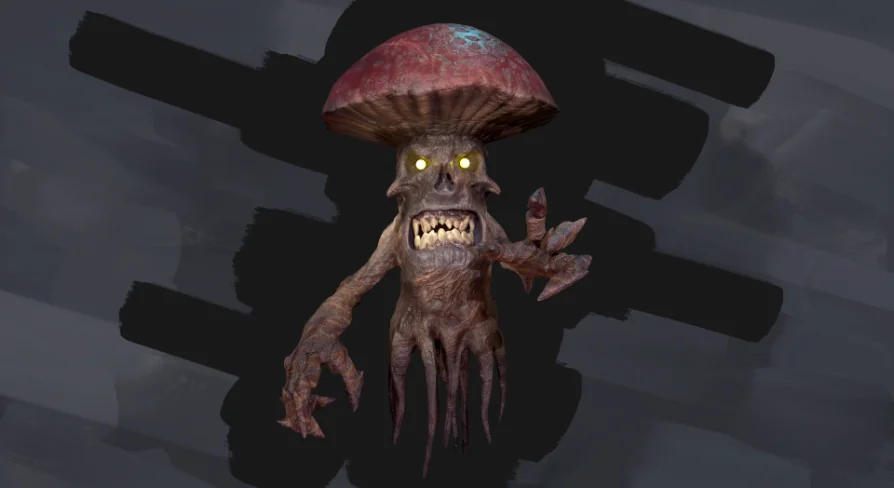
Fantasy worlds often need oddball adversaries that do not look like standard goblins or skeletons. A mutated mushroom creature fills that gap, sitting somewhere between a nature spirit and a toxic hazard. The kind of scene where a player walks through a dim forest or an abandoned alchemy lab and spots a hunched, fleshy cap lunging from the shadows is exactly where this character model earns its place. The tagging points to demon, mutant, chemical, and monster themes, so the intended mood leans toward corrupted fantasy rather than cheerful woodland fairy tale.
What the Mushroom (K) Package Actually Contains
At its core, this is a low-poly character model based on a mushroom mutant concept. The polygon count sits at 7,256, which places it in the lightweight category suitable for real-time rendering where performance matters. This density is low enough to populate several instances across a scene without crippling frame rates, but detailed enough to hold its own in closer encounters.
Eleven animations accompany the model. These are not a random grab-bag of poses; they map directly onto the behavior states a hostile non-player character needs in a game. The package breaks the animation set into several distinct categories:
Attack (4 clips) — Enough variety to keep melee encounters from looking repetitive. Four distinct attack swings or strikes give the creature a small combo pool.
Idle (2 clips) — Two breathing or waiting loops allow some visual variety when the creature is standing around before detecting the player.
Walk (1 clip) — A slower patrol gait for when the creature is wandering its territory.
Run (1 clip) — A faster locomotion state for when the creature has acquired a target and is closing distance.
Take damage (2 clips) — Two stagger or hit-reaction animations so the creature reacts differently depending on how it was struck.
Death (1 clip) — A single death animation for the creature's final moments.
Combat Readiness and Behavioral States
Eleven clips might sound modest on paper, but the distribution tells a more useful story. With four attack animations, this mushroom mutant can cycle through different strikes, which matters for an enemy that a player will fight repeatedly. If every swing looked the same, the encounter would lose tension quickly. Four attacks give enough headroom for a basic AI to pick moves semi-randomly or even chain them into a short sequence.
Pairing four attacks with two stagger reactions means the creature can take hits without falling into the same flinch loop every time. The second take-damage clip likely covers a heavier knockback or a different angle of impact, letting the animation state machine choose a reaction that fits the incoming damage type or direction. This kind of variation, even on a small scale, helps a simple enemy feel less mechanical.
The mobility options are slim but functional. A single walk clip covers patrol behavior, and a single run clip handles the aggro state where the creature sprints toward the player. There is no dedicated jump, dodge, or strafe, so the creature is built for direct, grounded encounters rather than complex acrobatic fights. That fits a mutant mushroom archetype; it is not supposed to be nimble.
Scene-Building Value for Fantasy and Chemical Mutant Themes
The tags attached to this resource paint a clear picture of where it belongs. Character, demon, mushroom, mutant, lowpoly, fantasy, script, chemical, monster, and animationblueprint are the keywords defining its intended use. Read together, they point toward fantasy settings with a contamination or mutation angle. Think corrupted forests, failed alchemical experiments, or wasteland zones where something in the soil has gone wrong. A mushroom that attacks is a natural fit for places where nature has turned hostile.
Because the style is explicitly low-poly, the model sits comfortably in stylized projects. It will not compete with high-resolution photoreal assets, but in a low-poly environment it will look cohesive. The 7,256-polygon density means a developer can place several of these creatures in a single area — a cave system, a forest grove, a laboratory basement — without worrying about draw calls piling up. This makes it a practical choice for horde-style encounters or area population where multiple enemies share screen space.
How the Animation Blueprint Keyword Fits In
One tag that stands out is Animationblueprint. In an Unreal Engine context, an Animation Blueprint is the node system that controls which animation plays and when. It is the logic layer that ties the 11 clips together, watching the character's velocity, health, and attack triggers to call the correct state. The presence of this tag suggests the asset is not just a stack of raw animation files; it is set up to integrate into an animation system where the clips are already wired or ready to be wired into a state machine.
This matters because it reduces setup work. A developer dropping this creature into a project will likely not need to manually connect every clip to a custom state graph from scratch. The walk and run animations can blend based on movement speed, the idle clips can play when the character stands still, attack clips can trigger on AI decision events, and the take-damage and death animations can fire on health state changes. The animation blueprint concept is what turns these 11 clips from a library of isolated movements into a functioning character.
Moving Between Behavior States with Eleven Animation Slots
Looking at the animation breakdown, the full behavior range covers 11 clips total: 4 attacks, 2 idles, 1 walk, 1 run, 2 damage reactions, and 1 death. These eleven discrete animation slots give an AI opponent a versatile mid-range behavior palette.
For comparison, a bare-minimum enemy might ship with only an idle, a walk, an attack, and a death clip. This package doubles that base count and adds variety in the two areas where repetition is most noticeable: attacks and hit reactions. A player fighting this creature will see different swing animations across multiple encounters, and the creature will not always flinch the same way when struck. That variety is what separates a designed enemy from a placeholder.
Where the Creature Belongs and Who It Serves Best
This mushroom mutant is built for developers who need a stylized, combat-ready non-player character with a defined personality — corrupted, organic, and aggressive. It suits fantasy RPGs, action-adventure projects, and survival games where mutated flora or contaminated zones appear as level themes. The low-poly construction keeps it performance-friendly, and the animation set covers the full combat lifecycle from idle through attack, stagger, and death.
Projects that will get the most out of this asset are those already working in a low-poly or stylized art direction. It integrates cleanly into forest, swamp, cave, or laboratory environments, and it is specific enough in theme that it will feel like a deliberate part of the world rather than a generic filler enemy. The animation blueprint tag means it is set up for state-machine-driven behavior out of the box, which is useful for developers who want a creature that works as a system, not just a static mesh.
For a solo developer or small team, this is a grab-and-go enemy with enough animation depth to feel considered. For a larger project, it is a solid grunt-tier enemy that can be placed in groups, reskinned if needed, and repeated across a zone without becoming a visual burden. The 7,256-polygon footprint and the 11-clip animation set strike a practical balance between detail and efficiency, making the Mushroom (K) a useful piece for anyone building stylized fantasy content with a darker or more contaminated edge.
 Characters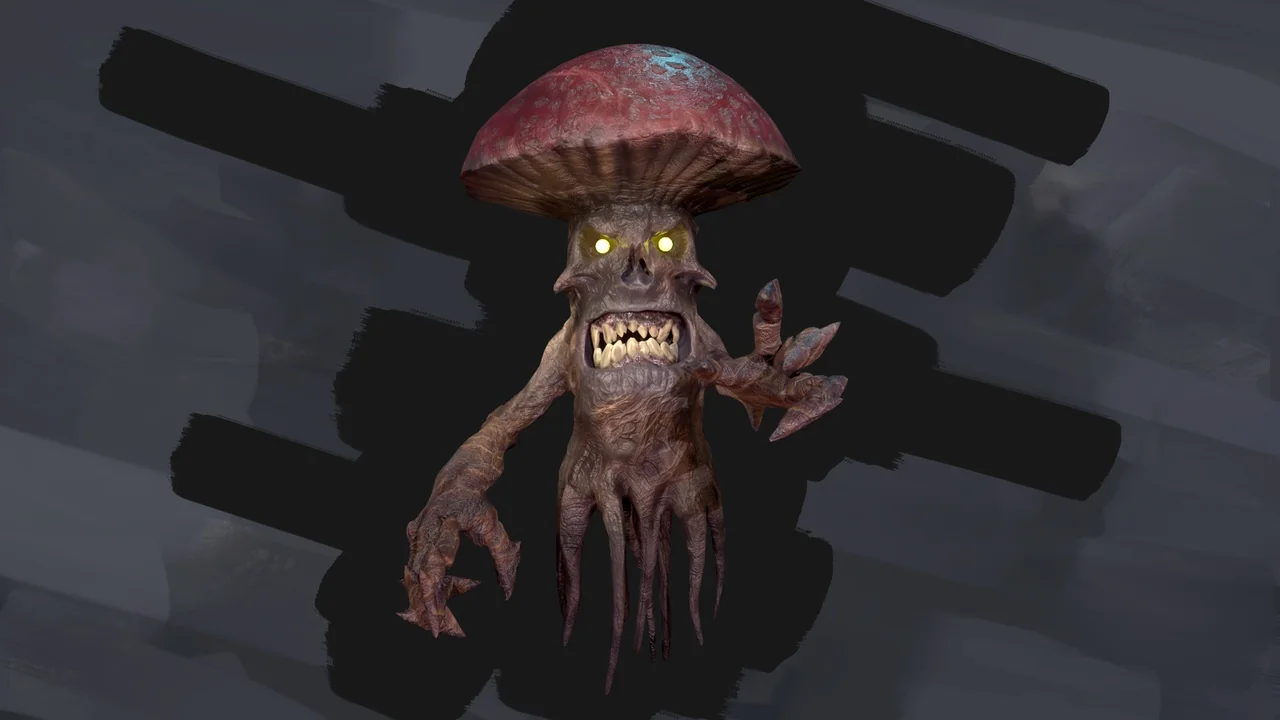
 Characters
 Characters
 Characters