"95fdaf16012263fa"{"id":"1002367","slug":"zombie-mutant-2","title":"Zombie mutant 2","category":"Characters \u0026 Creatures","engine":"4.26+,5.0+","assetVersion":"","engineVersion":"Engine Version: 4.26+,5.0+","tag":"Characters","accent":"blue","visual":"character","summary":"Zombie mutant 2 is a mutated creature character with 12 animations, 15,627 triangles, and six 4096×4096 PBR maps for MMORPG, RPG, shooter, and horror projects.","platform":"Unreal Engine","indexPolicy":"index","publishedAt":"2026-11-06T07:26:11.410Z","updatedAt":"2026-11-06T07:26:11.410Z","sourceNotes":[],"fileContents":[],"compatibility":["Unreal Engine","Engine Version: 4.26+,5.0+"],"featuredImage":{"alt":"Zombie mutant 2","src":"/wp-content/uploads/published/2026/11/cce39077840c-1faa20c3-1761-4a54-a0a0-381f04cafc23-82a9e3e364.webp"},"hasDownloadLink":true,"downloads":0,"terms":[{"taxonomy":"category","slug":"characters-and-creatures","name":"Characters \u0026 Creatures"}],"galleryImages":[{"src":"/wp-content/uploads/published/2026/11/8dfcc15ae416-df917770-6e0d-4c1b-8b6a-f24610faa9fc-096eb8cf91.webp","alt":"Zombie mutant 2"},{"src":"/wp-content/uploads/published/2026/11/4847e41343a1-0dee0729-0331-4447-a173-966bf2f39948-64656abacd.webp","alt":"Zombie mutant 2"},{"src":"/wp-content/uploads/published/2026/11/0c34a23259fc-7c5c4e61-7556-4b5b-adba-80e93831e8ac-d2057325a6.webp","alt":"Zombie mutant 2"},{"src":"/wp-content/uploads/published/2026/11/92f0a3c61225-bb9162c6-da29-45b7-9367-727a16b9f602-f9eeea3488.webp","alt":"Zombie mutant 2"},{"src":"/wp-content/uploads/published/2026/11/cd0bd84af66b-9cc80ed3-97b5-4730-9df9-3d75381a5202-b0d315a5b4.webp","alt":"Zombie mutant 2"},{"src":"/wp-content/uploads/published/2026/11/ff807674e299-f7a2a56f-1cf6-45a0-9eb3-2e31195bbecc-b868eedefd.webp","alt":"Zombie mutant 2"},{"src":"/wp-content/uploads/published/2026/11/ce994f136169-6e4c6569-ea20-4abb-9bf2-ee24d1b81b5f-8416f1d285.webp","alt":"Zombie mutant 2"},{"src":"/wp-content/uploads/published/2026/11/7b93f0c9b01d-46c41487-4507-4131-947a-c064fb69a877-476448aac8.webp","alt":"Zombie mutant 2"},{"src":"/wp-content/uploads/published/2026/11/fcef6ed9373f-00f1a224-4482-4f24-9f4a-42ddb343cb84-36b0dfc0c0.webp","alt":"Zombie mutant 2"}],"accessPanel":{"kind":"resource","title":"Get this resource","eyebrow":"Free resource","message":"3DCGHUB is the service provider for this listing. Access is fulfilled through the official publisher channel.","fileName":"Content.7z","safetyNote":"Resources are manually reviewed before listing to improve quality and reduce obvious risks.","actionLabel":"Get this resource","resourceType":"Resource archive","versions":[]},"contentHtml":"\u003ch2\u003eA creature for corridors, ruins, and boss arenas\u003c/h2\u003e\n\u003cp\u003eSomething drags itself down a dark hallway. A shape pulls free of rubble on a bombed-out street. A figure waits on the far side of an arena gate, changed by whatever started the outbreak. Zombie mutant 2 is built to fill that slot — a mutated humanoid that reads as a threat before it reads as a person.\u003c/p\u003e\n\u003cp\u003eThe stated genre range is wide: MMORPG, RPG, shooter, horror. That spread is the practical value here. One character can populate a fantasy MMO field, an apocalyptic shooter wave, or a single-room horror sequence without looking imported from a different production. The accompanying tags lean the same direction — zombie, epidemic, apocalyptic, creepy, scary, evil — with room left for fantasy and boss encounters, which is where a mutant rather than a plain walking corpse earns its place.\u003c/p\u003e \u003ch2\u003eTwelve clips that cover an entire encounter\u003c/h2\u003e\n\u003cp\u003eThe animation list is where this character does most of its work, because it maps to the beats of a fight rather than to a demo reel.\u003c/p\u003e\n\u003cul\u003e\n\u003cli\u003e\u003cstrong\u003eIdle\u003c/strong\u003e — the resting state, for a creature standing in a room or waiting behind a door.\u003c/li\u003e\n\u003cli\u003e\u003cstrong\u003eWalk\u003c/strong\u003e And \u003cstrong\u003eRun\u003c/strong\u003e — two movement speeds, so the same enemy can shuffle through a patrol and then close distance.\u003c/li\u003e\n\u003cli\u003e\u003cstrong\u003eJump\u003c/strong\u003e — traversal, or a lunge across a gap.\u003c/li\u003e\n\u003cli\u003e\u003cstrong\u003eGet hit (x2)\u003c/strong\u003e — two separate reactions, which keeps repeated damage from looking identical.\u003c/li\u003e\n\u003cli\u003e\u003cstrong\u003eDeath (x2)\u003c/strong\u003e — two death endings, useful when the same creature type dies more than once in a session.\u003c/li\u003e\n\u003cli\u003e\u003cstrong\u003eAttack (x3)\u003c/strong\u003e — three offensive options, enough to vary an exchange instead of looping one swing.\u003c/li\u003e\n\u003cli\u003e\u003cstrong\u003eShout\u003c/strong\u003e — a standalone vocal or taunt beat, the kind of clip that sells an aggro moment or an entrance.\u003c/li\u003e\n\u003c/ul\u003e\n\u003cp\u003eThe doubled and tripled entries are the detail worth noticing. A single get-hit and a single death clip is the usual minimum; two of each, plus three attacks, gives an encounter somewhere to go. A player who hits the same mutant five times sees variation. One that kills two of them sees two different endings. For a horror scene, the Shout clip alone can carry a reveal.\u003c/p\u003e \u003ch2\u003e15,627 triangles, 8,037 faces, 9,157 vertices\u003c/h2\u003e\n\u003cp\u003eThe mesh figures are fixed and specific: 8,037 faces, 9,157 vertices, 15,627 triangles. Those numbers matter for anyone assembling a scene budget, because they set exactly how much room the character takes before anything else goes in. It is a concrete figure to plan enemy counts against rather than a guess made after import.\u003c/p\u003e\n\u003cp\u003eThe face and vertex counts sit close together while the triangle count roughly doubles them, which is the normal signature of a triangulated mesh. Nothing about the figures implies extra geometry hidden behind the character — what is listed is what the silhouette costs. For a boss or a featured creature, that is a straightforward trade. For a crowd of shambling enemies in an MMORPG field, the number is the thing to check against whatever else is on screen.\u003c/p\u003e \u003ch2\u003eSix PBR maps, each at 4096 × 4096\u003c/h2\u003e\n\u003cp\u003eThe material setup is complete rather than partial. Six maps ship with the character, all at the same 4096×4096 resolution:\u003c/p\u003e\n\u003cul\u003e\n\u003cli\u003eAlbedo\u003c/li\u003e\n\u003cli\u003eNormal\u003c/li\u003e\n\u003cli\u003eMetallic\u003c/li\u003e\n\u003cli\u003eAmbient occlusion\u003c/li\u003e\n\u003cli\u003eEmission\u003c/li\u003e\n\u003cli\u003eRoughness\u003c/li\u003e\n\u003c/ul\u003e\n\u003cp\u003eUniform resolution across the set keeps the detail level consistent — no channel arriving sharper or softer than its neighbours. The presence of an emission map is the one that changes how the character can look on screen: part of the mutant can be authored to glow, which suits infected flesh, exposed tissue, or anything that should catch the eye in a dark corridor. Metallic and roughness together control how wet or dry the surface reads, which is the difference between a fresh mutation and a dried-out one. Ambient occlusion is already baked into its own map, so contact shadowing in the crevices is carried by the texture instead of depending entirely on scene lighting.\u003c/p\u003e\n\u003cp\u003eAt 4096 across six maps, the texture set is aimed at characters that get looked at closely — hero enemies, bosses, anything the camera lingers on. Distant background crowds would be carrying far more texture than they show.\u003c/p\u003e \u003ch2\u003eWhere the mutant earns its place\u003c/h2\u003e\n\u003cp\u003eIn an MMORPG or RPG, the character works as a mid-tier enemy or an elite that appears in infected zones — the tag list points at epidemic and apocalyptic settings, and the three attack clips give it enough behaviour to hold a small encounter. In a shooter, the walk and run pair lets it approach at two speeds while the two get-hit reactions keep sustained fire from looking stale. In horror, the value shifts: a single mutant placed in a tight space, using Idle, Walk, and Shout, is enough. The death and hit variants matter less when the creature only has to appear once.\u003c/p\u003e\n\u003cp\u003eBoss use is the other obvious fit. A mutated creature that shouts, attacks three different ways, and has two deaths reads as more than a standard enemy, and the 15,627-triangle budget is modest enough to justify the screen time.\u003c/p\u003e \u003ch2\u003eWho should pick it up\u003c/h2\u003e\n\u003cp\u003eThis one suits teams that need an infected humanoid to be functional immediately — moving, reacting, attacking, dying — without assembling that behaviour themselves. The animation set is the strongest argument, followed by the complete PBR texture group. If the project calls for a plain shambling zombie with one attack and one death, the extra clips go unused. If it calls for a creature that has to hold a fight, take repeated damage, and appear in more than one scene, the coverage is already there.\u003c/p\u003e\n\n\u003ch2\u003eRelated Resources Worth Checking\u003c/h2\u003e\n\u003cul\u003e\n\u003cli\u003e\u003ca href=\"https://3dcghub.com/skinless-mutant/\" rel=\"noopener noreferrer\"\u003eSkinless mutant\u003c/a\u003e\u003c/li\u003e\n\u003cli\u003e\u003ca href=\"https://3dcghub.com/big-zombie/\" rel=\"noopener noreferrer\"\u003eBig Zombie\u003c/a\u003e\u003c/li\u003e\n\u003cli\u003e\u003ca href=\"https://3dcghub.com/mutant-3/\" rel=\"noopener noreferrer\"\u003eMutant 3\u003c/a\u003e\u003c/li\u003e\n\u003cli\u003e\u003ca href=\"https://3dcghub.com/urban-zombie-pack/\" rel=\"noopener noreferrer\"\u003eUrban Zombie Pack\u003c/a\u003e\u003c/li\u003e\n\u003cli\u003e\u003ca href=\"https://3dcghub.com/zombie-02-game-assets-extra/\" rel=\"noopener noreferrer\"\u003eZombie 02 - Game Assets + Extra\u003c/a\u003e\u003c/li\u003e\n\u003c/ul\u003e","contentTextLength":5457,"navigation":{"current":1,"total":4291,"next":{"id":"1002366","slug":"yippy-kawaii","title":"Yippy Kawaii","category":"Animals","platform":"Unreal Engine","updatedAt":"2026-11-06T07:25:01.140Z"}},"relatedResources":[{"id":"1000680","slug":"skinless-mutant","title":"Skinless mutant","category":"Characters \u0026 Creatures","engine":"4.26+,5.0+","assetVersion":"","engineVersion":"Engine Version: 4.26+,5.0+","tag":"Characters","accent":"blue","visual":"character","summary":"Low-poly mutant character for games across RPG, strategy, and first-person shooter genres. Horror creature with animation blueprint and undead modular compatibi","platform":"Unreal Engine","indexPolicy":"index","publishedAt":"2026-07-22T15:18:52.308Z","updatedAt":"2026-07-22T15:18:52.308Z","sourceNotes":[],"fileContents":[],"compatibility":["Unreal Engine","Engine Version: 4.26+,5.0+"],"featuredImage":{"alt":"Skinless mutant","src":"/wp-content/uploads/published/2026/07/b667ce1d9c28-bd264074-b15b-4dea-a77a-f0d9cbcec45a-bb6b90d078.webp"},"hasDownloadLink":true,"downloads":0},{"id":"1774","slug":"big-zombie","title":"Big Zombie","category":"Characters \u0026 Creatures","engine":"4.26+,5.0+","assetVersion":"Engine version: 4.26+,5.0+","engineVersion":"4.19","tag":"Characters","accent":"blue","visual":"character","summary":"Enhance your horror game with this modular Big Zombie boss model. Featuring 4K textures, dismemberment support, and Epic Skeleton compatibility for UE4 and UE5.","platform":"Unreal Engine","indexPolicy":"index","publishedAt":"2026-02-06T21:50:27.000Z","updatedAt":"2026-04-19T15:58:29.000Z","sourceNotes":[],"fileContents":[],"compatibility":["Unreal Engine","Engine version: 4.26+,5.0+"],"featuredImage":{"alt":"Big Zombie","src":"https://3dcghub.com/wp-content/uploads/2026/02/008aa7bf-894c-45d8-947a-4f0e7817b9ee.webp"},"hasDownloadLink":true,"downloads":5},{"id":"3122","slug":"mutant-3","title":"Mutant 3","category":"Characters \u0026 Creatures","engine":"4.26+,5.0+","assetVersion":"Engine version: 4.26+,5.0+","engineVersion":"4.18","tag":"Characters","accent":"blue","visual":"character","summary":"Discover the Mutant 3 character model, a game-ready creature rigged with the Epic Skeleton. Perfect for horror, RPG, and FPS games with optimized low-poly mesh.","platform":"Unreal Engine","indexPolicy":"index","publishedAt":"2026-02-08T15:32:14.000Z","updatedAt":"2026-04-19T15:57:42.000Z","sourceNotes":[],"fileContents":[],"compatibility":["Unreal Engine","Engine version: 4.26+,5.0+"],"featuredImage":{"alt":"Mutant 3","src":"https://3dcghub.com/wp-content/uploads/2026/02/dfbdb10d-ef9e-4109-ada5-d7cf3d53b8c4.webp"},"hasDownloadLink":true,"downloads":2}]}
Characters
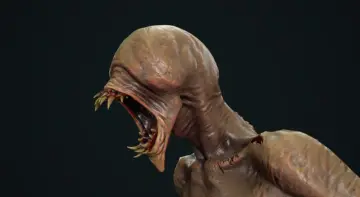
Zombie mutant 2
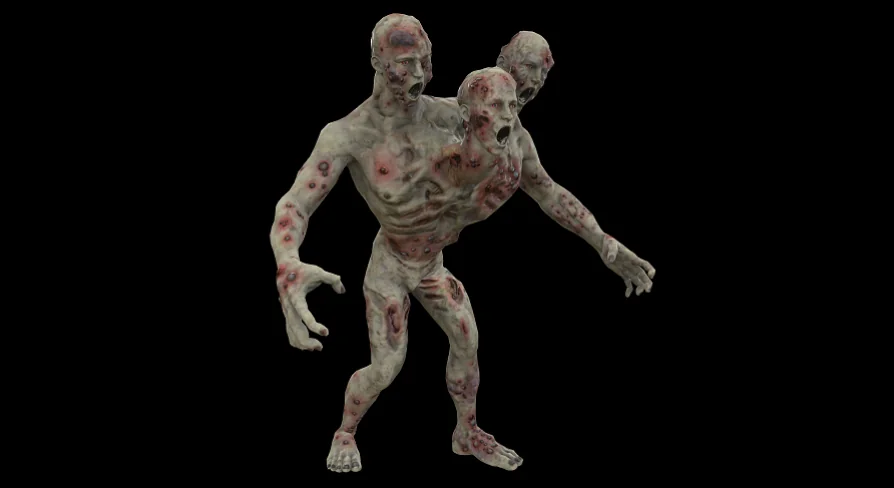
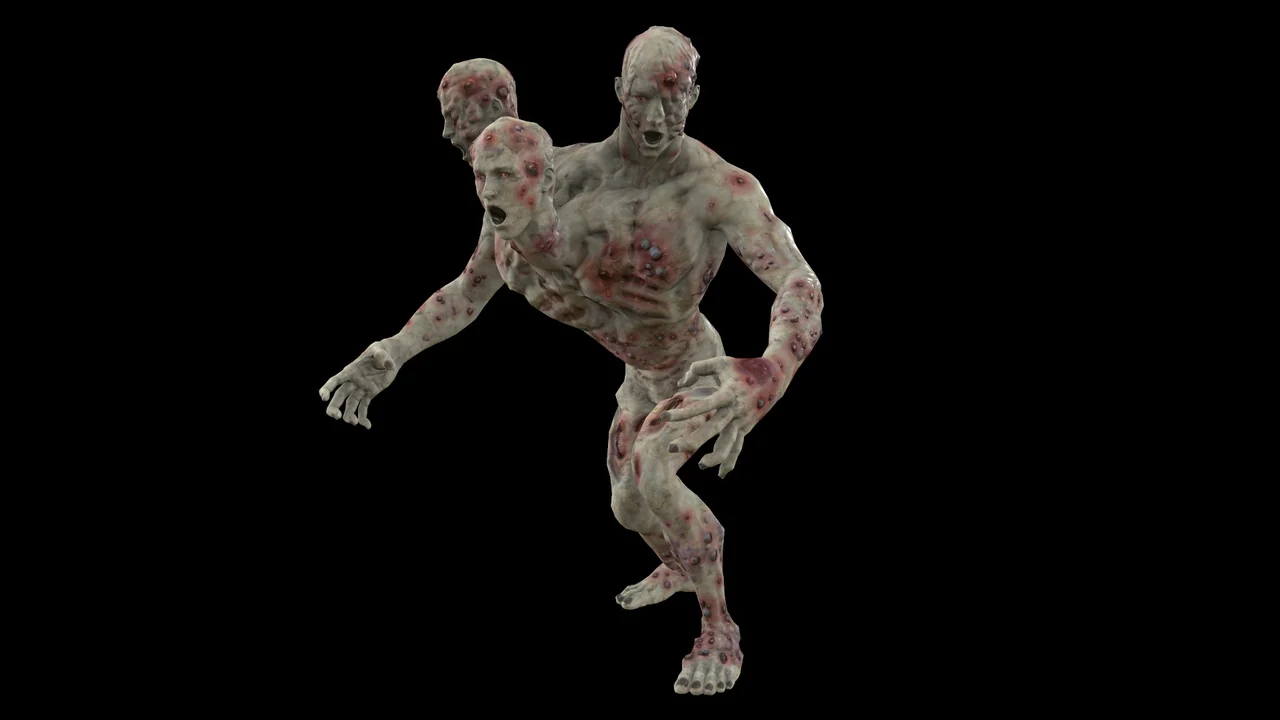
Zombie mutant 2 is a mutated creature character with 12 animations, 15,627 triangles, and six 4096×4096 PBR maps for MMORPG, RPG, shooter, and horror projects.
Something drags itself down a dark hallway. A shape pulls free of rubble on a bombed-out street. A figure waits on the far side of an arena gate, changed by whatever started the outbreak. Zombie mutant 2 is built to fill that slot — a mutated humanoid that reads as a threat before it reads as a person.
The stated genre range is wide: MMORPG, RPG, shooter, horror. That spread is the practical value here. One character can populate a fantasy MMO field, an apocalyptic shooter wave, or a single-room horror sequence without looking imported from a different production. The accompanying tags lean the same direction — zombie, epidemic, apocalyptic, creepy, scary, evil — with room left for fantasy and boss encounters, which is where a mutant rather than a plain walking corpse earns its place.
Twelve clips that cover an entire encounter
The animation list is where this character does most of its work, because it maps to the beats of a fight rather than to a demo reel.
Idle — the resting state, for a creature standing in a room or waiting behind a door.
Walk And Run — two movement speeds, so the same enemy can shuffle through a patrol and then close distance.
Jump — traversal, or a lunge across a gap.
Get hit (x2) — two separate reactions, which keeps repeated damage from looking identical.
Death (x2) — two death endings, useful when the same creature type dies more than once in a session.
Attack (x3) — three offensive options, enough to vary an exchange instead of looping one swing.
Shout — a standalone vocal or taunt beat, the kind of clip that sells an aggro moment or an entrance.
The doubled and tripled entries are the detail worth noticing. A single get-hit and a single death clip is the usual minimum; two of each, plus three attacks, gives an encounter somewhere to go. A player who hits the same mutant five times sees variation. One that kills two of them sees two different endings. For a horror scene, the Shout clip alone can carry a reveal.
15,627 triangles, 8,037 faces, 9,157 vertices
The mesh figures are fixed and specific: 8,037 faces, 9,157 vertices, 15,627 triangles. Those numbers matter for anyone assembling a scene budget, because they set exactly how much room the character takes before anything else goes in. It is a concrete figure to plan enemy counts against rather than a guess made after import.
The face and vertex counts sit close together while the triangle count roughly doubles them, which is the normal signature of a triangulated mesh. Nothing about the figures implies extra geometry hidden behind the character — what is listed is what the silhouette costs. For a boss or a featured creature, that is a straightforward trade. For a crowd of shambling enemies in an MMORPG field, the number is the thing to check against whatever else is on screen.
Six PBR maps, each at 4096 × 4096
The material setup is complete rather than partial. Six maps ship with the character, all at the same 4096×4096 resolution:
Albedo
Normal
Metallic
Ambient occlusion
Emission
Roughness
Uniform resolution across the set keeps the detail level consistent — no channel arriving sharper or softer than its neighbours. The presence of an emission map is the one that changes how the character can look on screen: part of the mutant can be authored to glow, which suits infected flesh, exposed tissue, or anything that should catch the eye in a dark corridor. Metallic and roughness together control how wet or dry the surface reads, which is the difference between a fresh mutation and a dried-out one. Ambient occlusion is already baked into its own map, so contact shadowing in the crevices is carried by the texture instead of depending entirely on scene lighting.
At 4096 across six maps, the texture set is aimed at characters that get looked at closely — hero enemies, bosses, anything the camera lingers on. Distant background crowds would be carrying far more texture than they show.
Where the mutant earns its place
In an MMORPG or RPG, the character works as a mid-tier enemy or an elite that appears in infected zones — the tag list points at epidemic and apocalyptic settings, and the three attack clips give it enough behaviour to hold a small encounter. In a shooter, the walk and run pair lets it approach at two speeds while the two get-hit reactions keep sustained fire from looking stale. In horror, the value shifts: a single mutant placed in a tight space, using Idle, Walk, and Shout, is enough. The death and hit variants matter less when the creature only has to appear once.
Boss use is the other obvious fit. A mutated creature that shouts, attacks three different ways, and has two deaths reads as more than a standard enemy, and the 15,627-triangle budget is modest enough to justify the screen time.
Who should pick it up
This one suits teams that need an infected humanoid to be functional immediately — moving, reacting, attacking, dying — without assembling that behaviour themselves. The animation set is the strongest argument, followed by the complete PBR texture group. If the project calls for a plain shambling zombie with one attack and one death, the extra clips go unused. If it calls for a creature that has to hold a fight, take repeated damage, and appear in more than one scene, the coverage is already there.
 Characters
 Characters
 Characters
 Characters