"82ee98b2ee2793f1"{"id":"1002437","slug":"poly-art-bear","title":"Poly Art Bear","category":"Characters \u0026 Creatures","engine":"4.26+,5.0+","assetVersion":"","engineVersion":"Engine Version: 4.26+,5.0+","tag":"Characters","accent":"blue","visual":"character","summary":"Explore the Poly Art Bear asset, featuring low-poly bear, polar, and cub models with textures, animations, and Horse Animset compatibility.","platform":"Unreal Engine","indexPolicy":"index","publishedAt":"2026-11-10T18:33:07.742Z","updatedAt":"2026-11-10T18:33:07.742Z","sourceNotes":[],"fileContents":[],"compatibility":["Unreal Engine","Engine Version: 4.26+,5.0+"],"featuredImage":{"alt":"Poly Art Bear","src":"/wp-content/uploads/published/2026/11/455cc90f0380-33f14d0e-fb09-4fbc-8445-92cd1c94d1cb-d340a2ffc5.webp"},"hasDownloadLink":true,"downloads":0,"terms":[{"taxonomy":"category","slug":"characters-and-creatures","name":"Characters \u0026 Creatures"}],"galleryImages":[{"src":"/wp-content/uploads/published/2026/11/684424ca2881-71064623-aa14-4892-b9c2-5fb0bcfad7f8-b27f3c341b.webp","alt":"Poly Art Bear"},{"src":"/wp-content/uploads/published/2026/11/f0bf1c21f32e-034fe179-3301-4b86-b025-1a5de45f461f-e5b7167686.webp","alt":"Poly Art Bear"},{"src":"/wp-content/uploads/published/2026/11/b0770d93ff3e-7889b685-d821-4b50-8ba6-56848d20a44b-1b34c35321.webp","alt":"Poly Art Bear"},{"src":"/wp-content/uploads/published/2026/11/2a8f1bbda203-c6710c87-1a81-4c44-8f7d-9fbdb6db11ef-0cd9da6ecc.webp","alt":"Poly Art Bear"},{"src":"/wp-content/uploads/published/2026/11/9e348892545f-d633d0f3-e338-44f4-924e-cbe6d2c0cc16-66bd018bba.webp","alt":"Poly Art Bear"},{"src":"/wp-content/uploads/published/2026/11/e2a201b682a1-b420f5a8-2a25-42ee-9198-7ab639b8c731-02914e9f6e.webp","alt":"Poly Art Bear"},{"src":"/wp-content/uploads/published/2026/11/e360bef043af-232d3fc7-dc81-4772-b2a5-d9f006973707-01b73170e0.webp","alt":"Poly Art Bear"},{"src":"/wp-content/uploads/published/2026/11/5266b44ad53d-af3f5329-0786-4fd9-9677-7a2c44b99abe-2e8db57d11.webp","alt":"Poly Art Bear"},{"src":"/wp-content/uploads/published/2026/11/59c18851c59e-f9e46b8c-b012-48c8-83a1-03eb7b947ff2-cbf956f855.webp","alt":"Poly Art Bear"},{"src":"/wp-content/uploads/published/2026/11/7afa3ea07288-b88a42a4-6e99-4707-87cc-e595ecb04c76-8956a3c587.webp","alt":"Poly Art Bear"}],"accessPanel":{"kind":"resource","title":"Get this resource","eyebrow":"Free resource","message":"Download this resource in your browser.","fileName":"Content.7z","safetyNote":"Resources are manually reviewed before listing to improve quality and reduce obvious risks.","actionLabel":"Get this resource","resourceType":"Resource archive","versions":[]},"contentHtml":"\u003ch2\u003ePopulating Stylized Biomes with Poly Art Wildlife\u003c/h2\u003e\u003cp\u003eStylized virtual worlds often present vast, sweeping natural vistas composed of faceted terrain, angular foliage, and clean geometric formations. Despite the abundance of distinctive low-poly environments available for modern real-time engines, these spaces frequently suffer from a noticeable lack of living fauna. Without dynamic creatures moving through the undergrowth or patrolling ridgelines, wilderness scenes risk feeling static and uninhabited. Poly Art Bear directly tackles this aesthetic void by supplying expressive animal models configured specifically to bring movement and biological life into low-poly natural environments.\u003c/p\u003e\u003cp\u003eInstead of relying on dense, high-frequency surface details or photo-scanned fur shaders, the presentation of the creature relies on crisp polygonal forms and readable silhouettes. This aesthetic alignment ensures that the animal looks natural against clean geometric landscapes, low-poly tree canopies, and simplified water bodies. Integrating an intentionally stylized animal prevents the visual disconnect that occurs when hyper-realistic fauna is dropped into abstract or simplified art directions.\u003c/p\u003e\u003ch2\u003eAdult Bear, Polar Forms, and Cub Scale\u003c/h2\u003e\u003cp\u003eNatural settings rarely rely on a single, uniform creature type across different geographical zones or narrative contexts. Within the scope of this asset, multiple variations expand how the animal appears across different biomes and life stages. The asset covers standard forest-dwelling configurations alongside specialized polar interpretations, allowing developers to dress both temperate woodland biomes and frozen, snow-covered arctic terrains using the same consistent visual grammar.\u003c/p\u003e\u003cp\u003eThe presence of a cub form opens up narrative and ecological staging opportunities that single-mesh releases cannot accommodate. Placing an adult bear next to a cub instantly transforms an empty clearing into a dynamic habitat, implying family units, territorial nesting, or wildlife protection scenarios. In gameplay situations, introducing smaller cub variants can influence non-player character encounters, ranging from docile wildlife sightings to aggressive encounters where mature parent animals defend their young. Because the faceted aesthetic remains consistent across both mature and immature variants, scenes maintain a cohesive artistic language across diverse environmental setups.\u003c/p\u003e\u003ch2\u003eTechnical Breakdown of Bear Models, Textures, and Motion\u003c/h2\u003e\u003cp\u003eUnderstanding the exact division of packaged components is essential when integrating assets into an active production pipeline. The package delivers the fundamental raw assets: 3D models, textures, and dedicated animation data. It deliberately omits pre-assembled Blueprint character controllers, movement logic, or built-in playable character scripts. Scene artists and gameplay programmers are provided with clean, unencumbered assets rather than an opinionated, rigid controller setup that might clash with their existing project framework.\u003c/p\u003e\u003cp\u003eBecause no environment meshes are bundled with the pack, the entire data footprint remains strictly concentrated on the creature assets themselves. The absence of terrain, rocks, or trees keeps the package modular, ensuring that production teams do not have to filter out unwanted landscape props or duplicate environment shaders. Textures provide the surface coloring required to define the fur patterns and physical accents across the polygonal geometry, complementing the faceted surface normals to produce clean light falloff under real-time lighting solutions.\u003c/p\u003e\u003cp\u003eMovement is provided directly through packaged animation sequences. Rather than leaving the low-poly meshes static, the asset includes native motion sets designed to convey natural quadruped weight and momentum. Having the animations delivered alongside the meshes guarantees that vertex weighting and skeletal deformation align correctly out of the box, sparing animators the friction of manual skinning and baseline rigging from scratch.\u003c/p\u003e\u003ch2\u003eAnimation Blueprint Setup and Horse Animset Compatibility\u003c/h2\u003e\u003cp\u003eAlthough the package refrains from providing complete character controller Blueprints, it directly supports engine-level animation systems. The tagging and structural configuration highlight compatibility with Animation Blueprint setups and script-driven behavior states. Developers can plug the provided motion tracks directly into custom state machines, configuring transitions between idle stances, investigative movements, and faster locomotion blends.\u003c/p\u003e\u003cp\u003eA notable technical bridge for this asset is its alignment with the Horse Animset standard. Quadruped locomotion in real-time engines can present unique challenges, particularly when blending transitions across multi-legged gaits, uneven ground alignment, or speed parameters. Compatibility with Horse Animset data provides a reliable baseline for rigging expectations, motion transfer, and behavioral choreography. Technical animators can leverage familiar quadruped animation standards to expand the creature’s library of movements or share functional motion structures already present in their project pipeline.\u003c/p\u003e\u003ch2\u003eEcosystem Roles in the Poly Art Forest Set\u003c/h2\u003e\u003cp\u003eThe asset serves as an individual biological entry within a broader wildlife ecosystem, forming an integral part of the Poly Art Forest Set. That wider collection establishes a unified stylized habitat featuring an array of wilderness animals, including foxes, wolves, tigers, rabbits, raccoons, moose, deer, boars, and cats. Because the creature shares its stylistic foundation with these complementary species, it can be deployed alongside them to construct a full food chain or wilderness simulation without stylistic clashing.\u003c/p\u003e\u003cp\u003eIn a forest biome, the asset can function as an apex wanderer, sharing territory with pack animals like wolves or foraging species like boars and deer. In higher latitudes, the polar variation operates as a dominant arctic presence, fitting cleanly into barren glacial environments. Because the package remains strictly focused on models, textures, and animations, integrating the asset into existing low-poly ecosystems requires developers to establish their own pathfinding, AI perception, and interaction triggers. The resulting implementation yields a visually unified environment where fauna moves naturally through low-poly wilderness spaces without excess technical overhead.\u003c/p\u003e\n\n\u003ch2\u003eExplore Similar Assets\u003c/h2\u003e\n\u003cul\u003e\n\u003cli\u003e\u003ca href=\"https://3dcghub.com/forest-golems/\" rel=\"noopener noreferrer\"\u003eForest Golems\u003c/a\u003e\u003c/li\u003e\n\u003cli\u003e\u003ca href=\"https://3dcghub.com/animalia-brown-bear-male/\" rel=\"noopener noreferrer\"\u003eAnimalia - Brown Bear (male)\u003c/a\u003e\u003c/li\u003e\n\u003cli\u003e\u003ca href=\"https://3dcghub.com/frogs-pack/\" rel=\"noopener noreferrer\"\u003eFrogs pack\u003c/a\u003e\u003c/li\u003e\n\u003cli\u003e\u003ca href=\"https://3dcghub.com/character-military-bandit-2/\" rel=\"noopener noreferrer\"\u003eCharacter Military Bandit 2\u003c/a\u003e\u003c/li\u003e\n\u003cli\u003e\u003ca href=\"https://3dcghub.com/bloodthirsty-beetle/\" rel=\"noopener noreferrer\"\u003eBloodthirsty Beetle\u003c/a\u003e\u003c/li\u003e\n\u003c/ul\u003e","contentTextLength":6538,"navigation":{"current":13,"total":4372,"previous":{"id":"1002438","slug":"poly-art-boar","title":"Poly Art Boar","category":"Characters \u0026 Creatures","platform":"Unreal Engine","updatedAt":"2026-11-10T18:34:27.984Z"},"next":{"id":"1002436","slug":"mutant-rat-mouse","title":"Mutant Rat Mouse","category":"Characters \u0026 Creatures","platform":"Unreal Engine","updatedAt":"2026-11-10T18:31:52.675Z"}},"relatedResources":[{"id":"1002444","slug":"poly-art-wolf","title":"Poly Art Wolf","category":"Characters \u0026 Creatures","engine":"4.26+,5.0+","assetVersion":"","engineVersion":"Engine Version: 4.26+,5.0+","tag":"Characters","accent":"blue","visual":"character","summary":"Explore the Poly Art Wolf asset package, featuring low-poly animal models, textures, animations, and compatibility with the Horse Animset pipeline.","platform":"Unreal Engine","indexPolicy":"index","publishedAt":"2026-11-10T18:41:27.353Z","updatedAt":"2026-11-10T18:41:27.353Z","sourceNotes":[],"fileContents":[],"compatibility":["Unreal Engine","Engine Version: 4.26+,5.0+"],"featuredImage":{"alt":"Poly Art Wolf","src":"/wp-content/uploads/published/2026/11/8982d6af3886-f8d2f00b-53a6-4387-97e9-d89f139adfed-49b4d1b9c5.webp"},"hasDownloadLink":true,"downloads":0},{"id":"1002439","slug":"poly-art-cougars-and-panthers","title":"Poly Art Cougars and Panthers","category":"Characters \u0026 Creatures","engine":"4.26+,5.0+","assetVersion":"","engineVersion":"Engine Version: 4.26+,5.0+","tag":"Characters","accent":"blue","visual":"character","summary":"Low poly cougars, panthers and cubs with textures and animations for Unreal Engine 4.15+ and 5.0+, shipped without a blueprint controller or any environment.","platform":"Unreal Engine","indexPolicy":"index","publishedAt":"2026-11-10T18:35:31.546Z","updatedAt":"2026-11-10T18:35:31.546Z","sourceNotes":[],"fileContents":[],"compatibility":["Unreal Engine","Engine Version: 4.26+,5.0+"],"featuredImage":{"alt":"Poly Art Cougars and Panthers","src":"/wp-content/uploads/published/2026/11/ecc7cc574c1c-3f46ccac-a0ad-4fa4-ae18-6a114b3fc952-3133a2a0b9.webp"},"hasDownloadLink":true,"downloads":0},{"id":"1002438","slug":"poly-art-boar","title":"Poly Art Boar","category":"Characters \u0026 Creatures","engine":"4.26+,5.0+","assetVersion":"","engineVersion":"Engine Version: 4.26+,5.0+","tag":"Characters","accent":"blue","visual":"character","summary":"The Poly Art Boar supplies low poly boar models, textures, and in-motion animations for forest scenes, without an environment or character controller.","platform":"Unreal Engine","indexPolicy":"index","publishedAt":"2026-11-10T18:34:27.984Z","updatedAt":"2026-11-10T18:34:27.984Z","sourceNotes":[],"fileContents":[],"compatibility":["Unreal Engine","Engine Version: 4.26+,5.0+"],"featuredImage":{"alt":"Poly Art Boar","src":"/wp-content/uploads/published/2026/11/86edbb72e455-423fed1c-70eb-4e0c-b525-c55cdb49c579-6a5e3f2cc8.webp"},"hasDownloadLink":true,"downloads":0}]}
Characters
Poly Art Bear
Explore the Poly Art Bear asset, featuring low-poly bear, polar, and cub models with textures, animations, and Horse Animset compatibility.
Stylized virtual worlds often present vast, sweeping natural vistas composed of faceted terrain, angular foliage, and clean geometric formations. Despite the abundance of distinctive low-poly environments available for modern real-time engines, these spaces frequently suffer from a noticeable lack of living fauna. Without dynamic creatures moving through the undergrowth or patrolling ridgelines, wilderness scenes risk feeling static and uninhabited. Poly Art Bear directly tackles this aesthetic void by supplying expressive animal models configured specifically to bring movement and biological life into low-poly natural environments.
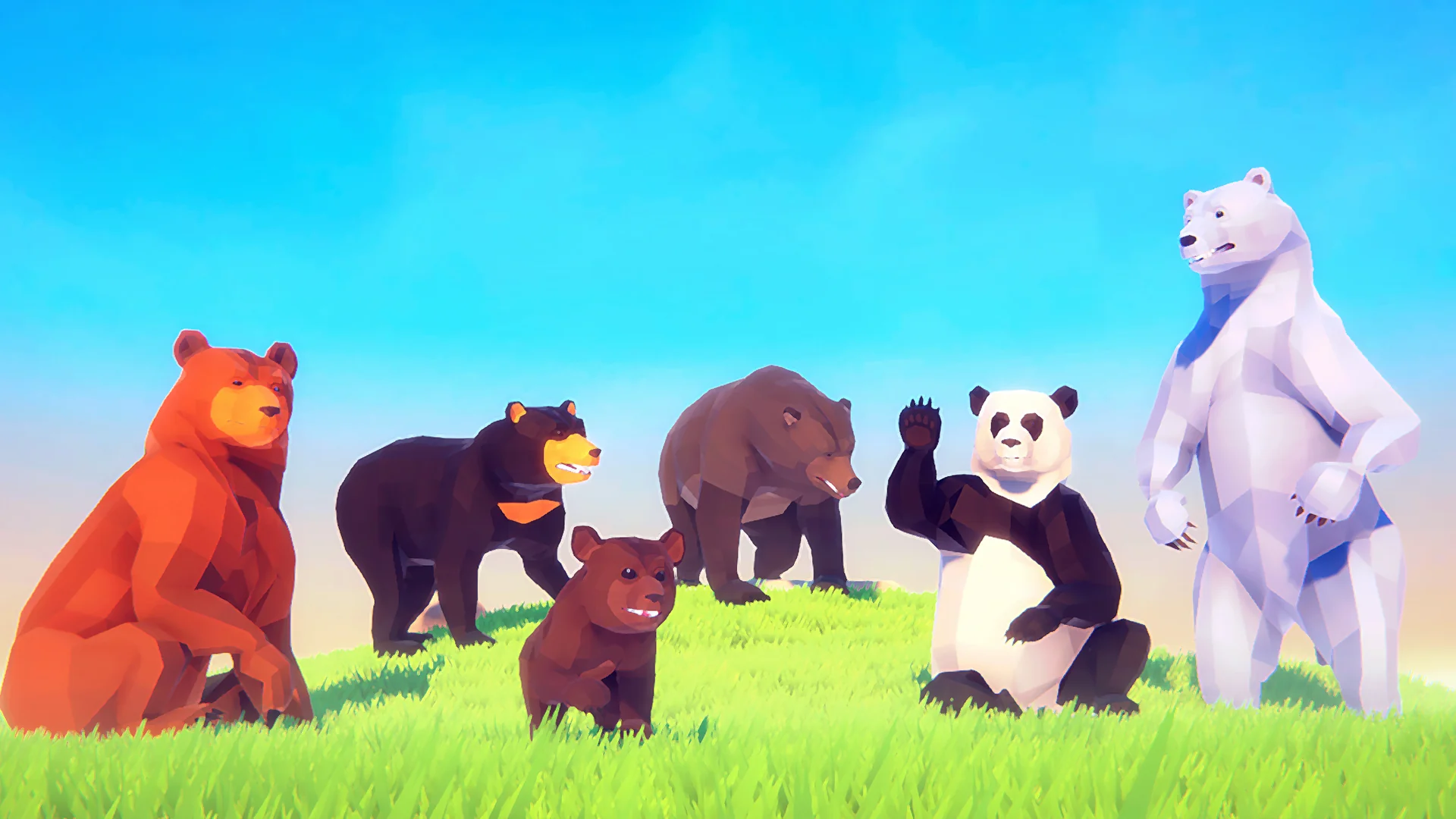
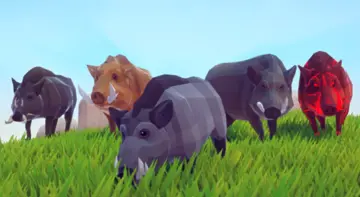
Instead of relying on dense, high-frequency surface details or photo-scanned fur shaders, the presentation of the creature relies on crisp polygonal forms and readable silhouettes. This aesthetic alignment ensures that the animal looks natural against clean geometric landscapes, low-poly tree canopies, and simplified water bodies. Integrating an intentionally stylized animal prevents the visual disconnect that occurs when hyper-realistic fauna is dropped into abstract or simplified art directions.
Adult Bear, Polar Forms, and Cub Scale
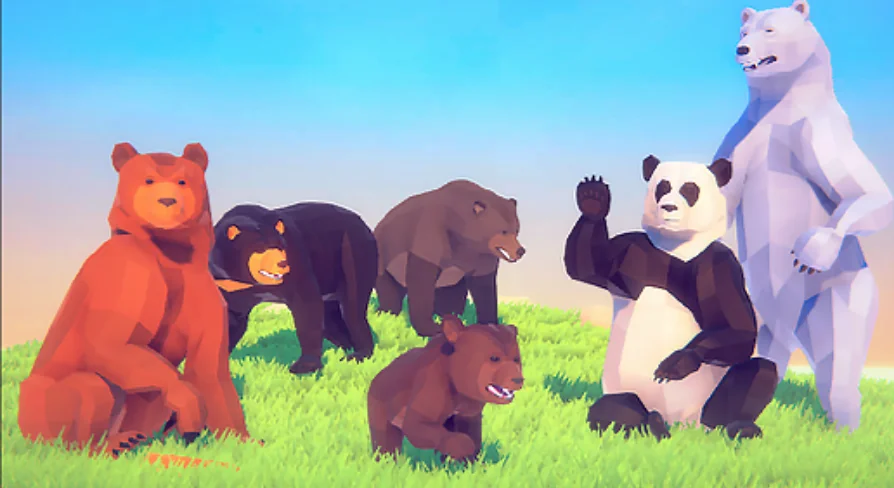
Natural settings rarely rely on a single, uniform creature type across different geographical zones or narrative contexts. Within the scope of this asset, multiple variations expand how the animal appears across different biomes and life stages. The asset covers standard forest-dwelling configurations alongside specialized polar interpretations, allowing developers to dress both temperate woodland biomes and frozen, snow-covered arctic terrains using the same consistent visual grammar.
The presence of a cub form opens up narrative and ecological staging opportunities that single-mesh releases cannot accommodate. Placing an adult bear next to a cub instantly transforms an empty clearing into a dynamic habitat, implying family units, territorial nesting, or wildlife protection scenarios. In gameplay situations, introducing smaller cub variants can influence non-player character encounters, ranging from docile wildlife sightings to aggressive encounters where mature parent animals defend their young. Because the faceted aesthetic remains consistent across both mature and immature variants, scenes maintain a cohesive artistic language across diverse environmental setups.
Technical Breakdown of Bear Models, Textures, and Motion
Understanding the exact division of packaged components is essential when integrating assets into an active production pipeline. The package delivers the fundamental raw assets: 3D models, textures, and dedicated animation data. It deliberately omits pre-assembled Blueprint character controllers, movement logic, or built-in playable character scripts. Scene artists and gameplay programmers are provided with clean, unencumbered assets rather than an opinionated, rigid controller setup that might clash with their existing project framework.
Because no environment meshes are bundled with the pack, the entire data footprint remains strictly concentrated on the creature assets themselves. The absence of terrain, rocks, or trees keeps the package modular, ensuring that production teams do not have to filter out unwanted landscape props or duplicate environment shaders. Textures provide the surface coloring required to define the fur patterns and physical accents across the polygonal geometry, complementing the faceted surface normals to produce clean light falloff under real-time lighting solutions.
Movement is provided directly through packaged animation sequences. Rather than leaving the low-poly meshes static, the asset includes native motion sets designed to convey natural quadruped weight and momentum. Having the animations delivered alongside the meshes guarantees that vertex weighting and skeletal deformation align correctly out of the box, sparing animators the friction of manual skinning and baseline rigging from scratch.
Animation Blueprint Setup and Horse Animset Compatibility
Although the package refrains from providing complete character controller Blueprints, it directly supports engine-level animation systems. The tagging and structural configuration highlight compatibility with Animation Blueprint setups and script-driven behavior states. Developers can plug the provided motion tracks directly into custom state machines, configuring transitions between idle stances, investigative movements, and faster locomotion blends.
A notable technical bridge for this asset is its alignment with the Horse Animset standard. Quadruped locomotion in real-time engines can present unique challenges, particularly when blending transitions across multi-legged gaits, uneven ground alignment, or speed parameters. Compatibility with Horse Animset data provides a reliable baseline for rigging expectations, motion transfer, and behavioral choreography. Technical animators can leverage familiar quadruped animation standards to expand the creature’s library of movements or share functional motion structures already present in their project pipeline.
Ecosystem Roles in the Poly Art Forest Set
The asset serves as an individual biological entry within a broader wildlife ecosystem, forming an integral part of the Poly Art Forest Set. That wider collection establishes a unified stylized habitat featuring an array of wilderness animals, including foxes, wolves, tigers, rabbits, raccoons, moose, deer, boars, and cats. Because the creature shares its stylistic foundation with these complementary species, it can be deployed alongside them to construct a full food chain or wilderness simulation without stylistic clashing.
In a forest biome, the asset can function as an apex wanderer, sharing territory with pack animals like wolves or foraging species like boars and deer. In higher latitudes, the polar variation operates as a dominant arctic presence, fitting cleanly into barren glacial environments. Because the package remains strictly focused on models, textures, and animations, integrating the asset into existing low-poly ecosystems requires developers to establish their own pathfinding, AI perception, and interaction triggers. The resulting implementation yields a visually unified environment where fauna moves naturally through low-poly wilderness spaces without excess technical overhead.
 Characters
 Characters
 Characters
 Characters