"82ee98b2ee2793f1"{"id":"1002444","slug":"poly-art-wolf","title":"Poly Art Wolf","category":"Characters \u0026 Creatures","engine":"4.26+,5.0+","assetVersion":"","engineVersion":"Engine Version: 4.26+,5.0+","tag":"Characters","accent":"blue","visual":"character","summary":"Explore the Poly Art Wolf asset package, featuring low-poly animal models, textures, animations, and compatibility with the Horse Animset pipeline.","platform":"Unreal Engine","indexPolicy":"index","publishedAt":"2026-11-10T18:41:27.353Z","updatedAt":"2026-11-10T18:41:27.353Z","sourceNotes":[],"fileContents":[],"compatibility":["Unreal Engine","Engine Version: 4.26+,5.0+"],"featuredImage":{"alt":"Poly Art Wolf","src":"/wp-content/uploads/published/2026/11/8982d6af3886-f8d2f00b-53a6-4387-97e9-d89f139adfed-49b4d1b9c5.webp"},"hasDownloadLink":true,"downloads":0,"terms":[{"taxonomy":"category","slug":"characters-and-creatures","name":"Characters \u0026 Creatures"}],"galleryImages":[{"src":"/wp-content/uploads/published/2026/11/bad1075c8c77-decbc0e5-a82c-4366-ace9-817c06045920-215055c4df.webp","alt":"Poly Art Wolf"},{"src":"/wp-content/uploads/published/2026/11/efd807a5a92e-541d8d6c-dcb9-40d5-8b8a-c48ac07bee7c-bf4bcf899e.webp","alt":"Poly Art Wolf"},{"src":"/wp-content/uploads/published/2026/11/86af8dc12067-cad96fc0-d050-4af4-84d3-1c4a3a78248b-f3a517c870.webp","alt":"Poly Art Wolf"},{"src":"/wp-content/uploads/published/2026/11/7b889486a499-d1e773f2-e5f8-4739-8bbf-eaf0e46f491d-4392893f39.webp","alt":"Poly Art Wolf"},{"src":"/wp-content/uploads/published/2026/11/332921130305-967e05af-4efe-4b50-8f8c-fee53700824e-fd951e1021.webp","alt":"Poly Art Wolf"},{"src":"/wp-content/uploads/published/2026/11/fa43ecd11644-d839c1d8-c0d5-4bbb-93f2-bf35c5b075d6-d214b08828.webp","alt":"Poly Art Wolf"},{"src":"/wp-content/uploads/published/2026/11/6cc3faae2a43-536f4cef-98cf-4c6c-9cf5-a8537ace892d-835374f0a4.webp","alt":"Poly Art Wolf"},{"src":"/wp-content/uploads/published/2026/11/63d818bf1212-82e8c754-c96b-4fa7-8cb3-e35915daf5d1-392bd3ab1b.webp","alt":"Poly Art Wolf"},{"src":"/wp-content/uploads/published/2026/11/1665735c9fd4-6f5fb863-1285-4efa-9d05-f9f4e80d6139-2aeae65933.webp","alt":"Poly Art Wolf"},{"src":"/wp-content/uploads/published/2026/11/cbe5e30b40c1-3d5d2c89-9494-466c-b970-628206445e86-6c630e19b4.webp","alt":"Poly Art Wolf"}],"accessPanel":{"kind":"resource","title":"Get this resource","eyebrow":"Free resource","message":"Download this resource in your browser.","fileName":"Content.7z","safetyNote":"Resources are manually reviewed before listing to improve quality and reduce obvious risks.","actionLabel":"Get this resource","resourceType":"Resource archive","versions":[]},"contentHtml":"\u003ch2\u003eVisual Composition of the Poly Art Wolf\u003c/h2\u003e\u003cp\u003ePoly Art Wolf delivers the essential components required to place a stylized predator into a digital scene: 3D character models, dedicated textures, and a foundational set of skeletal animations. The asset adheres strictly to a faceted, low-poly artistic direction, pairing geometric surface forms with stylized texturing. Rather than providing an entire wilderness backdrop, the package isolates the animal itself. Environments must be supplied separately, allowing the creature to be integrated into custom terrain setups, modular nature packs, or pre-existing woodland biomes without carrying redundant foliage or rock meshes into the project hierarchy.\u003c/p\u003e\u003cp\u003eThe package focuses on providing the visual and mechanical basis of the animal. By supplying clean geometry and mapped textures, the visual style matches low-poly environments where photorealistic creatures would look out of place. Many stylized scenes suffer from an absence of living fauna, leaving vast low-poly landscapes feeling barren. The inclusion of adult wolf assets alongside cub variations makes it possible to stage diverse animal behaviors, ranging from solitary roaming hunters to den scenes and family groups residing within a woodland environment.\u003c/p\u003e\u003ch2\u003eWolf Locomotion and the Horse Animset Framework\u003c/h2\u003e\u003cp\u003eAnimation data is a core part of the asset, giving life to the low-poly mesh through a range of key movements. Rather than leaving the mesh static, the package provides motion sets configured for four-legged locomotion and behavioral states. A key technical anchor noted for this setup is its compatibility with the Horse Animset framework, allowing developers familiar with quadruped animation structures to utilize recognized retargeting or motion-handling conventions.\u003c/p\u003e\u003cp\u003eHaving standardized movement makes it easier to set up blend spaces and state machines. In typical quadruped setups, transitions between resting, stalking, trotting, running, and reactive states require clean animation data that respects root motion or in-place translation needs. The animations supplied here demonstrate coordinated movement across the spine, head, tail, and legs, ensuring that the stylized geometry deforms cleanly during traversal. Because the asset also tags the Animation Blueprint workflow, developers can route these animation sequences directly into state-driven transition logic to handle speed changes, turning angles, and behavioral triggers smoothly.\u003c/p\u003e\u003ch2\u003ePopulating Forest Ecosystems with Wolf and Cub Variants\u003c/h2\u003e\u003cp\u003eThe Poly Art Wolf belongs to the wider Poly Art Forest Set, a series focused on populating low-poly wilderness projects with a broad spectrum of temperate and boreal wildlife. While environments often establish the geographic tone of a game—such as pine forests, snowy tundras, or rocky foothills—wildlife establishes the ecological tone. The wolf acts as an apex predator or ambient woodland occupant within this ecosystem, complementing other fauna associated with the broader forest collection, including bears, foxes, deer, boars, and smaller creatures.\u003c/p\u003e\u003cp\u003eBecause the pack encompasses both adult wolf and cub elements, world builders can design narrative-driven points of interest rather than simply scattering identical predator instances across a map. A cave system can house protected cubs while an adult guards the entrance, or an open glade can feature a roving pair tracking prey. The matching low-poly aesthetic across both maturity levels preserves visual consistency, preventing the jarring contrast that occurs when mixing realistic animal scans with stylized, polygonal surroundings.\u003c/p\u003e\u003ch2\u003eTechnical Setup and Controller Independence for the Wolf\u003c/h2\u003e\u003cp\u003eA distinct structural characteristic of this package is the total omission of character controller Blueprints. The package provides the raw digital assets—the 3D models, textures, and motion clips—without locking them into a predefined player or AI control script. This architectural decision places control entirely in the hands of the technical artist or gameplay programmer, who must assemble the final character logic, navigation agents, and decision trees.\u003c/p\u003e\u003cp\u003eIn practice, omitting locked runtime controllers offers distinct advantages for custom development pipelines:\u003c/p\u003e\u003cul\u003e\u003cli\u003eAI navigation can be mapped directly to custom pathfinding logic, state trees, or utility AI systems without having to strip out conflicting preset controller code.\u003c/li\u003e\u003cli\u003eAnimation sequences can be imported cleanly into custom Animation Blueprints, ensuring the state machine reflects the exact locomotion parameters required by the project.\u003c/li\u003e\u003cli\u003eThe skeletal mesh remains unbound to specific game genres, functioning equally well as an ambient background creature, a mount, an enemy mob, or an interactive companion.\u003c/li\u003e\u003c/ul\u003e\u003cp\u003eWithout hardcoded Blueprint dependencies, the technical pipeline avoids bloated master classes and unwanted script collisions. Technical teams can bind their own movement components, configure perception cones for stealth mechanics, and tune collision capsules to suit the specific physical scale of their game environments.\u003c/p\u003e\u003ch2\u003eScene Staging and Practical Production Roles\u003c/h2\u003e\u003cp\u003eImplementing the Poly Art Wolf into an active project centers on establishing ambient routines and interactive behaviors. For background dressing, the wolf can be placed along procedural spline paths to simulate patrol routes through dense woods, water sources, or mountain ridges. The included animations provide the natural pacing required for idling, observing, and moving through terrain, ensuring the animal feels anchored to the world rather than statically frozen in a pose.\u003c/p\u003e\u003cp\u003eFor interactive gameplay systems, the combination of adult models, cub variations, and animation clips provides the necessary visual coverage for questing and combat encounters. Whether scripted as a territorial pack defending an objective or an ambient creature that flees upon hearing player footsteps, the asset delivers the essential visual and motion data required to bring stylized wildlife into production-ready pipelines.\u003c/p\u003e\n\n\u003ch2\u003eExplore Similar Assets\u003c/h2\u003e\n\u003cul\u003e\n\u003cli\u003e\u003ca href=\"https://3dcghub.com/poly-art-cougars-and-panthers/\" rel=\"noopener noreferrer\"\u003ePoly Art Cougars and Panthers\u003c/a\u003e\u003c/li\u003e\n\u003cli\u003e\u003ca href=\"https://3dcghub.com/poly-art-boar/\" rel=\"noopener noreferrer\"\u003ePoly Art Boar\u003c/a\u003e\u003c/li\u003e\n\u003cli\u003e\u003ca href=\"https://3dcghub.com/poly-art-bear/\" rel=\"noopener noreferrer\"\u003ePoly Art Bear\u003c/a\u003e\u003c/li\u003e\n\u003cli\u003e\u003ca href=\"https://3dcghub.com/poly-art-tiger/\" rel=\"noopener noreferrer\"\u003ePoly Art Tiger\u003c/a\u003e\u003c/li\u003e\n\u003cli\u003e\u003ca href=\"https://3dcghub.com/poly-art-raccoons/\" rel=\"noopener noreferrer\"\u003ePoly Art Raccoons\u003c/a\u003e\u003c/li\u003e\n\u003c/ul\u003e","contentTextLength":6147,"navigation":{"current":6,"total":4372,"previous":{"id":"1002445","slug":"rats-complete-pack","title":"Rats Complete Pack","category":"Characters \u0026 Creatures","platform":"Unreal Engine","updatedAt":"2026-11-10T18:46:12.021Z"},"next":{"id":"1002443","slug":"poly-art-tiger","title":"Poly Art Tiger","category":"Characters \u0026 Creatures","platform":"Unreal Engine","updatedAt":"2026-11-10T18:40:16.839Z"}},"relatedResources":[{"id":"1002439","slug":"poly-art-cougars-and-panthers","title":"Poly Art Cougars and Panthers","category":"Characters \u0026 Creatures","engine":"4.26+,5.0+","assetVersion":"","engineVersion":"Engine Version: 4.26+,5.0+","tag":"Characters","accent":"blue","visual":"character","summary":"Low poly cougars, panthers and cubs with textures and animations for Unreal Engine 4.15+ and 5.0+, shipped without a blueprint controller or any environment.","platform":"Unreal Engine","indexPolicy":"index","publishedAt":"2026-11-10T18:35:31.546Z","updatedAt":"2026-11-10T18:35:31.546Z","sourceNotes":[],"fileContents":[],"compatibility":["Unreal Engine","Engine Version: 4.26+,5.0+"],"featuredImage":{"alt":"Poly Art Cougars and Panthers","src":"/wp-content/uploads/published/2026/11/ecc7cc574c1c-3f46ccac-a0ad-4fa4-ae18-6a114b3fc952-3133a2a0b9.webp"},"hasDownloadLink":true,"downloads":0},{"id":"1002438","slug":"poly-art-boar","title":"Poly Art Boar","category":"Characters \u0026 Creatures","engine":"4.26+,5.0+","assetVersion":"","engineVersion":"Engine Version: 4.26+,5.0+","tag":"Characters","accent":"blue","visual":"character","summary":"The Poly Art Boar supplies low poly boar models, textures, and in-motion animations for forest scenes, without an environment or character controller.","platform":"Unreal Engine","indexPolicy":"index","publishedAt":"2026-11-10T18:34:27.984Z","updatedAt":"2026-11-10T18:34:27.984Z","sourceNotes":[],"fileContents":[],"compatibility":["Unreal Engine","Engine Version: 4.26+,5.0+"],"featuredImage":{"alt":"Poly Art Boar","src":"/wp-content/uploads/published/2026/11/86edbb72e455-423fed1c-70eb-4e0c-b525-c55cdb49c579-6a5e3f2cc8.webp"},"hasDownloadLink":true,"downloads":0},{"id":"1002437","slug":"poly-art-bear","title":"Poly Art Bear","category":"Characters \u0026 Creatures","engine":"4.26+,5.0+","assetVersion":"","engineVersion":"Engine Version: 4.26+,5.0+","tag":"Characters","accent":"blue","visual":"character","summary":"Explore the Poly Art Bear asset, featuring low-poly bear, polar, and cub models with textures, animations, and Horse Animset compatibility.","platform":"Unreal Engine","indexPolicy":"index","publishedAt":"2026-11-10T18:33:07.742Z","updatedAt":"2026-11-10T18:33:07.742Z","sourceNotes":[],"fileContents":[],"compatibility":["Unreal Engine","Engine Version: 4.26+,5.0+"],"featuredImage":{"alt":"Poly Art Bear","src":"/wp-content/uploads/published/2026/11/455cc90f0380-33f14d0e-fb09-4fbc-8445-92cd1c94d1cb-d340a2ffc5.webp"},"hasDownloadLink":true,"downloads":0}]}
Characters
Poly Art Wolf
Explore the Poly Art Wolf asset package, featuring low-poly animal models, textures, animations, and compatibility with the Horse Animset pipeline.
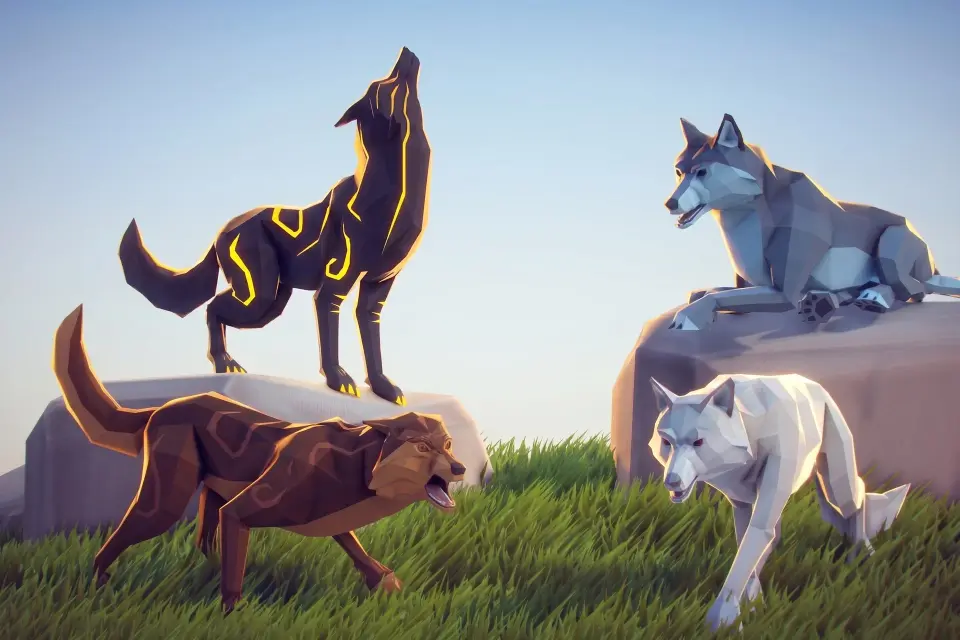
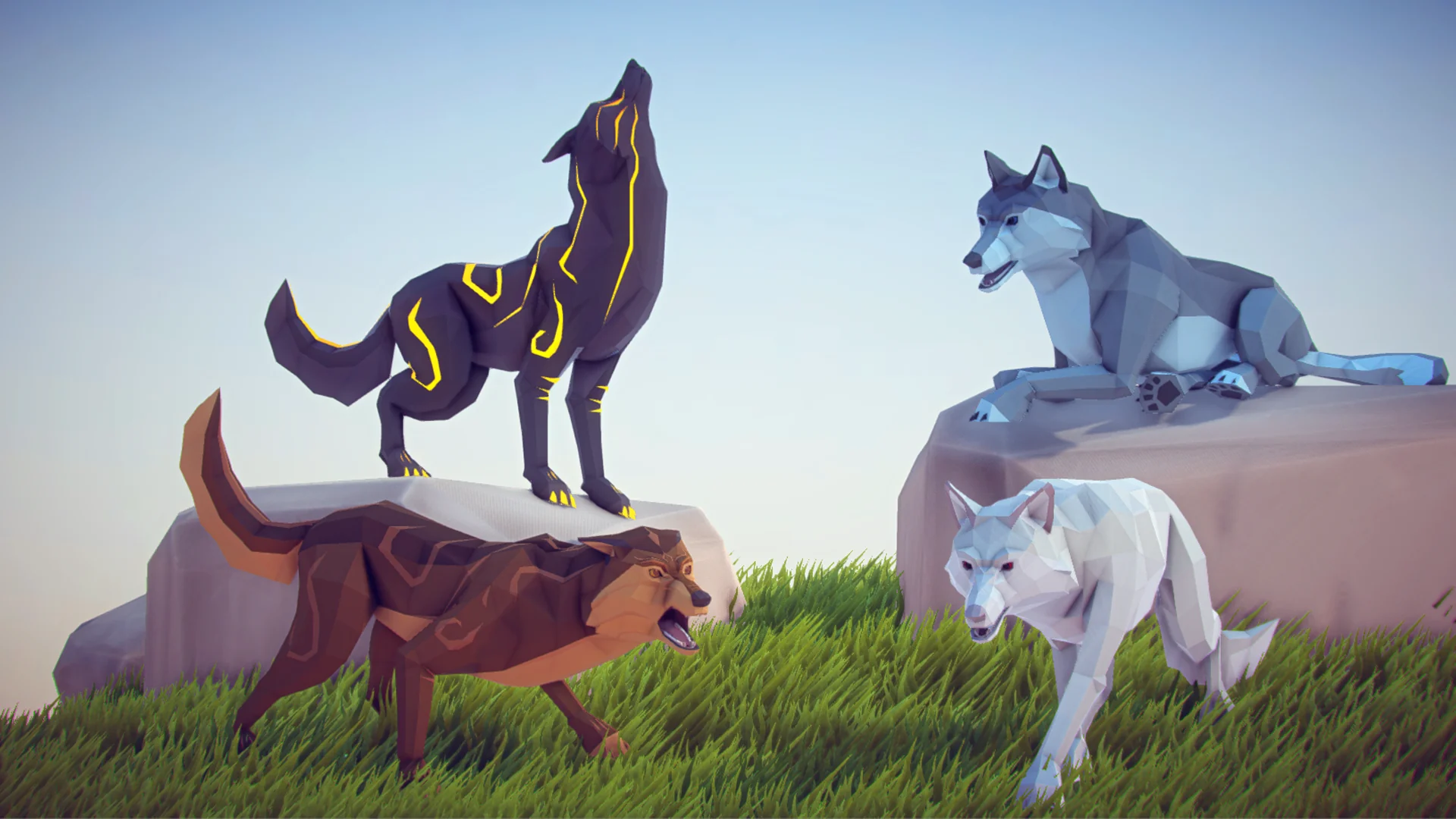
Poly Art Wolf delivers the essential components required to place a stylized predator into a digital scene: 3D character models, dedicated textures, and a foundational set of skeletal animations. The asset adheres strictly to a faceted, low-poly artistic direction, pairing geometric surface forms with stylized texturing. Rather than providing an entire wilderness backdrop, the package isolates the animal itself. Environments must be supplied separately, allowing the creature to be integrated into custom terrain setups, modular nature packs, or pre-existing woodland biomes without carrying redundant foliage or rock meshes into the project hierarchy.
The package focuses on providing the visual and mechanical basis of the animal. By supplying clean geometry and mapped textures, the visual style matches low-poly environments where photorealistic creatures would look out of place. Many stylized scenes suffer from an absence of living fauna, leaving vast low-poly landscapes feeling barren. The inclusion of adult wolf assets alongside cub variations makes it possible to stage diverse animal behaviors, ranging from solitary roaming hunters to den scenes and family groups residing within a woodland environment.
Wolf Locomotion and the Horse Animset Framework
Animation data is a core part of the asset, giving life to the low-poly mesh through a range of key movements. Rather than leaving the mesh static, the package provides motion sets configured for four-legged locomotion and behavioral states. A key technical anchor noted for this setup is its compatibility with the Horse Animset framework, allowing developers familiar with quadruped animation structures to utilize recognized retargeting or motion-handling conventions.
Having standardized movement makes it easier to set up blend spaces and state machines. In typical quadruped setups, transitions between resting, stalking, trotting, running, and reactive states require clean animation data that respects root motion or in-place translation needs. The animations supplied here demonstrate coordinated movement across the spine, head, tail, and legs, ensuring that the stylized geometry deforms cleanly during traversal. Because the asset also tags the Animation Blueprint workflow, developers can route these animation sequences directly into state-driven transition logic to handle speed changes, turning angles, and behavioral triggers smoothly.
Populating Forest Ecosystems with Wolf and Cub Variants
The Poly Art Wolf belongs to the wider Poly Art Forest Set, a series focused on populating low-poly wilderness projects with a broad spectrum of temperate and boreal wildlife. While environments often establish the geographic tone of a game—such as pine forests, snowy tundras, or rocky foothills—wildlife establishes the ecological tone. The wolf acts as an apex predator or ambient woodland occupant within this ecosystem, complementing other fauna associated with the broader forest collection, including bears, foxes, deer, boars, and smaller creatures.
Because the pack encompasses both adult wolf and cub elements, world builders can design narrative-driven points of interest rather than simply scattering identical predator instances across a map. A cave system can house protected cubs while an adult guards the entrance, or an open glade can feature a roving pair tracking prey. The matching low-poly aesthetic across both maturity levels preserves visual consistency, preventing the jarring contrast that occurs when mixing realistic animal scans with stylized, polygonal surroundings.
Technical Setup and Controller Independence for the Wolf
A distinct structural characteristic of this package is the total omission of character controller Blueprints. The package provides the raw digital assets—the 3D models, textures, and motion clips—without locking them into a predefined player or AI control script. This architectural decision places control entirely in the hands of the technical artist or gameplay programmer, who must assemble the final character logic, navigation agents, and decision trees.
In practice, omitting locked runtime controllers offers distinct advantages for custom development pipelines:
AI navigation can be mapped directly to custom pathfinding logic, state trees, or utility AI systems without having to strip out conflicting preset controller code.
Animation sequences can be imported cleanly into custom Animation Blueprints, ensuring the state machine reflects the exact locomotion parameters required by the project.
The skeletal mesh remains unbound to specific game genres, functioning equally well as an ambient background creature, a mount, an enemy mob, or an interactive companion.
Without hardcoded Blueprint dependencies, the technical pipeline avoids bloated master classes and unwanted script collisions. Technical teams can bind their own movement components, configure perception cones for stealth mechanics, and tune collision capsules to suit the specific physical scale of their game environments.
Scene Staging and Practical Production Roles
Implementing the Poly Art Wolf into an active project centers on establishing ambient routines and interactive behaviors. For background dressing, the wolf can be placed along procedural spline paths to simulate patrol routes through dense woods, water sources, or mountain ridges. The included animations provide the natural pacing required for idling, observing, and moving through terrain, ensuring the animal feels anchored to the world rather than statically frozen in a pose.
For interactive gameplay systems, the combination of adult models, cub variations, and animation clips provides the necessary visual coverage for questing and combat encounters. Whether scripted as a territorial pack defending an objective or an ambient creature that flees upon hearing player footsteps, the asset delivers the essential visual and motion data required to bring stylized wildlife into production-ready pipelines.
 Characters
 Characters
 Characters
 Characters