"bb7a96bd710f8a97"{"id":"1001199","slug":"kcisa-korean-traditional-pattern-decal","title":"KCISA - Korean Traditional Pattern Decal","category":"Art \u0026 Traditional","engine":"5.0+","assetVersion":"","engineVersion":"Engine Version: 5.0+","tag":"Art \u0026 Traditional","accent":"blue","visual":"mech","summary":"Digitized cultural heritage patterns from the Korea Cultural Information Service converted into Decal Actors for historical Unreal Engine environments.","platform":"Unreal Engine","publishedAt":"2026-09-19T08:15:12.112Z","updatedAt":"2026-09-19T08:15:12.112Z","sourceNotes":[],"fileContents":[],"compatibility":["Unreal Engine","Engine Version: 5.0+"],"featuredImage":{"alt":"KCISA - Korean Traditional Pattern Decal","src":"/wp-content/uploads/published/2026/09/65d632cd5ed8-a2c4693e-0ba5-43e0-a497-44ac53b5a2ee-1df818a6b1.webp"},"hasDownloadLink":true,"downloads":0,"terms":[{"taxonomy":"category","slug":"art-and-traditional","name":"Art \u0026 Traditional"}],"galleryImages":[{"src":"/wp-content/uploads/published/2026/09/5c7b2cc53865-cb6962b6-d6a9-4f93-9594-28f8d87d86f0-864e2eb207.webp","alt":"KCISA - Korean Traditional Pattern Decal"},{"src":"/wp-content/uploads/published/2026/09/cb29e8117213-ae742db6-0b63-44b5-891e-8f4065b0f4a5-b379624634.webp","alt":"KCISA - Korean Traditional Pattern Decal"},{"src":"/wp-content/uploads/published/2026/09/e7043e76e613-5218013e-b917-4be8-ae53-6f0d9791882b-da2213075b.webp","alt":"KCISA - Korean Traditional Pattern Decal"},{"src":"/wp-content/uploads/published/2026/09/aa2c51ac2719-cda91dec-1f36-4192-84cc-8ab3e8563cd4-21c25ebe29.webp","alt":"KCISA - Korean Traditional Pattern Decal"},{"src":"/wp-content/uploads/published/2026/09/7222f2cf459d-bd062feb-dcdb-4ba8-a906-3a0b814612ed-1496f3c65b.webp","alt":"KCISA - Korean Traditional Pattern Decal"}],"accessPanel":{"kind":"resource","title":"Download this resource","eyebrow":"Free Download","message":"Log in or create a free account to start your download.","fileName":"Content.7z","safetyNote":"Resources are manually reviewed before listing to improve quality and reduce obvious risks.","actionLabel":"Download Free","resourceType":"Resource archive"},"contentHtml":"\u003ch2\u003eGrounding Historical Environments in Authentic Korean Cultural Motifs\u003c/h2\u003e\n\u003cp\u003eHistorical virtual productions and period-accurate environment design depend heavily on surface decoration that reflects authentic cultural identity. Generic geometric shapes or improvised motifs can easily compromise the believability of an Asian period setting. When staging Korean architecture, temples, royal residences, or rural pavilions, decorative surfaces require specific cultural designs that carry actual historical precedent. Digitized patterns from actual cultural heritages across Korea provide a direct way to achieve this standard of visual fidelity.\u003c/p\u003e\n\u003cp\u003eThe collection draws from artwork digitized by the Korea Cultural Information Service, which records and catalogues patterns found throughout different regions of Korea. By moving real-world traditional motifs into digital spaces, these designs retain the proportions, stylized symbolism, and artistic heritage preserved in historical buildings and cultural artifacts. Applying these patterns to 3D scenes ensures that visual accents do not merely resemble traditional art but replicate digitized historical records directly.\u003c/p\u003e \u003ch2\u003eDigitized Heritage from the Korea Cultural Information Service as Decal Actors\u003c/h2\u003e\n\u003cp\u003eRather than packaging these cultural patterns purely as static 2D reference images or flat texture sheets, the assets are set up as Decal Actors ready for immediate deployment inside Unreal Engine. This operational structure shifts how environmental artists can approach surface detailing across complex geometry.\u003c/p\u003e\n\u003cp\u003eDecal Actors project textures directly across target meshes within an Unreal Engine scene. Instead of requiring artists to manually open structural meshes, unwrap dedicated UV channels, and bake intricate traditional patterns onto individual diffuse maps, the decals project dynamically over existing geometry. This non-destructive projection allows historical motifs to sit naturally on top of stone foundations, wooden posts, plastered walls, and ornamental trims without altering the underlying 3D models. The flexibility of Decal Actors also enables real-time adjustments to scale, position, and orientation, giving artists control over how closely the ornamentation matches specific historical layout conventions.\u003c/p\u003e \u003ch2\u003eIntegrating Korean Traditional Pattern Assets with Seyeonjeong Pavilion Geometry\u003c/h2\u003e\n\u003cp\u003eOne direct workflow connection for these decals is their compatibility with the KCISA - Bogildo Island Seyeonjeong Pavilion asset. Historical Korean pavilions feature complex woodwork, distinctive structural framing, and deliberate decorative placements across rafters, pillars, and raised floors. Pairing the digitized pattern decals with architectural models such as Seyeonjeong Pavilion provides a unified historical pipeline.\u003c/p\u003e\n\u003cp\u003eUsing Decal Actors alongside specialized pavilion geometry solves common dressing challenges in historical Asian environments:\u003c/p\u003e\n\u003cul\u003e \u003cli\u003ePlacing specific decorative accents on structural pillars and beams without baking unique textures for every wooden post.\u003c/li\u003e \u003cli\u003eApplying stylized heritage patterns across floorboards, stone bases, and boundary walls to break up repetitive tiling textures.\u003c/li\u003e \u003cli\u003eAdjusting cultural patterns dynamically to fit varied structural dimensions across pavilions, gates, and exterior structures.\u003c/li\u003e \u003cli\u003eMaintaining historical authenticity by using motifs digitized directly from verified Korean heritage sources.\u003c/li\u003e\n\u003c/ul\u003e\n\u003cp\u003eThis integration streamlines the process of dressing architectural kits, allowing environment artists to focus on environmental composition and cultural accuracy rather than mesh-level texture adjustments.\u003c/p\u003e \u003ch2\u003eFlexibility and Control in Traditional Production Pipelines\u003c/h2\u003e\n\u003cp\u003eIn large-scale level design, building distinct variations across multiple structures often demands significant texture memory and manual effort. A modular architectural kit can quickly look repetitive if the same surfaces appear across every building in an environment. Because these Korean traditional patterns exist as Decal Actors, they function as modular detailing layers that can be swapped, rotated, or repositioned throughout a scene.\u003c/p\u003e\n\u003cp\u003eAn artist can apply one pattern to a temple entrance, reposition another motif along a decorative courtyard walkway, and project matching cultural emblems onto painted screens or furniture. This approach prevents visual monotony while preserving consistent period styling across the entire level. Because the artwork originates from digitized heritage collections, every variation remains historically anchored, making the collection an effective asset for research visualization, interactive heritage tours, historical game production, and cinematic rendering.\u003c/p\u003e \u003ch2\u003ePractical Value for Period-Specific Environment Artists\u003c/h2\u003e\n\u003cp\u003eEnvironment artists, level designers, and technical visualizers building Korean or broader Asian historical environments gain the most utility from this collection. Developing historically grounded surface designs from scratch typically requires extensive cultural research and vector drafting before assets can even enter Unreal Engine. Having digitized cultural heritage patterns readily packaged as native Decal Actors eliminates that overhead.\u003c/p\u003e\n\u003cp\u003eThe package bridges the gap between historical archival work and real-time engine implementation, providing a dependable, authentic foundation for detailing traditional architectural scenes with genuine cultural integrity.\u003c/p\u003e\n\n\u003ch2\u003eContinue Browsing Similar Packs\u003c/h2\u003e\n\u003cul\u003e\n\u003cli\u003e\u003ca href=\"https://3dcghub.com/advanced-cel-shader-lite/\" title=\"Advanced Cel Shader Lite\"\u003eAdvanced Cel Shader Lite\u003c/a\u003e\u003c/li\u003e\n\u003cli\u003e\u003ca href=\"https://3dcghub.com/body-cam-effects/\" title=\"Body Cam Effects\"\u003eBody Cam Effects\u003c/a\u003e\u003c/li\u003e\n\u003cli\u003e\u003ca href=\"https://3dcghub.com/kcisa-korean-traditional-pattern-effect/\" title=\"KCISA -Korean Traditional Pattern Effect\"\u003eKCISA -Korean Traditional Pattern Effect\u003c/a\u003e\u003c/li\u003e\n\u003cli\u003e\u003ca href=\"https://3dcghub.com/cartoon-cel-shader/\" title=\"Cartoon Cel Shader\"\u003eCartoon Cel Shader\u003c/a\u003e\u003c/li\u003e\n\u003cli\u003e\u003ca href=\"https://3dcghub.com/postfx-globalscan/\" title=\"PostFX GlobalScan\"\u003ePostFX GlobalScan\u003c/a\u003e\u003c/li\u003e\n\u003c/ul\u003e","contentTextLength":5549,"navigation":{"current":18,"total":3159,"previous":{"id":"1001200","slug":"kcisa-korean-traditional-pattern-normal","title":"KCISA -Korean Traditional Pattern Normal","category":"Art \u0026 Traditional","platform":"Unreal Engine","updatedAt":"2026-09-19T08:16:43.179Z"},"next":{"id":"1001198","slug":"advanced-cel-shader-lite","title":"Advanced Cel Shader Lite","category":"Art \u0026 Traditional","platform":"Unreal Engine","updatedAt":"2026-09-19T08:13:24.211Z"}},"relatedResources":[{"id":"1001204","slug":"kcisa-korean-traditional-smart-materials-vol-4","title":"KCISA -Korean Traditional Smart Materials Vol.4","category":"Art \u0026 Traditional","engine":"5.0+","assetVersion":"","engineVersion":"Engine Version: 5.0+","tag":"Art \u0026 Traditional","accent":"blue","visual":"luts","summary":"Explore KCISA -Korean Traditional Smart Materials Vol.4, featuring traditional Korean architectural and landscape materials like stone, wood, and brick.","platform":"Unreal Engine","publishedAt":"2026-09-19T08:22:21.629Z","updatedAt":"2026-09-19T08:22:21.629Z","sourceNotes":[],"fileContents":[],"compatibility":["Unreal Engine","Engine Version: 5.0+"],"featuredImage":{"alt":"KCISA -Korean Traditional Smart Materials Vol.4","src":"/wp-content/uploads/published/2026/09/fd8800c89146-2ccabbb3-8c43-41a7-a712-5039b9416d55-e69509d935.webp"},"hasDownloadLink":true,"downloads":0},{"id":"1001203","slug":"kcisa-korean-traditional-smart-materials-vol-3","title":"KCISA -Korean Traditional Smart Materials Vol.3","category":"Art \u0026 Traditional","engine":"5.0+","assetVersion":"","engineVersion":"Engine Version: 5.0+","tag":"Art \u0026 Traditional","accent":"blue","visual":"luts","summary":"Examine KCISA -Korean Traditional Smart Materials Vol.3, delivering authentic Korean textures across bricks, stones, grass, wood, and metals.","platform":"Unreal Engine","publishedAt":"2026-09-19T08:20:55.391Z","updatedAt":"2026-09-19T08:20:55.391Z","sourceNotes":[],"fileContents":[],"compatibility":["Unreal Engine","Engine Version: 5.0+"],"featuredImage":{"alt":"KCISA -Korean Traditional Smart Materials Vol.3","src":"/wp-content/uploads/published/2026/09/7837ce3eb952-30098e03-3b36-4ada-b259-daedd5b4869e-4e4872a13a.webp"},"hasDownloadLink":true,"downloads":0},{"id":"1001202","slug":"kcisa-korean-traditional-smart-materials-vol-2","title":"KCISA -Korean Traditional Smart Materials Vol.2","category":"Art \u0026 Traditional","engine":"5.0+","assetVersion":"","engineVersion":"Engine Version: 5.0+","tag":"Art \u0026 Traditional","accent":"blue","visual":"luts","summary":"Explore KCISA -Korean Traditional Smart Materials Vol.2, featuring traditional bricks, stones, wood, grass, and metals for Korean historical settings.","platform":"Unreal Engine","publishedAt":"2026-09-19T08:19:34.190Z","updatedAt":"2026-09-19T08:19:34.190Z","sourceNotes":[],"fileContents":[],"compatibility":["Unreal Engine","Engine Version: 5.0+"],"featuredImage":{"alt":"KCISA -Korean Traditional Smart Materials Vol.2","src":"/wp-content/uploads/published/2026/09/2c95566da559-303bf72f-bdf6-4425-b9e1-4102c775e7fd-75f405a23b.webp"},"hasDownloadLink":true,"downloads":0}]}
Art & Traditional
KCISA - Korean Traditional Pattern Decal
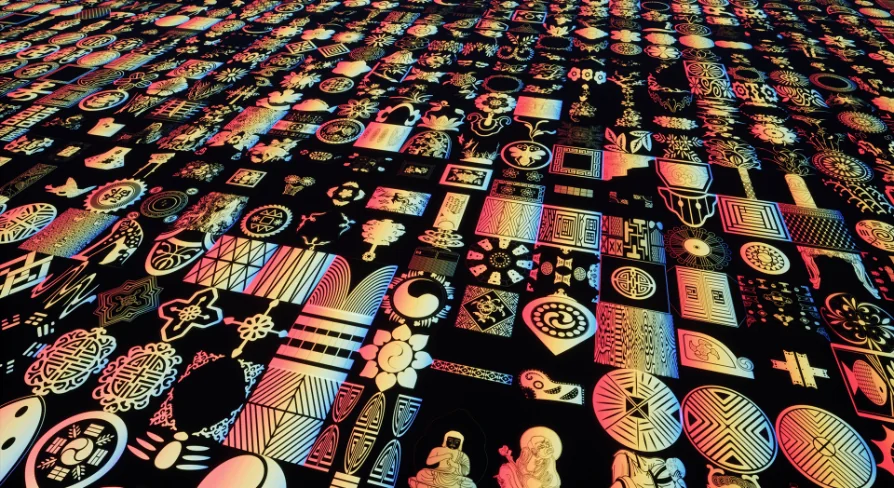
Digitized cultural heritage patterns from the Korea Cultural Information Service converted into Decal Actors for historical Unreal Engine environments.
Grounding Historical Environments in Authentic Korean Cultural Motifs
Historical virtual productions and period-accurate environment design depend heavily on surface decoration that reflects authentic cultural identity. Generic geometric shapes or improvised motifs can easily compromise the believability of an Asian period setting. When staging Korean architecture, temples, royal residences, or rural pavilions, decorative surfaces require specific cultural designs that carry actual historical precedent. Digitized patterns from actual cultural heritages across Korea provide a direct way to achieve this standard of visual fidelity.
The collection draws from artwork digitized by the Korea Cultural Information Service, which records and catalogues patterns found throughout different regions of Korea. By moving real-world traditional motifs into digital spaces, these designs retain the proportions, stylized symbolism, and artistic heritage preserved in historical buildings and cultural artifacts. Applying these patterns to 3D scenes ensures that visual accents do not merely resemble traditional art but replicate digitized historical records directly.
Digitized Heritage from the Korea Cultural Information Service as Decal Actors
Rather than packaging these cultural patterns purely as static 2D reference images or flat texture sheets, the assets are set up as Decal Actors ready for immediate deployment inside Unreal Engine. This operational structure shifts how environmental artists can approach surface detailing across complex geometry.
Decal Actors project textures directly across target meshes within an Unreal Engine scene. Instead of requiring artists to manually open structural meshes, unwrap dedicated UV channels, and bake intricate traditional patterns onto individual diffuse maps, the decals project dynamically over existing geometry. This non-destructive projection allows historical motifs to sit naturally on top of stone foundations, wooden posts, plastered walls, and ornamental trims without altering the underlying 3D models. The flexibility of Decal Actors also enables real-time adjustments to scale, position, and orientation, giving artists control over how closely the ornamentation matches specific historical layout conventions.
Integrating Korean Traditional Pattern Assets with Seyeonjeong Pavilion Geometry
One direct workflow connection for these decals is their compatibility with the KCISA - Bogildo Island Seyeonjeong Pavilion asset. Historical Korean pavilions feature complex woodwork, distinctive structural framing, and deliberate decorative placements across rafters, pillars, and raised floors. Pairing the digitized pattern decals with architectural models such as Seyeonjeong Pavilion provides a unified historical pipeline.
Using Decal Actors alongside specialized pavilion geometry solves common dressing challenges in historical Asian environments:
Placing specific decorative accents on structural pillars and beams without baking unique textures for every wooden post.
Applying stylized heritage patterns across floorboards, stone bases, and boundary walls to break up repetitive tiling textures.
Adjusting cultural patterns dynamically to fit varied structural dimensions across pavilions, gates, and exterior structures.
Maintaining historical authenticity by using motifs digitized directly from verified Korean heritage sources.
This integration streamlines the process of dressing architectural kits, allowing environment artists to focus on environmental composition and cultural accuracy rather than mesh-level texture adjustments.
Flexibility and Control in Traditional Production Pipelines
In large-scale level design, building distinct variations across multiple structures often demands significant texture memory and manual effort. A modular architectural kit can quickly look repetitive if the same surfaces appear across every building in an environment. Because these Korean traditional patterns exist as Decal Actors, they function as modular detailing layers that can be swapped, rotated, or repositioned throughout a scene.
An artist can apply one pattern to a temple entrance, reposition another motif along a decorative courtyard walkway, and project matching cultural emblems onto painted screens or furniture. This approach prevents visual monotony while preserving consistent period styling across the entire level. Because the artwork originates from digitized heritage collections, every variation remains historically anchored, making the collection an effective asset for research visualization, interactive heritage tours, historical game production, and cinematic rendering.
Practical Value for Period-Specific Environment Artists
Environment artists, level designers, and technical visualizers building Korean or broader Asian historical environments gain the most utility from this collection. Developing historically grounded surface designs from scratch typically requires extensive cultural research and vector drafting before assets can even enter Unreal Engine. Having digitized cultural heritage patterns readily packaged as native Decal Actors eliminates that overhead.
The package bridges the gap between historical archival work and real-time engine implementation, providing a dependable, authentic foundation for detailing traditional architectural scenes with genuine cultural integrity.
 Art & Traditional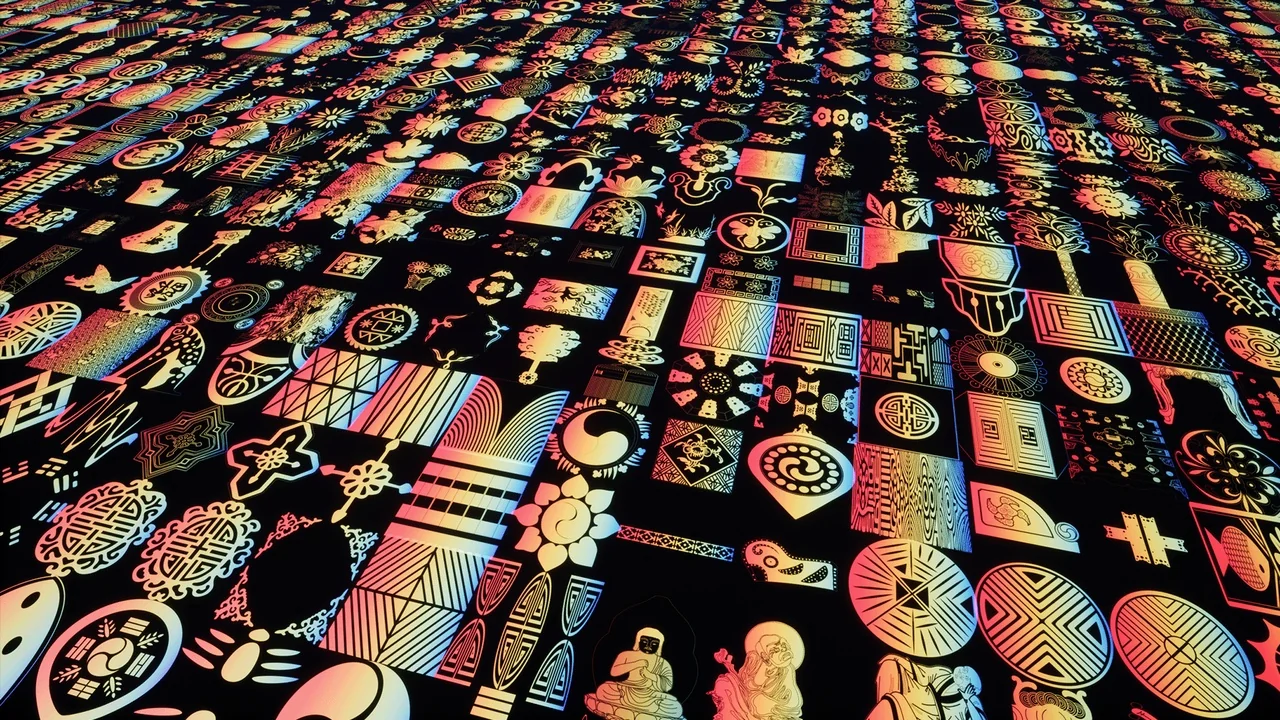
 Art & Traditional
 Art & Traditional
 Art & Traditional