Water interaction for boats, submarines, and any mesh that needs to feel the water
Dynamic Water Physics 2 focuses on scenes where water has to affect the object, not just sit beneath it. It simulates buoyancy and hydrodynamics from mesh data, which makes it suitable for objects of any shape or size, whether they are moving or stationary, above the water or underwater. That makes it a practical fit for boats, ships, submarines, floating props, and other mesh-based objects that need to respond to water in a believable way.
The package is built for Unity 6 and works with URP out of the box. It is also part of NWH Physics World, a collection of compatible vehicle simulation assets, so it sits naturally inside workflows that already involve drivable craft and physics-driven movement.
One important detail is that this is not a water renderer or shader. It is the interaction layer that uses simulation data to drive water effects and object behavior. In a production setup, that keeps the focus on how objects move through or sit on water rather than on drawing the water itself.
Mesh data, forces, and a setup path that stays practical
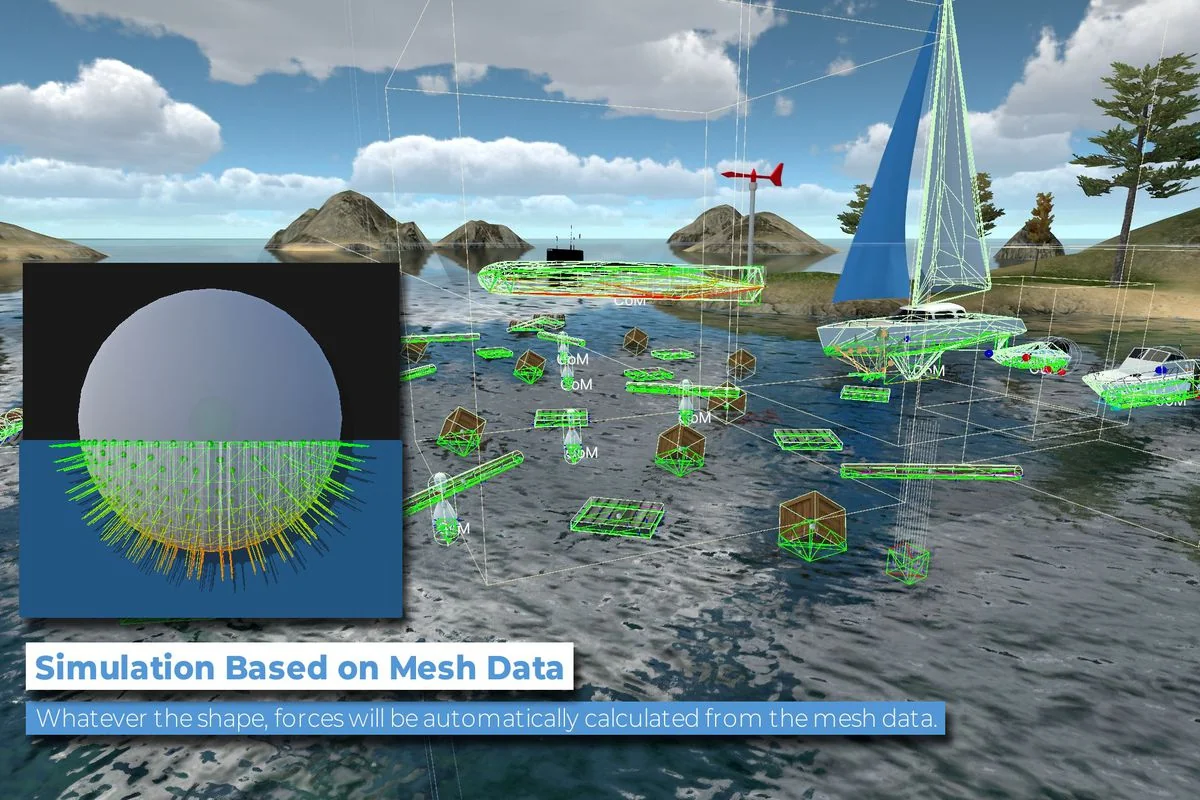
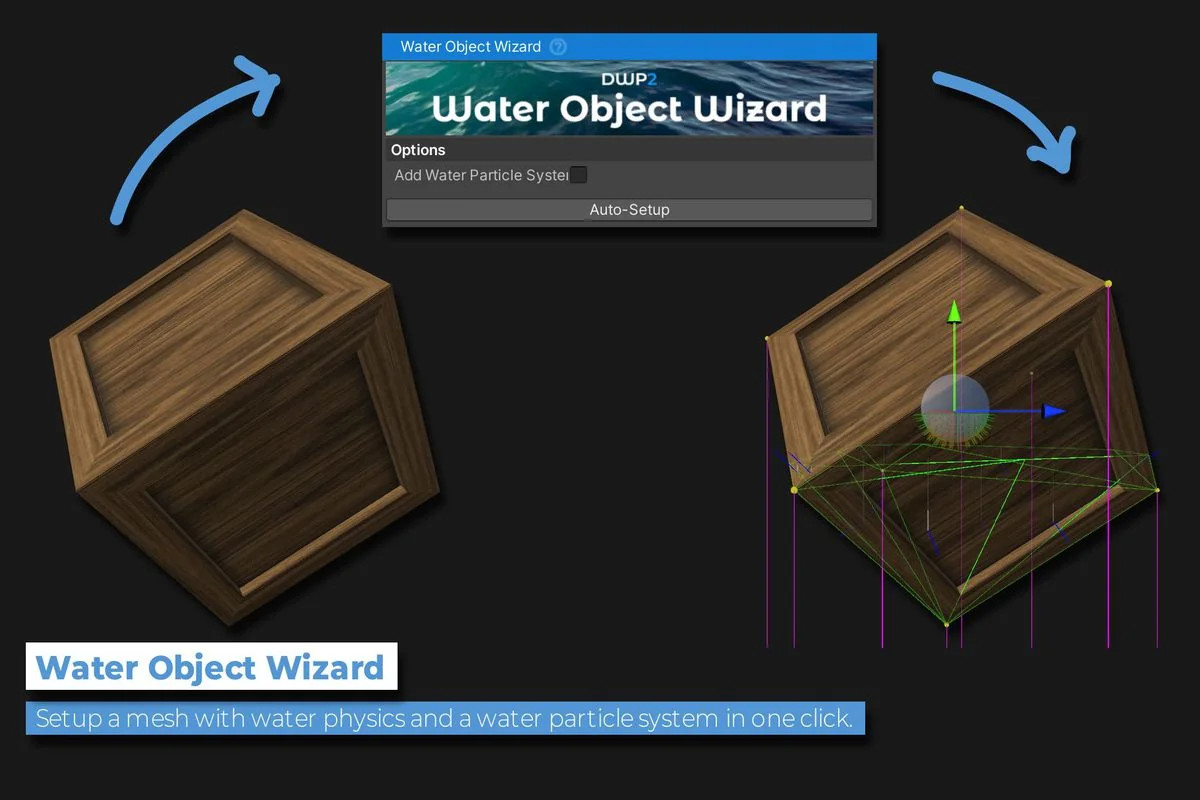
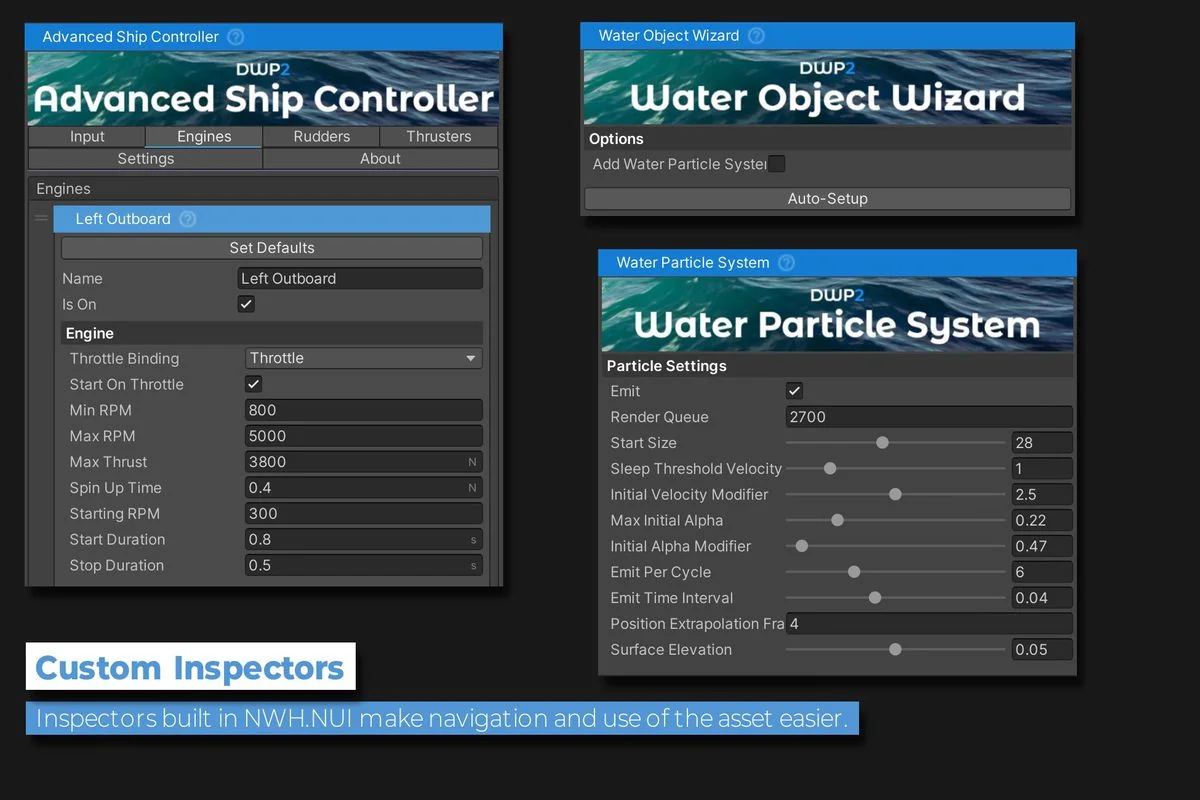
The core simulation works with mesh data, and the asset is meant to handle any object as long as it has a mesh. A simplified simulation mesh is generated internally with an in-built algorithm, which allows high-poly models to be used without affecting performance. The setup is described as fast and easy, with either manual configuration or a one-click wizard.
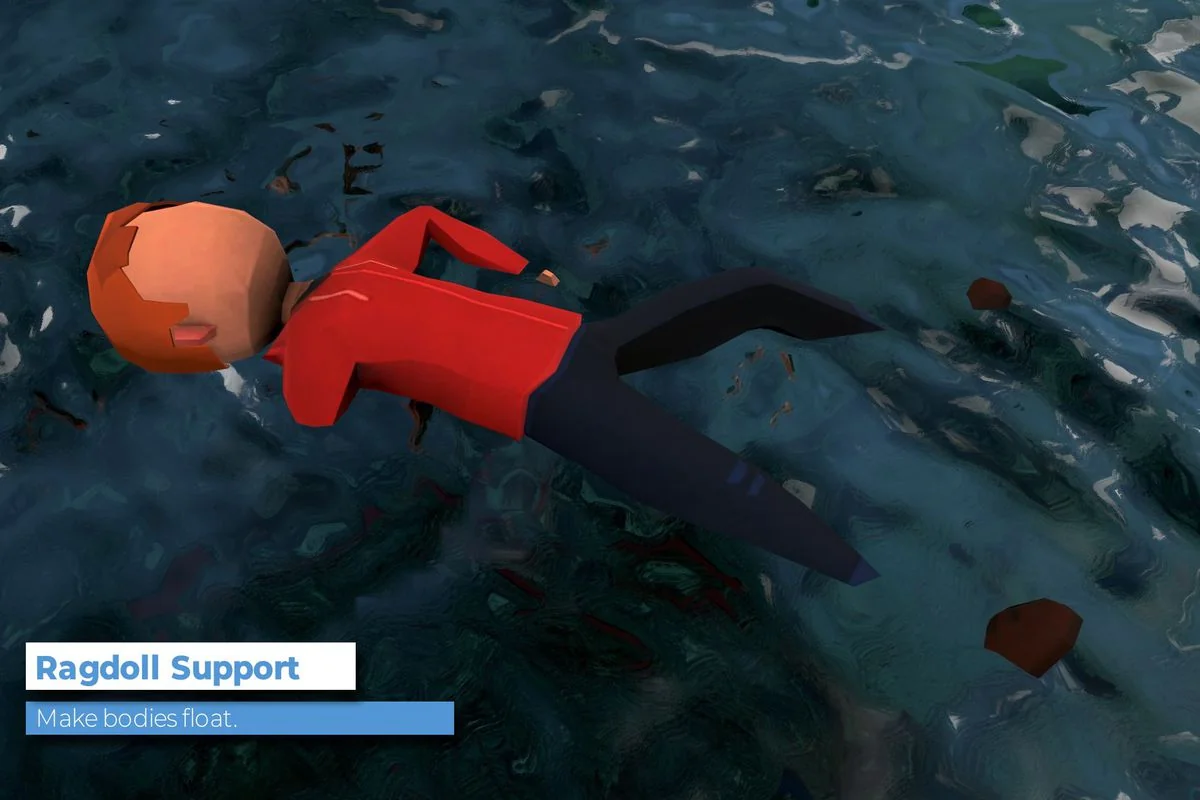
WaterObjects are Rigidbodies and interact with water only through forces. No translation or rotation is applied directly. That approach keeps the interaction tied to physics behavior, which is useful when the object needs to respond naturally rather than being moved by custom positional overrides.
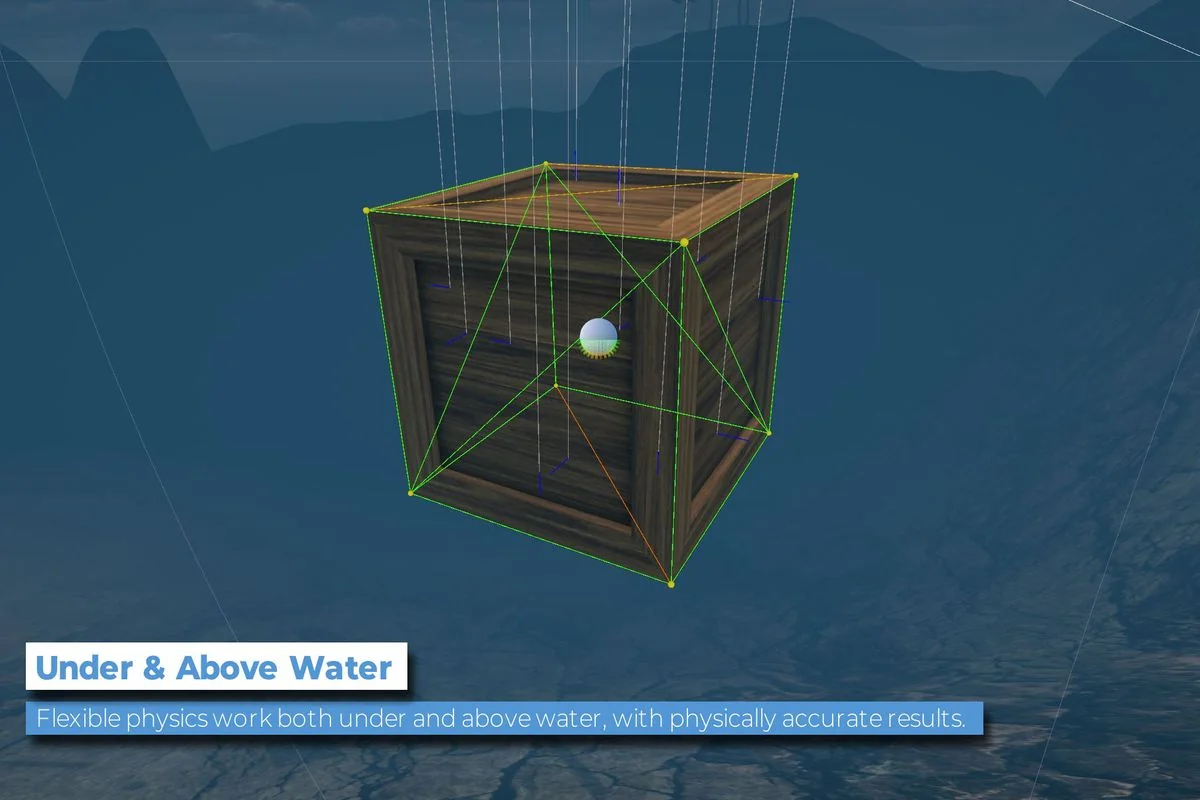
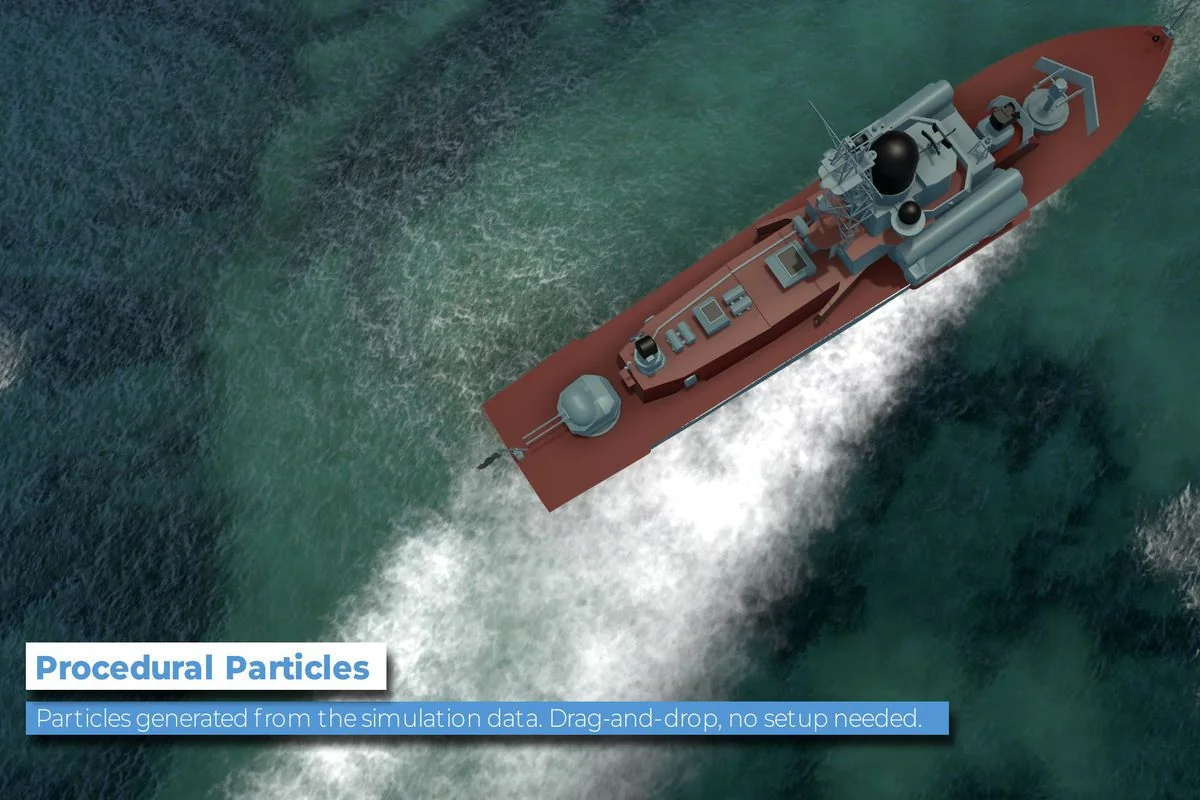
The simulation also supports any positive object scale and works underwater. Water effects are generated automatically from the simulation data and can work with any flat water asset. That makes the system useful in scenes where the water surface is provided by another solution and the gameplay logic still needs accurate buoyancy and hydrodynamic response.
Performance is another clear part of the package identity. In the demo scene, the reported CPU time is around 0.02ms on average per object and about 1.2ms total for 70 objects. Wavy water performance depends on the third-party asset being used. The asset is positioned for both desktop and mobile, so the same interaction layer can be carried into different project targets without changing the core approach.
Ship control, submarine support, and vehicle-style movement
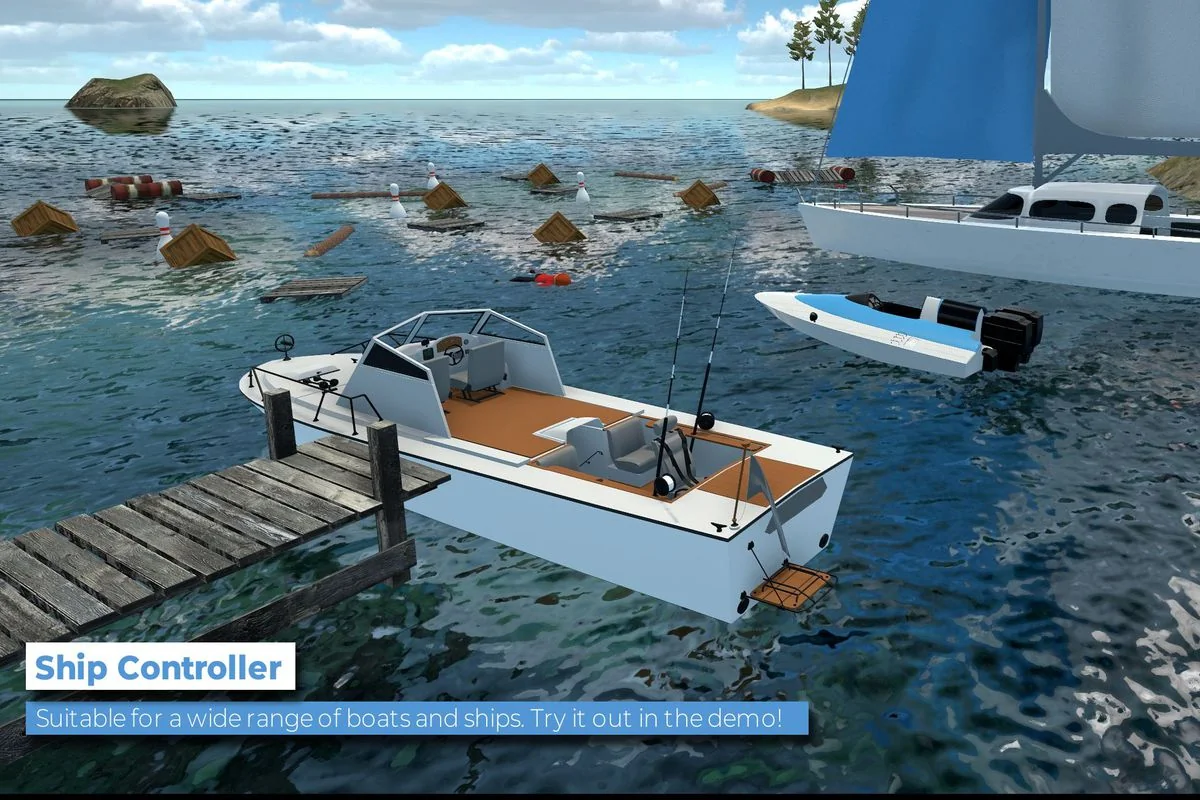
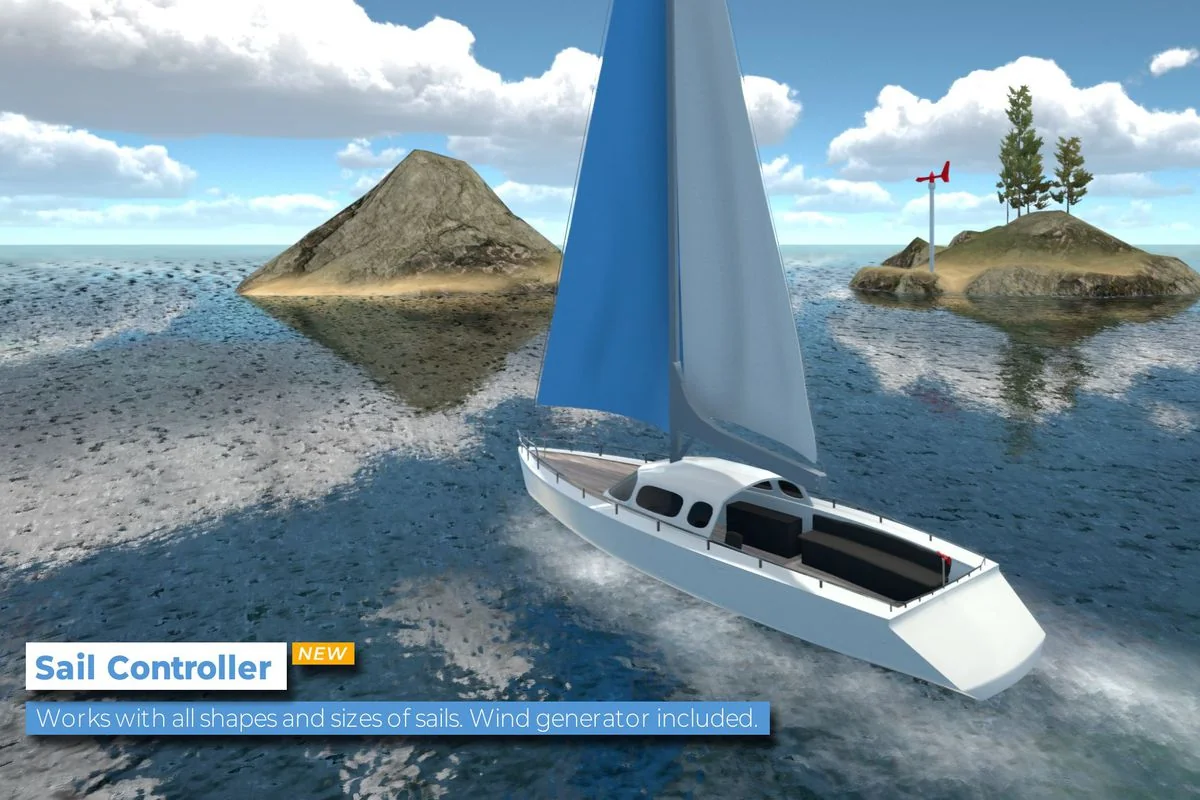
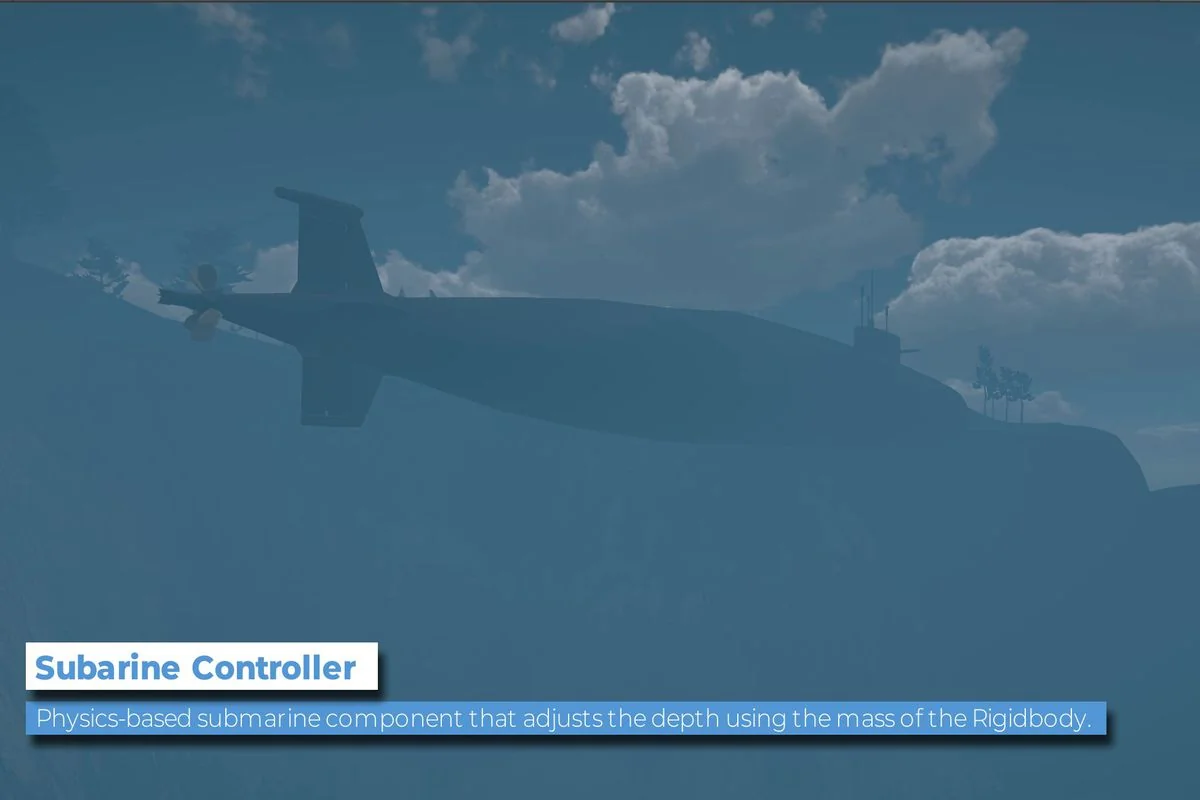
Beyond floating objects, the package includes a ship controller that can be used with WaterObjects to make drivable boats and ships. There is also an additional script for submarines, which extends the workflow into underwater craft rather than stopping at surface-level floating behavior.
The ship controller supports multiple engines with sound, both inboard and outboard, along with bow and stern thrusters and multiple rudders. Those details matter in a vehicle-driven project because they give the craft a more structured control setup without requiring a separate movement system for every type of vessel.
In a real scene-building workflow, that means the asset can serve as the physics layer for water-bound vehicles while other parts of the project handle visuals, level design, and any water surface solution already in use. The simulation is centered on interaction, and the included vehicle tools make that interaction usable in gameplay rather than only in test scenes.
Where it fits with other water systems and project setups
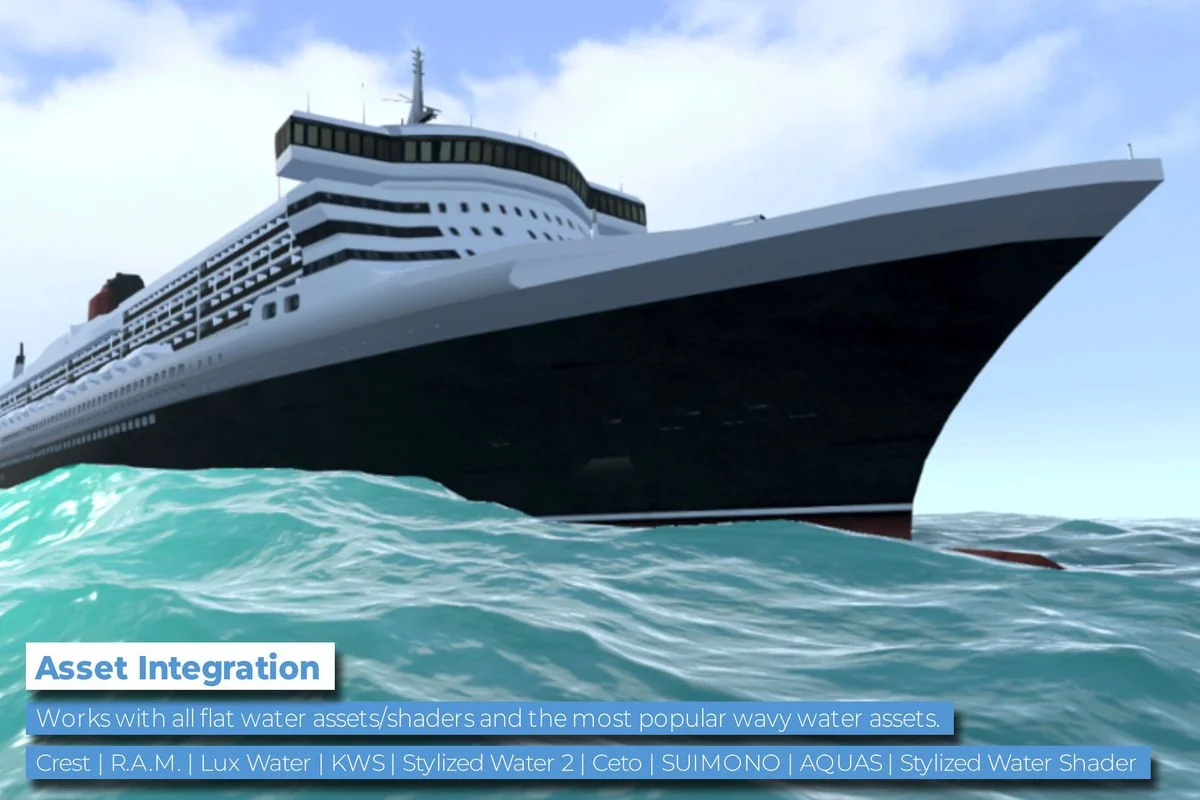
Dynamic Water Physics 2 is compatible with several water assets, including Crest, Unity HDRP Water, Stylized Water 2 & 3, KWS Water System, R.A.M, Lux Water, and all flat water assets such as AQUAS and Stylized Water Shader. That wide compatibility is useful when the water surface already comes from another pipeline or style and the project only needs consistent object interaction on top of it.
Support for multiplayer is included as well, with Mirror and PUN2 named directly. The package also includes C# source code, a manual, and everything seen in the demo. Demos are available for Windows, MacOS, and Android, which gives a clear sense of how the system has been exercised across platforms.
Technical compatibility is listed for Unity 6000.0.40, with render pipeline support shown for HDRP, URP, and Built-in on 6000.0.40f1. The package size is 310.3 MB and the asset count is 604, which reflects a fairly substantial setup rather than a minimal add-on.
For a project that needs objects to float, submerge, or push through water with physics-driven behavior, Dynamic Water Physics 2 fits as the interaction layer between your water surface and your gameplay objects. It is a better match when the production need is movement, buoyancy, and hydrodynamics rather than a new shader or water mesh.
A practical fit for production
If the scene already has water and the next step is making meshes react to it, this asset gives you the simulation side of that job. If the project also needs boats, ships, or submarines to become drivable inside the same system, the included controller tools make that path more direct.
Visual Breakdown
Protected download
Access this resource
All resources are 100% manually reviewed to eliminate all risks.