"7ad89cffa44984cf"{"id":"1002513","slug":"combat-dog","title":"Combat Dog","category":"Characters \u0026 Creatures","engine":"4.26+,5.0+","assetVersion":"","engineVersion":"Engine Version: 4.26+,5.0+","tag":"Characters","accent":"blue","visual":"character","summary":"A close look at Combat Dog, featuring Doberman monster styling, animation blueprint architecture, and script integration for dark game worlds.","platform":"Unreal Engine","indexPolicy":"index","publishedAt":"2026-11-13T08:49:52.464Z","updatedAt":"2026-11-13T08:49:52.464Z","sourceNotes":[],"fileContents":[],"compatibility":["Unreal Engine","Engine Version: 4.26+,5.0+"],"featuredImage":{"alt":"Combat Dog","src":"/wp-content/uploads/published/2026/11/7376ff80d991-1fa579a2-4256-4e5c-b80a-2929b78fa760-da922be745.webp"},"hasDownloadLink":true,"downloads":0,"terms":[{"taxonomy":"category","slug":"characters-and-creatures","name":"Characters \u0026 Creatures"}],"galleryImages":[{"src":"/wp-content/uploads/published/2026/11/d8a42beb0746-ea94248d-cec7-4069-b2bb-3527fe01d3b5-b2e6c3823b.webp","alt":"Combat Dog"},{"src":"/wp-content/uploads/published/2026/11/3236ce15a257-953ad071-fc70-4f08-b102-20c44501c5d5-14c9edf081.webp","alt":"Combat Dog"},{"src":"/wp-content/uploads/published/2026/11/c243e7903175-84b2c341-d395-4e1a-a6df-64a9e38941f8-e166f4dbfe.webp","alt":"Combat Dog"},{"src":"/wp-content/uploads/published/2026/11/033ae71939ff-bc4484f4-f38c-461b-97fa-79ec6b749d4c-abb1fbeca4.webp","alt":"Combat Dog"},{"src":"/wp-content/uploads/published/2026/11/ac34b8c76e89-6033dc14-ba8f-4518-a146-8784f05c1496-9aeac046c9.webp","alt":"Combat Dog"},{"src":"/wp-content/uploads/published/2026/11/cb15a73a5f88-96c6e8bf-f340-4a01-8ab0-ecfa4590d959-49ac5901c1.webp","alt":"Combat Dog"},{"src":"/wp-content/uploads/published/2026/11/74262f8d0763-9c8b3d48-8f5d-4b6f-adf9-0fcafe3f23df-df5f2e56fe.webp","alt":"Combat Dog"},{"src":"/wp-content/uploads/published/2026/11/1853876a3ca6-0dcd4625-8de5-41e4-ba5d-05fc40e0e5d9-b3604c6b47.webp","alt":"Combat Dog"}],"accessPanel":{"kind":"resource","title":"Get this resource","eyebrow":"Free resource","message":"Download this resource in your browser.","fileName":"Content.7z","safetyNote":"Resources are manually reviewed before listing to improve quality and reduce obvious risks.","actionLabel":"Get this resource","resourceType":"Resource archive","versions":[]},"contentHtml":"\u003ch2\u003eThe Doberman Profile and Monster Anatomy of Combat Dog\u003c/h2\u003e\n\u003cp\u003eRealistic canine anatomy serves as the structural baseline for Combat Dog, specifically referencing the alert posture, lean build, and distinctive silhouette of a Doberman. While rooted in a recognized breed, the visual language expands into creature design, allowing the model to function equally well as an authentic guard hound or a mutated monster. In gaming environments, quadrupeds shaped by realistic proportions communicate agility and genuine physical threat far more convincingly than exaggerated or disproportionate beasts. The athletic physique of a Doberman naturally lends itself to fast-paced encounters, characterized by sudden leaps, swift repositioning, and razor-sharp turns.\u003c/p\u003e\n\u003cp\u003ePositioning a familiar domestic form as an enemy creates an immediate psychological impact. Players understand the physical capabilities of a large, muscular dog, recognizing its bite radius and sprinting power instinctively. By integrating monster-oriented qualities into this recognizable framework, Combat Dog bridges the gap between grounded animal behavior and unnatural aggression. Whether deployed as a feral scavenger in the ruins of civilization or an altered fiend haunting a forgotten tomb, the underlying anatomy keeps movements believable while ratcheting up tension.\u003c/p\u003e \u003ch2\u003eCombat Dog Animation Blueprint and Script Structure\u003c/h2\u003e\n\u003cp\u003eMotion handling relies on a dedicated Animation Blueprint alongside gameplay scripts designed to manage non-player character states. In runtime execution, an Animation Blueprint organizes complex quadruped locomotion, interpolating smoothly between idling, patrolling, tracking, and high-velocity sprints. Because four-legged movement demands careful phase matching between front and rear limbs to avoid foot sliding, having a structured animation graph ensures that turns, sudden stops, and rapid directional shifts maintain physical plausibility on uneven terrain.\u003c/p\u003e\n\u003cp\u003eThe companion script handles the decision-making and triggering pipeline that informs the Animation Blueprint. When an NPC encounters a target, the script drives transitions from passive sniffing or stalking poses directly into combat stances. Attack sequences—such as running lunges, snap bites, and aggressive intimidation displays—require synchronized logic so the character can deliver damage, check collision radiuses, and recover smoothly into a defensive or circling posture. Having these functional animation systems wired directly into scripted behaviors minimizes the setup needed to get an aggressive quadruped operational inside a level.\u003c/p\u003e \u003ch2\u003eDeploying Combat Dog in Horror, Fantasy, and Post-Apocalyptic Worlds\u003c/h2\u003e\n\u003cp\u003eGame genres that rely heavily on survival themes and hostile environments demand threats that challenge player spacing. In post-apocalyptic settings, Combat Dog naturally embodies the role of a feral survivor, trained military hound left behind in the ruins, or savage pack animal defending resource caches. The sleek, short-coated Doberman look reflects an animal hardened by sparse environments, making it an intuitive encounter around abandoned industrial facilities, border checkpoints, and overgrown city streets.\u003c/p\u003e\n\u003cp\u003eHorror environments leverage the model quite differently. In dark corridors or fog-draped outdoor regions, the low profile and swift pace of a predatory dog force players to lower their defensive sights. A monster hound that darts through shadows, leaps from blind corners, and closes distance faster than a humanoid zombie shifts the gameplay pace from methodical clearing to frantic evasion. The combination of monster elements with realistic canine behaviors amplifies fear by subverting expectations of an ordinary animal encounter.\u003c/p\u003e\n\u003cp\u003eFantasy settings open up further avenues, framing Combat Dog as a war beast, dark familiar, or underworld sentinel. When paired with arcane visual effects or dungeon environments, the creature serves as an ideal vanguard unit deployed by enemy factions. It can harass archers, disrupt spellcasting, and flank fortified positions while heavier humanoid combatants engage the front line. Because the asset accommodates varied aesthetic tones, it slips naturally into grimy dark fantasy worlds just as easily as stark science fiction wastelands.\u003c/p\u003e \u003ch2\u003eNPC Behavior States and Canine Combat Motion\u003c/h2\u003e\n\u003cp\u003eTranslating canine combat into active gameplay requires animation sequences that reflect real predatory tactics. Unlike two-legged adversaries who engage with weapons or forward swings, a dog fights by circling, darting inward, gripping, and retreating to avoid counterstrikes. The animations included with Combat Dog reflect these dynamics, offering visual clarity during combat encounters so players can read incoming strikes and react with parries, dodges, or ranged counters.\u003c/p\u003e\n\u003cp\u003eIdle loops, alert stances, and transitions provide the quiet moments necessary for stealth scenarios. When an NPC dog detects a sound, subtle head tilts, body stiffening, and cautious stalking motions signal its investigative state to the player. Once hostility triggers, the shift to aggressive barking, lunging, and high-speed pursuit creates a sharp dynamic contrast. If the creature absorbs damage, dedicated hit reactions and knockdown recoveries keep it from feeling like an uninterruptible damage sponge, grounding the battle in physical cause and effect.\u003c/p\u003e \u003ch2\u003eQuadruped Dynamics and Stylized Horse Compatibility\u003c/h2\u003e\n\u003cp\u003eManaging quadrupeds within an interactive environment presents unique challenges compared to standard bipedal characters. Quadruped rigs must handle dual pivots, spinal flexing, and unique root motion pathways. Compatibility with Stylized Horse situates Combat Dog within a shared ecosystem of four-legged interactive actors, opening possibilities for mounted combat scenarios, animal companion mechanics, or multi-creature encounters where different quadrupeds share navigational spaces and mechanical contexts.\u003c/p\u003e\n\u003cp\u003eWhether cast as an untamed predator stalking player mounts or an escort animal operating alongside larger domestic creatures, the package provides a focused toolset for developers needing responsive, aggressive, and visually menacing canine encounters. With its blend of realistic Doberman styling, monster versatility, complete animations, and foundational script architecture, Combat Dog delivers an immediate, functional adversary ready for hostile game worlds.\u003c/p\u003e\n\n\u003ch2\u003eContinue Browsing Similar Packs\u003c/h2\u003e\n\u003cul\u003e\n\u003cli\u003e\u003ca href=\"https://3dcghub.com/combat-systems-constructor/\" rel=\"noopener noreferrer\"\u003eCombat Systems - Constructor\u003c/a\u003e\u003c/li\u003e\n\u003cli\u003e\u003ca href=\"https://3dcghub.com/assistant-dog/\" rel=\"noopener noreferrer\"\u003eAssistant Dog\u003c/a\u003e\u003c/li\u003e\n\u003cli\u003e\u003ca href=\"https://3dcghub.com/alien-dog/\" rel=\"noopener noreferrer\"\u003eAlien dog\u003c/a\u003e\u003c/li\u003e\n\u003cli\u003e\u003ca href=\"https://3dcghub.com/slice-mesh-shoot-matrix-slow-bullet/\" rel=\"noopener noreferrer\"\u003eSlice Mesh Shoot Matrix Slow Bullet\u003c/a\u003e\u003c/li\u003e\n\u003cli\u003e\u003ca href=\"https://3dcghub.com/female-heroine-01/\" rel=\"noopener noreferrer\"\u003eFemale Heroine 01\u003c/a\u003e\u003c/li\u003e\n\u003c/ul\u003e","contentTextLength":6524,"navigation":{"current":64,"total":4499,"previous":{"id":"1002514","slug":"creature-insect","title":"Creature Insect","category":"Characters \u0026 Creatures","platform":"Unreal Engine","updatedAt":"2026-11-13T08:53:58.041Z"},"next":{"id":"1002512","slug":"character-werewolf","title":"Character Werewolf","category":"Characters \u0026 Creatures","platform":"Unreal Engine","updatedAt":"2026-11-13T08:48:42.310Z"}},"relatedResources":[{"id":"1002562","slug":"ripper-dog","title":"Ripper Dog","category":"Characters \u0026 Creatures","engine":"4.26+,5.0+","assetVersion":"","engineVersion":"Engine Version: 4.26+,5.0+","tag":"Characters","accent":"blue","visual":"character","summary":"Explore the Ripper Dog creature asset, covering its lowpoly geometry, 56-animation set, Animation Blueprint, script setup, and multi-genre utility.","platform":"Unreal Engine","indexPolicy":"index","publishedAt":"2026-11-13T11:00:12.935Z","updatedAt":"2026-11-13T11:00:12.935Z","sourceNotes":[],"fileContents":[],"compatibility":["Unreal Engine","Engine Version: 4.26+,5.0+"],"featuredImage":{"alt":"Ripper Dog","src":"/wp-content/uploads/published/2026/11/f7198e610d0a-a23521b8-3f56-4041-ba52-ec7afff8799a-a527080c85.webp"},"hasDownloadLink":true,"downloads":0},{"id":"1002538","slug":"infernal-dog","title":"Infernal Dog","category":"Characters \u0026 Creatures","engine":"4.18+,5.0+","assetVersion":"","engineVersion":"Engine Version: 4.18+,5.0+","tag":"Characters","accent":"blue","visual":"character","summary":"Implement the Infernal Dog character with its realistic lowpoly aesthetic, custom script, Animation Blueprint, and 56 creature animations for horror RPGs.","platform":"Unreal Engine","indexPolicy":"index","publishedAt":"2026-11-13T09:41:37.586Z","updatedAt":"2026-11-13T09:41:37.586Z","sourceNotes":[],"fileContents":[],"compatibility":["Unreal Engine","Engine Version: 4.18+,5.0+"],"featuredImage":{"alt":"Infernal Dog","src":"/wp-content/uploads/published/2026/11/c2e72d6b26cc-164adf26-1c10-4cd8-8c75-679c8508a9af-82a9b03fdb.webp"},"hasDownloadLink":true,"downloads":0},{"id":"1001871","slug":"combat-systems-constructor","title":"Combat Systems - Constructor","category":"Characters \u0026 Creatures","engine":"4.26+,5.0+","assetVersion":"","engineVersion":"Engine Version: 4.26+,5.0+","tag":"Characters","accent":"blue","visual":"character","summary":"Explore Combat Systems - Constructor, featuring modular animated chassis, varied weapon systems, and Blueprint scripts for assembling custom combat robots.","platform":"Unreal Engine","indexPolicy":"index","publishedAt":"2026-10-22T11:13:58.665Z","updatedAt":"2026-10-22T11:13:58.665Z","sourceNotes":[],"fileContents":[],"compatibility":["Unreal Engine","Engine Version: 4.26+,5.0+"],"featuredImage":{"alt":"Combat Systems - Constructor","src":"/wp-content/uploads/published/2026/10/fb18d32f019d-7fd1be55-7392-4109-8a09-027a83a7eca7-edfcb660c7.webp"},"hasDownloadLink":true,"downloads":1}]}
Characters
Combat Dog
A close look at Combat Dog, featuring Doberman monster styling, animation blueprint architecture, and script integration for dark game worlds.
The Doberman Profile and Monster Anatomy of Combat Dog
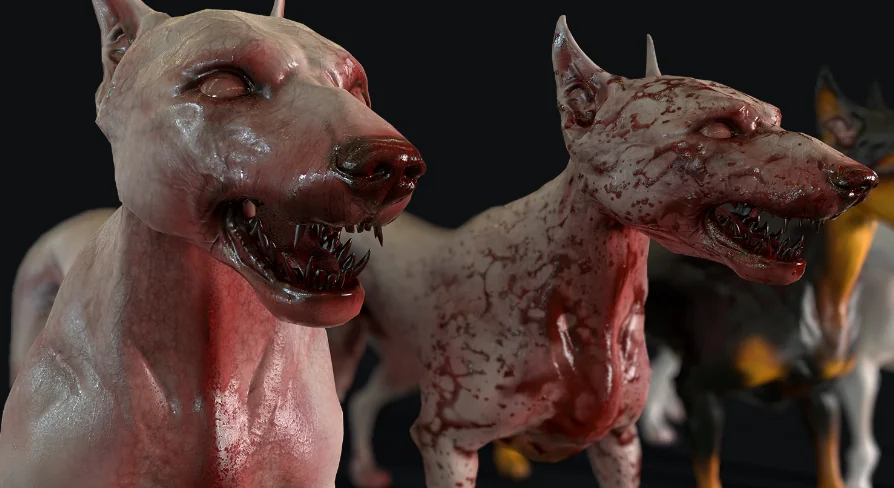
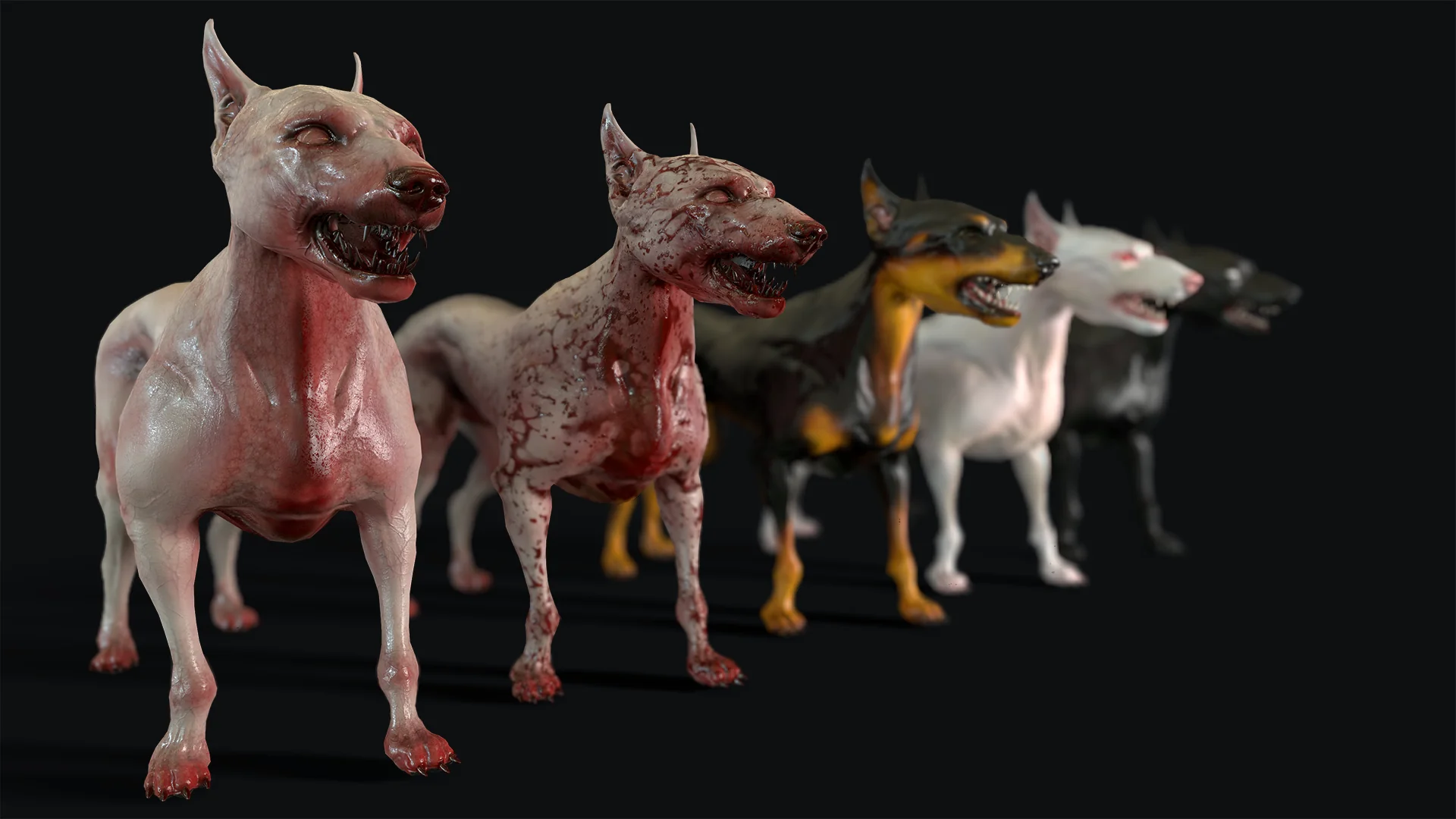
Realistic canine anatomy serves as the structural baseline for Combat Dog, specifically referencing the alert posture, lean build, and distinctive silhouette of a Doberman. While rooted in a recognized breed, the visual language expands into creature design, allowing the model to function equally well as an authentic guard hound or a mutated monster. In gaming environments, quadrupeds shaped by realistic proportions communicate agility and genuine physical threat far more convincingly than exaggerated or disproportionate beasts. The athletic physique of a Doberman naturally lends itself to fast-paced encounters, characterized by sudden leaps, swift repositioning, and razor-sharp turns.
Positioning a familiar domestic form as an enemy creates an immediate psychological impact. Players understand the physical capabilities of a large, muscular dog, recognizing its bite radius and sprinting power instinctively. By integrating monster-oriented qualities into this recognizable framework, Combat Dog bridges the gap between grounded animal behavior and unnatural aggression. Whether deployed as a feral scavenger in the ruins of civilization or an altered fiend haunting a forgotten tomb, the underlying anatomy keeps movements believable while ratcheting up tension.
Combat Dog Animation Blueprint and Script Structure
Motion handling relies on a dedicated Animation Blueprint alongside gameplay scripts designed to manage non-player character states. In runtime execution, an Animation Blueprint organizes complex quadruped locomotion, interpolating smoothly between idling, patrolling, tracking, and high-velocity sprints. Because four-legged movement demands careful phase matching between front and rear limbs to avoid foot sliding, having a structured animation graph ensures that turns, sudden stops, and rapid directional shifts maintain physical plausibility on uneven terrain.
The companion script handles the decision-making and triggering pipeline that informs the Animation Blueprint. When an NPC encounters a target, the script drives transitions from passive sniffing or stalking poses directly into combat stances. Attack sequences—such as running lunges, snap bites, and aggressive intimidation displays—require synchronized logic so the character can deliver damage, check collision radiuses, and recover smoothly into a defensive or circling posture. Having these functional animation systems wired directly into scripted behaviors minimizes the setup needed to get an aggressive quadruped operational inside a level.
Deploying Combat Dog in Horror, Fantasy, and Post-Apocalyptic Worlds
Game genres that rely heavily on survival themes and hostile environments demand threats that challenge player spacing. In post-apocalyptic settings, Combat Dog naturally embodies the role of a feral survivor, trained military hound left behind in the ruins, or savage pack animal defending resource caches. The sleek, short-coated Doberman look reflects an animal hardened by sparse environments, making it an intuitive encounter around abandoned industrial facilities, border checkpoints, and overgrown city streets.
Horror environments leverage the model quite differently. In dark corridors or fog-draped outdoor regions, the low profile and swift pace of a predatory dog force players to lower their defensive sights. A monster hound that darts through shadows, leaps from blind corners, and closes distance faster than a humanoid zombie shifts the gameplay pace from methodical clearing to frantic evasion. The combination of monster elements with realistic canine behaviors amplifies fear by subverting expectations of an ordinary animal encounter.
Fantasy settings open up further avenues, framing Combat Dog as a war beast, dark familiar, or underworld sentinel. When paired with arcane visual effects or dungeon environments, the creature serves as an ideal vanguard unit deployed by enemy factions. It can harass archers, disrupt spellcasting, and flank fortified positions while heavier humanoid combatants engage the front line. Because the asset accommodates varied aesthetic tones, it slips naturally into grimy dark fantasy worlds just as easily as stark science fiction wastelands.
NPC Behavior States and Canine Combat Motion
Translating canine combat into active gameplay requires animation sequences that reflect real predatory tactics. Unlike two-legged adversaries who engage with weapons or forward swings, a dog fights by circling, darting inward, gripping, and retreating to avoid counterstrikes. The animations included with Combat Dog reflect these dynamics, offering visual clarity during combat encounters so players can read incoming strikes and react with parries, dodges, or ranged counters.
Idle loops, alert stances, and transitions provide the quiet moments necessary for stealth scenarios. When an NPC dog detects a sound, subtle head tilts, body stiffening, and cautious stalking motions signal its investigative state to the player. Once hostility triggers, the shift to aggressive barking, lunging, and high-speed pursuit creates a sharp dynamic contrast. If the creature absorbs damage, dedicated hit reactions and knockdown recoveries keep it from feeling like an uninterruptible damage sponge, grounding the battle in physical cause and effect.
Quadruped Dynamics and Stylized Horse Compatibility
Managing quadrupeds within an interactive environment presents unique challenges compared to standard bipedal characters. Quadruped rigs must handle dual pivots, spinal flexing, and unique root motion pathways. Compatibility with Stylized Horse situates Combat Dog within a shared ecosystem of four-legged interactive actors, opening possibilities for mounted combat scenarios, animal companion mechanics, or multi-creature encounters where different quadrupeds share navigational spaces and mechanical contexts.
Whether cast as an untamed predator stalking player mounts or an escort animal operating alongside larger domestic creatures, the package provides a focused toolset for developers needing responsive, aggressive, and visually menacing canine encounters. With its blend of realistic Doberman styling, monster versatility, complete animations, and foundational script architecture, Combat Dog delivers an immediate, functional adversary ready for hostile game worlds.
 Characters
 Characters
 Characters
 Characters