"7ad89cffa44984cf"{"id":"1002514","slug":"creature-insect","title":"Creature Insect","category":"Characters \u0026 Creatures","engine":"4.26+,5.0+","assetVersion":"","engineVersion":"Engine Version: 4.26+,5.0+","tag":"Characters","accent":"blue","visual":"character","summary":"Explore the Creature Insect asset, featuring 56 creature animations, animation blueprint support, and scripts for shooter, fantasy, and horror games.","platform":"Unreal Engine","indexPolicy":"index","publishedAt":"2026-11-13T08:53:58.041Z","updatedAt":"2026-11-13T08:53:58.041Z","sourceNotes":[],"fileContents":[],"compatibility":["Unreal Engine","Engine Version: 4.26+,5.0+"],"featuredImage":{"alt":"Creature Insect","src":"/wp-content/uploads/published/2026/11/24a8299822e6-13db0c35-d25c-4048-b0c7-19b3b5d8d84b-1e967acae2.webp"},"hasDownloadLink":true,"downloads":0,"terms":[{"taxonomy":"category","slug":"characters-and-creatures","name":"Characters \u0026 Creatures"}],"galleryImages":[{"src":"/wp-content/uploads/published/2026/11/209a76780e32-3c471098-3230-4836-840b-db9d5f25889a-25d0c98c89.webp","alt":"Creature Insect"},{"src":"/wp-content/uploads/published/2026/11/7905ddcc3a8b-b8362925-57fd-4e2f-90df-1190f95a9895-3ddaab7a4e.webp","alt":"Creature Insect"},{"src":"/wp-content/uploads/published/2026/11/67784cd14eeb-9cb34162-b22a-4351-ac49-f4f6945f22a0-2e2d76df6e.webp","alt":"Creature Insect"}],"accessPanel":{"kind":"resource","title":"Get this resource","eyebrow":"Free resource","message":"Download this resource in your browser.","fileName":"Content.7z","safetyNote":"Resources are manually reviewed before listing to improve quality and reduce obvious risks.","actionLabel":"Get this resource","resourceType":"Resource archive","versions":[]},"contentHtml":"\u003ch2\u003eStaging the Creature Insect across Horror, Fantasy, and Shooter Environments\u003c/h2\u003e\u003cp\u003eDamp subterranean hives, abandoned space stations overrun by biological anomalies, and forgotten fantasy crypts all depend on unsettling hostile life to establish danger. The Creature Insect serves as a versatile monster tailored precisely for these settings, functioning effectively whether placed in a frantic military shooter, a tension-heavy survival horror scenario, or an action-focused fantasy expedition. Non-humanoid adversaries alter the visual rhythm of an encounter, pulling players away from routine shootouts with bipedal humanoids and forcing them to track erratic movement along floors and enclosed clearings.\u003c/p\u003e\u003cp\u003eIn horror environments, an insect-like monster excels by playing on primal dread. The anatomical irregularity of an insectoid creature creates an immediate sense of unease, allowing level designers to position it as an unexpected threat lurking within shadow-drenched corridors or tight tunnels. When translated to high-intensity shooter combat, the same monster can be utilized in swarms or specialized squad formations, pressing the player with relentless forward aggression. Fantasy settings benefit from the creature as an untamed denizen of uncharted wilderness, poisonous caverns, or alchemical ruins where monstrosities guard ancient hazards.\u003c/p\u003e\u003ch2\u003eMotion Systems and the 56 Creature Animations\u003c/h2\u003e\u003cp\u003eA significant requirement for any convincing non-humanoid monster is a comprehensive motion suite. The Creature Insect includes 56 animations for creatures, establishing a broad movement foundation capable of handling complex movement patterns and varied interactive states. Delivering high-quality animations is vital for insectoid anatomy, where multiple limbs, shifting thoraxes, and quick mandible motions must read clearly to the player while maintaining plausible organic weight.\u003c/p\u003e\u003cp\u003eHaving 56 discrete animations provides enough functional variety to prevent repetitive motion cycles during extended encounters. Enemy encounters become predictable when a monster repeats identical run cycles, strike profiles, and reaction states. With a larger animation library, an insectoid adversary can execute direction-specific turns, varied predatory stalking postures, distinctive idling sequences, multiple strike angles, and nuanced stagger responses. Fast, twitching micro-movements characteristic of insects can be interspersed with heavier lurches, giving combat designers the visual range needed to convey speed, toughness, and behavioral intent.\u003c/p\u003e\u003ch2\u003eAnimation Blueprint Setup and Script Integration\u003c/h2\u003e\u003cp\u003eBehind realistic motion lies the framework that evaluates when and how those animations play. The Creature Insect incorporates an Animation Blueprint alongside script functionality, offering developers a structured pipeline for integrating the asset into existing game logic. An Animation Blueprint is central to organizing locomotion transitions, blending between resting postures and full-tilt pursuit, and managing complex reaction trees without requiring hard-coded frame playback.\u003c/p\u003e\u003cp\u003eWorking in conjunction with scripts, the blueprint structure allows designers to wire locomotion speeds directly to character attributes. If the creature takes limb damage, script events can inform the animation graph to switch toward limp or injured variants within the animation pool. Similarly, transitions between passive exploration states, heightened alert modes, and aggressive melee combos can be driven cleanly through state machines. This setup reduces the manual work needed to translate raw skeletal movements into interactive gameplay responses, letting teams hook up basic pathfinding, behavioral triggers, and damage calculations directly to the creature's motion output.\u003c/p\u003e\u003ch2\u003eDeploying the Creature Insect in Gameplay Encounters\u003c/h2\u003e\u003cp\u003eBecause the creature bridges the gap between shooter, fantasy, and horror requirements, its role in combat encounters can shift based on level design objectives. In shooter contexts, where combat often revolves around ranged weaponry, the creature functions as a high-priority pressure unit. Its movement and animations allow it to close distances rapidly, forcing players out of static cover and breaking up entrenched firing lines. Designers can utilize its aggressive profiles to punish hesitation or flank players while other threats engage from a distance.\u003c/p\u003e\u003cp\u003eWithin fantasy titles, the Creature Insect can serve as an elemental or venomous beast tied to specific biome hazards. Encounter design can emphasize defensive reactions, where the creature uses sudden strike animations when players step within striking range of its lair. The sheer volume of 56 animations ensures that encounters do not feel like simple stat-check engagements; the monster can telegraph dangerous attacks, reel from heavy magical impacts, and transition smoothly through multiple combat phases.\u003c/p\u003e\u003cp\u003eHorror encounters demand a slower, more deliberate pacing. Here, the creature's idle, twitching, and low-profile movement animations allow it to stalk spaces rather than charge recklessly. Scripted sound-cue reactions and alert states can be driven through the Animation Blueprint to make the creature appear aware of its surroundings, pausing, pivoting, and inspecting rooms before committing to an ambush.\u003c/p\u003e\u003ch2\u003eProject Fit and Production Considerations\u003c/h2\u003e\u003cp\u003eTeams targeting horror, shooter, or fantasy projects benefit most from this package when they need a fully animated, dedicated monster archetype ready for integration. Developing multi-legged or insect-inspired creatures from scratch is notoriously time-consuming, as rigging and animating non-humanoid skeletons demands specialized animation work to avoid mechanical, unnatural limb behavior. By pairing an extensive 56-clip animation suite with dedicated script and Animation Blueprint support, the Creature Insect supplies the core technical and visual framework necessary to deploy a functional, reactive predator directly into game environments.\u003c/p\u003e\n\n\u003ch2\u003eMore From The Same Workflow\u003c/h2\u003e\n\u003cul\u003e\n\u003cli\u003e\u003ca href=\"https://3dcghub.com/japanese-insect-pack/\" rel=\"noopener noreferrer\"\u003eJapanese Insect Pack\u003c/a\u003e\u003c/li\u003e\n\u003cli\u003e\u003ca href=\"https://3dcghub.com/wasps-pack/\" rel=\"noopener noreferrer\"\u003eWasps pack\u003c/a\u003e\u003c/li\u003e\n\u003cli\u003e\u003ca href=\"https://3dcghub.com/bloodthirsty-beetle/\" rel=\"noopener noreferrer\"\u003eBloodthirsty Beetle\u003c/a\u003e\u003c/li\u003e\n\u003cli\u003e\u003ca href=\"https://3dcghub.com/animalia-meadow-grasshopper/\" rel=\"noopener noreferrer\"\u003eAnimalia - Meadow Grasshopper\u003c/a\u003e\u003c/li\u003e\n\u003cli\u003e\u003ca href=\"https://3dcghub.com/crab-animated-creature/\" rel=\"noopener noreferrer\"\u003eCrab - Animated Creature\u003c/a\u003e\u003c/li\u003e\n\u003c/ul\u003e","contentTextLength":6132,"navigation":{"current":63,"total":4499,"previous":{"id":"1002515","slug":"creatures-mega-pack","title":"Creatures Mega Pack","category":"Characters \u0026 Creatures","platform":"Unreal Engine","updatedAt":"2026-11-13T08:55:54.714Z"},"next":{"id":"1002513","slug":"combat-dog","title":"Combat Dog","category":"Characters \u0026 Creatures","platform":"Unreal Engine","updatedAt":"2026-11-13T08:49:52.464Z"}},"relatedResources":[{"id":"1001443","slug":"japanese-insect-pack","title":"Japanese Insect Pack","category":"Characters \u0026 Creatures","engine":"4.22+,5.0+","assetVersion":"","engineVersion":"Engine Version: 4.22+,5.0+","tag":"Characters","accent":"blue","visual":"character","summary":"Japanese Insect Pack delivers 9 realistic insect characters and 54 dedicated animations, covering beetles, dragonflies, butterflies, cicadas, and spiders.","platform":"Unreal Engine","indexPolicy":"index","publishedAt":"2026-10-08T00:42:34.898Z","updatedAt":"2026-10-08T00:42:34.898Z","sourceNotes":[],"fileContents":[],"compatibility":["Unreal Engine","Engine Version: 4.22+,5.0+"],"featuredImage":{"alt":"Japanese Insect Pack","src":"/wp-content/uploads/published/2026/10/dcfb235eb055-59efdbec-832b-4e57-8b40-802f73ceaf26-88d7619436.webp"},"hasDownloadLink":true,"downloads":0},{"id":"3796","slug":"wasps-pack","title":"Wasps pack","category":"Characters \u0026 Creatures","engine":"4.26,5.0+","assetVersion":"Engine version: 4.26,5.0+","engineVersion":"4.26","tag":"Characters","accent":"blue","visual":"character","summary":"Enhance your project with this professional animated wasps pack. Features two 3D models, 4K textures, and 14 unique animations for realistic insect enemies.","platform":"Unreal Engine","indexPolicy":"noindex","publishedAt":"2026-02-09T09:38:04.000Z","updatedAt":"2026-04-19T15:57:34.000Z","sourceNotes":[],"fileContents":[],"compatibility":["Unreal Engine","Engine version: 4.26,5.0+"],"featuredImage":{"alt":"Wasps pack","src":"https://3dcghub.com/wp-content/uploads/2026/02/cc45cbfe-cf77-4cc5-8f95-84216dc815ff.webp"},"hasDownloadLink":true,"downloads":1},{"id":"1798","slug":"bloodthirsty-beetle","title":"Bloodthirsty Beetle","category":"Characters \u0026 Creatures","engine":"4.26+,5.0+","assetVersion":"Engine version: 4.26+,5.0+","engineVersion":"4.18","tag":"Characters","accent":"blue","visual":"character","summary":"Discover the Bloodthirsty Beetle, a professional 3D creature asset. It features 4K PBR textures, 9 custom animations, and an optimized low-poly mesh for games.","platform":"Unreal Engine","indexPolicy":"noindex","publishedAt":"2026-02-06T21:56:35.000Z","updatedAt":"2026-04-19T15:58:29.000Z","sourceNotes":[],"fileContents":[],"compatibility":["Unreal Engine","Engine version: 4.26+,5.0+"],"featuredImage":{"alt":"Bloodthirsty Beetle","src":"https://3dcghub.com/wp-content/uploads/2026/02/2413bfc1-70b0-499a-b34c-e0a41ebf0721.webp"},"hasDownloadLink":true,"downloads":0}]}
Characters
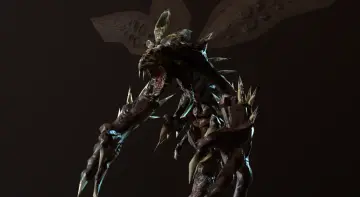
Creature Insect
Explore the Creature Insect asset, featuring 56 creature animations, animation blueprint support, and scripts for shooter, fantasy, and horror games.
Staging the Creature Insect across Horror, Fantasy, and Shooter Environments
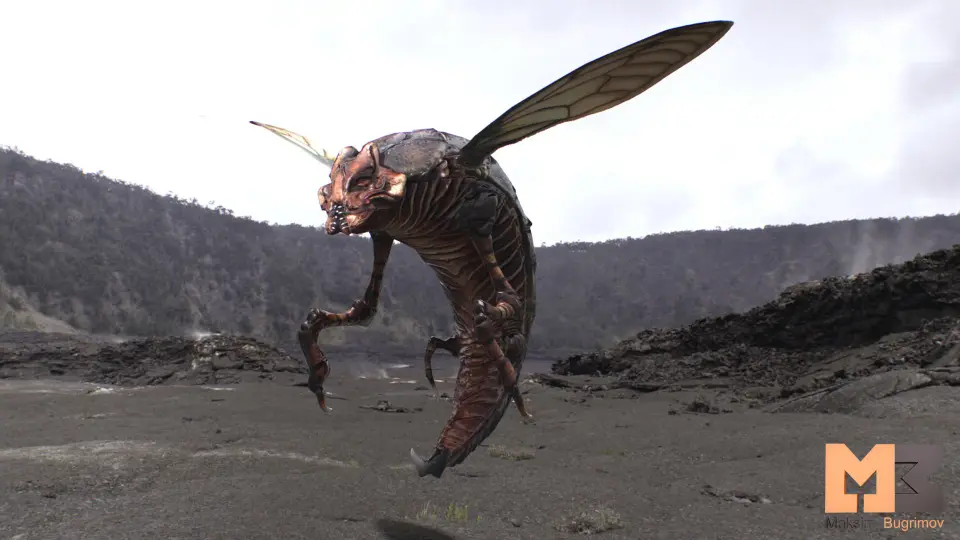
Damp subterranean hives, abandoned space stations overrun by biological anomalies, and forgotten fantasy crypts all depend on unsettling hostile life to establish danger. The Creature Insect serves as a versatile monster tailored precisely for these settings, functioning effectively whether placed in a frantic military shooter, a tension-heavy survival horror scenario, or an action-focused fantasy expedition. Non-humanoid adversaries alter the visual rhythm of an encounter, pulling players away from routine shootouts with bipedal humanoids and forcing them to track erratic movement along floors and enclosed clearings.
In horror environments, an insect-like monster excels by playing on primal dread. The anatomical irregularity of an insectoid creature creates an immediate sense of unease, allowing level designers to position it as an unexpected threat lurking within shadow-drenched corridors or tight tunnels. When translated to high-intensity shooter combat, the same monster can be utilized in swarms or specialized squad formations, pressing the player with relentless forward aggression. Fantasy settings benefit from the creature as an untamed denizen of uncharted wilderness, poisonous caverns, or alchemical ruins where monstrosities guard ancient hazards.
Motion Systems and the 56 Creature Animations
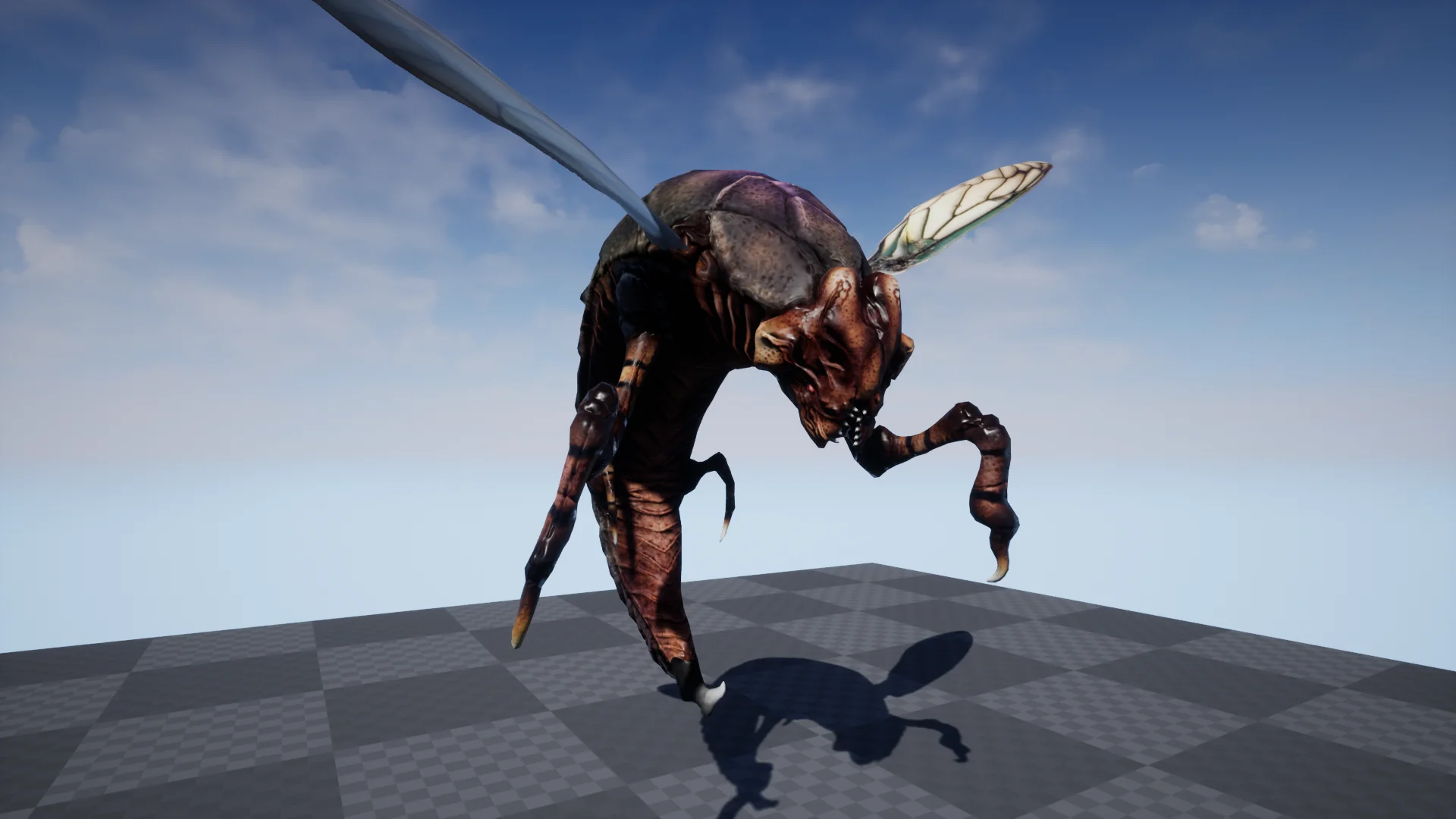
A significant requirement for any convincing non-humanoid monster is a comprehensive motion suite. The Creature Insect includes 56 animations for creatures, establishing a broad movement foundation capable of handling complex movement patterns and varied interactive states. Delivering high-quality animations is vital for insectoid anatomy, where multiple limbs, shifting thoraxes, and quick mandible motions must read clearly to the player while maintaining plausible organic weight.
Having 56 discrete animations provides enough functional variety to prevent repetitive motion cycles during extended encounters. Enemy encounters become predictable when a monster repeats identical run cycles, strike profiles, and reaction states. With a larger animation library, an insectoid adversary can execute direction-specific turns, varied predatory stalking postures, distinctive idling sequences, multiple strike angles, and nuanced stagger responses. Fast, twitching micro-movements characteristic of insects can be interspersed with heavier lurches, giving combat designers the visual range needed to convey speed, toughness, and behavioral intent.
Animation Blueprint Setup and Script Integration
Behind realistic motion lies the framework that evaluates when and how those animations play. The Creature Insect incorporates an Animation Blueprint alongside script functionality, offering developers a structured pipeline for integrating the asset into existing game logic. An Animation Blueprint is central to organizing locomotion transitions, blending between resting postures and full-tilt pursuit, and managing complex reaction trees without requiring hard-coded frame playback.
Working in conjunction with scripts, the blueprint structure allows designers to wire locomotion speeds directly to character attributes. If the creature takes limb damage, script events can inform the animation graph to switch toward limp or injured variants within the animation pool. Similarly, transitions between passive exploration states, heightened alert modes, and aggressive melee combos can be driven cleanly through state machines. This setup reduces the manual work needed to translate raw skeletal movements into interactive gameplay responses, letting teams hook up basic pathfinding, behavioral triggers, and damage calculations directly to the creature's motion output.
Deploying the Creature Insect in Gameplay Encounters
Because the creature bridges the gap between shooter, fantasy, and horror requirements, its role in combat encounters can shift based on level design objectives. In shooter contexts, where combat often revolves around ranged weaponry, the creature functions as a high-priority pressure unit. Its movement and animations allow it to close distances rapidly, forcing players out of static cover and breaking up entrenched firing lines. Designers can utilize its aggressive profiles to punish hesitation or flank players while other threats engage from a distance.
Within fantasy titles, the Creature Insect can serve as an elemental or venomous beast tied to specific biome hazards. Encounter design can emphasize defensive reactions, where the creature uses sudden strike animations when players step within striking range of its lair. The sheer volume of 56 animations ensures that encounters do not feel like simple stat-check engagements; the monster can telegraph dangerous attacks, reel from heavy magical impacts, and transition smoothly through multiple combat phases.
Horror encounters demand a slower, more deliberate pacing. Here, the creature's idle, twitching, and low-profile movement animations allow it to stalk spaces rather than charge recklessly. Scripted sound-cue reactions and alert states can be driven through the Animation Blueprint to make the creature appear aware of its surroundings, pausing, pivoting, and inspecting rooms before committing to an ambush.
Project Fit and Production Considerations
Teams targeting horror, shooter, or fantasy projects benefit most from this package when they need a fully animated, dedicated monster archetype ready for integration. Developing multi-legged or insect-inspired creatures from scratch is notoriously time-consuming, as rigging and animating non-humanoid skeletons demands specialized animation work to avoid mechanical, unnatural limb behavior. By pairing an extensive 56-clip animation suite with dedicated script and Animation Blueprint support, the Creature Insect supplies the core technical and visual framework necessary to deploy a functional, reactive predator directly into game environments.
 Characters
 Characters
 Characters
 Characters