"7ad89cffa44984cf"{"id":"1002512","slug":"character-werewolf","title":"Character Werewolf","category":"Characters \u0026 Creatures","engine":"4.26+,5.0+","assetVersion":"","engineVersion":"Engine Version: 4.26+,5.0+","tag":"Characters","accent":"blue","visual":"character","summary":"Examine the Character Werewolf asset, covering lowpoly design, Animationblueprint setup, script hooks, and 56 Animations For Creatures compatibility.","platform":"Unreal Engine","indexPolicy":"index","publishedAt":"2026-11-13T08:48:42.310Z","updatedAt":"2026-11-13T08:48:42.310Z","sourceNotes":[],"fileContents":[],"compatibility":["Unreal Engine","Engine Version: 4.26+,5.0+"],"featuredImage":{"alt":"Character Werewolf","src":"/wp-content/uploads/published/2026/11/e848422a90e8-cf4c3b50-4ccb-4713-a194-80c812a1c8bb-631d928208.webp"},"hasDownloadLink":true,"downloads":0,"terms":[{"taxonomy":"category","slug":"characters-and-creatures","name":"Characters \u0026 Creatures"}],"galleryImages":[{"src":"/wp-content/uploads/published/2026/11/21a25b4d6738-9c7c0a57-ac2c-4ccf-a44b-2d410d4ef7e2-fa8ff77c8d.webp","alt":"Character Werewolf"},{"src":"/wp-content/uploads/published/2026/11/07d04092bbce-6f21b82e-b1e8-4507-9236-106d382b04f6-2bed98d370.webp","alt":"Character Werewolf"},{"src":"/wp-content/uploads/published/2026/11/d6617e1366ba-747430a9-b84b-4bdb-aa45-96bec8a4c931-703f37dcf4.webp","alt":"Character Werewolf"},{"src":"/wp-content/uploads/published/2026/11/14f94bb43231-fc7e16c7-9828-4dd8-bfc8-7bbdd093dafc-7999768b49.webp","alt":"Character Werewolf"},{"src":"/wp-content/uploads/published/2026/11/aa2b29acfa58-9b155a77-4b6b-4dcc-a8d3-e9e638102c90-b4e628cda8.webp","alt":"Character Werewolf"}],"accessPanel":{"kind":"resource","title":"Get this resource","eyebrow":"Free resource","message":"Download this resource in your browser.","fileName":"Content.7z","safetyNote":"Resources are manually reviewed before listing to improve quality and reduce obvious risks.","actionLabel":"Get this resource","resourceType":"Resource archive","versions":[]},"contentHtml":"\u003ch2\u003eComponents of the Character Werewolf Asset\u003c/h2\u003e\u003cp\u003eCharacter Werewolf provides a lowpoly creature model prepared specifically for insertion into fantasy role-playing titles. Built to function as an active participant in gameplay encounters rather than an inert decorative mesh, the package pairs its base character geometry with both an Animationblueprint and dedicated script elements. Supplying an Animationblueprint out of the box eliminates the need to construct creature state logic from the ground up, allowing direct control over how the entity transitions between rest, locomotion, and alert states.\u003c/p\u003e\u003cp\u003eThe underlying construction targets dark fantasy aesthetics without relying on dense, high-polygon surfaces. By leaning on lowpoly styling, the character maintains recognizable silhouettes while minimizing runtime computational overhead. The accompanying script component acts alongside the Animationblueprint to handle state changes, behavioral switches, and situational triggers required during player confrontations or roaming cycles in wilderness zones.\u003c/p\u003e\u003ch2\u003eAnimationblueprint Logic and Werewolf Behaviors\u003c/h2\u003e\u003cp\u003eManaging non-humanoid or beast-like behavior requires specialized state logic, which is where the included Animationblueprint takes precedence. In an RPG pipeline, an Animationblueprint evaluates variables such as movement speed, direction, combat readiness, and status effects before passing those values into state machines. For Character Werewolf, having the Animationblueprint pre-configured ensures that transitions between idling, prowling, springing into a sprint, or recovering from incoming impacts happen in a predictable, stable sequence.\u003c/p\u003e\u003cp\u003eThe script component pairs with this animation system to bridge higher-level RPG logic with lower-level mesh playback. When game conditions call for a transition from a peaceful ambient roam to an aggressive pursuit, the script dictates parameter updates that the Animationblueprint immediately interprets. This arrangement streamlines encounter authoring, keeping mechanical logic modular so creature stats, threat radii, and target tracking connect cleanly to visual output without corrupting mesh deformations.\u003c/p\u003e\u003ch2\u003eIntegrating the 56 Animations For Creatures Compatibility\u003c/h2\u003e\u003cp\u003eMotion fidelity for quadrupeds and predatory fantasy humanoids depends on having a broad palette of movement frames. Character Werewolf features compatibility with 56 Animations For Creatures, providing a wide-ranging movement foundation that covers varied speeds, situational reactions, and offensive moves. Rather than forcing developers to adapt humanoid walk cycles that fail to capture predatory posture, relying on creature-specific animations ensures that weight distribution, paw or foot placement, and stalking postures appear natural on the model.\u003c/p\u003e\u003cp\u003eWith 56 compatible creature clips to draw from, designers can construct multi-tier combat and patrol routines. Basic cycles provide smooth directional locomotion across level geometry, while specialized clips supply sudden lunges, heavy swipes, turning cycles, flinches, and death collapses. Because the mesh is compatible with this specific suite, retargeting friction and bone-axis alignment issues are significantly reduced, enabling quick population of state trees inside the Animationblueprint.\u003c/p\u003e\u003ch2\u003eStaging Werewolf Encounters in Swamps, Caves, and Forests\u003c/h2\u003e\u003cp\u003eThe aesthetic and thematic balance of Character Werewolf is tailored for specific environmental contexts, particularly forests, swamps, caves, sewers, and other dark places. Each biome presents distinct spatial challenges that test both the lowpoly visual style and the creature's locomotion setup:\u003c/p\u003e\u003cul\u003e\u003cli\u003e\u003cstrong\u003eForest Locations:\u003c/strong\u003e Dense canopies and heavy tree trunks form irregular sightlines. Lowpoly silhouettes help the creature stand out against complex foliage textures, allowing moonlight or point-light sources to outline predatory movements as the beast navigates uneven undergrowth.\u003c/li\u003e\u003cli\u003e\u003cstrong\u003eSwamps and Marshes:\u003c/strong\u003e Stagnant water and murky mud require deliberate, stalking animations. The character's lowpoly contours prevent muddy, desaturated swamp color palettes from obscuring the creature's physical shape during low-visibility fog encounters.\u003c/li\u003e\u003cli\u003e\u003cstrong\u003eSubterranean Caves:\u003c/strong\u003e Uneven rocky corridors and sudden vertical drop-offs demand tight pathing. The creature's scale and aggressive stance fit narrow cavern passages where ambushes take place under dim torchlight.\u003c/li\u003e\u003cli\u003e\u003cstrong\u003eUrban Sewers and Conduits:\u003c/strong\u003e Tight brick tunnels, damp walkways, and artificial gloom present a different type of dark fantasy staging. The lowpoly werewolf functions effectively as an infestation or lurking threat emerging from deep drainage canals.\u003c/li\u003e\u003cli\u003e\u003cstrong\u003eOther Dark Places:\u003c/strong\u003e Whether utilized inside ruined crypts, shadow-draped dungeons, or midnight clearings, the asset is structured to integrate immediately into dim, high-contrast lighting schemes without losing its distinct animalistic profile.\u003c/li\u003e\u003c/ul\u003e\u003ch2\u003eLowpoly Styling within Fantasy RPG Pipelines\u003c/h2\u003e\u003cp\u003eDeploying creatures into RPG fantasy titles often involves managing multiple combatants, environmental VFX, complex user interfaces, and intricate level geometry simultaneously. The lowpoly identity of Character Werewolf offers concrete advantages in these scenarios by preserving rendering budgets. Fewer vertices directly translate to faster deformation calculations during skinned mesh updates, which is especially valuable when running dozens of creature instances throughout vast forest or sewer networks.\u003c/p\u003e\u003cp\u003eVisual clarity remains sharp despite the reduced polygon count. Because dark environments like caves, sewers, and midnight swamps rely heavily on dramatic shadow projection and rim lighting, a clean geometric mesh ensures that edges catch light sources distinctively. Players can immediately identify the threat profile, read attack windups, and react to aggressive strikes even when ambient illumination is kept intentionally low to preserve atmospheric tension.\u003c/p\u003e\u003cp\u003eCombining lowpoly modeling with the 56 Animations For Creatures compatibility, an Animationblueprint, and scripted controls establishes a direct pipeline for game implementation. Character Werewolf arrives structured to function as an adaptable, atmospheric enemy across RPG fantasy environments where darkness defines the encounter space.\u003c/p\u003e\n\n\u003ch2\u003eMore From The Same Workflow\u003c/h2\u003e\n\u003cul\u003e\n\u003cli\u003e\u003ca href=\"https://3dcghub.com/druid-werewolf/\" rel=\"noopener noreferrer\"\u003eDruid WereWolf\u003c/a\u003e\u003c/li\u003e\n\u003cli\u003e\u003ca href=\"https://3dcghub.com/animated-werewolf/\" rel=\"noopener noreferrer\"\u003eAnimated Werewolf\u003c/a\u003e\u003c/li\u003e\n\u003cli\u003e\u003ca href=\"https://3dcghub.com/character-prisoner/\" rel=\"noopener noreferrer\"\u003eCharacter Prisoner\u003c/a\u003e\u003c/li\u003e\n\u003cli\u003e\u003ca href=\"https://3dcghub.com/character-captain/\" rel=\"noopener noreferrer\"\u003eCharacter Captain\u003c/a\u003e\u003c/li\u003e\n\u003cli\u003e\u003ca href=\"https://3dcghub.com/cyberpunk-female-characters/\" rel=\"noopener noreferrer\"\u003eCyberpunk female characters\u003c/a\u003e\u003c/li\u003e\n\u003c/ul\u003e","contentTextLength":6368,"navigation":{"current":65,"total":4499,"previous":{"id":"1002513","slug":"combat-dog","title":"Combat Dog","category":"Characters \u0026 Creatures","platform":"Unreal Engine","updatedAt":"2026-11-13T08:49:52.464Z"},"next":{"id":"1002511","slug":"character-prisoner","title":"Character Prisoner","category":"Characters \u0026 Creatures","platform":"Unreal Engine","updatedAt":"2026-11-13T08:46:52.226Z"}},"relatedResources":[{"id":"1002380","slug":"druid-werewolf","title":"Druid WereWolf","category":"Characters \u0026 Creatures","engine":"4.22+,5.0+","assetVersion":"","engineVersion":"Engine Version: 4.22+,5.0+","tag":"Characters","accent":"blue","visual":"character","summary":"Detailed look at the Druid WereWolf asset, featuring 7 assembled character setups, 36 modular pieces, ARKit morphs, physics clothing, and custom proportions.","platform":"Unreal Engine","indexPolicy":"index","publishedAt":"2026-11-10T03:56:37.163Z","updatedAt":"2026-11-10T03:56:37.163Z","sourceNotes":[],"fileContents":[],"compatibility":["Unreal Engine","Engine Version: 4.22+,5.0+"],"featuredImage":{"alt":"Druid WereWolf","src":"/wp-content/uploads/published/2026/11/6e473b93137e-24d05187-7fa8-4cbe-b516-cae1b70b3396-447f1c61d7.webp"},"hasDownloadLink":true,"downloads":0},{"id":"1002503","slug":"animated-werewolf","title":"Animated Werewolf","category":"Creatures \u0026 Monsters","engine":"4.15+,5.0+","assetVersion":"","engineVersion":"Engine Version: 4.15+,5.0+","tag":"Creatures","accent":"blue","visual":"character","summary":"Detailed breakdown of the Animated Werewolf model, featuring 73 animations, 69-bone rig, root motion sets, and modular fur geometry counts.","platform":"Unreal Engine","indexPolicy":"index","publishedAt":"2026-11-13T08:09:59.230Z","updatedAt":"2026-11-13T08:09:59.230Z","sourceNotes":[],"fileContents":[],"compatibility":["Unreal Engine","Engine Version: 4.15+,5.0+"],"featuredImage":{"alt":"Animated Werewolf","src":"/wp-content/uploads/published/2026/11/2bdc373908c4-1dfe5dcf-7418-415c-8199-72e9813dd799-ac1adfd838.webp"},"hasDownloadLink":true,"downloads":0},{"id":"1002511","slug":"character-prisoner","title":"Character Prisoner","category":"Characters \u0026 Creatures","engine":"4.26+,5.0+","assetVersion":"","engineVersion":"Engine Version: 4.26+,5.0+","tag":"Characters","accent":"blue","visual":"character","summary":"Character Prisoner provides a lowpoly creature asset complete with an Animationblueprint, script support, and 56 compatible creature animations.","platform":"Unreal Engine","indexPolicy":"index","publishedAt":"2026-11-13T08:46:52.226Z","updatedAt":"2026-11-13T08:46:52.226Z","sourceNotes":[],"fileContents":[],"compatibility":["Unreal Engine","Engine Version: 4.26+,5.0+"],"featuredImage":{"alt":"Character Prisoner","src":"/wp-content/uploads/published/2026/11/c250a1ba3bd0-f7a53719-a5ad-4174-93b9-d5e8508aa649-6987c34ee9.webp"},"hasDownloadLink":true,"downloads":0}]}
Characters
Character Werewolf
Examine the Character Werewolf asset, covering lowpoly design, Animationblueprint setup, script hooks, and 56 Animations For Creatures compatibility.
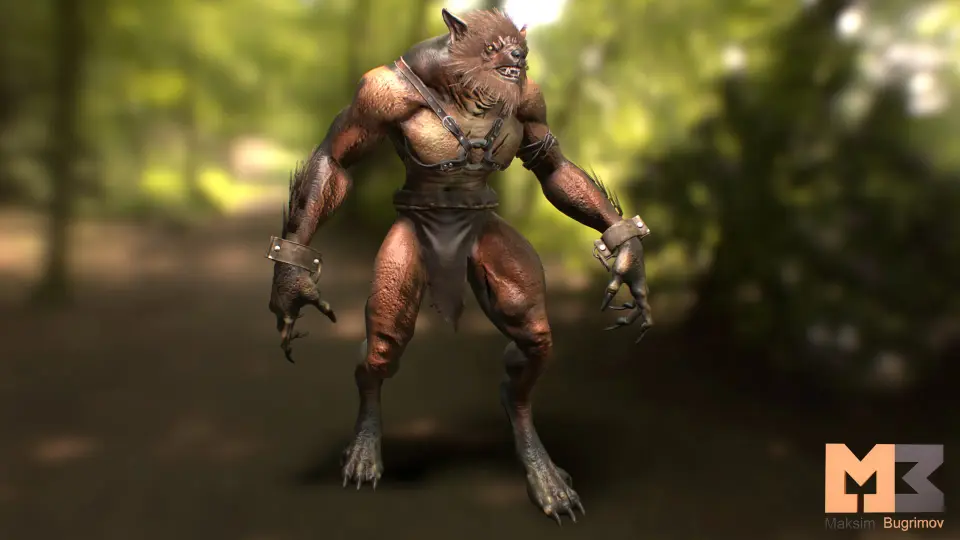
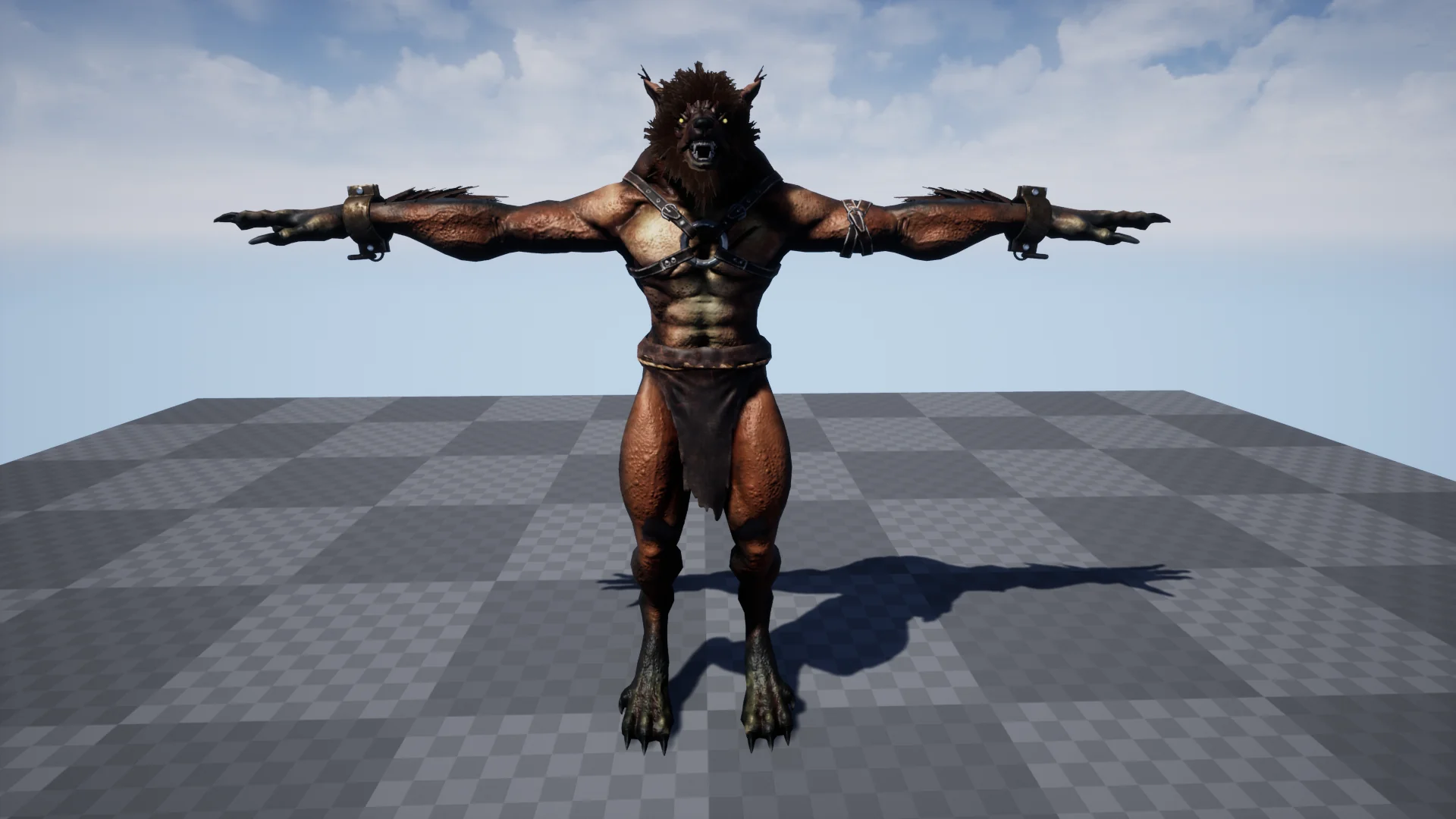
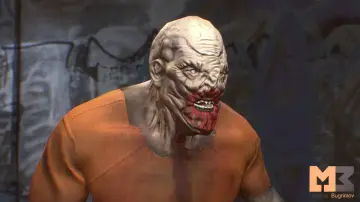
Character Werewolf provides a lowpoly creature model prepared specifically for insertion into fantasy role-playing titles. Built to function as an active participant in gameplay encounters rather than an inert decorative mesh, the package pairs its base character geometry with both an Animationblueprint and dedicated script elements. Supplying an Animationblueprint out of the box eliminates the need to construct creature state logic from the ground up, allowing direct control over how the entity transitions between rest, locomotion, and alert states.
The underlying construction targets dark fantasy aesthetics without relying on dense, high-polygon surfaces. By leaning on lowpoly styling, the character maintains recognizable silhouettes while minimizing runtime computational overhead. The accompanying script component acts alongside the Animationblueprint to handle state changes, behavioral switches, and situational triggers required during player confrontations or roaming cycles in wilderness zones.
Animationblueprint Logic and Werewolf Behaviors
Managing non-humanoid or beast-like behavior requires specialized state logic, which is where the included Animationblueprint takes precedence. In an RPG pipeline, an Animationblueprint evaluates variables such as movement speed, direction, combat readiness, and status effects before passing those values into state machines. For Character Werewolf, having the Animationblueprint pre-configured ensures that transitions between idling, prowling, springing into a sprint, or recovering from incoming impacts happen in a predictable, stable sequence.
The script component pairs with this animation system to bridge higher-level RPG logic with lower-level mesh playback. When game conditions call for a transition from a peaceful ambient roam to an aggressive pursuit, the script dictates parameter updates that the Animationblueprint immediately interprets. This arrangement streamlines encounter authoring, keeping mechanical logic modular so creature stats, threat radii, and target tracking connect cleanly to visual output without corrupting mesh deformations.
Integrating the 56 Animations For Creatures Compatibility
Motion fidelity for quadrupeds and predatory fantasy humanoids depends on having a broad palette of movement frames. Character Werewolf features compatibility with 56 Animations For Creatures, providing a wide-ranging movement foundation that covers varied speeds, situational reactions, and offensive moves. Rather than forcing developers to adapt humanoid walk cycles that fail to capture predatory posture, relying on creature-specific animations ensures that weight distribution, paw or foot placement, and stalking postures appear natural on the model.
With 56 compatible creature clips to draw from, designers can construct multi-tier combat and patrol routines. Basic cycles provide smooth directional locomotion across level geometry, while specialized clips supply sudden lunges, heavy swipes, turning cycles, flinches, and death collapses. Because the mesh is compatible with this specific suite, retargeting friction and bone-axis alignment issues are significantly reduced, enabling quick population of state trees inside the Animationblueprint.
Staging Werewolf Encounters in Swamps, Caves, and Forests
The aesthetic and thematic balance of Character Werewolf is tailored for specific environmental contexts, particularly forests, swamps, caves, sewers, and other dark places. Each biome presents distinct spatial challenges that test both the lowpoly visual style and the creature's locomotion setup:
Forest Locations: Dense canopies and heavy tree trunks form irregular sightlines. Lowpoly silhouettes help the creature stand out against complex foliage textures, allowing moonlight or point-light sources to outline predatory movements as the beast navigates uneven undergrowth.
Swamps and Marshes: Stagnant water and murky mud require deliberate, stalking animations. The character's lowpoly contours prevent muddy, desaturated swamp color palettes from obscuring the creature's physical shape during low-visibility fog encounters.
Subterranean Caves: Uneven rocky corridors and sudden vertical drop-offs demand tight pathing. The creature's scale and aggressive stance fit narrow cavern passages where ambushes take place under dim torchlight.
Urban Sewers and Conduits: Tight brick tunnels, damp walkways, and artificial gloom present a different type of dark fantasy staging. The lowpoly werewolf functions effectively as an infestation or lurking threat emerging from deep drainage canals.
Other Dark Places: Whether utilized inside ruined crypts, shadow-draped dungeons, or midnight clearings, the asset is structured to integrate immediately into dim, high-contrast lighting schemes without losing its distinct animalistic profile.
Lowpoly Styling within Fantasy RPG Pipelines
Deploying creatures into RPG fantasy titles often involves managing multiple combatants, environmental VFX, complex user interfaces, and intricate level geometry simultaneously. The lowpoly identity of Character Werewolf offers concrete advantages in these scenarios by preserving rendering budgets. Fewer vertices directly translate to faster deformation calculations during skinned mesh updates, which is especially valuable when running dozens of creature instances throughout vast forest or sewer networks.
Visual clarity remains sharp despite the reduced polygon count. Because dark environments like caves, sewers, and midnight swamps rely heavily on dramatic shadow projection and rim lighting, a clean geometric mesh ensures that edges catch light sources distinctively. Players can immediately identify the threat profile, read attack windups, and react to aggressive strikes even when ambient illumination is kept intentionally low to preserve atmospheric tension.
Combining lowpoly modeling with the 56 Animations For Creatures compatibility, an Animationblueprint, and scripted controls establishes a direct pipeline for game implementation. Character Werewolf arrives structured to function as an adaptable, atmospheric enemy across RPG fantasy environments where darkness defines the encounter space.
 Characters
 Characters
 Creatures
 Characters