"7ad89cffa44984cf"{"id":"1002511","slug":"character-prisoner","title":"Character Prisoner","category":"Characters \u0026 Creatures","engine":"4.26+,5.0+","assetVersion":"","engineVersion":"Engine Version: 4.26+,5.0+","tag":"Characters","accent":"blue","visual":"character","summary":"Character Prisoner provides a lowpoly creature asset complete with an Animationblueprint, script support, and 56 compatible creature animations.","platform":"Unreal Engine","indexPolicy":"index","publishedAt":"2026-11-13T08:46:52.226Z","updatedAt":"2026-11-13T08:46:52.226Z","sourceNotes":[],"fileContents":[],"compatibility":["Unreal Engine","Engine Version: 4.26+,5.0+"],"featuredImage":{"alt":"Character Prisoner","src":"/wp-content/uploads/published/2026/11/c250a1ba3bd0-f7a53719-a5ad-4174-93b9-d5e8508aa649-6987c34ee9.webp"},"hasDownloadLink":true,"downloads":0,"terms":[{"taxonomy":"category","slug":"characters-and-creatures","name":"Characters \u0026 Creatures"}],"galleryImages":[{"src":"/wp-content/uploads/published/2026/11/68a39b5b94f1-5da65fe1-15ef-445e-81b0-22a2a2f158e4-0701c40d1a.webp","alt":"Character Prisoner"},{"src":"/wp-content/uploads/published/2026/11/54f59fb2f547-f62530be-1822-4ec1-8ac4-f3b74af6f929-a528e78da8.webp","alt":"Character Prisoner"},{"src":"/wp-content/uploads/published/2026/11/b9356d8f4bba-8c3e433c-94bc-4854-9e04-8ac9c930737f-d9c956eb55.webp","alt":"Character Prisoner"},{"src":"/wp-content/uploads/published/2026/11/ee977b78ab55-4f522997-bd2d-495e-88a8-e640e6af49d7-9f696d1673.webp","alt":"Character Prisoner"},{"src":"/wp-content/uploads/published/2026/11/e8637779b0b4-539404c2-b70e-4348-ab34-df76bb0fab1d-653f66b93b.webp","alt":"Character Prisoner"}],"accessPanel":{"kind":"resource","title":"Get this resource","eyebrow":"Free resource","message":"Download this resource in your browser.","fileName":"Content.7z","safetyNote":"Resources are manually reviewed before listing to improve quality and reduce obvious risks.","actionLabel":"Get this resource","resourceType":"Resource archive","versions":[]},"contentHtml":"\u003cp\u003eCharacter Prisoner supplies a dedicated lowpoly character package configured around a monstrous, undead form. Combining a creature mesh with an integrated Animationblueprint and script setup, the package delivers a direct framework for real-time hostile encounters. The model sits at the intersection of monster and zombie typologies, giving level designers and technical artists an asset that translates effortlessly into atmospheric underground settings, wilderness hazards, and dungeon corridors.\u003c/p\u003e \u003ch2\u003eLowpoly Design in Character Prisoner\u003c/h2\u003e\n\u003cp\u003eThe mesh foundation of Character Prisoner relies on a lowpoly methodology, keeping geometric overhead low while defining an unsettling physical silhouette. Low-polygon models remain critical for real-time scenarios where multiple enemies must occupy the screen simultaneously without straining graphics pipelines or inflating rendering budgets. In crowded encounters, such as horde sequences or multi-tiered dungeon ambushes, keeping character topology lightweight ensures stable framerates across varying hardware specifications.\u003c/p\u003e\n\u003cp\u003eDespite a restrained polygon footprint, the creature communicates its background through distinct physical features. The captive, monstrous form reads instantly through exaggerated posture, exposed structure, and physical hallmarks typical of zombie and creature designs. Striking a clean balance between geometric efficiency and readability allows the model to respond sharply to dynamic lighting, casting distinct shadows across rough stone or muddy ground without requiring costly real-time subdivision passes.\u003c/p\u003e \u003ch2\u003eThe Creature and Zombie Archetype in Dark Locales\u003c/h2\u003e\n\u003cp\u003eCharacter Prisoner focuses heavily on atmospheric placement, specifically dark locales where traditional character models might lose their visual identity. Sewers, caves, and swamps serve as natural homes for this type of adversary. In cavern networks, the creature's hunched, distorted silhouette breaks up the repetition of rock faces and stalagmites, giving the player immediate visual confirmation of an active threat lurking in the gloom.\u003c/p\u003e\n\u003cp\u003eSewer systems and subterranean waterworks require antagonists that feel shaped by dampness, confinement, and decay. The zombie and monster tags define an entity that fits naturally into stagnant drainage channels, narrow culverts, and barred holding cells. In marshlands and swamp levels, dense ground fog and murky water partially conceal the character as it stalks the perimeter. The visual tension created in these environments relies on sparse silhouettes against dim light, an effect this lowpoly monster is configured to deliver.\u003c/p\u003e \u003ch2\u003eAnimationblueprint Mechanics and the 56 Creature Animations\u003c/h2\u003e\n\u003cp\u003eLocomotion and behavior rely on the included Animationblueprint alongside broad compatibility with 56 Animations For Creatures. An Animationblueprint handles the real-time logic that drives a character from a static pose into fluid movement. By evaluating variables such as velocity, acceleration, turn rate, and current health states, the graph dictates how transitions execute between idle stances, aggressive pursuit, attacks, and hit reactions.\u003c/p\u003e\n\u003cp\u003eThe pool of 56 animations for creatures expands the operational range of the model well beyond simple forward movement. Having access to an extensive motion library lets the character handle varied physical states, including erratic zombie shambles, predatory lunges, sudden directional shifts, and wounded recovery loops. Because high-quality animations are central to the asset, the lowpoly geometry retains weight and intention during complex physical actions. The Animationblueprint ensures that foot sliding is minimized, blending between walk and sprint thresholds is handled smoothly, and interruptible combat actions fire reliably upon player contact.\u003c/p\u003e \u003ch2\u003eScripting Movement for the Prisoner Encounter\u003c/h2\u003e\n\u003cp\u003eThe presence of dedicated script implementation links the underlying animation data to runtime game logic. A character asset in a creature or monster category needs more than just a skeletal mesh; it requires responsive hooks to react to engine navigation systems, perception cones, and damage events. The script architecture supports these baseline mechanics, allowing developers to route the character along patrol waypoints, alert nodes, and line-of-sight triggers.\u003c/p\u003e\n\u003cp\u003eWithin narrow environments like sewer tunnels or cave paths, navigation meshes can become constrained. The scripted framework helps manage collision responses and pathfinding updates so the character pursues targets without becoming wedged against level geometry. When integrated into combat encounters, the scripts facilitate clean communication between hitboxes, animation notifies, and state machines, ensuring that attack swings, damage flinches, and death sequences execute predictably during intense gameplay segments.\u003c/p\u003e \u003ch2\u003eDeploying Across RPG, Fantasy, and Horror Settings\u003c/h2\u003e\n\u003cp\u003eCharacter Prisoner bridges three foundational game genres: Role-Playing Games, Fantasy, and Horror. In an RPG framework, the character can function as an early-game dungeon denizen, an afflicted captive in an underground oubliette, or an expendable minion serving a necromancer or occult faction. Its lowpoly nature allows developers to populate broad dungeon floors or underground barracks with varied enemy groups without burdening system memory.\u003c/p\u003e\n\u003cp\u003eWithin dark fantasy campaigns, the line between prisoner and supernatural monster frequently blurs. The asset acts as a physical manifestation of ancient curses, forgotten subterranean prisons, or mutated test subjects abandoned beneath castle foundations. When placed in pure horror experiences, the emphasis shifts toward suspense, vulnerability, and sound. Here, the character can be deployed as an unpredictable pursuer within lightless tunnels, emerging suddenly from sewer recesses or subterranean alcoves to break player pacing.\u003c/p\u003e\n\u003cp\u003eBy uniting an Animationblueprint, dedicated scripting, high-quality motion support, and adaptability across swamps, caves, and sewers, Character Prisoner gives developers an efficient, production-ready creature tailored for challenging dark environments.\u003c/p\u003e\n\n\u003ch2\u003eMore From The Same Workflow\u003c/h2\u003e\n\u003cul\u003e\n\u003cli\u003e\u003ca href=\"https://3dcghub.com/samantha-cyberpunk-girl/\" rel=\"noopener noreferrer\"\u003eSamantha - Cyberpunk girl\u003c/a\u003e\u003c/li\u003e\n\u003cli\u003e\u003ca href=\"https://3dcghub.com/character-captain/\" rel=\"noopener noreferrer\"\u003eCharacter Captain\u003c/a\u003e\u003c/li\u003e\n\u003cli\u003e\u003ca href=\"https://3dcghub.com/gang-character/\" rel=\"noopener noreferrer\"\u003eGang Character\u003c/a\u003e\u003c/li\u003e\n\u003cli\u003e\u003ca href=\"https://3dcghub.com/cyberpunk-female-characters/\" rel=\"noopener noreferrer\"\u003eCyberpunk female characters\u003c/a\u003e\u003c/li\u003e\n\u003cli\u003e\u003ca href=\"https://3dcghub.com/post-apocalypse-girl/\" rel=\"noopener noreferrer\"\u003ePost Apocalypse Girl\u003c/a\u003e\u003c/li\u003e\n\u003c/ul\u003e","contentTextLength":6247,"navigation":{"current":66,"total":4499,"previous":{"id":"1002512","slug":"character-werewolf","title":"Character Werewolf","category":"Characters \u0026 Creatures","platform":"Unreal Engine","updatedAt":"2026-11-13T08:48:42.310Z"},"next":{"id":"1002510","slug":"bones-dragon","title":"Bones Dragon","category":"Creatures \u0026 Monsters","platform":"Unreal Engine","updatedAt":"2026-11-13T08:45:04.389Z"}},"relatedResources":[{"id":"1002185","slug":"samantha-cyberpunk-girl","title":"Samantha - Cyberpunk girl","category":"Characters \u0026 Creatures","engine":"4.22+,5.0+","assetVersion":"","engineVersion":"Engine Version: 4.22+,5.0+","tag":"Characters","accent":"blue","visual":"character","summary":"Integrate Samantha - Cyberpunk girl with single mesh geometry, 5 texture sets, socketed hair physics, and Undead Prisoners Pack compatibility.","platform":"Unreal Engine","indexPolicy":"index","publishedAt":"2026-10-29T14:26:36.100Z","updatedAt":"2026-10-29T14:26:36.100Z","sourceNotes":[],"fileContents":[],"compatibility":["Unreal Engine","Engine Version: 4.22+,5.0+"],"featuredImage":{"alt":"Samantha - Cyberpunk girl","src":"/wp-content/uploads/published/2026/10/81f7b6daaaa0-98828ec8-c6de-40c2-b9f1-8e79ad1227d0-7b6a58a401.webp"},"hasDownloadLink":true,"downloads":0},{"id":"1002512","slug":"character-werewolf","title":"Character Werewolf","category":"Characters \u0026 Creatures","engine":"4.26+,5.0+","assetVersion":"","engineVersion":"Engine Version: 4.26+,5.0+","tag":"Characters","accent":"blue","visual":"character","summary":"Examine the Character Werewolf asset, covering lowpoly design, Animationblueprint setup, script hooks, and 56 Animations For Creatures compatibility.","platform":"Unreal Engine","indexPolicy":"index","publishedAt":"2026-11-13T08:48:42.310Z","updatedAt":"2026-11-13T08:48:42.310Z","sourceNotes":[],"fileContents":[],"compatibility":["Unreal Engine","Engine Version: 4.26+,5.0+"],"featuredImage":{"alt":"Character Werewolf","src":"/wp-content/uploads/published/2026/11/e848422a90e8-cf4c3b50-4ccb-4713-a194-80c812a1c8bb-631d928208.webp"},"hasDownloadLink":true,"downloads":0},{"id":"1002310","slug":"character-captain","title":"Character Captain","category":"Characters \u0026 Creatures","engine":"4.18+,5.0+","assetVersion":"","engineVersion":"Engine Version: 4.18+,5.0+","tag":"Characters","accent":"blue","visual":"character","summary":"Character Captain is a lowpoly NPC captain for sea-themed games, with script and Animation Blueprint tags plus a compatibility note for 56 creature animations.","platform":"Unreal Engine","indexPolicy":"index","publishedAt":"2026-11-06T06:13:00.506Z","updatedAt":"2026-11-06T06:13:00.506Z","sourceNotes":[],"fileContents":[],"compatibility":["Unreal Engine","Engine Version: 4.18+,5.0+"],"featuredImage":{"alt":"Character Captain","src":"/wp-content/uploads/published/2026/11/66d000342486-6d157691-6795-48a1-9a2d-ec6f288e887a-66c06219fb.webp"},"hasDownloadLink":true,"downloads":0}]}
Characters
Character Prisoner
Character Prisoner provides a lowpoly creature asset complete with an Animationblueprint, script support, and 56 compatible creature animations.
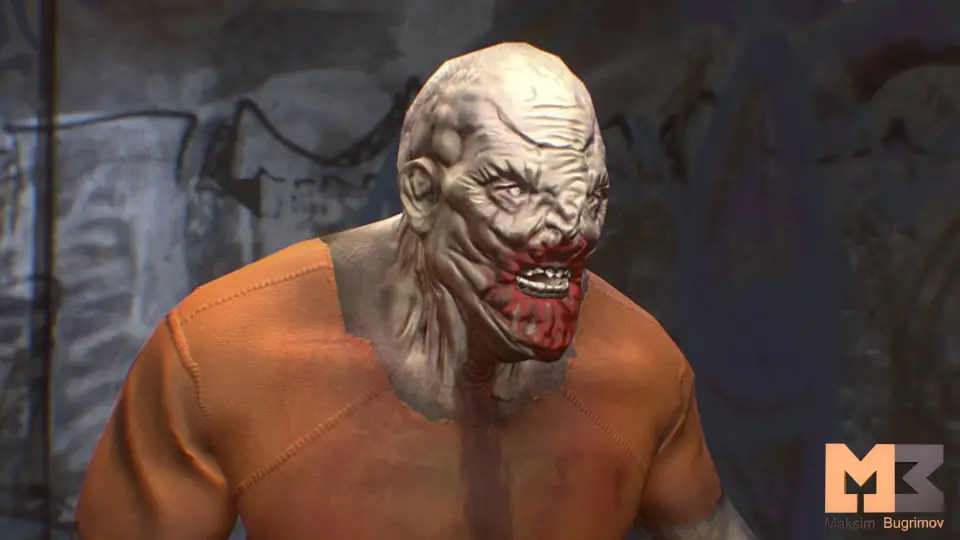
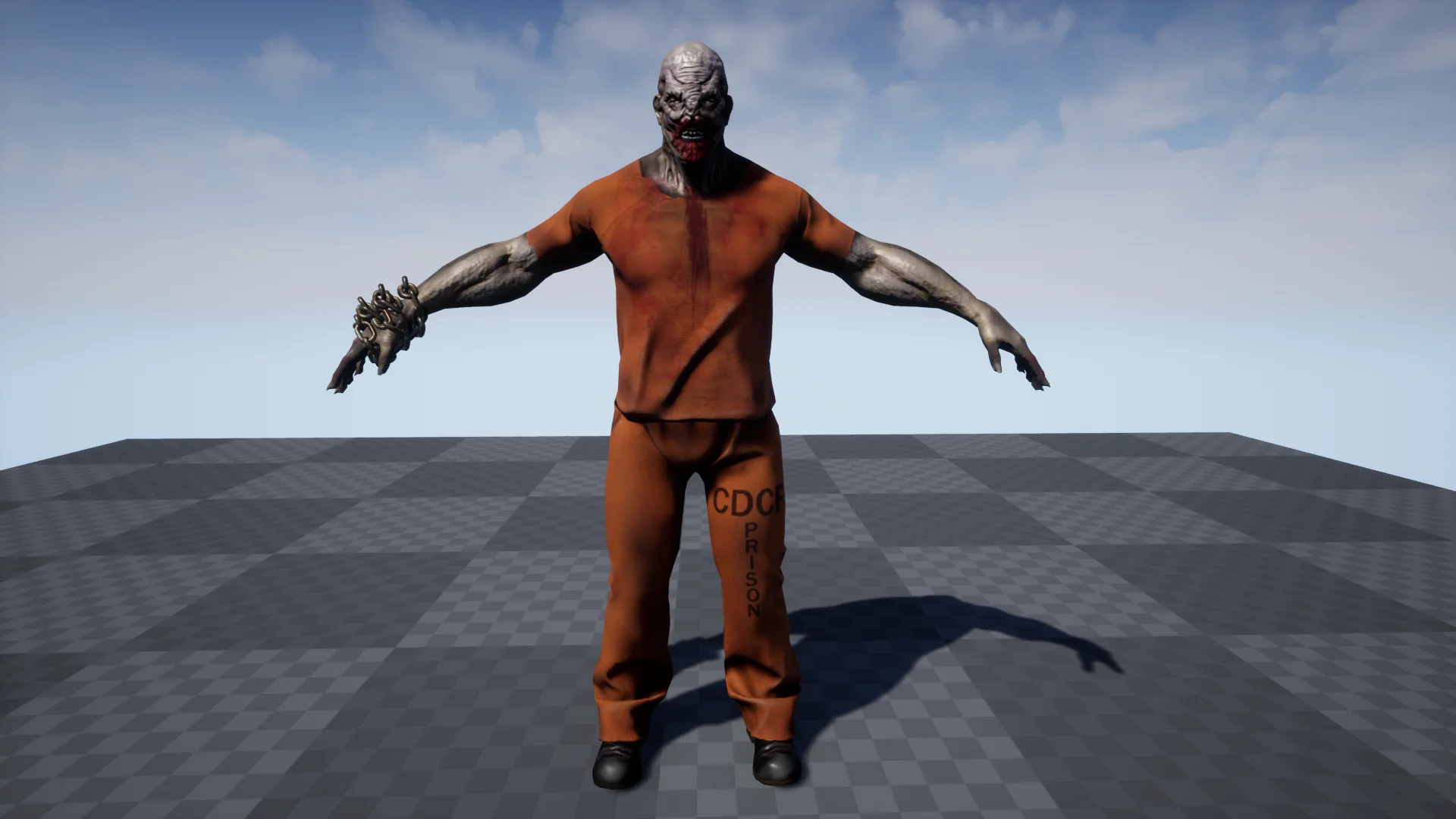
Character Prisoner supplies a dedicated lowpoly character package configured around a monstrous, undead form. Combining a creature mesh with an integrated Animationblueprint and script setup, the package delivers a direct framework for real-time hostile encounters. The model sits at the intersection of monster and zombie typologies, giving level designers and technical artists an asset that translates effortlessly into atmospheric underground settings, wilderness hazards, and dungeon corridors.
Lowpoly Design in Character Prisoner
The mesh foundation of Character Prisoner relies on a lowpoly methodology, keeping geometric overhead low while defining an unsettling physical silhouette. Low-polygon models remain critical for real-time scenarios where multiple enemies must occupy the screen simultaneously without straining graphics pipelines or inflating rendering budgets. In crowded encounters, such as horde sequences or multi-tiered dungeon ambushes, keeping character topology lightweight ensures stable framerates across varying hardware specifications.
Despite a restrained polygon footprint, the creature communicates its background through distinct physical features. The captive, monstrous form reads instantly through exaggerated posture, exposed structure, and physical hallmarks typical of zombie and creature designs. Striking a clean balance between geometric efficiency and readability allows the model to respond sharply to dynamic lighting, casting distinct shadows across rough stone or muddy ground without requiring costly real-time subdivision passes.
The Creature and Zombie Archetype in Dark Locales
Character Prisoner focuses heavily on atmospheric placement, specifically dark locales where traditional character models might lose their visual identity. Sewers, caves, and swamps serve as natural homes for this type of adversary. In cavern networks, the creature's hunched, distorted silhouette breaks up the repetition of rock faces and stalagmites, giving the player immediate visual confirmation of an active threat lurking in the gloom.
Sewer systems and subterranean waterworks require antagonists that feel shaped by dampness, confinement, and decay. The zombie and monster tags define an entity that fits naturally into stagnant drainage channels, narrow culverts, and barred holding cells. In marshlands and swamp levels, dense ground fog and murky water partially conceal the character as it stalks the perimeter. The visual tension created in these environments relies on sparse silhouettes against dim light, an effect this lowpoly monster is configured to deliver.
Animationblueprint Mechanics and the 56 Creature Animations
Locomotion and behavior rely on the included Animationblueprint alongside broad compatibility with 56 Animations For Creatures. An Animationblueprint handles the real-time logic that drives a character from a static pose into fluid movement. By evaluating variables such as velocity, acceleration, turn rate, and current health states, the graph dictates how transitions execute between idle stances, aggressive pursuit, attacks, and hit reactions.
The pool of 56 animations for creatures expands the operational range of the model well beyond simple forward movement. Having access to an extensive motion library lets the character handle varied physical states, including erratic zombie shambles, predatory lunges, sudden directional shifts, and wounded recovery loops. Because high-quality animations are central to the asset, the lowpoly geometry retains weight and intention during complex physical actions. The Animationblueprint ensures that foot sliding is minimized, blending between walk and sprint thresholds is handled smoothly, and interruptible combat actions fire reliably upon player contact.
Scripting Movement for the Prisoner Encounter
The presence of dedicated script implementation links the underlying animation data to runtime game logic. A character asset in a creature or monster category needs more than just a skeletal mesh; it requires responsive hooks to react to engine navigation systems, perception cones, and damage events. The script architecture supports these baseline mechanics, allowing developers to route the character along patrol waypoints, alert nodes, and line-of-sight triggers.
Within narrow environments like sewer tunnels or cave paths, navigation meshes can become constrained. The scripted framework helps manage collision responses and pathfinding updates so the character pursues targets without becoming wedged against level geometry. When integrated into combat encounters, the scripts facilitate clean communication between hitboxes, animation notifies, and state machines, ensuring that attack swings, damage flinches, and death sequences execute predictably during intense gameplay segments.
Deploying Across RPG, Fantasy, and Horror Settings
Character Prisoner bridges three foundational game genres: Role-Playing Games, Fantasy, and Horror. In an RPG framework, the character can function as an early-game dungeon denizen, an afflicted captive in an underground oubliette, or an expendable minion serving a necromancer or occult faction. Its lowpoly nature allows developers to populate broad dungeon floors or underground barracks with varied enemy groups without burdening system memory.
Within dark fantasy campaigns, the line between prisoner and supernatural monster frequently blurs. The asset acts as a physical manifestation of ancient curses, forgotten subterranean prisons, or mutated test subjects abandoned beneath castle foundations. When placed in pure horror experiences, the emphasis shifts toward suspense, vulnerability, and sound. Here, the character can be deployed as an unpredictable pursuer within lightless tunnels, emerging suddenly from sewer recesses or subterranean alcoves to break player pacing.
By uniting an Animationblueprint, dedicated scripting, high-quality motion support, and adaptability across swamps, caves, and sewers, Character Prisoner gives developers an efficient, production-ready creature tailored for challenging dark environments.
 Characters
 Characters
 Characters
 Characters