"95ccd6d7c96110f6"{"id":"1002452","slug":"assistant-dog","title":"Assistant Dog","category":"Characters \u0026 Creatures","engine":"4.21+,5.0+","assetVersion":"","engineVersion":"Engine Version: 4.21+,5.0+","tag":"Characters","accent":"blue","visual":"character","summary":"Explore the implementation of the Assistant Dog character, featuring low-poly PBR assets, Animation Blueprint support, and companion inventory scripts.","platform":"Unreal Engine","indexPolicy":"index","publishedAt":"2026-11-11T08:40:54.802Z","updatedAt":"2026-11-11T08:40:54.802Z","sourceNotes":[],"fileContents":[],"compatibility":["Unreal Engine","Engine Version: 4.21+,5.0+"],"featuredImage":{"alt":"Assistant Dog","src":"/wp-content/uploads/published/2026/11/e6b3dfb03b28-aa96a87f-92fc-4a61-847a-b28552965b4b-d7913f9d73.webp"},"hasDownloadLink":true,"downloads":0,"terms":[{"taxonomy":"category","slug":"characters-and-creatures","name":"Characters \u0026 Creatures"}],"galleryImages":[{"src":"/wp-content/uploads/published/2026/11/0ab38fcd6b94-8ea816be-48a7-4f00-b66c-db5710e6e079-d1864225f9.webp","alt":"Assistant Dog"},{"src":"/wp-content/uploads/published/2026/11/7d4322b6f446-d04f42aa-b661-4ced-a7cf-8f16db4075d5-843293753e.webp","alt":"Assistant Dog"},{"src":"/wp-content/uploads/published/2026/11/3e163fa96ad1-64b50ca6-472d-4c57-91f9-cfdbbd31f943-8b0de6e229.webp","alt":"Assistant Dog"},{"src":"/wp-content/uploads/published/2026/11/ae55742ecfad-4fb99a51-726d-4956-8b59-4169409d9ec4-c029f63a21.webp","alt":"Assistant Dog"},{"src":"/wp-content/uploads/published/2026/11/07b23defdafb-d2f110d1-b2c8-490d-bc63-32bd51116826-dacb2d4319.webp","alt":"Assistant Dog"}],"accessPanel":{"kind":"resource","title":"Get this resource","eyebrow":"Free resource","message":"Download this resource in your browser.","fileName":"Content.7z","safetyNote":"Resources are manually reviewed before listing to improve quality and reduce obvious risks.","actionLabel":"Get this resource","resourceType":"Resource archive","versions":[]},"contentHtml":"\u003cp\u003eRole-playing games frequently introduce companion characters to solve logistical hurdles in exploration and survival mechanics. The Assistant Dog operates directly within this framework, providing hero characters with mobile utility through dedicated carrying capacity and inventory space. Rather than serving purely as decorative background life, the model is configured to stand alongside the player, operating as an active assistant that transports gear, supplies, and collected equipment through interactive gameplay sequences.\u003c/p\u003e \u003ch2\u003eDeploying the Assistant Dog for Companion Inventory Systems\u003c/h2\u003e\n\u003cp\u003eManaging carried weight and limited bag space is an established gameplay hurdle across role-playing titles. Introducing the Assistant Dog allows designers to implement dedicated pack-animal or companion mechanics without disrupting player locomotion. Because the character is created to carry things and provide inventory space, its runtime setup directly supports systems where items can be transferred between the hero and the companion during exploration or camp phases.\u003c/p\u003e\n\u003cp\u003eImplementing this system relies on tying the character's physical presence to an inventory data structure. When the hero interacts with the creature in the game world, a storage container interface can be triggered to let players offload excess materials, quest items, or secondary armaments. In practical game design, this prevents players from continually breaking the pace of dungeon crawls or wilderness treks to return to static storage hubs, embedding transport capability directly into an accompanying creature.\u003c/p\u003e \u003ch2\u003ePBR Texturing Within Low-Poly Constraints\u003c/h2\u003e\n\u003cp\u003eThe visual framework pairs low-poly geometry with physically based rendering (PBR) texturing standards. Low-poly construction serves a crucial runtime purpose: companions must remain active on screen simultaneously with player models, adversarial NPCs, dynamic lighting setups, and expansive terrain. Maintaining an efficient polygon footprint prevents the model from generating unnecessary rendering bottlenecks during high-density combat or heavy environmental processing.\u003c/p\u003e\n\u003cp\u003eApplying PBR workflows ensures that surface properties—such as skin, fur, gear straps, and metal fixtures—react predictably across shifting light environments. In dark interior corridors or open daylight scenes, the physical shading maps define accurate reflections, roughness values, and light dispersion. This material standard ensures the low-poly mesh integrates cleanly beside higher-density assets or modern post-processing stacks without appearing visually flat or detached from surrounding environmental art.\u003c/p\u003e \u003ch2\u003eAnimation Blueprint Logic and the 56 Creature Motion Set\u003c/h2\u003e\n\u003cp\u003eDynamic movement is essential for non-player companions that must pathfind behind or alongside a player character. The package supports integration through an Animation Blueprint and aligns with a collection of 56 animations for creatures. This animation pool establishes the baseline locomotion and behavioral states required for a credible quadruped assistant in real-time environments.\u003c/p\u003e\n\u003cp\u003eWithin the Animation Blueprint, developers can assemble state machines that govern how the creature transitions between distinct behaviors:\u003c/p\u003e\n\u003cul\u003e \u003cli\u003eLocomotion blend spaces handling smooth shifts from resting, to walking, to running based on movement speed and player proximity.\u003c/li\u003e \u003cli\u003eStationary idle animations that trigger when the hero halts, signaling that the companion is waiting for interaction.\u003c/li\u003e \u003cli\u003eState-driven transition trees that account for directional turns, sudden stops, or reaction states during unexpected encounters.\u003c/li\u003e \u003cli\u003eAction-specific hooks designed to interface with trade actions, resting sequences, or terrain traversal.\u003c/li\u003e\n\u003c/ul\u003e\n\u003cp\u003eDriving these 56 creature motions through an Animation Blueprint guarantees that movement stays responsive. The blend logic interpolates bone transforms cleanly, preventing harsh visual pops when the companion switches from following the hero to settling into an idle stance when inventory interfaces open.\u003c/p\u003e \u003ch2\u003eIntegrating Weapons Across Fantasy and Horror Settings\u003c/h2\u003e\n\u003cp\u003eThe companion asset spans distinct genre categories, carrying explicit tagging for fantasy, RPG, horror, and weapon setups. In a fantasy role-playing structure, the animal serves as an escort, pack hound, or scout auxiliary carrying field gear across expansive biomes. In survival horror titles, the role shifts toward managing strict item limitations, where the dog functions as a critical mobile lifeline carrying defensive tools, spare ammunition, or medical items under high-stress conditions.\u003c/p\u003e\n\u003cp\u003eWeapon interaction hooks allow the character to be tied directly to armaments carried in the field. Depending on gameplay design, the creature can physically transport weapons via custom harness mounts or trigger defensive interaction scripts when threats enter its immediate sensory perimeter. This duality supports projects that require a utilitarian pack companion in one scenario and a guarded combat escort in another.\u003c/p\u003e \u003ch2\u003eScript Structure for Managing Assistant Dog Carry Mechanics\u003c/h2\u003e\n\u003cp\u003eFunctional implementation of companion carry mechanics depends on script coordination between the actor, the player controller, and the inventory manager. A typical implementation binds companion follow logic to the player's active navigation mesh, monitoring the distance vector between the hero and the Assistant Dog. When this distance exceeds standard follow margins, the companion updates its movement speed using the Animation Blueprint blend space parameters to catch up.\u003c/p\u003e\n\u003cp\u003eWhen the hero steps within interaction range, companion script triggers register player inputs to display the companion's current inventory weight and item contents. Script routines also monitor environmental states, toggling whether the companion maintains its follow route, defends an assigned position, or holds still while players equip or retrieve weapon assets from its carrying pack. By unifying low-poly modeling, PBR textures, procedural script hooks, and comprehensive creature animations, the setup functions as a complete auxiliary system ready for real-time deployment.\u003c/p\u003e\n\n\u003ch2\u003eMore From The Same Workflow\u003c/h2\u003e\n\u003cul\u003e\n\u003cli\u003e\u003ca href=\"https://3dcghub.com/alien-dog/\" rel=\"noopener noreferrer\"\u003eAlien dog\u003c/a\u003e\u003c/li\u003e\n\u003cli\u003e\u003ca href=\"https://3dcghub.com/elite-soldiers/\" rel=\"noopener noreferrer\"\u003eElite Soldiers\u003c/a\u003e\u003c/li\u003e\n\u003cli\u003e\u003ca href=\"https://3dcghub.com/dogs-big-pack/\" rel=\"noopener noreferrer\"\u003eDogs Big pack\u003c/a\u003e\u003c/li\u003e\n\u003cli\u003e\u003ca href=\"https://3dcghub.com/yuko-stylized-character/\" rel=\"noopener noreferrer\"\u003eYuko - Stylized Character\u003c/a\u003e\u003c/li\u003e\n\u003cli\u003e\u003ca href=\"https://3dcghub.com/dismemberment-gore-system/\" rel=\"noopener noreferrer\"\u003eDismemberment Gore System\u003c/a\u003e\u003c/li\u003e\n\u003c/ul\u003e","contentTextLength":6211,"navigation":{"current":13,"total":4387,"previous":{"id":"1002453","slug":"biotech-hornet","title":"Biotech - Hornet","category":"Characters \u0026 Creatures","platform":"Unreal Engine","updatedAt":"2026-11-11T08:42:07.950Z"},"next":{"id":"1002451","slug":"dragon-2","title":"Dragon","category":"Creatures \u0026 Monsters","platform":"Unreal Engine","updatedAt":"2026-11-11T06:44:24.088Z"}},"relatedResources":[{"id":"25042","slug":"alien-dog","title":"Alien dog","category":"Characters \u0026 Creatures","engine":"4.27,5.0+","assetVersion":"Engine version: 4.27,5.0+","engineVersion":"4.26","tag":"Characters","accent":"blue","visual":"character","summary":"Alien Dog is a low-poly animated character for games and animated films. The set includes project files for Maya, Unreal, and Marmoset, while the Unreal project already carries a customized body, materials, and textures for the character.","platform":"Unreal Engine","indexPolicy":"index","publishedAt":"2026-04-18T16:25:47.000Z","updatedAt":"2026-04-20T06:12:33.000Z","sourceNotes":[],"fileContents":[],"compatibility":["Unreal Engine","Engine version: 4.27,5.0+"],"featuredImage":{"alt":"Alien dog","src":"https://3dcghub.com/wp-content/uploads/2026/04/c89a450e4a07_9d8e605b-0402-48b6-9c7c-ab990c5adc17.webp"},"hasDownloadLink":true,"downloads":1},{"id":"1002382","slug":"elite-soldiers","title":"Elite Soldiers","category":"Characters \u0026 Creatures","engine":"4.18+,5.0+","assetVersion":"","engineVersion":"Engine Version: 4.18+,5.0+","tag":"Characters","accent":"blue","visual":"character","summary":"Explore the Elite Soldiers character package featuring weapon customization, a tactical drone, a canine assistant, and creature animation support.","platform":"Unreal Engine","indexPolicy":"index","publishedAt":"2026-11-10T04:00:01.844Z","updatedAt":"2026-11-10T04:00:01.844Z","sourceNotes":[],"fileContents":[],"compatibility":["Unreal Engine","Engine Version: 4.18+,5.0+"],"featuredImage":{"alt":"Elite Soldiers","src":"/wp-content/uploads/published/2026/11/99fee6b6f0e7-8082e711-438d-4bad-a11b-406a308a4110-fde90abdb4.webp"},"hasDownloadLink":true,"downloads":0},{"id":"1000813","slug":"dogs-big-pack","title":"Dogs Big pack","category":"Characters \u0026 Creatures","engine":"4.26+,5.0+","assetVersion":"","engineVersion":"Engine Version: 4.26+,5.0+","tag":"Characters","accent":"blue","visual":"character","summary":"Realistic dog model pack with 19 breeds, 100+ animations, 4 LOD levels, mobile-ready variants, and location props for animal scenes in real-time production.","platform":"Unreal Engine","indexPolicy":"index","publishedAt":"2026-07-31T11:08:05.866Z","updatedAt":"2026-07-31T11:08:05.866Z","sourceNotes":[],"fileContents":[],"compatibility":["Unreal Engine","Engine Version: 4.26+,5.0+"],"featuredImage":{"alt":"Dogs Big pack","src":"/wp-content/uploads/published/2026/07/df380edb1c45-4ffd0d12-b51c-44da-b91c-57d20d867709-35c85e6fa3.webp"},"hasDownloadLink":true,"downloads":3}]}
Characters
Assistant Dog
Explore the implementation of the Assistant Dog character, featuring low-poly PBR assets, Animation Blueprint support, and companion inventory scripts.
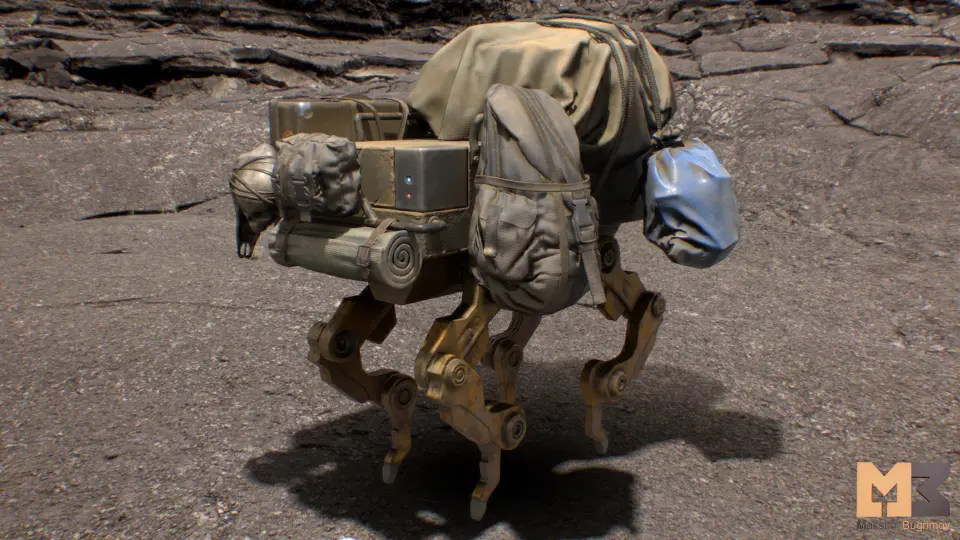
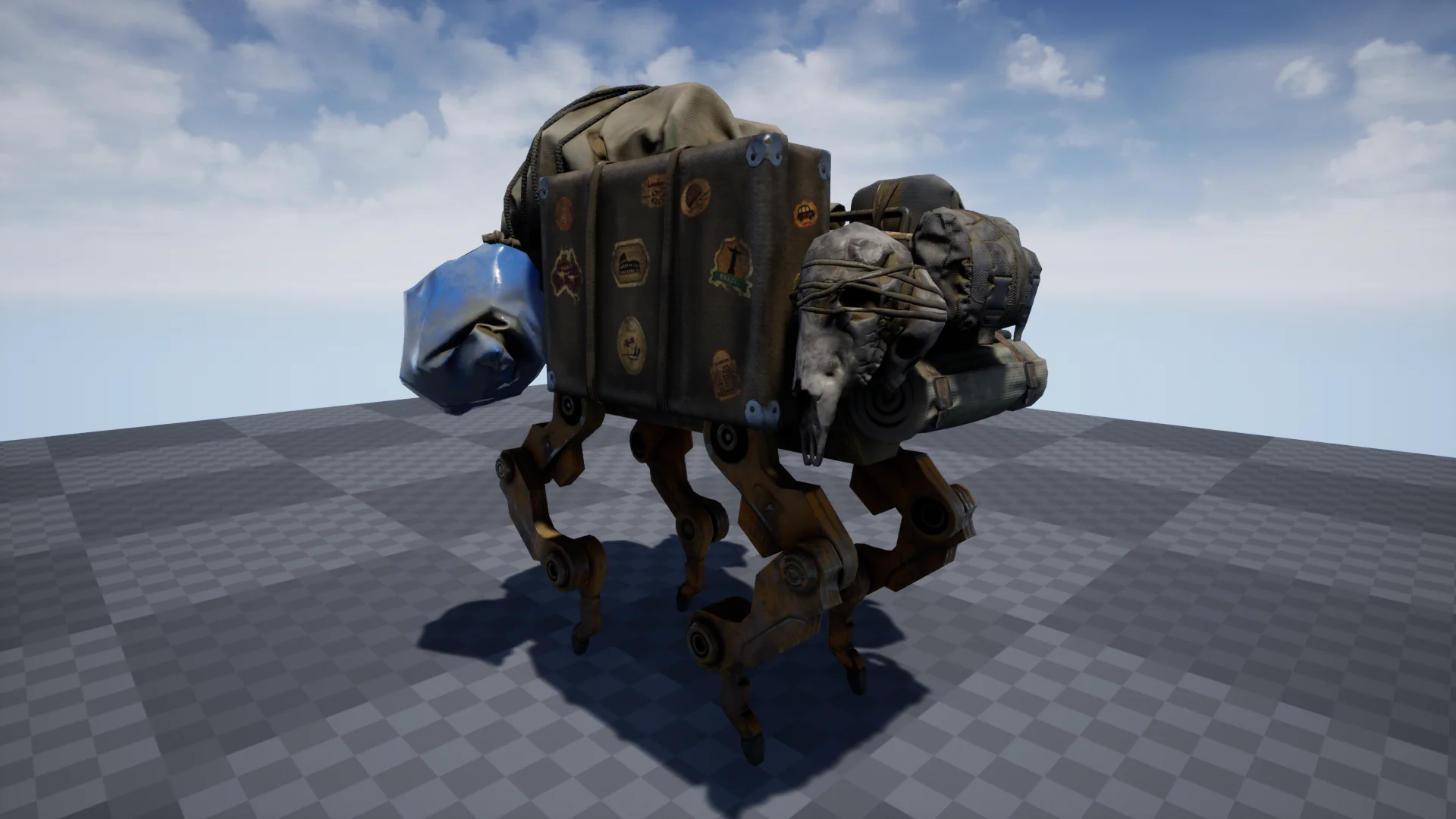
Role-playing games frequently introduce companion characters to solve logistical hurdles in exploration and survival mechanics. The Assistant Dog operates directly within this framework, providing hero characters with mobile utility through dedicated carrying capacity and inventory space. Rather than serving purely as decorative background life, the model is configured to stand alongside the player, operating as an active assistant that transports gear, supplies, and collected equipment through interactive gameplay sequences.
Deploying the Assistant Dog for Companion Inventory Systems
Managing carried weight and limited bag space is an established gameplay hurdle across role-playing titles. Introducing the Assistant Dog allows designers to implement dedicated pack-animal or companion mechanics without disrupting player locomotion. Because the character is created to carry things and provide inventory space, its runtime setup directly supports systems where items can be transferred between the hero and the companion during exploration or camp phases.
Implementing this system relies on tying the character's physical presence to an inventory data structure. When the hero interacts with the creature in the game world, a storage container interface can be triggered to let players offload excess materials, quest items, or secondary armaments. In practical game design, this prevents players from continually breaking the pace of dungeon crawls or wilderness treks to return to static storage hubs, embedding transport capability directly into an accompanying creature.
PBR Texturing Within Low-Poly Constraints
The visual framework pairs low-poly geometry with physically based rendering (PBR) texturing standards. Low-poly construction serves a crucial runtime purpose: companions must remain active on screen simultaneously with player models, adversarial NPCs, dynamic lighting setups, and expansive terrain. Maintaining an efficient polygon footprint prevents the model from generating unnecessary rendering bottlenecks during high-density combat or heavy environmental processing.
Applying PBR workflows ensures that surface properties—such as skin, fur, gear straps, and metal fixtures—react predictably across shifting light environments. In dark interior corridors or open daylight scenes, the physical shading maps define accurate reflections, roughness values, and light dispersion. This material standard ensures the low-poly mesh integrates cleanly beside higher-density assets or modern post-processing stacks without appearing visually flat or detached from surrounding environmental art.
Animation Blueprint Logic and the 56 Creature Motion Set
Dynamic movement is essential for non-player companions that must pathfind behind or alongside a player character. The package supports integration through an Animation Blueprint and aligns with a collection of 56 animations for creatures. This animation pool establishes the baseline locomotion and behavioral states required for a credible quadruped assistant in real-time environments.
Within the Animation Blueprint, developers can assemble state machines that govern how the creature transitions between distinct behaviors:
Locomotion blend spaces handling smooth shifts from resting, to walking, to running based on movement speed and player proximity.
Stationary idle animations that trigger when the hero halts, signaling that the companion is waiting for interaction.
State-driven transition trees that account for directional turns, sudden stops, or reaction states during unexpected encounters.
Action-specific hooks designed to interface with trade actions, resting sequences, or terrain traversal.
Driving these 56 creature motions through an Animation Blueprint guarantees that movement stays responsive. The blend logic interpolates bone transforms cleanly, preventing harsh visual pops when the companion switches from following the hero to settling into an idle stance when inventory interfaces open.
Integrating Weapons Across Fantasy and Horror Settings
The companion asset spans distinct genre categories, carrying explicit tagging for fantasy, RPG, horror, and weapon setups. In a fantasy role-playing structure, the animal serves as an escort, pack hound, or scout auxiliary carrying field gear across expansive biomes. In survival horror titles, the role shifts toward managing strict item limitations, where the dog functions as a critical mobile lifeline carrying defensive tools, spare ammunition, or medical items under high-stress conditions.
Weapon interaction hooks allow the character to be tied directly to armaments carried in the field. Depending on gameplay design, the creature can physically transport weapons via custom harness mounts or trigger defensive interaction scripts when threats enter its immediate sensory perimeter. This duality supports projects that require a utilitarian pack companion in one scenario and a guarded combat escort in another.
Script Structure for Managing Assistant Dog Carry Mechanics
Functional implementation of companion carry mechanics depends on script coordination between the actor, the player controller, and the inventory manager. A typical implementation binds companion follow logic to the player's active navigation mesh, monitoring the distance vector between the hero and the Assistant Dog. When this distance exceeds standard follow margins, the companion updates its movement speed using the Animation Blueprint blend space parameters to catch up.
When the hero steps within interaction range, companion script triggers register player inputs to display the companion's current inventory weight and item contents. Script routines also monitor environmental states, toggling whether the companion maintains its follow route, defends an assigned position, or holds still while players equip or retrieve weapon assets from its carrying pack. By unifying low-poly modeling, PBR textures, procedural script hooks, and comprehensive creature animations, the setup functions as a complete auxiliary system ready for real-time deployment.
 Characters
 Characters
 Characters
 Characters