"7e6fc58c410f2894"{"id":"1001629","slug":"dismemberment-gore-system","title":"Dismemberment Gore System","category":"Characters \u0026 Creatures","engine":"4.21+,5.0+","assetVersion":"","engineVersion":"Engine Version: 4.21+,5.0+","tag":"Characters","accent":"blue","visual":"character","summary":"Explore the Dismemberment Gore System for Unreal Engine, featuring 77 dismemberable parts, dynamic blood masks, shotgun combat, and smart character materials.","platform":"Unreal Engine","publishedAt":"2026-10-13T02:05:54.650Z","updatedAt":"2026-10-13T02:05:54.650Z","sourceNotes":[],"fileContents":[],"compatibility":["Unreal Engine","Engine Version: 4.21+,5.0+"],"featuredImage":{"alt":"Dismemberment Gore System","src":"/wp-content/uploads/published/2026/10/c7e10e24aab5-8c26cff9-1b19-4229-96e3-29b786b2faff-41aebea87f.webp"},"hasDownloadLink":true,"downloads":0,"terms":[{"taxonomy":"category","slug":"characters-and-creatures","name":"Characters \u0026 Creatures"}],"galleryImages":[{"src":"/wp-content/uploads/published/2026/10/510dbf995f15-7280b132-39c7-4171-8fc2-6303e4321672-6d0c95d46b.webp","alt":"Dismemberment Gore System"},{"src":"/wp-content/uploads/published/2026/10/56e8b27f8ed7-d31df262-dca8-422e-adfc-790eb99b6b56-8daaa6717d.webp","alt":"Dismemberment Gore System"},{"src":"/wp-content/uploads/published/2026/10/0ab473422052-791a8ecb-4943-4cca-ac70-be2917f92c62-f95f89aeb8.webp","alt":"Dismemberment Gore System"},{"src":"/wp-content/uploads/published/2026/10/e29318092e2e-7d79be95-13b2-4829-af51-ef7c4b84f6db-7b08743240.webp","alt":"Dismemberment Gore System"},{"src":"/wp-content/uploads/published/2026/10/cf84bd53703b-d52a07f1-a81b-4be9-a849-28653c319975-9699f70817.webp","alt":"Dismemberment Gore System"},{"src":"/wp-content/uploads/published/2026/10/869e47035ab3-dbbefd5f-b386-460b-bd3e-fc13da5424aa-cb86c7ff52.webp","alt":"Dismemberment Gore System"},{"src":"/wp-content/uploads/published/2026/10/00d1c4f19fb9-67d69a7e-8f9e-4930-84d5-39555da6ac98-94c935d19f.webp","alt":"Dismemberment Gore System"},{"src":"/wp-content/uploads/published/2026/10/182555afb724-f8af0f77-b36b-4cb3-a810-cd87fa45e843-40d1fd54e4.webp","alt":"Dismemberment Gore System"},{"src":"/wp-content/uploads/published/2026/10/2abdf20890aa-92087d57-825d-4a11-8c44-640284945ffe-5694d7ef7e.webp","alt":"Dismemberment Gore System"}],"accessPanel":{"kind":"resource","title":"Download this resource","eyebrow":"Free Download","message":"Log in or create a free account to start your download.","fileName":"Dismemberment Gore System.7z","safetyNote":"Resources are manually reviewed before listing to improve quality and reduce obvious risks.","actionLabel":"Download Free","resourceType":"Resource archive"},"contentHtml":"\u003ch2\u003eCore Mechanics of the Dismemberment Gore System\u003c/h2\u003e\u003cp\u003eThe Dismemberment Gore System transforms standard character ragdolls into modular entities capable of exploding into detailed showers of visceral pieces. Rather than relying on simple hit reactions or pre-baked death sequences, the framework is based on scalable separation, allowing characters to shed anatomical components dynamically under damage. The logic behind the system handles anything from minor fragmenting to catastrophic whole-body destruction, simulating the effect of high-impact weaponry on organic targets.\u003c/p\u003e\u003cp\u003eScalability defines the foundation of the separation framework. The system imposes no hard limits on how many individual fragments or gibs an asset can support. Creators can take any character mesh into external DCC software such as Blender, Maya, or 3ds Max, slice the model along desired anatomical seams, and configure those pieces within the system logic. Because the dismemberment logic relies on modular setup, custom creatures, humanoids, and monsters can feature few detachment points or dozens of micro-fragments depending on production requirements.\u003c/p\u003e\u003ch2\u003eAnatomical Fragmentation Across 77 Zombie Parts\u003c/h2\u003e\u003cp\u003eTo demonstrate the visual scope and responsiveness of the logic, the package provides a fully rigged and animated zombie character designed specifically around extensive bodily separation. This demonstration figure is partitioned into 77 discrete dismemberable components, providing deep granular coverage across every major limb, joint, and vital region. Rather than simply separating arms at the shoulder or legs at the hip, the structure accounts for nuanced impact locations.\u003c/p\u003e\u003cp\u003eHead trauma yields skull fragments and exposed brain matter that detach cleanly upon localized damage. Torso impacts and limb strikes release severed arms, lower legs, and regional flesh segments that convert immediately into physics-driven gibs. The character includes dedicated Animation Blueprint logic alongside a functional skeletal rig, enabling seamless movement through walk cycles, attack states, and stagger animations before transitioning into severed physics states. Simple AI mechanics drive the zombie to pursue the player, providing immediate targets to test precision damage and sequential de-limbing.\u003c/p\u003e\u003ch2\u003eSmart Materials, Dynamic Blood Masks, and Dissolving VFX\u003c/h2\u003e\u003cp\u003eDetaching skeletal meshes is only half of the dismemberment equation; visual feedback at the wound site determines whether an impact feels convincing. The Dismemberment Gore System pairs its skeletal separation logic with smart character materials configured to handle real-time trauma. Dynamic blood masks project wound staining and arterial splatter directly across the character surface at points of separation, ensuring that exposed stumps and adjacent skin show localized damage rather than pristine textures.\u003c/p\u003e\u003cp\u003eTo handle cleanup and visual variety, the material system incorporates dissolving visual effects. When body pieces or gibs must clear out of the scene, custom dissolution shaders transition the geometry smoothly rather than popping meshes out of existence abruptly. Supporting these materials is a suite of custom decals and particle emitters. Blood decals designed using Substance tools project splatter across nearby floors and walls, while directional blood bursts and fluid sprays emit at the exact moment a joint or skull component detaches.\u003c/p\u003e\u003ch2\u003eFPS Mechanics and the Triple-Barrelled Shotgun\u003c/h2\u003e\u003cp\u003eThe system includes a playable first-person framework to show how the dismemberment rules respond to direct weapon input. Central to this demonstration is a rigged and animated triple-barrelled shotgun, complete with reload mechanics and spent shells. The weapon logic delivers substantial regional damage, giving players the tools needed to carve through approaching waves of enemies and observe how distinct damage volumes trigger corresponding gib pieces.\u003c/p\u003e\u003cp\u003eWeapon fire is accompanied by dedicated particle effects, including muzzle flash bursts and physical shell ejections that synchronize with the reload animations. Integrated with this firearm setup is a dedicated zombie-spawning manager that generates hostile targets continuously. By linking the weapon hit traces directly to the zombie character’s collision volumes, the project demonstrates how localized ballistic force calculates which of the 77 body parts detach, how much physics impulse is applied to the severed piece, and how blood decals project relative to the firing angle.\u003c/p\u003e\u003ch2\u003eMarshland Environment and Production Pipeline\u003c/h2\u003e\u003cp\u003eAll demonstration assets are situated within a fully realized swampy marshland environment. This test arena features handcrafted Substance textures, murky bodies of water, and dense atmospheric foliage, providing a realistic visual baseline for evaluating lighting, shadow response, and environmental blood application. Testing the dismemberment logic against foliage and uneven marsh terrain confirms how dynamic blood decals adhere to non-flat geometry and how water surfaces interact with physics-driven body fragments.\u003c/p\u003e\u003cp\u003eBecause the project is constructed as a turnkey Unreal Engine project, the underlying Blueprint architecture and Animation Blueprints can be imported directly into an ongoing production or utilized as a foundational template for a new action title. Teams developing survival horror games, zombie shooters, or dark action titles—including projects utilizing the Complete Dark RPG Template—can repurpose the underlying Blueprint scripts for custom character rosters. The straightforward workflow between third-party modeling applications and the Unreal Blueprint framework ensures that adapting new enemy archetypes into fully gibbable targets remains consistent across any production phase.\u003c/p\u003e\n\n\u003ch2\u003eExplore Similar Assets\u003c/h2\u003e\n\u003cul\u003e\n\u003cli\u003e\u003ca href=\"https://3dcghub.com/engore-procedural-dismemberment/\" title=\"EnGore: Procedural Dismemberment\"\u003eEnGore: Procedural Dismemberment\u003c/a\u003e\u003c/li\u003e\n\u003cli\u003e\u003ca href=\"https://3dcghub.com/big-zombie/\" title=\"Big Zombie\"\u003eBig Zombie\u003c/a\u003e\u003c/li\u003e\n\u003cli\u003e\u003ca href=\"https://3dcghub.com/dismemberment-kit-v2/\" title=\"Dismemberment Kit V2\"\u003eDismemberment Kit V2\u003c/a\u003e\u003c/li\u003e\n\u003cli\u003e\u003ca href=\"https://3dcghub.com/forester/\" title=\"Forester\"\u003eForester\u003c/a\u003e\u003c/li\u003e\n\u003cli\u003e\u003ca href=\"https://3dcghub.com/insane-pack-01-game-assets-extra-stigma-studios/\" title=\"Insane Pack 01 - Game Assets + Extra | STIGMA STUDIOS\"\u003eInsane Pack 01 - Game Assets + Extra | STIGMA STUDIOS\u003c/a\u003e\u003c/li\u003e\n\u003c/ul\u003e","contentTextLength":5899,"navigation":{"current":54,"total":3618,"previous":{"id":"1001630","slug":"dissolve-teleport-effect","title":"Dissolve Teleport Effect","category":"Transition","platform":"Unreal Engine","updatedAt":"2026-10-13T02:07:01.646Z"},"next":{"id":"1001628","slug":"desert-mushroom-forest","title":"Desert Mushroom Forest","category":"Fantasy","platform":"Unreal Engine","updatedAt":"2026-10-13T02:05:01.901Z"}},"relatedResources":[{"id":"14866","slug":"engore-procedural-dismemberment","title":"EnGore: Procedural Dismemberment","category":"Game Mechanics","engine":"4.27,5.0 - 5.3","assetVersion":"Engine version: 4.27,5.0 - 5.3","engineVersion":"4.27","tag":"Game Mechanics","accent":"blue","visual":"mech","summary":"EnGore: Procedural Dismemberment is a high-performance C++ plugin designed for dynamic skeletal mesh destruction. It eliminates the need for baked meshes while offering highly customizable gore and blood effects.","platform":"Unreal Engine","publishedAt":"2026-03-11T19:54:46.000Z","updatedAt":"2026-04-19T15:45:39.000Z","sourceNotes":[],"fileContents":[],"compatibility":["Unreal Engine","Engine version: 4.27,5.0 - 5.3"],"featuredImage":{"alt":"EnGore: Procedural Dismemberment","src":"https://3dcghub.com/wp-content/uploads/2026/03/3524900f-fc0b-4c67-9fa4-be82c2e8451b.webp"},"hasDownloadLink":true,"downloads":1},{"id":"1774","slug":"big-zombie","title":"Big Zombie","category":"Characters \u0026 Creatures","engine":"4.26+,5.0+","assetVersion":"Engine version: 4.26+,5.0+","engineVersion":"4.19","tag":"Characters","accent":"blue","visual":"character","summary":"Enhance your horror game with this modular Big Zombie boss model. Featuring 4K textures, dismemberment support, and Epic Skeleton compatibility for UE4 and UE5.","platform":"Unreal Engine","publishedAt":"2026-02-06T21:50:27.000Z","updatedAt":"2026-04-19T15:58:29.000Z","sourceNotes":[],"fileContents":[],"compatibility":["Unreal Engine","Engine version: 4.26+,5.0+"],"featuredImage":{"alt":"Big Zombie","src":"https://3dcghub.com/wp-content/uploads/2026/02/008aa7bf-894c-45d8-947a-4f0e7817b9ee.webp"},"hasDownloadLink":true,"downloads":4},{"id":"10714","slug":"dismemberment-kit-v2","title":"Dismemberment Kit V2","category":"Gameplay Features","engine":"5.3+","assetVersion":"Engine version: 5.3+","engineVersion":"4.27","tag":"Gameplay Features","accent":"blue","visual":"character","summary":"Dismemberment Kit V2 provides a streamlined, plug-and-play solution for adding realistic gore to your characters. This fully replicated component allows for quick mesh swapping and animation integration.","platform":"Unreal Engine","publishedAt":"2026-03-03T16:02:30.000Z","updatedAt":"2026-04-19T15:49:56.000Z","sourceNotes":[],"fileContents":[],"compatibility":["Unreal Engine","Engine version: 5.3+"],"featuredImage":{"alt":"Dismemberment Kit V2","src":"https://3dcghub.com/wp-content/uploads/2026/03/b9cd95a1-bf2a-4ab7-8393-7b2f8b103bd9.webp"},"hasDownloadLink":true,"downloads":1}]}
Characters
Dismemberment Gore System
Explore the Dismemberment Gore System for Unreal Engine, featuring 77 dismemberable parts, dynamic blood masks, shotgun combat, and smart character materials.
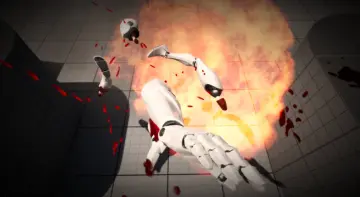
The Dismemberment Gore System transforms standard character ragdolls into modular entities capable of exploding into detailed showers of visceral pieces. Rather than relying on simple hit reactions or pre-baked death sequences, the framework is based on scalable separation, allowing characters to shed anatomical components dynamically under damage. The logic behind the system handles anything from minor fragmenting to catastrophic whole-body destruction, simulating the effect of high-impact weaponry on organic targets.
Scalability defines the foundation of the separation framework. The system imposes no hard limits on how many individual fragments or gibs an asset can support. Creators can take any character mesh into external DCC software such as Blender, Maya, or 3ds Max, slice the model along desired anatomical seams, and configure those pieces within the system logic. Because the dismemberment logic relies on modular setup, custom creatures, humanoids, and monsters can feature few detachment points or dozens of micro-fragments depending on production requirements.
Anatomical Fragmentation Across 77 Zombie Parts
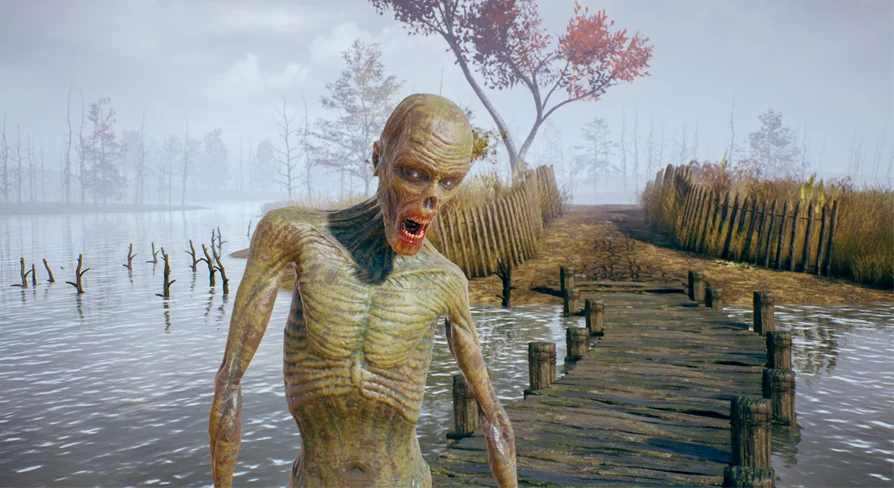
To demonstrate the visual scope and responsiveness of the logic, the package provides a fully rigged and animated zombie character designed specifically around extensive bodily separation. This demonstration figure is partitioned into 77 discrete dismemberable components, providing deep granular coverage across every major limb, joint, and vital region. Rather than simply separating arms at the shoulder or legs at the hip, the structure accounts for nuanced impact locations.
Head trauma yields skull fragments and exposed brain matter that detach cleanly upon localized damage. Torso impacts and limb strikes release severed arms, lower legs, and regional flesh segments that convert immediately into physics-driven gibs. The character includes dedicated Animation Blueprint logic alongside a functional skeletal rig, enabling seamless movement through walk cycles, attack states, and stagger animations before transitioning into severed physics states. Simple AI mechanics drive the zombie to pursue the player, providing immediate targets to test precision damage and sequential de-limbing.
Smart Materials, Dynamic Blood Masks, and Dissolving VFX
Detaching skeletal meshes is only half of the dismemberment equation; visual feedback at the wound site determines whether an impact feels convincing. The Dismemberment Gore System pairs its skeletal separation logic with smart character materials configured to handle real-time trauma. Dynamic blood masks project wound staining and arterial splatter directly across the character surface at points of separation, ensuring that exposed stumps and adjacent skin show localized damage rather than pristine textures.
To handle cleanup and visual variety, the material system incorporates dissolving visual effects. When body pieces or gibs must clear out of the scene, custom dissolution shaders transition the geometry smoothly rather than popping meshes out of existence abruptly. Supporting these materials is a suite of custom decals and particle emitters. Blood decals designed using Substance tools project splatter across nearby floors and walls, while directional blood bursts and fluid sprays emit at the exact moment a joint or skull component detaches.
FPS Mechanics and the Triple-Barrelled Shotgun
The system includes a playable first-person framework to show how the dismemberment rules respond to direct weapon input. Central to this demonstration is a rigged and animated triple-barrelled shotgun, complete with reload mechanics and spent shells. The weapon logic delivers substantial regional damage, giving players the tools needed to carve through approaching waves of enemies and observe how distinct damage volumes trigger corresponding gib pieces.
Weapon fire is accompanied by dedicated particle effects, including muzzle flash bursts and physical shell ejections that synchronize with the reload animations. Integrated with this firearm setup is a dedicated zombie-spawning manager that generates hostile targets continuously. By linking the weapon hit traces directly to the zombie character’s collision volumes, the project demonstrates how localized ballistic force calculates which of the 77 body parts detach, how much physics impulse is applied to the severed piece, and how blood decals project relative to the firing angle.
Marshland Environment and Production Pipeline
All demonstration assets are situated within a fully realized swampy marshland environment. This test arena features handcrafted Substance textures, murky bodies of water, and dense atmospheric foliage, providing a realistic visual baseline for evaluating lighting, shadow response, and environmental blood application. Testing the dismemberment logic against foliage and uneven marsh terrain confirms how dynamic blood decals adhere to non-flat geometry and how water surfaces interact with physics-driven body fragments.
Because the project is constructed as a turnkey Unreal Engine project, the underlying Blueprint architecture and Animation Blueprints can be imported directly into an ongoing production or utilized as a foundational template for a new action title. Teams developing survival horror games, zombie shooters, or dark action titles—including projects utilizing the Complete Dark RPG Template—can repurpose the underlying Blueprint scripts for custom character rosters. The straightforward workflow between third-party modeling applications and the Unreal Blueprint framework ensures that adapting new enemy archetypes into fully gibbable targets remains consistent across any production phase.
 Characters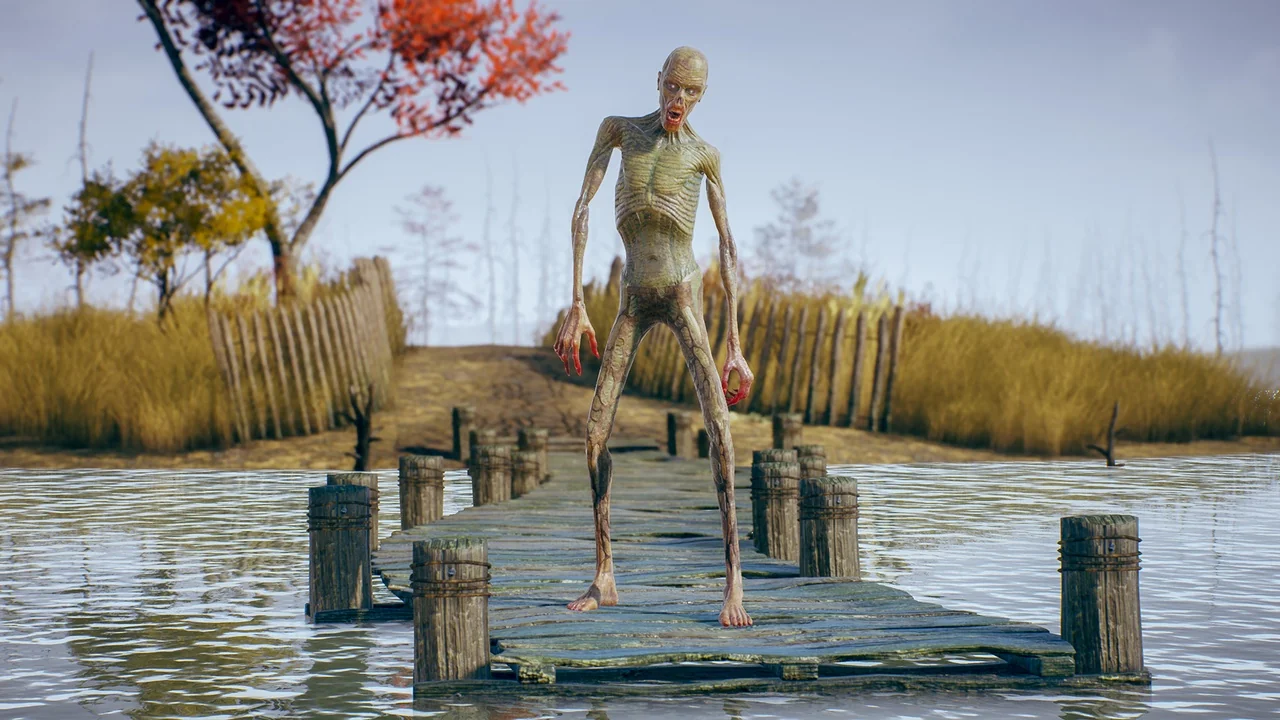
 Game Mechanics
 Characters
 Gameplay Features