"7e6fc58c410f2894"{"id":"1001628","slug":"desert-mushroom-forest","title":"Desert Mushroom Forest","category":"Fantasy","engine":"4.20+,5.0+","assetVersion":"","engineVersion":"Engine Version: 4.20+,5.0+","tag":"Fantasy","accent":"blue","visual":"mech","summary":"Explore the Desert Mushroom Forest setup, featuring stylized landscape materials, props, emissive foliage, and grass for fantasy level assembly.","platform":"Unreal Engine","publishedAt":"2026-10-13T02:05:01.901Z","updatedAt":"2026-10-13T02:05:01.901Z","sourceNotes":[],"fileContents":[],"compatibility":["Unreal Engine","Engine Version: 4.20+,5.0+"],"featuredImage":{"alt":"Desert Mushroom Forest","src":"/wp-content/uploads/published/2026/10/a40b9d768054-21032146-2f28-4e87-b7d6-33595c58d07b-8d27420f50.webp"},"hasDownloadLink":true,"downloads":0,"terms":[{"taxonomy":"category","slug":"fantasy","name":"Fantasy"}],"galleryImages":[{"src":"/wp-content/uploads/published/2026/10/2b6a8930196f-257c5f32-ce15-4df0-bd65-a8261c97c6d8-922f12efd7.webp","alt":"Desert Mushroom Forest"},{"src":"/wp-content/uploads/published/2026/10/bfa48b479537-445d26c1-a4bb-483b-932a-e512ee9862b2-8952b6e742.webp","alt":"Desert Mushroom Forest"},{"src":"/wp-content/uploads/published/2026/10/d5606f30e56e-4e58d5a8-822d-4731-a107-8aa578f12e96-87deb4cc45.webp","alt":"Desert Mushroom Forest"},{"src":"/wp-content/uploads/published/2026/10/10e505e6b296-33ad61c1-9b82-4e88-84a7-394b89d6876e-cd11f0d698.webp","alt":"Desert Mushroom Forest"},{"src":"/wp-content/uploads/published/2026/10/2eb0ce550f0a-bc4b084f-83f0-46d2-a463-4febf13e8f5f-f540655d29.webp","alt":"Desert Mushroom Forest"}],"accessPanel":{"kind":"resource","title":"Download this resource","eyebrow":"Free Download","message":"Log in or create a free account to start your download.","fileName":"Content.7z","safetyNote":"Resources are manually reviewed before listing to improve quality and reduce obvious risks.","actionLabel":"Download Free","resourceType":"Resource archive"},"contentHtml":"\u003ch2\u003eDesert Mushroom Forest Environment Architecture\u003c/h2\u003e\n\u003cp\u003eDesert biomes rely heavily on broad textural continuity to communicate vastness, while fantasy environments require unexpected biological elements to break visual repetition. Desert Mushroom Forest addresses this exact dynamic by pairing desert-themed landscape ground surfaces with vibrant, unconventional growth. By focusing on essential environmental layers—a dedicated landscape material, select props, and active vegetation—the collection creates an immediate thematic foundation for stylized level design.\u003c/p\u003e\n\u003cp\u003eThe core aesthetic works by establishing tension between dry, barren ground and flourishing fungal life. Rather than distributing standard desert shrubbery, the presence of foliage and grass adapted to a mushroom forest shifts the scene into high fantasy. Constructing environments within this thematic space requires careful attention to how terrain shaders meet vertical assets, ensuring the desert floor feels directly connected to the peculiar flora rising out of it.\u003c/p\u003e \u003ch2\u003eEmissive Foliage and Grass Material Behavior\u003c/h2\u003e\n\u003cp\u003eLight definition in stylized art directions frequently avoids pure realism in favor of exaggerated clarity, and the materials assigned to the foliage and grass inside this package leverage that philosophy directly through emissive color. When foliage and grass incorporate an emissive channel, the lighting response changes fundamentally across day and night cycles or shadowed zones.\u003c/p\u003e\n\u003cp\u003eIn standard shading, shadowed grass blades and low-lying ground plants depend entirely on direct scene illumination, ambient lighting, or secondary bounces to maintain form. Without intense direct light, stylized vegetation can easily become muddy or visually lost against textured terrain. By utilizing emissive color across the foliage and grass materials, the vegetation introduces its own localized luminance into the composition. This internal light response separates delicate plant geometry from dark terrain pockets, making ground cover immediately legible from wide camera angles or close player viewpoints.\u003c/p\u003e\n\u003cp\u003eWithin a fantasy desert context, emissive materials serve both an aesthetic and functional role:\u003c/p\u003e\n\u003cul\u003e\n\u003cli\u003eVisual hierarchy: Luminescent grass and foliage guide the eye toward active biological zones across dry, sprawling land.\u003c/li\u003e\n\u003cli\u003eAtmospheric contrast: The bright response of glowing plant surfaces contrasts against muted, dusty ground textures.\u003c/li\u003e\n\u003cli\u003eShading clarity: Emissive foliage maintains saturated color values regardless of extreme shadow casting across rolling dunes or rocky formations.\u003c/li\u003e\n\u003c/ul\u003e \u003ch2\u003eLandscape Material Application Across Stylized Levels\u003c/h2\u003e\n\u003cp\u003eThe ground surface within the package is anchored by a dedicated landscape material. In stylized level creation, landscape materials do not just provide color; they form the mechanical foundation upon which all vertical set dressing, foliage systems, and gameplay bounds depend. The landscape material here is tailored to support desert formations, presenting clean stylized textures that fit the broader aesthetic of the environment.\u003c/p\u003e\n\u003cp\u003eWhen painting and sculpting a level with this landscape material, the priority is creating believable ground transitions. Desert terrain features natural variations such as packed dirt, shifting sand surfaces, and exposed stony shelves. Applying the landscape shader cleanly across sculpted heights allows level designers to prepare beds for mushroom clusters, carving out dried stream pathways or deep desert basins where emissive grass can naturally concentrate. The shader handles the broad spatial canvas, ensuring that expansive level boundaries do not require dense prop density to remain visually coherent.\u003c/p\u003e \u003ch2\u003eProp Placement and Fantasy Level Dressing\u003c/h2\u003e\n\u003cp\u003eTo complement the ground material and vegetative cover, the package incorporates a selection of props. In stylized world building, props act as structural landmarks. They delineate traversable boundaries, create natural cover, and establish the scale of the living elements within the scene.\u003c/p\u003e\n\u003cp\u003eBecause the environment revolves around a desert mushroom forest, the props provide the physical anchors that break up flat landscape geometry. Placing these elements along ridgelines, clusters, or pathways organizes an open expanse into defined clearings and corridors. When layered alongside the emissive grass and foliage, these props establish verticality, pulling the scene upward from the terrain surface and grounding the fantasy nature of the biome.\u003c/p\u003e \u003ch2\u003eIntegration with the Stylized Terrain Pack of 50 Materials\u003c/h2\u003e\n\u003cp\u003eEnvironmental design rarely remains isolated to a single patch of ground, and expanding a desert biome often requires a larger library of terrain types. Desert Mushroom Forest shares direct compatibility with the Stylized Terrain Pack of 50 Materials, opening up straightforward workflows for larger world assemblies.\u003c/p\u003e\n\u003cp\u003eWhen working across multiple stylized biomes or scaling an environment outward, utilizing compatible terrain shaders prevents visual fragmentation. Integrating the landscape surfaces from the larger pack of 50 materials ensures that transitions from arid desert flats into rocky canyons, foothills, or bordering biomes share matching visual parameters. Level designers can maintain the core Desert Mushroom Forest theme in designated clearings while relying on compatible materials to build out surrounding territory, preserving aesthetic harmony across an entire map.\u003c/p\u003e\n\n\u003ch2\u003eExplore Similar Assets\u003c/h2\u003e\n\u003cul\u003e\n\u003cli\u003e\u003ca href=\"https://3dcghub.com/elvish-forest/\" title=\"Elvish Forest\"\u003eElvish Forest\u003c/a\u003e\u003c/li\u003e\n\u003cli\u003e\u003ca href=\"https://3dcghub.com/deadly-forest-modular-asset-pack/\" title=\"Deadly Forest - Modular Asset Pack\"\u003eDeadly Forest - Modular Asset Pack\u003c/a\u003e\u003c/li\u003e\n\u003cli\u003e\u003ca href=\"https://3dcghub.com/low-poly-fantasy-forest/\" title=\"LOW-POLY - Fantasy Forest\"\u003eLOW-POLY - Fantasy Forest\u003c/a\u003e\u003c/li\u003e\n\u003cli\u003e\u003ca href=\"https://3dcghub.com/cactus-plants-desert-garden/\" title=\"Cactus Plants: Desert Garden\"\u003eCactus Plants: Desert Garden\u003c/a\u003e\u003c/li\u003e\n\u003cli\u003e\u003ca href=\"https://3dcghub.com/forest-fungi-mushroom-pack/\" title=\"Forest Fungi - Mushroom Pack\"\u003eForest Fungi - Mushroom Pack\u003c/a\u003e\u003c/li\u003e\n\u003c/ul\u003e","contentTextLength":5555,"navigation":{"current":55,"total":3618,"previous":{"id":"1001629","slug":"dismemberment-gore-system","title":"Dismemberment Gore System","category":"Characters \u0026 Creatures","platform":"Unreal Engine","updatedAt":"2026-10-13T02:05:54.650Z"},"next":{"id":"1001627","slug":"deadly-ruins-modular-asset-pack","title":"Deadly Ruins - Modular asset pack","category":"Medieval","platform":"Unreal Engine","updatedAt":"2026-10-13T02:04:16.811Z"}},"relatedResources":[{"id":"1001137","slug":"elvish-forest","title":"Elvish Forest","category":"Fantasy","engine":"4.26+,5.0+","assetVersion":"","engineVersion":"Engine Version: 4.26+,5.0+","tag":"Fantasy","accent":"blue","visual":"mech","summary":"Elvish Forest is a stylized nature pack, part one of a three-part elven asset bundle. It holds mushrooms, grass, branches, ferns, bushes, clean folder structure","platform":"Unreal Engine","publishedAt":"2026-09-09T03:27:15.273Z","updatedAt":"2026-09-09T03:27:15.273Z","sourceNotes":[],"fileContents":[],"compatibility":["Unreal Engine","Engine Version: 4.26+,5.0+"],"featuredImage":{"alt":"Elvish Forest","src":"/wp-content/uploads/published/2026/09/8cf7d593b17c-9f73415d-8889-476c-8154-2427faab7c33-16493d1e5c.webp"},"hasDownloadLink":true,"downloads":0},{"id":"1001652","slug":"raided-forest-camp","title":"Raided Forest Camp","category":"Fantasy","engine":"4.26+,5.0+","assetVersion":"","engineVersion":"Engine Version: 4.26+,5.0+","tag":"Fantasy","accent":"blue","visual":"mech","summary":"Build dark fantasy and medieval encampment aftermaths with Raided Forest Camp, featuring 47 meshes, decals, spline water, and rock materials.","platform":"Unreal Engine","publishedAt":"2026-10-13T08:28:08.172Z","updatedAt":"2026-10-13T08:28:08.172Z","sourceNotes":[],"fileContents":[],"compatibility":["Unreal Engine","Engine Version: 4.26+,5.0+"],"featuredImage":{"alt":"Raided Forest Camp","src":"/wp-content/uploads/published/2026/10/031f5e071975-c176d058-aac5-4c77-ac17-7147cb21f98c-f13d511cc3.webp"},"hasDownloadLink":true,"downloads":0},{"id":"7916","slug":"deadly-forest-modular-asset-pack","title":"Deadly Forest - Modular Asset Pack","category":"Fantasy","engine":"4.26+,5.0+","assetVersion":"Engine version: 4.26+,5.0+","engineVersion":"4.25","tag":"Fantasy","accent":"blue","visual":"city","summary":"Build a haunting atmosphere for your next project with this comprehensive dark fantasy asset pack. It features modular trees, advanced landscape materials, and atmospheric particle systems.","platform":"Unreal Engine","publishedAt":"2026-02-22T15:51:36.000Z","updatedAt":"2026-04-19T15:55:52.000Z","sourceNotes":[],"fileContents":[],"compatibility":["Unreal Engine","Engine version: 4.26+,5.0+"],"featuredImage":{"alt":"Deadly Forest - Modular Asset Pack","src":"https://3dcghub.com/wp-content/uploads/2026/02/cb84d763-9acb-4334-92d2-c158093ed6fe.webp"},"hasDownloadLink":true,"downloads":0}]}
Fantasy
Desert Mushroom Forest
Explore the Desert Mushroom Forest setup, featuring stylized landscape materials, props, emissive foliage, and grass for fantasy level assembly.
Category:Unreal Engine,FantasyPlatform: Unreal EngineEngine Version: 4.20+,5.0+Published: Oct 13, 2026
Fantasy
Resource overview
Desert Mushroom Forest Environment Architecture
Desert biomes rely heavily on broad textural continuity to communicate vastness, while fantasy environments require unexpected biological elements to break visual repetition. Desert Mushroom Forest addresses this exact dynamic by pairing desert-themed landscape ground surfaces with vibrant, unconventional growth. By focusing on essential environmental layers—a dedicated landscape material, select props, and active vegetation—the collection creates an immediate thematic foundation for stylized level design.
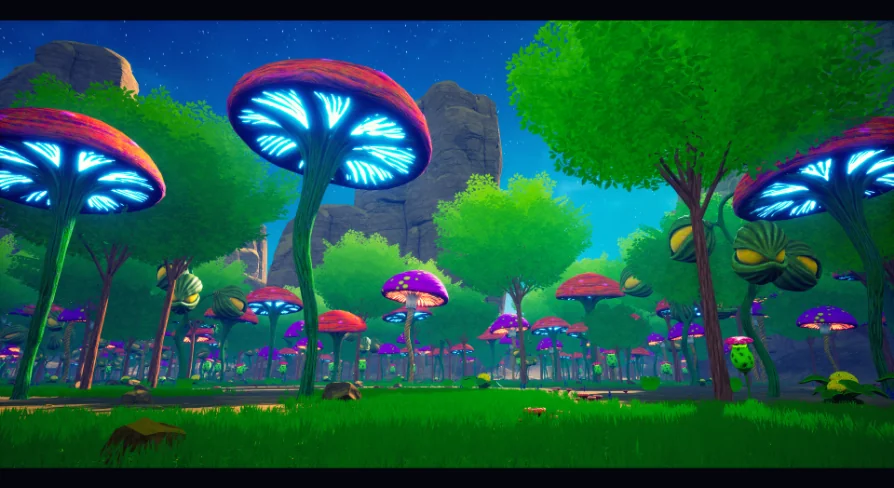
The core aesthetic works by establishing tension between dry, barren ground and flourishing fungal life. Rather than distributing standard desert shrubbery, the presence of foliage and grass adapted to a mushroom forest shifts the scene into high fantasy. Constructing environments within this thematic space requires careful attention to how terrain shaders meet vertical assets, ensuring the desert floor feels directly connected to the peculiar flora rising out of it.
Emissive Foliage and Grass Material Behavior
Light definition in stylized art directions frequently avoids pure realism in favor of exaggerated clarity, and the materials assigned to the foliage and grass inside this package leverage that philosophy directly through emissive color. When foliage and grass incorporate an emissive channel, the lighting response changes fundamentally across day and night cycles or shadowed zones.
In standard shading, shadowed grass blades and low-lying ground plants depend entirely on direct scene illumination, ambient lighting, or secondary bounces to maintain form. Without intense direct light, stylized vegetation can easily become muddy or visually lost against textured terrain. By utilizing emissive color across the foliage and grass materials, the vegetation introduces its own localized luminance into the composition. This internal light response separates delicate plant geometry from dark terrain pockets, making ground cover immediately legible from wide camera angles or close player viewpoints.
Within a fantasy desert context, emissive materials serve both an aesthetic and functional role:
Visual hierarchy: Luminescent grass and foliage guide the eye toward active biological zones across dry, sprawling land.
Atmospheric contrast: The bright response of glowing plant surfaces contrasts against muted, dusty ground textures.
Shading clarity: Emissive foliage maintains saturated color values regardless of extreme shadow casting across rolling dunes or rocky formations.
Landscape Material Application Across Stylized Levels
The ground surface within the package is anchored by a dedicated landscape material. In stylized level creation, landscape materials do not just provide color; they form the mechanical foundation upon which all vertical set dressing, foliage systems, and gameplay bounds depend. The landscape material here is tailored to support desert formations, presenting clean stylized textures that fit the broader aesthetic of the environment.
When painting and sculpting a level with this landscape material, the priority is creating believable ground transitions. Desert terrain features natural variations such as packed dirt, shifting sand surfaces, and exposed stony shelves. Applying the landscape shader cleanly across sculpted heights allows level designers to prepare beds for mushroom clusters, carving out dried stream pathways or deep desert basins where emissive grass can naturally concentrate. The shader handles the broad spatial canvas, ensuring that expansive level boundaries do not require dense prop density to remain visually coherent.
Prop Placement and Fantasy Level Dressing
To complement the ground material and vegetative cover, the package incorporates a selection of props. In stylized world building, props act as structural landmarks. They delineate traversable boundaries, create natural cover, and establish the scale of the living elements within the scene.
Because the environment revolves around a desert mushroom forest, the props provide the physical anchors that break up flat landscape geometry. Placing these elements along ridgelines, clusters, or pathways organizes an open expanse into defined clearings and corridors. When layered alongside the emissive grass and foliage, these props establish verticality, pulling the scene upward from the terrain surface and grounding the fantasy nature of the biome.
Integration with the Stylized Terrain Pack of 50 Materials
Environmental design rarely remains isolated to a single patch of ground, and expanding a desert biome often requires a larger library of terrain types. Desert Mushroom Forest shares direct compatibility with the Stylized Terrain Pack of 50 Materials, opening up straightforward workflows for larger world assemblies.
When working across multiple stylized biomes or scaling an environment outward, utilizing compatible terrain shaders prevents visual fragmentation. Integrating the landscape surfaces from the larger pack of 50 materials ensures that transitions from arid desert flats into rocky canyons, foothills, or bordering biomes share matching visual parameters. Level designers can maintain the core Desert Mushroom Forest theme in designated clearings while relying on compatible materials to build out surrounding territory, preserving aesthetic harmony across an entire map.
 Fantasy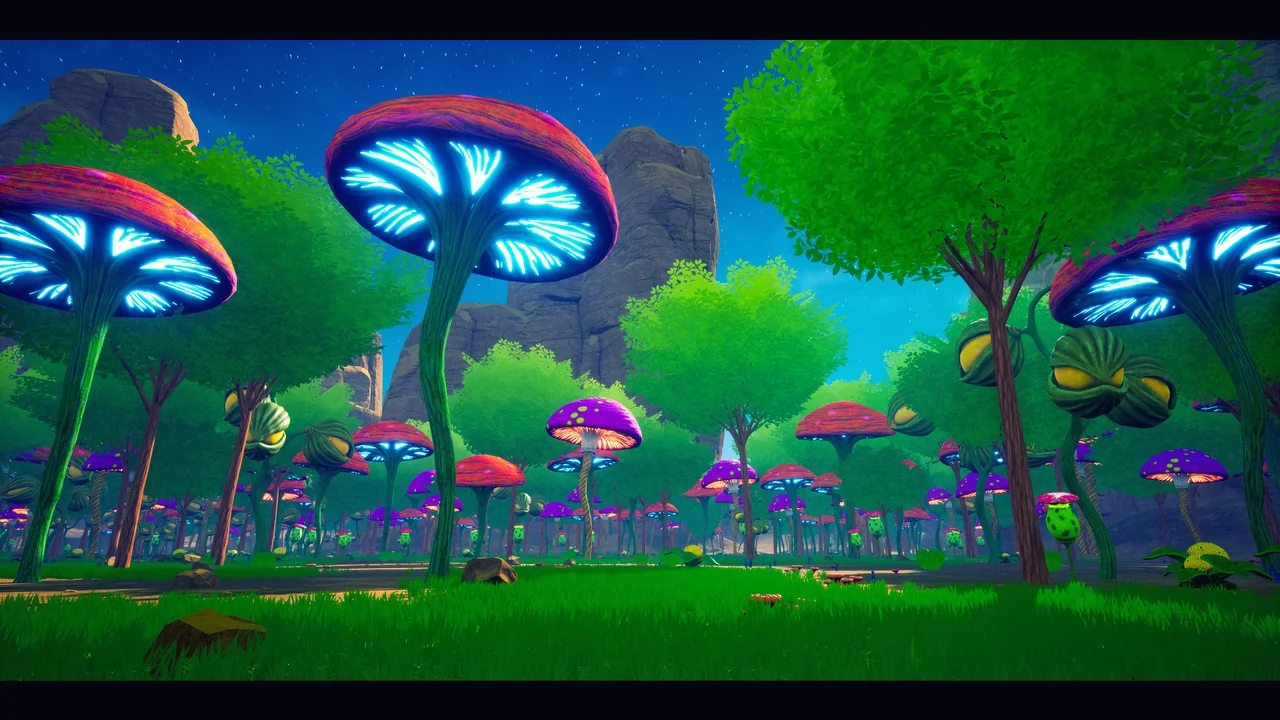
 Fantasy
 Fantasy
 Fantasy