"031373f479d9561a"{"id":"28553","slug":"american-classic-v8-engine-sound","title":"American Classic V8 Engine Sound","category":"Sound Effects","engine":"5.0+","assetVersion":"Engine version: 5.0+","engineVersion":"","tag":"Sound Effects","accent":"blue","visual":"audio","summary":"This pack focuses on a very specific job: supplying seamlessly looping American classic V8 engine audio for classic cars and muscle cars in games. It covers the full driving range with startup, shutdown, idle, RPM transitions, high-rev states, aggressivenes...","platform":"Unreal Engine","publishedAt":"2026-05-17T12:50:36.000Z","updatedAt":"2026-05-17T12:50:37.000Z","sourceNotes":[],"fileContents":[],"compatibility":["Audio","Engine version: 5.0+"],"featuredImage":{"alt":"American Classic V8 Engine Sound","src":"https://3dcghub.com/wp-content/uploads/2026/05/faa1234dc194_ba016b81-6bfa-4143-bfca-1b813e591474.webp"},"hasDownloadLink":true,"downloads":3,"terms":[{"taxonomy":"category","slug":"sound-effects","name":"Sound Effects"},{"taxonomy":"post_tag","slug":"audio","name":"Audio"},{"taxonomy":"post_tag","slug":"unity","name":"Unity"},{"taxonomy":"post_tag","slug":"vehicles","name":"Vehicles"}],"galleryImages":[{"src":"https://3dcghub.com/wp-content/uploads/2026/05/04cf3d6b70a9_e5c037c8-66c2-43cf-8623-44a10b3ae7d2.webp","alt":"American Classic V8 Engine Sound"},{"src":"https://3dcghub.com/wp-content/uploads/2026/05/13364af4e112_26d12b6e-cde7-4843-b2f0-b2f0952edc15.webp","alt":"American Classic V8 Engine Sound"},{"src":"https://3dcghub.com/wp-content/uploads/2026/05/5c0531f1441f_d10da2c1-8f51-4529-92ef-9bb120523a4d.webp","alt":"American Classic V8 Engine Sound"},{"src":"https://3dcghub.com/wp-content/uploads/2026/05/acd68c5a7b07_43e43cdc-c46f-494e-9c22-44185dc0ad6d.webp","alt":"American Classic V8 Engine Sound"},{"src":"https://3dcghub.com/wp-content/uploads/2026/05/61ce2b90ba89_0686127a-fcfc-4943-a7cf-018278649127.webp","alt":"American Classic V8 Engine Sound"}],"accessPanel":{"kind":"resource","title":"Access this resource","eyebrow":"Free Download","message":"Log in or create a free account to start your download.","fileName":"Content.7z","safetyNote":"All resources are 100% manually reviewed to eliminate all risks.","actionLabel":"Download Free","resourceType":"Resource archive"},"contentHtml":"\u003cp\u003eClassic car projects, muscle car driving scenes, and race setups that need a recognizable American V8 tone are the natural home for this sound pack. It is a game-ready collection of seamlessly looping engine clips focused on an American classic V8, with material aimed squarely at vehicles where the engine note is part of the identity rather than background noise.\u003c/p\u003e\u003cp\u003eThe package is positioned for American classic cars and muscle cars, and that focus shapes the whole set. The sound files are described as professionally recorded and seamlessly looped, while also containing computer generated sounds. Instead of offering a loose handful of effects, it provides a structured engine set that can cover startup, idle, throttle changes, RPM progression, and limiter behavior.\u003c/p\u003e\u003ch2\u003eAmerican classic V8 scenes that need more than a single loop\u003c/h2\u003e\u003cp\u003eA classic V8 rarely works as one static engine sound. Driving games, garage scenes, cinematic vehicle shots, and playable road sequences usually need the engine to respond across different RPM bands and pedal states. This pack addresses that by separating the engine behavior into distinct clips that can be combined into a more reactive system.\u003c/p\u003e\u003cp\u003eThe included sound list starts with \u003cstrong\u003eStartup\u003c/strong\u003e For engine ignition and \u003cstrong\u003eEngine_off\u003c/strong\u003e For shutoff. Those two clips handle the moment the car comes alive and the moment it powers down, which helps vehicle scenes feel complete instead of dropping the player into an already-running loop.\u003c/p\u003e\u003cp\u003eFrom there, the pack moves into the continuous driving range. There is an \u003cstrong\u003eIdle\u003c/strong\u003e Sound for the engine at rest, then a sequence of layers that move upward through the rev range: \u003cstrong\u003eIdle_low_off\u003c/strong\u003e And \u003cstrong\u003eIdle_low_on\u003c/strong\u003e, \u003cstrong\u003eLow_off\u003c/strong\u003e And \u003cstrong\u003eLow_on\u003c/strong\u003e, \u003cstrong\u003eLow_med_off\u003c/strong\u003e And \u003cstrong\u003eLow_med_on\u003c/strong\u003e, \u003cstrong\u003eMed_off\u003c/strong\u003e And \u003cstrong\u003eMed_on\u003c/strong\u003e, \u003cstrong\u003eMed_high_off\u003c/strong\u003e And \u003cstrong\u003eMed_high_on\u003c/strong\u003e, \u003cstrong\u003eHigh_off\u003c/strong\u003e And \u003cstrong\u003eHigh_on\u003c/strong\u003e, and finally \u003cstrong\u003eVery_high_off\u003c/strong\u003e And \u003cstrong\u003eVery_high_on\u003c/strong\u003e.\u003c/p\u003e\u003cp\u003eThat naming makes the intended use clear. The engine is broken into low, medium, high, and very high ranges, with separate states for whether the gas pedal is pressed or not pressed. For projects where throttle response matters, this is more useful than a simple RPM ladder because the engine can behave differently under load and off throttle. It gives a sound setup room to express coasting, cruising, and acceleration as separate moments.\u003c/p\u003e\u003cp\u003eThe set also includes \u003cstrong\u003eMaxRPM\u003c/strong\u003e, described as the engine sound at maximum RPM limiter. That adds a specific top-end event for scenes where the car is pushed hard, whether in racing, aggressive street driving, or rev-heavy showcase sequences.\u003c/p\u003e\u003ch2\u003eHow the RPM and gas-pedal layers support driving systems\u003c/h2\u003e\u003cp\u003eThe most concrete strength here is the way the clips are structured around both RPM position and gas pedal input. A lot of vehicle audio needs to move between engine states smoothly, and this pack is already divided into the kinds of layers that such systems commonly rely on.\u003c/p\u003e\u003cp\u003eAt the lower end, \u003cstrong\u003eIdle\u003c/strong\u003e, \u003cstrong\u003eIdle_low_off\u003c/strong\u003e, and \u003cstrong\u003eIdle_low_on\u003c/strong\u003e Can cover the handoff between parked idling and the first touch of throttle. That is especially useful for vehicles that spend time in menus, garages, staging lanes, or traffic scenes where the engine is heard before the car reaches speed.\u003c/p\u003e\u003cp\u003eThe low and low-medium clips continue that transition into ordinary driving. \u003cstrong\u003eLow_off\u003c/strong\u003e And \u003cstrong\u003eLow_on\u003c/strong\u003e Are followed by \u003cstrong\u003eLow_med_off\u003c/strong\u003e And \u003cstrong\u003eLow_med_on\u003c/strong\u003e, creating a stepped path from relaxed running into stronger acceleration. After that, \u003cstrong\u003eMed_off\u003c/strong\u003e And \u003cstrong\u003eMed_on\u003c/strong\u003e And then \u003cstrong\u003eMed_high_off\u003c/strong\u003e And \u003cstrong\u003eMed_high_on\u003c/strong\u003e Extend the engine upward without jumping straight from calm to extreme.\u003c/p\u003e\u003cp\u003eThe top end is handled by \u003cstrong\u003eHigh_off\u003c/strong\u003e, \u003cstrong\u003eHigh_on\u003c/strong\u003e, \u003cstrong\u003eVery_high_off\u003c/strong\u003e, and \u003cstrong\u003eVery_high_on\u003c/strong\u003e, with \u003cstrong\u003eMaxRPM\u003c/strong\u003e Available for the limiter point. For practical use, this means the pack is not limited to gentle cruising or a single hero rev. It covers the climb into harder driving and the edge case where the engine is pushed all the way to its cap.\u003c/p\u003e\u003cp\u003eTwo extra clips add another layer of control: \u003cstrong\u003eAggressiveness_off_fx\u003c/strong\u003e And \u003cstrong\u003eAggressiveness_on_fx\u003c/strong\u003e. These are described as extra sound clips for changing the engine sound's aggressiveness when the gas pedal is not pressed and when it is pressed. The exact implementation details are left to the included documentation, but even from the naming alone their role is straightforward: they give the engine setup an additional tone-shaping element beyond raw RPM placement.\u003c/p\u003e\u003ch2\u003eFMOD sound bank, Unity support, and Realistic Engine Sounds 2 compatibility\u003c/h2\u003e\u003cp\u003eThe package is not only a folder of clips. It comes with a highly detailed FMOD sound bank, which places it within a more complete audio workflow for projects using FMOD for interactive sound behavior. That matters for teams or solo developers who want the engine states already structured in a form suited to implementation rather than treating every clip as a separate manual assembly job.\u003c/p\u003e\u003cp\u003eA Unity version is also included. On top of that, the Unity package has pre-made compatibility for the \u003cstrong\u003eRealistic Engine Sounds 2\u003c/strong\u003e Asset. That is one of the clearest practical details in the whole set because it points to a defined workflow path for Unity users who already rely on that vehicle sound framework.\u003c/p\u003e\u003cp\u003eThere is also documentation for Unreal Engine and documentation for Unity, plus a tutorial video for implementing FMOD car sound into UE 5. Those materials suggest that the pack is meant to be put to work inside an actual interactive vehicle setup rather than treated as raw audio only. The useful point is not just that support materials exist, but that they are separated by engine and include implementation guidance alongside the sound content itself.\u003c/p\u003e\u003ch2\u003eInterior versions for in-car driving moments\u003c/h2\u003e\u003cp\u003eExternal engine sound is only part of a vehicle audio presentation. When the player sits inside the car, the sound perspective changes, and this pack accounts for that by including interior versions of the clips. These interior sound clips are intended for the case where the player is inside the vehicle.\u003c/p\u003e\u003cp\u003eThat detail makes the set more practical for playable driving, cockpit views, and first-person vehicle scenes. A game or simulation that switches between exterior and interior cameras often needs both perspectives to avoid flattening the experience. With interior versions already present, the pack supports that change in listening position without reducing the engine to one universal loop for every view.\u003c/p\u003e\u003cp\u003eFor projects focused on muscle cars and classic cars, this can be especially important. Those vehicles are often shown as much from the driver seat as from the outside, and the engine note is part of the sensation of being behind the wheel. Interior clips help preserve that distinction.\u003c/p\u003e\u003ch2\u003eWhere American Classic V8 Engine Sound fits best\u003c/h2\u003e\u003cp\u003eThis pack makes the most sense for developers building classic American car content where the engine character needs to span idle, throttle, and high-rev driving without sounding static. Racing scenes, road driving, car showcases, and vehicle systems that let the player hear startup, shutdown, interior driving, and limiter moments all line up with what is included here.\u003c/p\u003e\u003cp\u003eIt also suits projects that want a more implementation-ready structure. The FMOD sound bank, the Unity version, the documentation for both Unreal Engine and Unity, and the pre-made compatibility for Realistic Engine Sounds 2 all point toward teams that want to move from sound clips to a working vehicle audio setup with less guesswork.\u003c/p\u003e\u003cp\u003eThe audience is clearest when the car itself is the focus. If a project needs the voice of an American classic V8 across ignition, idle, acceleration, coasting, upper RPMs, and in-car listening, this pack covers those exact situations with a defined set of loops and supporting workflow material.\u003c/p\u003e\n\n\u003ch2\u003eContinue Browsing Similar Packs\u003c/h2\u003e\n\u003cul\u003e\n\u003cli\u003e\u003ca href=\"https://3dcghub.com/ambient-sounds-interactive-soundscapes-for-unity-6/\" title=\"Ambient Sounds – Interactive Soundscapes for Unity 6\"\u003eAmbient Sounds – Interactive Soundscapes for Unity 6\u003c/a\u003e\u003c/li\u003e\n\u003cli\u003e\u003ca href=\"https://3dcghub.com/dialogue-system-for-unity/\" title=\"Dialogue System for Unity\"\u003eDialogue System for Unity\u003c/a\u003e\u003c/li\u003e\n\u003cli\u003e\u003ca href=\"https://3dcghub.com/making-an-ai-eight-ball-pool-game-in-unity/\" title=\"Making an AI Eight-Ball Pool Game in Unity\"\u003eMaking an AI Eight-Ball Pool Game in Unity\u003c/a\u003e\u003c/li\u003e\n\u003cli\u003e\u003ca href=\"https://3dcghub.com/pegasus-flythroughs-for-unity-6/\" title=\"Pegasus – Flythroughs for Unity 6\"\u003ePegasus – Flythroughs for Unity 6\u003c/a\u003e\u003c/li\u003e\n\u003cli\u003e\u003ca href=\"https://3dcghub.com/the-complete-guide-to-unity-2d-platformer-development/\" title=\"The Complete Guide to Unity 2D : Platformer Development\"\u003eThe Complete Guide to Unity 2D : Platformer Development\u003c/a\u003e\u003c/li\u003e\n\u003c/ul\u003e","contentTextLength":7912,"navigation":{"current":1361,"total":3223,"previous":{"id":"28564","slug":"art-of-shader-film-and-special-effects","title":"Art of Shader - Film And Special Effects","category":"Variety","platform":"Unreal Engine","updatedAt":"2026-05-17T13:13:54.000Z"},"next":{"id":"28545","slug":"acf-u-ascent-combat-framework-ultimate-v4-c-complete-action-rpg-creator","title":"(ACF U) Ascent Combat Framework Ultimate V4- C++ Complete Action RPG Creator","category":"Game Mechanics","platform":"Unreal Engine","updatedAt":"2026-05-17T12:50:28.000Z"}},"relatedResources":[{"id":"21953","slug":"american-modern-v8-engine-sound","title":"American Modern V8 Engine Sound","category":"Transportation","engine":"Original Unity version: 2020.3.12","assetVersion":"Original Unity version: 2020.3.12","engineVersion":"Asset Version:1.3","tag":"Transportation","accent":"cyan","visual":"audio","summary":"This sound pack provides a streamlined workflow for integrating modern V8 engine audio into racing games, featuring pre-edited loops and compatibility for Realistic Engine Sounds 2.","platform":"Unity","publishedAt":"2026-03-28T05:43:31.000Z","updatedAt":"2026-04-19T15:42:12.000Z","sourceNotes":[],"fileContents":[],"compatibility":["Unity","Original Unity version: 2020.3.12","Asset Version: 1.3"],"featuredImage":{"alt":"American Modern V8 Engine Sound","src":"https://3dcghub.com/wp-content/uploads/2026/03/e1ea0a7c9494_c7202549-c24b-4ae8-bf06-4198ecc8c73c_1280x720_stretch.webp"},"hasDownloadLink":true,"downloads":3},{"id":"6613","slug":"truck-engines","title":"Truck Engines","category":"Sound Effects","engine":"4.26+,5.0+","assetVersion":"Engine version: 4.26+,5.0+","engineVersion":"4.16","tag":"Sound Effects","accent":"blue","visual":"audio","summary":"Enhance your project with high-quality truck engine sound effects. This pack includes realistic loops, transitions, and accelerations for heavy vehicles.","platform":"Unreal Engine","publishedAt":"2026-02-19T18:40:03.000Z","updatedAt":"2026-04-19T15:56:08.000Z","sourceNotes":[],"fileContents":[],"compatibility":["Audio","Engine version: 4.26+,5.0+"],"featuredImage":{"alt":"Truck Engines","src":"https://3dcghub.com/wp-content/uploads/2026/02/94c76c98-518d-4e6b-86da-6554d0ddc01a.webp"},"hasDownloadLink":true,"downloads":0},{"id":"27146","slug":"impacts-hits-whooshes","title":"Impacts, Hits \u0026 Whooshes","category":"Sound Effects","engine":"4.26+,5.0+","assetVersion":"Engine version: 4.26+,5.0+","engineVersion":"","tag":"Sound Effects","accent":"blue","visual":"audio","summary":"Impacts, Hits \u0026 Whooshes gathers 539 ready-to-use sound effects for scenes that need force, movement, or a clean transition. The range spans air, bass, explosion, glass, magic, metal, and more, giving editors and sound designers a wide set of cinematic text...","platform":"Unreal Engine","publishedAt":"2026-04-21T13:27:16.000Z","updatedAt":"2026-04-21T13:27:18.000Z","sourceNotes":[],"fileContents":[],"compatibility":["Audio","Engine version: 4.26+,5.0+"],"featuredImage":{"alt":"Impacts, Hits \u0026 Whooshes","src":"https://3dcghub.com/wp-content/uploads/2026/04/ac0fcf072bff_dc8ebb62-c682-4c9e-be00-6298f8aff2d3.webp"},"hasDownloadLink":true,"downloads":0}]}
Sound Effects
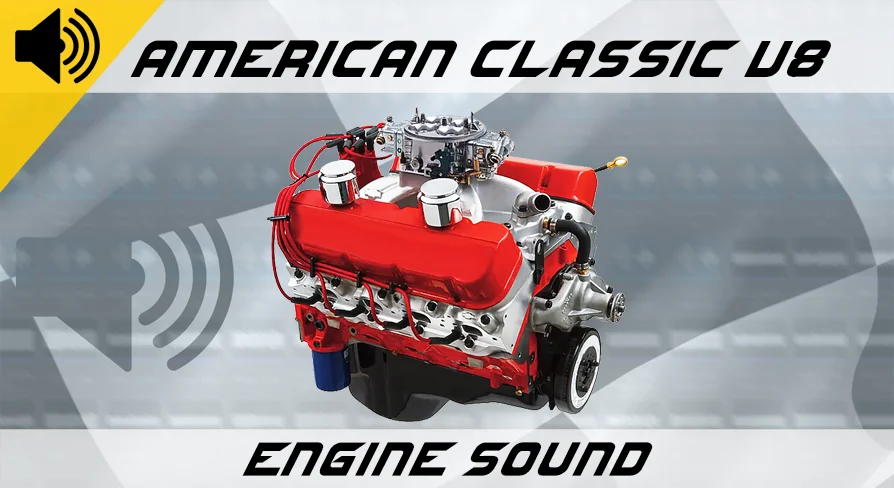
American Classic V8 Engine Sound
This pack focuses on a very specific job: supplying seamlessly looping American classic V8 engine audio for classic cars and muscle cars in games. It covers the full driving range with startup, shutdown, idle, RPM transitions, high-rev states, aggressivenes...
Classic car projects, muscle car driving scenes, and race setups that need a recognizable American V8 tone are the natural home for this sound pack. It is a game-ready collection of seamlessly looping engine clips focused on an American classic V8, with material aimed squarely at vehicles where the engine note is part of the identity rather than background noise.
The package is positioned for American classic cars and muscle cars, and that focus shapes the whole set. The sound files are described as professionally recorded and seamlessly looped, while also containing computer generated sounds. Instead of offering a loose handful of effects, it provides a structured engine set that can cover startup, idle, throttle changes, RPM progression, and limiter behavior.
American classic V8 scenes that need more than a single loop
A classic V8 rarely works as one static engine sound. Driving games, garage scenes, cinematic vehicle shots, and playable road sequences usually need the engine to respond across different RPM bands and pedal states. This pack addresses that by separating the engine behavior into distinct clips that can be combined into a more reactive system.
The included sound list starts with Startup For engine ignition and Engine_off For shutoff. Those two clips handle the moment the car comes alive and the moment it powers down, which helps vehicle scenes feel complete instead of dropping the player into an already-running loop.
From there, the pack moves into the continuous driving range. There is an Idle Sound for the engine at rest, then a sequence of layers that move upward through the rev range: Idle_low_off And Idle_low_on, Low_off And Low_on, Low_med_off And Low_med_on, Med_off And Med_on, Med_high_off And Med_high_on, High_off And High_on, and finally Very_high_off And Very_high_on.
That naming makes the intended use clear. The engine is broken into low, medium, high, and very high ranges, with separate states for whether the gas pedal is pressed or not pressed. For projects where throttle response matters, this is more useful than a simple RPM ladder because the engine can behave differently under load and off throttle. It gives a sound setup room to express coasting, cruising, and acceleration as separate moments.
The set also includes MaxRPM, described as the engine sound at maximum RPM limiter. That adds a specific top-end event for scenes where the car is pushed hard, whether in racing, aggressive street driving, or rev-heavy showcase sequences.
How the RPM and gas-pedal layers support driving systems
The most concrete strength here is the way the clips are structured around both RPM position and gas pedal input. A lot of vehicle audio needs to move between engine states smoothly, and this pack is already divided into the kinds of layers that such systems commonly rely on.
At the lower end, Idle, Idle_low_off, and Idle_low_on Can cover the handoff between parked idling and the first touch of throttle. That is especially useful for vehicles that spend time in menus, garages, staging lanes, or traffic scenes where the engine is heard before the car reaches speed.
The low and low-medium clips continue that transition into ordinary driving. Low_off And Low_on Are followed by Low_med_off And Low_med_on, creating a stepped path from relaxed running into stronger acceleration. After that, Med_off And Med_on And then Med_high_off And Med_high_on Extend the engine upward without jumping straight from calm to extreme.
The top end is handled by High_off, High_on, Very_high_off, and Very_high_on, with MaxRPM Available for the limiter point. For practical use, this means the pack is not limited to gentle cruising or a single hero rev. It covers the climb into harder driving and the edge case where the engine is pushed all the way to its cap.
Two extra clips add another layer of control: Aggressiveness_off_fx And Aggressiveness_on_fx. These are described as extra sound clips for changing the engine sound's aggressiveness when the gas pedal is not pressed and when it is pressed. The exact implementation details are left to the included documentation, but even from the naming alone their role is straightforward: they give the engine setup an additional tone-shaping element beyond raw RPM placement.
FMOD sound bank, Unity support, and Realistic Engine Sounds 2 compatibility
The package is not only a folder of clips. It comes with a highly detailed FMOD sound bank, which places it within a more complete audio workflow for projects using FMOD for interactive sound behavior. That matters for teams or solo developers who want the engine states already structured in a form suited to implementation rather than treating every clip as a separate manual assembly job.
A Unity version is also included. On top of that, the Unity package has pre-made compatibility for the Realistic Engine Sounds 2 Asset. That is one of the clearest practical details in the whole set because it points to a defined workflow path for Unity users who already rely on that vehicle sound framework.
There is also documentation for Unreal Engine and documentation for Unity, plus a tutorial video for implementing FMOD car sound into UE 5. Those materials suggest that the pack is meant to be put to work inside an actual interactive vehicle setup rather than treated as raw audio only. The useful point is not just that support materials exist, but that they are separated by engine and include implementation guidance alongside the sound content itself.
Interior versions for in-car driving moments
External engine sound is only part of a vehicle audio presentation. When the player sits inside the car, the sound perspective changes, and this pack accounts for that by including interior versions of the clips. These interior sound clips are intended for the case where the player is inside the vehicle.
That detail makes the set more practical for playable driving, cockpit views, and first-person vehicle scenes. A game or simulation that switches between exterior and interior cameras often needs both perspectives to avoid flattening the experience. With interior versions already present, the pack supports that change in listening position without reducing the engine to one universal loop for every view.
For projects focused on muscle cars and classic cars, this can be especially important. Those vehicles are often shown as much from the driver seat as from the outside, and the engine note is part of the sensation of being behind the wheel. Interior clips help preserve that distinction.
Where American Classic V8 Engine Sound fits best
This pack makes the most sense for developers building classic American car content where the engine character needs to span idle, throttle, and high-rev driving without sounding static. Racing scenes, road driving, car showcases, and vehicle systems that let the player hear startup, shutdown, interior driving, and limiter moments all line up with what is included here.
It also suits projects that want a more implementation-ready structure. The FMOD sound bank, the Unity version, the documentation for both Unreal Engine and Unity, and the pre-made compatibility for Realistic Engine Sounds 2 all point toward teams that want to move from sound clips to a working vehicle audio setup with less guesswork.
The audience is clearest when the car itself is the focus. If a project needs the voice of an American classic V8 across ignition, idle, acceleration, coasting, upper RPMs, and in-car listening, this pack covers those exact situations with a defined set of loops and supporting workflow material.
 Sound Effects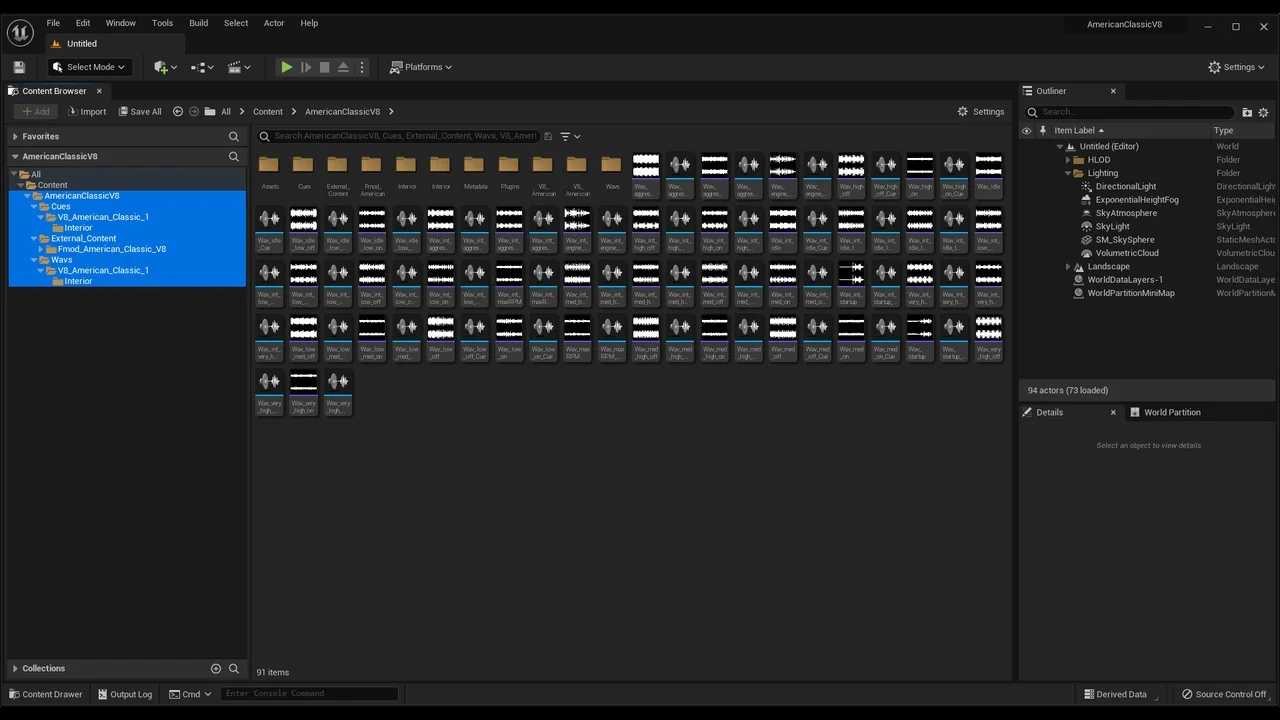
 Transportation
 Sound Effects
 Sound Effects