"b00678cacce53329"{"id":"1002767","slug":"advanced-magic-fx-17","title":"Advanced Magic FX 17","category":"Spells \u0026 Combat","engine":"4.12+,5.0+","assetVersion":"","engineVersion":"Engine Version: 4.12+,5.0+","tag":"Spells \u0026 Combat","accent":"blue","visual":"mech","summary":"Explore Advanced Magic FX 17, featuring dual Cascade and Niagara particle systems, built-in Cascade LODs, and elemental kinetic profiles for Unreal Engine.","platform":"Unreal Engine","indexPolicy":"index","publishedAt":"2026-11-20T06:45:58.757Z","updatedAt":"2026-11-20T06:45:58.757Z","sourceNotes":[],"fileContents":[],"compatibility":["Unreal Engine","Engine Version: 4.12+,5.0+"],"featuredImage":{"alt":"Advanced Magic FX 17","src":"/wp-content/uploads/published/2026/11/ad9bc90c1905-602f57ff-4817-4bfa-b21f-45d5e7d3b9ed-c3156e587c.webp"},"fileSizeBytes":50368683,"hasDownloadLink":true,"downloads":0,"terms":[{"taxonomy":"category","slug":"spells-and-combat","name":"Spells \u0026 Combat"}],"galleryImages":[{"src":"/wp-content/uploads/published/2026/11/4069d18c5e1f-2d15074b-d03d-4385-b4e1-c6811302148e-b30e314990.webp","alt":"Advanced Magic FX 17"},{"src":"/wp-content/uploads/published/2026/11/49614bbdaad8-412ff021-1df9-4fdb-bc36-175584908d0a-a4f10897f2.webp","alt":"Advanced Magic FX 17"},{"src":"/wp-content/uploads/published/2026/11/a30f0fa312e3-10b9e86c-1f56-4e2a-a3c5-8f16eb45f3b7-169b043369.webp","alt":"Advanced Magic FX 17"},{"src":"/wp-content/uploads/published/2026/11/29f9a13637b1-2c5dad62-b373-491e-ba9a-f2dc5965ed63-f920d99e52.webp","alt":"Advanced Magic FX 17"}],"accessPanel":{"kind":"resource","title":"Get this resource","safetyNote":"Resources are manually reviewed before listing to improve quality and reduce obvious risks.","fileName":"Content.7z","resourceType":"Resource archive","versions":[]},"contentHtml":"\u003ch2\u003eConfiguring Advanced Magic FX in Niagara and Cascade Pipelines\u003c/h2\u003e\n\u003cp\u003eDeveloping real-time combat visual effects requires technical adaptability across varying engine versions and rendering architectures. Advanced Magic FX 17 addresses this by supplying particle systems across two distinct frameworks within Unreal Engine: the traditional Cascade system and an expanded NiagaraFX implementation introduced for Unreal Engine 4.26 and subsequent releases.\u003c/p\u003e\n\u003cp\u003eTo deploy the Niagara variations within a production project, technical artists must ensure the Cascade To Niagara plugin is enabled inside the engine's plugin settings. This plugin provides the underlying translation pathways needed to support the converted emitter structures and runtime modules. Providing parallel implementations allows visual effects teams to support legacy production environments structured through Cascade while simultaneously enabling modern project branches to take advantage of Niagara's modular solver stacks and flexible parameter interfaces.\u003c/p\u003e\n\u003cp\u003eHaving native configurations in both emitter types eliminates the need to manually rebuild node setups or particle parameters when migrating a title's combat VFX between engine versions. Teams maintaining long-term projects initiated in earlier iterations of Unreal Engine can deploy the Cascade assets directly, while projects utilizing version 4.26 and newer can leverage the NiagaraFX variations without modifying core game logic.\u003c/p\u003e \u003ch2\u003eKinetic Motion Profiles in Magic FX: RiseFlare, Vortex, FireShot, and Wave\u003c/h2\u003e\n\u003cp\u003eGameplay readability depends heavily on the kinetic trajectory and volume silhouette of an effect. When abilities are executed in fast-paced encounters, players rely on immediate visual cues to interpret attack phases, telegraphing windows, and hit volumes. Advanced Magic FX 17 structures its library around clear geometric and directional motion profiles, including riseFlare, vortex, fireShot, and wave systems, alongside various supporting effect types.\u003c/p\u003e\n\u003cp\u003eEach profile occupies a distinct spatial role in combat design:\u003c/p\u003e\n\u003cul\u003e\n\u003cli\u003e\u003cstrong\u003eRiseFlare:\u003c/strong\u003e Characterized by vertical lift and upward-surging energy vectors. These assets expand rapidly from the ground origin or character base, generating pronounced ascending pillars of light and matter that serve effectively as spell windups, self-buff activations, or area-of-effect telegraph markers.\u003c/li\u003e\n\u003cli\u003e\u003cstrong\u003eVortex:\u003c/strong\u003e Driven by centripetal, rotational particle forces that spiral inward toward a central axis. These orbital dynamics suit lingering field hazards, crowd-control gravitations, summoning rituals, or channeling states where ambient energy must be drawn together before discharge.\u003c/li\u003e\n\u003cli\u003e\u003cstrong\u003eFireShot:\u003c/strong\u003e Configured for high-velocity linear translation. These effects feature concentrated projectile heads with directional trailing wakes, establishing readable ballistic trajectories for ranged spells, basic spell attacks, and rapid single-target strikes.\u003c/li\u003e\n\u003cli\u003e\u003cstrong\u003eWave:\u003c/strong\u003e Focused on broad planar expansion. The particle emitters propagate outward along ground or horizontal axes, generating expanding shockwave boundaries and radial sweeps that register cleanly across open terrain.\u003c/li\u003e\n\u003c/ul\u003e\n\u003cp\u003eBecause these kinetic forms establish distinct directional footprints, gameplay programmers and animators can pair them directly with animation notify triggers, skeletal mesh sockets, and projectile actor classes to synchronize hitboxes with active particle bounds.\u003c/p\u003e \u003ch2\u003eElemental Visual Spectrum: Fire, Water, Dark, Lightning, and Thunder FX\u003c/h2\u003e\n\u003cp\u003eCombat systems frequently require diverse elemental signatures to differentiate character classes, opposing factions, and damage types. The visual library covers multiple distinct themes, incorporating fire, water, lightning, thunder, dark energy, and wave behaviors across its kinetic templates.\u003c/p\u003e\n\u003cp\u003eFire effects emphasize rapid combustion dynamics, dense ignition cores, and lingering sparks that complement direct attacks like the fireShot archetype. In contrast, dark-themed effects feature concentrated, high-contrast energy palettes that match the rotational velocity of the vortex profile, creating visual representations of entropic fields, curses, or gravitational void magic.\u003c/p\u003e\n\u003cp\u003eElectrical and storm affinities are divided into lightning and thunder variants. These profiles utilize rapid, non-linear discharge arcs and high-intensity illumination bursts that register instantly on screen, providing immediate feedback for sudden impact strikes or chain attacks. Water and wave effects introduce smoother, fluidic displacement patterns, expanding over broad surface areas to convey elemental impact across group encounters. Maintaining distinct color palettes and emission frequencies across these elements ensures that simultaneous spellcasts remain visually readable without muddying the play space.\u003c/p\u003e \u003ch2\u003eOptimizing Cascade Particle LOD Systems for Frame Stability\u003c/h2\u003e\n\u003cp\u003eMultiplayer skirmishes, dungeon encounters, and boss arenas frequently produce scenarios where numerous particle systems trigger concurrently. Dense semi-transparent particle volumes can generate significant GPU overdraw, resulting in frame latency when multiple overlapping emitters occupy the same screen space.\u003c/p\u003e\n\u003cp\u003eTo maintain stable render performance, the Cascade implementations in this package include integrated particle Level of Detail (LOD) configurations. These built-in LODs evaluate the world-space distance between the camera viewport and the particle emitter origin, dynamically reducing simulation overhead as the effect recedes into the distance.\u003c/p\u003e\n\u003cp\u003eAt extended view distances, the Cascade LOD modules reduce active sprite counts, lower emission spawn rates, and cull minor secondary emitters such as ambient dust or minute embers. By shedding micro-detail that would only occupy a few sub-pixels on screen, the engine saves substantial fill-rate and evaluation time. When the camera approaches for close-range combat or cutscenes, the system transitions back to the base LOD tier, restoring full particle counts, layered alpha blending, and intricate trailing dynamics.\u003c/p\u003e \u003ch2\u003eCombat Ability Design with Advanced Magic FX Components\u003c/h2\u003e\n\u003cp\u003eThe structured variety of motion archetypes and elemental themes enables complete spellcasting sequences to be constructed from cohesive components. Rather than relying on static, single-frame bursts, designers can construct multi-stage magical interactions by sequencing complementary assets from the library.\u003c/p\u003e\n\u003cp\u003eA typical heavy ability sequence can begin with a riseFlare or vortex asset bound to an animation notify track during the character's cast windup, anchoring the player to the ground and telegraphing the impending attack. The release phase can transition directly into a high-velocity fireShot projectile actor that travels along the forward aiming vector. Upon collision with an enemy or environment surface, the sequence can terminate with a wave effect or radial elemental burst, visually reinforcing the hit detection perimeter.\u003c/p\u003e\n\u003cp\u003eBy leveraging both the Cascade and NiagaraFX variants alongside built-in Cascade LOD scaling, development teams can balance visual quality against strict rendering budgets across action games, RPGs, and combat arenas running in Unreal Engine 4.26 and newer versions.\u003c/p\u003e\n\n\u003ch2\u003eContinue Browsing Similar Packs\u003c/h2\u003e\n\u003cul\u003e\n\u003cli\u003e\u003ca href=\"https://3dcghub.com/advanced-magic-fx-11/\" rel=\"noopener noreferrer\"\u003eAdvanced Magic FX 11\u003c/a\u003e\u003c/li\u003e\n\u003cli\u003e\u003ca href=\"https://3dcghub.com/advanced-magic-fx-10/\" rel=\"noopener noreferrer\"\u003eAdvanced Magic FX 10\u003c/a\u003e\u003c/li\u003e\n\u003cli\u003e\u003ca href=\"https://3dcghub.com/advanced-magic-fx-09/\" rel=\"noopener noreferrer\"\u003eAdvanced Magic FX 09\u003c/a\u003e\u003c/li\u003e\n\u003cli\u003e\u003ca href=\"https://3dcghub.com/advanced-magic-fx-07/\" rel=\"noopener noreferrer\"\u003eAdvanced Magic FX 07\u003c/a\u003e\u003c/li\u003e\n\u003cli\u003e\u003ca href=\"https://3dcghub.com/advanced-magic-fx-13/\" rel=\"noopener noreferrer\"\u003eAdvanced Magic FX 13\u003c/a\u003e\u003c/li\u003e\n\u003c/ul\u003e","contentTextLength":7308,"navigation":{"current":113,"total":4797,"previous":{"id":"1002768","slug":"advancedmagicfx16","title":"AdvancedMagicFX16","category":"Spells \u0026 Combat","platform":"Unreal Engine","updatedAt":"2026-11-20T06:47:02.762Z"},"next":{"id":"1002766","slug":"advanced-magic-fx-15","title":"Advanced Magic FX 15","category":"Game Development Resource","platform":"Unreal Engine","updatedAt":"2026-11-20T06:45:09.419Z"}},"relatedResources":[{"id":"1002869","slug":"advanced-magic-fx-14","title":"Advanced Magic FX 14","category":"Spells \u0026 Combat","engine":"4.26+,5.0+","assetVersion":"","engineVersion":"Engine Version: 4.26+,5.0+","tag":"Spells \u0026 Combat","accent":"blue","visual":"mech","summary":"Explore Advanced Magic FX 14, featuring Niagara and Cascade magic spells, elemental fire vortexes, lasers, healing, lightning, and built-in particle LODs.","platform":"Unreal Engine","indexPolicy":"index","publishedAt":"2026-11-20T16:32:06.460Z","updatedAt":"2026-11-20T16:32:06.460Z","sourceNotes":[],"fileContents":[],"compatibility":["Unreal Engine","Engine Version: 4.26+,5.0+"],"featuredImage":{"alt":"Advanced Magic FX 14","src":"/wp-content/uploads/published/2026/11/33641332d289-27e981bf-72b2-4c5e-86dc-4b4d536e5221-8a43b3a7ca.webp"},"fileSizeBytes":112659794,"hasDownloadLink":true,"downloads":0},{"id":"1002796","slug":"ky-magic-chant-fx","title":"KY Magic Chant FX","category":"Spells \u0026 Combat","engine":"4.12+,5.0+","assetVersion":"","engineVersion":"Engine Version: 4.12+,5.0+","tag":"Spells \u0026 Combat","accent":"blue","visual":"mech","summary":"A detailed technical breakdown of KY Magic Chant FX, featuring 33 magic chant circle effects across Niagara and Cascade pipelines.","platform":"Unreal Engine","indexPolicy":"index","publishedAt":"2026-11-20T07:20:53.760Z","updatedAt":"2026-11-20T07:20:53.760Z","sourceNotes":[],"fileContents":[],"compatibility":["Unreal Engine","Engine Version: 4.12+,5.0+"],"featuredImage":{"alt":"KY Magic Chant FX","src":"/wp-content/uploads/published/2026/11/a9c693298b3d-459e9b4f-a1e9-427b-a42e-788f325a9537-a725cd44e2.webp"},"fileSizeBytes":54725656,"hasDownloadLink":true,"downloads":0},{"id":"1002795","slug":"ky-barrier-shield-fx","title":"KY Barrier Shield FX","category":"Spells \u0026 Combat","engine":"4.12+,5.0+","assetVersion":"","engineVersion":"Engine Version: 4.12+,5.0+","tag":"Spells \u0026 Combat","accent":"blue","visual":"mech","summary":"An analysis of KY Barrier Shield FX, featuring 23 magic barrier and shield effects across Cascade and Niagara systems for Unreal Engine 4.27 and beyond.","platform":"Unreal Engine","indexPolicy":"index","publishedAt":"2026-11-20T07:20:16.091Z","updatedAt":"2026-11-20T07:20:16.091Z","sourceNotes":[],"fileContents":[],"compatibility":["Unreal Engine","Engine Version: 4.12+,5.0+"],"featuredImage":{"alt":"KY Barrier Shield FX","src":"/wp-content/uploads/published/2026/11/8eec687c10a4-4676e615-caf5-46c3-98b5-7c22b166dcb3-250a86cf35.webp"},"fileSizeBytes":63393790,"hasDownloadLink":true,"downloads":0}]}
Resource screenshots
1 / 4
Join our channel
Follow 3DCGHUB on Telegram for new resource drops, migration updates, and community notices.
Configuring Advanced Magic FX in Niagara and Cascade Pipelines
Developing real-time combat visual effects requires technical adaptability across varying engine versions and rendering architectures. Advanced Magic FX 17 addresses this by supplying particle systems across two distinct frameworks within Unreal Engine: the traditional Cascade system and an expanded NiagaraFX implementation introduced for Unreal Engine 4.26 and subsequent releases.
To deploy the Niagara variations within a production project, technical artists must ensure the Cascade To Niagara plugin is enabled inside the engine's plugin settings. This plugin provides the underlying translation pathways needed to support the converted emitter structures and runtime modules. Providing parallel implementations allows visual effects teams to support legacy production environments structured through Cascade while simultaneously enabling modern project branches to take advantage of Niagara's modular solver stacks and flexible parameter interfaces.
Having native configurations in both emitter types eliminates the need to manually rebuild node setups or particle parameters when migrating a title's combat VFX between engine versions. Teams maintaining long-term projects initiated in earlier iterations of Unreal Engine can deploy the Cascade assets directly, while projects utilizing version 4.26 and newer can leverage the NiagaraFX variations without modifying core game logic.
Kinetic Motion Profiles in Magic FX: RiseFlare, Vortex, FireShot, and Wave
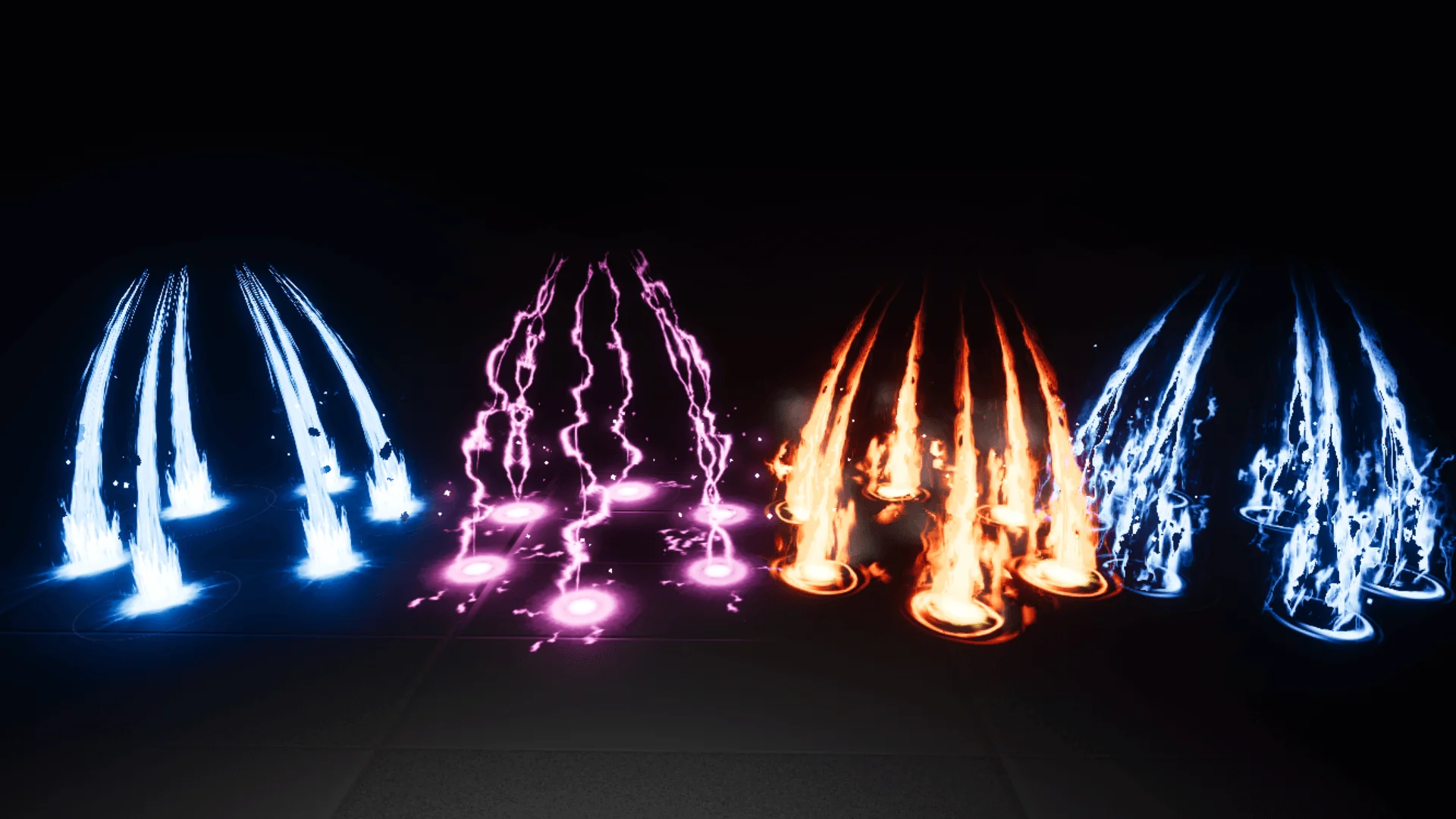
Gameplay readability depends heavily on the kinetic trajectory and volume silhouette of an effect. When abilities are executed in fast-paced encounters, players rely on immediate visual cues to interpret attack phases, telegraphing windows, and hit volumes. Advanced Magic FX 17 structures its library around clear geometric and directional motion profiles, including riseFlare, vortex, fireShot, and wave systems, alongside various supporting effect types.
Each profile occupies a distinct spatial role in combat design:
RiseFlare: Characterized by vertical lift and upward-surging energy vectors. These assets expand rapidly from the ground origin or character base, generating pronounced ascending pillars of light and matter that serve effectively as spell windups, self-buff activations, or area-of-effect telegraph markers.
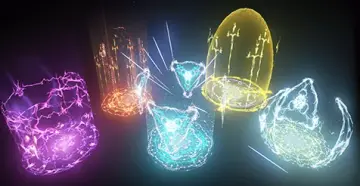
Vortex: Driven by centripetal, rotational particle forces that spiral inward toward a central axis. These orbital dynamics suit lingering field hazards, crowd-control gravitations, summoning rituals, or channeling states where ambient energy must be drawn together before discharge.
FireShot: Configured for high-velocity linear translation. These effects feature concentrated projectile heads with directional trailing wakes, establishing readable ballistic trajectories for ranged spells, basic spell attacks, and rapid single-target strikes.
Wave: Focused on broad planar expansion. The particle emitters propagate outward along ground or horizontal axes, generating expanding shockwave boundaries and radial sweeps that register cleanly across open terrain.
Because these kinetic forms establish distinct directional footprints, gameplay programmers and animators can pair them directly with animation notify triggers, skeletal mesh sockets, and projectile actor classes to synchronize hitboxes with active particle bounds.
Elemental Visual Spectrum: Fire, Water, Dark, Lightning, and Thunder FX
Combat systems frequently require diverse elemental signatures to differentiate character classes, opposing factions, and damage types. The visual library covers multiple distinct themes, incorporating fire, water, lightning, thunder, dark energy, and wave behaviors across its kinetic templates.
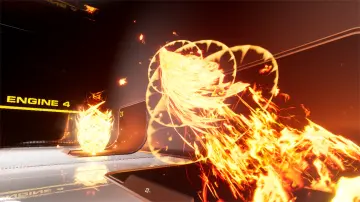
Fire effects emphasize rapid combustion dynamics, dense ignition cores, and lingering sparks that complement direct attacks like the fireShot archetype. In contrast, dark-themed effects feature concentrated, high-contrast energy palettes that match the rotational velocity of the vortex profile, creating visual representations of entropic fields, curses, or gravitational void magic.
Electrical and storm affinities are divided into lightning and thunder variants. These profiles utilize rapid, non-linear discharge arcs and high-intensity illumination bursts that register instantly on screen, providing immediate feedback for sudden impact strikes or chain attacks. Water and wave effects introduce smoother, fluidic displacement patterns, expanding over broad surface areas to convey elemental impact across group encounters. Maintaining distinct color palettes and emission frequencies across these elements ensures that simultaneous spellcasts remain visually readable without muddying the play space.
Optimizing Cascade Particle LOD Systems for Frame Stability
Multiplayer skirmishes, dungeon encounters, and boss arenas frequently produce scenarios where numerous particle systems trigger concurrently. Dense semi-transparent particle volumes can generate significant GPU overdraw, resulting in frame latency when multiple overlapping emitters occupy the same screen space.
To maintain stable render performance, the Cascade implementations in this package include integrated particle Level of Detail (LOD) configurations. These built-in LODs evaluate the world-space distance between the camera viewport and the particle emitter origin, dynamically reducing simulation overhead as the effect recedes into the distance.
At extended view distances, the Cascade LOD modules reduce active sprite counts, lower emission spawn rates, and cull minor secondary emitters such as ambient dust or minute embers. By shedding micro-detail that would only occupy a few sub-pixels on screen, the engine saves substantial fill-rate and evaluation time. When the camera approaches for close-range combat or cutscenes, the system transitions back to the base LOD tier, restoring full particle counts, layered alpha blending, and intricate trailing dynamics.
Combat Ability Design with Advanced Magic FX Components
The structured variety of motion archetypes and elemental themes enables complete spellcasting sequences to be constructed from cohesive components. Rather than relying on static, single-frame bursts, designers can construct multi-stage magical interactions by sequencing complementary assets from the library.
A typical heavy ability sequence can begin with a riseFlare or vortex asset bound to an animation notify track during the character's cast windup, anchoring the player to the ground and telegraphing the impending attack. The release phase can transition directly into a high-velocity fireShot projectile actor that travels along the forward aiming vector. Upon collision with an enemy or environment surface, the sequence can terminate with a wave effect or radial elemental burst, visually reinforcing the hit detection perimeter.
By leveraging both the Cascade and NiagaraFX variants alongside built-in Cascade LOD scaling, development teams can balance visual quality against strict rendering budgets across action games, RPGs, and combat arenas running in Unreal Engine 4.26 and newer versions.
 Spells & Combat
 Spells & Combat
 Spells & Combat