"b00678cacce53329"{"id":"1002869","slug":"advanced-magic-fx-14","title":"Advanced Magic FX 14","category":"Spells \u0026 Combat","engine":"4.26+,5.0+","assetVersion":"","engineVersion":"Engine Version: 4.26+,5.0+","tag":"Spells \u0026 Combat","accent":"blue","visual":"mech","summary":"Explore Advanced Magic FX 14, featuring Niagara and Cascade magic spells, elemental fire vortexes, lasers, healing, lightning, and built-in particle LODs.","platform":"Unreal Engine","indexPolicy":"index","publishedAt":"2026-11-20T16:32:06.460Z","updatedAt":"2026-11-20T16:32:06.460Z","sourceNotes":[],"fileContents":[],"compatibility":["Unreal Engine","Engine Version: 4.26+,5.0+"],"featuredImage":{"alt":"Advanced Magic FX 14","src":"/wp-content/uploads/published/2026/11/33641332d289-27e981bf-72b2-4c5e-86dc-4b4d536e5221-8a43b3a7ca.webp"},"fileSizeBytes":112659794,"hasDownloadLink":true,"downloads":0,"terms":[{"taxonomy":"category","slug":"spells-and-combat","name":"Spells \u0026 Combat"}],"galleryImages":[{"src":"/wp-content/uploads/published/2026/11/0c93c7dc3f1f-df749246-db2f-4e9c-b044-ba3fe1b3c173-3c31228efe.webp","alt":"Advanced Magic FX 14"},{"src":"/wp-content/uploads/published/2026/11/40dc233563a6-bf6d2372-33ab-4992-b8e6-e9e23340a7a5-f289085f61.webp","alt":"Advanced Magic FX 14"},{"src":"/wp-content/uploads/published/2026/11/0a3410d508ec-f2aa5189-2a2e-48d1-9222-dd6781d7fea5-2e8148d232.webp","alt":"Advanced Magic FX 14"},{"src":"/wp-content/uploads/published/2026/11/fb219d68ee22-07a4d113-e687-44c9-a1c7-b23f16253abc-5410a33a30.webp","alt":"Advanced Magic FX 14"}],"accessPanel":{"kind":"resource","title":"Get this resource","safetyNote":"Resources are manually reviewed before listing to improve quality and reduce obvious risks.","fileName":"Content.7z","resourceType":"Resource archive","versions":[]},"contentHtml":"\u003ch2\u003eAdvanced Combat Spellcraft and Trajectory Dynamics\u003c/h2\u003e\u003cp\u003eSpellcasting systems rely on distinct silhouettes to communicate velocity, threat, and spatial boundaries. When an encounter involves rapid exchanges, particle trajectories define how quickly a player perceives incoming damage or confirms an offensive connection. The visual language of Advanced Magic FX 14 provides focused solutions for targeted combat through discrete shots, concentrated lasers, and responsive hit impacts.\u003c/p\u003e\u003cp\u003eA projectile effect must establish clear pathing the instant it spawns. For directional shots, rapid acceleration away from the cast point gives ranged abilities weight, signaling trajectory before the spell connects. Piercing attacks take a different form through continuous or burst-driven laser effects. Beams demand rigid alignment and clean linear definition, drawing an unmistakable vector through 3D space that immediately informs players of line-of-sight exposure. When these linear casts terminate against a character capsule or environment mesh, dedicated hit effects mark the point of collision, dispersing energy outwards to provide instant gameplay confirmation without obscuring the combat arena.\u003c/p\u003e\u003cp\u003eArea denial spells demand spatial presence over linear movement. The fire vortex introduces rotational momentum, drawing particle plumes inward and upward to establish a spinning cylinder of persistent damage. Such rotary motion contrasts sharply against direct-fire projectiles, warning units away from a designated radius. Similarly, geometric circle effects supply ground-level framing. Whether acting as ritual summoning seals, telegraphing delayed area-of-effect detonations, or marking persistent defensive perimeters, circular arrays establish unambiguous gameplay zones on complex terrain.\u003c/p\u003e\u003ch2\u003eMagic Types Across Destructive and Restorative Disciplines\u003c/h2\u003e\u003cp\u003eSpells in fantasy and action titles require elemental divergence so that statuses, damage affinities, and utility functions remain immediately readable during high-intensity encounters. Advanced Magic FX 14 encompasses a balanced spectrum of spell forms, covering fire, lightning, poison, pure magic, and healing.\u003c/p\u003e\u003cp\u003eDestructive elemental forms balance speed against persistence. Lightning effects utilize jagged, discontinuous paths that branch unpredictably across short frames, generating an aggressive snap suited for instant burst damage or crowd-control stuns. Fire contrasts this erratic behavior through continuous fluid expansion, combining ember dissipation with rising vortex structures. Pure magic presets deliver stylized energy pulses suitable for neutral arcane blasts, force shields, or general-purpose spellcasting archetypes.\u003c/p\u003e\u003cp\u003eStatus effects and sustain mechanics rely on prolonged visual presence. Poison manifestations use drifting particles and dense vapor clouds to imply attrition, lingering over an afflicted target or pooling across the floor to signal lingering damage over time. In contrast, healing effects invert the aggressive visual cues of combat spells. Soft radiance, rising restorative motes, and stable concentric shapes immediately signal restoration, health recovery, or warding buffs. Having access to contrasting offensive attacks and supportive remedies under a single visual style helps maintain aesthetic unity across an entire combat repertoire.\u003c/p\u003e\u003ch2\u003eFX Implementations Across Niagara and Cascade\u003c/h2\u003e\u003cp\u003eGame production pipelines often encounter bridging points between legacy architectures and modern simulation frameworks. Advanced Magic FX 14 accommodates these production needs by offering dual-framework support, providing visual effects configured for both Cascade and Niagara.\u003c/p\u003e\u003cp\u003eThe package integrates a dedicated NiagaraFX release tailored for Unreal Engine 4.26 and subsequent engine builds. Migrating legacy emitter behaviors into modern projects often introduces friction, but this collection accounts for that transition by referencing the Cascade To Niagara plugin workflow. Teams actively modernizing legacy assets or standardizing their visual libraries on Niagara can harness newer execution stacks, while projects maintaining existing Cascade setups can deploy the original emitter network directly.\u003c/p\u003e\u003cp\u003eThis dual-pipeline presence simplifies workflow planning. Developers maintaining established projects running on earlier version tracks retain functional particle setups without rebuilding emitters from scratch. Simultaneously, teams leveraging Unreal Engine 4.26 and beyond can tap into the Niagara architecture to take advantage of modernized particle handling and simulation graphs.\u003c/p\u003e\u003ch2\u003eParticle LOD Integration for Performance Scaling\u003c/h2\u003e\u003cp\u003eDozens of simultaneous spell casts can saturate GPU fill rates and overtax particle simulation budgets, particularly during dense multiplayer skirmishes or large-scale encounters. Unchecked particle emissions cause severe frame drops when multiple vortexes, laser beams, and impact hits trigger within the same rendering frame. Advanced Magic FX 14 incorporates particle Level of Detail (LOD) systems across its effects to counter these performance bottlenecks.\u003c/p\u003e\u003cp\u003eIntegrated particle LODs scale visual complexity based on the camera's distance from the emitter origin. When a character fires a projectile close to the viewport, the asset displays its full emission volume, complex sub-emitters, and secondary debris. As the encounter shifts or the camera pulls back, the LOD thresholds scale down active particle counts, simplify auxiliary sparks, and reduce overall draw load. This automated reduction preserves frame stability during broad tactical overviews without sacrificing close-up fidelity during one-on-one combat or cinematic sequences.\u003c/p\u003e\u003cp\u003ePerformance-conscious design extends to layered spell combinations. Because circular boundary indicators, persistent poison clouds, and swirling fire vortexes naturally linger on the battlefield, having native LOD structures built into each asset ensures that overlapping effects do not compound into unmanageable rendering costs during extended boss phases or siege scenarios.\u003c/p\u003e\u003ch2\u003ePractical Deployment in Encounter Design\u003c/h2\u003e\u003cp\u003eConstructing readable combat loops requires coordinating spell behaviors so that each phase of an action communicates clearly to the player. The variety of effect categories included in the collection allows designers to assemble full ability sequences from initial wind-up to final dissipation.\u003c/p\u003e\u003cp\u003eA typical area-denial ability can begin with a magic circle expanding across the ground plane, telegraphing incoming danger during the cast phase. Once the spell finishes charging, the circle transitions into a roaring fire vortex that damages anything caught inside the perimeter. If an enemy attempts to escape, targeted shots or direct-fire lightning bolts can stagger them, concluding with crisp hit bursts that punctuate the impact. Meanwhile, allied supports can deploy green poison mists to debuff enemy clusters or project soft healing waves to restore the frontline.\u003c/p\u003e\u003cp\u003eWith native support for both Cascade and Niagara systems starting in Unreal Engine 4.26, paired with integrated particle LODs across all variations, Advanced Magic FX 14 serves production environments that require dependable, performance-managed spell effects for action, role-playing, and strategy projects.\u003c/p\u003e\n\n\u003ch2\u003eContinue Browsing Similar Packs\u003c/h2\u003e\n\u003cul\u003e\n\u003cli\u003e\u003ca href=\"https://3dcghub.com/ky-magic-chant-fx/\" rel=\"noopener noreferrer\"\u003eKY Magic Chant FX\u003c/a\u003e\u003c/li\u003e\n\u003cli\u003e\u003ca href=\"https://3dcghub.com/ky-barrier-shield-fx/\" rel=\"noopener noreferrer\"\u003eKY Barrier Shield FX\u003c/a\u003e\u003c/li\u003e\n\u003cli\u003e\u003ca href=\"https://3dcghub.com/advancedmagicfx18/\" rel=\"noopener noreferrer\"\u003eAdvancedMagicFX18\u003c/a\u003e\u003c/li\u003e\n\u003cli\u003e\u003ca href=\"https://3dcghub.com/advanced-magic-fx-17/\" rel=\"noopener noreferrer\"\u003eAdvanced Magic FX 17\u003c/a\u003e\u003c/li\u003e\n\u003cli\u003e\u003ca href=\"https://3dcghub.com/advanced-magic-fx-11/\" rel=\"noopener noreferrer\"\u003eAdvanced Magic FX 11\u003c/a\u003e\u003c/li\u003e\n\u003c/ul\u003e","contentTextLength":7401,"navigation":{"current":11,"total":4797,"previous":{"id":"1002870","slug":"exhaust-particles","title":"Exhaust Particles","category":"Variety","platform":"Unreal Engine","updatedAt":"2026-11-20T16:33:04.839Z"},"next":{"id":"1002868","slug":"fireworks-niagara-fx","title":"Fireworks Niagara FX","category":"Variety","platform":"Unreal Engine","updatedAt":"2026-11-20T16:31:03.944Z"}},"relatedResources":[{"id":"1002796","slug":"ky-magic-chant-fx","title":"KY Magic Chant FX","category":"Spells \u0026 Combat","engine":"4.12+,5.0+","assetVersion":"","engineVersion":"Engine Version: 4.12+,5.0+","tag":"Spells \u0026 Combat","accent":"blue","visual":"mech","summary":"A detailed technical breakdown of KY Magic Chant FX, featuring 33 magic chant circle effects across Niagara and Cascade pipelines.","platform":"Unreal Engine","indexPolicy":"index","publishedAt":"2026-11-20T07:20:53.760Z","updatedAt":"2026-11-20T07:20:53.760Z","sourceNotes":[],"fileContents":[],"compatibility":["Unreal Engine","Engine Version: 4.12+,5.0+"],"featuredImage":{"alt":"KY Magic Chant FX","src":"/wp-content/uploads/published/2026/11/a9c693298b3d-459e9b4f-a1e9-427b-a42e-788f325a9537-a725cd44e2.webp"},"fileSizeBytes":54725656,"hasDownloadLink":true,"downloads":0},{"id":"1002795","slug":"ky-barrier-shield-fx","title":"KY Barrier Shield FX","category":"Spells \u0026 Combat","engine":"4.12+,5.0+","assetVersion":"","engineVersion":"Engine Version: 4.12+,5.0+","tag":"Spells \u0026 Combat","accent":"blue","visual":"mech","summary":"An analysis of KY Barrier Shield FX, featuring 23 magic barrier and shield effects across Cascade and Niagara systems for Unreal Engine 4.27 and beyond.","platform":"Unreal Engine","indexPolicy":"index","publishedAt":"2026-11-20T07:20:16.091Z","updatedAt":"2026-11-20T07:20:16.091Z","sourceNotes":[],"fileContents":[],"compatibility":["Unreal Engine","Engine Version: 4.12+,5.0+"],"featuredImage":{"alt":"KY Barrier Shield FX","src":"/wp-content/uploads/published/2026/11/8eec687c10a4-4676e615-caf5-46c3-98b5-7c22b166dcb3-250a86cf35.webp"},"fileSizeBytes":63393790,"hasDownloadLink":true,"downloads":0},{"id":"1002769","slug":"advancedmagicfx18","title":"AdvancedMagicFX18","category":"Spells \u0026 Combat","engine":"4.18+,5.0+","assetVersion":"","engineVersion":"Engine Version: 4.18+,5.0+","tag":"Spells \u0026 Combat","accent":"blue","visual":"mech","summary":"Explore the dual Cascade and Niagara particle setup, elemental types, and combat FX in AdvancedMagicFX18, covering energy, shock, wind, water, and dark magic.","platform":"Unreal Engine","indexPolicy":"index","publishedAt":"2026-11-20T06:47:54.152Z","updatedAt":"2026-11-20T06:47:54.152Z","sourceNotes":[],"fileContents":[],"compatibility":["Unreal Engine","Engine Version: 4.18+,5.0+"],"featuredImage":{"alt":"AdvancedMagicFX18","src":"/wp-content/uploads/published/2026/11/ebaa5340dbe6-8221ab8d-dae3-4962-b075-9e4fd073eccb-ef53dd8079.webp"},"fileSizeBytes":66272652,"hasDownloadLink":true,"downloads":0}]}
Resource screenshots
1 / 4
Join our channel
Follow 3DCGHUB on Telegram for new resource drops, migration updates, and community notices.
Advanced Combat Spellcraft and Trajectory Dynamics
Spellcasting systems rely on distinct silhouettes to communicate velocity, threat, and spatial boundaries. When an encounter involves rapid exchanges, particle trajectories define how quickly a player perceives incoming damage or confirms an offensive connection. The visual language of Advanced Magic FX 14 provides focused solutions for targeted combat through discrete shots, concentrated lasers, and responsive hit impacts.
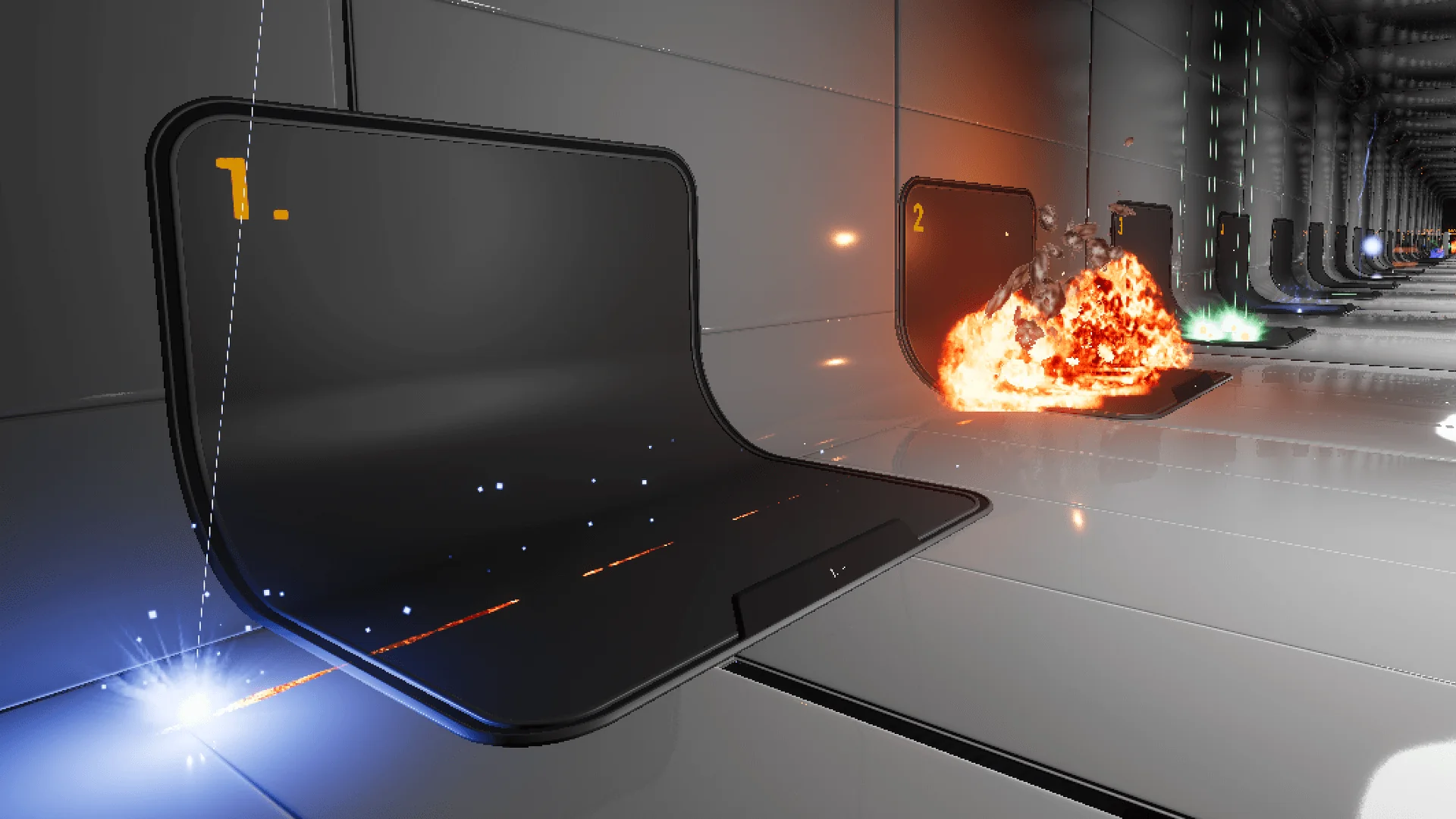
A projectile effect must establish clear pathing the instant it spawns. For directional shots, rapid acceleration away from the cast point gives ranged abilities weight, signaling trajectory before the spell connects. Piercing attacks take a different form through continuous or burst-driven laser effects. Beams demand rigid alignment and clean linear definition, drawing an unmistakable vector through 3D space that immediately informs players of line-of-sight exposure. When these linear casts terminate against a character capsule or environment mesh, dedicated hit effects mark the point of collision, dispersing energy outwards to provide instant gameplay confirmation without obscuring the combat arena.
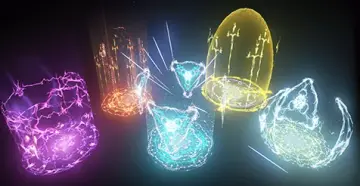
Area denial spells demand spatial presence over linear movement. The fire vortex introduces rotational momentum, drawing particle plumes inward and upward to establish a spinning cylinder of persistent damage. Such rotary motion contrasts sharply against direct-fire projectiles, warning units away from a designated radius. Similarly, geometric circle effects supply ground-level framing. Whether acting as ritual summoning seals, telegraphing delayed area-of-effect detonations, or marking persistent defensive perimeters, circular arrays establish unambiguous gameplay zones on complex terrain.
Magic Types Across Destructive and Restorative Disciplines
Spells in fantasy and action titles require elemental divergence so that statuses, damage affinities, and utility functions remain immediately readable during high-intensity encounters. Advanced Magic FX 14 encompasses a balanced spectrum of spell forms, covering fire, lightning, poison, pure magic, and healing.
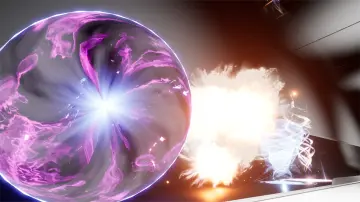
Destructive elemental forms balance speed against persistence. Lightning effects utilize jagged, discontinuous paths that branch unpredictably across short frames, generating an aggressive snap suited for instant burst damage or crowd-control stuns. Fire contrasts this erratic behavior through continuous fluid expansion, combining ember dissipation with rising vortex structures. Pure magic presets deliver stylized energy pulses suitable for neutral arcane blasts, force shields, or general-purpose spellcasting archetypes.
Status effects and sustain mechanics rely on prolonged visual presence. Poison manifestations use drifting particles and dense vapor clouds to imply attrition, lingering over an afflicted target or pooling across the floor to signal lingering damage over time. In contrast, healing effects invert the aggressive visual cues of combat spells. Soft radiance, rising restorative motes, and stable concentric shapes immediately signal restoration, health recovery, or warding buffs. Having access to contrasting offensive attacks and supportive remedies under a single visual style helps maintain aesthetic unity across an entire combat repertoire.
FX Implementations Across Niagara and Cascade
Game production pipelines often encounter bridging points between legacy architectures and modern simulation frameworks. Advanced Magic FX 14 accommodates these production needs by offering dual-framework support, providing visual effects configured for both Cascade and Niagara.
The package integrates a dedicated NiagaraFX release tailored for Unreal Engine 4.26 and subsequent engine builds. Migrating legacy emitter behaviors into modern projects often introduces friction, but this collection accounts for that transition by referencing the Cascade To Niagara plugin workflow. Teams actively modernizing legacy assets or standardizing their visual libraries on Niagara can harness newer execution stacks, while projects maintaining existing Cascade setups can deploy the original emitter network directly.
This dual-pipeline presence simplifies workflow planning. Developers maintaining established projects running on earlier version tracks retain functional particle setups without rebuilding emitters from scratch. Simultaneously, teams leveraging Unreal Engine 4.26 and beyond can tap into the Niagara architecture to take advantage of modernized particle handling and simulation graphs.
Particle LOD Integration for Performance Scaling
Dozens of simultaneous spell casts can saturate GPU fill rates and overtax particle simulation budgets, particularly during dense multiplayer skirmishes or large-scale encounters. Unchecked particle emissions cause severe frame drops when multiple vortexes, laser beams, and impact hits trigger within the same rendering frame. Advanced Magic FX 14 incorporates particle Level of Detail (LOD) systems across its effects to counter these performance bottlenecks.
Integrated particle LODs scale visual complexity based on the camera's distance from the emitter origin. When a character fires a projectile close to the viewport, the asset displays its full emission volume, complex sub-emitters, and secondary debris. As the encounter shifts or the camera pulls back, the LOD thresholds scale down active particle counts, simplify auxiliary sparks, and reduce overall draw load. This automated reduction preserves frame stability during broad tactical overviews without sacrificing close-up fidelity during one-on-one combat or cinematic sequences.
Performance-conscious design extends to layered spell combinations. Because circular boundary indicators, persistent poison clouds, and swirling fire vortexes naturally linger on the battlefield, having native LOD structures built into each asset ensures that overlapping effects do not compound into unmanageable rendering costs during extended boss phases or siege scenarios.
Practical Deployment in Encounter Design
Constructing readable combat loops requires coordinating spell behaviors so that each phase of an action communicates clearly to the player. The variety of effect categories included in the collection allows designers to assemble full ability sequences from initial wind-up to final dissipation.
A typical area-denial ability can begin with a magic circle expanding across the ground plane, telegraphing incoming danger during the cast phase. Once the spell finishes charging, the circle transitions into a roaring fire vortex that damages anything caught inside the perimeter. If an enemy attempts to escape, targeted shots or direct-fire lightning bolts can stagger them, concluding with crisp hit bursts that punctuate the impact. Meanwhile, allied supports can deploy green poison mists to debuff enemy clusters or project soft healing waves to restore the frontline.
With native support for both Cascade and Niagara systems starting in Unreal Engine 4.26, paired with integrated particle LODs across all variations, Advanced Magic FX 14 serves production environments that require dependable, performance-managed spell effects for action, role-playing, and strategy projects.
 Spells & Combat
 Spells & Combat
 Spells & Combat