"b00678cacce53329"{"id":"1002870","slug":"exhaust-particles","title":"Exhaust Particles","category":"Variety","engine":"4.26+,5.0+","assetVersion":"","engineVersion":"Engine Version: 4.26+,5.0+","tag":"Variety","accent":"blue","visual":"mech","summary":"Exhaust Particles provides lightweight, Cascade-authored vehicle and rocket propulsion effects optimized with low instruction materials and custom LODs.","platform":"Unreal Engine","indexPolicy":"index","publishedAt":"2026-11-20T16:33:04.839Z","updatedAt":"2026-11-20T16:33:04.839Z","sourceNotes":[],"fileContents":[],"compatibility":["Unreal Engine","Engine Version: 4.26+,5.0+"],"featuredImage":{"alt":"Exhaust Particles","src":"/wp-content/uploads/published/2026/11/2ae1f495d15f-58f8b7bd-2a3a-4896-a58e-c35d88424abc-7b3cfa6bda.webp"},"fileSizeBytes":23064218,"hasDownloadLink":true,"downloads":0,"terms":[{"taxonomy":"category","slug":"variety-vfx","name":"Variety"}],"galleryImages":[{"src":"/wp-content/uploads/published/2026/11/83a93611fb99-ca553f2f-d025-4192-9ed9-0c1ae6d83278-10e9138da3.webp","alt":"Exhaust Particles"},{"src":"/wp-content/uploads/published/2026/11/90450a0e7f92-4bfe20c0-ad39-460b-96a7-8fe4d13afa05-17b7f08ca3.webp","alt":"Exhaust Particles"},{"src":"/wp-content/uploads/published/2026/11/74bf63fa1d23-1c3996ae-e68c-4070-bd57-54f303dd7209-8b01d4ee56.webp","alt":"Exhaust Particles"},{"src":"/wp-content/uploads/published/2026/11/ba8b5535f8d0-606fd0ef-29a2-4b83-983f-addf4dce463b-5f15a843a6.webp","alt":"Exhaust Particles"},{"src":"/wp-content/uploads/published/2026/11/61602ef8b5ff-ea6a7204-43b4-448f-b75d-8da50571ce67-9083f1f774.webp","alt":"Exhaust Particles"},{"src":"/wp-content/uploads/published/2026/11/c7d623de025c-fbc4efb2-070d-4976-abee-3c846570467c-81ae3c0f37.webp","alt":"Exhaust Particles"},{"src":"/wp-content/uploads/published/2026/11/730ccfdeb9fd-4d740b0e-4fc0-463d-bd11-2716afbed3d8-b6b72dd83f.webp","alt":"Exhaust Particles"},{"src":"/wp-content/uploads/published/2026/11/8c56829bfa45-eae7318a-7ef9-430f-840a-7fa080eb1b30-95c67261da.webp","alt":"Exhaust Particles"},{"src":"/wp-content/uploads/published/2026/11/d932abe5f5de-c96cb200-261d-4c42-8b8e-5c470decea00-ec28eefd92.webp","alt":"Exhaust Particles"},{"src":"/wp-content/uploads/published/2026/11/a0de8baeb662-5a1b2b54-c3e3-46d4-9629-1c86a4997cb0-5cc325365d.webp","alt":"Exhaust Particles"}],"accessPanel":{"kind":"resource","title":"Get this resource","safetyNote":"Resources are manually reviewed before listing to improve quality and reduce obvious risks.","fileName":"Content.7z","resourceType":"Resource archive","versions":[]},"contentHtml":"\u003ch2\u003eAttaching Exhaust Particles to Fast-Moving Hulls\u003c/h2\u003e\u003cp\u003eVehicles, spaceships, and rockets require dependable propulsion effects that do not cripple real-time performance when multiple craft fill the viewport. Exhaust Particles addresses this common bottleneck by providing ready-to-mount thruster systems authored specifically for vehicle attachment.\u003c/p\u003e\u003cp\u003eInstead of building combustion nozzles and propulsion plumes from scratch, technical artists can anchor these systems directly to vehicle sockets, spaceship engine bells, or rocket exhaust chambers. Because each emitter is authored with an initial scale of approximately one meter in diameter, the plumes match the geometric scale of standard engine manifolds out of the box. Placing them onto craft involves snapping the root to the desired thruster position, allowing the velocity and directional alignment to mirror vehicle trajectories cleanly. The system supports direct integration behind high-speed movers, whether that involves standard wheeled vehicles kicking out hot fumes or heavy rocket boosters generating concentrated thrust.\u003c/p\u003e\u003ch2\u003eCascade Particle Editor and Vortex Trail Dynamics\u003c/h2\u003e\u003cp\u003eThe collection relies on Unreal Engine's Cascade particle editor to define its emitter properties, flow rates, and velocity fields.\u003c/p\u003e\u003cp\u003eCascade provides a structured pipeline for managing sprite modules, initial velocities, and life cycles. Within this asset collection, the particle modules capture multiple behavioral profiles ranging from tight, concentrated rocket plumes to twisting vortex formations and sustained trails. The vortex behavior organizes the particulate matter into rotational patterns, simulating the turbulent air currents and twisting pressures created by high-output engines. In contrast, the trail dynamics extend behind moving vehicles and rockets, creating a persistent wake that traces the movement vector across the scene. Operating within Cascade allows artists already familiar with traditional emitter stacks to access velocity curves, size over life, and color parameters without navigating newer, unneeded graph complexities.\u003c/p\u003e\u003ch2\u003eLow-Instruction Shaders and Instanced Materials\u003c/h2\u003e\u003cp\u003eParticle overdraw poses a major threat to framerates when dense exhaust plumes stack across the screen. The shaders in this pack deliberately minimize this impact by keeping material instruction counts as low as possible.\u003c/p\u003e\u003cp\u003eTo maintain efficient rendering passes, the setup uses instanced materials wherever possible instead of unique, isolated shader networks. Material instances draw from shared parent shaders, allowing different visual properties across emitters while preserving batching efficiency and limiting shader compilation overhead. Because engine thrusters frequently overlap in vehicle formations or multi-engine spaceships, reducing the mathematical complexity within each pixel shader calculation stops the GPU from stalling on alpha blending and complex texture sampling. This low-instruction baseline provides predictable rendering costs even when several rockets or vehicles ignite their thrusters within the exact same frame.\u003c/p\u003e\u003ch2\u003eTexture Dimensions and Memory Budgets\u003c/h2\u003e\u003cp\u003eTexture allocations for exhaust systems often consume unnecessary video memory when oversized maps are applied to soft, transient sprites.\u003c/p\u003e\u003cp\u003eThis asset pack limits texture allocations strictly to 256x256 and 512x512 resolutions. These compact texture dimensions keep the memory footprint minuscule, ensuring that disk footprints and texture streaming pools remain unaffected during intense gameplay sequences. For high-speed trails, vortex sweeps, and rocket exhausts, these resolutions deliver ample visual fidelity for smoke masks, noise patterns, and flame gradients without wasting memory bandwidth on invisible micro-detail. By restricting the texture maps to 256x256 and 512x512 boundaries, the asset runs smoothly on hardware configurations with constrained VRAM budgets while leaving headroom for ship textures, environmental geometry, and lighting calculations.\u003c/p\u003e\u003ch2\u003eManaging Distance and Density with Custom Exhaust Particles LODs\u003c/h2\u003e\u003cp\u003ePropulsion plumes visible across vast planetary expanses or deep space environments require strict distance-scaling mechanisms.\u003c/p\u003e\u003cp\u003eCustom levels of detail (LODs) are built directly into these exhaust emitters to control particle generation based on camera distance. As a spaceship, rocket, or ground vehicle moves further from the viewer, the custom LODs adjust module parameters to decrease computation costs. Rather than leaving the engine to brute-force distant particle evaluation, the author-defined LOD states manage spawn rates, module evaluation, and geometry overhead systematically. In fast-paced pursuit sequences or orbital launches, vehicles rapidly traverse massive distances; the custom LOD steps ensure that an exhaust plume occupying only a few screen pixels does not demand the same computational budget as an engine firing one meter in front of the lens.\u003c/p\u003e\u003ch2\u003eFitting Propulsion Systems into Vehicle Production Pipelines\u003c/h2\u003e\u003cp\u003eThe one-meter diameter foundation gives the emitters an immediately usable physical proportion across diverse mechanical craft.\u003c/p\u003e\u003cp\u003eA rocket engine typically demands a concentrated, forceful column of fire and particulate matter that stays rigid near the nozzle before dissipating into a trailing plume. Spaceships often require continuous, high-energy vortex streams that convey sustained vacuum thrust. Ground vehicles can utilize these elements for high-performance booster ignitions, nitrous purges, or heavy mechanical exhaust. Because the baseline scale is unified at approximately one meter, adjusting emitters to fit smaller quad-exhaust pipes or massive space vessel nacelles simply requires straightforward uniform scaling of the emitter properties. The combination of lightweight textures, instanced materials, low instruction counts, Cascade modules, and custom LODs ensures that whether the scene features a single rocket liftoff or an entire squadron of spaceships in transit, the propulsion effects remain visually solid and computationally light.\u003c/p\u003e\n\n\u003ch2\u003eContinue Browsing Similar Packs\u003c/h2\u003e\n\u003cul\u003e\n\u003cli\u003e\u003ca href=\"https://3dcghub.com/kick-up-fx/\" rel=\"noopener noreferrer\"\u003eKick Up FX\u003c/a\u003e\u003c/li\u003e\n\u003cli\u003e\u003ca href=\"https://3dcghub.com/living-particles-niagara/\" rel=\"noopener noreferrer\"\u003eLiving Particles Niagara\u003c/a\u003e\u003c/li\u003e\n\u003cli\u003e\u003ca href=\"https://3dcghub.com/mega-sci-fi-particle-fx-bundle-3in1/\" rel=\"noopener noreferrer\"\u003eMega Sci-Fi Particle FX Bundle 3in1\u003c/a\u003e\u003c/li\u003e\n\u003cli\u003e\u003ca href=\"https://3dcghub.com/cartoony-impact-stylized-particle-simulation-1/\" rel=\"noopener noreferrer\"\u003eCartoony Impact - Stylized Particle Simulation #1\u003c/a\u003e\u003c/li\u003e\n\u003cli\u003e\u003ca href=\"https://3dcghub.com/20-gun-impact-particles/\" rel=\"noopener noreferrer\"\u003e20+ Gun Impact Particles\u003c/a\u003e\u003c/li\u003e\n\u003c/ul\u003e","contentTextLength":6225,"navigation":{"current":10,"total":4797,"previous":{"id":"1002871","slug":"niagara-dissolution-examples","title":"Niagara Dissolution Examples","category":"Variety","platform":"Unreal Engine","updatedAt":"2026-11-20T16:36:06.698Z"},"next":{"id":"1002869","slug":"advanced-magic-fx-14","title":"Advanced Magic FX 14","category":"Spells \u0026 Combat","platform":"Unreal Engine","updatedAt":"2026-11-20T16:32:06.460Z"}},"relatedResources":[{"id":"1000631","slug":"kick-up-fx","title":"Kick Up FX","category":"Variety","engine":"4.26+,5.0+","assetVersion":"","engineVersion":"Engine Version: 4.26+,5.0+","tag":"Variety","accent":"blue","visual":"mech","summary":"Kick Up FX delivers 10 Unreal Engine Niagara particle systems simulating vehicle wheel kick-up across dirt, mud, snow, water, and other surfaces.","platform":"Unreal Engine","indexPolicy":"noindex","publishedAt":"2026-07-21T14:39:46.079Z","updatedAt":"2026-07-21T14:39:46.079Z","sourceNotes":[],"fileContents":[],"compatibility":["Unreal Engine","Engine Version: 4.26+,5.0+"],"featuredImage":{"alt":"Kick Up FX","src":"/wp-content/uploads/published/2026/07/977fda7c63e1-fc96a220-cae4-4638-96f7-a7b0144cbd03-00b60e746f.webp"},"fileSizeBytes":87195038,"hasDownloadLink":true,"downloads":1},{"id":"1002861","slug":"living-particles-niagara","title":"Living Particles Niagara","category":"Variety","engine":"4.23+,5.0+","assetVersion":"","engineVersion":"Engine Version: 4.23+,5.0+","tag":"Variety","accent":"blue","visual":"mech","summary":"Explore Living Particles Niagara, featuring GPU-simulated particle systems, multi-actor interactivity, gradient textures, and dynamic environment responses.","platform":"Unreal Engine","indexPolicy":"index","publishedAt":"2026-11-20T12:42:01.224Z","updatedAt":"2026-11-20T12:42:01.224Z","sourceNotes":[],"fileContents":[],"compatibility":["Unreal Engine","Engine Version: 4.23+,5.0+"],"featuredImage":{"alt":"Living Particles Niagara","src":"/wp-content/uploads/published/2026/11/66b26a401d71-4f0aa935-1d3d-4ecf-99d6-26f16bc13442-19fd59b279.webp"},"fileSizeBytes":49743017,"hasDownloadLink":true,"downloads":0},{"id":"1002811","slug":"mega-sci-fi-particle-fx-bundle-3in1","title":"Mega Sci-Fi Particle FX Bundle 3in1","category":"Variety","engine":"4.15+,5.0+","assetVersion":"","engineVersion":"Engine Version: 4.15+,5.0+","tag":"Variety","accent":"blue","visual":"mech","summary":"Examine the technical layout, realistic visual effects, and scene staging options inside the 34-system Mega Sci-Fi Particle FX Bundle 3in1.","platform":"Unreal Engine","indexPolicy":"index","publishedAt":"2026-11-20T07:41:29.840Z","updatedAt":"2026-11-20T07:41:29.840Z","sourceNotes":[],"fileContents":[],"compatibility":["Unreal Engine","Engine Version: 4.15+,5.0+"],"featuredImage":{"alt":"Mega Sci-Fi Particle FX Bundle 3in1","src":"/wp-content/uploads/published/2026/11/59f5c8a20250-86697ede-966e-446b-a607-1082e95befc9-0498b26cb7.webp"},"fileSizeBytes":78539712,"hasDownloadLink":true,"downloads":0}]}
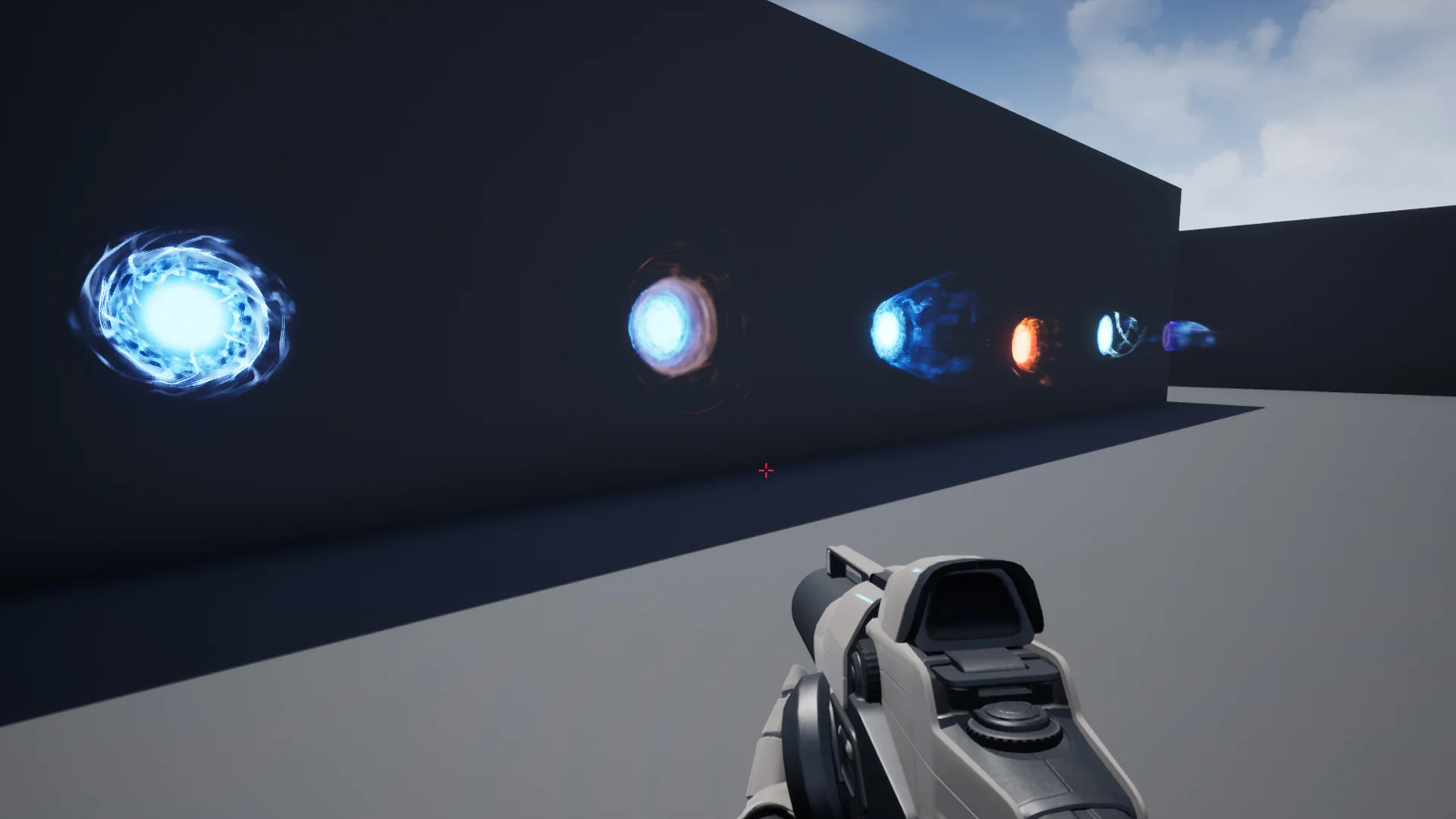
Resource screenshots
1 / 10
Join our channel
Follow 3DCGHUB on Telegram for new resource drops, migration updates, and community notices.
Vehicles, spaceships, and rockets require dependable propulsion effects that do not cripple real-time performance when multiple craft fill the viewport. Exhaust Particles addresses this common bottleneck by providing ready-to-mount thruster systems authored specifically for vehicle attachment.
Instead of building combustion nozzles and propulsion plumes from scratch, technical artists can anchor these systems directly to vehicle sockets, spaceship engine bells, or rocket exhaust chambers. Because each emitter is authored with an initial scale of approximately one meter in diameter, the plumes match the geometric scale of standard engine manifolds out of the box. Placing them onto craft involves snapping the root to the desired thruster position, allowing the velocity and directional alignment to mirror vehicle trajectories cleanly. The system supports direct integration behind high-speed movers, whether that involves standard wheeled vehicles kicking out hot fumes or heavy rocket boosters generating concentrated thrust.
Cascade Particle Editor and Vortex Trail Dynamics
The collection relies on Unreal Engine's Cascade particle editor to define its emitter properties, flow rates, and velocity fields.
Cascade provides a structured pipeline for managing sprite modules, initial velocities, and life cycles. Within this asset collection, the particle modules capture multiple behavioral profiles ranging from tight, concentrated rocket plumes to twisting vortex formations and sustained trails. The vortex behavior organizes the particulate matter into rotational patterns, simulating the turbulent air currents and twisting pressures created by high-output engines. In contrast, the trail dynamics extend behind moving vehicles and rockets, creating a persistent wake that traces the movement vector across the scene. Operating within Cascade allows artists already familiar with traditional emitter stacks to access velocity curves, size over life, and color parameters without navigating newer, unneeded graph complexities.
Low-Instruction Shaders and Instanced Materials
Particle overdraw poses a major threat to framerates when dense exhaust plumes stack across the screen. The shaders in this pack deliberately minimize this impact by keeping material instruction counts as low as possible.
To maintain efficient rendering passes, the setup uses instanced materials wherever possible instead of unique, isolated shader networks. Material instances draw from shared parent shaders, allowing different visual properties across emitters while preserving batching efficiency and limiting shader compilation overhead. Because engine thrusters frequently overlap in vehicle formations or multi-engine spaceships, reducing the mathematical complexity within each pixel shader calculation stops the GPU from stalling on alpha blending and complex texture sampling. This low-instruction baseline provides predictable rendering costs even when several rockets or vehicles ignite their thrusters within the exact same frame.
Texture Dimensions and Memory Budgets
Texture allocations for exhaust systems often consume unnecessary video memory when oversized maps are applied to soft, transient sprites.
This asset pack limits texture allocations strictly to 256x256 and 512x512 resolutions. These compact texture dimensions keep the memory footprint minuscule, ensuring that disk footprints and texture streaming pools remain unaffected during intense gameplay sequences. For high-speed trails, vortex sweeps, and rocket exhausts, these resolutions deliver ample visual fidelity for smoke masks, noise patterns, and flame gradients without wasting memory bandwidth on invisible micro-detail. By restricting the texture maps to 256x256 and 512x512 boundaries, the asset runs smoothly on hardware configurations with constrained VRAM budgets while leaving headroom for ship textures, environmental geometry, and lighting calculations.
Managing Distance and Density with Custom Exhaust Particles LODs
Propulsion plumes visible across vast planetary expanses or deep space environments require strict distance-scaling mechanisms.
Custom levels of detail (LODs) are built directly into these exhaust emitters to control particle generation based on camera distance. As a spaceship, rocket, or ground vehicle moves further from the viewer, the custom LODs adjust module parameters to decrease computation costs. Rather than leaving the engine to brute-force distant particle evaluation, the author-defined LOD states manage spawn rates, module evaluation, and geometry overhead systematically. In fast-paced pursuit sequences or orbital launches, vehicles rapidly traverse massive distances; the custom LOD steps ensure that an exhaust plume occupying only a few screen pixels does not demand the same computational budget as an engine firing one meter in front of the lens.
Fitting Propulsion Systems into Vehicle Production Pipelines
The one-meter diameter foundation gives the emitters an immediately usable physical proportion across diverse mechanical craft.
A rocket engine typically demands a concentrated, forceful column of fire and particulate matter that stays rigid near the nozzle before dissipating into a trailing plume. Spaceships often require continuous, high-energy vortex streams that convey sustained vacuum thrust. Ground vehicles can utilize these elements for high-performance booster ignitions, nitrous purges, or heavy mechanical exhaust. Because the baseline scale is unified at approximately one meter, adjusting emitters to fit smaller quad-exhaust pipes or massive space vessel nacelles simply requires straightforward uniform scaling of the emitter properties. The combination of lightweight textures, instanced materials, low instruction counts, Cascade modules, and custom LODs ensures that whether the scene features a single rocket liftoff or an entire squadron of spaceships in transit, the propulsion effects remain visually solid and computationally light.
 Variety
 Variety
 Variety