"b00678cacce53329"{"id":"1002766","slug":"advanced-magic-fx-15","title":"Advanced Magic FX 15","category":"Game Development Resource","engine":"4.12+,5.0+","assetVersion":"","engineVersion":"Engine Version: 4.12+,5.0+","tag":"Game Development R","accent":"blue","visual":"mech","summary":"Advanced Magic FX 15 delivers star, flare, burst, and spark particle systems for Unreal Engine, featuring Cascade particle LODs and NiagaraFX for UE4.26+.","platform":"Unreal Engine","indexPolicy":"index","publishedAt":"2026-11-20T06:45:09.419Z","updatedAt":"2026-11-20T06:45:09.419Z","sourceNotes":[],"fileContents":[],"compatibility":["Unreal Engine","Engine Version: 4.12+,5.0+"],"featuredImage":{"alt":"Advanced Magic FX 15","src":"/wp-content/uploads/published/2026/11/2c4f6f921429-95ee0df1-07a8-4f2f-8889-ee3a29552eb8-f701f26d6e.webp"},"fileSizeBytes":107928622,"hasDownloadLink":true,"downloads":0,"terms":[],"galleryImages":[{"src":"/wp-content/uploads/published/2026/11/0b0737556150-48c96251-fa0b-4676-80c8-e3b00b9f69f6-69ad7cedb1.webp","alt":"Advanced Magic FX 15"},{"src":"/wp-content/uploads/published/2026/11/1eb95a15e7cd-5b3946fc-8c2c-430d-abfb-c3feb57f0857-8872aaff26.webp","alt":"Advanced Magic FX 15"},{"src":"/wp-content/uploads/published/2026/11/6c31144f03d8-613e2652-336a-4d64-ad89-be3d3b2865dd-ede4eb2223.webp","alt":"Advanced Magic FX 15"},{"src":"/wp-content/uploads/published/2026/11/8e7fe29d3fe1-4e436094-f191-4268-bfdb-750575593149-43e430fffc.webp","alt":"Advanced Magic FX 15"}],"accessPanel":{"kind":"resource","title":"Get this resource","safetyNote":"Resources are manually reviewed before listing to improve quality and reduce obvious risks.","fileName":"Content.7z","resourceType":"Resource archive","versions":[]},"contentHtml":"\u003ch2\u003eVisual Motifs in Advanced Magic FX 15: Stars, Flares, and Bursts\u003c/h2\u003e\u003cp\u003eAdvanced Magic FX 15 gathers an assortment of visual elements anchored in star formations, concentrated bursts, luminous flares, and scattering sparks. Each particle structure serves a distinct visual purpose when assembling arcane combat sequences, ambient supernatural occurrences, or instantaneous spell impacts. Geometric star shapes deliver sharp visual clarity, giving spell releases and arcane sigils a clear focal point. Flares provide broad illumination and steady, glowing radiance, while sudden bursts disperse magical energy rapidly outward from an origin point.\u003c/p\u003e\u003cp\u003eCombining these distinct elements gives creators the ability to stack rapid bursts over sustained, lingering glows. When an ability triggers, an explosive burst can convey the initial shockwave of the cast, followed immediately by sharp star accents and residual flares that decay across several frames. Because the package encompasses a variety of effects rather than relying on a single repetitive visual template, developers can assign distinct visual signatures to separate spells, schools of magic, or ability tiers, keeping varied actions immediately readable during fast-moving encounters.\u003c/p\u003e\u003cp\u003eThe structural variety within the collection makes it possible to differentiate casting states from impact events. A sustained star pattern can define an active projectile or floating runic point, while sudden bursts mark sudden detonative forces. Surrounding these core shapes with soft flares ensures that the magical effect casts an appropriate visual weight in dark or high-contrast scenes, reinforcing the presence of supernatural energy without obscuring environmental details.\u003c/p\u003e\u003ch2\u003eSpark Dynamics, Energy Dispersal, and Hit Confirms\u003c/h2\u003e\u003cp\u003eHit reactions and instantaneous impacts demand snappy, responsive particle execution so that player interactions feel grounded. Advanced Magic FX 15 relies heavily on sparks, energy bursts, and dedicated hit visuals to convey physical and magical contact between an ability and its target. Sparks scatter along irregular paths, introducing chaotic motion that complements the structured, radiant patterns of stars and flares. This contrast prevents magical collisions from appearing rigid, predictable, or flat against geometry.\u003c/p\u003e\u003cp\u003eEnergy strikes in real-time action sequences require instantaneous feedback so players instantly register successful attacks. Pairing short-lived bursts with high-velocity spark showers imparts tangible physical weight to otherwise intangible arcane spells. A projectile collision can trigger a sharp hit effect that bursts outward, scattering sparks against nearby terrain, static meshes, or character models to root the phenomenon in world space. By balancing broad energy releases with concentrated point impacts, combat encounters maintain a clear visual hierarchy where player actions produce distinct, readable results.\u003c/p\u003e\u003cp\u003eThe spark modules included in the package also serve to link separate phases of an effect together. Residual sparks that drift and flicker after an initial burst provide continuity between the instantaneous strike and its gradual dissipation. This multi-stage decay helps spells feel complete, transitioning naturally from intense energy release back to resting environmental lighting conditions.\u003c/p\u003e\u003ch2\u003eCascade Implementations and Particle LODs for FX Performance\u003c/h2\u003e\u003cp\u003eManaging rendering overhead is critical when numerous particle systems trigger concurrently during intensive gameplay encounters. The Cascade implementation of Advanced Magic FX 15 incorporates particle Levels of Detail (LODs) directly into the emitters. These particle LODs automatically adjust emitter complexity, active particle counts, and rendering overhead based on the distance between the camera and the origin of the effect.\u003c/p\u003e\u003cp\u003eIn large open levels or dense combat arenas, rendering full-resolution particle systems at extreme viewing distances consumes significant GPU fill rate and simulation time without delivering perceptible visual benefits. Having built-in particle LOD support inside Cascade ensures that distant spell impacts, ambient flares, or secondary spark bursts scale down their particle density automatically. As the camera retreats, complex sub-emitters can reduce their output or cull entirely, preserving performance budgets across broad multi-character battles.\u003c/p\u003e\u003cp\u003eConversely, close-range camera framing retains complete emitter fidelity. Every delicate spark trajectory, crisp star facet, and multi-layered flare remains intact when viewed up close, ensuring foreground visual impact is not compromised. For technical artists auditing frame times in particle-heavy environments, having pre-configured particle LODs in Cascade eliminates the need to manually build distance-culling curves and LOD switching logic from scratch.\u003c/p\u003e\u003ch2\u003eThe NiagaraFX Pipeline and the Cascade To Niagara Plugin\u003c/h2\u003e\u003cp\u003eParticle authoring workflows in Unreal Engine expanded significantly with the introduction of the modern Niagara simulation framework. Advanced Magic FX 15 incorporates a dedicated NiagaraFX version suited to Unreal Engine 4.26 and subsequent releases. This release equips developers working in newer engine versions with native Niagara implementations of the collection's star, burst, flare, and spark effects.\u003c/p\u003e\u003cp\u003eFor teams handling existing projects or managing transitions between legacy Cascade systems and Niagara, the package highlights the Cascade To Niagara plugin. This plugin provides a conversion workflow to translate parameters, emitter logic, and module behaviors from legacy Cascade setups into functional Niagara particle systems. Utilizing this workflow helps technical artists examine the native Cascade setups alongside the NiagaraFX assets, ensuring consistent visual behavior regardless of which particle system is active in the project.\u003c/p\u003e\u003cp\u003eDeploying native NiagaraFX assets in Unreal Engine 4.26 or later gives creators direct access to Niagara's modular stack. Emitter behavior, particle lifetimes, spawn rates, and color curves can be inspected, tweaked, or extended using Niagara's node-based and module-driven architecture. This ensures that the star, flare, spark, and energy elements integrate smoothly into modern engine pipelines that standardize on Niagara for visual effects.\u003c/p\u003e\u003ch2\u003eLayering Magic FX Across Real-Time Gameplay Sequences\u003c/h2\u003e\u003cp\u003eThe collection offers enough breadth across its star, flare, spark, and burst components to support an entire spectrum of gameplay mechanics. Beyond standard projectile hits and weapon impact confirmations, these particle systems can be deployed for environmental interactions, status effect notifications, collectible item pickups, and cinematic sequences. An ambient, pulsing flare can designate an interactable shrine or objective, while an escalating star effect can telegraph a charged boss attack.\u003c/p\u003e\u003cp\u003eBecause the package supplies both Cascade assets with integrated particle LODs and dedicated NiagaraFX systems for Unreal Engine 4.26 and newer, it fits into a broad range of production configurations. Teams maintaining established Cascade pipelines can utilize the particle LOD setups to keep performance stable across busy scenes, while modern productions can deploy the NiagaraFX assets directly. Across both systems, the balanced visual language of stars, flares, bursts, and sparks provides the essential visual components required for clear, dynamic, and responsive magical effects.\u003c/p\u003e\n\n\u003ch2\u003eContinue Browsing Similar Packs\u003c/h2\u003e\n\u003cul\u003e\n\u003cli\u003e\u003ca href=\"https://3dcghub.com/ky-magic-fx-04/\" rel=\"noopener noreferrer\"\u003eKY Magic FX 04\u003c/a\u003e\u003c/li\u003e\n\u003cli\u003e\u003ca href=\"https://3dcghub.com/advanced-magic-fx-11/\" rel=\"noopener noreferrer\"\u003eAdvanced Magic FX 11\u003c/a\u003e\u003c/li\u003e\n\u003cli\u003e\u003ca href=\"https://3dcghub.com/advanced-magic-fx-10/\" rel=\"noopener noreferrer\"\u003eAdvanced Magic FX 10\u003c/a\u003e\u003c/li\u003e\n\u003cli\u003e\u003ca href=\"https://3dcghub.com/advanced-magic-fx-09/\" rel=\"noopener noreferrer\"\u003eAdvanced Magic FX 09\u003c/a\u003e\u003c/li\u003e\n\u003cli\u003e\u003ca href=\"https://3dcghub.com/advanced-magic-fx-08/\" rel=\"noopener noreferrer\"\u003eAdvanced Magic FX 08\u003c/a\u003e\u003c/li\u003e\n\u003c/ul\u003e","contentTextLength":7572,"navigation":{"current":114,"total":4797,"previous":{"id":"1002767","slug":"advanced-magic-fx-17","title":"Advanced Magic FX 17","category":"Spells \u0026 Combat","platform":"Unreal Engine","updatedAt":"2026-11-20T06:45:58.757Z"},"next":{"id":"1002765","slug":"advanced-magic-fx-11","title":"Advanced Magic FX 11","category":"Spells \u0026 Combat","platform":"Unreal Engine","updatedAt":"2026-11-20T06:44:02.661Z"}},"relatedResources":[{"id":"1002073","slug":"ky-magic-fx-04","title":"KY Magic FX 04","category":"Spells \u0026 Combat","engine":"4.26+,5.0+","assetVersion":"","engineVersion":"Engine Version: 4.26+,5.0+","tag":"Spells \u0026 Combat","accent":"blue","visual":"mech","summary":"KY Magic FX 04 provides 20 versatile magic effects covering fire, ice, dark spells, explosions, circular casting runes, and cascade-driven visual sparks.","platform":"Unreal Engine","indexPolicy":"index","publishedAt":"2026-10-26T15:37:16.489Z","updatedAt":"2026-10-26T15:37:16.489Z","sourceNotes":[],"fileContents":[],"compatibility":["Unreal Engine","Engine Version: 4.26+,5.0+"],"featuredImage":{"alt":"KY Magic FX 04","src":"/wp-content/uploads/published/2026/10/de596d5f4fc8-bb090b5e-7d33-4fc7-8595-807d571f88fa-d54d83a578.webp"},"fileSizeBytes":53485077,"hasDownloadLink":true,"downloads":4},{"id":"1002869","slug":"advanced-magic-fx-14","title":"Advanced Magic FX 14","category":"Spells \u0026 Combat","engine":"4.26+,5.0+","assetVersion":"","engineVersion":"Engine Version: 4.26+,5.0+","tag":"Spells \u0026 Combat","accent":"blue","visual":"mech","summary":"Explore Advanced Magic FX 14, featuring Niagara and Cascade magic spells, elemental fire vortexes, lasers, healing, lightning, and built-in particle LODs.","platform":"Unreal Engine","indexPolicy":"index","publishedAt":"2026-11-20T16:32:06.460Z","updatedAt":"2026-11-20T16:32:06.460Z","sourceNotes":[],"fileContents":[],"compatibility":["Unreal Engine","Engine Version: 4.26+,5.0+"],"featuredImage":{"alt":"Advanced Magic FX 14","src":"/wp-content/uploads/published/2026/11/33641332d289-27e981bf-72b2-4c5e-86dc-4b4d536e5221-8a43b3a7ca.webp"},"fileSizeBytes":112659794,"hasDownloadLink":true,"downloads":0},{"id":"1002796","slug":"ky-magic-chant-fx","title":"KY Magic Chant FX","category":"Spells \u0026 Combat","engine":"4.12+,5.0+","assetVersion":"","engineVersion":"Engine Version: 4.12+,5.0+","tag":"Spells \u0026 Combat","accent":"blue","visual":"mech","summary":"A detailed technical breakdown of KY Magic Chant FX, featuring 33 magic chant circle effects across Niagara and Cascade pipelines.","platform":"Unreal Engine","indexPolicy":"index","publishedAt":"2026-11-20T07:20:53.760Z","updatedAt":"2026-11-20T07:20:53.760Z","sourceNotes":[],"fileContents":[],"compatibility":["Unreal Engine","Engine Version: 4.12+,5.0+"],"featuredImage":{"alt":"KY Magic Chant FX","src":"/wp-content/uploads/published/2026/11/a9c693298b3d-459e9b4f-a1e9-427b-a42e-788f325a9537-a725cd44e2.webp"},"fileSizeBytes":54725656,"hasDownloadLink":true,"downloads":0}]}
Resource screenshots
1 / 4
Join our channel
Follow 3DCGHUB on Telegram for new resource drops, migration updates, and community notices.
Resources are manually reviewed before listing to improve quality and reduce obvious risks.
No account required
Game Development R
Advanced Magic FX 15
Advanced Magic FX 15 delivers star, flare, burst, and spark particle systems for Unreal Engine, featuring Cascade particle LODs and NiagaraFX for UE4.26+.
Visual Motifs in Advanced Magic FX 15: Stars, Flares, and Bursts
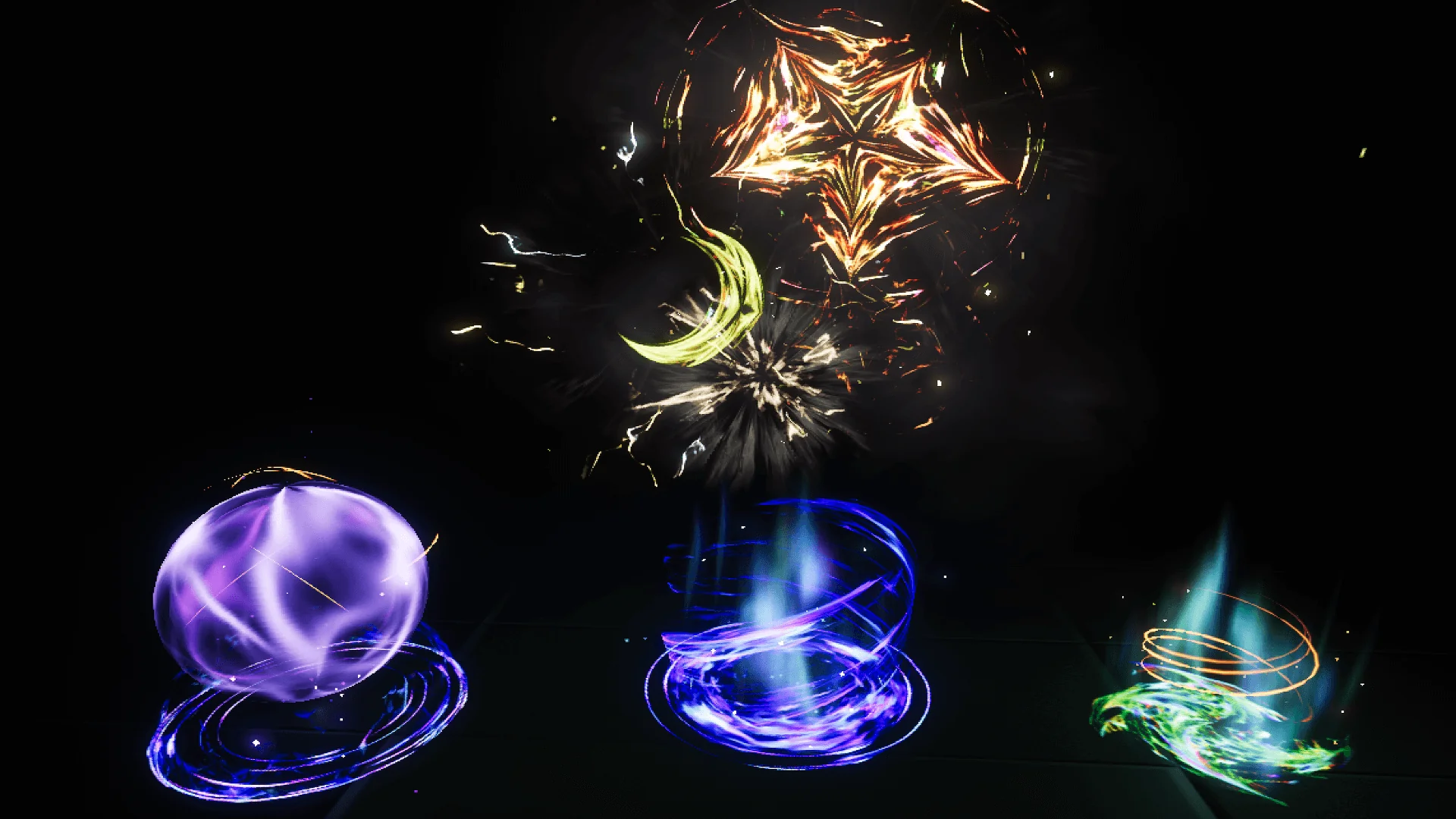
Advanced Magic FX 15 gathers an assortment of visual elements anchored in star formations, concentrated bursts, luminous flares, and scattering sparks. Each particle structure serves a distinct visual purpose when assembling arcane combat sequences, ambient supernatural occurrences, or instantaneous spell impacts. Geometric star shapes deliver sharp visual clarity, giving spell releases and arcane sigils a clear focal point. Flares provide broad illumination and steady, glowing radiance, while sudden bursts disperse magical energy rapidly outward from an origin point.
Combining these distinct elements gives creators the ability to stack rapid bursts over sustained, lingering glows. When an ability triggers, an explosive burst can convey the initial shockwave of the cast, followed immediately by sharp star accents and residual flares that decay across several frames. Because the package encompasses a variety of effects rather than relying on a single repetitive visual template, developers can assign distinct visual signatures to separate spells, schools of magic, or ability tiers, keeping varied actions immediately readable during fast-moving encounters.
The structural variety within the collection makes it possible to differentiate casting states from impact events. A sustained star pattern can define an active projectile or floating runic point, while sudden bursts mark sudden detonative forces. Surrounding these core shapes with soft flares ensures that the magical effect casts an appropriate visual weight in dark or high-contrast scenes, reinforcing the presence of supernatural energy without obscuring environmental details.
Spark Dynamics, Energy Dispersal, and Hit Confirms
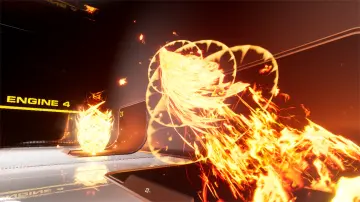
Hit reactions and instantaneous impacts demand snappy, responsive particle execution so that player interactions feel grounded. Advanced Magic FX 15 relies heavily on sparks, energy bursts, and dedicated hit visuals to convey physical and magical contact between an ability and its target. Sparks scatter along irregular paths, introducing chaotic motion that complements the structured, radiant patterns of stars and flares. This contrast prevents magical collisions from appearing rigid, predictable, or flat against geometry.
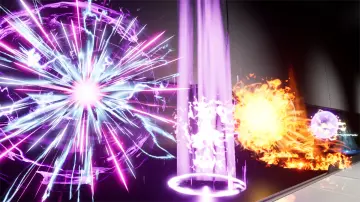
Energy strikes in real-time action sequences require instantaneous feedback so players instantly register successful attacks. Pairing short-lived bursts with high-velocity spark showers imparts tangible physical weight to otherwise intangible arcane spells. A projectile collision can trigger a sharp hit effect that bursts outward, scattering sparks against nearby terrain, static meshes, or character models to root the phenomenon in world space. By balancing broad energy releases with concentrated point impacts, combat encounters maintain a clear visual hierarchy where player actions produce distinct, readable results.
The spark modules included in the package also serve to link separate phases of an effect together. Residual sparks that drift and flicker after an initial burst provide continuity between the instantaneous strike and its gradual dissipation. This multi-stage decay helps spells feel complete, transitioning naturally from intense energy release back to resting environmental lighting conditions.
Cascade Implementations and Particle LODs for FX Performance
Managing rendering overhead is critical when numerous particle systems trigger concurrently during intensive gameplay encounters. The Cascade implementation of Advanced Magic FX 15 incorporates particle Levels of Detail (LODs) directly into the emitters. These particle LODs automatically adjust emitter complexity, active particle counts, and rendering overhead based on the distance between the camera and the origin of the effect.
In large open levels or dense combat arenas, rendering full-resolution particle systems at extreme viewing distances consumes significant GPU fill rate and simulation time without delivering perceptible visual benefits. Having built-in particle LOD support inside Cascade ensures that distant spell impacts, ambient flares, or secondary spark bursts scale down their particle density automatically. As the camera retreats, complex sub-emitters can reduce their output or cull entirely, preserving performance budgets across broad multi-character battles.
Conversely, close-range camera framing retains complete emitter fidelity. Every delicate spark trajectory, crisp star facet, and multi-layered flare remains intact when viewed up close, ensuring foreground visual impact is not compromised. For technical artists auditing frame times in particle-heavy environments, having pre-configured particle LODs in Cascade eliminates the need to manually build distance-culling curves and LOD switching logic from scratch.
The NiagaraFX Pipeline and the Cascade To Niagara Plugin
Particle authoring workflows in Unreal Engine expanded significantly with the introduction of the modern Niagara simulation framework. Advanced Magic FX 15 incorporates a dedicated NiagaraFX version suited to Unreal Engine 4.26 and subsequent releases. This release equips developers working in newer engine versions with native Niagara implementations of the collection's star, burst, flare, and spark effects.
For teams handling existing projects or managing transitions between legacy Cascade systems and Niagara, the package highlights the Cascade To Niagara plugin. This plugin provides a conversion workflow to translate parameters, emitter logic, and module behaviors from legacy Cascade setups into functional Niagara particle systems. Utilizing this workflow helps technical artists examine the native Cascade setups alongside the NiagaraFX assets, ensuring consistent visual behavior regardless of which particle system is active in the project.
Deploying native NiagaraFX assets in Unreal Engine 4.26 or later gives creators direct access to Niagara's modular stack. Emitter behavior, particle lifetimes, spawn rates, and color curves can be inspected, tweaked, or extended using Niagara's node-based and module-driven architecture. This ensures that the star, flare, spark, and energy elements integrate smoothly into modern engine pipelines that standardize on Niagara for visual effects.
Layering Magic FX Across Real-Time Gameplay Sequences
The collection offers enough breadth across its star, flare, spark, and burst components to support an entire spectrum of gameplay mechanics. Beyond standard projectile hits and weapon impact confirmations, these particle systems can be deployed for environmental interactions, status effect notifications, collectible item pickups, and cinematic sequences. An ambient, pulsing flare can designate an interactable shrine or objective, while an escalating star effect can telegraph a charged boss attack.
Because the package supplies both Cascade assets with integrated particle LODs and dedicated NiagaraFX systems for Unreal Engine 4.26 and newer, it fits into a broad range of production configurations. Teams maintaining established Cascade pipelines can utilize the particle LOD setups to keep performance stable across busy scenes, while modern productions can deploy the NiagaraFX assets directly. Across both systems, the balanced visual language of stars, flares, bursts, and sparks provides the essential visual components required for clear, dynamic, and responsive magical effects.
 Spells & Combat
 Spells & Combat
 Spells & Combat