"1062d43bc714d570"{"id":"1001420","slug":"4-in-1-modular-research-facility-mega-bundle-2025","title":"4 IN 1 Modular Research Facility / Mega Bundle 2025","category":"Sci-Fi","engine":"4.24+,5.0+","assetVersion":"","engineVersion":"Engine Version: 4.24+,5.0+","tag":"Sci-Fi","accent":"blue","visual":"mech","summary":"Explore the 4 IN 1 Modular Research Facility Mega Bundle 2025, bringing together four modular underground research, military, and storage environment packs.","platform":"Unreal Engine","publishedAt":"2026-10-06T14:59:43.264Z","updatedAt":"2026-10-06T14:59:43.264Z","sourceNotes":[],"fileContents":[],"compatibility":["Unreal Engine","Engine Version: 4.24+,5.0+"],"featuredImage":{"alt":"4 IN 1 Modular Research Facility / Mega Bundle 2025","src":"/wp-content/uploads/published/2026/10/419ff5595e81-6877c9c0-7c4a-4126-b0a5-e89d6dfc79e3-68fa712658.webp"},"hasDownloadLink":true,"downloads":1,"terms":[{"taxonomy":"category","slug":"sci-fi","name":"Sci-Fi"}],"galleryImages":[{"src":"/wp-content/uploads/published/2026/10/2cf781874d6e-5284d81a-ca8f-4fe8-96a5-dfe86b0dcf21-8f124d69f2.webp","alt":"4 IN 1 Modular Research Facility / Mega Bundle 2025"},{"src":"/wp-content/uploads/published/2026/10/e00dddfda6e3-c95d95a1-960c-4098-87cd-f97258358c1a-d7fc0f05ed.webp","alt":"4 IN 1 Modular Research Facility / Mega Bundle 2025"},{"src":"/wp-content/uploads/published/2026/10/0941a804929e-457bad89-4cb3-4fc6-8bf6-9c931c22fda8-a39630f516.webp","alt":"4 IN 1 Modular Research Facility / Mega Bundle 2025"},{"src":"/wp-content/uploads/published/2026/10/796a95a28e37-c006fd96-dd7f-40aa-8fb3-85363e5e93d7-b9e6927fc0.webp","alt":"4 IN 1 Modular Research Facility / Mega Bundle 2025"},{"src":"/wp-content/uploads/published/2026/10/d10516fac7ef-05c7f28a-be3c-4555-81d4-855a73c0b6e9-2798f543d5.webp","alt":"4 IN 1 Modular Research Facility / Mega Bundle 2025"},{"src":"/wp-content/uploads/published/2026/10/ea7bc8f6b715-a0105c23-ddc5-41e7-9c06-cf0b568af2fe-f6ad13cf4c.webp","alt":"4 IN 1 Modular Research Facility / Mega Bundle 2025"},{"src":"/wp-content/uploads/published/2026/10/e4cf50d07241-e828153b-b5de-4a21-a998-7ef351cf9edf-9d6509e1a8.webp","alt":"4 IN 1 Modular Research Facility / Mega Bundle 2025"},{"src":"/wp-content/uploads/published/2026/10/2cf8fed641da-6f65e32a-1e55-4815-adf4-ea5577e4343b-7c83402d21.webp","alt":"4 IN 1 Modular Research Facility / Mega Bundle 2025"},{"src":"/wp-content/uploads/published/2026/10/4ee066ada756-57981fd4-a46a-4839-aeec-734c2acc9fc5-59a35c7097.webp","alt":"4 IN 1 Modular Research Facility / Mega Bundle 2025"},{"src":"/wp-content/uploads/published/2026/10/c224b3b57e4d-eb736903-e5aa-421b-af37-63e727ccc073-9c24dbc687.webp","alt":"4 IN 1 Modular Research Facility / Mega Bundle 2025"}],"accessPanel":{"kind":"resource","title":"Download this resource","eyebrow":"Free Download","message":"Log in or create a free account to start your download.","fileName":"Content.7z","safetyNote":"Resources are manually reviewed before listing to improve quality and reduce obvious risks.","actionLabel":"Download Free","resourceType":"Resource archive"},"contentHtml":"\u003ch2\u003eFour Modular Research Environment Projects in One Collection\u003c/h2\u003e\u003cp\u003eThe 4 IN 1 Modular Research Facility / Mega Bundle 2025 combines four individual modular research environment releases—designated as Pack 1, Pack 2, Pack 3, and Pack 4—into a single unified production set. Rather than relying on a static, pre-assembled scene that cannot be reshaped, the collection breaks down the architecture into discrete building components. Each project within the bundle delivers distinct architectural and environmental assets configured to represent modern scientific laboratories, subterranean outposts, and containment sectors.\u003c/p\u003e\u003cp\u003eBringing all four packages into a single framework allows level designers to construct contiguous spaces that transition naturally from one functional sector to another. A compound can begin in an administrative scientific wing supplied by one pack, move into heavy testing chambers from another, and terminate in deep secure containment zones built using the remaining modules. Because each project shares structural design logic, individual rooms, hallways, and structural support modules align cleanly across package boundaries.\u003c/p\u003e\u003ch2\u003eScaling Underground Facility and Storage Center Layouts\u003c/h2\u003e\u003cp\u003eThe primary advantage of the modular construction method used across these four packs is the freedom of scale. Environments can be assembled as tight, claustrophobic subterranean bunkers or expanded into sprawling multi-level research centers without hitting arbitrary spatial limits. Level creators can piece together corridors, junction chambers, laboratory rooms, and large underground storage depots to match specific layout plans.\u003c/p\u003e\u003cp\u003eBecause the assets are designed to fit together cleanly, connecting walls, ceiling grids, access doorways, and floor segments can be repeated across grid increments. This modular fidelity prevents visual gaps and misalignment when stacking multiple vertical floors or extending corridors across wide horizontal distances. The subterranean and military themes allow for believable underground research networks, subterranean storage depots, security checkpoints, and specialized experiment centers within a unified map architecture.\u003c/p\u003e\u003ch2\u003eCustom Collisions and Architectural Alignment\u003c/h2\u003e\u003cp\u003eConstructing multi-room underground environments requires reliable collision geometry to ensure player characters, physics objects, and navigation meshes function as intended. The assets in the bundle feature custom collisions built directly into the modular architectural components. Having dedicated collision meshes tailored to individual walls, floor slabs, doorways, and structural frames eliminates common collision issues such as player snagging on thin door jambs, improper floor contact, or characters clipping through exterior boundary walls.\u003c/p\u003e\u003cp\u003eThe inclusion of asset overview references and documentation images allows developers to inspect individual asset bounds, pivot placement, and collision hulls before dropping them into an active production level. Clean collision setups also streamline artificial intelligence navigation. Pathfinding grids can generate cleanly through corridors and around architectural support pillars without generating dead zones or unreachable pathways caused by oversized simplified bounding boxes.\u003c/p\u003e\u003ch2\u003eLowpoly Construction for Large-Scale Military and Research Levels\u003c/h2\u003e\u003cp\u003eHandling massive indoor installations with dozens of interconnected rooms demands careful balance in geometric detail. The package is built with a lowpoly modeling methodology, keeping triangle counts efficient across standard wall segments, junction fittings, and environmental structures. This streamlined geometric density allows level designers to duplicate corridor assemblies, large-scale storage racks, and industrial laboratory elements repeatedly without introducing geometry bottlenecks into the rendering pipeline.\u003c/p\u003e\u003cp\u003eLowpoly geometry is particularly beneficial when designing multi-wing military complexes and deep underground facilities where broad visibility lines might encompass several consecutive rooms. The reduced overhead gives teams ample performance headroom to handle lighting scenarios, particle effects, actor blueprints, and character processing throughout dense compound maps.\u003c/p\u003e\u003ch2\u003eUE4 and UE5 Documentation and Maintenance\u003c/h2\u003e\u003cp\u003eThe bundle is supported by ongoing documentation covering both Unreal Engine 4 and Unreal Engine 5 implementations. A generic live document tracks information across the developer's engine-compatible products, outlining package notes, asset overview configurations, and collision behavior. Keeping documentation live ensures that asset updates, engine workflow adjustments, and structure notes remain accessible as production pipelines shift across engine generations.\u003c/p\u003e\u003cp\u003eVideo overview materials provide a direct visual walkthrough of the kit, showing how individual pieces from Pack 1 through Pack 4 fit together in practical scene layouts. Reviewing the video documentation helps developers assess structural proportion, module snapping, and asset grouping before beginning level assembly. Product update notes log modifications over time, giving teams clarity on asset maintenance and revision changes across the full collection.\u003c/p\u003e\n\n\u003ch2\u003eContinue Browsing Similar Packs\u003c/h2\u003e\n\u003cul\u003e\n\u003cli\u003e\u003ca href=\"https://3dcghub.com/modular-underground-environment/\" title=\"Modular Underground Environment\"\u003eModular Underground Environment\u003c/a\u003e\u003c/li\u003e\n\u003cli\u003e\u003ca href=\"https://3dcghub.com/underground-sci-fi/\" title=\"Underground Sci-Fi\"\u003eUnderground Sci-Fi\u003c/a\u003e\u003c/li\u003e\n\u003cli\u003e\u003ca href=\"https://3dcghub.com/spectrum-galaxy-modular-sci-fi-environment-kit/\" title=\"Spectrum Galaxy | Modular Sci-Fi Environment Kit\"\u003eSpectrum Galaxy | Modular Sci-Fi Environment Kit\u003c/a\u003e\u003c/li\u003e\n\u003cli\u003e\u003ca href=\"https://3dcghub.com/laboratory-research-center/\" title=\"Laboratory - Research Center\"\u003eLaboratory - Research Center\u003c/a\u003e\u003c/li\u003e\n\u003cli\u003e\u003ca href=\"https://3dcghub.com/sci-fi-orion-mars-med-lab/\" title=\"Sci Fi Orion Mars Med Lab\"\u003eSci Fi Orion Mars Med Lab\u003c/a\u003e\u003c/li\u003e\n\u003c/ul\u003e","contentTextLength":5385,"navigation":{"current":24,"total":3379,"previous":{"id":"1001421","slug":"asian-forest-town","title":"ASIAN - Forest Town","category":"Towns \u0026 Villages","platform":"Unreal Engine","updatedAt":"2026-10-06T15:00:39.064Z"},"next":{"id":"1001419","slug":"3d-dynamicdatacubechart-01","title":"3D DynamicDataCubeChart 01","category":"Gameplay Features","platform":"Unreal Engine","updatedAt":"2026-10-06T14:59:05.834Z"}},"relatedResources":[{"id":"1001354","slug":"modular-underground-environment","title":"Modular Underground Environment","category":"Sci-Fi","engine":"4.16+,5.0+","assetVersion":"","engineVersion":"Engine Version: 4.16+,5.0+","tag":"Sci-Fi","accent":"blue","visual":"city","summary":"Build realistic lowpoly subterranean levels, bunkers, and research facilities in UE4 with the Modular Underground Environment modular asset pack.","platform":"Unreal Engine","publishedAt":"2026-10-04T10:22:21.557Z","updatedAt":"2026-10-04T10:22:21.557Z","sourceNotes":[],"fileContents":[],"compatibility":["Unreal Engine","Engine Version: 4.16+,5.0+"],"featuredImage":{"alt":"Modular Underground Environment","src":"https://media.fab.com/image_previews/gallery_images/a4276c3d-bd23-4728-b71c-dd59c5233301/d5ac6d9e-332f-4edc-ab24-7743dbad862e.png"},"hasDownloadLink":true,"downloads":0},{"id":"9693","slug":"underground-sci-fi","title":"Underground Sci-Fi","category":"Sci-Fi","engine":"4.26+,5.0+","assetVersion":"Engine version: 4.26+,5.0+","engineVersion":"4.19","tag":"Sci-Fi","accent":"blue","visual":"city","summary":"Build realistic and original futuristic environments using this modular Underground Sci-Fi asset pack. Featuring customizable materials, it is perfect for bunkers, research facilities, and spaceships.","platform":"Unreal Engine","publishedAt":"2026-03-01T17:35:44.000Z","updatedAt":"2026-04-19T15:51:02.000Z","sourceNotes":[],"fileContents":[],"compatibility":["Unreal Engine","Engine version: 4.26+,5.0+"],"featuredImage":{"alt":"Underground Sci-Fi","src":"https://3dcghub.com/wp-content/uploads/2026/03/6efb3c05-0372-4046-bbcb-953c3661bebd.webp"},"hasDownloadLink":true,"downloads":0},{"id":"1001069","slug":"spectrum-galaxy-modular-sci-fi-environment-kit","title":"Spectrum Galaxy | Modular Sci-Fi Environment Kit","category":"Sci-Fi","engine":"4.27,5.0+","assetVersion":"","engineVersion":"Engine Version: 4.27,5.0+","tag":"Sci-Fi","accent":"blue","visual":"city","summary":"Sci-fi environment kit for UE5 with Lumen and Nanite support, over 400 meshes, 8K textures, and a new Research Lab expansion. A complete modular scene pack.","platform":"Unreal Engine","publishedAt":"2026-09-03T17:01:31.709Z","updatedAt":"2026-09-03T17:01:31.709Z","sourceNotes":[],"fileContents":[],"compatibility":["Unreal Engine","Engine Version: 4.27,5.0+"],"featuredImage":{"alt":"Spectrum Galaxy | Modular Sci-Fi Environment Kit","src":"/wp-content/uploads/published/2026/09/a929babec07b-eb0ba3f1-d300-4718-b914-cb6aef94d500-123fa9c06c.webp"},"hasDownloadLink":true,"downloads":0}]}
Sci-Fi
4 IN 1 Modular Research Facility / Mega Bundle 2025
Explore the 4 IN 1 Modular Research Facility Mega Bundle 2025, bringing together four modular underground research, military, and storage environment packs.
Category:Unreal Engine,Sci-FiPlatform: Unreal EngineEngine Version: 4.24+,5.0+Published: Oct 6, 2026
Sci-Fi
Resource overview
Four Modular Research Environment Projects in One Collection
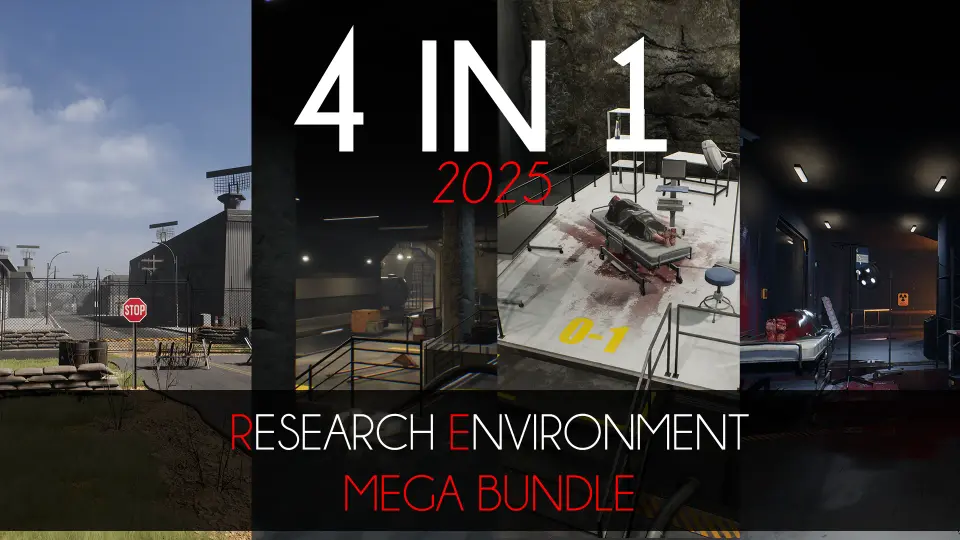
The 4 IN 1 Modular Research Facility / Mega Bundle 2025 combines four individual modular research environment releases—designated as Pack 1, Pack 2, Pack 3, and Pack 4—into a single unified production set. Rather than relying on a static, pre-assembled scene that cannot be reshaped, the collection breaks down the architecture into discrete building components. Each project within the bundle delivers distinct architectural and environmental assets configured to represent modern scientific laboratories, subterranean outposts, and containment sectors.
Bringing all four packages into a single framework allows level designers to construct contiguous spaces that transition naturally from one functional sector to another. A compound can begin in an administrative scientific wing supplied by one pack, move into heavy testing chambers from another, and terminate in deep secure containment zones built using the remaining modules. Because each project shares structural design logic, individual rooms, hallways, and structural support modules align cleanly across package boundaries.
Scaling Underground Facility and Storage Center Layouts
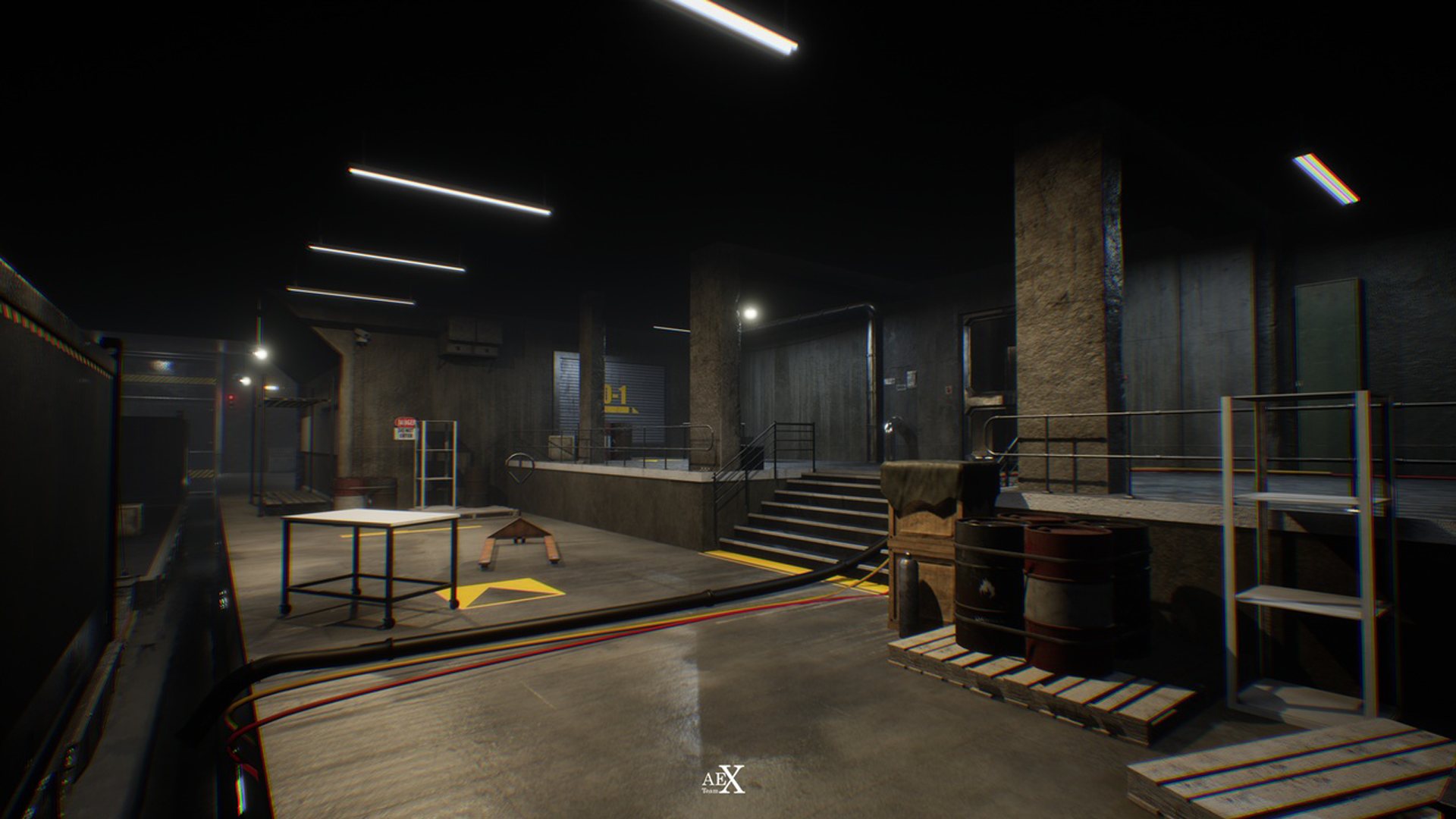
The primary advantage of the modular construction method used across these four packs is the freedom of scale. Environments can be assembled as tight, claustrophobic subterranean bunkers or expanded into sprawling multi-level research centers without hitting arbitrary spatial limits. Level creators can piece together corridors, junction chambers, laboratory rooms, and large underground storage depots to match specific layout plans.
Because the assets are designed to fit together cleanly, connecting walls, ceiling grids, access doorways, and floor segments can be repeated across grid increments. This modular fidelity prevents visual gaps and misalignment when stacking multiple vertical floors or extending corridors across wide horizontal distances. The subterranean and military themes allow for believable underground research networks, subterranean storage depots, security checkpoints, and specialized experiment centers within a unified map architecture.
Custom Collisions and Architectural Alignment
Constructing multi-room underground environments requires reliable collision geometry to ensure player characters, physics objects, and navigation meshes function as intended. The assets in the bundle feature custom collisions built directly into the modular architectural components. Having dedicated collision meshes tailored to individual walls, floor slabs, doorways, and structural frames eliminates common collision issues such as player snagging on thin door jambs, improper floor contact, or characters clipping through exterior boundary walls.
The inclusion of asset overview references and documentation images allows developers to inspect individual asset bounds, pivot placement, and collision hulls before dropping them into an active production level. Clean collision setups also streamline artificial intelligence navigation. Pathfinding grids can generate cleanly through corridors and around architectural support pillars without generating dead zones or unreachable pathways caused by oversized simplified bounding boxes.
Lowpoly Construction for Large-Scale Military and Research Levels
Handling massive indoor installations with dozens of interconnected rooms demands careful balance in geometric detail. The package is built with a lowpoly modeling methodology, keeping triangle counts efficient across standard wall segments, junction fittings, and environmental structures. This streamlined geometric density allows level designers to duplicate corridor assemblies, large-scale storage racks, and industrial laboratory elements repeatedly without introducing geometry bottlenecks into the rendering pipeline.
Lowpoly geometry is particularly beneficial when designing multi-wing military complexes and deep underground facilities where broad visibility lines might encompass several consecutive rooms. The reduced overhead gives teams ample performance headroom to handle lighting scenarios, particle effects, actor blueprints, and character processing throughout dense compound maps.
UE4 and UE5 Documentation and Maintenance
The bundle is supported by ongoing documentation covering both Unreal Engine 4 and Unreal Engine 5 implementations. A generic live document tracks information across the developer's engine-compatible products, outlining package notes, asset overview configurations, and collision behavior. Keeping documentation live ensures that asset updates, engine workflow adjustments, and structure notes remain accessible as production pipelines shift across engine generations.
Video overview materials provide a direct visual walkthrough of the kit, showing how individual pieces from Pack 1 through Pack 4 fit together in practical scene layouts. Reviewing the video documentation helps developers assess structural proportion, module snapping, and asset grouping before beginning level assembly. Product update notes log modifications over time, giving teams clarity on asset maintenance and revision changes across the full collection.
 Sci-Fi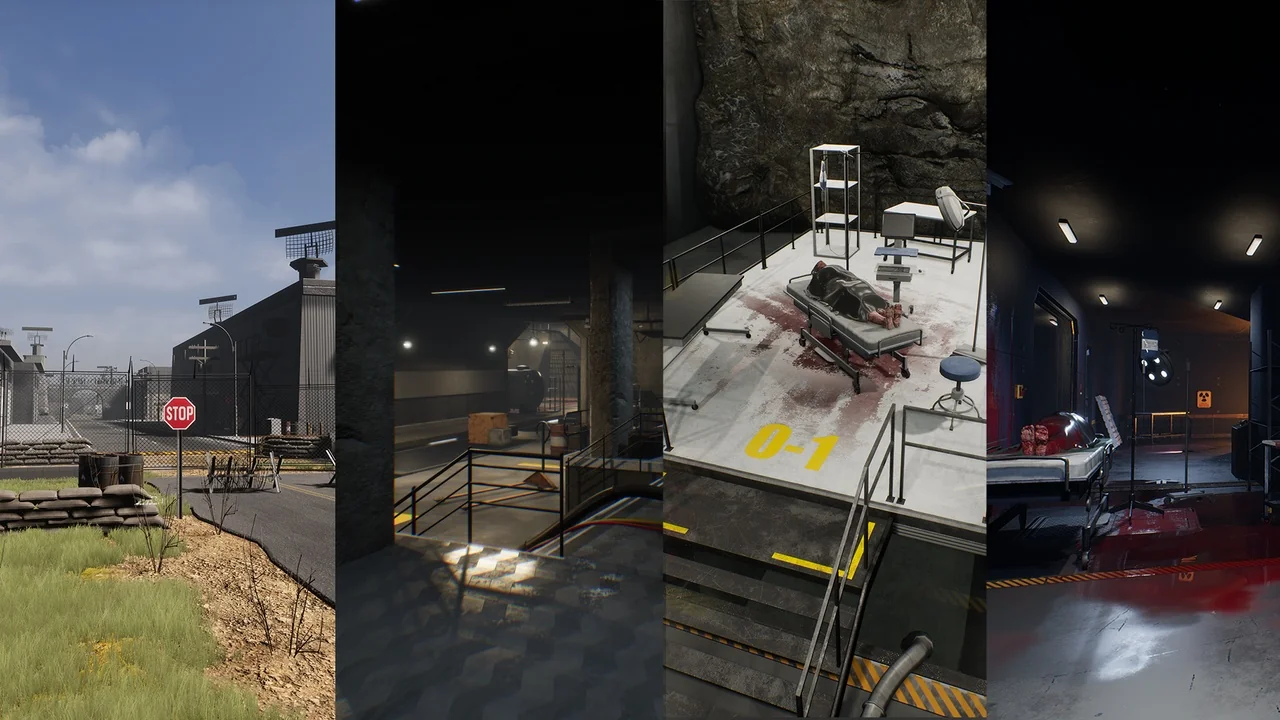
 Sci-Fi
 Sci-Fi
 Sci-Fi