"c14ff6bd758dadb1"{"id":"1001087","slug":"zhang-jia-jie-mountain","title":"Zhang Jia Jie Mountain","category":"Cities","engine":"4.26+,5.0+","assetVersion":"","engineVersion":"Engine Version: 4.26+,5.0+","tag":"Cities","accent":"blue","visual":"mech","summary":"Zhang Jia Jie Mountain: an Environment/Level asset inspired by China's famous peaks, featuring ZBrush-carved rocks, warm dynamic light, varied pines, water and","platform":"Unreal Engine","publishedAt":"2026-09-04T17:01:18.256Z","updatedAt":"2026-09-04T17:01:18.256Z","sourceNotes":[],"fileContents":[],"compatibility":["Unreal Engine","Engine Version: 4.26+,5.0+"],"featuredImage":{"alt":"Zhang Jia Jie Mountain","src":"/wp-content/uploads/published/2026/09/440336778cac-aa4bf58b-e19a-425d-96ff-4e736b4f45fd-c9f5663db0.webp"},"hasDownloadLink":true,"downloads":0,"terms":[{"taxonomy":"category","slug":"cities","name":"Cities"}],"galleryImages":[{"src":"/wp-content/uploads/published/2026/09/32559c461c7a-ce67e451-15b2-4c6a-97a3-5c54f77e0617-e7a747d90a.webp","alt":"Zhang Jia Jie Mountain"},{"src":"/wp-content/uploads/published/2026/09/941e4fb3b70d-1b8bf24b-33e1-4177-88dd-11a76b82ee9b-2b64c66de3.webp","alt":"Zhang Jia Jie Mountain"},{"src":"/wp-content/uploads/published/2026/09/789c9a5c37f4-46f49243-d55c-4b9d-84a1-73cc98db4c62-5c9c3be4c8.webp","alt":"Zhang Jia Jie Mountain"},{"src":"/wp-content/uploads/published/2026/09/6ec823d7ffe3-c3d4c69d-0417-44e9-9755-4dfbf767090f-9a67f267f3.webp","alt":"Zhang Jia Jie Mountain"},{"src":"/wp-content/uploads/published/2026/09/85a33b911d64-bce1091c-2d5f-4b08-9ff6-1101ec09ecfc-8fd4d00234.webp","alt":"Zhang Jia Jie Mountain"}],"accessPanel":{"kind":"resource","title":"Download this resource","eyebrow":"Free Download","message":"Log in or create a free account to start your download.","fileName":"Content.7z","safetyNote":"Resources are manually reviewed before listing to improve quality and reduce obvious risks.","actionLabel":"Download Free","resourceType":"Resource archive"},"contentHtml":"\u003cp\u003eZhang Jia Jie Mountain works best for productions that need the imposing spirit of China's famous peaks without feeling like a generic mountain backdrop. It gathers temple silhouettes, carved stone, flowing water, cloud layers and several types of pines into one cohesive scene, all pushed towards an old, half-mythical mood. The asset is flagged as an Environment and a Level, meaning it is not intended as a single hero prop but as a spread-out, place-like setup that can support gameplay or cinematic blocking.\u003c/p\u003e\u003cp\u003eThe earliest read of the piece is the way the ground plane disappears into mist. That choice takes the environment away from documentary realism and steps it into an old painting-like zone. The temples become landmarks, the cliffs appear unexpectedly, and the whole mountain feels like a border between daily life and somewhere more sacred. The description calls it a wonderland, which matches the visual recipe exactly.\u003c/p\u003e\u003ch2\u003eAn Ancient Mountain Think That Reaches Back to China's Famous Peaks\u003c/h2\u003e\u003cp\u003eAtmosphere is the major driver throughout. The scene starts from the kind of atmosphere found in China's celebrated mountain regions, known for vertical rock, scarce buildings, and changing weather. Yet this is not a faithful copy of any one scenic area. The mountain is instead a staging ground for ancient feelings: a place where fog cuts the lower world off, where a temple feels hidden before it is visible, and where the air seems older than the surrounding game level.\u003c/p\u003e\u003cp\u003eTemple elements in the composition strengthen the sense that this mountain has been inhabited or visited, but they also add a spiritual layer. The placement of those structures matters. Positioned among ledges and cliffs, the temples become a clue for traversal or story moments. For a player, a roof seen through mist might be the only thing telling them a path is close. For a filmmaker, that same hidden building becomes a natural target for slow reveals. The mountain is large enough to contain that kind of spatial storytelling, especially when it is broken apart by different stone masses instead of being one solid hill.\u003c/p\u003e\u003ch2\u003eZBrush-Carved Stone and Mixed Rock Sizes Shape the Detail\u003c/h2\u003e\u003cp\u003eThe rocky skeleton of Zhang Jia Jie Mountain is sculpted with ZBrush. Using a digital sculpting tool for the stone, rather than only tiling a generic height map, allows the final surface to carry a stronger sense of chiseled truth. The project description says this engraving method improves the veracity of the stones. Indeed, the rock surfaces feel less like a repeating texture and more like an object that has been shaped and damaged over centuries.\u003c/p\u003e\u003cp\u003eIn practice, the mountainside is assembled from stones of varied sizes. Some boulders are small enough to almost be counted as scattered debris, while others are massive enough to define the main horizon. The mix of scales lets each rock type stay readable, instead of turning the whole level into a monotone gray smear. Small stones create foreground texture and break up the base of the terrain. Larger rock sections catch shadows and highlight the dramatic silhouette of the ridge. Because each element is individually sized, the eye can move from the near ground to the far peaks without losing sense of the material.\u003c/p\u003e\u003cp\u003eWorking this way also helps in a level-building context. A scene with coherent but separable stone blocks gives environment artists an unusually legible structure to light, fog, and even budget geometry around. Whether the task is placing a character near a cliff edge or cutting a view between two giant boulders, the variety of rock dimensions supports staging rather than fighting it.\u003c/p\u003e\u003ch2\u003eWarm Dynamic Lighting for a Larger Living Scene\u003c/h2\u003e\u003cp\u003eZhang Jia Jie Mountain uses dynamic light sources for its main environment lighting, and those lights lean towards warm color. This is a deliberate departure from the cold, blue-gray palette many people expect from an alpine scene, and it changes the way the stone looks. Warm light makes the ZBrush surface details seem more golden and less harsh. It also helps the temple structures feel welcoming instead of abandoned.\u003c/p\u003e\u003cp\u003eThe decision to use dynamic rather than fully baked lighting means the environment can keep responsive light in motion. If the game level shifts toward dusk or night, the lighting rig can be changed without rebuilding the whole lighting information for the asset. The original description notes that the larger environment uses this setup to add a warm tone, and that choice is what brings the mountain out of a 3D scan-like neutrality. The interaction between warm sunlight, rock shadow, and soft mist creates an inviting, almost dreamlike visual temperature.\u003c/p\u003e\u003ch2\u003ePines in Different Forms, Flowing Water, and Mist Increase the Dreamlike Read\u003c/h2\u003e\u003cp\u003eBetween the rock formations, the level introduces pine trees in a range of shapes. The pines are not all created from one duplicated plant. Different forms are used, allowing some trees to lean out from cliffs while others anchor the lower slopes. Those various silhouettes prevent the forest from flattening into a repetitive strip and give the ridges a more layered silhouette.\u003c/p\u003e\u003cp\u003eTwo other elements bring movement into the static world: water and drifting cloud or mist. The flow of water as well as the slow motion of cloud and mist animate the mountain without needing moving characters. Water might cut through the valleys or stream off one of the rock platforms, while misty particles collect under the temple roofs and around the pines. All of these effects combine to create the moment the asset summary points to: an environment that reads as a dreamy wonderland.\u003c/p\u003e\u003cp\u003eFor an artist, the mist is not only mood. It softens the transition between the bottom of the terrain and nothingness, which allows a game director to hide draw distance or negative space behind the water vapor. The pines, in turn, give the mist something to climb among. That leaves a full vertical composition, from warm-lit peaks down into fog-bound gorges, with water acting as the only clear line of movement.\u003c/p\u003e\u003ch2\u003eAn Environment Level Set for a Particular Production Context\u003c/h2\u003e\u003cp\u003eThe package makes its purpose simple with the tags Environment and Level. Those tags distinguish it from asset packs that merely sell a handful of props. This is a space where a player can stand, a camera can look around, and light can play across a landscape. Part of the value also comes from the production note that the asset carries an Old Train Factory compatibility label. The exact meaning of that label is left to the build pipeline, but it signals the asset has some alignment with that environment's expectations. Teams already working in that context can treat this as a closer integration point, while other teams know they are bringing in an atmosphere-driven mountain level rather than an isolated rock mesh.\u003c/p\u003e\u003cp\u003eFor level designers aiming to stage an ancient China-inspired story, Zhang Jia Jie Mountain spares much of the early composition work. The ZBrush-sculpted mountains already contain the required depth and texture, the warm dynamic lights create a usable base, and the placement of pines, water, and clouds provides enough density to feel alive. Because the piece is deliberately atmospheric, it opens the door to encounters anchored in exploration and discovery—around the next bend or beyond the mist. The asset supplies artists not only with a set of assets but with the atmosphere of a mythical Chinese mountain ready to receive characters and gameplay.\u003c/p\u003e\n\n\u003ch2\u003eContinue Browsing Similar Packs\u003c/h2\u003e\n\u003cul\u003e\n\u003cli\u003e\u003ca href=\"https://3dcghub.com/oriental-ancient-picturestemple-archway-mountain-gate/\" title=\"Oriental ancient pictures,temple/Archway/Mountain gate\"\u003eOriental ancient pictures,temple/Archway/Mountain gate\u003c/a\u003e\u003c/li\u003e\n\u003cli\u003e\u003ca href=\"https://3dcghub.com/modular-seaside-town/\" title=\"Modular Seaside Town\"\u003eModular Seaside Town\u003c/a\u003e\u003c/li\u003e\n\u003cli\u003e\u003ca href=\"https://3dcghub.com/arctic-base/\" title=\"Arctic Base\"\u003eArctic Base\u003c/a\u003e\u003c/li\u003e\n\u003cli\u003e\u003ca href=\"https://3dcghub.com/arctic-aurora-landscape/\" title=\"Arctic Aurora Landscape\"\u003eArctic Aurora Landscape\u003c/a\u003e\u003c/li\u003e\n\u003cli\u003e\u003ca href=\"https://3dcghub.com/natural-wonders-mojave/\" title=\"Natural Wonders - Mojave\"\u003eNatural Wonders - Mojave\u003c/a\u003e\u003c/li\u003e\n\u003c/ul\u003e","contentTextLength":7632,"navigation":{"current":742,"total":3719,"previous":{"id":"15016","slug":"flex-pool-actor-pooling-system","title":"Flex Pool - Actor Pooling System","category":"Gameplay Features","platform":"Unreal Engine","updatedAt":"2026-09-05T03:20:14.594Z"},"next":{"id":"1001086","slug":"fantasy-medieval-kingdom-stylized-castle-town-village-dungeon-kingdom","title":"Fantasy Medieval Kingdom (Stylized Castle, Town, Village, Dungeon, Kingdom)","category":"Fantasy","platform":"Unreal Engine","updatedAt":"2026-09-04T16:54:26.409Z"}},"relatedResources":[{"id":"7282","slug":"oriental-ancient-picturestemple-archway-mountain-gate","title":"Oriental ancient pictures,temple/Archway/Mountain gate","category":"Cities","engine":"4.26+,5.0+","assetVersion":"Engine version: 4.26+,5.0+","engineVersion":"4.20","tag":"Cities","accent":"blue","visual":"city","summary":"Transform your game world with authentic ancient Chinese architecture. This collection features temples, archways, and vegetation designed with a unique oil-painting aesthetic.","platform":"Unreal Engine","publishedAt":"2026-02-21T12:19:20.000Z","updatedAt":"2026-04-19T15:56:01.000Z","sourceNotes":[],"fileContents":[],"compatibility":["Unreal Engine","Engine version: 4.26+,5.0+"],"featuredImage":{"alt":"Oriental ancient pictures,temple/Archway/Mountain gate","src":"https://3dcghub.com/wp-content/uploads/2026/02/97eb8214-9a83-4956-9ce7-a3921eedbf6f.webp"},"hasDownloadLink":true,"downloads":0},{"id":"1001136","slug":"eastern-iceland-landscape","title":"Eastern Iceland Landscape","category":"Mountain","engine":"4.26+,5.0+","assetVersion":"","engineVersion":"Engine Version: 4.26+,5.0+","tag":"Mountain","accent":"blue","visual":"city","summary":"A 64 square kilometer terrain with 1x1 m vertex density, volumetric 3D clouds, dynamic cloud shadows, and layered material controls for realistic outdoor scenes","platform":"Unreal Engine","publishedAt":"2026-09-09T03:20:31.567Z","updatedAt":"2026-09-09T03:20:31.567Z","sourceNotes":[],"fileContents":[],"compatibility":["Unreal Engine","Engine Version: 4.26+,5.0+"],"featuredImage":{"alt":"Eastern Iceland Landscape","src":"/wp-content/uploads/published/2026/09/ffd4b4699908-7793c3ec-35c9-4cc6-b06d-962d5f6ccb4e-89f3513491.webp"},"hasDownloadLink":true,"downloads":1},{"id":"1000562","slug":"arctic-base","title":"Arctic Base","category":"Mountain","engine":"4.26+,5.0+","assetVersion":"","engineVersion":"Engine Version: 4.26+,5.0+","tag":"Mountain","accent":"blue","visual":"mech","summary":"Arctic Base is a polar station environment pack with buildings, props, landscape, and water materials across Unreal Engine versions from 4.19 to 5.8.","platform":"Unreal Engine","publishedAt":"2026-07-16T05:00:29.747Z","updatedAt":"2026-07-16T05:00:29.747Z","sourceNotes":[],"fileContents":[],"compatibility":["Unreal Engine","Engine Version: 4.26+,5.0+"],"featuredImage":{"alt":"Arctic Base","src":"/wp-content/uploads/published/2026/07/b73e66f11064-912225d2-ed0b-4150-a5c3-a003ea26c179-8381e0955a.webp"},"hasDownloadLink":true,"downloads":0}]}
Cities
Zhang Jia Jie Mountain
Zhang Jia Jie Mountain: an Environment/Level asset inspired by China's famous peaks, featuring ZBrush-carved rocks, warm dynamic light, varied pines, water and
Zhang Jia Jie Mountain works best for productions that need the imposing spirit of China's famous peaks without feeling like a generic mountain backdrop. It gathers temple silhouettes, carved stone, flowing water, cloud layers and several types of pines into one cohesive scene, all pushed towards an old, half-mythical mood. The asset is flagged as an Environment and a Level, meaning it is not intended as a single hero prop but as a spread-out, place-like setup that can support gameplay or cinematic blocking.
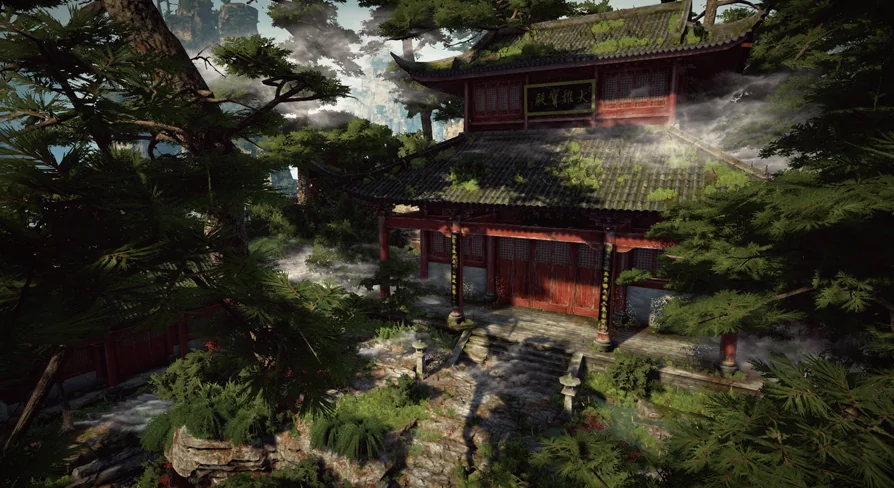
The earliest read of the piece is the way the ground plane disappears into mist. That choice takes the environment away from documentary realism and steps it into an old painting-like zone. The temples become landmarks, the cliffs appear unexpectedly, and the whole mountain feels like a border between daily life and somewhere more sacred. The description calls it a wonderland, which matches the visual recipe exactly.
An Ancient Mountain Think That Reaches Back to China's Famous Peaks
Atmosphere is the major driver throughout. The scene starts from the kind of atmosphere found in China's celebrated mountain regions, known for vertical rock, scarce buildings, and changing weather. Yet this is not a faithful copy of any one scenic area. The mountain is instead a staging ground for ancient feelings: a place where fog cuts the lower world off, where a temple feels hidden before it is visible, and where the air seems older than the surrounding game level.
Temple elements in the composition strengthen the sense that this mountain has been inhabited or visited, but they also add a spiritual layer. The placement of those structures matters. Positioned among ledges and cliffs, the temples become a clue for traversal or story moments. For a player, a roof seen through mist might be the only thing telling them a path is close. For a filmmaker, that same hidden building becomes a natural target for slow reveals. The mountain is large enough to contain that kind of spatial storytelling, especially when it is broken apart by different stone masses instead of being one solid hill.
ZBrush-Carved Stone and Mixed Rock Sizes Shape the Detail
The rocky skeleton of Zhang Jia Jie Mountain is sculpted with ZBrush. Using a digital sculpting tool for the stone, rather than only tiling a generic height map, allows the final surface to carry a stronger sense of chiseled truth. The project description says this engraving method improves the veracity of the stones. Indeed, the rock surfaces feel less like a repeating texture and more like an object that has been shaped and damaged over centuries.
In practice, the mountainside is assembled from stones of varied sizes. Some boulders are small enough to almost be counted as scattered debris, while others are massive enough to define the main horizon. The mix of scales lets each rock type stay readable, instead of turning the whole level into a monotone gray smear. Small stones create foreground texture and break up the base of the terrain. Larger rock sections catch shadows and highlight the dramatic silhouette of the ridge. Because each element is individually sized, the eye can move from the near ground to the far peaks without losing sense of the material.
Working this way also helps in a level-building context. A scene with coherent but separable stone blocks gives environment artists an unusually legible structure to light, fog, and even budget geometry around. Whether the task is placing a character near a cliff edge or cutting a view between two giant boulders, the variety of rock dimensions supports staging rather than fighting it.
Warm Dynamic Lighting for a Larger Living Scene
Zhang Jia Jie Mountain uses dynamic light sources for its main environment lighting, and those lights lean towards warm color. This is a deliberate departure from the cold, blue-gray palette many people expect from an alpine scene, and it changes the way the stone looks. Warm light makes the ZBrush surface details seem more golden and less harsh. It also helps the temple structures feel welcoming instead of abandoned.
The decision to use dynamic rather than fully baked lighting means the environment can keep responsive light in motion. If the game level shifts toward dusk or night, the lighting rig can be changed without rebuilding the whole lighting information for the asset. The original description notes that the larger environment uses this setup to add a warm tone, and that choice is what brings the mountain out of a 3D scan-like neutrality. The interaction between warm sunlight, rock shadow, and soft mist creates an inviting, almost dreamlike visual temperature.
Pines in Different Forms, Flowing Water, and Mist Increase the Dreamlike Read
Between the rock formations, the level introduces pine trees in a range of shapes. The pines are not all created from one duplicated plant. Different forms are used, allowing some trees to lean out from cliffs while others anchor the lower slopes. Those various silhouettes prevent the forest from flattening into a repetitive strip and give the ridges a more layered silhouette.
Two other elements bring movement into the static world: water and drifting cloud or mist. The flow of water as well as the slow motion of cloud and mist animate the mountain without needing moving characters. Water might cut through the valleys or stream off one of the rock platforms, while misty particles collect under the temple roofs and around the pines. All of these effects combine to create the moment the asset summary points to: an environment that reads as a dreamy wonderland.
For an artist, the mist is not only mood. It softens the transition between the bottom of the terrain and nothingness, which allows a game director to hide draw distance or negative space behind the water vapor. The pines, in turn, give the mist something to climb among. That leaves a full vertical composition, from warm-lit peaks down into fog-bound gorges, with water acting as the only clear line of movement.
An Environment Level Set for a Particular Production Context
The package makes its purpose simple with the tags Environment and Level. Those tags distinguish it from asset packs that merely sell a handful of props. This is a space where a player can stand, a camera can look around, and light can play across a landscape. Part of the value also comes from the production note that the asset carries an Old Train Factory compatibility label. The exact meaning of that label is left to the build pipeline, but it signals the asset has some alignment with that environment's expectations. Teams already working in that context can treat this as a closer integration point, while other teams know they are bringing in an atmosphere-driven mountain level rather than an isolated rock mesh.
For level designers aiming to stage an ancient China-inspired story, Zhang Jia Jie Mountain spares much of the early composition work. The ZBrush-sculpted mountains already contain the required depth and texture, the warm dynamic lights create a usable base, and the placement of pines, water, and clouds provides enough density to feel alive. Because the piece is deliberately atmospheric, it opens the door to encounters anchored in exploration and discovery—around the next bend or beyond the mist. The asset supplies artists not only with a set of assets but with the atmosphere of a mythical Chinese mountain ready to receive characters and gameplay.
 Cities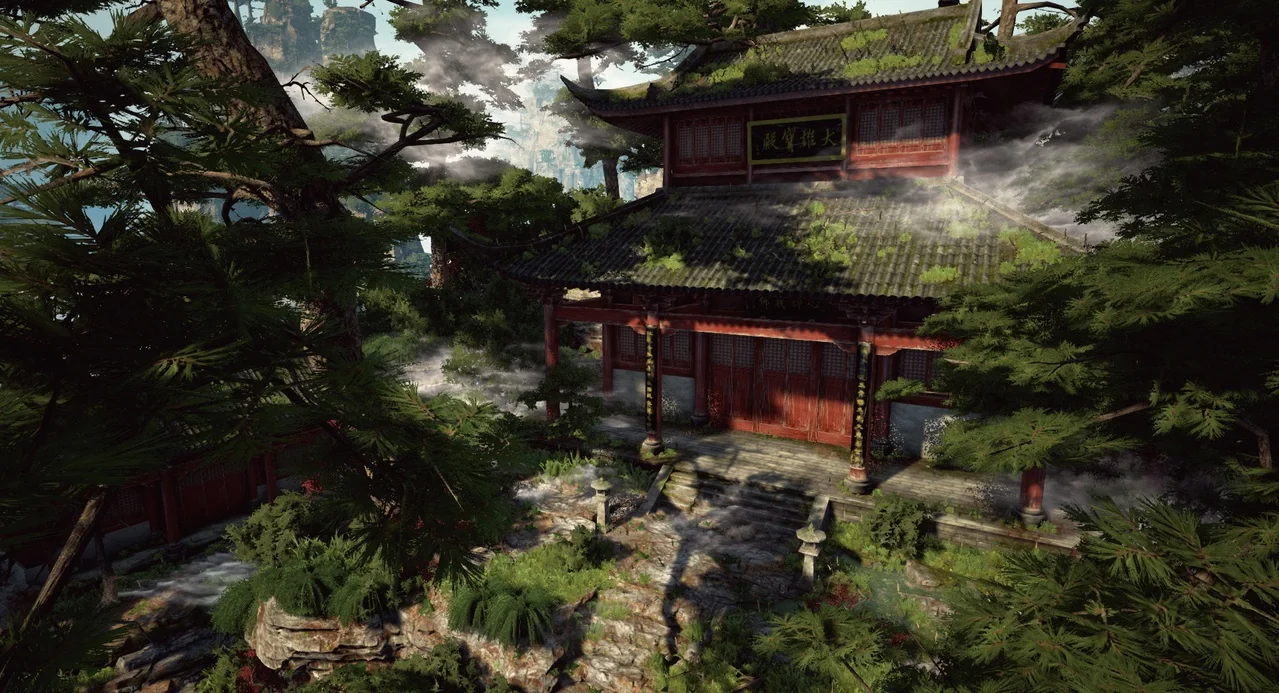
 Cities
 Mountain
 Mountain