"031373f479d9561a"{"id":"28484","slug":"arctic-aurora-landscape","title":"Arctic Aurora Landscape","category":"Mountain","engine":"4.26+,5.0+","assetVersion":"Engine version: 4.26+,5.0+","engineVersion":"","tag":"Mountain","accent":"blue","visual":"city","summary":"Arctic Aurora Landscape centers on a realistic snowy mountain scene shaped by layered terrain, aurora-filled skies, and atmospheric particles. It combines detailed landscape shaders, snow-covered vegetation, distant mountain backdrops, and lighting settings...","platform":"Unreal Engine","publishedAt":"2026-05-15T17:17:38.000Z","updatedAt":"2026-05-15T17:17:39.000Z","sourceNotes":[],"fileContents":[],"compatibility":["Unreal Engine","Engine version: 4.26+,5.0+"],"featuredImage":{"alt":"Arctic Aurora Landscape","src":"https://3dcghub.com/wp-content/uploads/2026/05/e519b62c651a_7fcc4b27-978c-4834-9de9-f4fe863e8487.webp"},"hasDownloadLink":true,"downloads":1,"terms":[{"taxonomy":"category","slug":"mountain-environments-sprites-and-flipbooks","name":"Mountain"},{"taxonomy":"post_tag","slug":"environment","name":"Environment"},{"taxonomy":"post_tag","slug":"materials","name":"Materials"},{"taxonomy":"post_tag","slug":"unreal-engine-5","name":"Unreal Engine 5"}],"galleryImages":[{"src":"https://3dcghub.com/wp-content/uploads/2026/05/efebd19db1b1_f5a2a584-0436-4c68-88d6-5c18b64230bd.webp","alt":"Arctic Aurora Landscape"},{"src":"https://3dcghub.com/wp-content/uploads/2026/05/0806e9364aa3_f93f4735-d598-4206-8b7b-ab96fd349563.webp","alt":"Arctic Aurora Landscape"},{"src":"https://3dcghub.com/wp-content/uploads/2026/05/5a81401efcc9_e43404f4-ee08-4436-bc56-4633bd1c204f.webp","alt":"Arctic Aurora Landscape"},{"src":"https://3dcghub.com/wp-content/uploads/2026/05/31f45775d642_94af3c1e-1d0a-4c29-b9be-6d22edae3671.webp","alt":"Arctic Aurora Landscape"},{"src":"https://3dcghub.com/wp-content/uploads/2026/05/41e657f4c6a0_53b734e5-c75f-4bb2-b474-a9fd1dd5225e.webp","alt":"Arctic Aurora Landscape"},{"src":"https://3dcghub.com/wp-content/uploads/2026/05/b80e799d1dc9_630c6809-e4bb-401f-b0b9-b8e725a115f9.webp","alt":"Arctic Aurora Landscape"},{"src":"https://3dcghub.com/wp-content/uploads/2026/05/27deb9d7aa7f_d47388d9-a2e6-4209-ad04-a89b13eab691.webp","alt":"Arctic Aurora Landscape"}],"accessPanel":{"kind":"resource","title":"Access this resource","eyebrow":"Free Download","message":"Log in or create a free account to start your download.","fileName":"Content.7z","safetyNote":"All resources are 100% manually reviewed to eliminate all risks.","actionLabel":"Download Free","resourceType":"Resource archive"},"contentHtml":"\u003cp\u003eArctic Aurora Landscape is aimed at scenes that need a cold, expansive mountain setting with strong atmosphere. Its focus is a highly realistic arctic environment where the terrain, the vegetation, the sky, and the lighting all work together to create a sense of scale, distance, and severe winter conditions.\u003c/p\u003e\u003cp\u003eThe environment is not just a stretch of snow-covered ground. It is framed as an arctic mountain level with several types of Aurora Borealis overhead, detailed landscape shaders across the terrain, and a broad mix of mountain assets spread through the scene. Snow clouds roll over the peaks, shooting stars pass through the sky, and background mountain layers extend the horizon so the space feels larger than a single playable foreground area.\u003c/p\u003e\u003cp\u003eThat combination gives the pack a clear identity. This is a scene for frozen wilderness vistas, aurora-lit mountain passes, and remote snowy landscapes where the sky is as important as the land beneath it.\u003c/p\u003e\u003ch2\u003eAurora Borealis over an arctic mountain range\u003c/h2\u003e\u003cp\u003eThe defining visual element is the use of several types of Aurora Borealis in the level. That detail matters because it pushes the environment beyond a standard snow map and into something more cinematic and atmospheric. The aurora becomes part of the scene composition, shaping how the mountain forms, trees, and open snowfields are read against the sky.\u003c/p\u003e\u003cp\u003eThe mountain environment itself is described as highly realistic, and that realism is reinforced by the way the landscape is layered. A variety of mountain ranges are scattered across the scene to add depth and life. Instead of relying on a single ridge line, the environment uses multiple mountain forms to keep the view active and to avoid a flat background. There is also a dedicated background layer of mountain, which helps sell the feeling of distance and overall scale.\u003c/p\u003e\u003cp\u003eInside a project, this makes the environment suitable for wide shots where the horizon needs to feel believable. The distant mountain layer helps keep the world from feeling enclosed, while the repeated mountain ranges in the mid and far distance give the eye multiple points to travel across. For creators building arctic exploration scenes, isolated traversal moments, or scenic camera flythroughs, that kind of depth is central to the look.\u003c/p\u003e\u003ch2\u003eSnowed trees, dead branches, and saplings across the terrain\u003c/h2\u003e\u003cp\u003eThe mountain terrain is supported by detailed shaders and a range of assets covering the slopes. Vegetation is a major part of that coverage. The scene includes high-level trees that appear both snowed in and stripped into dead branches, alongside smaller sapling trees. These smaller trees are paired with clusters of snow chunks and deposits of snow, which helps break up the terrain surface and keeps the snowy ground from reading as a single unvaried material.\u003c/p\u003e\u003cp\u003eThis mix of vegetation types gives the environment a more natural winter character. Snow-covered trees communicate a heavier, colder climate, while dead branches introduce harsher silhouettes and a more exposed alpine feel. The saplings then add another scale layer, making the environment feel less uniform. Larger trees establish the broad forms of the forested areas, while smaller growth and snow deposits handle the close and mid-range detail.\u003c/p\u003e\u003cp\u003eBecause the vegetation spans from taller trees down to saplings, the scene can support more than one kind of composition. A camera can sit low among smaller growth and snow clusters for a tighter shot, or it can pull back to take in the taller tree lines against the mountains. The available details emphasizes the visual coverage of the mountains rather than an empty rocky surface, so the environment reads as a populated winter landscape rather than a bare snowfield.\u003c/p\u003e\u003cp\u003eTags associated with the environment reinforce that identity: snow, tree, arctic, level, realistic, forest, and ice. Together, those tags point to a resource best suited to frozen forested mountain spaces rather than desert snow plains or stylized winter maps.\u003c/p\u003e\u003ch2\u003eRolling snow clouds and shooting stars add motion\u003c/h2\u003e\u003cp\u003eAtmosphere in Arctic Aurora Landscape is not limited to static terrain and sky color. The environment also includes realistic particles, specifically rolling snow clouds over the mountain peaks and shooting stars. Those two effects push the scene toward a more active and believable presentation.\u003c/p\u003e\u003cp\u003eThe rolling snow clouds help the peaks feel exposed to weather. Even without describing a full storm system, the presence of moving snow over the mountaintops suggests wind, cold air movement, and elevation. It gives the mountain ridges more presence and can make the skyline feel alive rather than still.\u003c/p\u003e\u003cp\u003eShooting stars serve a different role. They reinforce the nighttime or low-light sky atmosphere already established by the Aurora Borealis. In an environment where the sky is one of the central attractions, adding occasional celestial motion strengthens the sense that this is a place meant to be viewed, not just traversed.\u003c/p\u003e\u003cp\u003eThese particle touches are especially useful in scenes where the creator wants the environment itself to carry emotional weight. A quiet arctic vista gains more impact when clouds drift over the peaks and stars cut across the sky. For flythroughs, establishing shots, or cinematic environments that need a strong natural mood, those details can be as important as the mountain geometry.\u003c/p\u003e\u003ch2\u003ePhysically accurate lighting in Arctic Aurora Landscape\u003c/h2\u003e\u003cp\u003eOne of the most concrete production notes attached to this environment concerns its lighting. The scenes use physically accurate lighting values. That choice affects how the environment appears out of the box, especially in relation to the sun intensity, which can look overblown if the camera and project settings are not adjusted to match.\u003c/p\u003e\u003cp\u003eThe setup calls for using or adding a cine camera and then tweaking ISO and shutter speed values. This is not a small side note. It directly affects how the scene should be viewed and captured. Since the lighting is physically accurate, exposure control becomes part of presenting the environment correctly. Without those camera adjustments, the brightness can overwhelm the image.\u003c/p\u003e\u003cp\u003eThere is also a specific project setting requirement: extended default luminance range in UE4 needs to be enabled. That tells you the scene is meant to operate within a broader exposure and lighting range than a default setup may allow. Anyone using the environment for rendered sequences, look development, or in-engine cinematics should pay close attention to this part of the setup, because the visual result depends on it.\u003c/p\u003e\u003cp\u003eThis lighting note also helps define the kind of user who will get the most from the pack. Arctic Aurora Landscape is not only about placing snowy mountains into a level. It is also about working with a more realistic lighting approach, where camera exposure and project configuration are part of achieving the intended look.\u003c/p\u003e\u003ch2\u003eWhere this arctic level makes the most sense\u003c/h2\u003e\u003cp\u003eArctic Aurora Landscape is best matched to projects that need a realistic snowy mountain environment with a strong sky presence. The combination of aurora variants, layered mountain ranges, snow-covered and dead-branched trees, saplings, snow deposits, and atmospheric particles makes it well suited to scenes where the environment needs to carry mood on its own.\u003c/p\u003e\u003cp\u003eIt fits naturally in arctic wilderness sequences, frozen forest vistas, mountain flythroughs, and other scenes where distance, cold atmosphere, and elevated terrain are central. The background mountain layer is especially helpful when a project needs the world to feel broad and remote rather than enclosed. The rolling snow clouds and shooting stars add extra value in shots where motion in the environment helps prevent static compositions.\u003c/p\u003e\u003cp\u003eCreators who want a stylized or simplified winter map may not be looking for the same thing. This environment leans into realism, both in how the landscape is presented and in how the lighting needs to be handled. It will be most useful to those who want an arctic level with visible depth, dense snowy detail, and a sky setup that plays an active role in the scene.\u003c/p\u003e\u003cp\u003eIf the goal is to stage a believable frozen mountain setting under Aurora Borealis, with forests, ice, snow deposits, distant ridges, and weather-driven atmosphere, this environment is a strong fit.\u003c/p\u003e\n\n\u003ch2\u003eContinue Browsing Similar Packs\u003c/h2\u003e\n\u003cul\u003e\n\u003cli\u003e\u003ca href=\"https://3dcghub.com/56-fabric-textile-materials-4k-pbr-collection/\" title=\"56 Fabric \u0026amp;amp; Textile Materials (4K PBR Collection)\"\u003e56 Fabric \u0026amp; Textile Materials (4K PBR Collection)\u003c/a\u003e\u003c/li\u003e\n\u003cli\u003e\u003ca href=\"https://3dcghub.com/advanced-road-materials/\" title=\"Advanced road materials\"\u003eAdvanced road materials\u003c/a\u003e\u003c/li\u003e\n\u003cli\u003e\u003ca href=\"https://3dcghub.com/master-materials-and-layer-system-for-daz3d-imports/\" title=\"Master Materials and Layer System for Daz3D Imports\"\u003eMaster Materials and Layer System for Daz3D Imports\u003c/a\u003e\u003c/li\u003e\n\u003cli\u003e\u003ca href=\"https://3dcghub.com/realistic-materials-vol-7-water-ice-25-materials/\" title=\"Realistic Materials Vol. 7 – Water \u0026amp;amp; Ice (25+ Materials)\"\u003eRealistic Materials Vol. 7 – Water \u0026amp; Ice (25+ Materials)\u003c/a\u003e\u003c/li\u003e\n\u003cli\u003e\u003ca href=\"https://3dcghub.com/stylized-250-materials-bundle/\" title=\"Stylized 250 Materials Bundle\"\u003eStylized 250 Materials Bundle\u003c/a\u003e\u003c/li\u003e\n\u003c/ul\u003e","contentTextLength":8595,"navigation":{"current":1367,"total":3223,"previous":{"id":"28498","slug":"ascent-ui-tools-gamepad-navigation-ui-framework","title":"Ascent UI Tools - Gamepad Navigation \u0026 UI Framework","category":"Engine Tools","platform":"Unreal Engine","updatedAt":"2026-05-16T07:36:08.000Z"},"next":{"id":"28474","slug":"ancient-cathedral-environment-ancient-cathedral-ancient-dungeon-cathedral-3d","title":"Ancient Cathedral Environment ( Ancient Cathedral Ancient Dungeon Cathedral 3D )","category":"Temple","platform":"Unreal Engine","updatedAt":"2026-05-15T17:03:39.000Z"}},"relatedResources":[{"id":"1000562","slug":"arctic-base","title":"Arctic Base","category":"Mountain","engine":"4.26+,5.0+","assetVersion":"","engineVersion":"Engine Version: 4.26+,5.0+","tag":"Mountain","accent":"blue","visual":"mech","summary":"Arctic Base is a polar station environment pack with buildings, props, landscape, and water materials across Unreal Engine versions from 4.19 to 5.8.","platform":"Unreal Engine","publishedAt":"2026-07-16T05:00:29.747Z","updatedAt":"2026-07-16T05:00:29.747Z","sourceNotes":[],"fileContents":[],"compatibility":["Unreal Engine","Engine Version: 4.26+,5.0+"],"featuredImage":{"alt":"Arctic Base","src":"/wp-content/uploads/published/2026/07/b73e66f11064-912225d2-ed0b-4150-a5c3-a003ea26c179-8381e0955a.webp"},"hasDownloadLink":true,"downloads":0},{"id":"9357","slug":"brushify-arctic-pack","title":"Brushify - Arctic Pack","category":"Mountain","engine":"4.26+,5.0+","assetVersion":"Engine version: 4.26+,5.0+","engineVersion":"4.24","tag":"Mountain","accent":"blue","visual":"city","summary":"The Brushify - Arctic Pack is a professional modular toolkit for Unreal Engine designed to streamline the creation of massive, detailed winter environments. It features high-resolution alpha brushes, distance meshes, and an advanced landscape auto-material.","platform":"Unreal Engine","publishedAt":"2026-03-01T16:40:54.000Z","updatedAt":"2026-04-19T15:51:14.000Z","sourceNotes":[],"fileContents":[],"compatibility":["Unreal Engine","Engine version: 4.26+,5.0+"],"featuredImage":{"alt":"Brushify - Arctic Pack","src":"https://3dcghub.com/wp-content/uploads/2026/03/b49cbf83-56c1-49bc-a42a-d7077b34e2f7.webp"},"hasDownloadLink":true,"downloads":0},{"id":"1001136","slug":"eastern-iceland-landscape","title":"Eastern Iceland Landscape","category":"Mountain","engine":"4.26+,5.0+","assetVersion":"","engineVersion":"Engine Version: 4.26+,5.0+","tag":"Mountain","accent":"blue","visual":"city","summary":"A 64 square kilometer terrain with 1x1 m vertex density, volumetric 3D clouds, dynamic cloud shadows, and layered material controls for realistic outdoor scenes","platform":"Unreal Engine","publishedAt":"2026-09-09T03:20:31.567Z","updatedAt":"2026-09-09T03:20:31.567Z","sourceNotes":[],"fileContents":[],"compatibility":["Unreal Engine","Engine Version: 4.26+,5.0+"],"featuredImage":{"alt":"Eastern Iceland Landscape","src":"/wp-content/uploads/published/2026/09/ffd4b4699908-7793c3ec-35c9-4cc6-b06d-962d5f6ccb4e-89f3513491.webp"},"hasDownloadLink":true,"downloads":0}]}
Mountain
Arctic Aurora Landscape
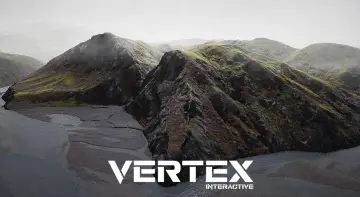
Arctic Aurora Landscape centers on a realistic snowy mountain scene shaped by layered terrain, aurora-filled skies, and atmospheric particles. It combines detailed landscape shaders, snow-covered vegetation, distant mountain backdrops, and lighting settings...
Category:Unreal Engine,MountainPlatform: Unreal EngineEngine version: 4.26+,5.0+Published: May 15, 2026
Mountain
Resource overview
Arctic Aurora Landscape is aimed at scenes that need a cold, expansive mountain setting with strong atmosphere. Its focus is a highly realistic arctic environment where the terrain, the vegetation, the sky, and the lighting all work together to create a sense of scale, distance, and severe winter conditions.
The environment is not just a stretch of snow-covered ground. It is framed as an arctic mountain level with several types of Aurora Borealis overhead, detailed landscape shaders across the terrain, and a broad mix of mountain assets spread through the scene. Snow clouds roll over the peaks, shooting stars pass through the sky, and background mountain layers extend the horizon so the space feels larger than a single playable foreground area.
That combination gives the pack a clear identity. This is a scene for frozen wilderness vistas, aurora-lit mountain passes, and remote snowy landscapes where the sky is as important as the land beneath it.
Aurora Borealis over an arctic mountain range
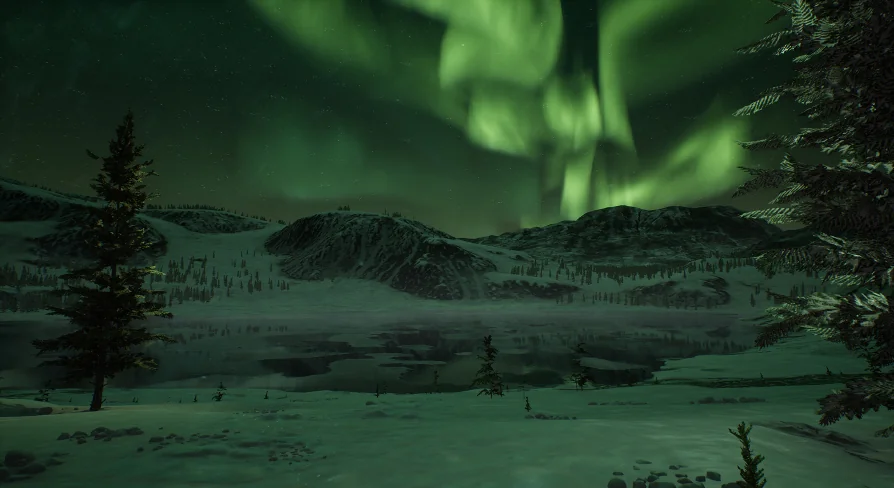
The defining visual element is the use of several types of Aurora Borealis in the level. That detail matters because it pushes the environment beyond a standard snow map and into something more cinematic and atmospheric. The aurora becomes part of the scene composition, shaping how the mountain forms, trees, and open snowfields are read against the sky.
The mountain environment itself is described as highly realistic, and that realism is reinforced by the way the landscape is layered. A variety of mountain ranges are scattered across the scene to add depth and life. Instead of relying on a single ridge line, the environment uses multiple mountain forms to keep the view active and to avoid a flat background. There is also a dedicated background layer of mountain, which helps sell the feeling of distance and overall scale.
Inside a project, this makes the environment suitable for wide shots where the horizon needs to feel believable. The distant mountain layer helps keep the world from feeling enclosed, while the repeated mountain ranges in the mid and far distance give the eye multiple points to travel across. For creators building arctic exploration scenes, isolated traversal moments, or scenic camera flythroughs, that kind of depth is central to the look.
Snowed trees, dead branches, and saplings across the terrain
The mountain terrain is supported by detailed shaders and a range of assets covering the slopes. Vegetation is a major part of that coverage. The scene includes high-level trees that appear both snowed in and stripped into dead branches, alongside smaller sapling trees. These smaller trees are paired with clusters of snow chunks and deposits of snow, which helps break up the terrain surface and keeps the snowy ground from reading as a single unvaried material.
This mix of vegetation types gives the environment a more natural winter character. Snow-covered trees communicate a heavier, colder climate, while dead branches introduce harsher silhouettes and a more exposed alpine feel. The saplings then add another scale layer, making the environment feel less uniform. Larger trees establish the broad forms of the forested areas, while smaller growth and snow deposits handle the close and mid-range detail.
Because the vegetation spans from taller trees down to saplings, the scene can support more than one kind of composition. A camera can sit low among smaller growth and snow clusters for a tighter shot, or it can pull back to take in the taller tree lines against the mountains. The available details emphasizes the visual coverage of the mountains rather than an empty rocky surface, so the environment reads as a populated winter landscape rather than a bare snowfield.
Tags associated with the environment reinforce that identity: snow, tree, arctic, level, realistic, forest, and ice. Together, those tags point to a resource best suited to frozen forested mountain spaces rather than desert snow plains or stylized winter maps.
Rolling snow clouds and shooting stars add motion
Atmosphere in Arctic Aurora Landscape is not limited to static terrain and sky color. The environment also includes realistic particles, specifically rolling snow clouds over the mountain peaks and shooting stars. Those two effects push the scene toward a more active and believable presentation.
The rolling snow clouds help the peaks feel exposed to weather. Even without describing a full storm system, the presence of moving snow over the mountaintops suggests wind, cold air movement, and elevation. It gives the mountain ridges more presence and can make the skyline feel alive rather than still.
Shooting stars serve a different role. They reinforce the nighttime or low-light sky atmosphere already established by the Aurora Borealis. In an environment where the sky is one of the central attractions, adding occasional celestial motion strengthens the sense that this is a place meant to be viewed, not just traversed.
These particle touches are especially useful in scenes where the creator wants the environment itself to carry emotional weight. A quiet arctic vista gains more impact when clouds drift over the peaks and stars cut across the sky. For flythroughs, establishing shots, or cinematic environments that need a strong natural mood, those details can be as important as the mountain geometry.
Physically accurate lighting in Arctic Aurora Landscape
One of the most concrete production notes attached to this environment concerns its lighting. The scenes use physically accurate lighting values. That choice affects how the environment appears out of the box, especially in relation to the sun intensity, which can look overblown if the camera and project settings are not adjusted to match.
The setup calls for using or adding a cine camera and then tweaking ISO and shutter speed values. This is not a small side note. It directly affects how the scene should be viewed and captured. Since the lighting is physically accurate, exposure control becomes part of presenting the environment correctly. Without those camera adjustments, the brightness can overwhelm the image.
There is also a specific project setting requirement: extended default luminance range in UE4 needs to be enabled. That tells you the scene is meant to operate within a broader exposure and lighting range than a default setup may allow. Anyone using the environment for rendered sequences, look development, or in-engine cinematics should pay close attention to this part of the setup, because the visual result depends on it.
This lighting note also helps define the kind of user who will get the most from the pack. Arctic Aurora Landscape is not only about placing snowy mountains into a level. It is also about working with a more realistic lighting approach, where camera exposure and project configuration are part of achieving the intended look.
Where this arctic level makes the most sense
Arctic Aurora Landscape is best matched to projects that need a realistic snowy mountain environment with a strong sky presence. The combination of aurora variants, layered mountain ranges, snow-covered and dead-branched trees, saplings, snow deposits, and atmospheric particles makes it well suited to scenes where the environment needs to carry mood on its own.
It fits naturally in arctic wilderness sequences, frozen forest vistas, mountain flythroughs, and other scenes where distance, cold atmosphere, and elevated terrain are central. The background mountain layer is especially helpful when a project needs the world to feel broad and remote rather than enclosed. The rolling snow clouds and shooting stars add extra value in shots where motion in the environment helps prevent static compositions.
Creators who want a stylized or simplified winter map may not be looking for the same thing. This environment leans into realism, both in how the landscape is presented and in how the lighting needs to be handled. It will be most useful to those who want an arctic level with visible depth, dense snowy detail, and a sky setup that plays an active role in the scene.
If the goal is to stage a believable frozen mountain setting under Aurora Borealis, with forests, ice, snow deposits, distant ridges, and weather-driven atmosphere, this environment is a strong fit.
 Mountain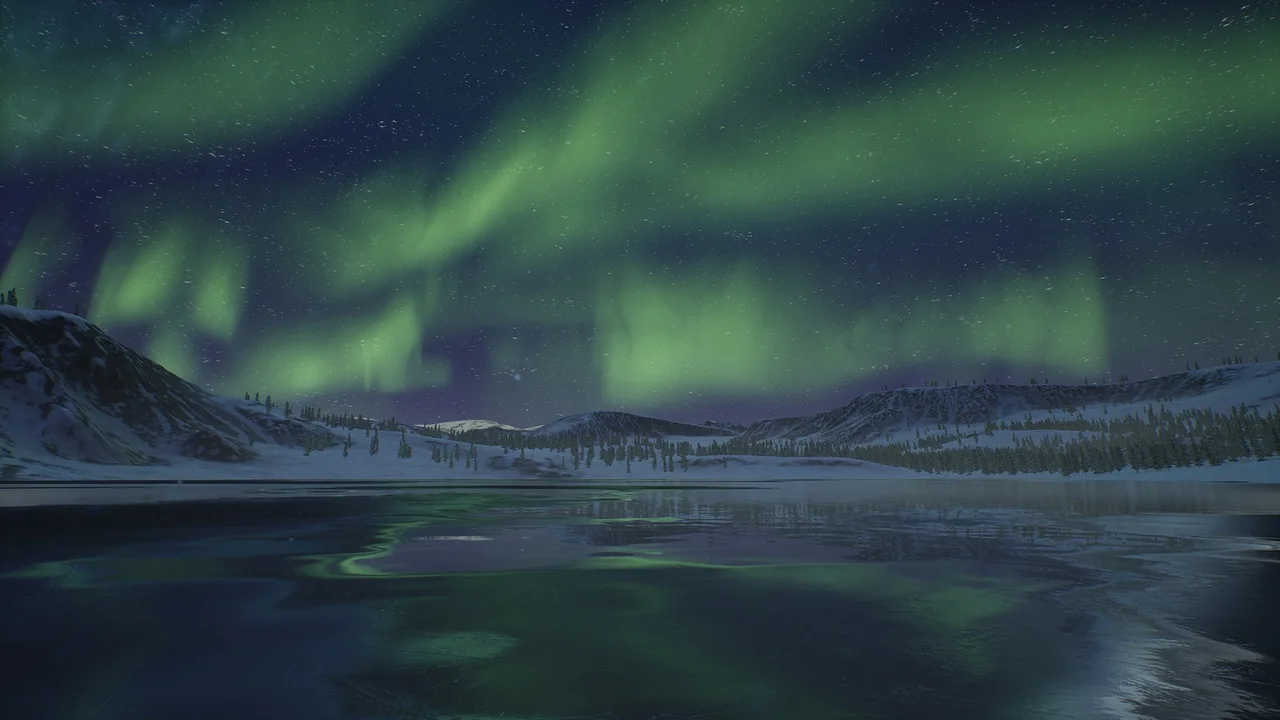
 Mountain
 Mountain
 Mountain