"7b46a695175d8694"{"id":"1001462","slug":"worms-complete-pack","title":"Worms Complete Pack","category":"Characters \u0026 Creatures","engine":"4.16+,5.0+","assetVersion":"","engineVersion":"Engine Version: 4.16+,5.0+","tag":"Characters","accent":"blue","visual":"character","summary":"Examine Worms Complete Pack, featuring sized worms, clawed variants, specialized leeches, a Flying Monster, and Animationblueprint implementation.","platform":"Unreal Engine","publishedAt":"2026-10-08T01:07:36.891Z","updatedAt":"2026-10-08T01:07:36.891Z","sourceNotes":[],"fileContents":[],"compatibility":["Unreal Engine","Engine Version: 4.16+,5.0+"],"featuredImage":{"alt":"Worms Complete Pack","src":"/wp-content/uploads/published/2026/10/d83ce3189266-8138210b-36d8-45ce-9f7c-2c51fd09b631-d952dcb119.webp"},"hasDownloadLink":true,"downloads":0,"terms":[{"taxonomy":"category","slug":"characters-and-creatures","name":"Characters \u0026 Creatures"}],"galleryImages":[{"src":"/wp-content/uploads/published/2026/10/6900da9a0024-fdfb8b3c-9ba8-4e10-8f76-718e3c5260f0-4b06dcc02b.webp","alt":"Worms Complete Pack"},{"src":"/wp-content/uploads/published/2026/10/d9e340c35042-070c321d-3456-48c6-8eeb-f349cfb02a61-1e15e6fca0.webp","alt":"Worms Complete Pack"},{"src":"/wp-content/uploads/published/2026/10/f703085d270e-f04e3f05-0a51-4a56-99d6-3e8599c8dc18-ca9e8dce0d.webp","alt":"Worms Complete Pack"},{"src":"/wp-content/uploads/published/2026/10/e1172ecf043a-69680798-d46d-402e-b164-5b64090e548b-e6baac9145.webp","alt":"Worms Complete Pack"},{"src":"/wp-content/uploads/published/2026/10/6a50c61f5eb2-e2ebc150-5395-4c64-a1ac-def0445c5a0e-8d2b76dc95.webp","alt":"Worms Complete Pack"},{"src":"/wp-content/uploads/published/2026/10/564ea7723341-f625c97c-3923-4493-aad8-a2c984a37aac-1900689a37.webp","alt":"Worms Complete Pack"},{"src":"/wp-content/uploads/published/2026/10/9fabfb803f57-9daf582f-ccb1-4fd2-915c-438e6b76c6f8-0707ec0f42.webp","alt":"Worms Complete Pack"},{"src":"/wp-content/uploads/published/2026/10/3b5278acd0e6-2d98dc96-83dd-4f66-8094-0329f62dd519-6b75356651.webp","alt":"Worms Complete Pack"},{"src":"/wp-content/uploads/published/2026/10/82b801ce5c9d-f2699df4-abb2-4c0b-8df8-c4dfd452483f-9b0d60a914.webp","alt":"Worms Complete Pack"},{"src":"/wp-content/uploads/published/2026/10/1403ec03b218-ffc580d0-ea14-4f61-871f-e64fc57e2abe-55e1e8a86a.webp","alt":"Worms Complete Pack"}],"accessPanel":{"kind":"resource","title":"Download this resource","eyebrow":"Free Download","message":"Log in or create a free account to start your download.","fileName":"Content.7z","safetyNote":"Resources are manually reviewed before listing to improve quality and reduce obvious risks.","actionLabel":"Download Free","resourceType":"Resource archive"},"contentHtml":"\u003cp\u003ePopulating dark environments with credible segmented threats often stalls when an encounter requires distinct behavioral classes instead of one repeated model. Building separate rigs, behaviors, and visual archetypes for subterranean ambushers consumes substantial production time, especially when sequences call for varied scales and tactical roles. Worms Complete Pack addresses this production bottleneck by supplying an entire ecosystem of crawling, biting, and flying entities ready for immediate level deployment.\u003c/p\u003e\u003cp\u003eInstead of relying on a uniform enemy profile, the collection provides distinct operational categories. Developers can establish multi-tiered threats ranging from massive burrowers to smaller parasitic hazards, backed by dedicated behavioral structures including Animationblueprint support and script functionality. This variety allows designers to construct cohesive horror sequences and fantasy set pieces without engineering each creature framework from scratch.\u003c/p\u003e\u003ch2\u003eTiered Scaling with Big Worm, Middle Worm, and Small Worm\u003c/h2\u003e\u003cp\u003eStaging subterranean combat demands believable progression in enemy dimensions and threat potential.\u003c/p\u003e\u003cp\u003eThe foundational layer of the collection relies on a clear size taxonomy: Big Worm, Middle Worm, and Small Worm. Big Worm functions naturally as an environmental focal point, anchoring boss encounters, cavern hazards, or deep-earth set pieces where high visual impact is essential. Middle Worm offers the appropriate proportions for elite patrol units or secondary combatants, bridging the gap between massive centerpiece threats and smaller baseline minions. Small Worm satisfies the requirement for pack encounters, ambushes, or recurring swarms that harass players in confined corridors. Because the three tiers represent a unified structural lineage, encounters remain visually coherent while scaling up difficulty through physical presence.\u003c/p\u003e\u003ch2\u003eClose-Combat Threats: Clawed Worm Variations\u003c/h2\u003e\u003cp\u003eStandard annelid forms can leave combat designers limited when encounters demand distinct offensive silhouettes and armored defense profiles.\u003c/p\u003e\u003cp\u003eTo provide specific mechanical roles, the pack introduces clawed variants categorized as Venous Clawed Worm, Armored Clawed Worm, and Meat Clawed Worm. Each type delivers a distinct physical emphasis that informs how an enemy engages within fantasy or realistic horror scenes. Venous Clawed Worm presents an organic, exposed aesthetic suitable for venomous strikes or corrupted zones where tissue detailing signals environmental toxicity. Armored Clawed Worm introduces protective plating, providing an intuitive visual language for damage resistance, deflection states, or shielded attack phases. Meat Clawed Worm reinforces raw physical brutality, presenting a visceral silhouette built for heavy melee lunges and high-impact encounters where brute force dominates the space.\u003c/p\u003e\u003ch2\u003eParasitic Swarms: Heavy Leech, Armored Leech, Fanged Leech, and Thin Leech\u003c/h2\u003e\u003cp\u003eConfined spaces such as damp caverns, flooded crypts, and underground sewers require compact parasitic threats capable of overwhelming player movement.\u003c/p\u003e\u003cp\u003eThe leech roster expands the lower-tier threat spectrum through four targeted archetypes: Heavy Leech, Armored Leech, Fanged Leech, and Thin Leech. Heavy Leech establishes a bulkier presence, functioning well for resilient hazards that block narrow passages or endure prolonged direct damage. Armored Leech applies defensive textures and plating to a low-slung frame, requiring tactical precision to dispatch. In contrast, Fanged Leech visually communicates high puncture damage and aggressive grappling behavior, serving as an ideal ambusher along walls and murky water surfaces. Thin Leech rounds out the group with an elongated, agile profile suitable for high-density mobbing, infesting tight crawlspaces where rapid movement compensates for lighter build mass.\u003c/p\u003e\u003ch2\u003eAerial Disruption with the Flying Monster and Animationblueprint Control\u003c/h2\u003e\u003cp\u003eGround-bound burrowers leave the upper volume of a game environment open, allowing players to navigate encounters without considering overhead attacks.\u003c/p\u003e\u003cp\u003eThe Flying Monster breaks the ground-level combat plane, extending encounter parameters into the vertical dimension. By combining subterranean creepers with an airborne predator, level designers can challenge player sightlines and force defensive adjustments in open arenas or multi-tiered caves. Technical execution across the entire roster is driven by Animationblueprint assets alongside integrated script support. The Animationblueprint structure links skeletal movement to real-time gameplay states, ensuring locomotion, transitions, and strike motions respond directly to game logic. Working in conjunction with script hooks, these setups shorten the transition between importing character meshes and establishing functional behavioral routines inside a project.\u003c/p\u003e\u003ch2\u003eFantasy, Realistic Horror, and Stylized Horse Compatibility Workflows\u003c/h2\u003e\u003cp\u003eBalancing creature presentation between grounded realism and exaggerated horror style dictates how assets interact with existing world art.\u003c/p\u003e\u003cp\u003eThe collection spans both fantasy and realistic design parameters, allowing the models to populate gritty survival horror dungeons as effectively as high-fantasy underground strongholds. Detailed fleshy structures, clawed limbs, and parasitic anatomy carry enough organic definition for visceral presentations while remaining adaptable to stylized settings. Technical compatibility with the Stylized Horse asset provides cross-resource utility, allowing creators working within that ecosystem to introduce hostile interactions, mount evasion sequences, or predator-prey dynamics within their maps. Designers can stage scenarios where mounted travel is disrupted by burrowing leeches, clawed strikers, or airborne pursuers without encountering system mismatch.\u003c/p\u003e\u003ch2\u003eImplementing the Creature Roster in Active Game Environments\u003c/h2\u003e\u003cp\u003eDeploying multi-class encounters requires assigning each creature to an exact spatial function within a level layout.\u003c/p\u003e\u003cp\u003eAn effective implementation strategy distributes the roster across distinct combat ranges. Designers can station Big Worm beneath fragile terrain as an environmental trigger, position Meat Clawed Worm and Armored Clawed Worm in defensive bottlenecks, and carpet flooded trenches with Thin Leech and Fanged Leech clusters. As players navigate the ground hazard, Flying Monster patrol routes maintain tension from above. Driven by Animationblueprint logic and tailored through script variables, Worms Complete Pack provides game teams with a complete, coherent suite of adversaries structured to resolve both ground and aerial creature requirements.\u003c/p\u003e\n\n\u003ch2\u003eExplore Similar Assets\u003c/h2\u003e\n\u003cul\u003e\n\u003cli\u003e\u003ca href=\"https://3dcghub.com/sci-fi-quick-sand-worm/\" title=\"SCI FI: QUICK SAND WORM\"\u003eSCI FI: QUICK SAND WORM\u003c/a\u003e\u003c/li\u003e\n\u003cli\u003e\u003ca href=\"https://3dcghub.com/modular-soldier-opb-full/\" title=\"Modular Soldier OPB Full\"\u003eModular Soldier OPB Full\u003c/a\u003e\u003c/li\u003e\n\u003cli\u003e\u003ca href=\"https://3dcghub.com/infinite-characters-collection-over-230-characters-extra-stigma-studios/\" title=\"Infinite Characters Collection – Over 230 Characters + Extra | STIGMA STUDIOS\"\u003eInfinite Characters Collection – Over 230 Characters + Extra | STIGMA STUDIOS\u003c/a\u003e\u003c/li\u003e\n\u003cli\u003e\u003ca href=\"https://3dcghub.com/insane-pack-01-game-assets-extra-stigma-studios/\" title=\"Insane Pack 01 - Game Assets + Extra | STIGMA STUDIOS\"\u003eInsane Pack 01 - Game Assets + Extra | STIGMA STUDIOS\u003c/a\u003e\u003c/li\u003e\n\u003cli\u003e\u003ca href=\"https://3dcghub.com/ciber-girl/\" title=\"Ciber Girl\"\u003eCiber Girl\u003c/a\u003e\u003c/li\u003e\n\u003c/ul\u003e","contentTextLength":6854,"navigation":{"current":85,"total":3481,"previous":{"id":"1001463","slug":"npc-queue-system","title":"NPC Queue system","category":"Gameplay Features","platform":"Unreal Engine","updatedAt":"2026-10-08T07:53:54.377Z"},"next":{"id":"1001461","slug":"suburbs-vol-8-retro-decor-nanite-and-low-poly","title":"Suburbs VOL.8 - Retro Decor (Nanite and Low Poly)","category":"Art \u0026 Statues","platform":"Unreal Engine","updatedAt":"2026-10-08T01:06:45.708Z"}},"relatedResources":[{"id":"3360","slug":"sci-fi-quick-sand-worm","title":"SCI FI: QUICK SAND WORM","category":"Characters \u0026 Creatures","engine":"4.26+,5.0+","assetVersion":"Engine version: 4.26+,5.0+","engineVersion":"4.15","tag":"Characters","accent":"blue","visual":"character","summary":"Discover the massive 70-meter Sci-Fi Sand Worm for your next game. This high-quality 3D alien monster features 8K PBR textures and a professional 90-bone rig.","platform":"Unreal Engine","publishedAt":"2026-02-09T06:50:06.000Z","updatedAt":"2026-04-19T15:57:39.000Z","sourceNotes":[],"fileContents":[],"compatibility":["Unreal Engine","Engine version: 4.26+,5.0+"],"featuredImage":{"alt":"SCI FI: QUICK SAND WORM","src":"https://3dcghub.com/wp-content/uploads/2026/02/deefdd1a.webp"},"hasDownloadLink":true,"downloads":0},{"id":"1001167","slug":"modular-soldier-opb-full","title":"Modular Soldier OPB Full","category":"Characters \u0026 Creatures","engine":"4.27,5.0+","assetVersion":"","engineVersion":"Engine Version: 4.27,5.0+","tag":"Characters","accent":"blue","visual":"character","summary":"Examine the Modular Soldier OPB Full pack, featuring UE4 and MetaHuman skeletons, 17 skeletal meshes, 4K textures, Lyra support, and mobile LOD scaling.","platform":"Unreal Engine","publishedAt":"2026-09-16T15:17:15.509Z","updatedAt":"2026-09-16T15:17:15.509Z","sourceNotes":[],"fileContents":[],"compatibility":["Unreal Engine","Engine Version: 4.27,5.0+"],"featuredImage":{"alt":"Modular Soldier OPB Full","src":"/wp-content/uploads/published/2026/09/ea2ebd97c5f3-6fd23319-3d68-435c-a7cb-60a62bd850ca-000d21f799.webp"},"hasDownloadLink":true,"downloads":4},{"id":"1000184","slug":"infinite-characters-collection-over-230-characters-extra-stigma-studios","title":"Infinite Characters Collection – Over 230 Characters + Extra | STIGMA STUDIOS","category":"Characters \u0026 Creatures","engine":"4.27,5.0+","assetVersion":"","engineVersion":"Engine Version: 4.27,5.0+","tag":"Characters","accent":"blue","visual":"character","summary":"A massive Unreal Engine character collection with over 230 characters, armor, weapons, material variants, and ongoing future updates.","platform":"Unreal Engine","publishedAt":"2026-06-21T17:34:28.433Z","updatedAt":"2026-08-23T13:14:17.209Z","sourceNotes":[],"fileContents":[],"compatibility":["Unreal Engine","Engine Version: 4.27,5.0+"],"featuredImage":{"alt":"Infinite Characters Collection – Over 230 Characters + Extra | STIGMA STUDIOS","src":"/wp-content/uploads/published/2026/06/26476fb360bb-f2bcdade-6b80-4803-903a-68e84d350b6b-f00df84586.webp"},"hasDownloadLink":true,"downloads":15}]}
Characters
Worms Complete Pack
Examine Worms Complete Pack, featuring sized worms, clawed variants, specialized leeches, a Flying Monster, and Animationblueprint implementation.
Populating dark environments with credible segmented threats often stalls when an encounter requires distinct behavioral classes instead of one repeated model. Building separate rigs, behaviors, and visual archetypes for subterranean ambushers consumes substantial production time, especially when sequences call for varied scales and tactical roles. Worms Complete Pack addresses this production bottleneck by supplying an entire ecosystem of crawling, biting, and flying entities ready for immediate level deployment.
Instead of relying on a uniform enemy profile, the collection provides distinct operational categories. Developers can establish multi-tiered threats ranging from massive burrowers to smaller parasitic hazards, backed by dedicated behavioral structures including Animationblueprint support and script functionality. This variety allows designers to construct cohesive horror sequences and fantasy set pieces without engineering each creature framework from scratch.
Tiered Scaling with Big Worm, Middle Worm, and Small Worm
Staging subterranean combat demands believable progression in enemy dimensions and threat potential.
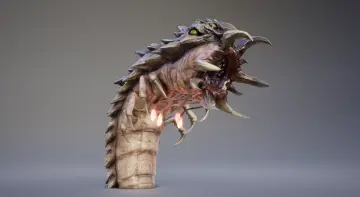
The foundational layer of the collection relies on a clear size taxonomy: Big Worm, Middle Worm, and Small Worm. Big Worm functions naturally as an environmental focal point, anchoring boss encounters, cavern hazards, or deep-earth set pieces where high visual impact is essential. Middle Worm offers the appropriate proportions for elite patrol units or secondary combatants, bridging the gap between massive centerpiece threats and smaller baseline minions. Small Worm satisfies the requirement for pack encounters, ambushes, or recurring swarms that harass players in confined corridors. Because the three tiers represent a unified structural lineage, encounters remain visually coherent while scaling up difficulty through physical presence.
Close-Combat Threats: Clawed Worm Variations
Standard annelid forms can leave combat designers limited when encounters demand distinct offensive silhouettes and armored defense profiles.
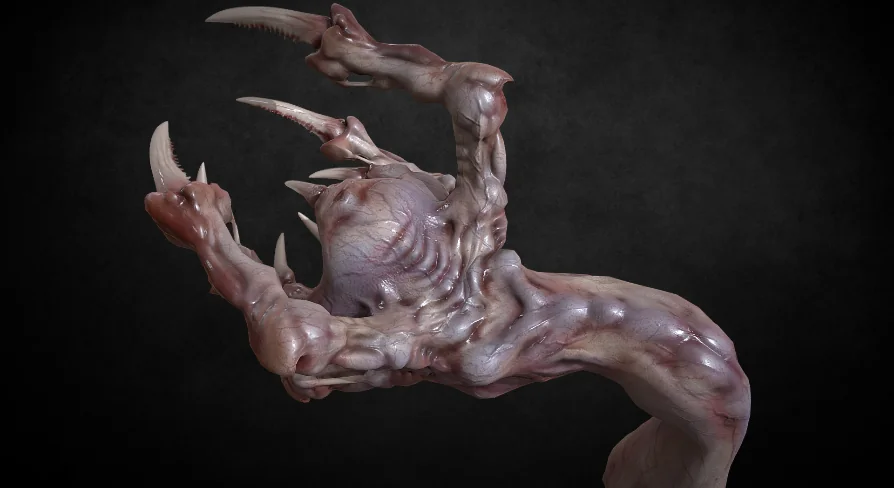
To provide specific mechanical roles, the pack introduces clawed variants categorized as Venous Clawed Worm, Armored Clawed Worm, and Meat Clawed Worm. Each type delivers a distinct physical emphasis that informs how an enemy engages within fantasy or realistic horror scenes. Venous Clawed Worm presents an organic, exposed aesthetic suitable for venomous strikes or corrupted zones where tissue detailing signals environmental toxicity. Armored Clawed Worm introduces protective plating, providing an intuitive visual language for damage resistance, deflection states, or shielded attack phases. Meat Clawed Worm reinforces raw physical brutality, presenting a visceral silhouette built for heavy melee lunges and high-impact encounters where brute force dominates the space.
Parasitic Swarms: Heavy Leech, Armored Leech, Fanged Leech, and Thin Leech
Confined spaces such as damp caverns, flooded crypts, and underground sewers require compact parasitic threats capable of overwhelming player movement.
The leech roster expands the lower-tier threat spectrum through four targeted archetypes: Heavy Leech, Armored Leech, Fanged Leech, and Thin Leech. Heavy Leech establishes a bulkier presence, functioning well for resilient hazards that block narrow passages or endure prolonged direct damage. Armored Leech applies defensive textures and plating to a low-slung frame, requiring tactical precision to dispatch. In contrast, Fanged Leech visually communicates high puncture damage and aggressive grappling behavior, serving as an ideal ambusher along walls and murky water surfaces. Thin Leech rounds out the group with an elongated, agile profile suitable for high-density mobbing, infesting tight crawlspaces where rapid movement compensates for lighter build mass.
Aerial Disruption with the Flying Monster and Animationblueprint Control
Ground-bound burrowers leave the upper volume of a game environment open, allowing players to navigate encounters without considering overhead attacks.
The Flying Monster breaks the ground-level combat plane, extending encounter parameters into the vertical dimension. By combining subterranean creepers with an airborne predator, level designers can challenge player sightlines and force defensive adjustments in open arenas or multi-tiered caves. Technical execution across the entire roster is driven by Animationblueprint assets alongside integrated script support. The Animationblueprint structure links skeletal movement to real-time gameplay states, ensuring locomotion, transitions, and strike motions respond directly to game logic. Working in conjunction with script hooks, these setups shorten the transition between importing character meshes and establishing functional behavioral routines inside a project.
Fantasy, Realistic Horror, and Stylized Horse Compatibility Workflows
Balancing creature presentation between grounded realism and exaggerated horror style dictates how assets interact with existing world art.
The collection spans both fantasy and realistic design parameters, allowing the models to populate gritty survival horror dungeons as effectively as high-fantasy underground strongholds. Detailed fleshy structures, clawed limbs, and parasitic anatomy carry enough organic definition for visceral presentations while remaining adaptable to stylized settings. Technical compatibility with the Stylized Horse asset provides cross-resource utility, allowing creators working within that ecosystem to introduce hostile interactions, mount evasion sequences, or predator-prey dynamics within their maps. Designers can stage scenarios where mounted travel is disrupted by burrowing leeches, clawed strikers, or airborne pursuers without encountering system mismatch.
Implementing the Creature Roster in Active Game Environments
Deploying multi-class encounters requires assigning each creature to an exact spatial function within a level layout.
An effective implementation strategy distributes the roster across distinct combat ranges. Designers can station Big Worm beneath fragile terrain as an environmental trigger, position Meat Clawed Worm and Armored Clawed Worm in defensive bottlenecks, and carpet flooded trenches with Thin Leech and Fanged Leech clusters. As players navigate the ground hazard, Flying Monster patrol routes maintain tension from above. Driven by Animationblueprint logic and tailored through script variables, Worms Complete Pack provides game teams with a complete, coherent suite of adversaries structured to resolve both ground and aerial creature requirements.
 Characters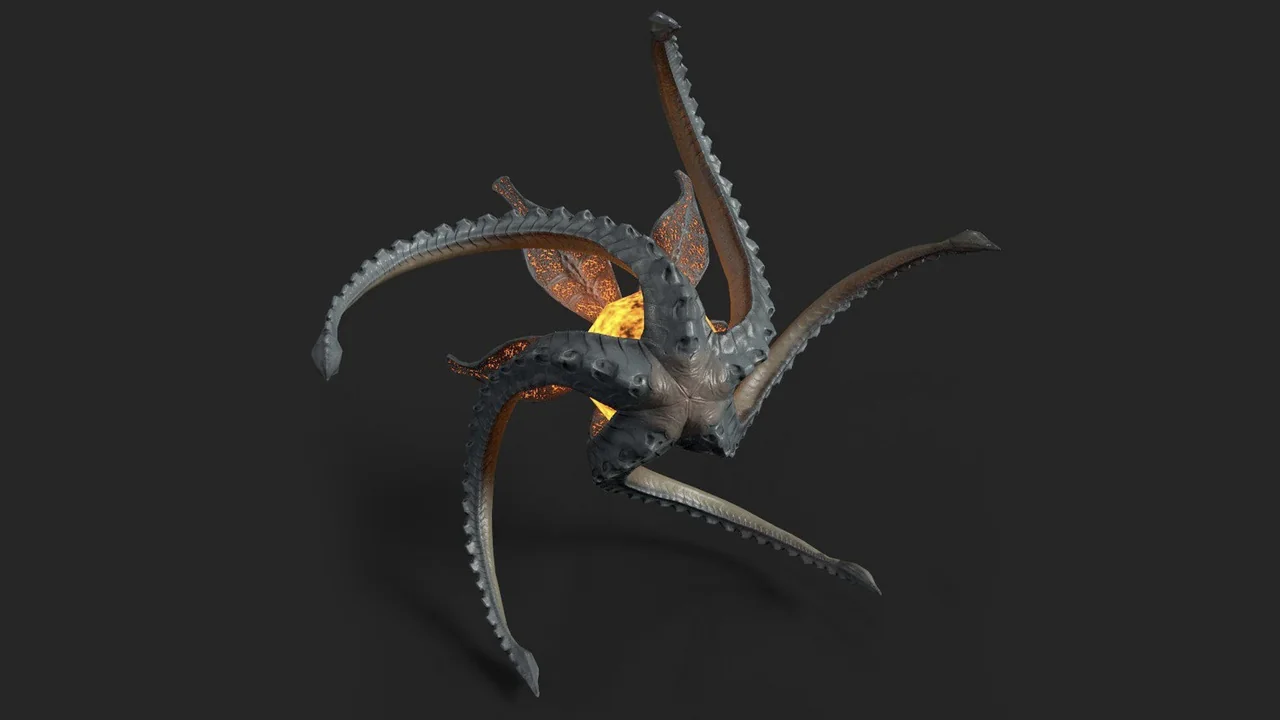
 Characters
 Characters
 Characters