"4481da9c895ef786"{"id":"1001307","slug":"ultimate-spell-system","title":"Ultimate Spell System","category":"Gameplay Features","engine":"5.1+","assetVersion":"","engineVersion":"Engine Version: 5.1+","tag":"Gameplay Features","accent":"blue","visual":"mech","summary":"Explore the Ultimate Spell System, an advanced magic framework featuring Niagara integration, multiplayer support, mana, shields, and spellbook mechanics.","platform":"Unreal Engine","publishedAt":"2026-10-02T06:21:12.194Z","updatedAt":"2026-10-02T06:21:12.194Z","sourceNotes":[],"fileContents":[],"compatibility":["Unreal Engine","Engine Version: 5.1+"],"featuredImage":{"alt":"Ultimate Spell System","src":"/wp-content/uploads/published/2026/10/b765acfa374d-8db4a436-8f55-46de-a8d5-84bd16177dcd-b3cdaaff6f.webp"},"hasDownloadLink":true,"downloads":0,"terms":[{"taxonomy":"category","slug":"gameplay-features","name":"Gameplay Features"}],"galleryImages":[{"src":"/wp-content/uploads/published/2026/10/1e4dfd0031f7-317c54b8-0aa7-4661-88ca-ded1843f56e4-282149a5c1.webp","alt":"Ultimate Spell System"},{"src":"/wp-content/uploads/published/2026/10/3c5f0ed1157d-5a29fe5d-9ad0-447f-908b-0c301059ee15-086d4e8202.webp","alt":"Ultimate Spell System"},{"src":"/wp-content/uploads/published/2026/10/ce96b0aadf48-b06c1269-c015-4093-b2c4-962f25529699-63931b891f.webp","alt":"Ultimate Spell System"},{"src":"/wp-content/uploads/published/2026/10/cf9e112fb8ae-1182c039-70ce-484b-8f17-7c8624d0baf4-bdb6eed142.webp","alt":"Ultimate Spell System"},{"src":"/wp-content/uploads/published/2026/10/b8b3f66fee52-72794a0a-a9d0-44da-9fa4-c0b129511d6b-b8175a8036.webp","alt":"Ultimate Spell System"},{"src":"/wp-content/uploads/published/2026/10/69286be8d2d2-ef6749b8-c1d9-4458-b93b-adcc3ed9b443-b8467b0f56.webp","alt":"Ultimate Spell System"}],"accessPanel":{"kind":"resource","title":"Download this resource","eyebrow":"Free Download","message":"Log in or create a free account to start your download.","fileName":"SpellSystem.7z","safetyNote":"Resources are manually reviewed before listing to improve quality and reduce obvious risks.","actionLabel":"Download Free","resourceType":"Resource archive"},"contentHtml":"\u003cp\u003eFantasy role-playing games and arena-based combat titles rely heavily on responsive, legible magic architecture. In gameplay scenarios where spellcasters exchange offensive blasts, deploy protective barriers, or monitor energy reserves, the underlying technical pipeline must reconcile input registration, visual feedback, and stat calculations without friction. The Ultimate Spell System provides an advanced magic framework engineered to introduce dynamic elements and strategic depth to character ability workflows. By balancing offensive attacks, defensive abilities, and player resources, the framework establishes a structured foundation for projects requiring deep magical interaction.\u003c/p\u003e \u003ch2\u003eSingle-Player and Multiplayer Support in the Ultimate Spell System\u003c/h2\u003e\n\u003cp\u003eGameplay logic for spellcasting often encounters hurdles when transitioning between isolated local testing and shared networked worlds. The Ultimate Spell System incorporates native support for both single-player scenarios and multiplayer environments. This dual-mode capability ensures that mechanics behave predictably whether an individual player navigates a solo quest or coordinates attacks collaboratively with friends in team-oriented encounters.\u003c/p\u003e \u003cp\u003eNetworked magic combat requires precise coordination across character states. When an ability triggers, the system handles the interaction between the player controller, the casting actor, and the target. Multiplayer support allows teams of players to combine offensive abilities, coordinate defensive shields, and execute combined tactics in real time. Handling spell dispatch across both single-player and multiplayer frameworks eliminates the need to construct separate logic trees for standalone campaigns versus cooperative modes.\u003c/p\u003e \u003ch2\u003eConnecting Custom Niagara System Skills to Gameplay Logic\u003c/h2\u003e\n\u003cp\u003eVisual presentation is essential to communicating the intent, impact, and range of magical powers. The framework directly interfaces with the Niagara System, allowing creators to author their own visual skills and attach them seamlessly to the underlying spell framework. Rather than restricting projects to predefined particle emitters, the architecture encourages building unique particle simulations and linking them to specific execution phases.\u003c/p\u003e \u003cp\u003eBy connecting custom Niagara effects to the gameplay logic, each phase of a spell—from initial charging and projectile launch to area-of-effect impact—can trigger corresponding visual assets. An offensive fireball, an expanding defensive ward, or an instantaneous magical shield can each possess dedicated particle parameters driven by the central ability logic. This integration bridges visual aesthetics and technical gameplay data, ensuring that the visual effect mirrors the underlying damage zones and ability durations.\u003c/p\u003e \u003ch2\u003eMana, Health, Shield, and Damage Mechanics\u003c/h2\u003e\n\u003cp\u003eStrategic spellcasting relies on clear constraints and consequences. The Ultimate Spell System integrates essential resource attributes that dictate how frequently and effectively players deploy magic. At the core of this system are structured variables governing mana pools, health monitoring, shield absorption, and damage calculation.\u003c/p\u003e \u003cp\u003eWhen a character casts an ability, the framework verifies whether sufficient mana is available before permitting the attack to proceed. Depleting mana reserves forces players to rethink their combat strategy, wait for energy regeneration, or prioritize lower-cost abilities. On the defensive side, shield mechanics allow wizards to absorb incoming damage before their base health pool suffers reduction. The clear separation between shield layers, current health, and incoming attack values enables balanced exchanges during high-stakes combat encounters.\u003c/p\u003e \u003ch2\u003eSpellbook Architecture, Widgets, and Controller Setup\u003c/h2\u003e\n\u003cp\u003eA functional magic system requires clean interfaces for both players and input devices. The architecture incorporates spellbook and inventory logic alongside dedicated UI widgets and Blueprint player controller integration. This setup organizes how spells are stored, assigned, and tracked throughout an active session.\u003c/p\u003e \u003cp\u003eUser interface widgets communicate vital information directly to the player, including current mana levels, remaining health bars, active shield durability, and ability availability. By routing input commands through the player controller to the spellbook inventory, the system allows characters to cycle through available spells, manage active ability slots, and execute attacks reliably. The structured Blueprint organization ensures that developers can inspect input bindings, reconfigure widget visual elements, and link new ability slots into the existing inventory hierarchy.\u003c/p\u003e \u003ch2\u003eAdapting Abilities for RPG and MOBA Frameworks\u003c/h2\u003e\n\u003cp\u003eThe core components of the Ultimate Spell System make it suitable for a broad spectrum of combat-focused genres, particularly role-playing games and multiplayer online battle arenas (MOBAs). In RPG settings, the emphasis often falls on progression, spellbook curation, inventory management, and long-term resource preservation. Wizard archetypes can expand their repertoires, learning high-damage spells and defensive utility wards as they navigate game worlds.\u003c/p\u003e \u003cp\u003eIn fast-paced MOBA environments, the same mechanics support quick decision-making, rapid-fire skill combinations, and tactical shield deployment. The unified handling of attack execution, damage delivery, and visual feedback suits competitive arenas where readability and responsiveness are paramount. In addition to fantasy and MOBA applications, the system maintains compatibility with specialized gameplay frameworks such as Jumpscare Pack X - Horror Game, offering utility for projects that blend tension-filled horror exploration with defensive magical abilities.\u003c/p\u003e \u003cp\u003eProjects integrating the asset benefit from comprehensive documentation and playable demonstration setups, which illustrate how blueprints, widgets, and combat attributes communicate before deployment. As additional features and updates are introduced to the framework over time, its central architecture continues to provide a dependable foundation for developers crafting immersive, ability-driven magic gameplay.\u003c/p\u003e\n\n\u003ch2\u003eRelated Resources Worth Checking\u003c/h2\u003e\n\u003cul\u003e\n\u003cli\u003e\u003ca href=\"https://3dcghub.com/time-system/\" title=\"Time System\"\u003eTime System\u003c/a\u003e\u003c/li\u003e\n\u003cli\u003e\u003ca href=\"https://3dcghub.com/interactive-water-ocean-and-swim-systems/\" title=\"Interactive Water, Ocean and Swim Systems\"\u003eInteractive Water, Ocean and Swim Systems\u003c/a\u003e\u003c/li\u003e\n\u003cli\u003e\u003ca href=\"https://3dcghub.com/teleportation-and-portal/\" title=\"Teleportation and Portal\"\u003eTeleportation and Portal\u003c/a\u003e\u003c/li\u003e\n\u003cli\u003e\u003ca href=\"https://3dcghub.com/powerline-generator/\" title=\"Powerline Generator\"\u003ePowerline Generator\u003c/a\u003e\u003c/li\u003e\n\u003cli\u003e\u003ca href=\"https://3dcghub.com/ultimate-interaction-manager/\" title=\"Ultimate Interaction Manager\"\u003eUltimate Interaction Manager\u003c/a\u003e\u003c/li\u003e\n\u003c/ul\u003e","contentTextLength":6331,"navigation":{"current":31,"total":3269,"previous":{"id":"1001308","slug":"voyager-cover-system","title":"Voyager: Cover System","category":"Gameplay Features","platform":"Unreal Engine","updatedAt":"2026-10-02T06:21:52.066Z"},"next":{"id":"1001306","slug":"ultimate-interaction-manager","title":"Ultimate Interaction Manager","category":"Gameplay Features","platform":"Unreal Engine","updatedAt":"2026-10-02T06:20:16.462Z"}},"relatedResources":[{"id":"1000698","slug":"time-system","title":"Time System","category":"Gameplay Features","engine":"5.1+","assetVersion":"","engineVersion":"Engine Version: 5.1+","tag":"Gameplay Features","accent":"blue","visual":"mech","summary":"A blueprint-based time management system for Unreal Engine featuring day/night cycles, multiplayer replication, save/load persistence, and sample Niagara spawne","platform":"Unreal Engine","publishedAt":"2026-07-23T17:19:44.409Z","updatedAt":"2026-07-23T17:19:44.409Z","sourceNotes":[],"fileContents":[],"compatibility":["Unreal Engine","Engine Version: 5.1+"],"featuredImage":{"alt":"Time System","src":"/wp-content/uploads/published/2026/07/8217e9535d8a-4749283a-6af3-4d3b-8a67-2347e754444e-73bc9235d6.webp"},"hasDownloadLink":true,"downloads":0},{"id":"10993","slug":"interactive-water-ocean-and-swim-systems","title":"Interactive Water, Ocean and Swim Systems","category":"Gameplay Features","engine":"5.4+","assetVersion":"Engine version: 5.4+","engineVersion":"5.3","tag":"Gameplay Features","accent":"blue","visual":"animation","summary":"Discover a robust 3-in-1 solution for creating interactive aquatic environments. This system features advanced shaders, realistic buoyancy, and complete multiplayer support for swimming above and below the surface.","platform":"Unreal Engine","publishedAt":"2026-03-03T16:40:07.000Z","updatedAt":"2026-04-19T15:49:53.000Z","sourceNotes":[],"fileContents":[],"compatibility":["Unreal Engine","Engine version: 5.4+"],"featuredImage":{"alt":"Interactive Water, Ocean and Swim Systems","src":"https://3dcghub.com/wp-content/uploads/2026/03/5bc7b9ab-1622-4a70-a72e-efdf2f38bc9a.webp"},"hasDownloadLink":true,"downloads":2},{"id":"27841","slug":"teleportation-and-portal","title":"Teleportation and Portal","category":"Gameplay Features","engine":"5.0+","assetVersion":"Engine version: 5.0+","engineVersion":"4.22","tag":"Gameplay Features","accent":"blue","visual":"mech","summary":"Teleportation and Portal centers on one clear job: moving characters through portals without manual friction. Its strongest practical angle is online multiplayer, with a replicated, customizable, and automatic setup backed by Blueprint, Niagara, particles,...","platform":"Unreal Engine","publishedAt":"2026-04-29T10:56:20.000Z","updatedAt":"2026-04-29T10:56:21.000Z","sourceNotes":[],"fileContents":[],"compatibility":["Unreal Engine","Engine version: 5.0+"],"featuredImage":{"alt":"Teleportation and Portal","src":"https://3dcghub.com/wp-content/uploads/2026/04/b75b5cbdd2e1_e4771e4d-77b5-48e2-8b4f-31654a1f53e7.webp"},"hasDownloadLink":true,"downloads":0}]}
Gameplay Features
Ultimate Spell System
Explore the Ultimate Spell System, an advanced magic framework featuring Niagara integration, multiplayer support, mana, shields, and spellbook mechanics.
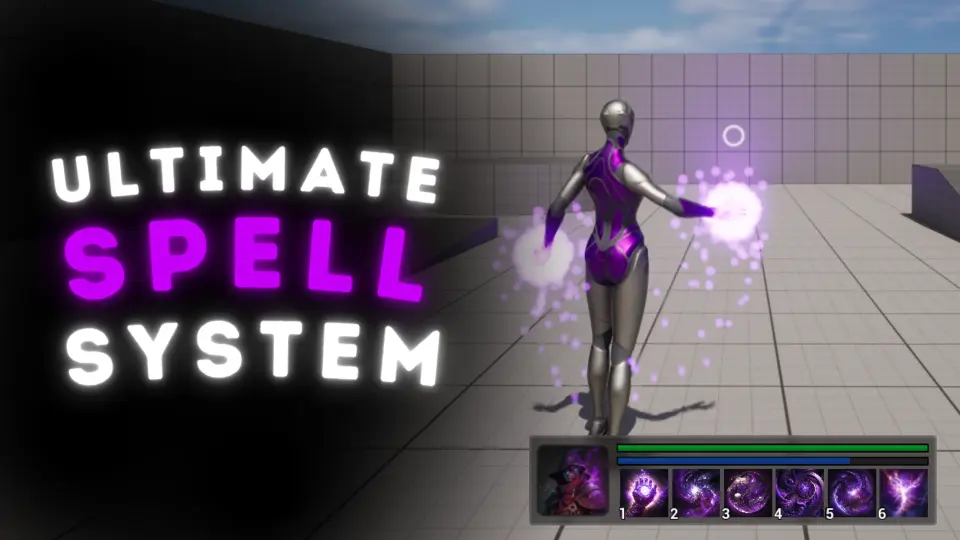
Fantasy role-playing games and arena-based combat titles rely heavily on responsive, legible magic architecture. In gameplay scenarios where spellcasters exchange offensive blasts, deploy protective barriers, or monitor energy reserves, the underlying technical pipeline must reconcile input registration, visual feedback, and stat calculations without friction. The Ultimate Spell System provides an advanced magic framework engineered to introduce dynamic elements and strategic depth to character ability workflows. By balancing offensive attacks, defensive abilities, and player resources, the framework establishes a structured foundation for projects requiring deep magical interaction.
Single-Player and Multiplayer Support in the Ultimate Spell System
Gameplay logic for spellcasting often encounters hurdles when transitioning between isolated local testing and shared networked worlds. The Ultimate Spell System incorporates native support for both single-player scenarios and multiplayer environments. This dual-mode capability ensures that mechanics behave predictably whether an individual player navigates a solo quest or coordinates attacks collaboratively with friends in team-oriented encounters.
Networked magic combat requires precise coordination across character states. When an ability triggers, the system handles the interaction between the player controller, the casting actor, and the target. Multiplayer support allows teams of players to combine offensive abilities, coordinate defensive shields, and execute combined tactics in real time. Handling spell dispatch across both single-player and multiplayer frameworks eliminates the need to construct separate logic trees for standalone campaigns versus cooperative modes.
Connecting Custom Niagara System Skills to Gameplay Logic
Visual presentation is essential to communicating the intent, impact, and range of magical powers. The framework directly interfaces with the Niagara System, allowing creators to author their own visual skills and attach them seamlessly to the underlying spell framework. Rather than restricting projects to predefined particle emitters, the architecture encourages building unique particle simulations and linking them to specific execution phases.
By connecting custom Niagara effects to the gameplay logic, each phase of a spell—from initial charging and projectile launch to area-of-effect impact—can trigger corresponding visual assets. An offensive fireball, an expanding defensive ward, or an instantaneous magical shield can each possess dedicated particle parameters driven by the central ability logic. This integration bridges visual aesthetics and technical gameplay data, ensuring that the visual effect mirrors the underlying damage zones and ability durations.
Mana, Health, Shield, and Damage Mechanics
Strategic spellcasting relies on clear constraints and consequences. The Ultimate Spell System integrates essential resource attributes that dictate how frequently and effectively players deploy magic. At the core of this system are structured variables governing mana pools, health monitoring, shield absorption, and damage calculation.
When a character casts an ability, the framework verifies whether sufficient mana is available before permitting the attack to proceed. Depleting mana reserves forces players to rethink their combat strategy, wait for energy regeneration, or prioritize lower-cost abilities. On the defensive side, shield mechanics allow wizards to absorb incoming damage before their base health pool suffers reduction. The clear separation between shield layers, current health, and incoming attack values enables balanced exchanges during high-stakes combat encounters.
Spellbook Architecture, Widgets, and Controller Setup
A functional magic system requires clean interfaces for both players and input devices. The architecture incorporates spellbook and inventory logic alongside dedicated UI widgets and Blueprint player controller integration. This setup organizes how spells are stored, assigned, and tracked throughout an active session.
User interface widgets communicate vital information directly to the player, including current mana levels, remaining health bars, active shield durability, and ability availability. By routing input commands through the player controller to the spellbook inventory, the system allows characters to cycle through available spells, manage active ability slots, and execute attacks reliably. The structured Blueprint organization ensures that developers can inspect input bindings, reconfigure widget visual elements, and link new ability slots into the existing inventory hierarchy.
Adapting Abilities for RPG and MOBA Frameworks
The core components of the Ultimate Spell System make it suitable for a broad spectrum of combat-focused genres, particularly role-playing games and multiplayer online battle arenas (MOBAs). In RPG settings, the emphasis often falls on progression, spellbook curation, inventory management, and long-term resource preservation. Wizard archetypes can expand their repertoires, learning high-damage spells and defensive utility wards as they navigate game worlds.
In fast-paced MOBA environments, the same mechanics support quick decision-making, rapid-fire skill combinations, and tactical shield deployment. The unified handling of attack execution, damage delivery, and visual feedback suits competitive arenas where readability and responsiveness are paramount. In addition to fantasy and MOBA applications, the system maintains compatibility with specialized gameplay frameworks such as Jumpscare Pack X - Horror Game, offering utility for projects that blend tension-filled horror exploration with defensive magical abilities.
Projects integrating the asset benefit from comprehensive documentation and playable demonstration setups, which illustrate how blueprints, widgets, and combat attributes communicate before deployment. As additional features and updates are introduced to the framework over time, its central architecture continues to provide a dependable foundation for developers crafting immersive, ability-driven magic gameplay.
 Gameplay Features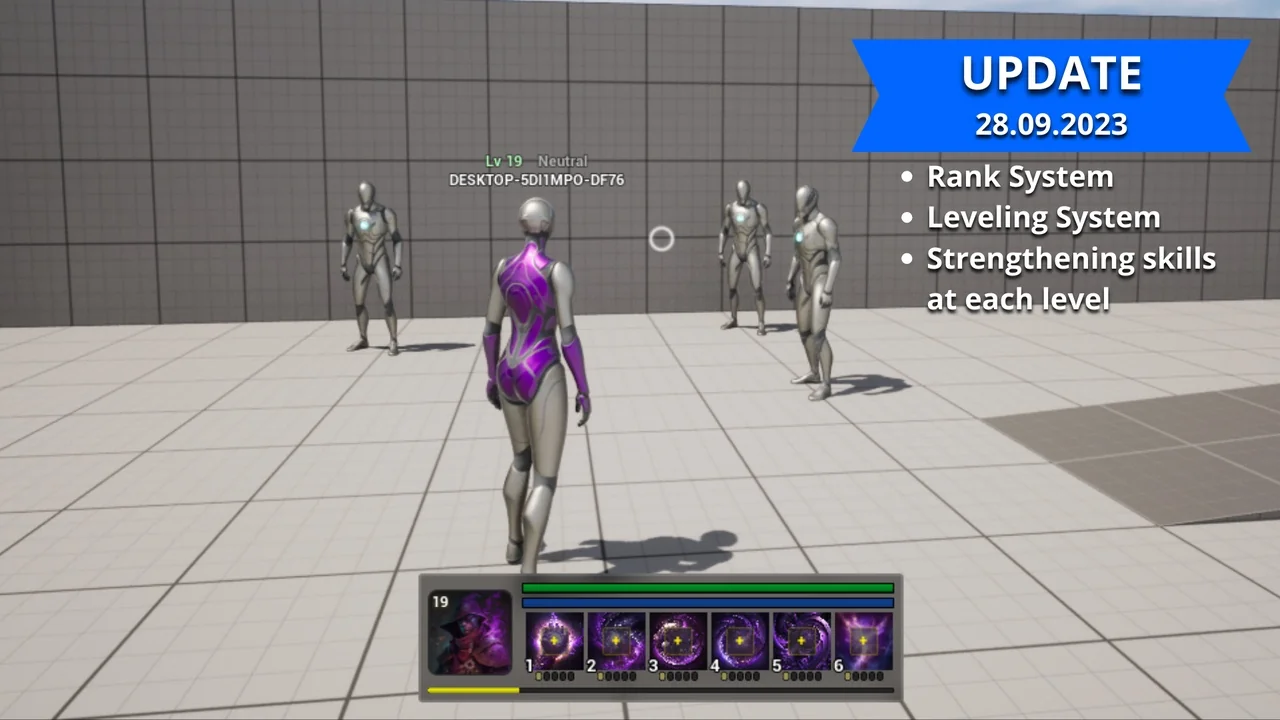
 Gameplay Features
 Gameplay Features
 Gameplay Features