"ddd0e3fb95b0aec2"{"id":"1001563","slug":"train-wreck-refuge","title":"Train Wreck Refuge","category":"Apocalyptic / Post-apocalyptic","engine":"4.26+,5.0+","assetVersion":"","engineVersion":"Engine Version: 4.26+,5.0+","tag":"Apocalyptic","accent":"blue","visual":"mech","summary":"Explore the Train Wreck Refuge environment, featuring socialist-style trains, handmade foliage LODs, master materials, and UE5 Lumen support.","platform":"Unreal Engine","publishedAt":"2026-10-10T03:54:08.294Z","updatedAt":"2026-10-10T03:54:08.294Z","sourceNotes":[],"fileContents":[],"compatibility":["Unreal Engine","Engine Version: 4.26+,5.0+"],"featuredImage":{"alt":"Train Wreck Refuge","src":"/wp-content/uploads/published/2026/10/fffa6a954d31-2d5d3ba2-eb7c-4bce-8984-8b40eb7555c0-d8ce7e3344.webp"},"hasDownloadLink":true,"downloads":0,"terms":[{"taxonomy":"category","slug":"apocalyptic-post-apocalyptic","name":"Apocalyptic / Post-apocalyptic"}],"galleryImages":[{"src":"/wp-content/uploads/published/2026/10/97d0d97b5f61-4e26cca5-5eea-42a0-a243-57fc637f06b3-d3cd76e02e.webp","alt":"Train Wreck Refuge"},{"src":"/wp-content/uploads/published/2026/10/83069352a89f-af287baf-b04e-4551-b523-bff1aecf3ea4-2f3bf31c6a.webp","alt":"Train Wreck Refuge"},{"src":"/wp-content/uploads/published/2026/10/0ef8c103deb8-3136b522-25bf-4201-a0e8-ee51f9af3a61-98d8b31112.webp","alt":"Train Wreck Refuge"},{"src":"/wp-content/uploads/published/2026/10/a214559fed78-cfdf9e62-07d3-40c2-8190-3c38c2f02717-f650efecf7.webp","alt":"Train Wreck Refuge"},{"src":"/wp-content/uploads/published/2026/10/f499ca2a2e6b-21fba414-f7ab-4d87-9054-83f81599c7dd-b4778bd1b3.webp","alt":"Train Wreck Refuge"},{"src":"/wp-content/uploads/published/2026/10/00e85551d11b-eba55b49-aa0a-4d5b-a711-f5754f958f9b-17f7da21c5.webp","alt":"Train Wreck Refuge"},{"src":"/wp-content/uploads/published/2026/10/a89c0e454a88-f1a35e29-f616-41f0-98d2-0776d458c1ec-b190c3ea50.webp","alt":"Train Wreck Refuge"},{"src":"/wp-content/uploads/published/2026/10/6fbbdd150551-27498344-5bb3-46b4-ac9f-2c25688eb293-704b9553a3.webp","alt":"Train Wreck Refuge"},{"src":"/wp-content/uploads/published/2026/10/b7f2757847fb-50e3e3a5-f8c2-466a-a1c5-69d0fa051ee5-36a9894104.webp","alt":"Train Wreck Refuge"},{"src":"/wp-content/uploads/published/2026/10/de353dba3927-495f0259-4914-4e30-a871-3c7ae7bca43e-cd1bd9371e.webp","alt":"Train Wreck Refuge"}],"accessPanel":{"kind":"resource","title":"Download this resource","eyebrow":"Free Download","message":"Log in or create a free account to start your download.","fileName":"Content.7z","safetyNote":"Resources are manually reviewed before listing to improve quality and reduce obvious risks.","actionLabel":"Download Free","resourceType":"Resource archive"},"contentHtml":"\u003ch2\u003ePost-Collapse Campsite in a Balkan Setting\u003c/h2\u003e\u003cp\u003eTrain Wreck Refuge builds its environment around the aftermath of societal collapse, setting the scene inside an ex-communist Balkan territory. Rather than depicting pristine ruins or generic modern scrap, the package draws directly from the historical socialist styling typical of the region. Years of neglect have allowed nature to claim the landscape, wrapping heavy foliage and forest ground cover around derailed cars, tracks, and metal structures.\u003c/p\u003e\u003cp\u003eSurvivors have turned these rusted train hulls into a makeshift refuge camp. The carriages serve as improvised shelters, barricades, and living quarters, blending heavy industrial decay with desperate human habitation. This juxtaposition establishes an atmospheric narrative fitting for realistic survival levels, atmospheric horror games, or retro-styled Eastern European scenarios. The man-made items, decorative set dressings, and railway hardware evoke a specific mid-to-late 20th-century Soviet and Bulgarian aesthetic that reinforces the sense of a lost era.\u003c/p\u003e\u003ch2\u003eTrain Wreck Models, Small Props, and Cohesive Textures\u003c/h2\u003e\u003cp\u003eThe collection supplies a comprehensive assembly of assets required to construct a dense, believable campsite. At the center of the asset suite are the train models themselves, detailed with the wear, weathering, and architectural hallmarks of socialist-era rail transport. These large mechanical silhouettes provide structural focal points for level layouts, serving as natural boundaries, interior hideouts, or elevated vantage points within an overgrown wilderness.\u003c/p\u003e\u003cp\u003eSurrounding the train hulls is an array of smaller set-dressing props designed to establish human presence within the salvage site. These pieces reflect the ad-hoc nature of a refugee settlement built from whatever survived the collapse. To bind these disparate models together visually, the environment uses a cohesive texturing pass covering rusted metals, weathered woods, and worn manufactured surfaces. The material choices ground the human-occupied campsite directly into the surrounding forest biome, ensuring that both industrial salvage and organic growth share consistent surface responses and environmental aging.\u003c/p\u003e\u003ch2\u003eHandmade Vegetation LODs and Technical Art Optimization\u003c/h2\u003e\u003cp\u003eHandling dense outdoor scenes filled with both foliage and complex industrial geometry requires careful performance considerations. Built from the background of triple-A technical art production, the environment emphasizes optimization and clean hierarchy. Instead of relying purely on automated reduction algorithms that often degrade organic silhouettes, the vegetation assets utilize handmade LODs. These custom levels of detail preserve branch density, leaf profiles, and overall silhouette integrity at distance while stripping unnecessary vertex overhead to maintain stable frame rates.\u003c/p\u003e\u003cp\u003eThe same disciplined approach extends across the hard-surface props and heavy train structures. Every object is delivered with proper LOD stepping, ensuring that the visual density of the refugee camp does not cause abrupt pop-in or excessive rendering bottlenecks during gameplay. The clean asset setup allows level designers to populate sprawling forest zones without destabilizing baseline performance targets.\u003c/p\u003e\u003ch2\u003eMaster Materials for Landscape, Cloth, and Triplanar Cliffs\u003c/h2\u003e\u003cp\u003eFlexibility across varied landscape topologies is supported through a collection of dedicated master materials. These shaders govern key surface categories throughout the scene, allowing artists to adjust parameters and adapt assets to custom layouts without breaking the underlying visual unity. The package provides distinct master material setups for several critical environment components:\u003c/p\u003e\u003cul\u003e\u003cli\u003e\u003cstrong\u003eFoliage Shaders:\u003c/strong\u003e Built to manage wind response, light transmission, and natural color variation across dense canopy and ground plants.\u003c/li\u003e\u003cli\u003e\u003cstrong\u003eLandscape Materials:\u003c/strong\u003e Configured to blend cohesive ground biome layers, forest dirt, and organic debris cleanly across terrain contours.\u003c/li\u003e\u003cli\u003e\u003cstrong\u003eTriplanar Cliffs and Rocks:\u003c/strong\u003e Shaders utilizing triplanar projection techniques to prevent texture stretching across steep cliff faces, sharp rock outcrops, and varied landscape geometry.\u003c/li\u003e\u003cli\u003e\u003cstrong\u003eCloth Materials:\u003c/strong\u003e Customized for refugee tarps, patched covers, and soft camp fittings that drape over metal hulls and wooden frames.\u003c/li\u003e\u003cli\u003e\u003cstrong\u003eProp Shaders:\u003c/strong\u003e Flexible surface setups that balance metallic decay, peeling paint, and ambient grunge across man-made salvage.\u003c/li\u003e\u003c/ul\u003e\u003ch2\u003eUnreal Engine 5 Lumen Lighting and Engine Updates\u003c/h2\u003e\u003cp\u003eThe environment includes an updated release targeting modern rendering pipelines within Unreal Engine 5. The primary forest showcase scene has been overhauled to function natively with Lumen dynamic global illumination and reflections. Materials, specular values, and roughness textures throughout the camp were re-calibrated to respond accurately to the real-time bounce light and occluded shadows characteristic of modern engine lighting.\u003c/p\u003e\u003cp\u003eThese adjustments operate natively inside the engine without requiring external plugins to load or function correctly. To utilize the Lumen features within Unreal Engine 5 as designed, projects must be configured with their Render Hardware Interface set to DirectX 12 (DX12) in the project settings. This setting enables the underlying hardware and software tracing pathways needed to resolve natural light filtering through the dense tree canopy down into the interior spaces of the wrecked railcars.\u003c/p\u003e\u003ch2\u003ePractical Production Fit and Forest Scene Integration\u003c/h2\u003e\u003cp\u003eTrain Wreck Refuge functions as a standalone, production-ready environment that can either be deployed directly as an atmospheric playable level or broken apart to feed modular level construction. Because the master shaders are built for customization, environmental artists can easily adjust surface parameters, recolor elements, and align the assets to match custom lighting setups and game art directions. The assets integrate naturally alongside complementary foliage packs, including the Broken and Burned Trees Pack, expanding the potential for desolate, fire-damaged, or harsh woodland warzones. Whether staging a bleak narrative horror sequence or an open survival camp deep in an Eastern European woodland, the collection supplies the structural, organic, and material assets necessary to ground the scene.\u003c/p\u003e\n\n\u003ch2\u003eRelated Resources Worth Checking\u003c/h2\u003e\n\u003cul\u003e\n\u003cli\u003e\u003ca href=\"https://3dcghub.com/post-apocalyptic-desert/\" title=\"Post Apocalyptic Desert\"\u003ePost Apocalyptic Desert\u003c/a\u003e\u003c/li\u003e\n\u003cli\u003e\u003ca href=\"https://3dcghub.com/surroundead-survival-game-assets-bundle/\" title=\"SurrounDead - Survival Game Assets (Bundle)\"\u003eSurrounDead - Survival Game Assets (Bundle)\u003c/a\u003e\u003c/li\u003e\n\u003cli\u003e\u003ca href=\"https://3dcghub.com/ready-map-vol-2-bridge-environment-nature/\" title=\"Ready Map Vol 2 - Bridge Environment / Nature\"\u003eReady Map Vol 2 - Bridge Environment / Nature\u003c/a\u003e\u003c/li\u003e\n\u003cli\u003e\u003ca href=\"https://3dcghub.com/airport-terminal-interior/\" title=\"Airport Terminal Interior\"\u003eAirport Terminal Interior\u003c/a\u003e\u003c/li\u003e\n\u003cli\u003e\u003ca href=\"https://3dcghub.com/realistic-ivy-plants/\" title=\"Realistic IVY Plants\"\u003eRealistic IVY Plants\u003c/a\u003e\u003c/li\u003e\n\u003c/ul\u003e","contentTextLength":6501,"navigation":{"current":11,"total":3511,"previous":{"id":"1001564","slug":"ucreate-fractal-toolkit","title":"UCreate - Fractal Toolkit","category":"Buildings \u0026 Architecture","platform":"Unreal Engine","updatedAt":"2026-10-10T03:55:40.075Z"},"next":{"id":"1001562","slug":"the-blue-metro-2029-post-apocalyptic-metros-subway-subways-environment","title":"The Blue Metro 2029 ( Post Apocalyptic Metros Subway Subways Environment )","category":"Interior","platform":"Unreal Engine","updatedAt":"2026-10-10T03:53:06.565Z"}},"relatedResources":[{"id":"1001064","slug":"post-apocalyptic-desert","title":"Post Apocalyptic Desert","category":"Apocalyptic / Post-apocalyptic","engine":"4.26+,5.0+","assetVersion":"","engineVersion":"Engine Version: 4.26+,5.0+","tag":"Apocalyptic","accent":"blue","visual":"mech","summary":"Post Apocalyptic Desert is a Unreal Engine desert environment with a drivable vehicle, extensive props and foliage, advanced materials, plus Nanite/Lumen suppor","platform":"Unreal Engine","publishedAt":"2026-09-03T15:10:50.530Z","updatedAt":"2026-09-03T15:10:50.530Z","sourceNotes":[],"fileContents":[],"compatibility":["Unreal Engine","Engine Version: 4.26+,5.0+"],"featuredImage":{"alt":"Post Apocalyptic Desert","src":"/wp-content/uploads/published/2026/09/c03aaff5c58e-a4df247e-4355-4450-95e8-7efd4f43611d-aba4e12f2c.webp"},"hasDownloadLink":true,"downloads":0},{"id":"1001489","slug":"surroundead-survival-game-assets-bundle","title":"SurrounDead - Survival Game Assets (Bundle)","category":"Apocalyptic / Post-apocalyptic","engine":"4.21+,5.0+","assetVersion":"","engineVersion":"Engine Version: 4.21+,5.0+","tag":"Apocalyptic","accent":"blue","visual":"mech","summary":"Explore the SurrounDead bundle featuring over 1500 modular stylized assets, 570 handpainted diffuse textures, and Blueprints for Unreal Engine survival games.","platform":"Unreal Engine","publishedAt":"2026-10-08T10:04:09.253Z","updatedAt":"2026-10-08T10:04:09.253Z","sourceNotes":[],"fileContents":[],"compatibility":["Unreal Engine","Engine Version: 4.21+,5.0+"],"featuredImage":{"alt":"SurrounDead - Survival Game Assets (Bundle)","src":"/wp-content/uploads/published/2026/10/12e47d0b93c1-2a14e76d-be60-4525-bb61-6612d88c2d6e-68763433b5.webp"},"hasDownloadLink":true,"downloads":0},{"id":"1001358","slug":"ready-map-vol-2-bridge-environment-nature","title":"Ready Map Vol 2 - Bridge Environment / Nature","category":"Apocalyptic / Post-apocalyptic","engine":"5.0+","assetVersion":"","engineVersion":"Engine Version: 5.0+","tag":"Apocalyptic","accent":"blue","visual":"city","summary":"Examine the technical layout, RVT setup, LOD hierarchy, and collision pipeline in Ready Map Vol 2 - Bridge Environment / Nature by Six Sides Studios.","platform":"Unreal Engine","publishedAt":"2026-10-04T10:26:35.727Z","updatedAt":"2026-10-04T10:26:35.727Z","sourceNotes":[],"fileContents":[],"compatibility":["Unreal Engine","Engine Version: 5.0+"],"featuredImage":{"alt":"Ready Map Vol 2 - Bridge Environment / Nature","src":"/wp-content/uploads/published/2026/10/2d8c73dc0cd1-9923139d-6e59-4dfd-8370-421d0a51b49a-0aa8801421.webp"},"hasDownloadLink":true,"downloads":0}]}
Apocalyptic
Train Wreck Refuge
Explore the Train Wreck Refuge environment, featuring socialist-style trains, handmade foliage LODs, master materials, and UE5 Lumen support.
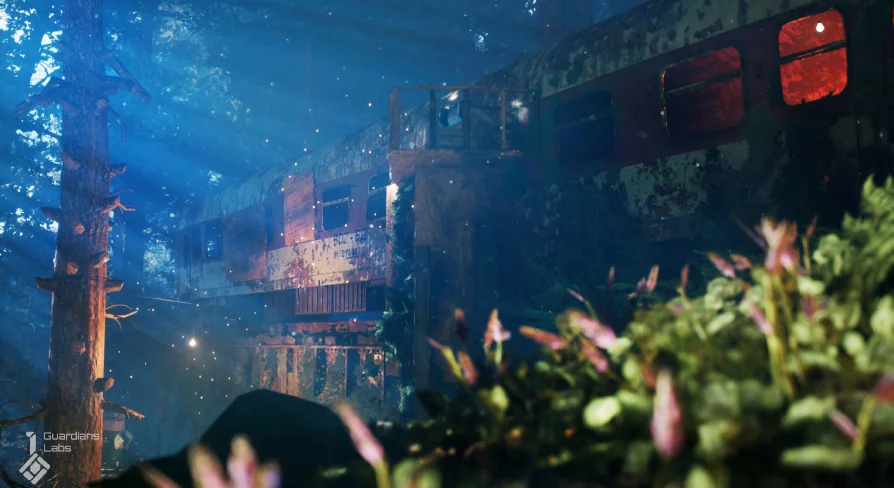
Train Wreck Refuge builds its environment around the aftermath of societal collapse, setting the scene inside an ex-communist Balkan territory. Rather than depicting pristine ruins or generic modern scrap, the package draws directly from the historical socialist styling typical of the region. Years of neglect have allowed nature to claim the landscape, wrapping heavy foliage and forest ground cover around derailed cars, tracks, and metal structures.
Survivors have turned these rusted train hulls into a makeshift refuge camp. The carriages serve as improvised shelters, barricades, and living quarters, blending heavy industrial decay with desperate human habitation. This juxtaposition establishes an atmospheric narrative fitting for realistic survival levels, atmospheric horror games, or retro-styled Eastern European scenarios. The man-made items, decorative set dressings, and railway hardware evoke a specific mid-to-late 20th-century Soviet and Bulgarian aesthetic that reinforces the sense of a lost era.
Train Wreck Models, Small Props, and Cohesive Textures
The collection supplies a comprehensive assembly of assets required to construct a dense, believable campsite. At the center of the asset suite are the train models themselves, detailed with the wear, weathering, and architectural hallmarks of socialist-era rail transport. These large mechanical silhouettes provide structural focal points for level layouts, serving as natural boundaries, interior hideouts, or elevated vantage points within an overgrown wilderness.
Surrounding the train hulls is an array of smaller set-dressing props designed to establish human presence within the salvage site. These pieces reflect the ad-hoc nature of a refugee settlement built from whatever survived the collapse. To bind these disparate models together visually, the environment uses a cohesive texturing pass covering rusted metals, weathered woods, and worn manufactured surfaces. The material choices ground the human-occupied campsite directly into the surrounding forest biome, ensuring that both industrial salvage and organic growth share consistent surface responses and environmental aging.
Handmade Vegetation LODs and Technical Art Optimization
Handling dense outdoor scenes filled with both foliage and complex industrial geometry requires careful performance considerations. Built from the background of triple-A technical art production, the environment emphasizes optimization and clean hierarchy. Instead of relying purely on automated reduction algorithms that often degrade organic silhouettes, the vegetation assets utilize handmade LODs. These custom levels of detail preserve branch density, leaf profiles, and overall silhouette integrity at distance while stripping unnecessary vertex overhead to maintain stable frame rates.
The same disciplined approach extends across the hard-surface props and heavy train structures. Every object is delivered with proper LOD stepping, ensuring that the visual density of the refugee camp does not cause abrupt pop-in or excessive rendering bottlenecks during gameplay. The clean asset setup allows level designers to populate sprawling forest zones without destabilizing baseline performance targets.
Master Materials for Landscape, Cloth, and Triplanar Cliffs
Flexibility across varied landscape topologies is supported through a collection of dedicated master materials. These shaders govern key surface categories throughout the scene, allowing artists to adjust parameters and adapt assets to custom layouts without breaking the underlying visual unity. The package provides distinct master material setups for several critical environment components:
Foliage Shaders: Built to manage wind response, light transmission, and natural color variation across dense canopy and ground plants.
Landscape Materials: Configured to blend cohesive ground biome layers, forest dirt, and organic debris cleanly across terrain contours.
Triplanar Cliffs and Rocks: Shaders utilizing triplanar projection techniques to prevent texture stretching across steep cliff faces, sharp rock outcrops, and varied landscape geometry.
Cloth Materials: Customized for refugee tarps, patched covers, and soft camp fittings that drape over metal hulls and wooden frames.
Prop Shaders: Flexible surface setups that balance metallic decay, peeling paint, and ambient grunge across man-made salvage.
Unreal Engine 5 Lumen Lighting and Engine Updates
The environment includes an updated release targeting modern rendering pipelines within Unreal Engine 5. The primary forest showcase scene has been overhauled to function natively with Lumen dynamic global illumination and reflections. Materials, specular values, and roughness textures throughout the camp were re-calibrated to respond accurately to the real-time bounce light and occluded shadows characteristic of modern engine lighting.
These adjustments operate natively inside the engine without requiring external plugins to load or function correctly. To utilize the Lumen features within Unreal Engine 5 as designed, projects must be configured with their Render Hardware Interface set to DirectX 12 (DX12) in the project settings. This setting enables the underlying hardware and software tracing pathways needed to resolve natural light filtering through the dense tree canopy down into the interior spaces of the wrecked railcars.
Practical Production Fit and Forest Scene Integration
Train Wreck Refuge functions as a standalone, production-ready environment that can either be deployed directly as an atmospheric playable level or broken apart to feed modular level construction. Because the master shaders are built for customization, environmental artists can easily adjust surface parameters, recolor elements, and align the assets to match custom lighting setups and game art directions. The assets integrate naturally alongside complementary foliage packs, including the Broken and Burned Trees Pack, expanding the potential for desolate, fire-damaged, or harsh woodland warzones. Whether staging a bleak narrative horror sequence or an open survival camp deep in an Eastern European woodland, the collection supplies the structural, organic, and material assets necessary to ground the scene.
 Apocalyptic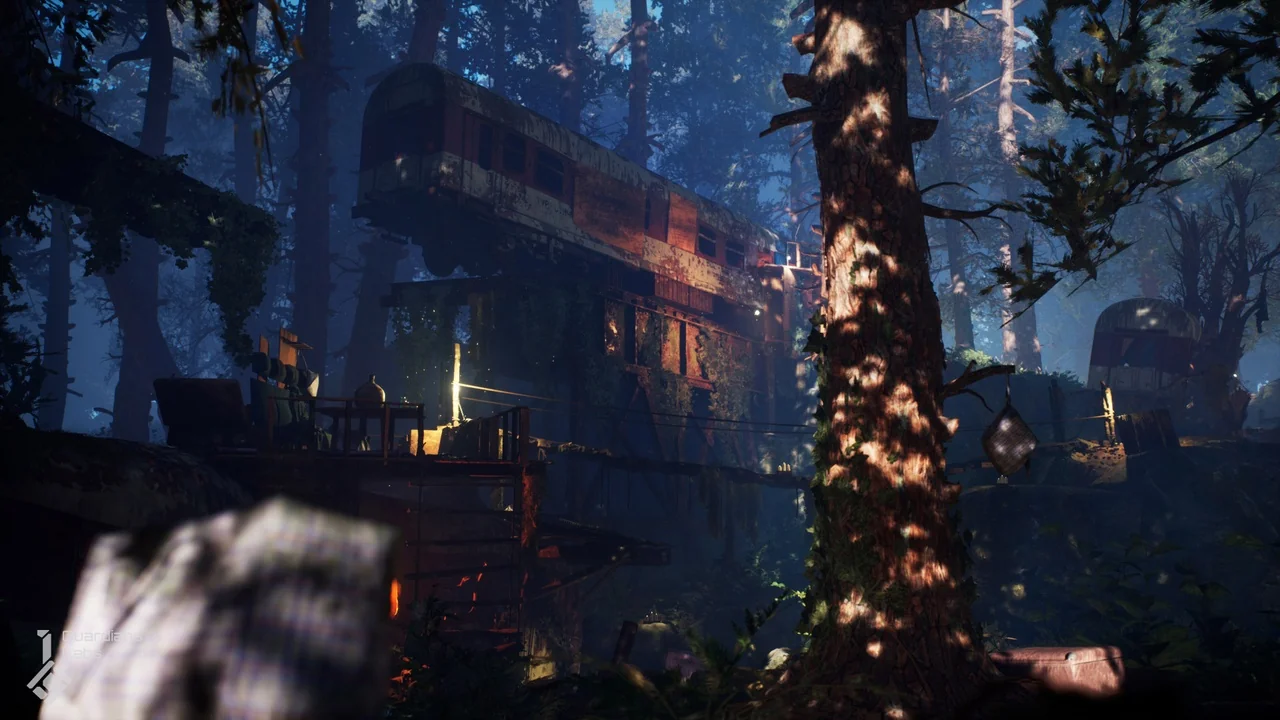
 Apocalyptic
 Apocalyptic
 Apocalyptic