"7977b3847c3127c7"{"id":"1001562","slug":"the-blue-metro-2029-post-apocalyptic-metros-subway-subways-environment","title":"The Blue Metro 2029 ( Post Apocalyptic Metros Subway Subways Environment )","category":"Interior","engine":"4.26+,5.0+","assetVersion":"","engineVersion":"Engine Version: 4.26+,5.0+","tag":"Interior","accent":"blue","visual":"city","summary":"Explore The Blue Metro 2029 environment pack, featuring 84 unique meshes, a preassembled scene, and Ultimate Level Art Tool integration for Unreal Engine.","platform":"Unreal Engine","publishedAt":"2026-10-10T03:53:06.565Z","updatedAt":"2026-10-10T03:53:06.565Z","sourceNotes":[],"fileContents":[],"compatibility":["Unreal Engine","Engine Version: 4.26+,5.0+"],"featuredImage":{"alt":"The Blue Metro 2029 ( Post Apocalyptic Metros Subway Subways Environment )","src":"/wp-content/uploads/published/2026/10/6b422210387e-df3b1f57-d420-4a67-a416-702f37650df1-7b534a15b5.webp"},"hasDownloadLink":true,"downloads":0,"terms":[{"taxonomy":"category","slug":"interior","name":"Interior"}],"galleryImages":[{"src":"/wp-content/uploads/published/2026/10/cd74788ab488-2e433abe-77ba-43b9-b7af-a561ac669c4a-ea3af8aaa6.webp","alt":"The Blue Metro 2029 ( Post Apocalyptic Metros Subway Subways Environment )"},{"src":"/wp-content/uploads/published/2026/10/158a0bac7903-d9b59230-78cc-4c83-9512-d4401962c79c-479db73434.webp","alt":"The Blue Metro 2029 ( Post Apocalyptic Metros Subway Subways Environment )"},{"src":"/wp-content/uploads/published/2026/10/d37a0ed6e05c-86bdd49b-6f35-41a5-b6ce-78e38a66d07e-3c9e641be4.webp","alt":"The Blue Metro 2029 ( Post Apocalyptic Metros Subway Subways Environment )"},{"src":"/wp-content/uploads/published/2026/10/1646d97f20ce-6291f2ef-c5b9-4728-99cc-15dfda4cea7f-ade4710e44.webp","alt":"The Blue Metro 2029 ( Post Apocalyptic Metros Subway Subways Environment )"},{"src":"/wp-content/uploads/published/2026/10/a9b950d66c72-72283730-0f46-4d29-af6f-68298ddf07ae-7f63f69145.webp","alt":"The Blue Metro 2029 ( Post Apocalyptic Metros Subway Subways Environment )"},{"src":"/wp-content/uploads/published/2026/10/1e837be993bf-5b930af6-2ad3-4e08-a166-83faf2e974be-f7a6f0123d.webp","alt":"The Blue Metro 2029 ( Post Apocalyptic Metros Subway Subways Environment )"},{"src":"/wp-content/uploads/published/2026/10/f9ae6184746f-6367518e-d1bf-4372-b167-63fdd23bec9b-2fc8ee256c.webp","alt":"The Blue Metro 2029 ( Post Apocalyptic Metros Subway Subways Environment )"},{"src":"/wp-content/uploads/published/2026/10/04504e57a044-53be9fe9-40db-4423-bcdb-2bc539f2a4c3-f20a09d4f3.webp","alt":"The Blue Metro 2029 ( Post Apocalyptic Metros Subway Subways Environment )"},{"src":"/wp-content/uploads/published/2026/10/871db9fb6178-d6fcb9db-b0a3-49a0-8632-090d0ac30923-0eb80ae2fa.webp","alt":"The Blue Metro 2029 ( Post Apocalyptic Metros Subway Subways Environment )"},{"src":"/wp-content/uploads/published/2026/10/e72f5c7cec15-bfd1b041-8a4e-4ecc-9801-6ca0b06cf880-51ce75879a.webp","alt":"The Blue Metro 2029 ( Post Apocalyptic Metros Subway Subways Environment )"}],"accessPanel":{"kind":"resource","title":"Download this resource","eyebrow":"Free Download","message":"Log in or create a free account to start your download.","fileName":"Content.7z","safetyNote":"Resources are manually reviewed before listing to improve quality and reduce obvious risks.","actionLabel":"Download Free","resourceType":"Resource archive"},"contentHtml":"\u003ch2\u003eSetting the Subterranean Atmosphere in The Blue Metro 2029\u003c/h2\u003e\n\u003cp\u003eUnderground rail networks offer a distinct canvas for environmental storytelling, particularly when surface conditions render open air uninhabitable. The fictional premise of this environment unfolds during the transition into the year 2029, when a catastrophic atmospheric event—a fusion of toxic dust and gas identified as PT-1—blankets vast regional zones. In this narrative context, surface transit becomes instant death, while subterranean metro lines transform into fortified refuges. Commuters caught beneath the street grid find themselves insulated from the chemical fallout above, carving out a fragile existence over a three-month span under the coordination of station metro officers.\u003c/p\u003e\n\u003cp\u003eTranslating this three-month survival narrative into a 3D scene requires visual balance between transit architecture and prolonged ad-hoc habitation. Stations were never constructed to serve as long-term residential fallout bunkers. They lack native domestic amenities, meaning spaces must reflect improvisation: improvised living quarters clustered near passenger platforms, makeshift partitions obstructing pedestrian thoroughfares, and utilitarian infrastructure repurposed for communal survival. The visual weight relies on this tension between everyday civil engineering and the gritty markers of containment.\u003c/p\u003e \u003ch2\u003eLayout Architecture and the Preassembled Metro Scene\u003c/h2\u003e\n\u003cp\u003eBuilding realistic subterranean layouts requires an understanding of civic rail design, tunnel geometry, and spatial claustrophobia. The pack provides a fully preassembled showcase scene that illustrates how structural components and environmental dressing connect to form a cohesive underground enclave. Rather than starting on a blank level grid, artists can inspect this pre-built layout to analyze scale relationships, track depths, platform clearances, and the distribution of spatial lighting.\u003c/p\u003e\n\u003cp\u003eThe preassembled scene operates as a working reference for environmental pacing. In subterranean horror or survival scenarios, visual rhythm depends heavily on contrasting open platform expanses with narrow, service-access corridors. Walking through the constructed scene shows how line-of-sight obstructions, structural pillars, and transit infrastructure channel player movement or real-time camera tracking. For virtual production supervisors, having an assembled level ready to load allows rapid camera placement, lighting tests, and framing calibration without requiring days of manual set construction before testing shots.\u003c/p\u003e \u003ch2\u003eModular Assembly Using 84 Unique Meshes\u003c/h2\u003e\n\u003cp\u003eAt the center of the environment's construction is a catalog of 84 unique meshes made for modular deployment. Subway infrastructure relies heavily on repeated architectural units—track beds, platform edging, tiled support columns, pedestrian stairwells, and tunnel rings. The modular design of these assets enables artists to extend tunnels, branch into abandoned maintenance bays, or erect standalone station vestibules while preserving visual consistency across distinct sections of the network.\u003c/p\u003e\n\u003cp\u003eEach component within the mesh library balances detailed surface definition with performance optimization. Managing geometric density is critical in subterranean scenes, where enclosed geometries, complex lighting bounces, and overlapping prop placements can challenge frame budgets. Because the pack targets game ready deployment as well as virtual production setups, the underlying meshes are optimized to sustain consistent frame rates during heavy real-time rendering. The structural parts snap into alignment cleanly, while accompanying dressing props allow level artists to clutter the trackways and platforms with debris, survival equipment, and transit fixtures indicative of an abandoned, war-torn, or quarantined district.\u003c/p\u003e \u003ch2\u003eProcedural Assembly with the Ultimate Level Art Tool\u003c/h2\u003e\n\u003cp\u003eManual placement of individual tiles, wall segments, and tunnel segments across sprawling underground levels can consume extensive production time. To accelerate this pipeline, the environment pack incorporates compatibility with the Ultimate Level Art Tool, widely abbreviated as ULAT. Originally titled as a modular design development tool for mobile and web-based systems, ULAT is engineered to automate and streamline the creation of custom modular buildings and structural complexes.\u003c/p\u003e\n\u003cp\u003eWithin this environment workflow, ULAT functions as an engine for assembling modular pieces rapidly while maintaining organic, natural scene population. Instead of manually aligning every structural piece along rail beds or corridor networks, level artists can utilize the tool to generate custom spatial layouts and architectural shells quickly. The tool simplifies the transition from broad layout blocking to detailed set dressing, providing a structured approach to populating scenes with architectural meshes without producing repetitive, artificial patterns along extended subway corridors.\u003c/p\u003e \u003ch2\u003eVirtual Production Staging and Engine Implementation\u003c/h2\u003e\n\u003cp\u003eReal-time transit environments demand lighting and material setups that read accurately through cinematic virtual production viewports and gameplay cameras alike. In a subterranean post-apocalyptic setting dominated by dark corridors, ambient volumetric haze, and artificial emergency illumination, surface materials must interact cleanly with sharp directional sources and low-intensity bounce light. The optimized structural assets in the pack provide clean geometry for light baking or dynamic global illumination workflows, preventing unwanted light leaks across modular seams.\u003c/p\u003e\n\u003cp\u003eFor modern Unreal Engine pipelines, technical compatibility extends toward modern editor tooling. The asset set integrates cleanly alongside systems like the NWIRO - AI Integration Kit, interfacing with frameworks encompassing Unreal Copilot, MCP, IK setups, and the Ultimate AI Bridge MCP. This architectural and technical integration helps technical artists automate layout generation, rig contextual character interactions across station props, or orchestrate complex subterranean level states using advanced script bridges. Whether configured as an isolated survival horror gauntlet or an extended backdrop for in-engine virtual film shoots, the pack provides the foundational geometry and modular tooling necessary to stage believable underground disaster zones.\u003c/p\u003e\n\n\u003ch2\u003eExplore Similar Assets\u003c/h2\u003e\n\u003cul\u003e\n\u003cli\u003e\u003ca href=\"https://3dcghub.com/abandoned-swimming-pool-environment-abandoned-building-pool-apocalyptic-swim-2/\" title=\"Abandoned Swimming Pool Environment ( Abandoned Building Pool Apocalyptic Swim )\"\u003eAbandoned Swimming Pool Environment ( Abandoned Building Pool Apocalyptic Swim )\u003c/a\u003e\u003c/li\u003e\n\u003cli\u003e\u003ca href=\"https://3dcghub.com/abandoned-swimming-pool-environment-abandoned-building-pool-apocalyptic-swim/\" title=\"Abandoned Swimming Pool Environment ( Abandoned Building Pool Apocalyptic Swim )\"\u003eAbandoned Swimming Pool Environment ( Abandoned Building Pool Apocalyptic Swim )\u003c/a\u003e\u003c/li\u003e\n\u003cli\u003e\u003ca href=\"https://3dcghub.com/post-soviet-kitchen/\" title=\"Post Soviet Kitchen\"\u003ePost Soviet Kitchen\u003c/a\u003e\u003c/li\u003e\n\u003cli\u003e\u003ca href=\"https://3dcghub.com/post-soviet-hostel/\" title=\"Post Soviet Hostel\"\u003ePost Soviet Hostel\u003c/a\u003e\u003c/li\u003e\n\u003cli\u003e\u003ca href=\"https://3dcghub.com/post-soviet-flat/\" title=\"Post Soviet Flat\"\u003ePost Soviet Flat\u003c/a\u003e\u003c/li\u003e\n\u003c/ul\u003e","contentTextLength":6607,"navigation":{"current":11,"total":3510,"previous":{"id":"1001563","slug":"train-wreck-refuge","title":"Train Wreck Refuge","category":"Apocalyptic / Post-apocalyptic","platform":"Unreal Engine","updatedAt":"2026-10-10T03:54:08.294Z"},"next":{"id":"1001561","slug":"synthwave-city-kit","title":"Synthwave City Kit","category":"Cities","platform":"Unreal Engine","updatedAt":"2026-10-10T03:52:24.147Z"}},"relatedResources":[{"id":"1001039","slug":"abandoned-swimming-pool-environment-abandoned-building-pool-apocalyptic-swim-2","title":"Abandoned Swimming Pool Environment ( Abandoned Building Pool Apocalyptic Swim )","category":"Interior","engine":"4.27,5.0+","assetVersion":"","engineVersion":"Engine Version: 4.27,5.0+","tag":"Interior","accent":"blue","visual":"city","summary":"A ruined pool environment with 146 unique meshes, ULAT compatibility, and a moody post-apocalyptic look for game-ready projects and virtual production.","platform":"Unreal Engine","publishedAt":"2026-08-27T10:24:56.371Z","updatedAt":"2026-08-27T10:24:56.371Z","sourceNotes":[],"fileContents":[],"compatibility":["Unreal Engine","Engine Version: 4.27,5.0+"],"featuredImage":{"alt":"Abandoned Swimming Pool Environment ( Abandoned Building Pool Apocalyptic Swim )","src":"/wp-content/uploads/published/2026/08/f814cef1dbcb-eb374130-5318-4fd3-9de8-c59142e7122d-313d5f39e5.webp"},"hasDownloadLink":true,"downloads":1},{"id":"8767","slug":"abandoned-swimming-pool-environment-abandoned-building-pool-apocalyptic-swim","title":"Abandoned Swimming Pool Environment ( Abandoned Building Pool Apocalyptic Swim )","category":"Interior","engine":"5.3+","assetVersion":"Engine version: 5.3+","engineVersion":"4.27","tag":"Interior","accent":"blue","visual":"city","summary":"Create hauntingly beautiful post-apocalyptic scenes with the Abandoned Swimming Pool Environment. This pack features 146 unique meshes and a powerful modular building tool for game developers.","platform":"Unreal Engine","publishedAt":"2026-02-25T17:55:28.000Z","updatedAt":"2026-04-19T15:51:23.000Z","sourceNotes":[],"fileContents":[],"compatibility":["Unreal Engine","Engine version: 5.3+"],"featuredImage":{"alt":"Abandoned Swimming Pool Environment ( Abandoned Building Pool Apocalyptic Swim )","src":"https://3dcghub.com/wp-content/uploads/2026/02/8e808dcc-707e-414f-90df-1daf72426425.webp"},"hasDownloadLink":true,"downloads":0},{"id":"1001394","slug":"post-soviet-kitchen","title":"Post Soviet Kitchen","category":"Interior","engine":"4.15+,5.0+","assetVersion":"","engineVersion":"Engine Version: 4.15+,5.0+","tag":"Interior","accent":"blue","visual":"mech","summary":"Construct authentic, low-poly domestic interiors with Post Soviet Kitchen, featuring modular parts, centimeter-scale props, and realistic PBR wear.","platform":"Unreal Engine","publishedAt":"2026-10-04T17:17:29.857Z","updatedAt":"2026-10-04T17:17:29.857Z","sourceNotes":[],"fileContents":[],"compatibility":["Unreal Engine","Engine Version: 4.15+,5.0+"],"featuredImage":{"alt":"Post Soviet Kitchen","src":"/wp-content/uploads/published/2026/10/73dae7cfc5ee-e9552f87-02fd-45ee-ac04-af2044f54c63-bc89d0e776.webp"},"hasDownloadLink":true,"downloads":3}]}
Interior
The Blue Metro 2029 ( Post Apocalyptic Metros Subway Subways Environment )
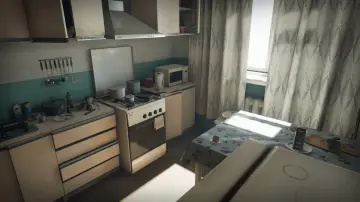
Explore The Blue Metro 2029 environment pack, featuring 84 unique meshes, a preassembled scene, and Ultimate Level Art Tool integration for Unreal Engine.
Category:Unreal Engine,InteriorPlatform: Unreal EngineEngine Version: 4.26+,5.0+Published: Oct 10, 2026
Interior
Resource overview
Setting the Subterranean Atmosphere in The Blue Metro 2029
Underground rail networks offer a distinct canvas for environmental storytelling, particularly when surface conditions render open air uninhabitable. The fictional premise of this environment unfolds during the transition into the year 2029, when a catastrophic atmospheric event—a fusion of toxic dust and gas identified as PT-1—blankets vast regional zones. In this narrative context, surface transit becomes instant death, while subterranean metro lines transform into fortified refuges. Commuters caught beneath the street grid find themselves insulated from the chemical fallout above, carving out a fragile existence over a three-month span under the coordination of station metro officers.
Translating this three-month survival narrative into a 3D scene requires visual balance between transit architecture and prolonged ad-hoc habitation. Stations were never constructed to serve as long-term residential fallout bunkers. They lack native domestic amenities, meaning spaces must reflect improvisation: improvised living quarters clustered near passenger platforms, makeshift partitions obstructing pedestrian thoroughfares, and utilitarian infrastructure repurposed for communal survival. The visual weight relies on this tension between everyday civil engineering and the gritty markers of containment.
Layout Architecture and the Preassembled Metro Scene
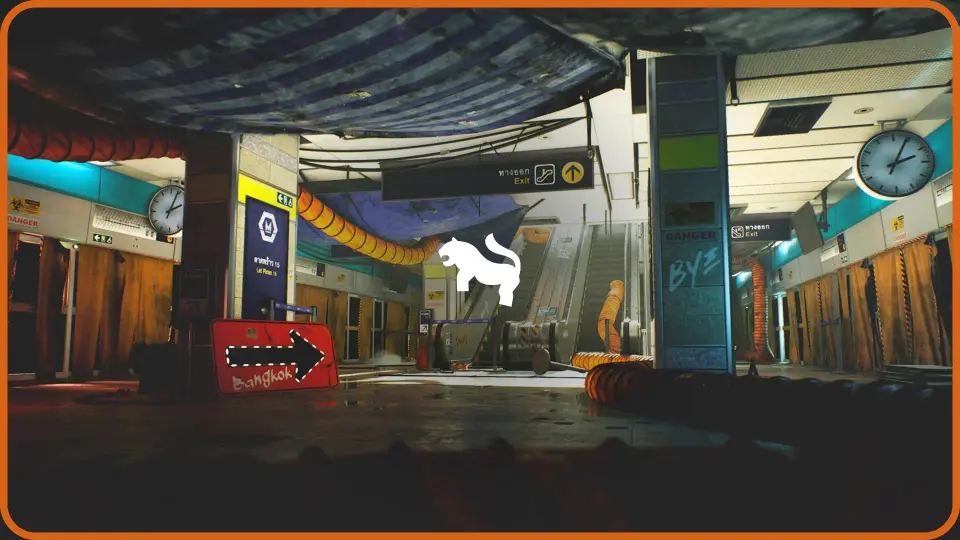
Building realistic subterranean layouts requires an understanding of civic rail design, tunnel geometry, and spatial claustrophobia. The pack provides a fully preassembled showcase scene that illustrates how structural components and environmental dressing connect to form a cohesive underground enclave. Rather than starting on a blank level grid, artists can inspect this pre-built layout to analyze scale relationships, track depths, platform clearances, and the distribution of spatial lighting.
The preassembled scene operates as a working reference for environmental pacing. In subterranean horror or survival scenarios, visual rhythm depends heavily on contrasting open platform expanses with narrow, service-access corridors. Walking through the constructed scene shows how line-of-sight obstructions, structural pillars, and transit infrastructure channel player movement or real-time camera tracking. For virtual production supervisors, having an assembled level ready to load allows rapid camera placement, lighting tests, and framing calibration without requiring days of manual set construction before testing shots.
Modular Assembly Using 84 Unique Meshes
At the center of the environment's construction is a catalog of 84 unique meshes made for modular deployment. Subway infrastructure relies heavily on repeated architectural units—track beds, platform edging, tiled support columns, pedestrian stairwells, and tunnel rings. The modular design of these assets enables artists to extend tunnels, branch into abandoned maintenance bays, or erect standalone station vestibules while preserving visual consistency across distinct sections of the network.
Each component within the mesh library balances detailed surface definition with performance optimization. Managing geometric density is critical in subterranean scenes, where enclosed geometries, complex lighting bounces, and overlapping prop placements can challenge frame budgets. Because the pack targets game ready deployment as well as virtual production setups, the underlying meshes are optimized to sustain consistent frame rates during heavy real-time rendering. The structural parts snap into alignment cleanly, while accompanying dressing props allow level artists to clutter the trackways and platforms with debris, survival equipment, and transit fixtures indicative of an abandoned, war-torn, or quarantined district.
Procedural Assembly with the Ultimate Level Art Tool
Manual placement of individual tiles, wall segments, and tunnel segments across sprawling underground levels can consume extensive production time. To accelerate this pipeline, the environment pack incorporates compatibility with the Ultimate Level Art Tool, widely abbreviated as ULAT. Originally titled as a modular design development tool for mobile and web-based systems, ULAT is engineered to automate and streamline the creation of custom modular buildings and structural complexes.
Within this environment workflow, ULAT functions as an engine for assembling modular pieces rapidly while maintaining organic, natural scene population. Instead of manually aligning every structural piece along rail beds or corridor networks, level artists can utilize the tool to generate custom spatial layouts and architectural shells quickly. The tool simplifies the transition from broad layout blocking to detailed set dressing, providing a structured approach to populating scenes with architectural meshes without producing repetitive, artificial patterns along extended subway corridors.
Virtual Production Staging and Engine Implementation
Real-time transit environments demand lighting and material setups that read accurately through cinematic virtual production viewports and gameplay cameras alike. In a subterranean post-apocalyptic setting dominated by dark corridors, ambient volumetric haze, and artificial emergency illumination, surface materials must interact cleanly with sharp directional sources and low-intensity bounce light. The optimized structural assets in the pack provide clean geometry for light baking or dynamic global illumination workflows, preventing unwanted light leaks across modular seams.
For modern Unreal Engine pipelines, technical compatibility extends toward modern editor tooling. The asset set integrates cleanly alongside systems like the NWIRO - AI Integration Kit, interfacing with frameworks encompassing Unreal Copilot, MCP, IK setups, and the Ultimate AI Bridge MCP. This architectural and technical integration helps technical artists automate layout generation, rig contextual character interactions across station props, or orchestrate complex subterranean level states using advanced script bridges. Whether configured as an isolated survival horror gauntlet or an extended backdrop for in-engine virtual film shoots, the pack provides the foundational geometry and modular tooling necessary to stage believable underground disaster zones.
 Interior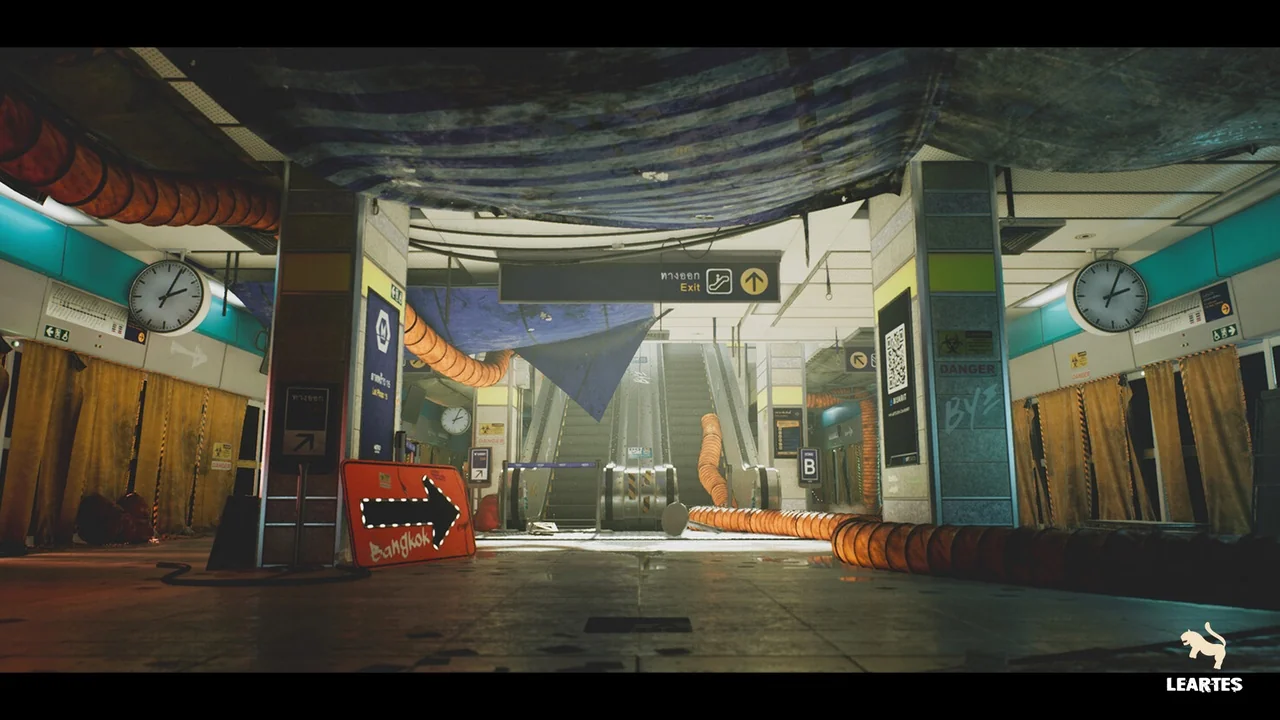
 Interior
 Interior
 Interior