"efaa631e936fd3ee"{"id":"1002231","slug":"terrain-models-pack-vol-3","title":"Terrain Models Pack Vol. 3","category":"Nature \u0026 Plants","engine":"5.3+","assetVersion":"","engineVersion":"Engine Version: 5.3+","tag":"Nature \u0026 Plants","accent":"blue","visual":"mech","summary":"Explore Terrain Models Pack Vol. 3, featuring five high quality terrains including snow mountains, valleys, deserts, and alien planets with 4 to 5 models each.","platform":"Unreal Engine","publishedAt":"2026-10-29T15:34:00.934Z","updatedAt":"2026-10-29T15:34:00.934Z","sourceNotes":[],"fileContents":[],"compatibility":["Unreal Engine","Engine Version: 5.3+"],"featuredImage":{"alt":"Terrain Models Pack Vol. 3","src":"/wp-content/uploads/published/2026/10/02620cb20698-14b442c0-32c7-4581-9674-3a9bccf99c11-ae20ebcd30.webp"},"hasDownloadLink":true,"downloads":0,"terms":[{"taxonomy":"category","slug":"nature-and-plants","name":"Nature \u0026 Plants"}],"galleryImages":[{"src":"/wp-content/uploads/published/2026/10/8aab79f16981-aad3371a-fed2-4628-a982-02690981ab3a-6a8dbcf84e.webp","alt":"Terrain Models Pack Vol. 3"},{"src":"/wp-content/uploads/published/2026/10/d6f794de8314-62e1d688-f186-489c-981d-02d8af160617-c1a778641d.webp","alt":"Terrain Models Pack Vol. 3"},{"src":"/wp-content/uploads/published/2026/10/5cf43534bf18-0b0c548c-10fe-42cf-99ba-6953d59a0d31-2356eca6c7.webp","alt":"Terrain Models Pack Vol. 3"},{"src":"/wp-content/uploads/published/2026/10/fff831543e1f-4782f97e-a934-4b41-9bb9-b52fafbdf973-3423c74e88.webp","alt":"Terrain Models Pack Vol. 3"},{"src":"/wp-content/uploads/published/2026/10/18b8f22835bd-3316c6f7-ed49-4eb3-a923-3061a9974900-a9c71ca6e0.webp","alt":"Terrain Models Pack Vol. 3"},{"src":"/wp-content/uploads/published/2026/10/71b5dfc48420-0de99f59-bff7-43d8-9b20-bdbde73b3af0-b988ee3b85.webp","alt":"Terrain Models Pack Vol. 3"},{"src":"/wp-content/uploads/published/2026/10/43eeb3a21527-9bd728dd-4262-4e1d-8b32-fbccd2d0c0fa-c9d3ab9b88.webp","alt":"Terrain Models Pack Vol. 3"},{"src":"/wp-content/uploads/published/2026/10/f07cc05a61e8-2a240772-2438-4ae6-93b6-ad36b729c52a-c2b0153bde.webp","alt":"Terrain Models Pack Vol. 3"},{"src":"/wp-content/uploads/published/2026/10/45d07495caf5-edd87f7b-dc3e-4f44-ae18-8d8359f17867-50c7dccf9d.webp","alt":"Terrain Models Pack Vol. 3"},{"src":"/wp-content/uploads/published/2026/10/34b30946199c-2e5ae526-eb3a-4254-a833-9b6e7541757a-298bdb3643.webp","alt":"Terrain Models Pack Vol. 3"}],"accessPanel":{"kind":"resource","title":"Download this resource","eyebrow":"Free Download","message":"Log in or create a free account to start your download.","fileName":"Content.7z","safetyNote":"Resources are manually reviewed before listing to improve quality and reduce obvious risks.","actionLabel":"Download Free","resourceType":"Resource archive"},"contentHtml":"\u003ch2\u003eConstructing Environments with Terrain Models Pack Vol. 3\u003c/h2\u003e\n\u003cp\u003eStaging an expansive 3D world often begins with establishing clear topographical scale. Terrain Models Pack Vol. 3 provides an organized foundation for this phase by delivering five high quality terrains suited to broad environment layouts. Rather than relying on a single uniform surface mesh, the collection divides each environment into four or five separate models. This division changes how digital landscapes are structured, allowing artists to piece together sweeping vistas through modular mesh placement rather than relying on heavy, singular heightmaps.\u003c/p\u003e\n\u003cp\u003eThe collection spans both grounded Earth biomes and speculative extraterrestrial topography. Artists working on nature scenes can draw from snow mountains, valleys, and deserts, while science-fiction projects can utilize the included alien planet formations. Because every individual terrain theme contains 4 or 5 models, scene assembly becomes an exercise in combining complementary topographical components to create believable world boundaries, focal horizons, and varied play spaces.\u003c/p\u003e \u003ch2\u003eMulti-Mesh Structure Across Snow Mountains, Valleys, and Deserts\u003c/h2\u003e\n\u003cp\u003eRealistic nature scenes demand variation in elevation and silhouette. In Terrain Models Pack Vol. 3, the inclusion of 4 or 5 models per environment category gives creators direct control over how geological features transition across a landscape.\u003c/p\u003e\n\u003cp\u003eWhen assembling snow mountains, having distinct mountain landforms prevents the skyline from looking repetitive. Individual models can be placed to form jagged ridge lines, background massifs, or isolated sub-peaks. Staggering these models across the camera frustum creates realistic depth, where foreground peaks obscure and frame background ridges naturally. The presence of snow-covered landforms also establishes immediate climatic context, useful for alpine passes, arctic wastes, or sub-zero wilderness settings.\u003c/p\u003e\n\u003cp\u003eThe valley selections serve the opposite spatial need by providing enclosed, recessed topography. Valleys require flanking walls, descending slopes, and low-lying ground to guide movement or direct the viewer’s eye. Using the four or five valley models, an environment layout can feature winding canyon passages, wide river basins, or sheer mountain passes. Combining valley meshes with alpine elements allows for smooth transitions from towering elevation down to sheltered corridors.\u003c/p\u003e\n\u003cp\u003eDeserts present a different landscape challenge characterized by vast openness, wind-sculpted contours, and gradual rises. The desert models in the pack supply sweeping contours that define arid worlds. Placing these landforms side-by-side or rotating them along different axes makes it possible to construct expansive dune seas, dry plateaus, and sprawling wilderness expanses without exposing unnatural seams or repetitive wave patterns.\u003c/p\u003e \u003ch2\u003eAssembling Alien Planet Worlds with Varied Surface Meshes\u003c/h2\u003e\n\u003cp\u003eBeyond traditional nature biomes, Terrain Models Pack Vol. 3 addresses speculative worldbuilding with its alien planet assets. Extraterrestrial environments depend on silhouettes that deviate from standard terrestrial erosion patterns, giving art directors the assets needed to convey unfamiliar gravitational forces, strange geological compositions, or uncharted planetary surfaces.\u003c/p\u003e\n\u003cp\u003eBecause the alien planet terrain category also contains 4 or 5 distinct models, environment builders are not locked into a single crater or anomalous mound. The assets can be arranged to create vast extraterrestrial plains interrupted by strange landform protrusions, deep impact zones, or otherworldly ridge formations. When combined with the realistic tags associated with the collection, these alien landforms retain physical presence while establishing a striking visual departure from standard valleys or deserts.\u003c/p\u003e\n\u003cp\u003eThese models can also be cross-pollinated with other assets in the package. An alien planet scene might incorporate elements from the desert or valley categories to represent parched exoplanets, or merge with snow mountain geometry to depict frozen moon surfaces, broadening the utility of the five distinct terrain styles.\u003c/p\u003e \u003ch2\u003eLayout Techniques for 4 or 5 Models per Terrain\u003c/h2\u003e\n\u003cp\u003eWorking with modular terrain models requires deliberate layout planning to maximize visual diversity. Because each of the five terrains in Terrain Models Pack Vol. 3 features four or five models, creators can deploy several specific staging techniques:\u003c/p\u003e\n\u003cul\u003e \u003cli\u003e\u003cstrong\u003eRotation and Elevation Offsets:\u003c/strong\u003e Taking a single mountain or valley mesh, altering its heading by 90 or 180 degrees, and slightly adjusting its vertical sink creates a noticeably different silhouette from alternate camera angles.\u003c/li\u003e \u003cli\u003e\u003cstrong\u003eCluster-Based Massing:\u003c/strong\u003e Grouping two or three models close together allows artists to form compound peaks or branching valley systems that appear far larger than any single individual mesh.\u003c/li\u003e \u003cli\u003e\u003cstrong\u003eForeground Framing:\u003c/strong\u003e Positioning a smaller terrain segment close to the camera creates immediate depth, while larger models anchored on the horizon establish the scale of the world.\u003c/li\u003e \u003cli\u003e\u003cstrong\u003ePerimeter Enclosures:\u003c/strong\u003e Surrounding an interior play area with valley walls or ridge models sets natural navigation boundaries without resorting to arbitrary invisible barriers.\u003c/li\u003e\n\u003c/ul\u003e\n\u003cp\u003eThis multi-model setup ensures that each biome provides enough geometric material to fill broad scenes without demanding that every landform be sculpted or generated from scratch during initial level blockout.\u003c/p\u003e \u003ch2\u003eWorkflow Integration within the Terrain Models Buddle\u003c/h2\u003e\n\u003cp\u003eTerrain Models Pack Vol. 3 is noted for compatibility with the Terrain Models Buddle, positioning it as an integrated chapter within a broader ecosystem of terrain generation assets. For projects that require extensive biome variation—transitioning a player or narrative from arid deserts through fertile valleys and up into high snow mountains, before jumping to an alien planet—having assets that share this structural logic is a distinct advantage.\u003c/p\u003e\n\u003cp\u003eWorking within a standardized collection ensures consistency in scale and organization. Artists using Volume 3 alongside the wider bundle can reliably anticipate how assets are structured, knowing that each terrain set delivers four to five models tailored for landscape, nature, and world construction. This makes scene staging predictable and streamlined across complex, multi-environment production pipelines.\u003c/p\u003e\n\n\u003ch2\u003eRelated Resources Worth Checking\u003c/h2\u003e\n\u003cul\u003e\n\u003cli\u003e\u003ca href=\"https://3dcghub.com/stones-vol-1-scanned-materials/\" title=\"Stones Vol. 1 - Scanned Materials\"\u003eStones Vol. 1 - Scanned Materials\u003c/a\u003e\u003c/li\u003e\n\u003cli\u003e\u003ca href=\"https://3dcghub.com/grass-landscape-material-vol-i/\" title=\"Grass Landscape Material Vol. I\"\u003eGrass Landscape Material Vol. I\u003c/a\u003e\u003c/li\u003e\n\u003cli\u003e\u003ca href=\"https://3dcghub.com/foliage-vol-26-dead-birch-trees-nanite-low-poly/\" title=\"Foliage VOL.26 - Dead Birch Trees (Nanite + Low Poly)\"\u003eFoliage VOL.26 - Dead Birch Trees (Nanite + Low Poly)\u003c/a\u003e\u003c/li\u003e\n\u003cli\u003e\u003ca href=\"https://3dcghub.com/forest-landscape-materials-vol-i/\" title=\"Forest Landscape Materials Vol.I\"\u003eForest Landscape Materials Vol.I\u003c/a\u003e\u003c/li\u003e\n\u003cli\u003e\u003ca href=\"https://3dcghub.com/forest-landscape-materials-vol-ii/\" title=\"Forest Landscape Materials Vol. II\"\u003eForest Landscape Materials Vol. II\u003c/a\u003e\u003c/li\u003e\n\u003c/ul\u003e","contentTextLength":6577,"navigation":{"current":54,"total":4209,"previous":{"id":"1002232","slug":"texture-resize-sc","title":"Texture Resize SC","category":"Engine Tools","platform":"Unreal Engine","updatedAt":"2026-10-29T15:35:06.805Z"},"next":{"id":"1002230","slug":"terrain-materials-vol-4","title":"Terrain Materials VOL.4","category":"Nature \u0026 Terrain","platform":"Unreal Engine","updatedAt":"2026-10-29T15:31:40.076Z"}},"relatedResources":[{"id":"1001603","slug":"stones-vol-1-scanned-materials","title":"Stones Vol. 1 - Scanned Materials","category":"Stone","engine":"5.2+","assetVersion":"","engineVersion":"Engine Version: 5.2+","tag":"Stone","accent":"blue","visual":"luts","summary":"Stones Vol. 1 - Scanned Materials delivers 10 photogrammetry PBR instance materials featuring packed ARM textures and customizable shader parameters.","platform":"Unreal Engine","publishedAt":"2026-10-10T16:27:55.183Z","updatedAt":"2026-10-10T16:27:55.183Z","sourceNotes":[],"fileContents":[],"compatibility":["Unreal Engine","Engine Version: 5.2+"],"featuredImage":{"alt":"Stones Vol. 1 - Scanned Materials","src":"/wp-content/uploads/published/2026/10/93c76ee97657-4d5c7a4a-44cc-480c-a49e-531250bd2f96-b69a9f13a8.webp"},"hasDownloadLink":true,"downloads":1},{"id":"1001211","slug":"grass-landscape-material-vol-i","title":"Grass Landscape Material Vol. I","category":"Nature \u0026 Terrain","engine":"5.0+","assetVersion":"","engineVersion":"Engine Version: 5.0+","tag":"Nature \u0026 Terrain","accent":"blue","visual":"luts","summary":"Examine Grass Landscape Material Vol. I, featuring photoscanned 3mx3m grass and mud surfaces with multiple displacement methods for realistic terrains.","platform":"Unreal Engine","publishedAt":"2026-09-19T08:44:44.049Z","updatedAt":"2026-09-19T08:44:44.049Z","sourceNotes":[],"fileContents":[],"compatibility":["Unreal Engine","Engine Version: 5.0+"],"featuredImage":{"alt":"Grass Landscape Material Vol. I","src":"/wp-content/uploads/published/2026/09/223a06048e45-13f8af89-33ba-43d2-bfbb-9135eb638f57-b26e938f50.webp"},"hasDownloadLink":true,"downloads":2},{"id":"1000607","slug":"foliage-vol-26-dead-birch-trees-nanite-low-poly","title":"Foliage VOL.26 - Dead Birch Trees (Nanite + Low Poly)","category":"Nature \u0026 Plants","engine":"5.1+","assetVersion":"","engineVersion":"Engine Version: 5.1+","tag":"Nature \u0026 Plants","accent":"blue","visual":"mech","summary":"Twenty-four dead birch tree meshes by Dekogon Studios, offered in Nanite and low poly variants with 4K channel-packed textures, Lumen support, and game-ready op","platform":"Unreal Engine","publishedAt":"2026-07-20T19:17:05.693Z","updatedAt":"2026-07-20T19:17:05.693Z","sourceNotes":[],"fileContents":[],"compatibility":["Unreal Engine","Engine Version: 5.1+"],"featuredImage":{"alt":"Foliage VOL.26 - Dead Birch Trees (Nanite + Low Poly)","src":"/wp-content/uploads/published/2026/07/41175b88c8ee-9e2e495c-76af-4f8f-8f26-c57a281f7239-cc2d364d8c.webp"},"hasDownloadLink":true,"downloads":0}]}
Nature & Plants
Terrain Models Pack Vol. 3
Explore Terrain Models Pack Vol. 3, featuring five high quality terrains including snow mountains, valleys, deserts, and alien planets with 4 to 5 models each.
Constructing Environments with Terrain Models Pack Vol. 3
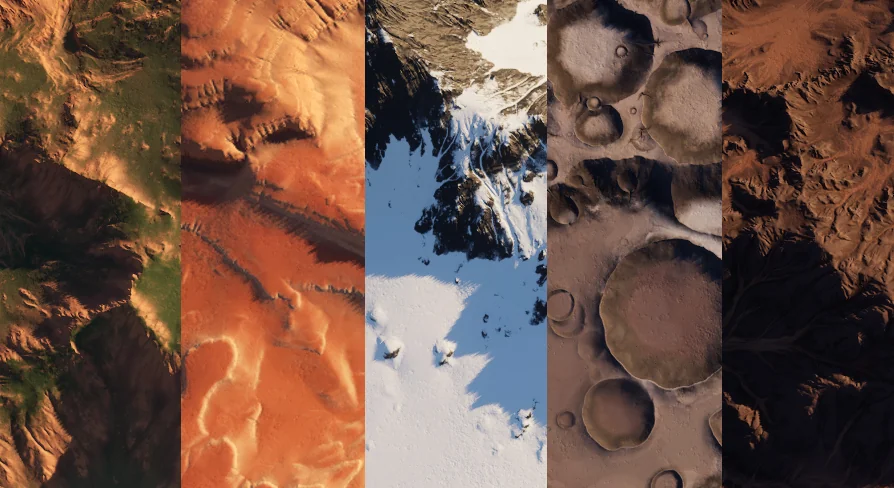
Staging an expansive 3D world often begins with establishing clear topographical scale. Terrain Models Pack Vol. 3 provides an organized foundation for this phase by delivering five high quality terrains suited to broad environment layouts. Rather than relying on a single uniform surface mesh, the collection divides each environment into four or five separate models. This division changes how digital landscapes are structured, allowing artists to piece together sweeping vistas through modular mesh placement rather than relying on heavy, singular heightmaps.
The collection spans both grounded Earth biomes and speculative extraterrestrial topography. Artists working on nature scenes can draw from snow mountains, valleys, and deserts, while science-fiction projects can utilize the included alien planet formations. Because every individual terrain theme contains 4 or 5 models, scene assembly becomes an exercise in combining complementary topographical components to create believable world boundaries, focal horizons, and varied play spaces.
Multi-Mesh Structure Across Snow Mountains, Valleys, and Deserts
Realistic nature scenes demand variation in elevation and silhouette. In Terrain Models Pack Vol. 3, the inclusion of 4 or 5 models per environment category gives creators direct control over how geological features transition across a landscape.
When assembling snow mountains, having distinct mountain landforms prevents the skyline from looking repetitive. Individual models can be placed to form jagged ridge lines, background massifs, or isolated sub-peaks. Staggering these models across the camera frustum creates realistic depth, where foreground peaks obscure and frame background ridges naturally. The presence of snow-covered landforms also establishes immediate climatic context, useful for alpine passes, arctic wastes, or sub-zero wilderness settings.
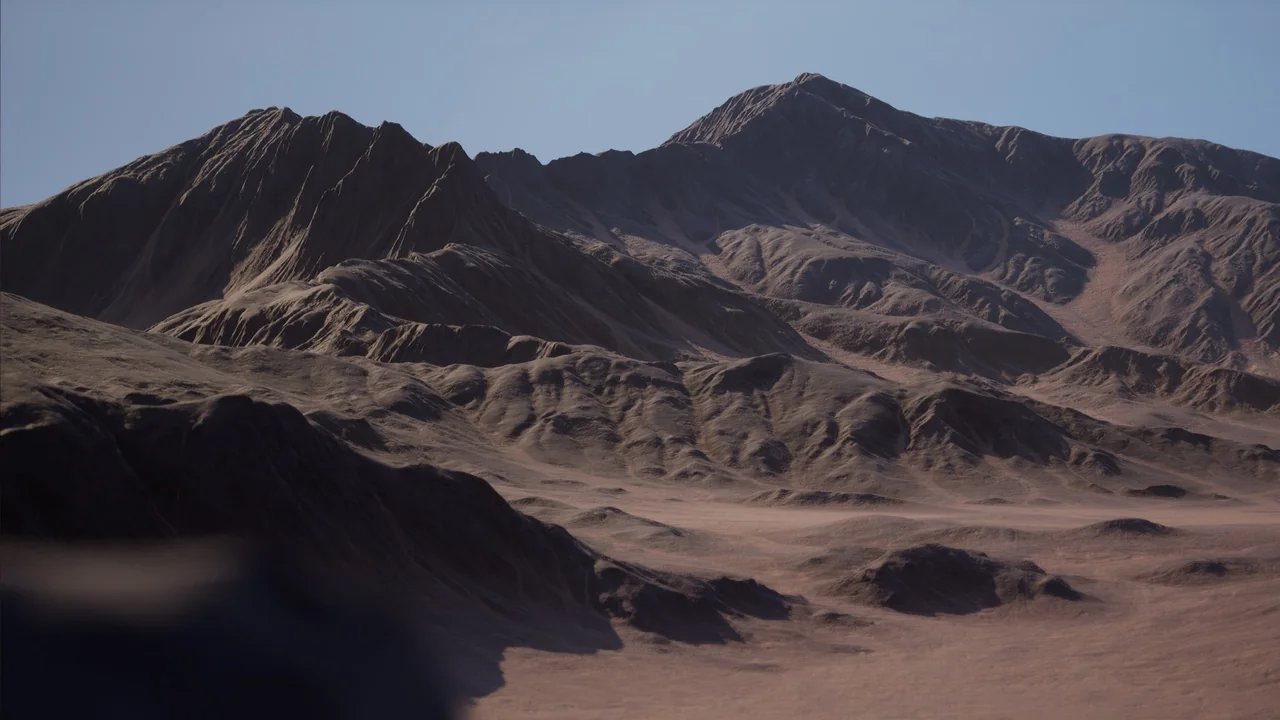
The valley selections serve the opposite spatial need by providing enclosed, recessed topography. Valleys require flanking walls, descending slopes, and low-lying ground to guide movement or direct the viewer’s eye. Using the four or five valley models, an environment layout can feature winding canyon passages, wide river basins, or sheer mountain passes. Combining valley meshes with alpine elements allows for smooth transitions from towering elevation down to sheltered corridors.
Deserts present a different landscape challenge characterized by vast openness, wind-sculpted contours, and gradual rises. The desert models in the pack supply sweeping contours that define arid worlds. Placing these landforms side-by-side or rotating them along different axes makes it possible to construct expansive dune seas, dry plateaus, and sprawling wilderness expanses without exposing unnatural seams or repetitive wave patterns.
Assembling Alien Planet Worlds with Varied Surface Meshes
Beyond traditional nature biomes, Terrain Models Pack Vol. 3 addresses speculative worldbuilding with its alien planet assets. Extraterrestrial environments depend on silhouettes that deviate from standard terrestrial erosion patterns, giving art directors the assets needed to convey unfamiliar gravitational forces, strange geological compositions, or uncharted planetary surfaces.
Because the alien planet terrain category also contains 4 or 5 distinct models, environment builders are not locked into a single crater or anomalous mound. The assets can be arranged to create vast extraterrestrial plains interrupted by strange landform protrusions, deep impact zones, or otherworldly ridge formations. When combined with the realistic tags associated with the collection, these alien landforms retain physical presence while establishing a striking visual departure from standard valleys or deserts.
These models can also be cross-pollinated with other assets in the package. An alien planet scene might incorporate elements from the desert or valley categories to represent parched exoplanets, or merge with snow mountain geometry to depict frozen moon surfaces, broadening the utility of the five distinct terrain styles.
Layout Techniques for 4 or 5 Models per Terrain
Working with modular terrain models requires deliberate layout planning to maximize visual diversity. Because each of the five terrains in Terrain Models Pack Vol. 3 features four or five models, creators can deploy several specific staging techniques:
Rotation and Elevation Offsets: Taking a single mountain or valley mesh, altering its heading by 90 or 180 degrees, and slightly adjusting its vertical sink creates a noticeably different silhouette from alternate camera angles.
Cluster-Based Massing: Grouping two or three models close together allows artists to form compound peaks or branching valley systems that appear far larger than any single individual mesh.
Foreground Framing: Positioning a smaller terrain segment close to the camera creates immediate depth, while larger models anchored on the horizon establish the scale of the world.
Perimeter Enclosures: Surrounding an interior play area with valley walls or ridge models sets natural navigation boundaries without resorting to arbitrary invisible barriers.
This multi-model setup ensures that each biome provides enough geometric material to fill broad scenes without demanding that every landform be sculpted or generated from scratch during initial level blockout.
Workflow Integration within the Terrain Models Buddle
Terrain Models Pack Vol. 3 is noted for compatibility with the Terrain Models Buddle, positioning it as an integrated chapter within a broader ecosystem of terrain generation assets. For projects that require extensive biome variation—transitioning a player or narrative from arid deserts through fertile valleys and up into high snow mountains, before jumping to an alien planet—having assets that share this structural logic is a distinct advantage.
Working within a standardized collection ensures consistency in scale and organization. Artists using Volume 3 alongside the wider bundle can reliably anticipate how assets are structured, knowing that each terrain set delivers four to five models tailored for landscape, nature, and world construction. This makes scene staging predictable and streamlined across complex, multi-environment production pipelines.
 Nature & Plants
 Stone
 Nature & Terrain
 Nature & Plants