"a7cfa646d0d8ae55"{"id":"1001209","slug":"forest-landscape-materials-vol-ii","title":"Forest Landscape Materials Vol. II","category":"Nature \u0026 Terrain","engine":"5.0+","assetVersion":"","engineVersion":"Engine Version: 5.0+","tag":"Nature \u0026 Terrain","accent":"blue","visual":"luts","summary":"A detailed look at Forest Landscape Materials Vol. II, featuring 3mx3m photoscanned deciduous forest textures and multiple displacement methods.","platform":"Unreal Engine","publishedAt":"2026-09-19T08:41:22.784Z","updatedAt":"2026-09-19T08:41:22.784Z","sourceNotes":[],"fileContents":[],"compatibility":["Unreal Engine","Engine Version: 5.0+"],"featuredImage":{"alt":"Forest Landscape Materials Vol. II","src":"/wp-content/uploads/published/2026/09/87bf5469786d-c8f44977-9c23-4412-9186-783fc612d0d0-bae97017a8.webp"},"hasDownloadLink":true,"downloads":0,"terms":[{"taxonomy":"category","slug":"nature-and-terrain","name":"Nature \u0026 Terrain"}],"galleryImages":[{"src":"/wp-content/uploads/published/2026/09/740f7efa2b5a-4894f4ae-fc4d-4e1c-8ee4-d7703221da50-a880080e2d.webp","alt":"Forest Landscape Materials Vol. II"},{"src":"/wp-content/uploads/published/2026/09/54d317afbde1-95b778df-c746-4c4d-bbc7-401dd0ffe8e2-bab1c5651d.webp","alt":"Forest Landscape Materials Vol. II"},{"src":"/wp-content/uploads/published/2026/09/24165f1c043a-c06d99c2-fa8d-4a46-9b6d-2e94c11cc7e8-268f9b0f3b.webp","alt":"Forest Landscape Materials Vol. II"},{"src":"/wp-content/uploads/published/2026/09/562d0cedbf34-8ffdbc82-e118-44b2-9487-269e6c21a6a0-3ed08414fe.webp","alt":"Forest Landscape Materials Vol. II"},{"src":"/wp-content/uploads/published/2026/09/e6d514eeb604-f0f511fe-038b-4f5d-a0ac-966281406f0f-fc8034eb06.webp","alt":"Forest Landscape Materials Vol. II"},{"src":"/wp-content/uploads/published/2026/09/be63ecb15459-92e7f356-cff5-46bd-9768-c2848d151fa1-9ea6afc17e.webp","alt":"Forest Landscape Materials Vol. II"},{"src":"/wp-content/uploads/published/2026/09/a3a3bde76439-5f65987d-9fe6-4dda-8b87-e9ae0a71fb74-9291848956.webp","alt":"Forest Landscape Materials Vol. II"},{"src":"/wp-content/uploads/published/2026/09/c973560efa05-9f36c8ce-a204-44e1-b231-bf3531576179-4c99b909f8.webp","alt":"Forest Landscape Materials Vol. II"}],"accessPanel":{"kind":"resource","title":"Download this resource","eyebrow":"Free Download","message":"Log in or create a free account to start your download.","fileName":"Content.7z","safetyNote":"Resources are manually reviewed before listing to improve quality and reduce obvious risks.","actionLabel":"Download Free","resourceType":"Resource archive"},"contentHtml":"\u003ch2\u003eGrounding Deciduous Forest Floors in Oak and Beech Environments\u003c/h2\u003e\u003cp\u003eTemperate woodland scenes require ground cover that conveys the organic chaos of real undergrowth. In natural oak and beech stands, the forest floor is defined by decaying leaf litter, fragmented branches, weathered soil, and subtle surface micro-ridges. Recreating these elements convincingly in an interactive terrain pipeline requires dedicated surface data rather than generic dirt shaders.\u003c/p\u003e\u003cp\u003eForest Landscape Materials Vol. II addresses this specific ecological profile. The material pack focuses directly on deciduous woodlands, capturing the distinctive ground clutter and earthy compositions found beneath broadleaf canopies. Instead of relying on hand-painted or synthetically generated soil patterns, the asset collection provides realistic ground foundations that reflect the natural distribution of organic debris across the forest floor.\u003c/p\u003e\u003cp\u003eBecause these materials are designed to be game-ready, they integrate cleanly into standard landscape shading pipelines. The textures provide the immediate visual grit required for first-person viewpoints while retaining the broader structural coherence needed when painting expansive hillsides or dense thickets across large maps.\u003c/p\u003e\u003ch2\u003eThe Practical Role of 3mx3m Photoscanned Surfaces for Large Terrains\u003c/h2\u003e\u003cp\u003eTiling repetition is one of the most persistent visual problems when texturing open environments. When an artist tiles a ground material across hundreds of meters of terrain, small capture areas create visible grid patterns and noticeable duplicate details that instantly break scene immersion. A single distinctive twig, rock, or clump of leaves that repeats every two meters ruins the sense of scale.\u003c/p\u003e\u003cp\u003eAll textures in this collection are derived from photogrammetry scans covering a 3m by 3m square or larger. Utilizing a physical capture area of this scale directly benefits landscape texturing in several practical ways:\u003c/p\u003e\u003cul\u003e\u003cli\u003e\u003cstrong\u003eReduced Pattern Recognition:\u003c/strong\u003e A minimum nine-square-meter footprint disperses high-contrast elements across a broader area, making tiling repetition far harder for the human eye to detect at mid and long distances.\u003c/li\u003e\u003cli\u003e\u003cstrong\u003eBroad Natural Variation:\u003c/strong\u003e Larger scan areas capture natural gradients in soil moisture, leaf density, and surface packing that smaller samples simply miss.\u003c/li\u003e\u003cli\u003e\u003cstrong\u003eHigh-Resolution Surface Micro-Detail:\u003c/strong\u003e Capturing a 3mx3m area at high resolution ensures that fine details—such as individual leaf stems, decomposing beech foliage, and soil granulation—remain crisp under close scrutiny.\u003c/li\u003e\u003c/ul\u003e\u003cp\u003eBy prioritizing large capture footprints, the collection delivers maximum tiling quality. Environment artists can stretch these ground layers across rolling landscape geometry without spending excessive time hiding repetitive visual seams beneath clutter meshes.\u003c/p\u003e\u003ch2\u003eFlexible Displacement Methods Across Different Technical Budgets\u003c/h2\u003e\u003cp\u003eFlat ground textures flattened against low-polygon terrain geometry fail when viewed from low camera angles. In realistic forest settings, ground cover must exhibit physical height; leaves should cast small shadows across the dirt beneath them, and mounds of earth should silhouette realistically against the background.\u003c/p\u003e\u003cp\u003eTo solve this without locking production into a single performance profile, multiple displacement methods are implemented across the material set. This structural flexibility provides direct workflow advantages depending on technical requirements:\u003c/p\u003e\u003cp\u003eModern real-time pipelines vary substantially in how they handle geometry tessellation, vertex height manipulation, and screen-space depth offsets. By providing alternative displacement methods directly out of the box, the pack allows developers to match material settings to target hardware capabilities. A project prioritizing pure rendering speed can adopt lighter displacement techniques to preserve performance, while cinematic sequences or high-end PC builds can engage more aggressive height mapping for deep surface physicalization.\u003c/p\u003e\u003cp\u003eHaving pre-configured displacement options simplifies shader management across the art team. Artists can deploy the materials directly to terrain layers without manually constructing complex custom displacement functions to balance visual depth against system overhead.\u003c/p\u003e\u003ch2\u003eIntegrating Deciduous Ground with Temperate Spruce Forest Biomes\u003c/h2\u003e\u003cp\u003eNatural landscapes rarely feature sharp borders between different plant communities. In real-world temperate zones, broadleaf deciduous forests often intersect with coniferous woodlands, creating mixed ecotones where oak and beech canopies give way to pine or spruce stands.\u003c/p\u003e\u003cp\u003eThe material collection provides natural visual compatibility with temperate vegetation, including spruce forest assets. When authoring diverse natural maps, technical artists need ground layers that blend logically from one zone to another. The deep browns, rich organic loam, and fallen leaves of the deciduous materials pair naturally with the darker, cooler tones typical of spruce understories.\u003c/p\u003e\u003cp\u003eThis cross-biome utility allows world builders to establish smooth landscape layer transitions. An environment can begin in a sundrenched oak grove, transition across mixed leafy soil, and seamlessly resolve into the denser needles and shadowed loam of an adjacent spruce timberline without an abrupt clash in texture resolution or lighting response.\u003c/p\u003e\u003ch2\u003eTechnical Workflows and Production Environments That Benefit Most\u003c/h2\u003e\u003cp\u003eForest Landscape Materials Vol. II functions effectively across a range of 3D asset applications, from interactive game development to real-time nature simulations and architectural landscape contextualization. Projects building outdoor environments benefit significantly from using scan-based collections that share a consistent capture methodology.\u003c/p\u003e\u003cp\u003eEnvironment artists handling open-world level design gain a fast, reliable baseline for multi-layer landscape painting. Because the 3mx3m scan footprints mitigate tiling artifacts, broad terrain can be blocked out quickly with high confidence in the final visual quality. Technical artists can easily wire the materials into existing terrain master shaders, utilizing the implemented displacement methods to optimize framerates across varying level-of-detail stages.\u003c/p\u003e\u003cp\u003eUltimately, developers seeking to ground temperate forest scenes in authentic broadleaf ecology will find the collection directly applicable. By combining large-format photoscanning with versatile displacement controls, the pack provides the concrete texturing assets needed to construct believable woodland terrains across modern real-time engines.\u003c/p\u003e\n\n\u003ch2\u003eExplore Similar Assets\u003c/h2\u003e\n\u003cul\u003e\n\u003cli\u003e\u003ca href=\"https://3dcghub.com/stylized-materials-vol-1/\" title=\"Stylized materials VOL.1\"\u003eStylized materials VOL.1\u003c/a\u003e\u003c/li\u003e\n\u003cli\u003e\u003ca href=\"https://3dcghub.com/stylized-landscape-5-biomes-stylized-low-poly-forest-orasot-bundle/\" title=\"Stylized Landscape 5 Biomes + Stylized + Low poly forest : Orasot Bundle\"\u003eStylized Landscape 5 Biomes + Stylized + Low poly forest : Orasot Bundle\u003c/a\u003e\u003c/li\u003e\n\u003cli\u003e\u003ca href=\"https://3dcghub.com/stylized-nature-vol-1-stylized-environment-bundle/\" title=\"Stylized Nature Vol. 1 | Stylized Environment Bundle\"\u003eStylized Nature Vol. 1 | Stylized Environment Bundle\u003c/a\u003e\u003c/li\u003e\n\u003cli\u003e\u003ca href=\"https://3dcghub.com/ground-material-texture-pack-advanced-materials-5-variations/\" title=\"Ground Material Texture Pack (Advanced Materials / 5 Variations)\"\u003eGround Material Texture Pack (Advanced Materials / 5 Variations)\u003c/a\u003e\u003c/li\u003e\n\u003cli\u003e\u003ca href=\"https://3dcghub.com/wildlands-stylized-nature-pine-forest-trees-foliage-nature-forest-biome/\" title=\"Wildlands: Stylized Nature (Pine Forest, Trees, Foliage, Nature, Forest, Biome)\"\u003eWildlands: Stylized Nature (Pine Forest, Trees, Foliage, Nature, Forest, Biome)\u003c/a\u003e\u003c/li\u003e\n\u003c/ul\u003e","contentTextLength":6878,"navigation":{"current":16,"total":3167,"previous":{"id":"1001210","slug":"forest-landscape-materials-vol-i","title":"Forest Landscape Materials Vol.I","category":"Nature \u0026 Terrain","platform":"Unreal Engine","updatedAt":"2026-09-19T08:43:08.399Z"},"next":{"id":"1001208","slug":"megascans-asphalt-fine-vol-1","title":"Megascans - Asphalt Fine Vol. 1","category":"Asphalt","platform":"Unreal Engine","updatedAt":"2026-09-19T08:32:19.805Z"}},"relatedResources":[{"id":"1001211","slug":"grass-landscape-material-vol-i","title":"Grass Landscape Material Vol. I","category":"Nature \u0026 Terrain","engine":"5.0+","assetVersion":"","engineVersion":"Engine Version: 5.0+","tag":"Nature \u0026 Terrain","accent":"blue","visual":"luts","summary":"Examine Grass Landscape Material Vol. I, featuring photoscanned 3mx3m grass and mud surfaces with multiple displacement methods for realistic terrains.","platform":"Unreal Engine","publishedAt":"2026-09-19T08:44:44.049Z","updatedAt":"2026-09-19T08:44:44.049Z","sourceNotes":[],"fileContents":[],"compatibility":["Unreal Engine","Engine Version: 5.0+"],"featuredImage":{"alt":"Grass Landscape Material Vol. I","src":"/wp-content/uploads/published/2026/09/223a06048e45-13f8af89-33ba-43d2-bfbb-9135eb638f57-b26e938f50.webp"},"hasDownloadLink":true,"downloads":0},{"id":"1001210","slug":"forest-landscape-materials-vol-i","title":"Forest Landscape Materials Vol.I","category":"Nature \u0026 Terrain","engine":"5.0+","assetVersion":"","engineVersion":"Engine Version: 5.0+","tag":"Nature \u0026 Terrain","accent":"blue","visual":"luts","summary":"Examine Forest Landscape Materials Vol.I, featuring 3mx3m photo-scanned coniferous forest surfaces with multiple displacement methods.","platform":"Unreal Engine","publishedAt":"2026-09-19T08:43:08.399Z","updatedAt":"2026-09-19T08:43:08.399Z","sourceNotes":[],"fileContents":[],"compatibility":["Unreal Engine","Engine Version: 5.0+"],"featuredImage":{"alt":"Forest Landscape Materials Vol.I","src":"/wp-content/uploads/published/2026/09/b61bfba68fd5-e493231b-b7cb-4dda-a978-64109746a3b0-09225789f5.webp"},"hasDownloadLink":true,"downloads":0},{"id":"12972","slug":"stylized-materials-vol-1","title":"Stylized materials VOL.1","category":"Nature \u0026 Terrain","engine":"4.26+,5.0+","assetVersion":"Engine version: 4.26+,5.0+","engineVersion":"4.20","tag":"Nature \u0026 Terrain","accent":"blue","visual":"luts","summary":"Enhance your project with Stylized materials VOL.1, featuring a comprehensive 15-layer landscape material and a flexible 5-layer vertex painting tool for stylized environments.","platform":"Unreal Engine","publishedAt":"2026-03-09T18:07:56.000Z","updatedAt":"2026-04-19T15:46:34.000Z","sourceNotes":[],"fileContents":[],"compatibility":["Unreal Engine","Engine version: 4.26+,5.0+"],"featuredImage":{"alt":"Stylized materials VOL.1","src":"https://3dcghub.com/wp-content/uploads/2026/03/97eab7a6-3cc9-465b-85c9-a8de441575a1.webp"},"hasDownloadLink":true,"downloads":0}]}
Nature & Terrain
Forest Landscape Materials Vol. II
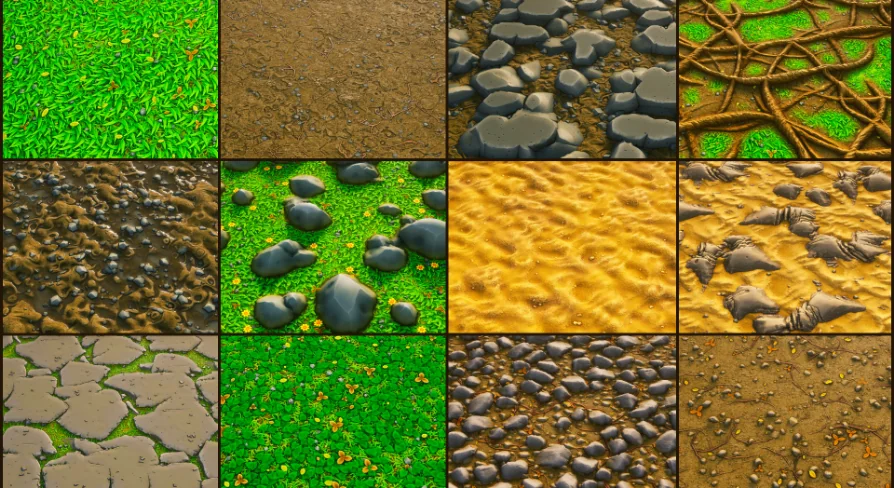
A detailed look at Forest Landscape Materials Vol. II, featuring 3mx3m photoscanned deciduous forest textures and multiple displacement methods.
Grounding Deciduous Forest Floors in Oak and Beech Environments
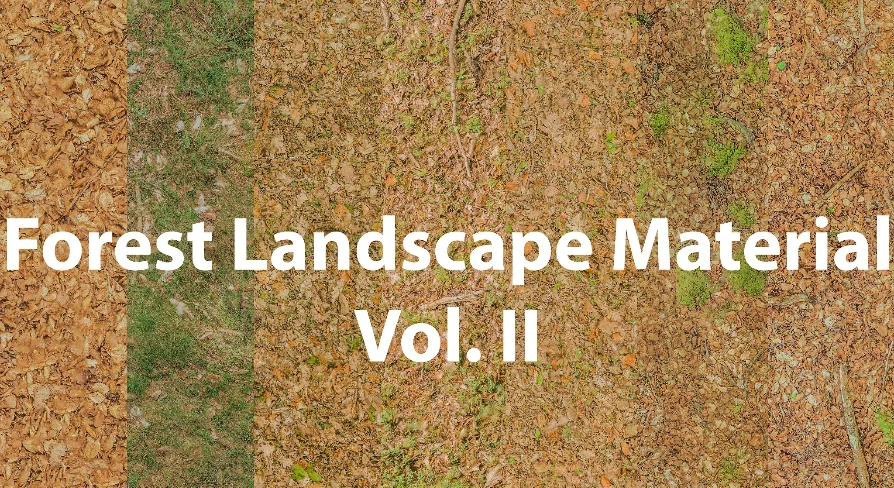
Temperate woodland scenes require ground cover that conveys the organic chaos of real undergrowth. In natural oak and beech stands, the forest floor is defined by decaying leaf litter, fragmented branches, weathered soil, and subtle surface micro-ridges. Recreating these elements convincingly in an interactive terrain pipeline requires dedicated surface data rather than generic dirt shaders.
Forest Landscape Materials Vol. II addresses this specific ecological profile. The material pack focuses directly on deciduous woodlands, capturing the distinctive ground clutter and earthy compositions found beneath broadleaf canopies. Instead of relying on hand-painted or synthetically generated soil patterns, the asset collection provides realistic ground foundations that reflect the natural distribution of organic debris across the forest floor.
Because these materials are designed to be game-ready, they integrate cleanly into standard landscape shading pipelines. The textures provide the immediate visual grit required for first-person viewpoints while retaining the broader structural coherence needed when painting expansive hillsides or dense thickets across large maps.
The Practical Role of 3mx3m Photoscanned Surfaces for Large Terrains
Tiling repetition is one of the most persistent visual problems when texturing open environments. When an artist tiles a ground material across hundreds of meters of terrain, small capture areas create visible grid patterns and noticeable duplicate details that instantly break scene immersion. A single distinctive twig, rock, or clump of leaves that repeats every two meters ruins the sense of scale.
All textures in this collection are derived from photogrammetry scans covering a 3m by 3m square or larger. Utilizing a physical capture area of this scale directly benefits landscape texturing in several practical ways:
Reduced Pattern Recognition: A minimum nine-square-meter footprint disperses high-contrast elements across a broader area, making tiling repetition far harder for the human eye to detect at mid and long distances.
Broad Natural Variation: Larger scan areas capture natural gradients in soil moisture, leaf density, and surface packing that smaller samples simply miss.
High-Resolution Surface Micro-Detail: Capturing a 3mx3m area at high resolution ensures that fine details—such as individual leaf stems, decomposing beech foliage, and soil granulation—remain crisp under close scrutiny.
By prioritizing large capture footprints, the collection delivers maximum tiling quality. Environment artists can stretch these ground layers across rolling landscape geometry without spending excessive time hiding repetitive visual seams beneath clutter meshes.
Flexible Displacement Methods Across Different Technical Budgets
Flat ground textures flattened against low-polygon terrain geometry fail when viewed from low camera angles. In realistic forest settings, ground cover must exhibit physical height; leaves should cast small shadows across the dirt beneath them, and mounds of earth should silhouette realistically against the background.
To solve this without locking production into a single performance profile, multiple displacement methods are implemented across the material set. This structural flexibility provides direct workflow advantages depending on technical requirements:
Modern real-time pipelines vary substantially in how they handle geometry tessellation, vertex height manipulation, and screen-space depth offsets. By providing alternative displacement methods directly out of the box, the pack allows developers to match material settings to target hardware capabilities. A project prioritizing pure rendering speed can adopt lighter displacement techniques to preserve performance, while cinematic sequences or high-end PC builds can engage more aggressive height mapping for deep surface physicalization.
Having pre-configured displacement options simplifies shader management across the art team. Artists can deploy the materials directly to terrain layers without manually constructing complex custom displacement functions to balance visual depth against system overhead.
Integrating Deciduous Ground with Temperate Spruce Forest Biomes
Natural landscapes rarely feature sharp borders between different plant communities. In real-world temperate zones, broadleaf deciduous forests often intersect with coniferous woodlands, creating mixed ecotones where oak and beech canopies give way to pine or spruce stands.
The material collection provides natural visual compatibility with temperate vegetation, including spruce forest assets. When authoring diverse natural maps, technical artists need ground layers that blend logically from one zone to another. The deep browns, rich organic loam, and fallen leaves of the deciduous materials pair naturally with the darker, cooler tones typical of spruce understories.
This cross-biome utility allows world builders to establish smooth landscape layer transitions. An environment can begin in a sundrenched oak grove, transition across mixed leafy soil, and seamlessly resolve into the denser needles and shadowed loam of an adjacent spruce timberline without an abrupt clash in texture resolution or lighting response.
Technical Workflows and Production Environments That Benefit Most
Forest Landscape Materials Vol. II functions effectively across a range of 3D asset applications, from interactive game development to real-time nature simulations and architectural landscape contextualization. Projects building outdoor environments benefit significantly from using scan-based collections that share a consistent capture methodology.
Environment artists handling open-world level design gain a fast, reliable baseline for multi-layer landscape painting. Because the 3mx3m scan footprints mitigate tiling artifacts, broad terrain can be blocked out quickly with high confidence in the final visual quality. Technical artists can easily wire the materials into existing terrain master shaders, utilizing the implemented displacement methods to optimize framerates across varying level-of-detail stages.
Ultimately, developers seeking to ground temperate forest scenes in authentic broadleaf ecology will find the collection directly applicable. By combining large-format photoscanning with versatile displacement controls, the pack provides the concrete texturing assets needed to construct believable woodland terrains across modern real-time engines.
 Nature & Terrain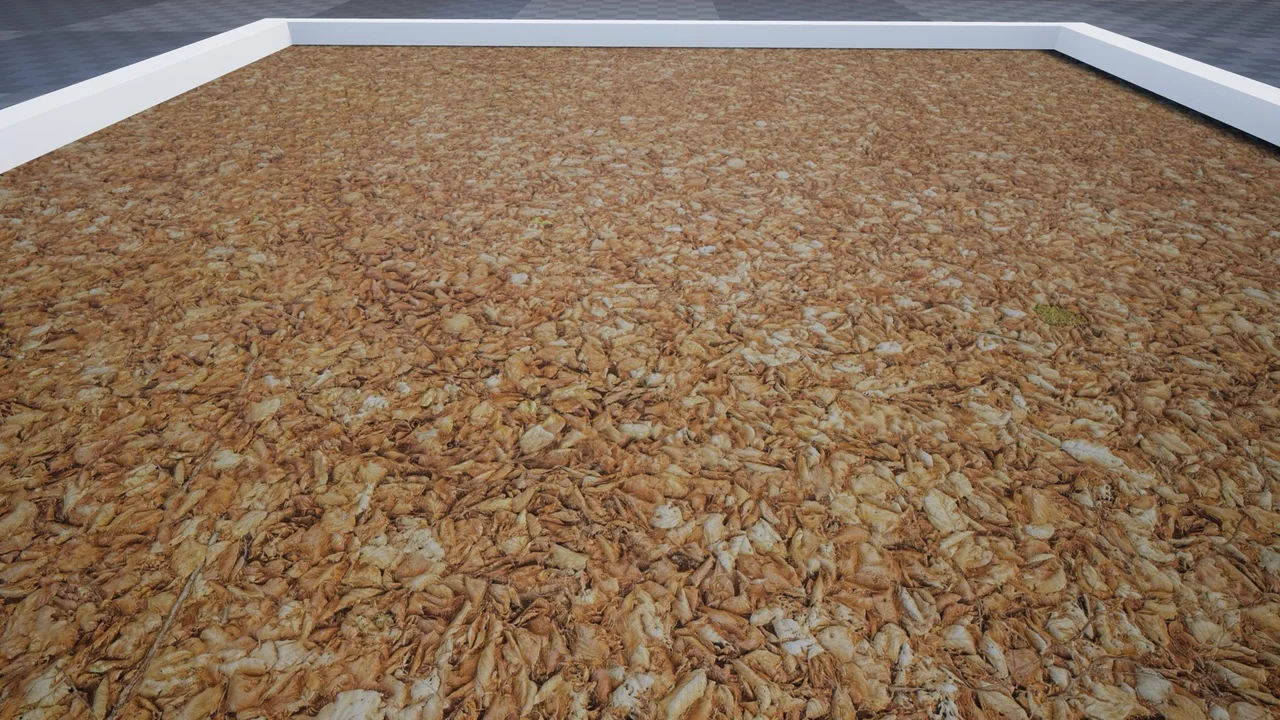
 Nature & Terrain
 Nature & Terrain
 Nature & Terrain